How Much Does 3D Rendering Cost? 2026 Industry Price Ranges by Deliverable

Lukas Berezowiec · CEO of NoTriangle Studio
Updated · 9 minutes
Key takeaways
Where a project lands in the range depends mostly on the level of detail and realism, how many views share one model, and what the images have to do.
- Drivers
- Level of detail and realism, custom modeling, number of views, site and context
- Charging
- Per image, per project, per hour, or per second and per minute for animation
- Premium
- Price is the easiest thing to compare and the worst thing to choose on
- AI
- Across the industry, rendering prices are not falling
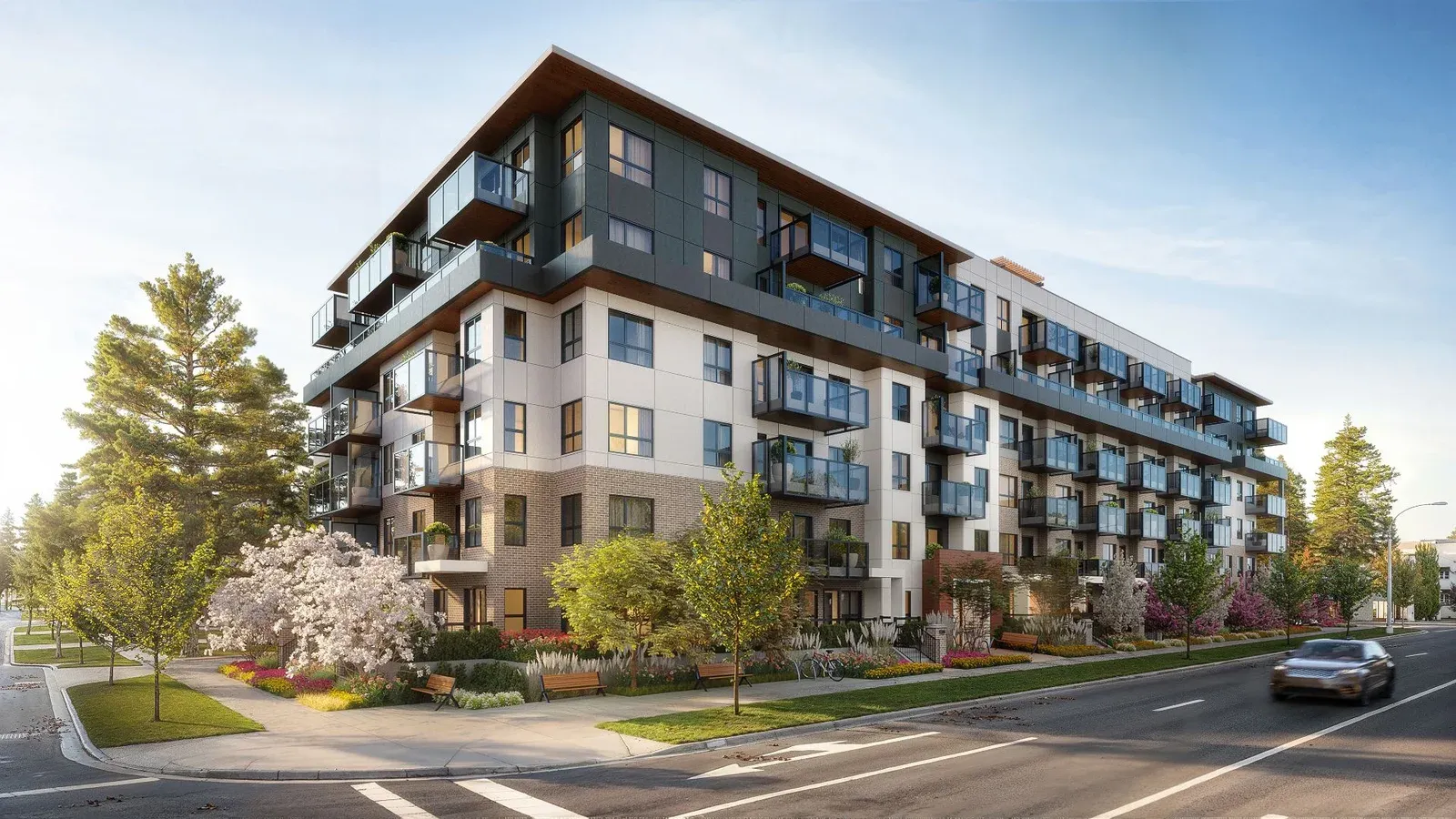
How much does 3D rendering cost? In 2026, published industry pricing guides put a single architectural 3D rendering at roughly $250 to $5,000+ per still image, and architectural animation at roughly $2,000 to $18,000 per finished minute (Maverick Frame, July 2026; ArchiCGI, September 2026; RealSpace 3D, April 2026; R2U, August 2026). Where a project lands in that range depends mostly on the level of detail and realism, how many views share one model, and what the images have to do.
These are industry-wide figures, not NoTriangle prices. Below: the ranges by deliverable, what moves the price, and how to read a quote.
A quick note on the word: “rendering” can also mean applying plaster to a real exterior wall. This guide is about the digital kind, 3D visualization of a building before it exists.
3D Rendering Prices by Deliverable (2026)
Ranges below are the spread across four published 2026 studio pricing guides, rounded. They are industry figures for professional architectural work, in USD.
| Deliverable | Typical industry range (2026, USD) | What moves it within the range | Sources |
|---|---|---|---|
| Exterior still (street-level) | About $500 to $3,500 per image; commercial and large sites up to $5,000+ | Site size, landscaping and context, facade detail, day vs twilight | Maverick Frame (Jul 2026), ArchiCGI (Sep 2026), RealSpace 3D (Apr 2026), R2U (Aug 2026) |
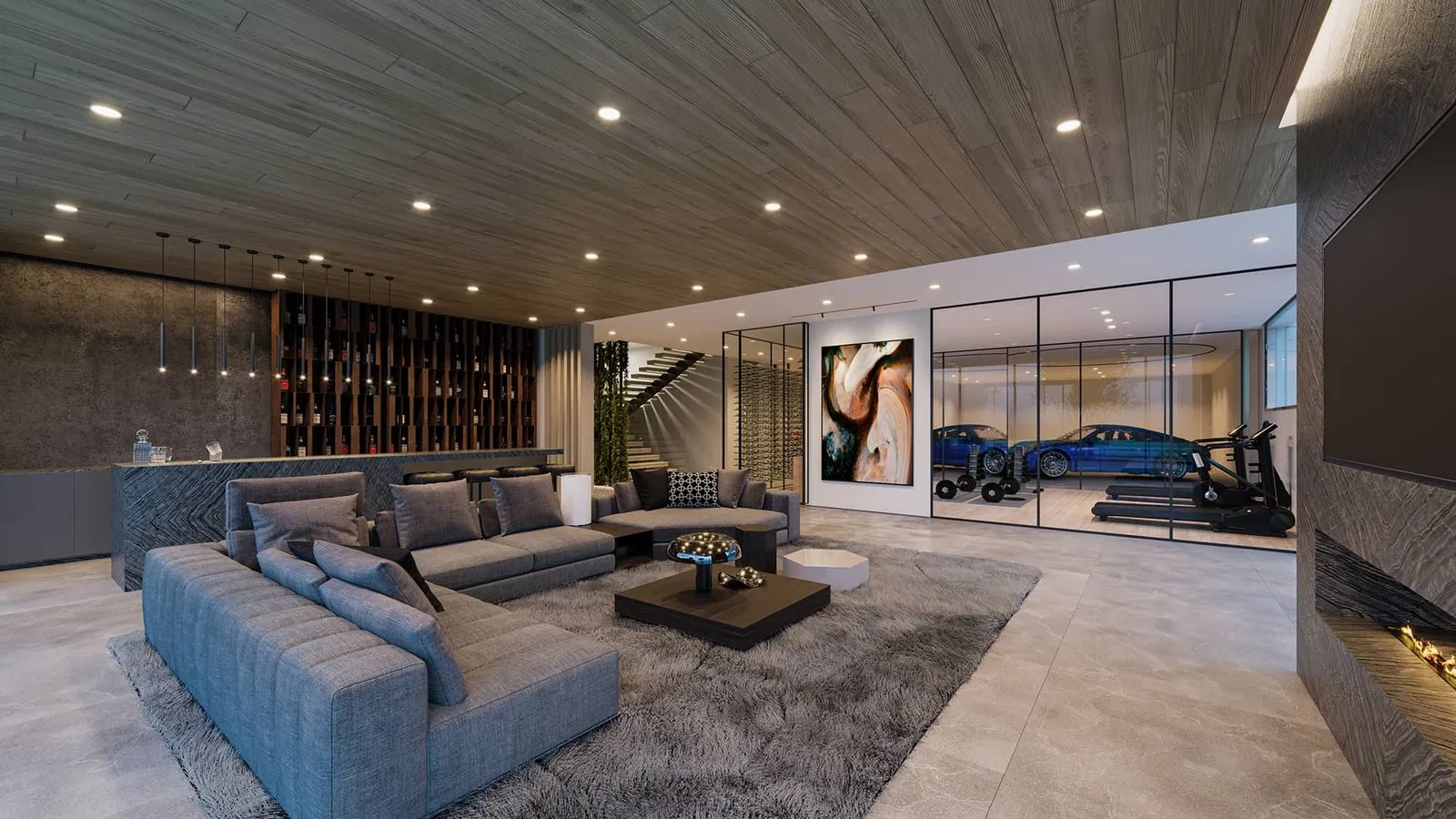
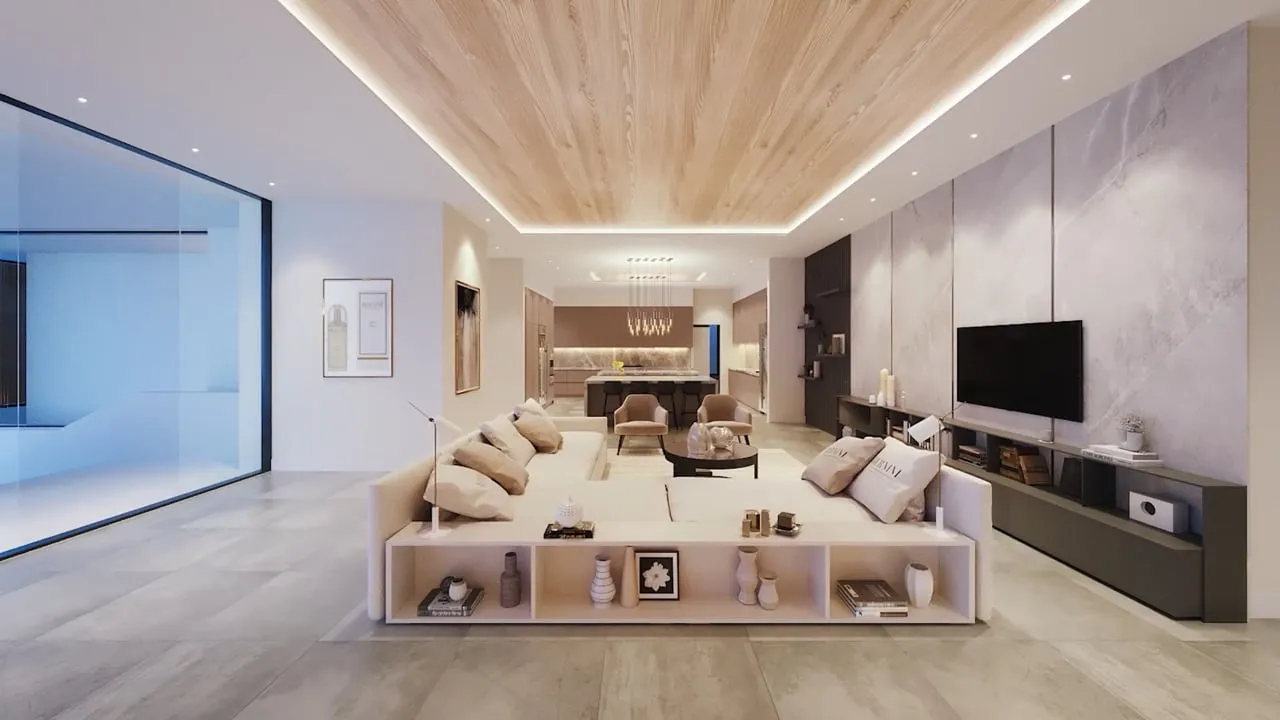
| Interior still | About $250 to $2,500 per image | Custom furniture and millwork, styling, lighting complexity | Maverick Frame, ArchiCGI, RealSpace 3D, R2U |
| Aerial / bird’s-eye view | About $800 to $4,000 per image; often 35% to 50% above a street-level view | How much surrounding context has to be modeled | Maverick Frame, ArchiCGI, RealSpace 3D, R2U |
| Architectural animation | About $2,000 to $5,000 per finished minute for a simple flythrough; about $8,000 to $18,000 per minute for marketing-grade film (often quoted as roughly $50 to $200+ per second) | Length, number of scenes, camera work, realism, editing and sound | Maverick Frame (Jul 2026), RealSpace 3D, R2U |
| Virtual tour / 360 | About $800 to $2,000 per 360 viewpoint, or about $1,600 to $4,000 for a small project | Number of viewpoints, interactivity, whether stills already exist | ArchiCGI (Sep 2026), R2U (Aug 2026) |
| 3D floor plan | About $250 to $1,200 per plan | Unit size, furnishing level, single unit vs full site plan | Maverick Frame, RealSpace 3D, R2U |
Two things the table cannot show. First, the same image type can sit at either end depending on what it has to do: a clear supporting view and a launch hero shot are different jobs. Second, most real projects are quoted as a set, because one 3D model feeds several views, an animation and sometimes a tour.
Animation
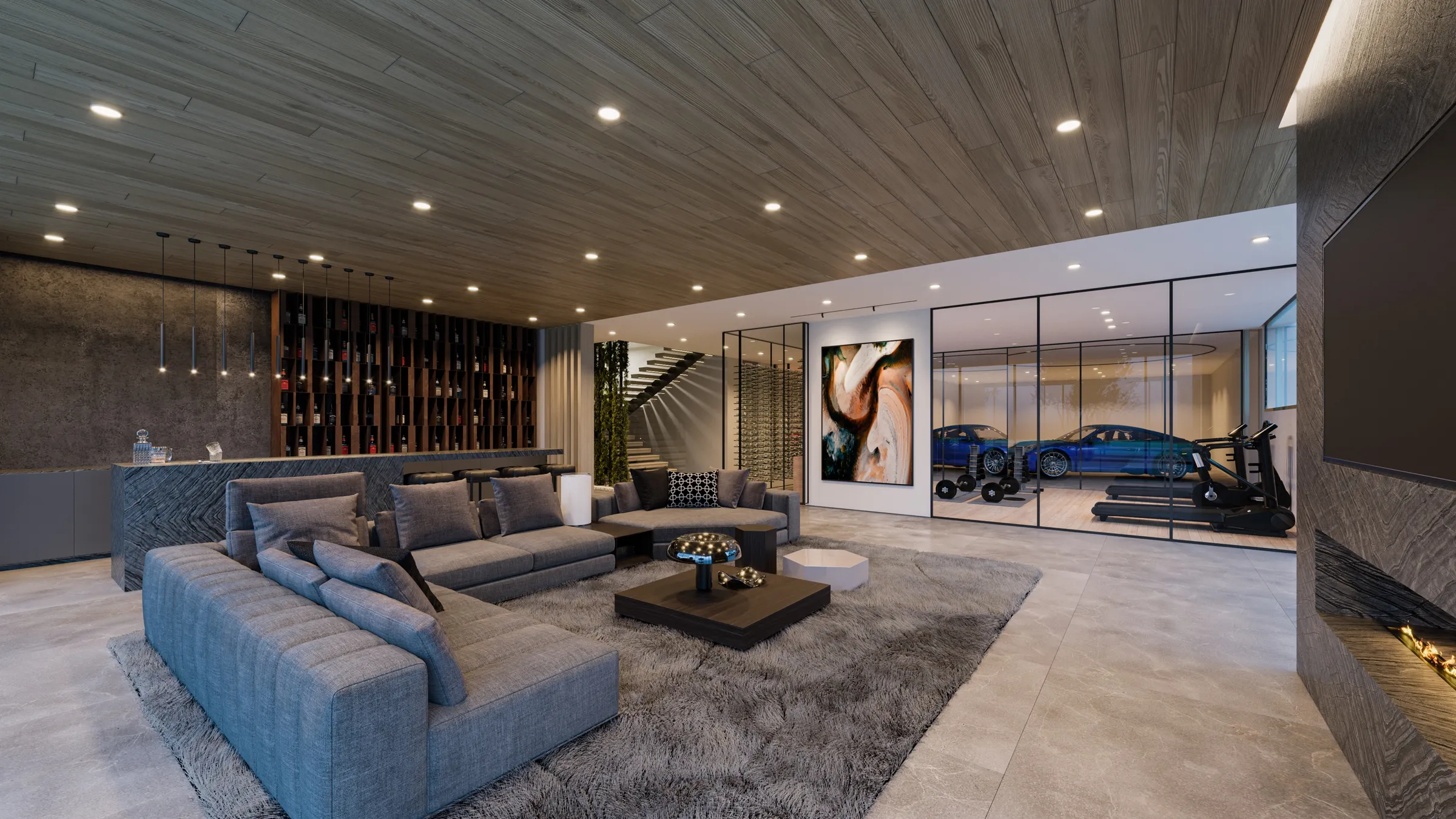
Animation is priced per second or per finished minute because every second is dozens of rendered frames plus editing. A short flythrough reusing an existing model sits at the low end; a cinematic film with many scenes, people and sound sits at the top. AI tools that add motion to a finished still are starting to appear for short social clips, but a full architectural film is still a real production.
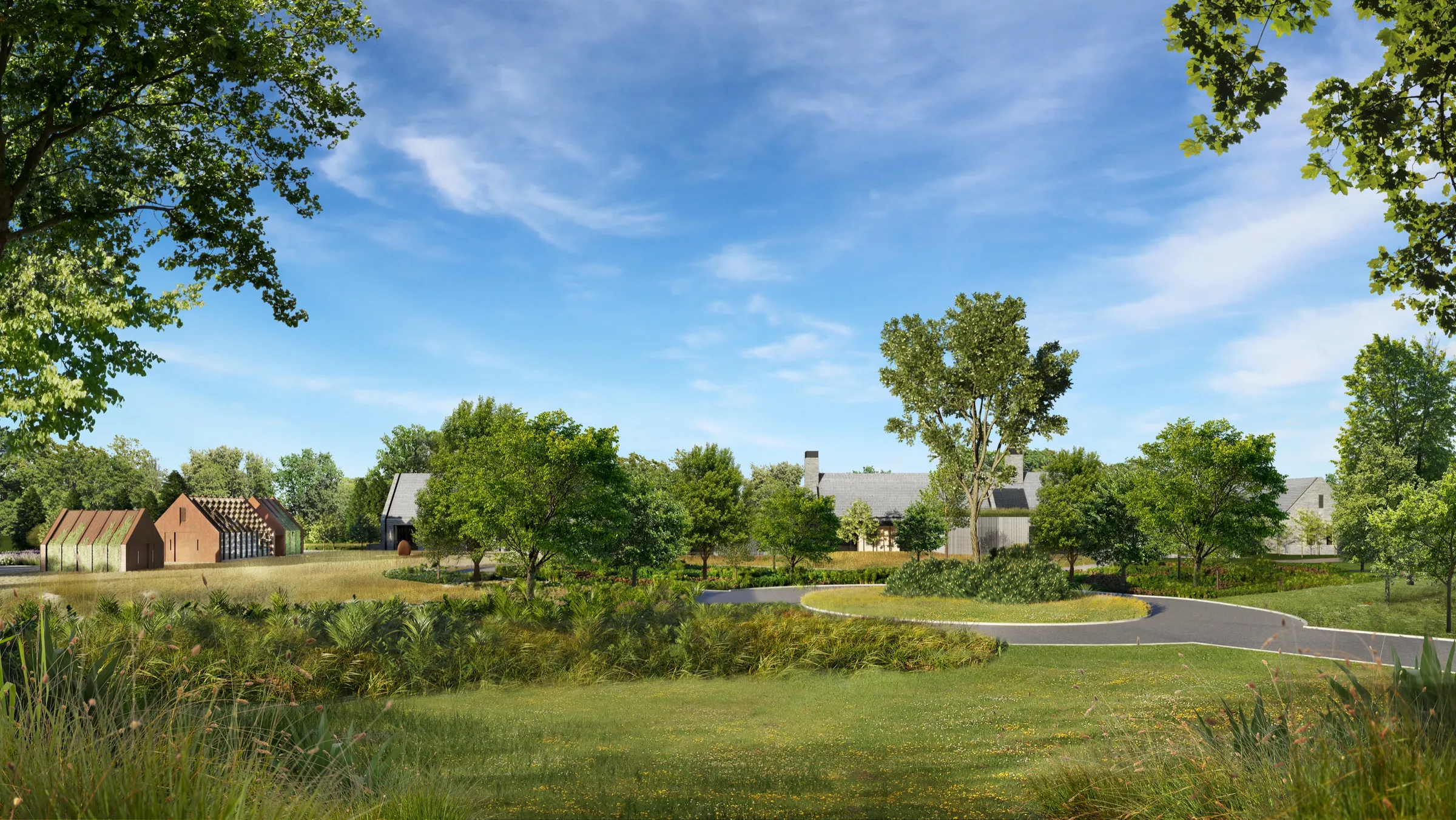
A 3D animation from our Clear Creek project.
Virtual Tours and Floor Plans
Virtual tours and floor plans are usually built from the same model as the stills, which is why they are most often quoted as part of a rendering set rather than on their own. Ask for them in the same brief so the model is planned for them from the start.
What Drives the Price
| Factor | Why it changes the cost | What you can do about it |
|---|---|---|
| Level of detail and realism | Photoreal lighting, custom materials and styling take senior artist time | Decide which images need editorial polish and which only need to inform |
| Custom modeling | Real furniture, fixtures and millwork modeled to spec instead of library pieces | Share the actual selections and specs up front |
| Number of views and deliverables | The model is built once; each extra view, animation or tour adds to the total | Plan the full set at the start instead of adding views later |
| Site and context | Aerials, large sites and dense surroundings mean far more to model | Say early whether you need aerial or context views |
| Readiness of the design | Late design changes mean rework on an existing model | Start from a stable design and complete files |
| Revisions and feedback | Scattered feedback creates extra rounds | Consolidate comments through one person and one channel |
| Resolution and formats | Print, billboard or ultra-wide outputs take longer to render and finish | Specify where each image will be used |
| Deadline | A compressed schedule needs more artist hours at once, which studios often price in | Share the real date, and the event behind it, on the first call |
Revision rounds are included with every NoTriangle project, and the exact number is confirmed in the proposal.
How Studios Charge
- Per image. One price per finished view. Common for small sets and single hero shots.
- Per project. One price for the full set (stills, animation, tour) built from one model. Common for developments and launch campaigns.
- Per hour. Used mostly by freelancers and for open-ended concept work. Published 2026 guides list rates from about $30 per hour (Maverick Frame) to $40 to $50 per hour (ArchiCGI) for outsourced work.
- Per second or per minute. The norm for animation.
Whatever the model, a good quote explains what each image is for and why it sits at the level it does. A flat per-image price list treats every view as the same unit of work, when a launch hero shot and a secondary bathroom are different jobs.
Why Premium Studios Cost More
Two renderings of the same room can differ several times in price because they are different work: documentary images (accurate, evenly lit, library furniture) inform, while editorial images (custom-modeled furniture, lighting used to tell a story, styled to sell) have to carry a launch. Most sets need both. The honest case for when the editorial level pays for itself, and where the money actually goes, is in our guide what premium 3D rendering costs, and why.
The short version: price is the easiest thing to compare and the worst thing to choose on. On a project where the images carry the launch, the real cost of the wrong studio is not the invoice. It is a set that does not sell, then a relaunch with new images, new weeks on the market and an asking price already anchored by weak visuals.
How AI Is Changing Rendering Costs in 2026
Across the industry, rendering prices are not falling. The part that sets the price, an accurate model and photoreal core images that match the real design, is still skilled human work, because a buyer, an investor or an approval board treats the image as a promise. AI helps at the edges: background context, planting, people in the frame and short motion clips from finished stills. You should not pay a premium for those extras, and you should expect the accurate core images to remain a real cost.
Common Questions
Is 3D Rendering Priced per Square Foot or per Square Meter?
Rarely, for still images. Stills are priced per view or per set, because a small room with custom millwork can take longer than a large plain one. Area does matter for floor plans, site plans and aerials, where the size of the plan or site drives the modeling. If you see a per-square-foot figure online, check whether it is a rendering price or a construction or marketing cost.
What Does 3D Rendering Cost per Hour?
Published 2026 guides list outsourced hourly rates from about $30 per hour (Maverick Frame) to $40 to $50 per hour (ArchiCGI). Hourly billing is mostly used for open-ended concept work; architectural marketing images are usually quoted per image or per project, so the total is known before work starts.
How Much Do Architects Charge for Renderings?
There is no standard figure, because many architecture firms do not produce marketing-grade renderings in-house. Some include simple design views in their fees; for photoreal images many outsource to a visualization studio and either pass the cost through or add it to their fee. Ask for renderings as a separate line item so you can see what you are paying for and who produces it.
Is 3D Rendering Worth the Cost?
For a project that has to sell, fund or win approval before it is built, usually yes: the images are what buyers, investors and boards react to, and their cost is small next to the value of the project. It is worth less when the image only has to inform, which is why most sets mix editorial hero shots with simpler supporting views. See what premium 3D rendering costs, and why and pre-selling real estate with 3D visualization.
Can You Get a Price Before Your Files Are Ready?
Often, yes. A studio needs a clear understanding of the project to price it: what is being built, who the buyer is, how many images and of what kind, the level they have to reach, and the deadline. A thorough discovery call usually gives that, and the file review then confirms the detail. Anything that materially changes the scope should be flagged before work begins, not after. See what files you need for 3D rendering.
How Long Does 3D Rendering Take?
It depends on the size and readiness of the project. We build the milestone schedule on the assumption that feedback comes back within two working days at each review point, and the timeline moves with that. The schedule is confirmed in the proposal, once we understand the scope and your deadline.
More detail in our timelines FAQ and in how long does 3D rendering take.
About NoTriangle Studio
NoTriangle Studio is a senior-led boutique visualization partner for luxury real estate developers, architects and agents. Founded in 2014, it is headquartered in the San Francisco Bay Area (Fremont, California), with its in-house production team based in Brazil, and works with clients across the US, Canada and the Caribbean. We quote every project to its scope after a discovery call; there is no price list. Examples of the work: Clear Creek, Villa Visala, Austin Surf Club.
Get a Quote for Your Project
Tell us what you are building, who it is for and when you need the images. We will come back with a scope and a quote built around what each image has to do. Start a project.
Further Reading
- What premium 3D rendering costs, and why: where the money goes and when the editorial level pays for itself.
- How to choose a 3D rendering studio: the questions to ask before you sign, including who actually produces the work.
- What 500+ projects taught us about 3D rendering: where cost and quality really diverge.
- The architectural visualization process: the stages behind a quote.
- What files you need for 3D rendering: what to send so the quote is accurate.
- Timelines FAQ
Sources
Every dollar figure in this post is an industry range taken from these published guides, checked in September 2026. None of them is a NoTriangle price.
- Maverick Frame, “3D Rendering Pricing Guide: How Much Do 3D Renderings Cost in 2026”, updated 30 July 2026.
- Maverick Frame, “3D Walkthrough Animation Cost in 2026”, updated 4 July 2026.
- ArchiCGI, “3D Rendering Cost: A Complete Guide to Architectural Rendering Prices”, updated 1 September 2026.
- RealSpace 3D, “3D Rendering Pricing Guide”, updated April 2026.
- R2U, “Real Estate 3D Rendering Cost: 2026 Pricing Guide”, published 2 August 2026.
FAQs
How much does 3D rendering cost in 2026?+
Published 2026 industry guides put a single architectural 3D rendering at roughly $250 to $5,000+ per still image, and architectural animation at roughly $2,000 to $18,000 per finished minute. Interior stills sit around $250 to $2,500, exterior stills around $500 to $3,500, and aerials around $800 to $4,000. These are industry ranges, not NoTriangle prices; we quote each project to its scope.
How much does a 3D architectural animation cost per minute?+
Industry guides published in 2026 list about $2,000 to $5,000 per finished minute for a simple flythrough and about $8,000 to $18,000 per minute for marketing-grade film, often quoted as roughly $50 to $200+ per second. Length, number of scenes, camera work, realism and editing move the price.
How much does a 3D virtual tour or 3D floor plan cost?+
Published 2026 guides list about $800 to $2,000 per 360 viewpoint, or about $1,600 to $4,000 for a small tour project, and about $250 to $1,200 per 3D floor plan. Both are usually built from the same model as the stills, so they are most often quoted as part of a rendering set.
Is 3D rendering priced per square foot or per hour?+
Still images are rarely priced per square foot; they are priced per view or per set. Area matters mainly for floor plans, site plans and aerials. Published 2026 guides list outsourced hourly rates from about $30 to $50 per hour, but marketing images are usually quoted per image or per project.
How long does 3D rendering take?+
It depends on the size and readiness of the project. We build the milestone schedule on the assumption that feedback comes back within two working days at each review point, and the timeline moves with that. The schedule is confirmed in the proposal, once we understand the scope and your deadline.
Does NoTriangle Studio publish a price list?+
No. NoTriangle Studio, a 3D visualization studio headquartered in the San Francisco Bay Area and founded in 2014, quotes every project to its scope after a discovery call, because the right number depends on the property, the buyer, how many images and of what kind, and the deadline.