
[ The process, drawn as a map ]
How we work.
Most people think this is about making renderings. It isn't. The renderings sit in the middle of a longer process. Work happens before, to make the renderings possible. Work can happen after, to extend them into everything else the project needs.
For what each stage protects and why the order matters, read the 3D rendering process, stage by stage.
Map · 3 phases · 7 stages
Tap a pin to jump
Phase I · Before we begin
Discovery call.
Every project starts with a discovery call. It is how we understand what the project needs to do, who the buyer is, what the deadlines are, and whether we are the right studio for the work. We do not write proposals without it.
The call is also where the first advice happens. After enough projects in enough markets, we have a view on what tends to work for a given buyer at a given price point, and we share it. By the time the call ends, we and you know whether to proceed, and the shape of the project is already taking form.
What the call covers
Phase II
The seven stages.
This is the core of the project. Every project runs through these stages in the same order, from understanding the project to delivering the final renderings.
Stage 01
Analysis
Once a project begins, the first thing we do is go deeper. Market analysis, competitor scan, buyer profile, project context. Who is going to see the imagery, what they already look at, what the project has to compete with, what level of finish the audience expects.
That analysis shapes every creative decision that follows. Angles, lighting, time of day, whether the rooms are shot empty or lived in. None of those are aesthetic choices made in isolation. They are answers to questions the analysis has already raised.
Layers of analysis
Stage 02
Design alignment
Before any modeling begins, the project files have to be coherent and the design has to be resolved. This stage covers three sub-steps.
File review and discrepancies.
All project files are reviewed for compatibility and completeness. When architecture, interior, landscape, and structure arrive from different teams, they don't always agree. Discrepancies are flagged and resolved with you before production starts. Missing files are identified the same way, confirmed, sourced, and in hand before we proceed.
Design services (optional).
When a project arrives without a complete design, we can fill the gap. Sometimes that is a single unresolved space. Sometimes it is the full design from scratch. Sometimes it is a custom feature, a signature lighting moment or feature wall, designed specifically to anchor the imagery. Where design services are part of the scope, we surface it clearly in the proposal. Design extends the timeline and changes the cost. We never bury that.
Site photography and drone coordination (situational).
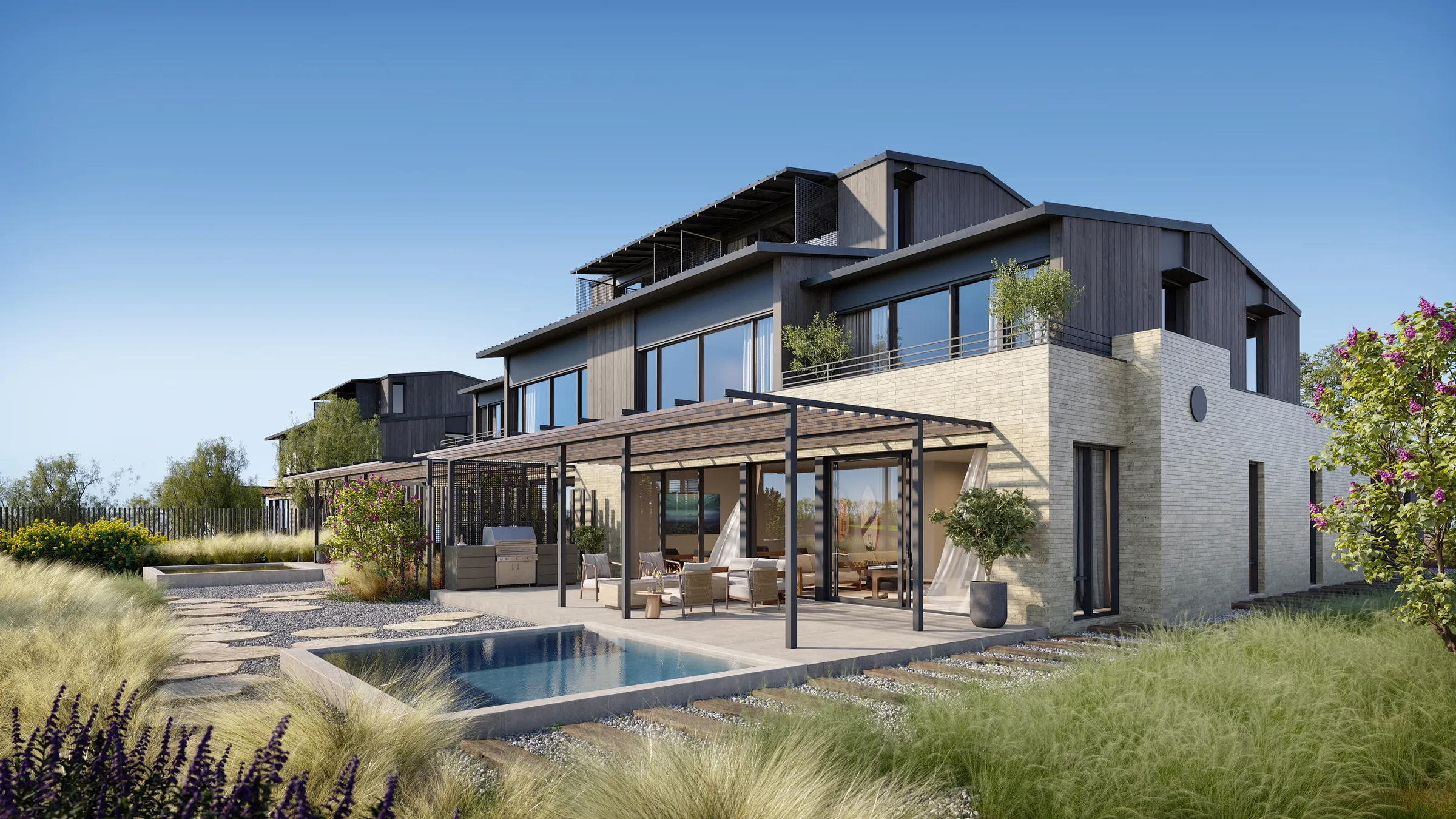
Some renderings need real-world photographic plates: a luxury home where the view is the selling point, an aerial that has to read as the actual neighborhood, an existing-property project overlaying site photography. Where plates are needed, we plan how to get them now. Sometimes the client's existing photography works. More often, we direct the client's drone operator or photographer with a specific shot list. On projects that warrant it, we hire the operator ourselves or travel to the site.
Files merging into one
Stage 03
Moodboard
Before any model is touched, we define the visual language of the project. Lighting, atmosphere, color, lifestyle references, compositional intent. The moodboard is presented for alignment with everyone who needs to be on the same page.
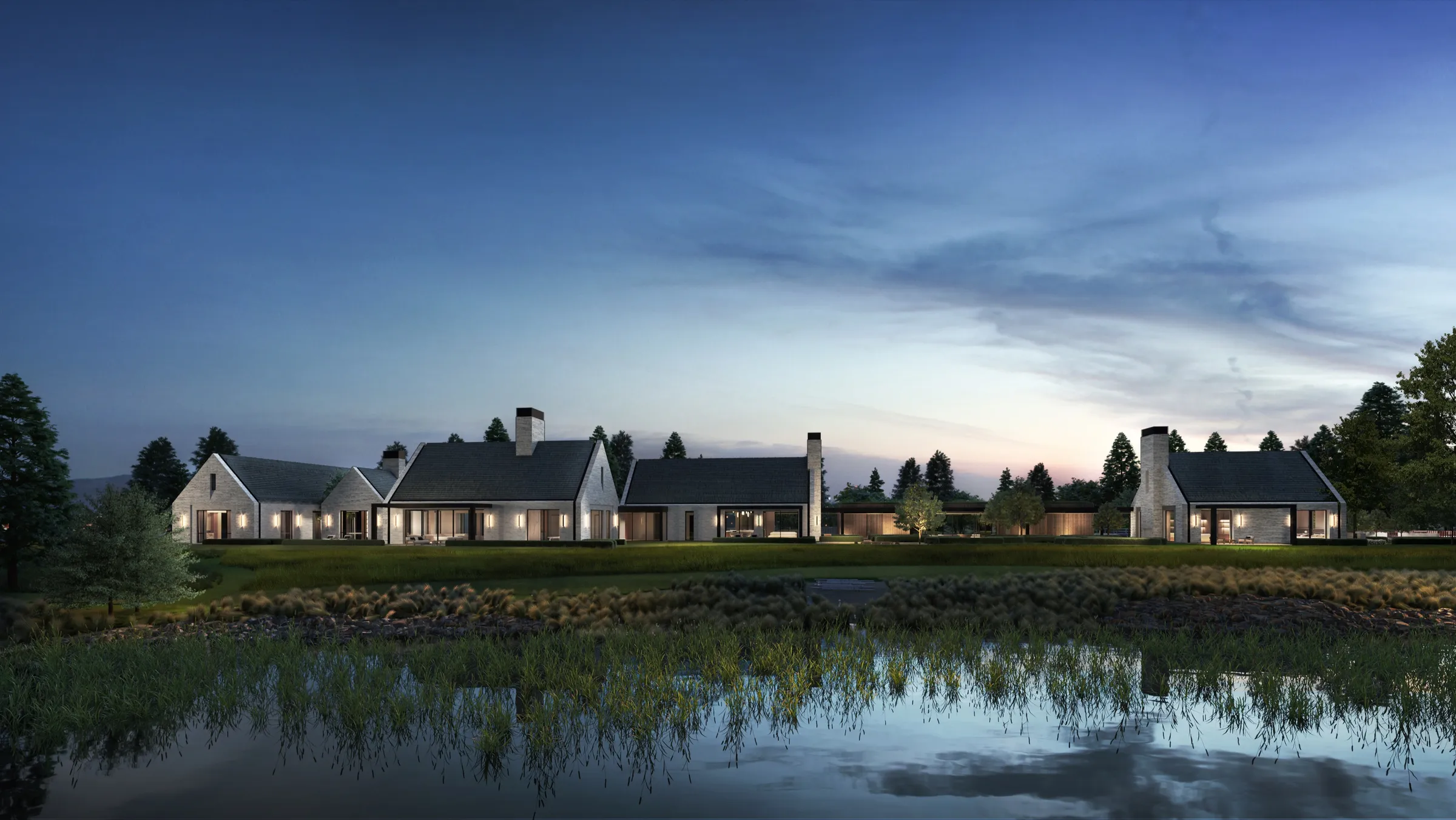
The most important decision made here is style. The right one depends on who the renderings are for. An architecture or design practice usually needs clean, accurate imagery to get a design approved: fair lighting, honest finishes, full visibility of the space. A real estate developer selling to end buyers needs something else: editorial composition, dramatic light, atmosphere, the suggestion of a lifestyle. The trade-off is that a dramatic image shows less of the design than a documentary one. That is acceptable when the goal is to sell, not to approve.
Most projects need both styles across the set. Documentary for approvals and detail. Editorial for the hero shot, the PR moment, the cover of the brochure. The moodboard is where we work out which style serves which milestone.
Branding development (optional).
For some projects, the visual language extends beyond the renderings into a full brand document: identity that runs from the imagery through marketing collateral, digital, and print. Optional. Some projects already have their branding set; others benefit from building it alongside the renderings.
Style spectrum
Stage 04
White-model preview
The building and spaces are modeled in full. Before any material, color, or lighting is applied, every camera angle is presented to you as a white model. Clean untextured geometry. Framing, composition, camera height, lens.
This is the stage where changes are cheap. The angle of the great room shot. The drone height. Whether the kitchen reads from the dining side or the island side. Adjustments here cost almost nothing. The same adjustments later cost a round of revisions. The white model is the angle's last cheap moment.
Cameras locked before render
Stage 05
Photoreal rendering
With angles approved, the team applies materials, lighting, atmosphere, furniture, people, and every scene-building element the rendering needs.
For Premium projects, this is where editorial intent gets realized: custom-modeled furniture, lighting used as a storytelling tool, lifestyle and atmosphere. For Standard work, the production is cleaner and more documentary: library furniture where it serves the design, lighting that shows the space fairly. The level was decided earlier. This stage executes it.
Layers stacked into the image
Stage 06
Revisions
Revisions are part of the process, not an exception to it. They come in at two stages: the white-model stage, where framing and composition change cheaply, and the photoreal stage, for lighting, materials, and atmosphere. Revision rounds are included with every project, and the exact number is confirmed in the proposal.
Revisions exist for three reasons. First, no design is fully resolved until it is rendered. Things surface in the imagery that did not surface in the drawings. Second, real estate involves multiple parties who each imagine the project differently; the renderings are the first time everyone sees the same picture, and revisions are how alignment lands. Third, we push for a single comments funnel: one consolidated round per stage, with internal disagreements resolved before they reach us. That single rule is the difference between a project that wraps on schedule and one that bleeds rounds.
Two review points
Stage 07
Delivery
Final renderings are delivered in the formats agreed at the start. Print, web, social, presentation. Master files where requested.
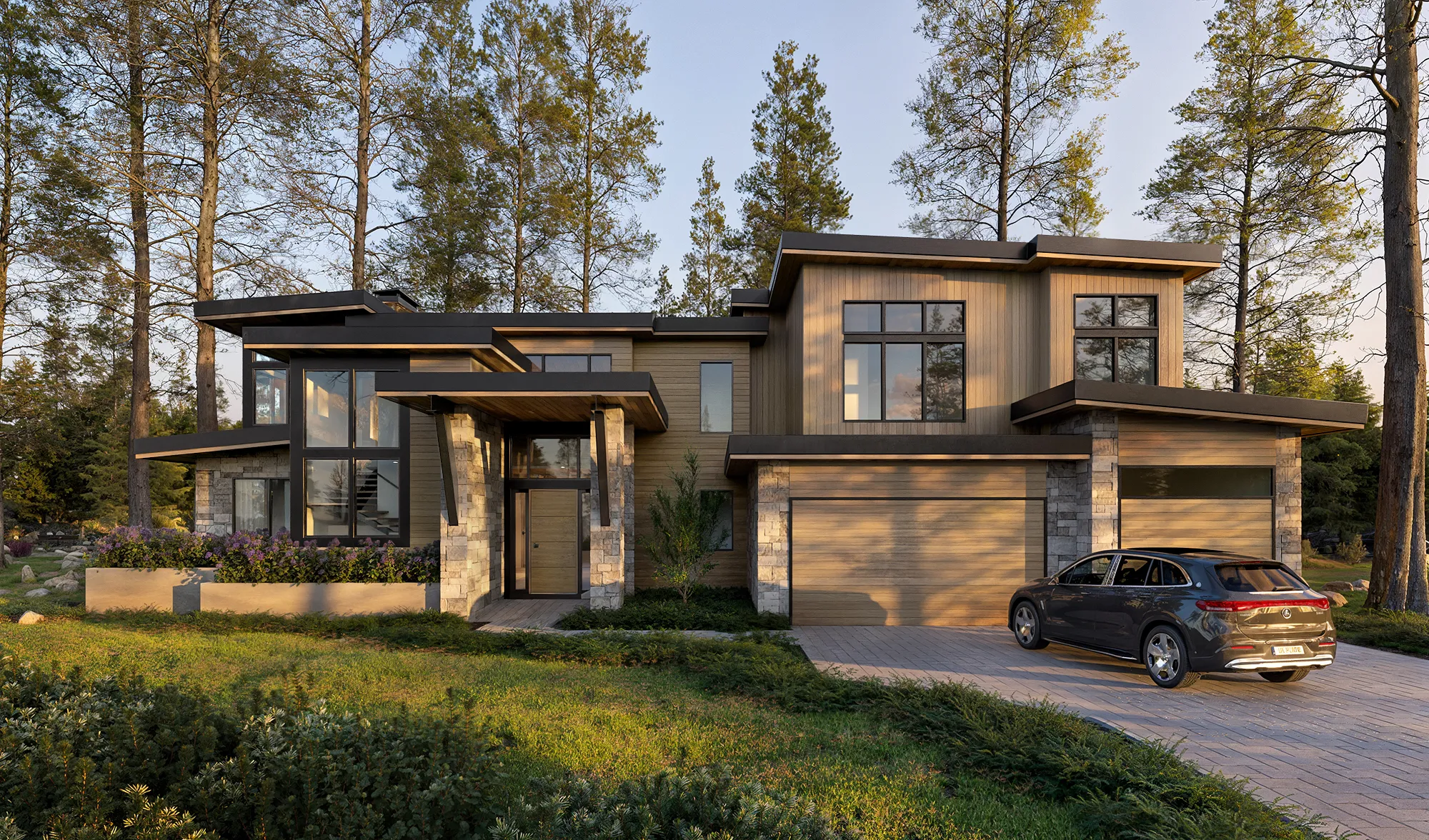
For projects that only need renderings, this is the endpoint. For most, the rendering set is also the input to a wider family of marketing assets.
We keep the project model after delivery. A new view, a design change, or a re-render months later starts from what we already built, not from scratch. That is what makes coming back to a finished project straightforward instead of a fresh commission.
One master, many formats
Phase III · After delivery
Optional marketing assets.
What follows is optional, and not every project needs it. These are the marketing assets that build on top of the rendering set, often in parallel, since they all draw from the same modeling and visual language.
→
Animations
Stills extended into movement. Keyframes are sent for approval before final render, the same logic as white-model previews for stills.
→
Virtual tours
Self-paced exploration of the space for sales offices, broker meetings, and remote buyers. White-model views and interface confirmed before final production.
→
3D floor plans
Dollhouse-style layouts with furniture, finishes, and spatial relationships visible at a glance. Easier to read than 2D, faster to absorb.
How we stay close
People in the room.
A lot of this industry is moving to automation. Faster outputs, fewer people, generic results. We have made the other choice.
The process above runs on people. Senior people in the room from kickoff through delivery. Regular calls instead of asynchronous handoffs. And it continues after delivery: we want to know how the imagery performed, what the launch generated, what we would do differently next time. Some of that conversation is for your benefit. Some of it is for ours. The next project we do for you should be better than this one.
Files, revisions, timing, and billing are covered in our answers to common questions about working with us.
[ Start here ]
Every project starts with a discovery call.
It is where we understand what the project needs to do, who is involved, and where we go from here.
Book a call