
[ Pillar guide ]
Premium 3D rendering cost: what drives the price.
Price is the easiest thing to compare and the worst thing to choose on. This guide is not a price list. It is the honest case for why premium visualization costs what it does, where the money actually goes, when it pays for itself, and when a Standard image is the smarter spend.
By Lukas Berezowiec, CEO, NoTriangle Studio
Updated
[ Quick answer ]
Premium 3D rendering costs more because it buys different work: custom-modeled furniture instead of library pieces, editorial lighting, styled detail, senior in-house artists, and a white-model approval step before the expensive stage. The price depends on image count, level, scene complexity, design readiness and deadline. For industry price ranges by image type, see our cost of renderings guide.
[ Start here ]
Value first, numbers second.
If you came for ballpark figures, they exist and they are useful. Our complete guide to the cost of renderings breaks the market down by image type, interior, exterior, product, floor plan, animation, and virtual tour, and explains how studios build a quote. Read it when you need a number.
This guide answers a different question, the one that actually decides a launch: is premium worth it, and why does it cost more than the cheapest option on the page. On a multimillion-dollar development, weak visualization is not the cheap choice, it is the expensive one. So we start from what the images have to do and the stakes behind them, then work back to what that is worth. We do not publish per-image prices here, because the right number depends entirely on the project, and a flat rate anchors you to the wrong conversation.
[ Where the money goes ]
What you are actually paying for in a premium render.
A premium price is not a markup on the same work. It buys different work, in five specific places.
01
The details a buyer reads as quality
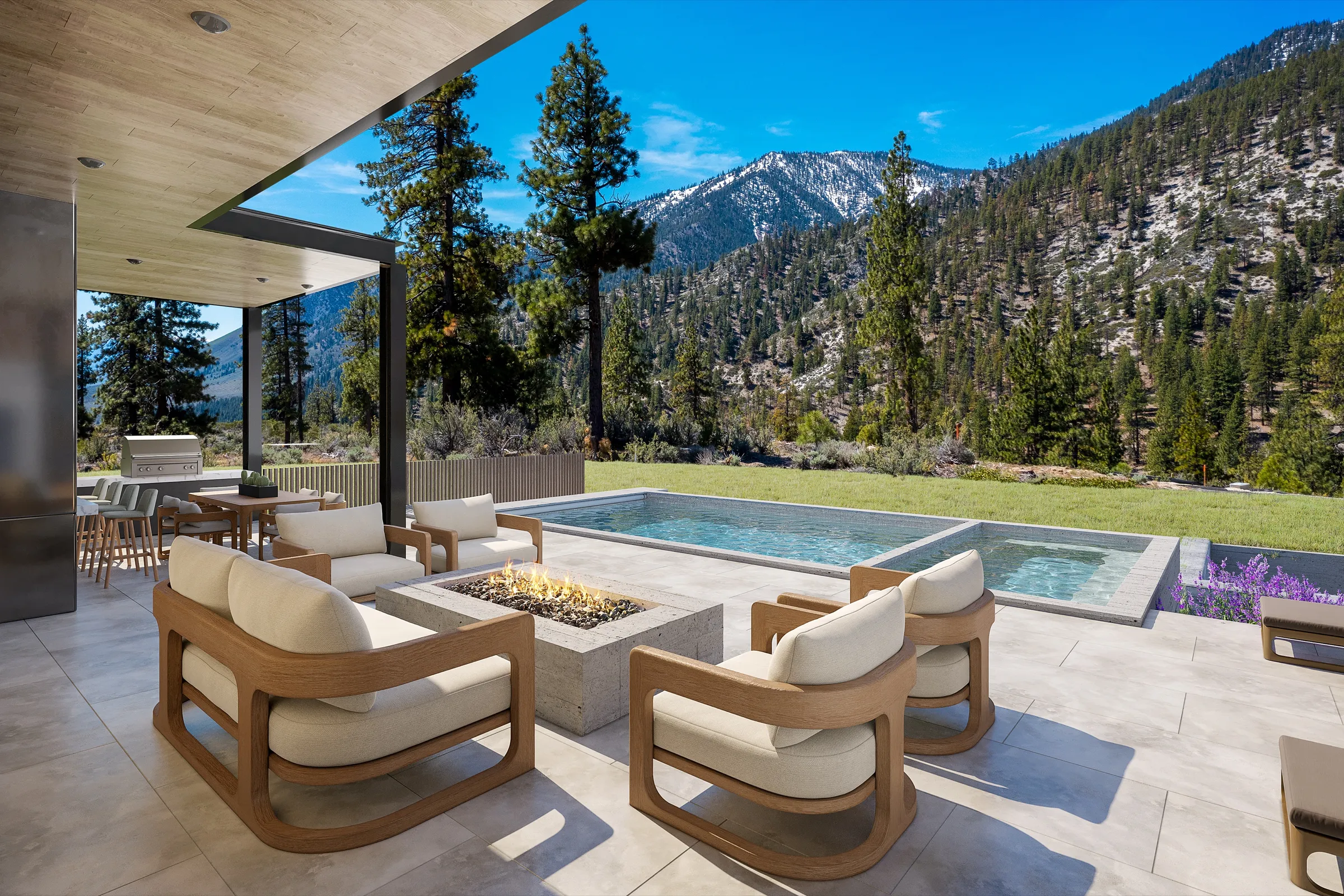
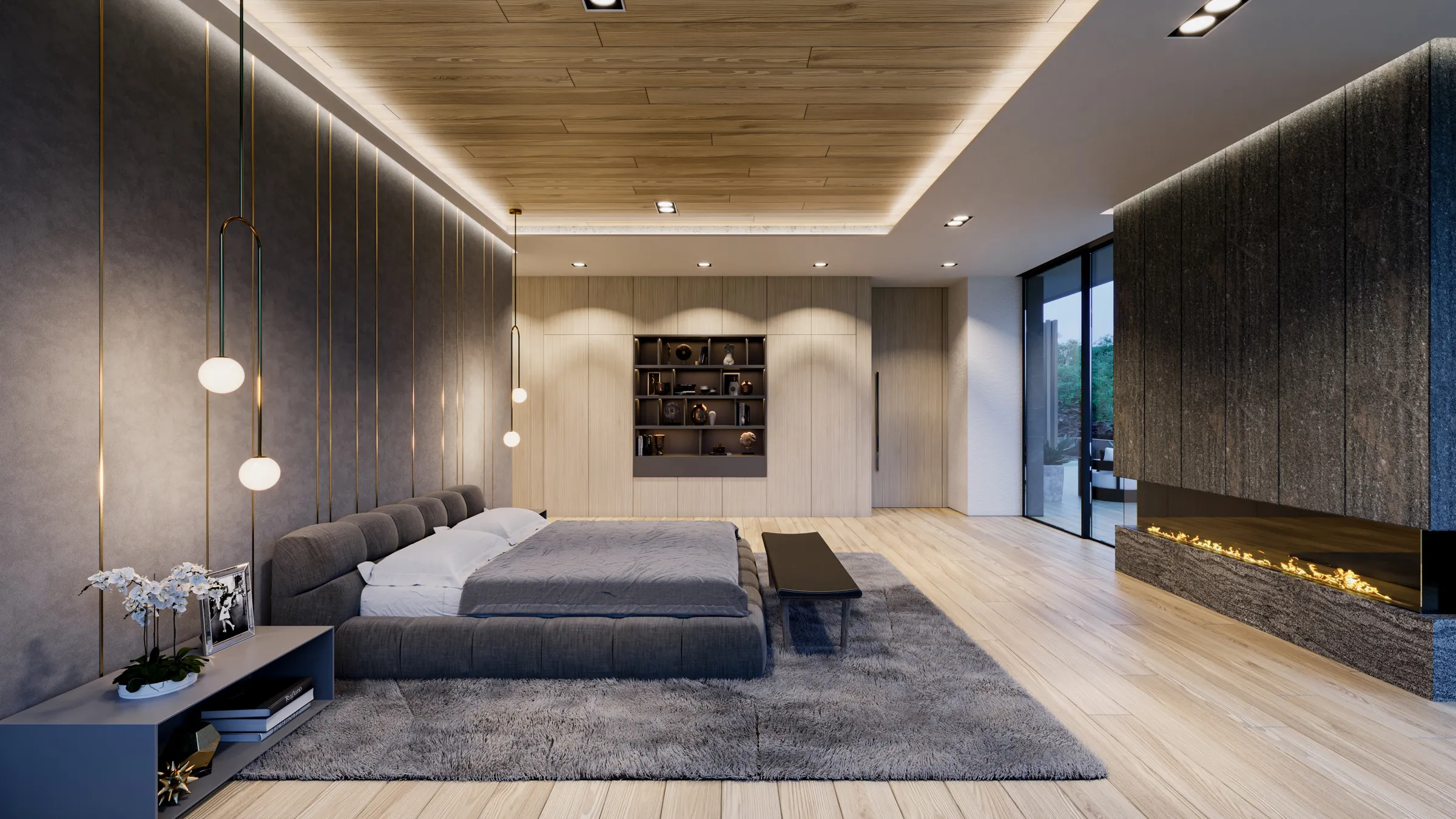
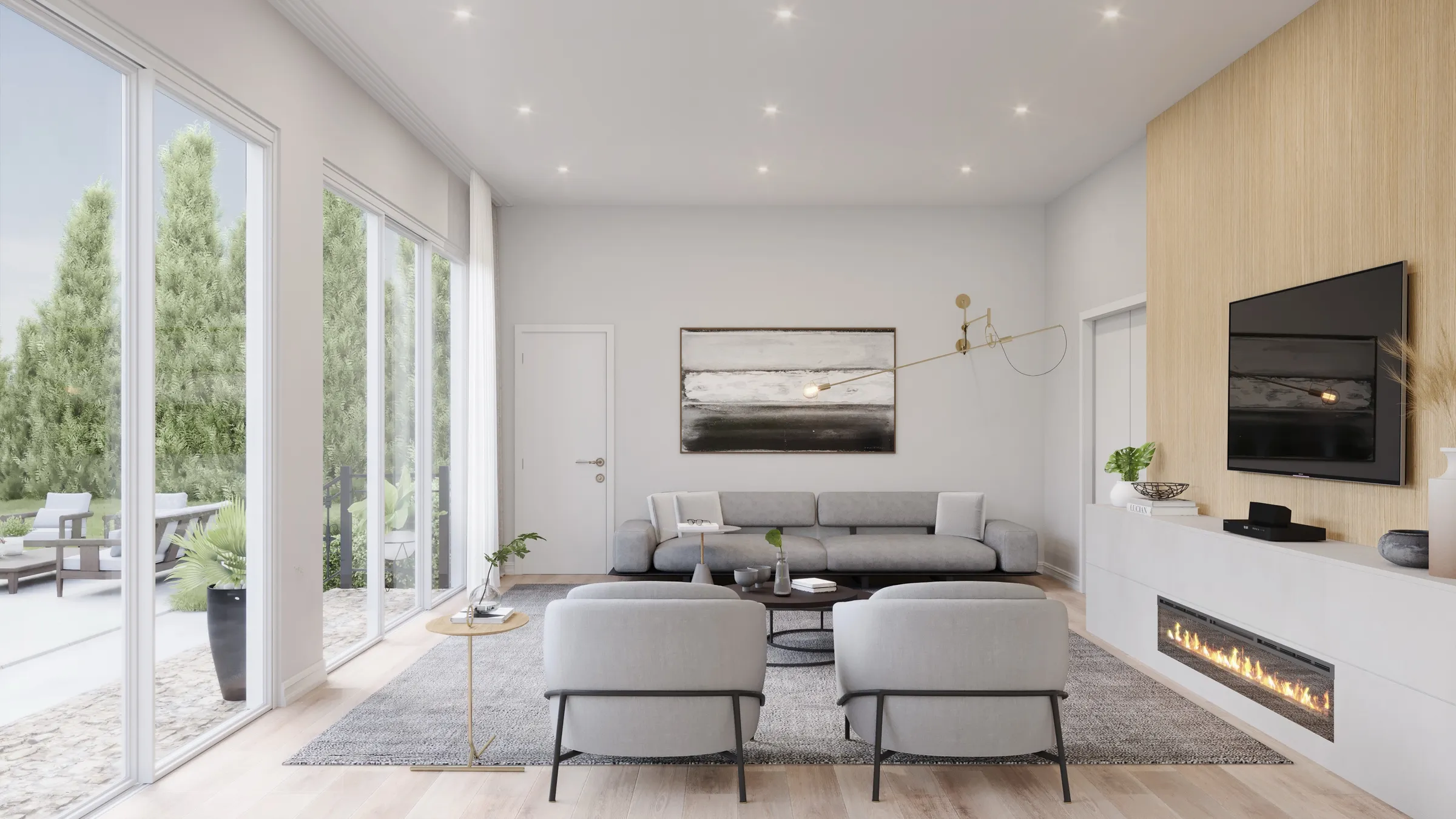
The gap between a cheap render and a premium one is almost never the architecture. It is the artwork on the walls, the props on the counter, the styling of a made bed, the small finishes that take time to get right. A budget studio reaches for stock and moves on, because those details are slow. A buyer reads exactly that difference, consciously or not, as quality. Across hundreds of projects, the notes that decide a sign-off are rarely about the building. They are about whether the fruit in the bowl looks real and whether the light feels like the end of the day.
02
Custom modeling instead of the library
Standard work uses library furniture where it serves the space, and that is the right call for many images. Premium work models the actual pieces to spec: the real sofa, the real light fixture, the millwork as it will be built. That accuracy is what lets a luxury image survive scrutiny, and it is hours of skilled modeling that a stock asset does not cost.
03
Lighting used as a tool, not a switch
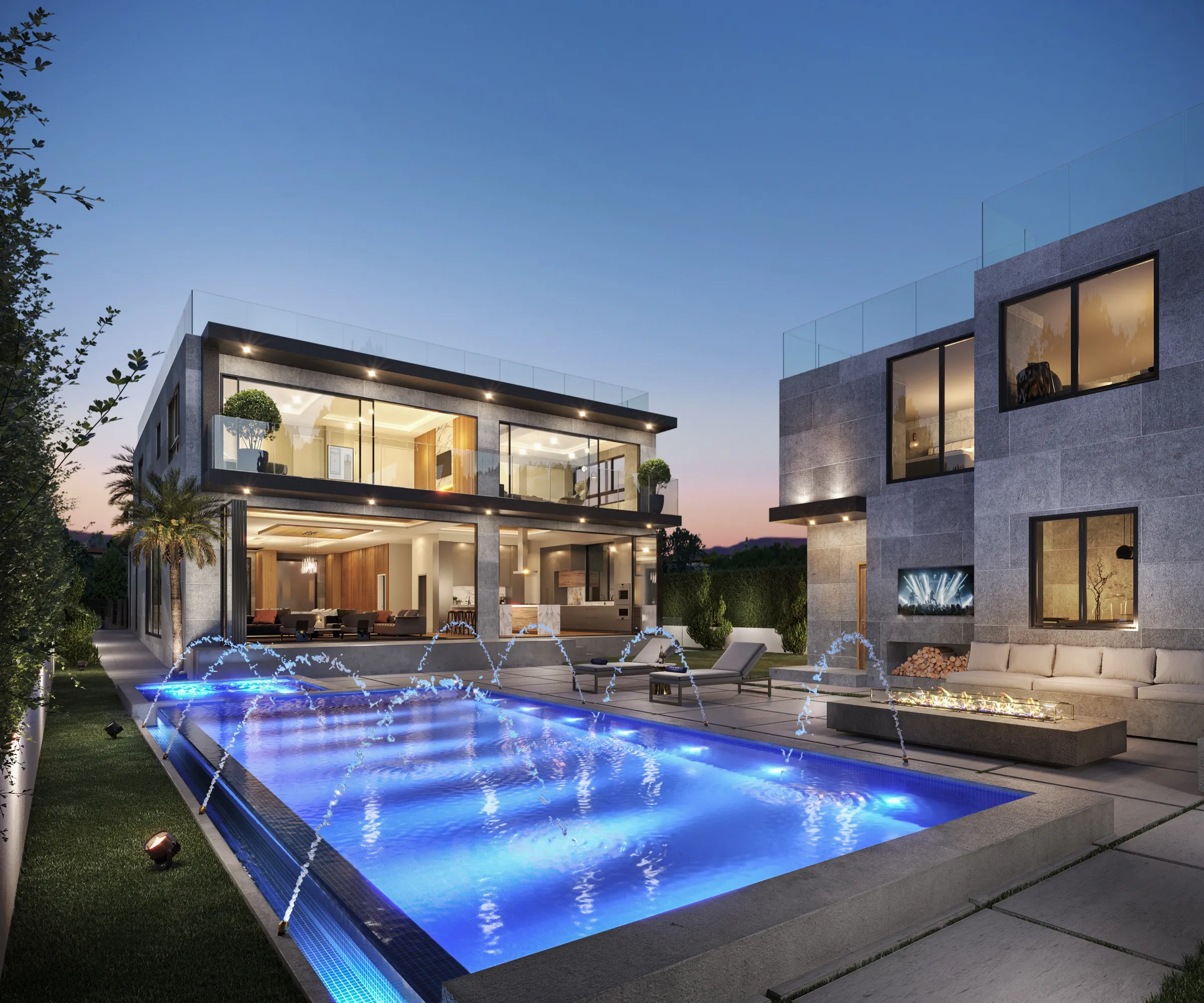
In documentary work the lighting is fair and even so the design reads clearly. In editorial work the lighting is the story: the dusk exterior, the low sun across a room, the warmth that makes a space feel lived in. That is the difference between a picture that informs and a picture that sells, and it is craft time, not a preset.
04
Senior people, in-house, from first call to delivery
A large part of a premium price is who touches the work. A studio that produces in-house with senior artists involved throughout owns the quality, the schedule, and the confidentiality of your project. A studio that quietly subcontracts is a broker, and the people who pitched you are not the ones making your images. On a project that carries your brand and your buyers, that is not a line item to cut.
05
The process that happens before the image
The most valuable work is invisible in the final frame. A review of your files and the market, a moodboard that fixes the look, and white-model previews of every camera angle you approve before anyone applies light and materials. That process is what stops an expensive mistake, and it is exactly what a cut-rate quote leaves out.
[ Cost factors ]
What drives the cost of a rendering.
These are the factors that move the price across the rendering industry. There are no prices here on purpose: the number follows from the factors, not the other way round.
| Cost factor | What pushes it up | How to keep it under control |
|---|---|---|
| Number of views | More images, more camera setups | Pick the few views that sell; one model serves every view |
| Production level | Premium (editorial) instead of Standard (documentary) | Hybrid: Premium on hero shots, Standard on supporting views |
| Scene complexity | Large sites, dense landscaping, detailed context, many rooms | Agree what is in frame at the white-model stage |
| Custom modeling | Real furniture, fixtures and millwork modeled to spec | Custom-model only the pieces the buyer will notice |
| Design readiness | Incomplete or conflicting files, design still changing | Resolve the design before production; flag gaps early |
| Changes after approval | New angles or design changes after sign-off | Approve every angle on the white model; one consolidated round of notes |
| Deadline | Rush schedules paid in overtime and extra render capacity | Plan back from the launch date |
| Deliverable type | Animation and interactive tours take more work than stills | Build them from the same model as the stills |
| Output size | Large-format print resolution | Tell the studio the print size up front |
[ Two levels ]
Standard and Premium, and why paying for the top level everywhere wastes money.
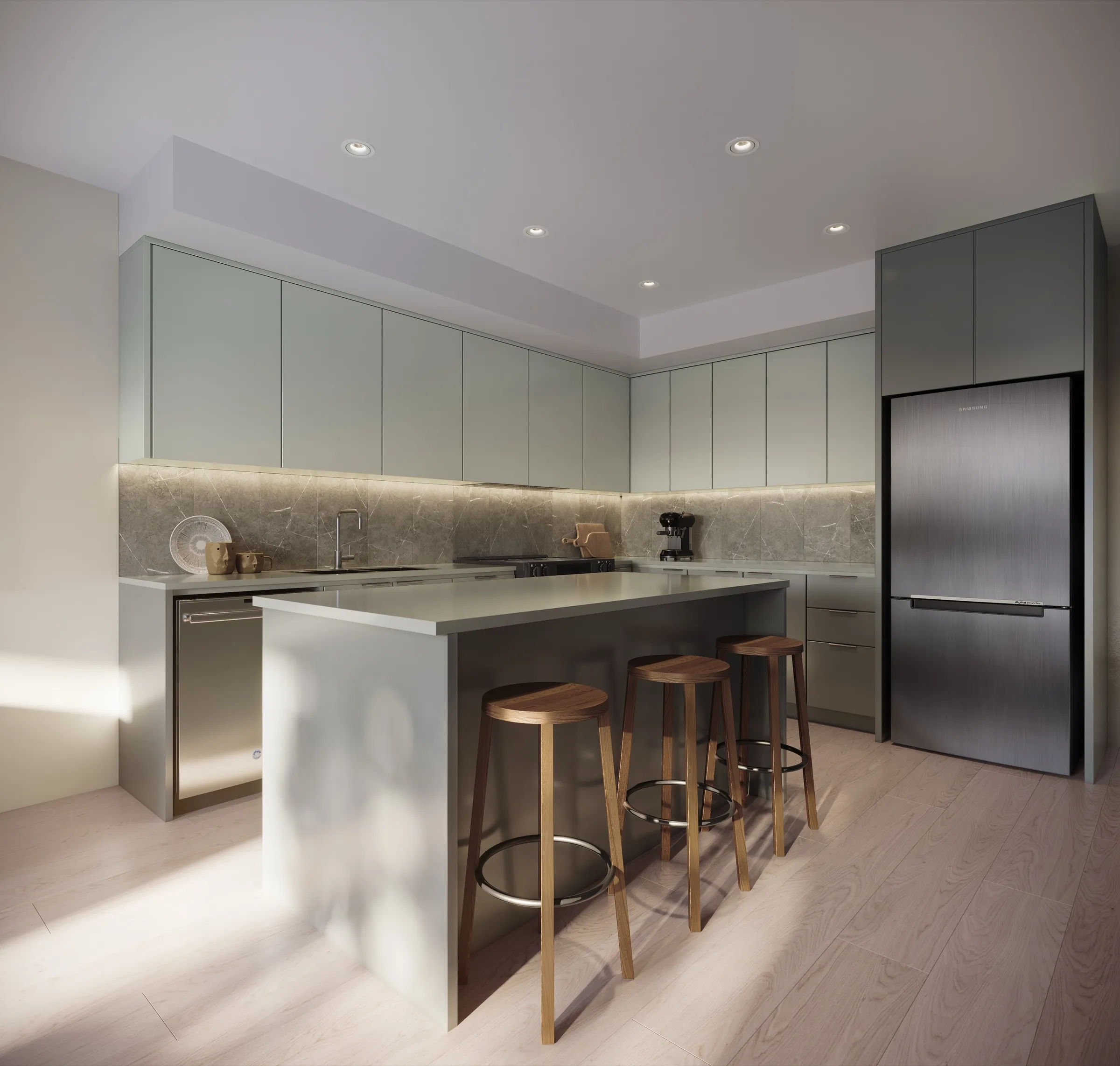
There are two honest kinds of rendering. Standard is documentary: accurate and faithful to the design, library furniture where it serves, fair and even lighting, honest materials, full visibility of the room. It is the right level for planning submissions, design approvals, and the supporting views where clarity matters more than drama. Premium is editorial: custom-modeled furniture matched to spec, lighting used to tell a story, atmosphere and a suggested lifestyle. It is the right level for hero shots, launch moments, and the cover of the brochure.
The mistake that costs the most is not buying cheap. It is buying Premium for every image when the set does not need it. Most projects should be a hybrid: Premium for the few frames that have to sell, Standard for the many that only have to inform. A studio that recommends the right mix, rather than upselling the top level across the board, is thinking about your budget as well as your outcome. Deciding which level each image needs is one of the most effective ways to control cost without weakening the result.
[ The false economy ]
The most expensive rendering is the one that does not sell.
On a project where the images carry the launch, the real cost of the wrong studio is not the invoice. It is a set that fails to sell, and then a relaunch: new images, new weeks in the market, and an asking price already anchored by weak visuals. The gap between a cheap render and a strong one is small in dollars and large in effect.
We hear the same story from developers who learned it the hard way. On an earlier community, one homebuilder used the cheapest renderer he could find, and the images became, in his words, a business card: they looked fine, but they did not sell anything. Sales were slow at the start, and he traced it straight back to the visuals. That cheap set did not cost him a few hundred dollars. It cost him momentum on a whole community, which is a far larger number than the one he saved.
[ The hidden cost ]
The cost that never shows up on a quote.
There is a second cost behind every project, and it is time. What stretches a project into months is waiting on decisions, selections, and feedback, almost always on the client's side. A studio cannot invoice for it, but it is real, and it is usually the true bottleneck rather than the rendering itself.
So the surest way to keep a project on budget is not to push a studio for a lower number. It is to arrive with a stable design, gather your selections, and consolidate your feedback before the work begins. The clients who spend the least are not the ones who negotiated hardest. They are the ones who came prepared, which is a lesson drawn straight from what 500+ projects taught us about 3D rendering.
[ The return ]
How premium pays for itself.
The case for premium is not aesthetic, it is financial. Strong imagery helps sell homes off-plan, which shortens the carry and de-risks the launch. It holds an asking price against a better-funded competitor, because a buyer who feels the quality does not push as hard on the number. It moves approvals and entitlements along, because a board that can see the finished result asks fewer questions. And it raises capital, because an investor deck lives or dies on whether the reader believes the thing will exist and will be desirable.
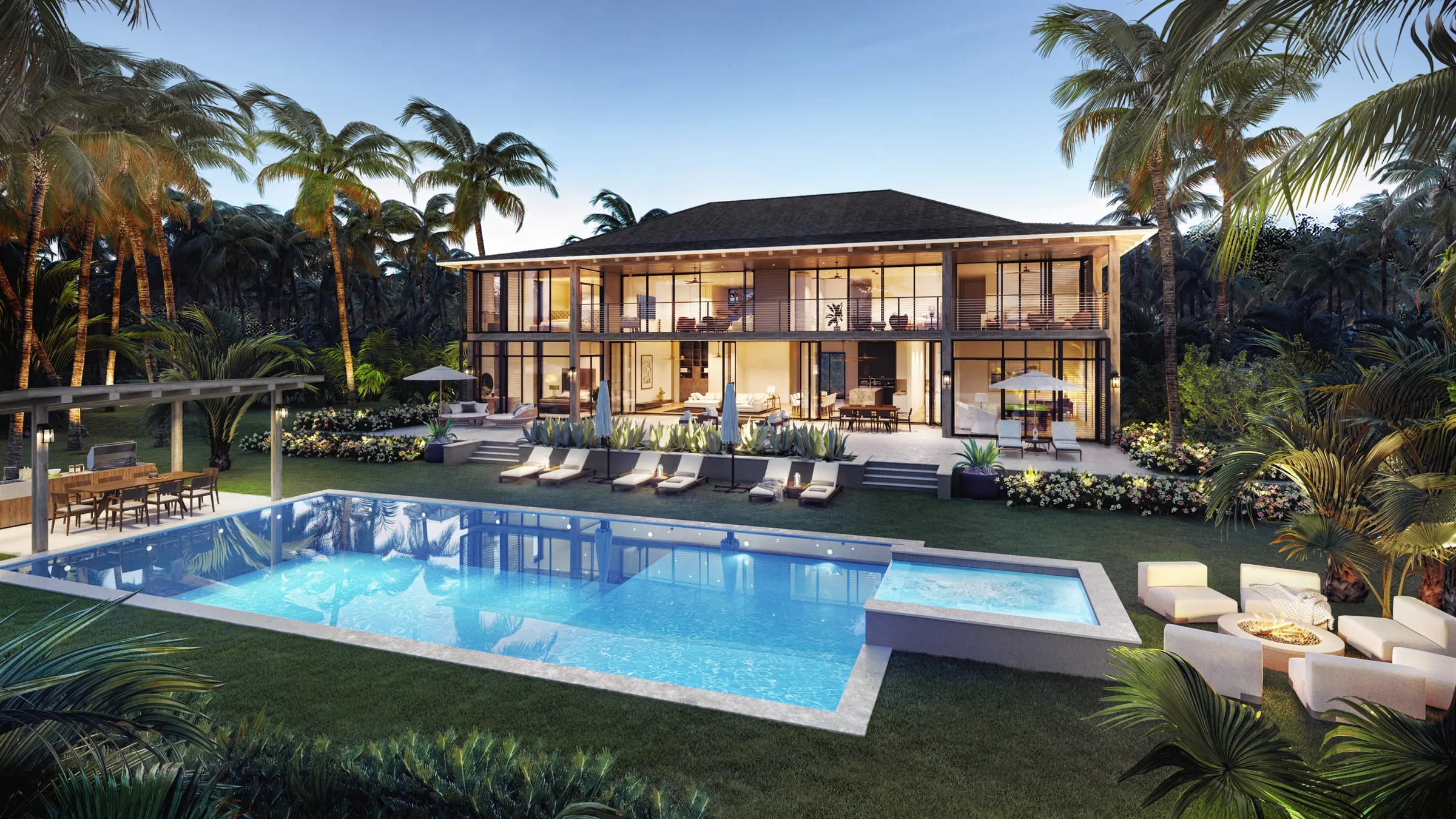
Set against a multimillion-dollar development, the imagery is a rounding error. A launch that stalls because the visuals did not carry it is not. That is the whole ROI argument, and it is the subject of our guide to pre-selling real estate with 3D visualization. The proof is in the work: Villa Solene at Apes Hill, Barbados, was relaunched on its renderings and floor plan and sold before it was built, which is exactly the outcome premium imagery is bought to produce.
[ Reading a quote ]
How to read a quote, not just the number.
Read a quote for how it is built. Options with reasoning attached, a Standard level, an editorial Premium level, and a hybrid that puts Premium on the hero shots, show a studio thinking about your outcome. A flat per-image price list is a commodity signal, and it anchors you low. Serious studios confirm pricing in a conversation about scope, because the right number depends on what the images have to do, not on a rate card.
A good quote also tells you what is included where it counts: the number of revision rounds, whether the white-model previews are part of the process, who will actually produce the work, and what usage rights you receive over the final images. If a quote is only a total with no scope behind it, you are not comparing studios, you are comparing guesses. For the fuller checklist, see our guide on how to choose a 3D rendering studio.
[ Spending well ]
How to spend less without buying cheap.
Controlling cost is not the same as cutting quality, and the levers that save money do not touch the result. Match the level to the purpose, so you pay for Premium only where an image has to sell. Plan your views together, because the model is built once and serves every image made from it. Arrive with a stable design and consolidated feedback, which is where the real overruns come from. And plan far enough ahead to avoid rush fees, which pay for overtime and extra render capacity rather than better work.
Every one of these protects the imagery while lowering the bill. What they have in common is that they ask you to be a better client, not the studio to be a cheaper one. That is the difference between spending less and buying cheap.
[ In practice ]
How the levels map to a real launch set.
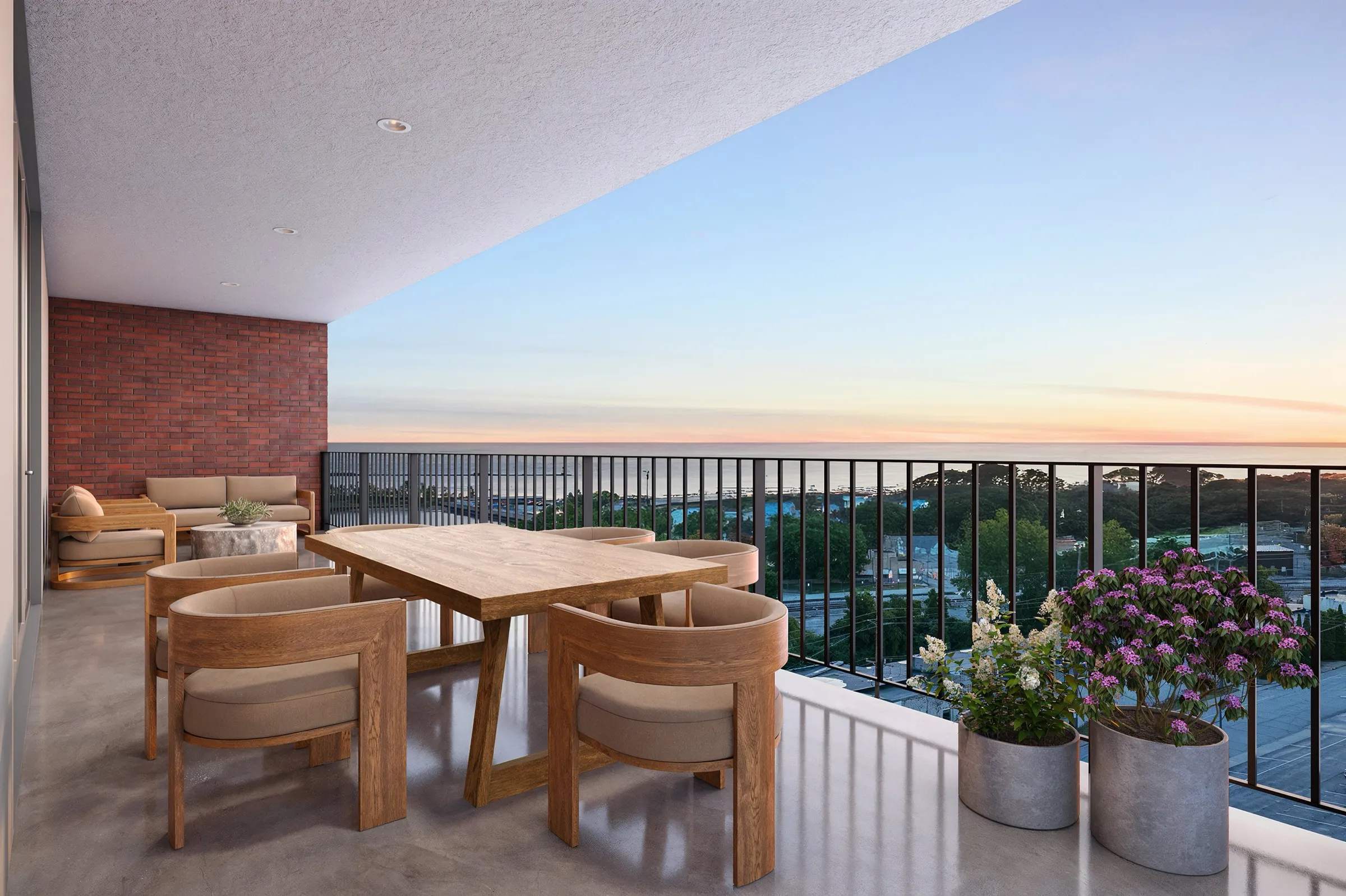
The split between Standard and Premium stops being abstract the moment you plan an actual set. Take a typical launch: a hero exterior, a few supporting exteriors, the primary interiors, and a group of secondary rooms and amenity views. The hero is where Premium earns its keep, custom modeling, editorial lighting, the frame that has to stop a buyer, because it carries the launch and the cover of the brochure. The primary interiors, the great room, the kitchen, the primary suite, usually justify Premium too, since those are the rooms where a buyer actually decides. The supporting exteriors and the secondary rooms are Standard: accurate, well lit, honest, there to inform rather than to seduce.
That allocation is the hybrid model, and it is where most of the budget discipline lives. Paying Premium for every secondary bathroom is money spent where no buyer is won, and running the hero at Standard to save a little is a false economy on the single image that does the most work. A studio thinking about your outcome proposes the split rather than quoting one level across the board, and it revisits the split as the phasing changes: more Premium for the launch moments, more Standard as the set fills out for completeness. Deciding the level image by image, against what each one has to do, is the most effective cost lever on the whole project.
It is also why a flat per-image rate card misleads. A rate card implies every image is the same unit of work, when the hero and the secondary bathroom are different jobs at different levels. Price the set the way you plan it, by what each image is for, and the total stops being a mystery and becomes a decision you control.
[ Premium in practice ]
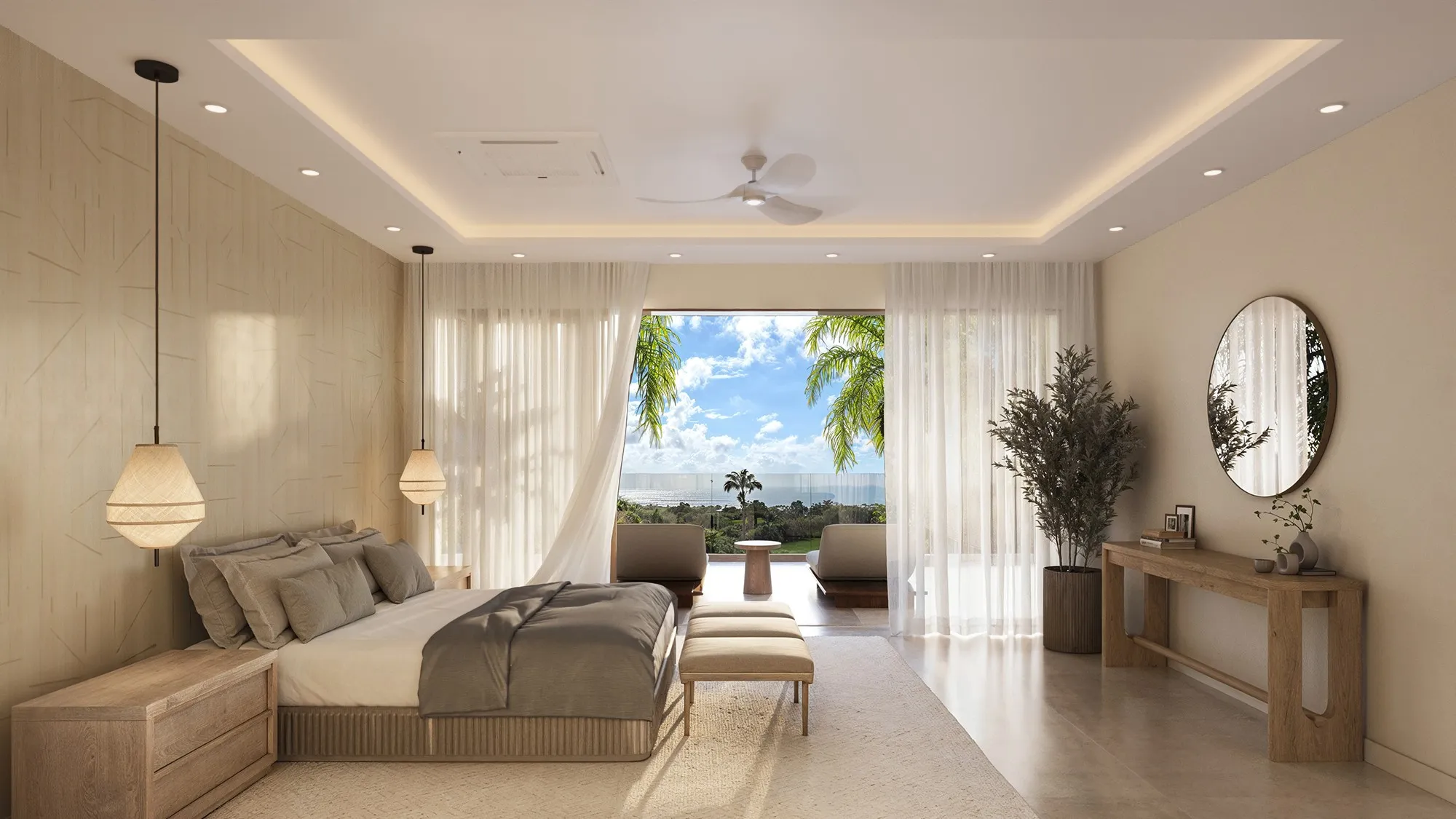
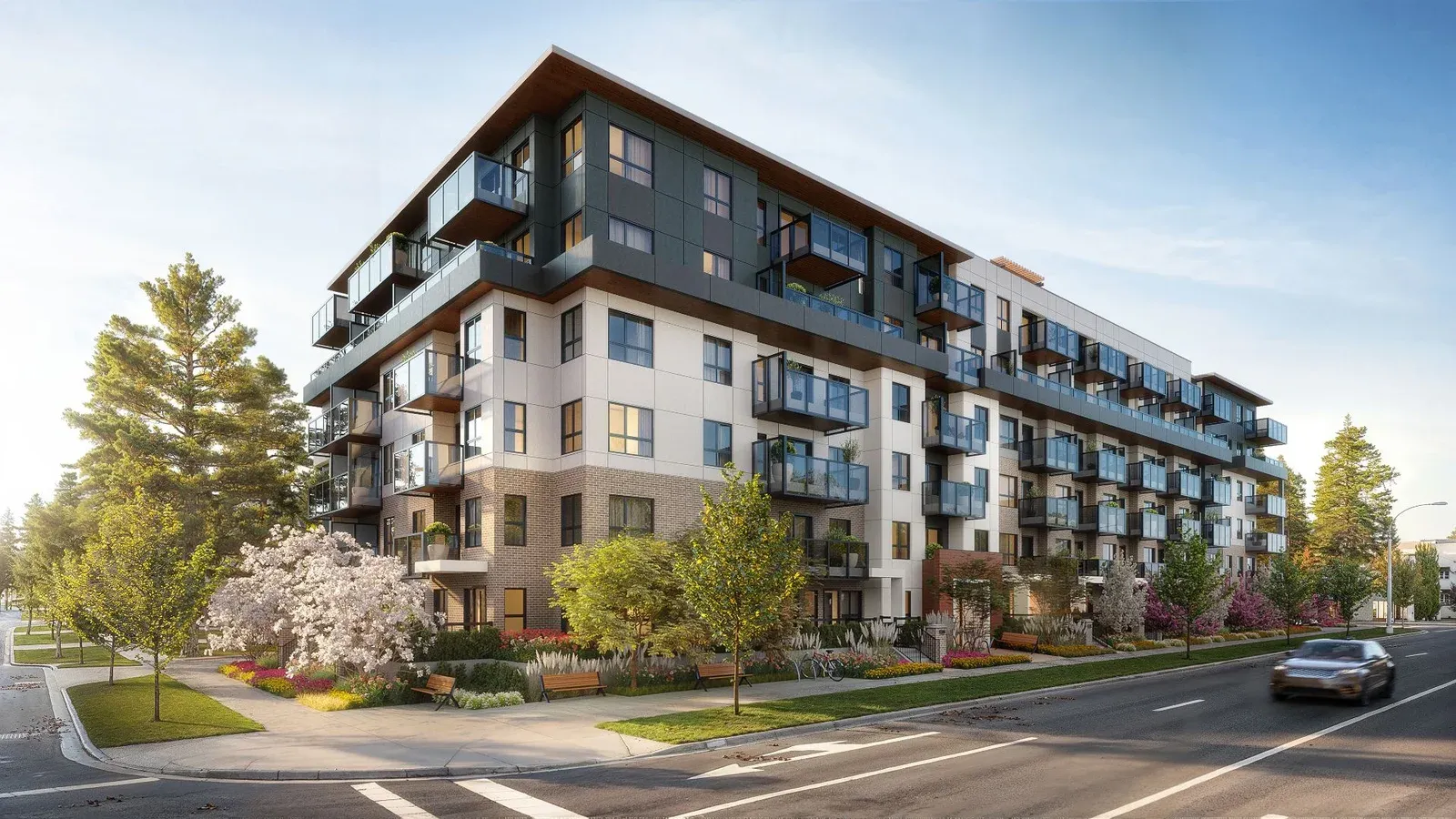
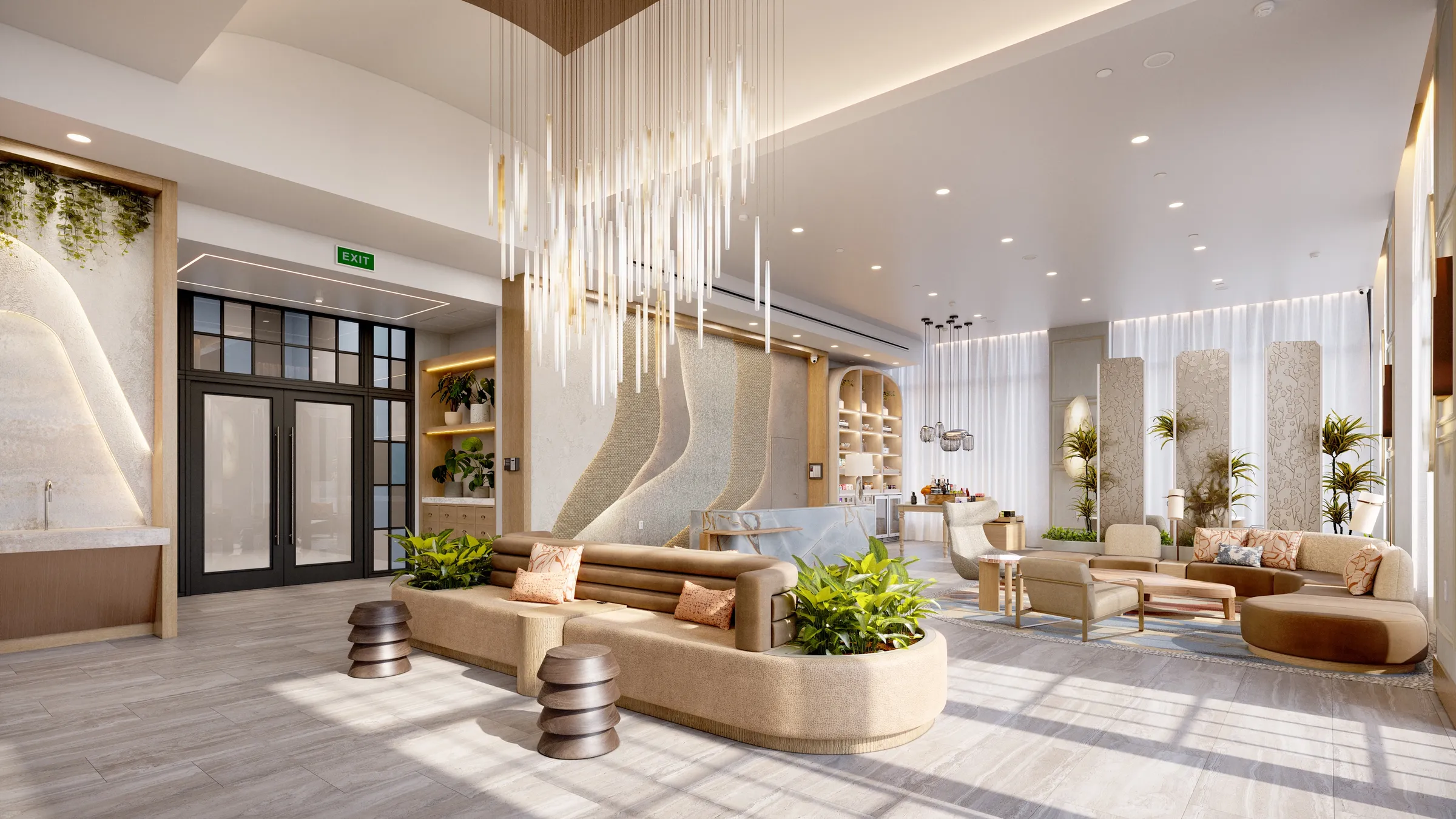
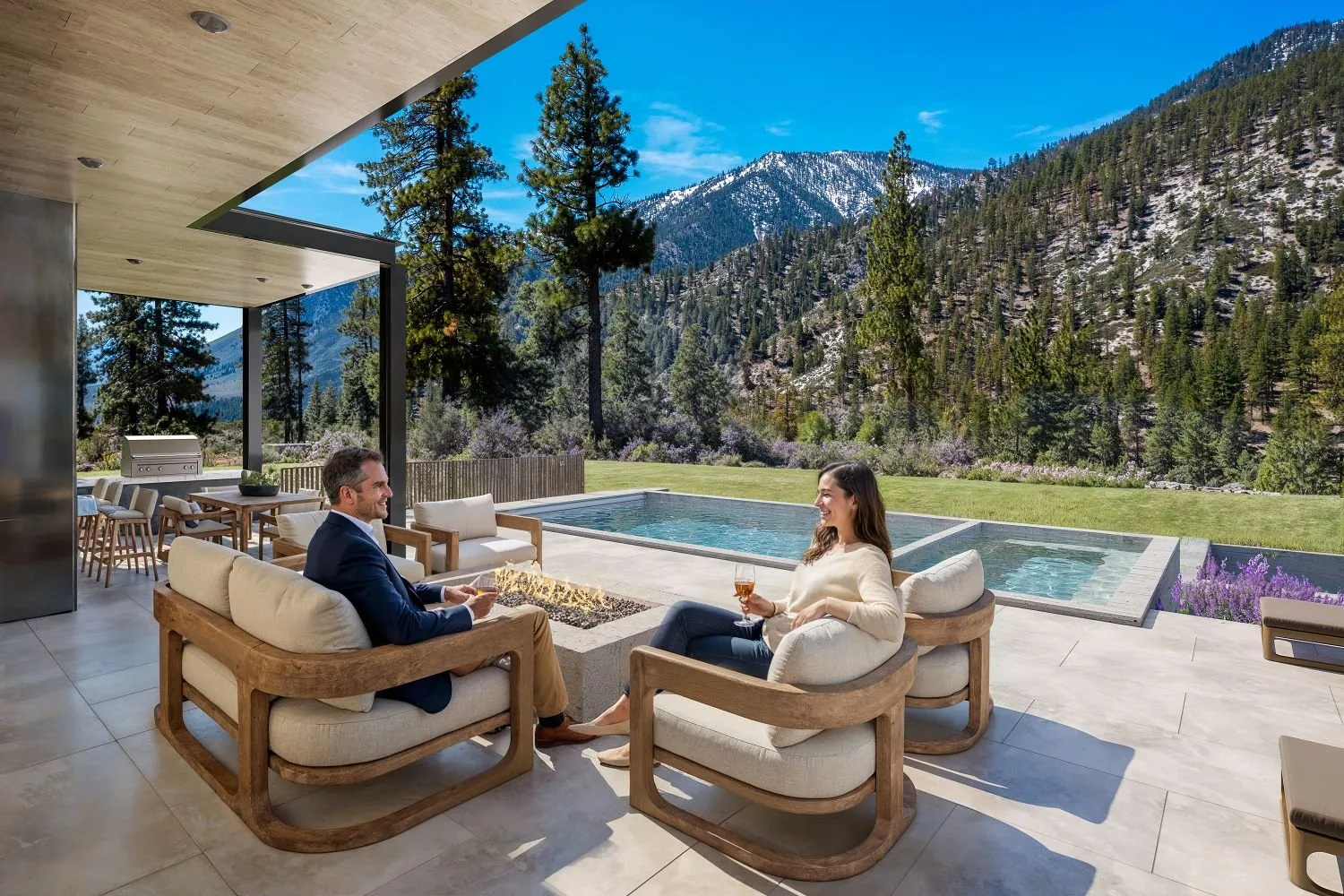
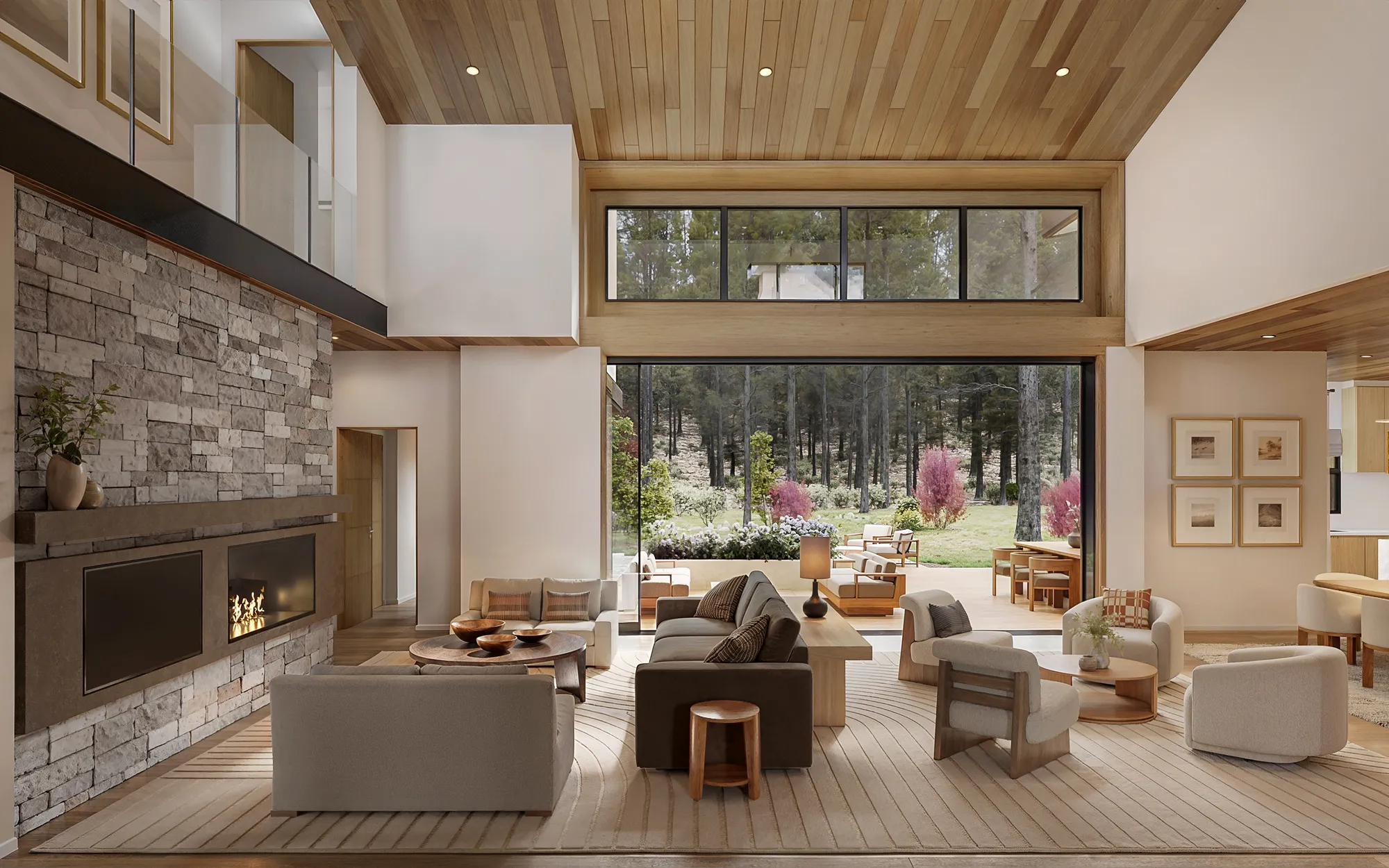
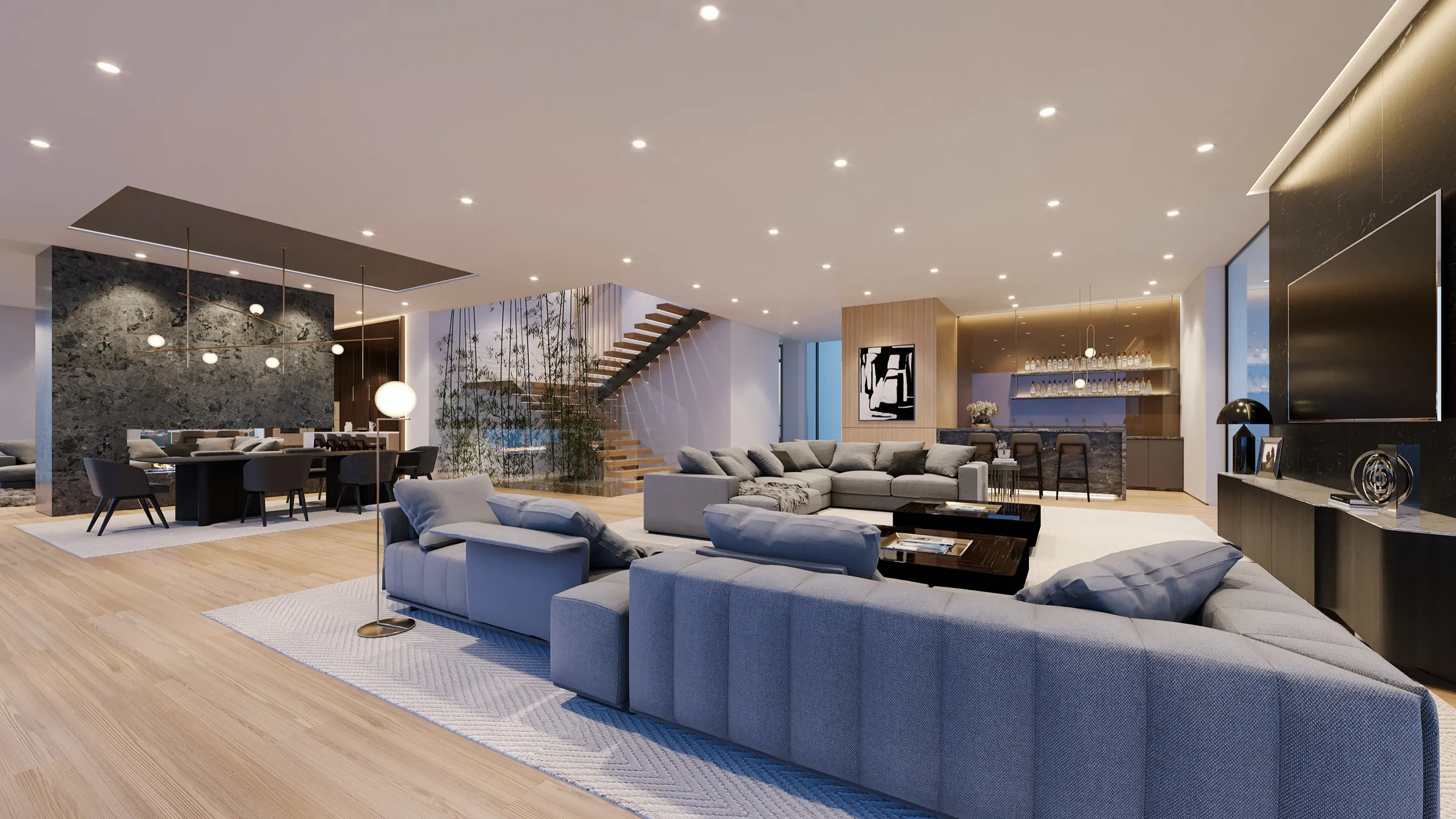
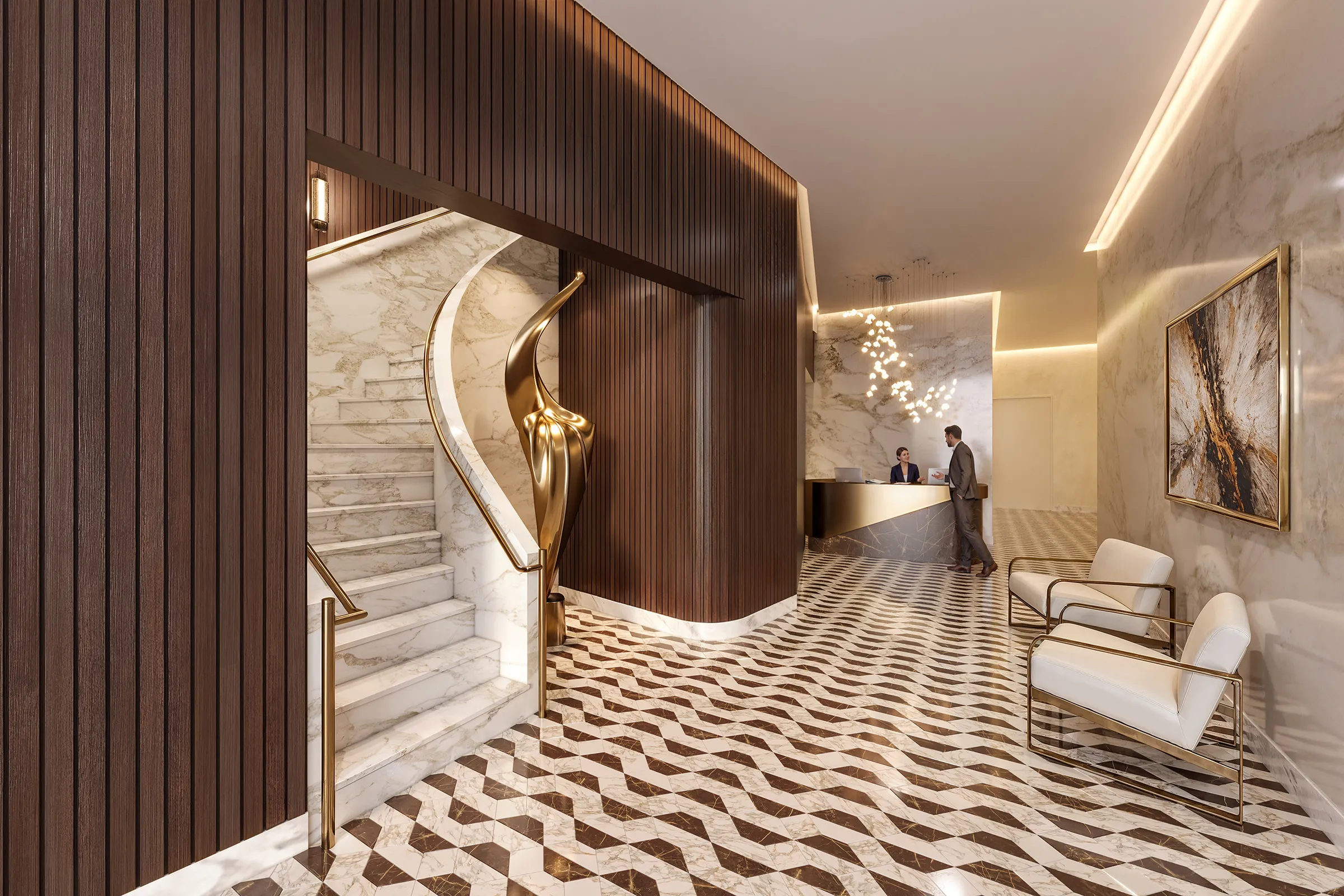
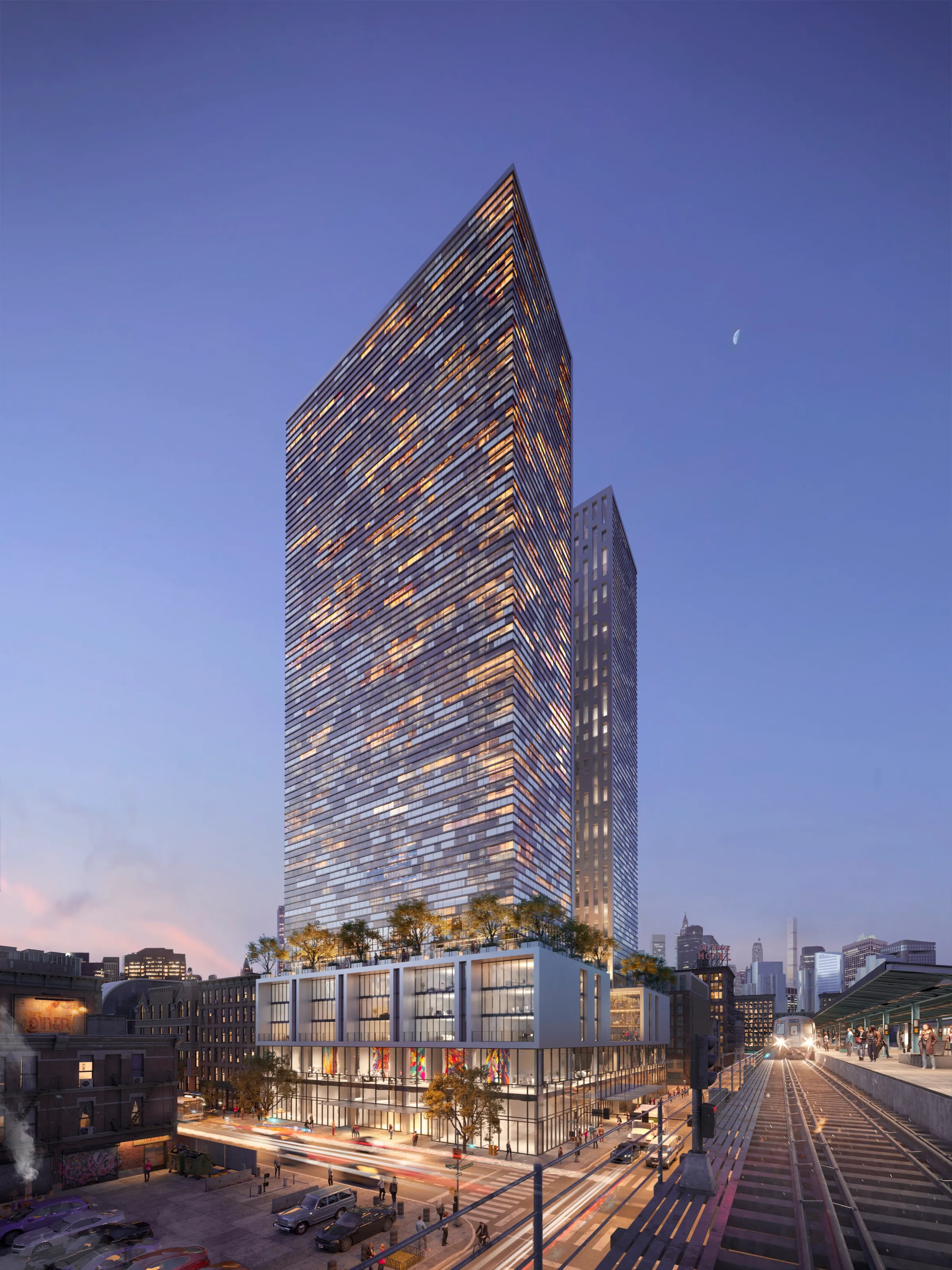
What the spend looks like in the work.
Frequently asked questions
How much does premium 3D rendering cost?+
It depends on scope and on what the images have to do, so we price a project in a conversation about it rather than from a flat list. For general market ranges by image type, our cost of renderings guide has the numbers; this guide covers why premium costs what it does and when it pays for itself.
Why is a premium rendering more expensive than a cheap one?+
You are paying for the things a budget studio cuts: the styling and finish details a buyer reads as quality, custom-modeled furniture matched to spec, lighting used as a storytelling tool, senior people producing the work in-house, and the process that happens before the image, including the white-model step that prevents expensive mistakes.
Is premium worth it for every image?+
No, and a good studio will tell you so. Match the level to the purpose. Most projects use a hybrid: Premium for the few hero shots that have to sell, and Standard for the supporting views that only have to inform. Paying for the top level everywhere is one of the most common ways to overspend.
What is the real cost of choosing the cheapest studio?+
On a project where the images carry the launch, it is not the invoice. It is a set that fails to sell and then a relaunch: new images, new weeks in the market, and an asking price already anchored by weak visuals. The gap between a cheap render and a strong one is small in dollars and large in effect.
Do you give per-image prices?+
We quote per project after a discovery call, because the right number depends on the property, the buyer, how many images and of what kind, and the deadline. A flat per-image list treats renderings as a commodity and anchors you low.
What factors affect the cost of 3D rendering?+
The number of views, the production level (Standard or Premium), scene complexity, how much furniture is custom-modeled, how finished the design is, changes after approval, the deadline, and the deliverable type. The table on this page explains each one and how to keep it under control.
Does a rush deadline cost more?+
Across the industry, usually yes. Rush fees pay for overtime and extra render capacity, not better images. Working back from the launch date and arriving with a resolved design is the simplest way to avoid them.
Where can I find typical rendering prices?+
Our cost of renderings guide lists general market ranges by image type. We do not publish our own prices, because the right number depends on what the images have to do.
What makes a rendering pay for itself?+
Stronger pre-sales absorption, holding the asking price against a well-funded competitor, smoother approvals, and stronger investor confidence. Next to a multimillion-dollar launch, the cost of the imagery is small, and the cost of a launch that stalls because the visuals did not carry it is not.
[ Proof ]
What premium buys, and what stands behind it.
- 10+ years in business, 500+ projects delivered, 150+ clients.
- 40+ Google reviews, every one five stars. Read them.
- A team of twenty to thirty people, all in-house. No subcontracting.
- Coverage in Boston Magazine, Apartment Therapy, New York YIMBY, MSN Money, Vancouver Magazine, and KX News.
[ Explore further ]
Who it's for
- Years in business
- 10+
- Projects delivered
- 500+
- Clients
- 150+
[ Start here ]
Every project starts with a discovery call.
Start with a discovery call. We will learn the project, who you are selling to, and quote the work around what the images actually need to do.
Book a call