

[ Pillar guide ]
What 500+ projects taught us about 3D rendering.
Most rendering advice online is generic, because most of it is written by people who have not done the work at scale. This is different. Over more than a decade and 500-plus projects, the same truths keep showing up, in the emails, on the calls, in what clients get right and get wrong. Here is what the work itself taught us.
Updated
[ Start here ]
Patterns, not theory.
Everything below is drawn from real projects: luxury homes, branded residential, resorts, offices, and repositioning work, for developers, agents, architects, and design teams across the country and worldwide. We have changed no facts and named no clients. What we have done is notice what repeats.
These are the lessons a studio only learns by delivering hundreds of projects, not by writing about a handful. Some will make you a better client of any studio you hire. Some explain why good visualization is worth what it costs. All of them are true to how the work actually goes.
- The rendering is rarely the bottleneck. Decisions and feedback set the calendar.
- The white model is the cheapest place to be wrong, so we lock the shape before we add the finish.
- Quality lives in the details a cheap studio skips, because that is what a buyer reads as real.
- Accuracy is the product, so we build from real files and real specs, not from a PDF or a guess.
- A rendering has a job: sell off-plan, win the room, raise the money.
- One good project becomes ten. Repeat work and referrals are how a studio reaches five hundred.
01
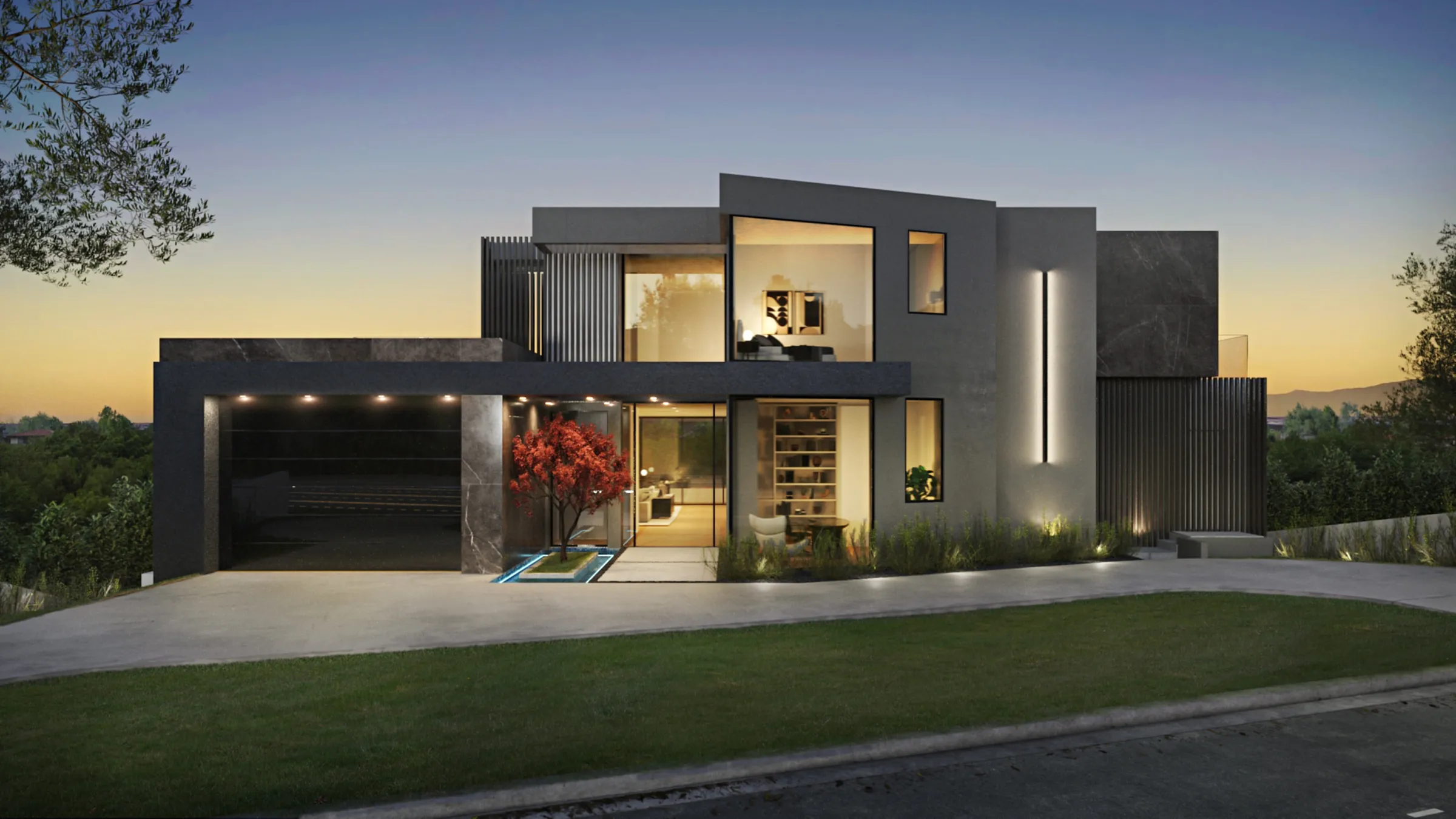
The rendering is rarely the bottleneck. Decisions set the calendar.
This is the single most consistent thing five hundred projects taught us, and almost nobody says it out loud: the rendering itself is rarely the bottleneck. What stretches a project across weeks or months is the time spent waiting on decisions, and those decisions are almost always on the client’s side, not ours.
A finish selection that is still being made. Feedback that has to loop through an architect, an interior designer, a partner, a board, or an investor before it comes back. A project that pauses while a developer closes on the property. We have had jobs where the active work was a couple of weeks and the calendar ran the better part of a year, entirely in the gaps between rounds. Add up the hours we actually spent and they match the estimate. The elapsed time is a different number, and the difference is feedback latency.
Clients often see it themselves. More than one has kicked off a new project by apologizing for the last one and saying, plainly, that the delay had been theirs. The honest ones name it: the timeline they plan for and the timeline that is realistic are two different things, and the gap between them is how fast their own side can decide.
The proof runs the other way too. When a client trims and locks their inputs before handing them over, the same work collapses to a fraction of the calendar. We have watched an animation drop from six to eight weeks down to three, with no change to the actual production, purely because the client made their decisions first. So the most useful thing you can do to keep a rendering project on schedule is not to push the studio. It is to gather your selections, consolidate your feedback, and decide.
02
The white model is the cheapest place to be wrong.
Before we apply a single material or light, we show the project as a plain, untextured white model: every camera angle, the geometry, the composition. You approve it there, where a change costs almost nothing. It is the least glamorous stage and the one that saves the most money, and clients who have been burned before are the ones who value it most.
What it catches is rarely just aesthetic. On real projects the white model has surfaced a missing wall of windows, an entrance road modeled flat that was actually several feet lower than the ground around it, plates and finishes that did not match the real product, and, on one luxury home, a ceiling detail that would have collided with the tall windows and doors once built. Because the windows had not yet been ordered, the builder used what the model revealed to adjust the real construction and avoid a change order. A marketing rendering paid for itself before it was even finished, by catching a build problem while it was still cheap to fix.
It is also, surprisingly often, the moment a client falls in love with the project. We have delivered plain grey massing views and had clients write back the same day, thrilled, before a single pixel was rendered in color. When a studio skips this step, usually under deadline pressure, the predictable small errors simply resurface later at the expensive color stage. Skipping it is sometimes the right call. It should always be a conscious one.
03
Quality lives in the details cheap studios skip.
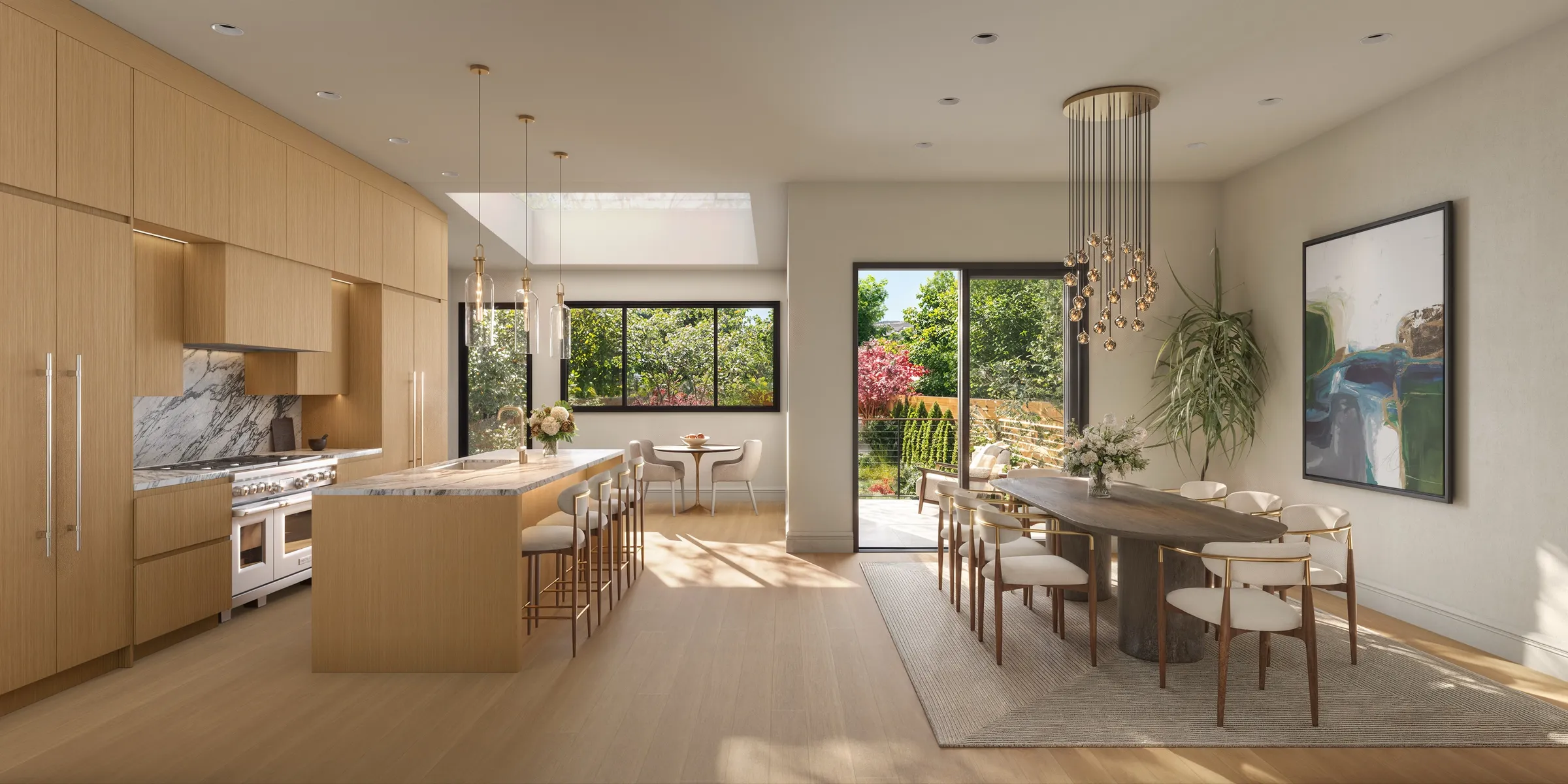
Ask an experienced developer how they spot a budget studio and they will not point at the architecture. They point at the bowl of fruit on the counter, the art on the walls, the props, the finishes. That is where a cheaper studio cuts, because those things are slow and easy to fake badly, and that is exactly what a buyer reads, consciously or not, as quality. As one client put it, a less expensive company always struggles to make the artwork look good, so they buy stock and reuse the same pieces across every image.
Sign-off on serious projects happens at that level of detail. We have taken real notes asking us to make apples less red because they looked like tomatoes, then to fix the bowl so the apples did not appear to float. To make copper show its age rather than shine like a new penny. To give marble fewer veins and more white. To reduce the plates on a restaurant table, because one bottle of wine per table was plenty. A cedar-shake roof held up a delivery because it read as plain siding unless you zoomed in. These are not fussy clients. They know their own buyers will study the images and assume the finished home looks exactly like them.
And photoreal is not the finish line. A render can be technically flawless and still fail, if the building you are selling disappears into its own backdrop. One developer rejected an inherited image that was perfectly realistic because, in the wider skyline, nobody could tell which tower was theirs. Getting the context right, the true color of the water, the light at the right time of day, so a buyer feels they are standing there, is a separate skill from raw realism, and it is often what actually sells the place.

04
Accuracy is the product, not the decoration.
The job is not to make something pretty. It is to make something true, that also happens to be beautiful. That is why we build from real files, a CAD or Revit or SketchUp model and the fuller design package where it exists, and why a PDF, however detailed, is reference and not a thing we can build from. When a finish is ambiguous we ask for the exact specification rather than eyeball it, because the difference between honed and sandblasted stone, or the direction a hardwood plank runs, is the difference between a render a buyer trusts and one they catch out. On repeat projects, clients hold a physical sample up to the webcam so the color in the image matches the color in the world.
Clients notice, and value, the accuracy for its own sake. One told us his renderings from us were sometimes too accurate, and meant it as the highest praise, because seeing the design built truthfully in 3D had shown him real problems he could then go and fix. That is the quiet second job of a good rendering: it is the first place a design is forced to be honest with itself, before anyone breaks ground.
05
A rendering has a job: sell, win the room, raise the money.
Renderings are almost never commissioned to decorate. They are commissioned to do a specific, dated job, and the best clients are clear about which one. The most common is to sell what does not exist yet: developers pre-sell homes off-plan straight from the images, sometimes to buyers on another continent who will never see anything but the renderings until they arrive. We have made images to sell empty lots on the strength of approved plans, and images of homes that a client deliberately declined to furnish because the plan was to sell off the renderings before spending a dollar on staging.
Just as often, the images are made to win a room. Developers project them on a city’s own screen at a design-review hearing, and correct them beforehand to reflect exactly what will be built so there are no inconsistencies under questioning. Architects race drafts into their own client meetings. Teams put early images in front of investors to raise capital, and tune them until the deal reads as feasible rather than a stretch. One developer said it plainly on a call: millions were already committed, and if they could show the approving body with confidence what the project would look like, they believed they would get approved. The rendering was not marketing. It was the argument.

06
The cure for endless revisions is one room, not more rounds.
Revisions do not spiral because the studio is careless. They spiral because feedback arrives one stakeholder at a time, and one person’s change quietly contradicts another’s. We have watched a project go several rounds with comments coming separately from a designer, an architect, and a director, each undoing a little of the last. What finally closed it was a single call with everyone present, handing over every comment at once. The savviest clients insist on exactly this, and refuse to trickle changes.
Experienced clients also protect their rounds. They know a real project takes more than two small tweaks to get right, and they negotiate the round count honestly up front rather than pretending. They batch their comments so a trivial change, moving one object, does not burn a revision they might need later. And a good studio meets them halfway: correcting something against the brief is our error, not a round, and small tweaks at the white-model stage should never be counted as one. The number of revisions is where quality lives, so both sides do better by being straight about it.
07
One good project becomes ten. That is how you reach five hundred.
Five hundred projects is not five hundred one-time clients. It is roughly a hundred and fifty clients, many of whom came back again and again. A single home turns into a whole community. A product client returns across two years for the next launch and the next. An agent sells one property off our renderings, then brings the two developments next door. The strongest testimonial in this business is not a quote. It is the next purchase order.
That compounding is worth understanding as a client, because it is a signal you can check. Repeat business and unprompted referrals are the clearest evidence that a studio’s work holds up over time and under real stakes, in a way a highlight reel never proves. The clients who choose well tend to test a studio on a single project first, and then, when it works, expand and refer. Being the studio someone tries first and comes back to is the entire game, and it is the honest reason the project count climbs into the hundreds.


[ The part that surprises people ]
Sometimes the honest move is to make it less flattering.
You might expect clients to always push for more drama, a bigger view, a better car in the driveway. The good ones do the opposite when it matters. A broker asked us to remove an invented mountain view from a back room and put the real retaining wall back, so the image stayed transparent to a buyer. Developers swap flashy exotic cars for ordinary ones so the scene reads as a real place where a real person lives, not a fantasy. On an entitlement drawing, an architect caught himself softening a neighbor’s true height and asked us to model it honestly instead.
This is not caution. It is the understanding that a rendering is a promise. Buyers treat the image as what they will actually get, down to expecting the landscaping berm that was drawn in the front yard. The studios and clients who last are the ones who keep the picture true, because the alternative is a very expensive conversation on move-in day.
[ What is changing ]
Now clients arrive with AI images, and hire us for the truth.
This is the newest pattern, and honestly it did not exist in our older work. In the last couple of years, more and more clients arrive having already made their own AI images, and then hire a studio precisely because those images will not survive scrutiny. The AI look right at a glance and fall apart on inspection: one had invented a building expansion the site physically could not allow, another placed windows wrong and got a product’s scale wrong against its building. As one client said, they look really good at first, and then you look harder and start to see the little things that are off.
So the line is settling in a useful place. AI is where a client explores an idea, and increasingly even how they find a studio, by asking an assistant which one to use. A studio is where the idea becomes accurate enough to sell from, win an approval with, or raise money against. The tools will keep getting better. What has not changed across five hundred projects is that when the image has to be true, the accountability for it is human. For more on that line, see our guide to choosing a 3D rendering studio and our article on AI for architects.
[ Five hundred projects, a few of them ]
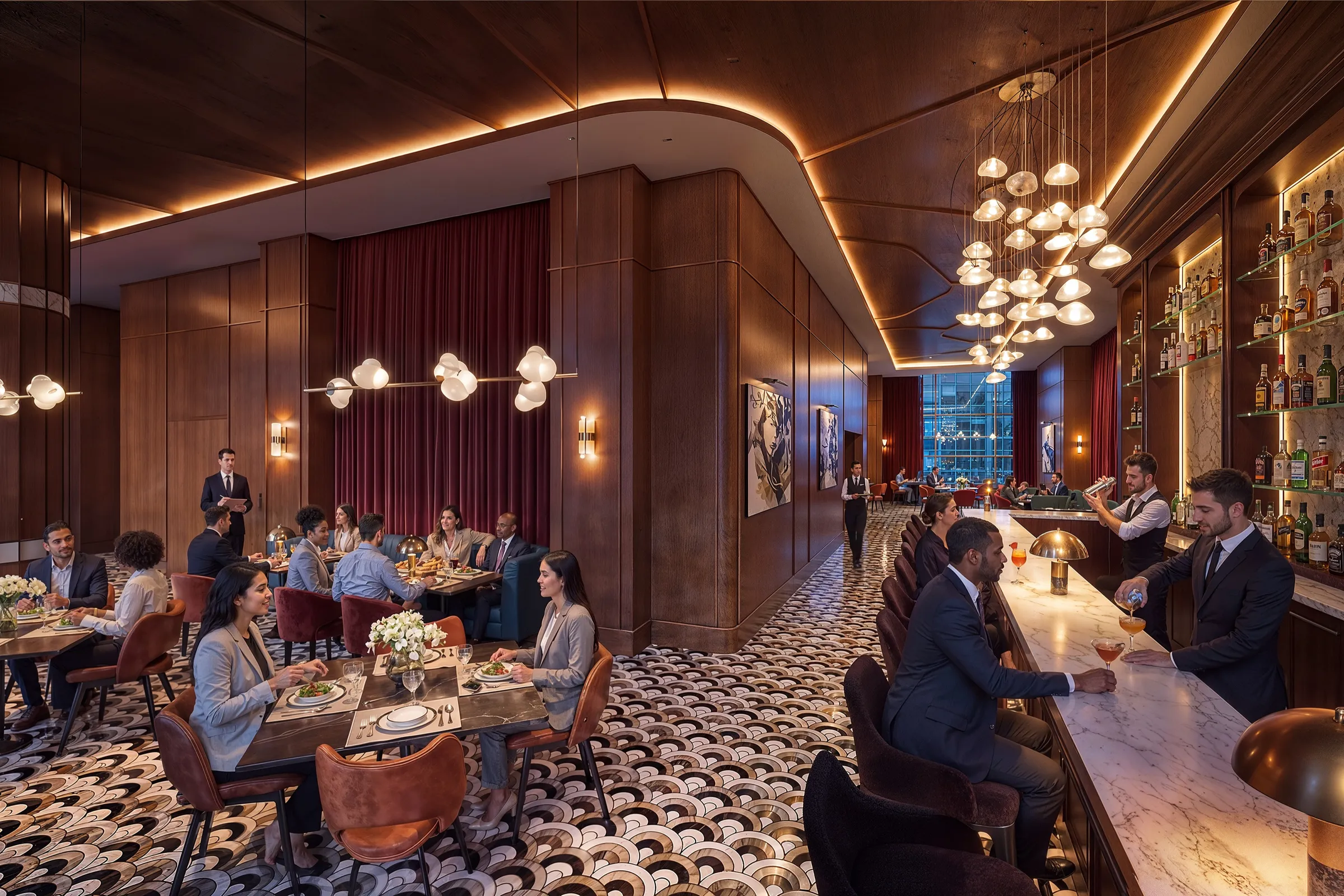
The lessons come from work like this.







Frequently asked questions
How long does a rendering project actually take?+
It depends on the size and readiness of the project, and the schedule is confirmed in the proposal once we understand the scope and your deadline. The calendar length depends almost entirely on when decisions and feedback come back. Feedback speed is the single biggest variable in the timeline.
Why do some projects run for months?+
Almost never because the rendering is slow. Projects stretch while they wait on the client’s own decisions and sign-off chain: finish selections that are still being made, feedback that has to loop through an architect, an interior designer, a board, or an investor. Add up the active working time and it matches the estimate; the gaps in between are what make the calendar long.
What is the white-model stage, and why does it matter?+
It is an untextured preview of every camera angle, shown before any light or material goes on. You approve the geometry and the framing while changing them costs nothing. It is where problems get caught cheaply, and on real projects it has caught everything from a missing wall to a window height that would have clashed with the ceiling once built.
How do revisions really work?+
Rounds are defined in the proposal. Correcting something against the brief is not a revision; a change you request is. The surest way to close a set on schedule is one consolidated review with every decision-maker giving their comments at once, rather than feedback trickling in from several people over several weeks.
Can a rendering really sell a home before it is built?+
Yes. Developers routinely pre-sell off-plan from the images, sometimes to buyers who only ever see the renderings. The same images are also used to win planning approvals and to raise capital from investors, which is often the real reason they are commissioned.
Can you work from a PDF?+
A PDF is useful reference, but it cannot be imported and built from. We model from CAD, Revit, or another 3D file, and match finishes to real specifications. If a finish is ambiguous we ask for the exact spec rather than guess, because a render that guesses is a render that misleads.
[ The five hundred ]
The record the lessons come from.
- 10+ years in business, 500+ projects delivered, 150+ clients.
- 40+ Google reviews, every one five stars. Read them.
- A team of twenty to thirty people, all in-house. No subcontracting.
- Coverage in Boston Magazine, Apartment Therapy, New York YIMBY, MSN Money, Vancouver Magazine, and KX News.
[ Explore further ]
Who it's for
The pillar guides
- Years in business
- 10+
- Projects delivered
- 500+
- Clients
- 150+
[ Start here ]
Every project starts with a discovery call.
Start with a discovery call. We will learn the project, who you are selling to, and the calendar you are working against.
Book a call