
Case study
Austin Surf Club
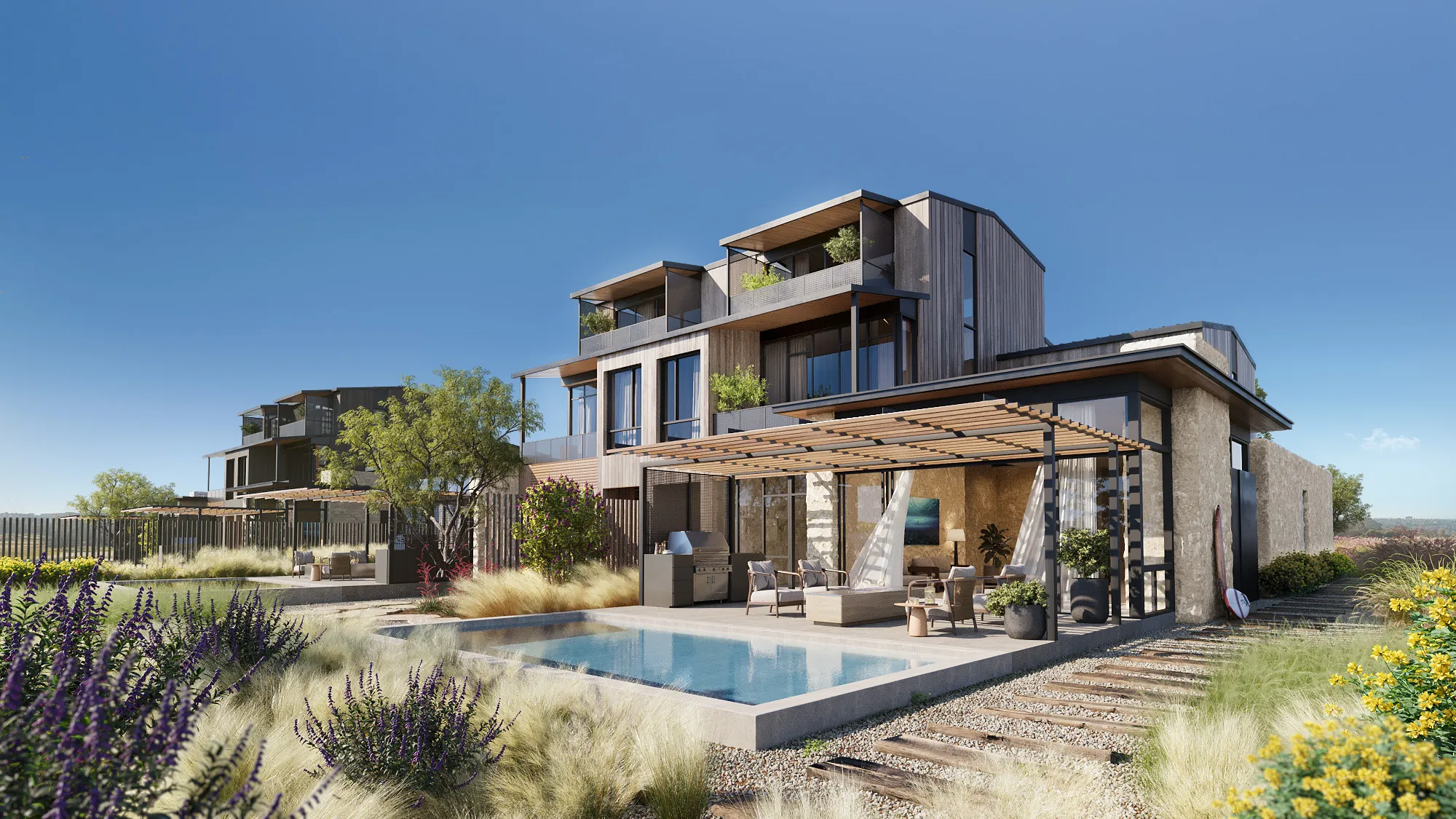
A members-only surf community from Discovery Land Company and pro surfer Kelly Slater, planned on the former NLand Surf Park site, where one material language carried across cottages, duplexes, suites, and more, then went straight into the club's marketing.
Project at a glance
Austin Surf Club is a members-only surf community from Discovery Land Company and pro surfer Kelly Slater, designed as several distinct home types around a man-made surf basin. NoTriangle produced its visualization phase by phase, turning an evolving design into renderings the club could market and decide from while the architecture was still being refined.
- End client
- Discovery Land Company
- In partnership with
- Kelly Slater
- Location
- Austin, Texas
- Asset type
- Members-only surf community
- Home types
- Cottages, duplexes, suites, and more
- Material palettes
- Wave, Cliff, Sand
- Scope
- 40 renderings across 20 homes
- Deliverables
- 2K then 4K, plus layered PSD files
- Engagement
- Phased, three scopes from 2024 to 2025
- Status
- In development; construction paused in April 2026
The challenge
Many Homes That Had to Feel Like One Place.
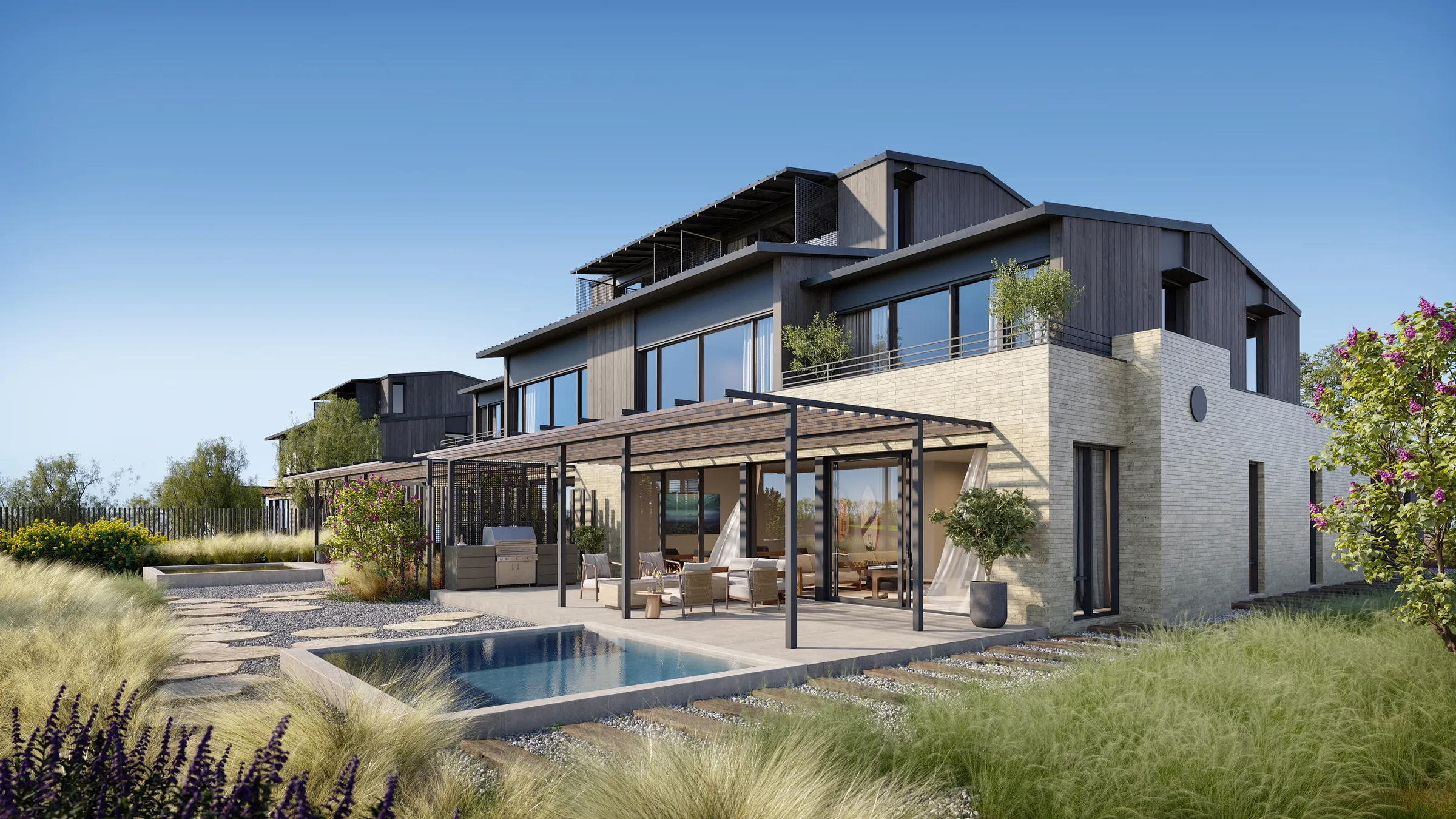
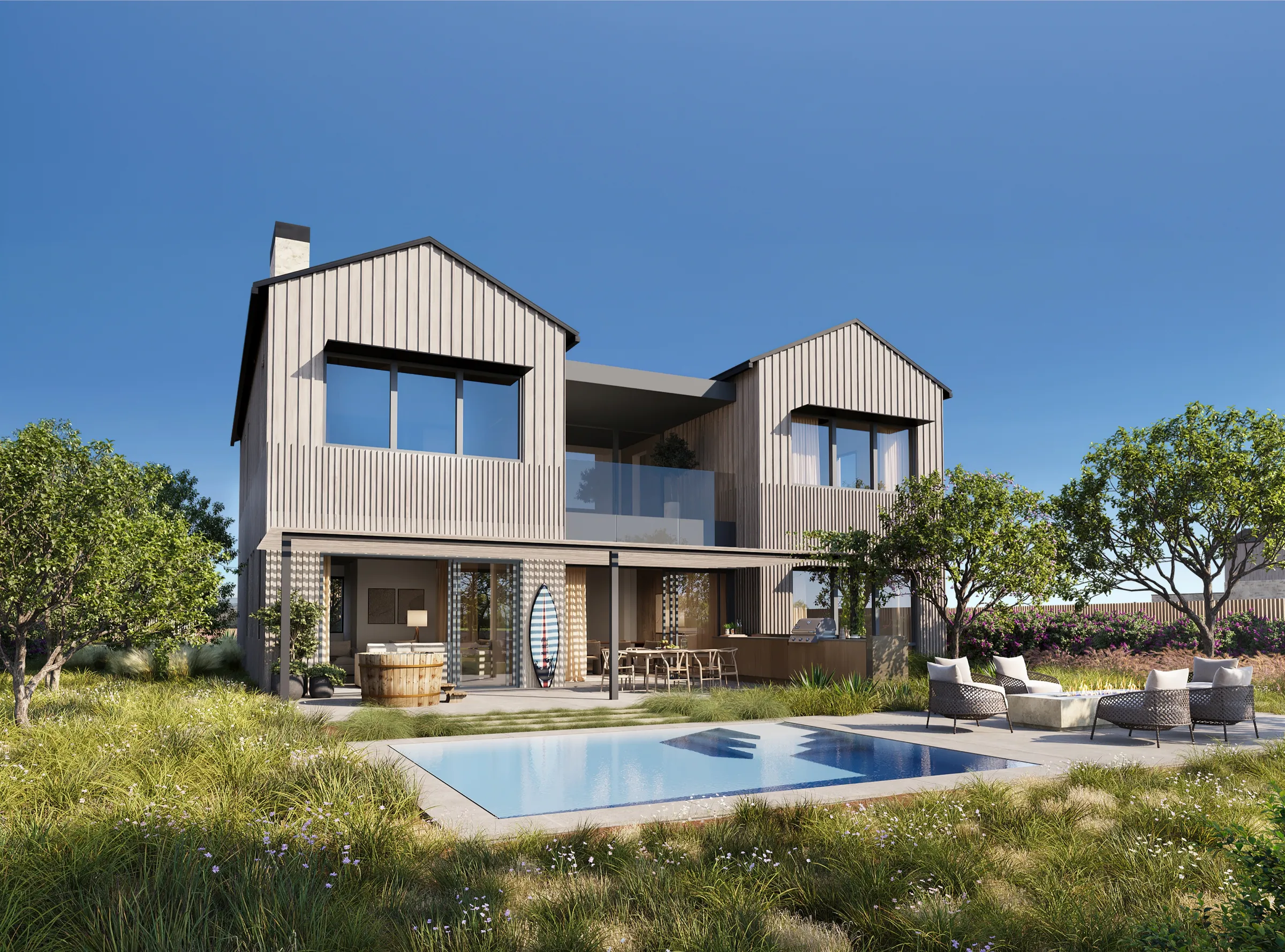
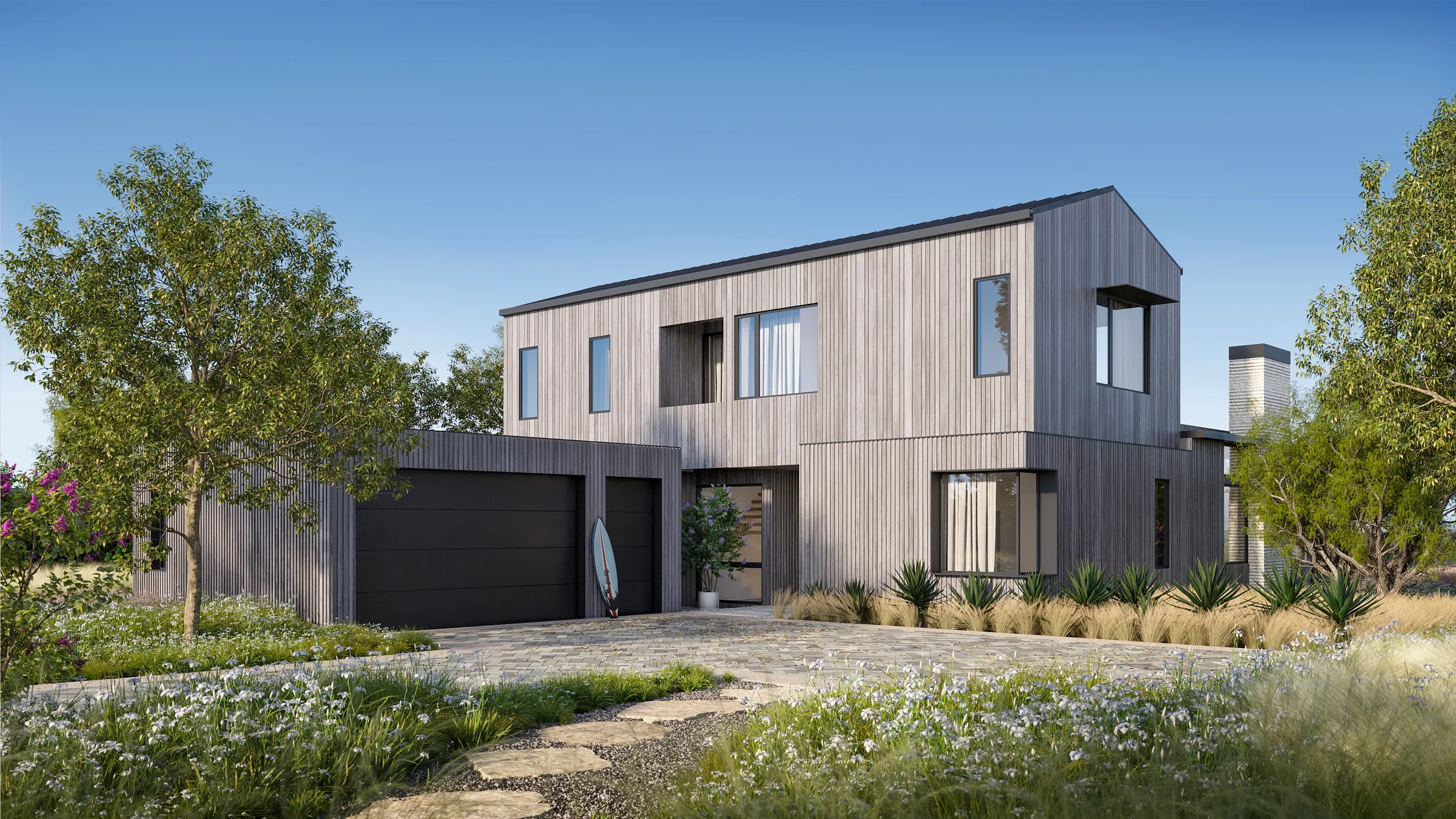
Austin Surf Club was not a single building but a community of homes, cottages, duplexes, and suites, that all had to read as one place. The architecture was still being refined when visualization began, and the developer needed renderings they could use right away: to market the homes, to align the design team, and to help members make decisions about their own residences.
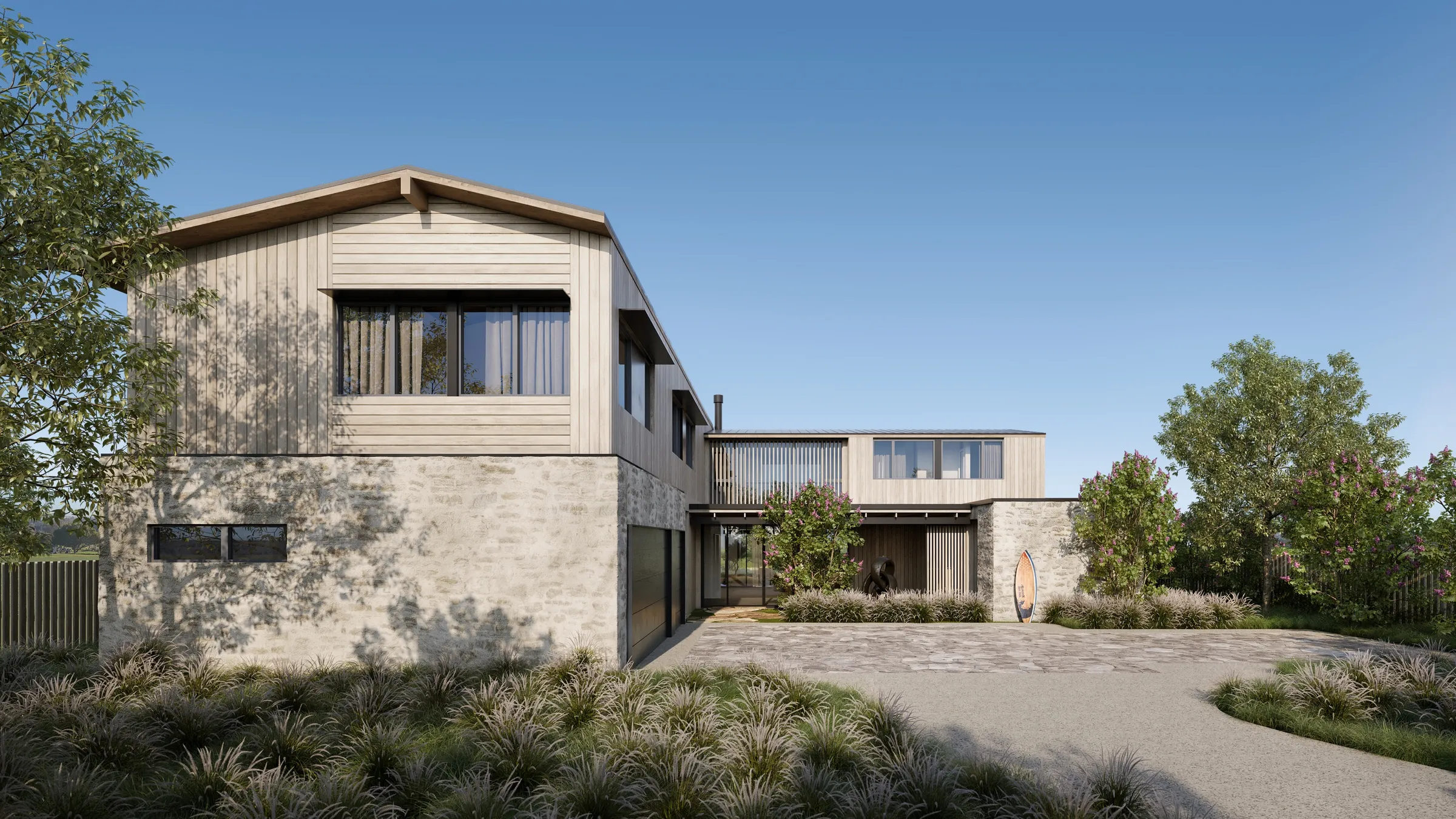
Several things made that hard. Each home had its own massing, but the community had to feel like a single, coherent destination rather than a set of unrelated buildings. Materials, rooflines, and landscape were still being decided, so the renderings had to keep pace with the changes instead of waiting for a final, frozen design. The homes drew on a set palette of stone, timber siding, and tongue-and-groove cladding, following the project architects' design intent, and every view had to stay true to it while still introducing contrast between homes.
The schedule was tight. The team was producing and presenting renderings on a timeline set by the club's sales events.
The approach
A Repeatable Process, One Home at a Time.
We ran the work as a structured, repeatable process rather than a one-off batch of images, so each home could move from concept to final visual without losing the thread that tied the community together:
- 01White model first, then color. For each home, the camera angles and massing were locked in a white model before any material or color was applied, so the developer approved the composition before we committed to a full render.
- 02A feedback call per home. Rather than trade revisions by email, we held a working call for each house to resolve materials, lighting, and landscape together, which kept a tight schedule from turning into rework.
- 03Consistent angles and light. Camera positions and lighting were held steady across schemes A and B, so two material directions for the same home could be compared like for like, and whole sets were re-lit from a flat midday to a warmer golden hour when the marketing called for it.
- 04Built to keep using. Each view was delivered first at 2K to meet the sales-event dates, then upgraded to 4K, and handed over as layered files the club's marketing team could adjust on its own.
Because every home moved through the same stages, the renderings could keep pace with an evolving design while the community held together visually, one house at a time.
The palettes
Wave, Cliff, and Sand: One Family of Materials.
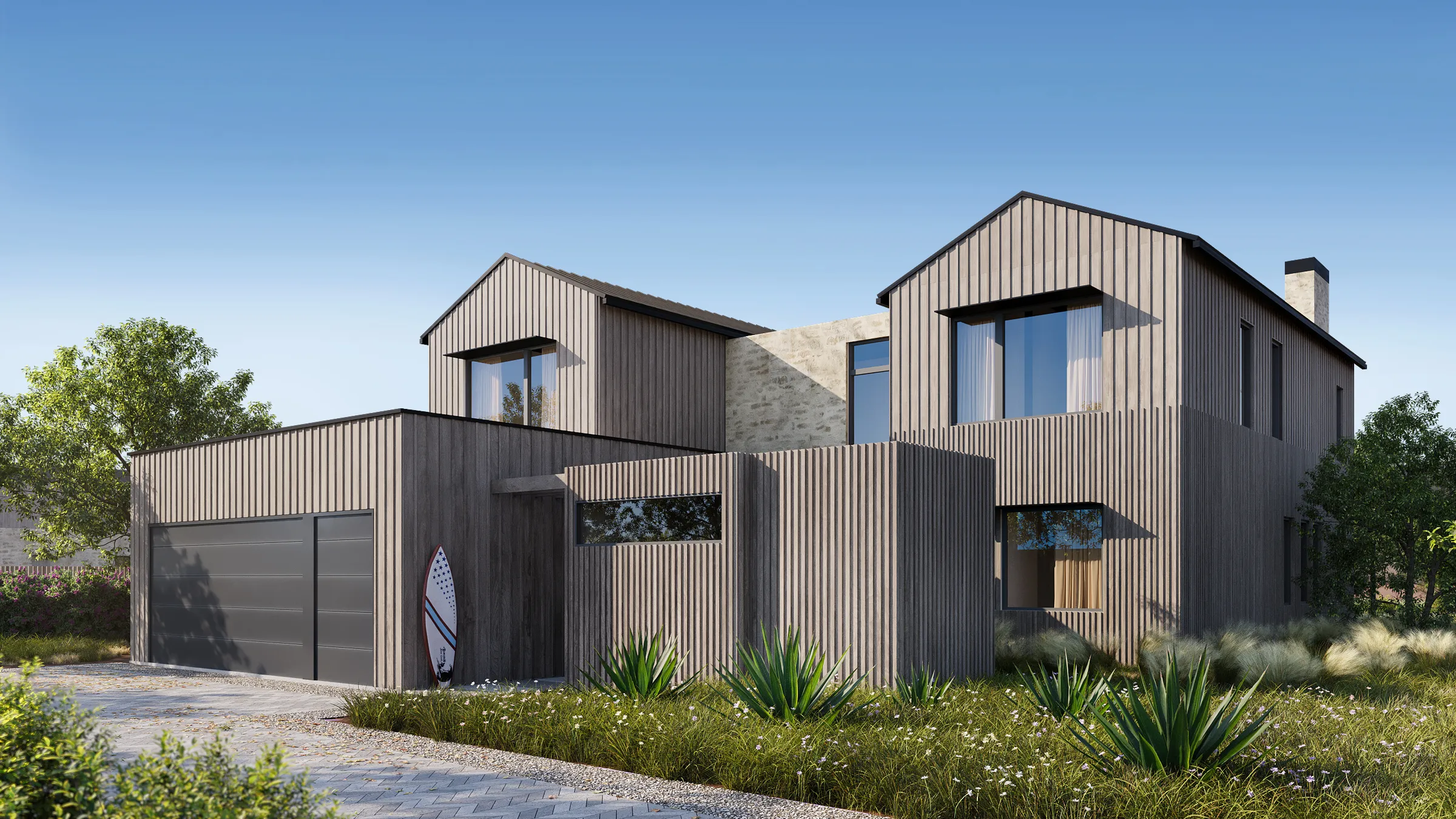
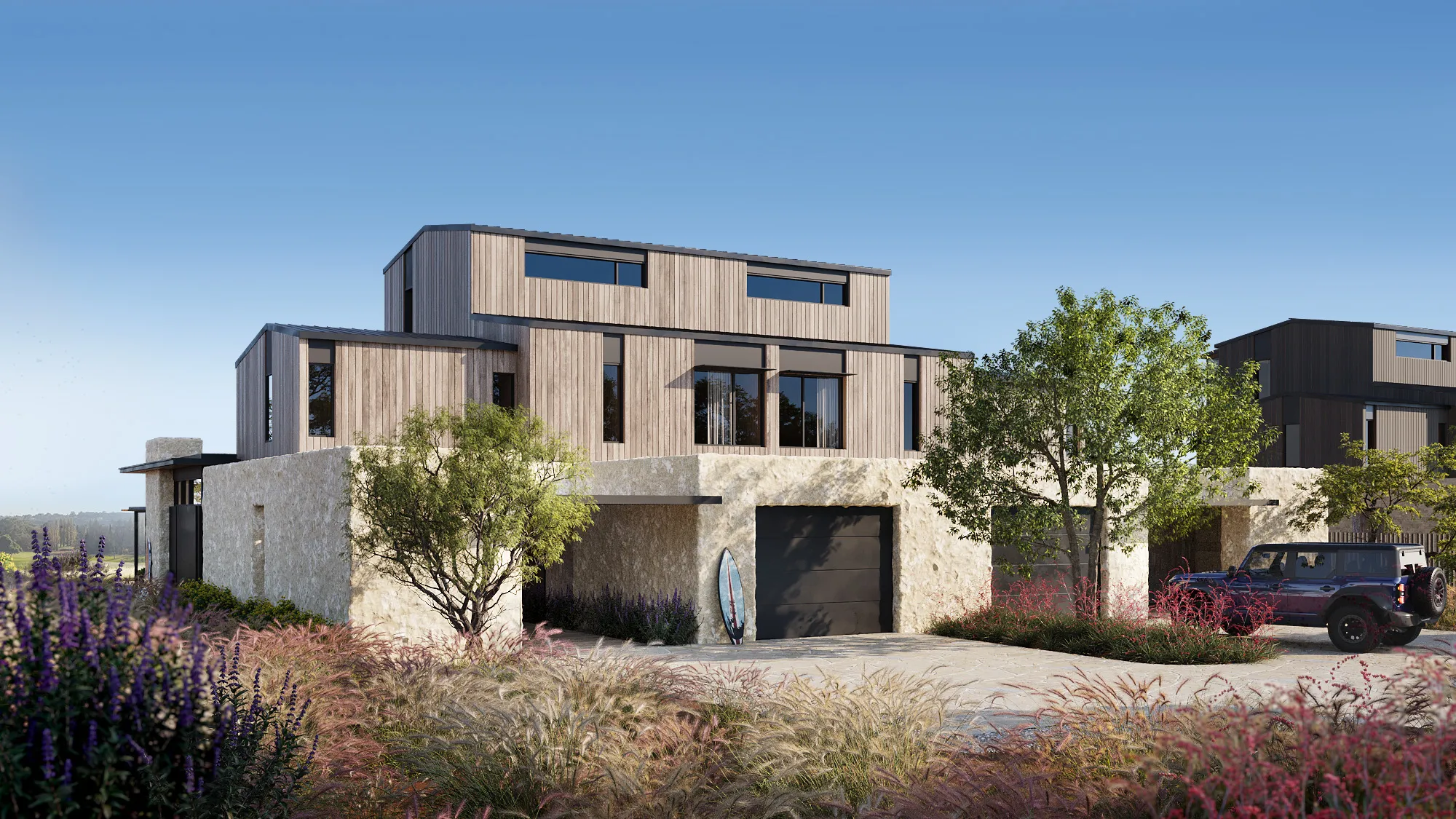
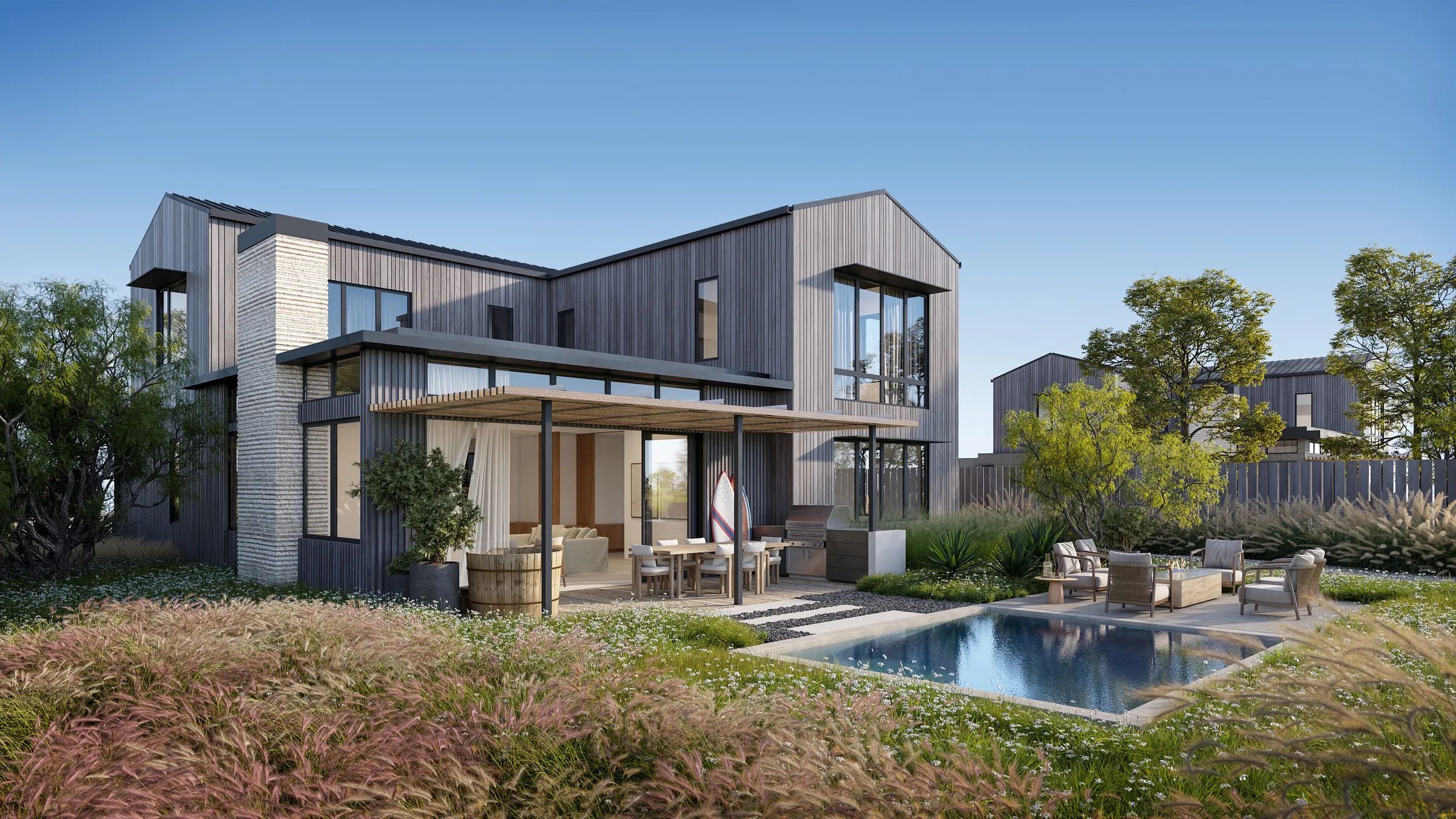
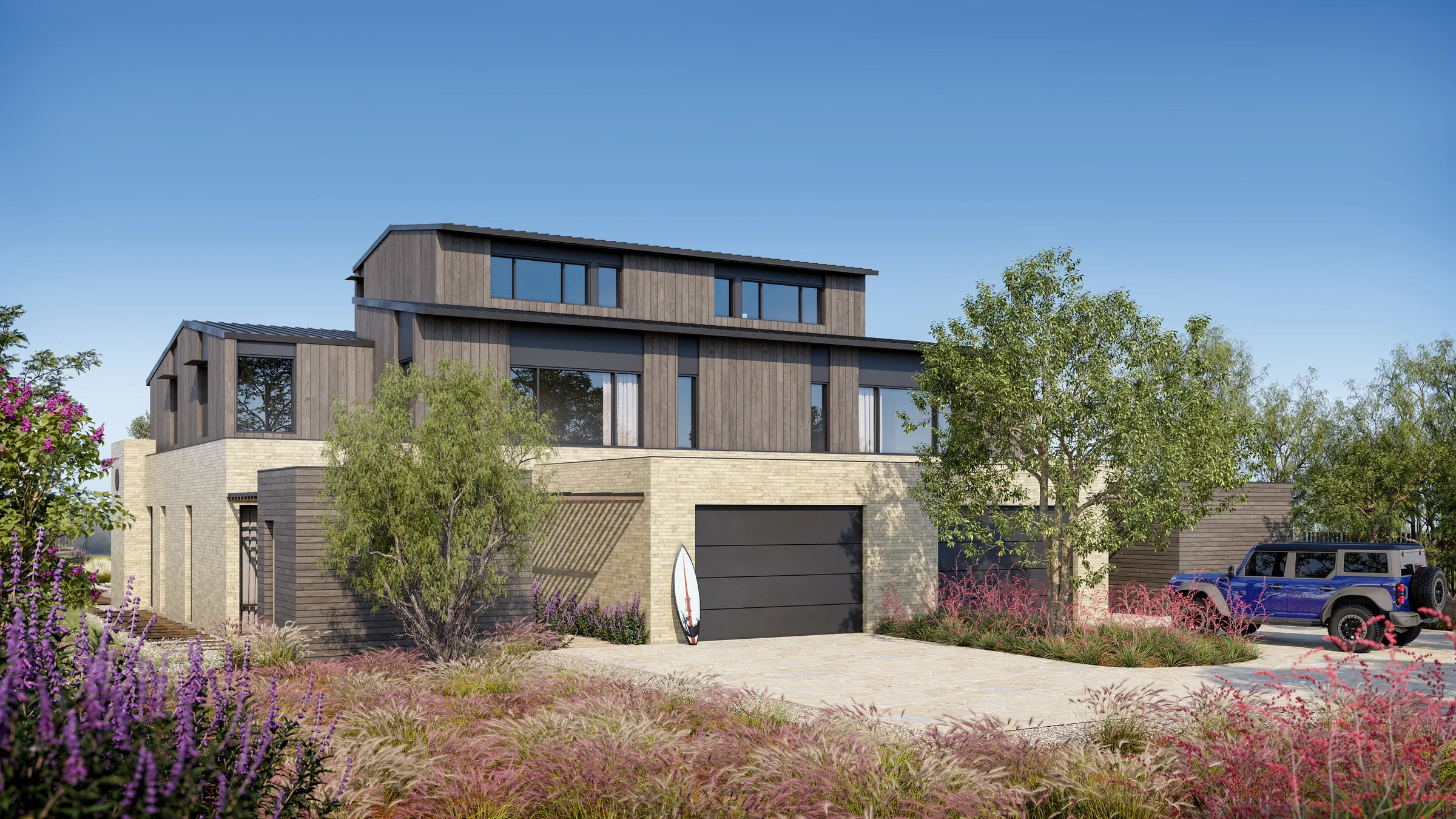
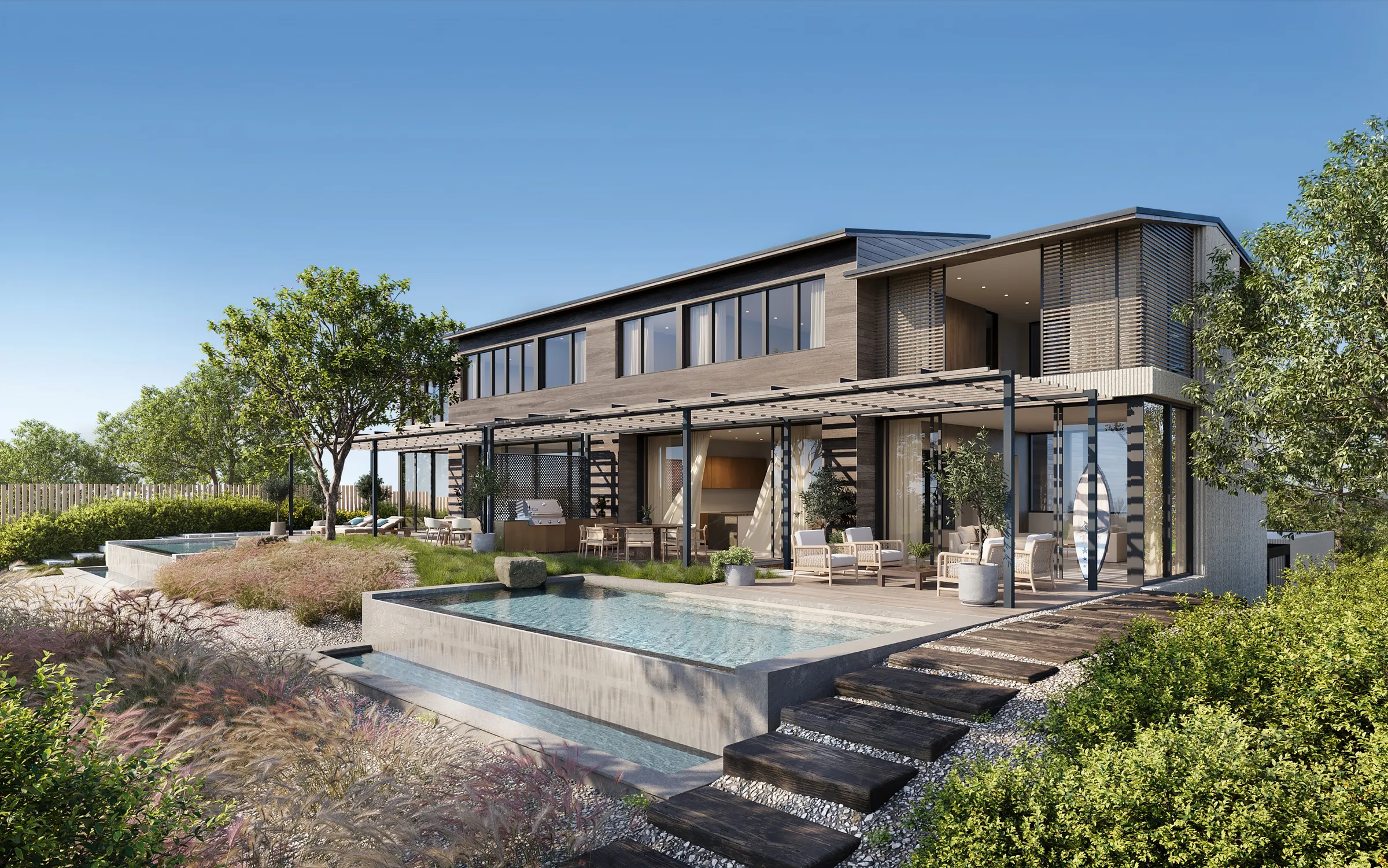
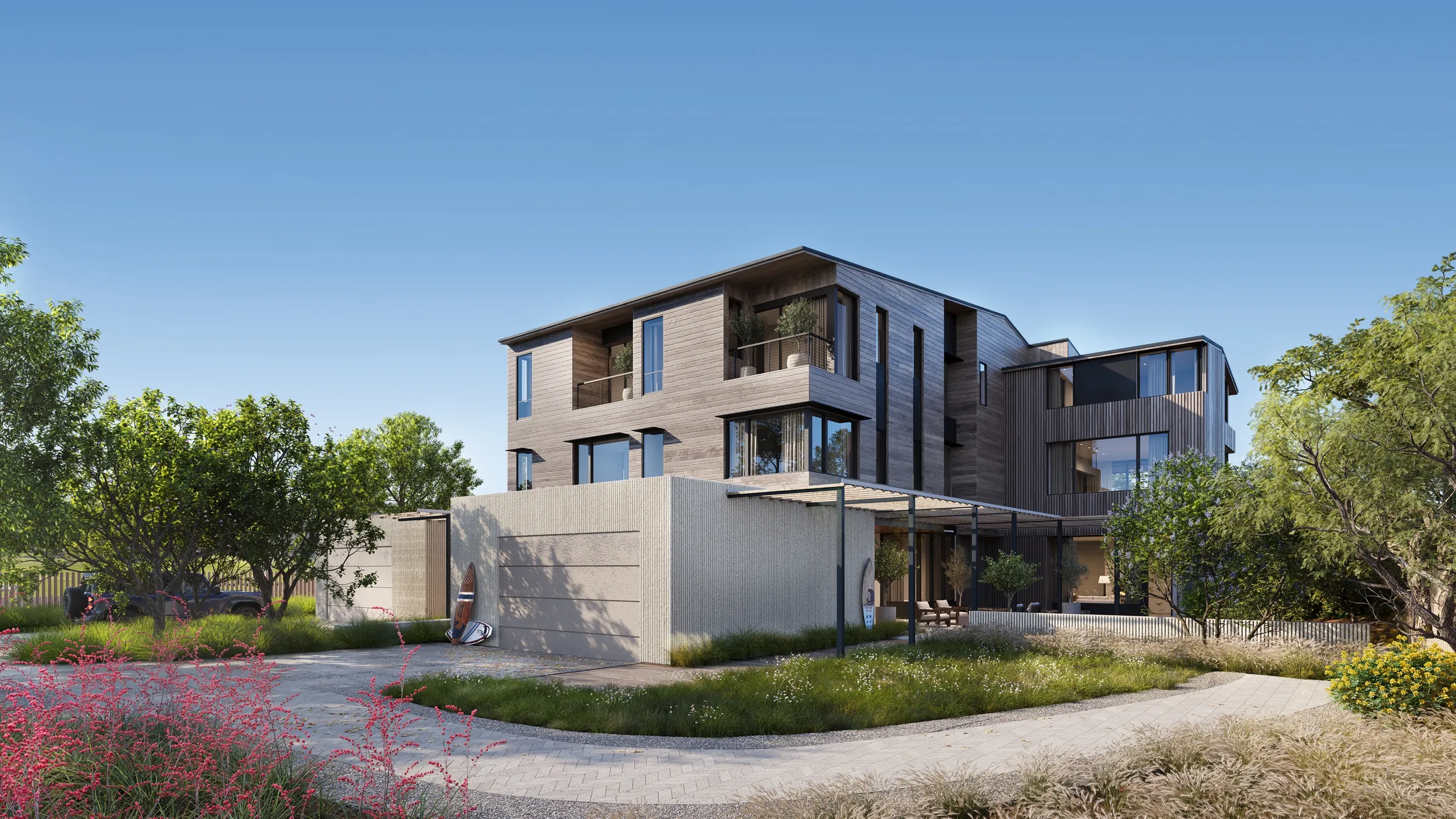
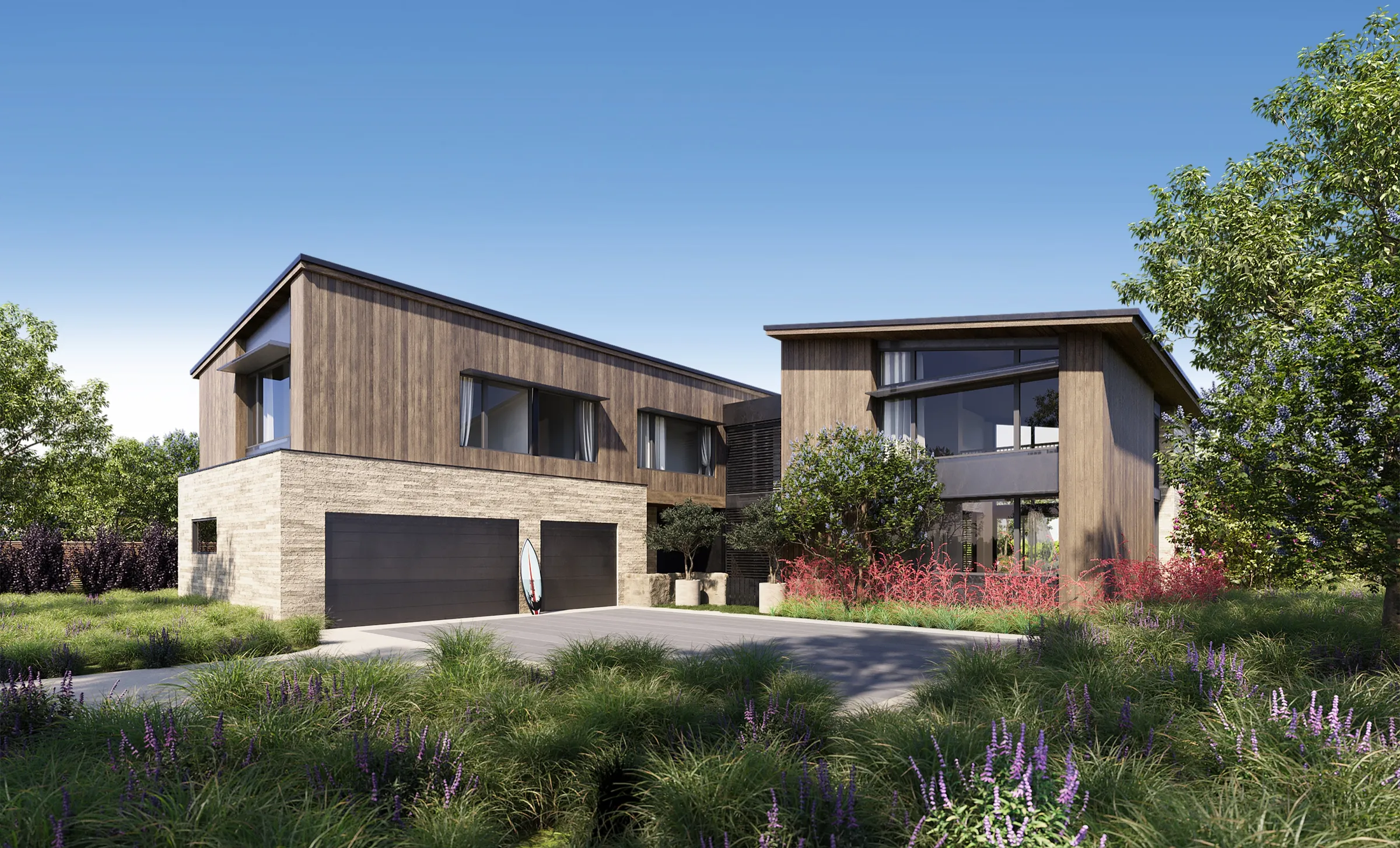
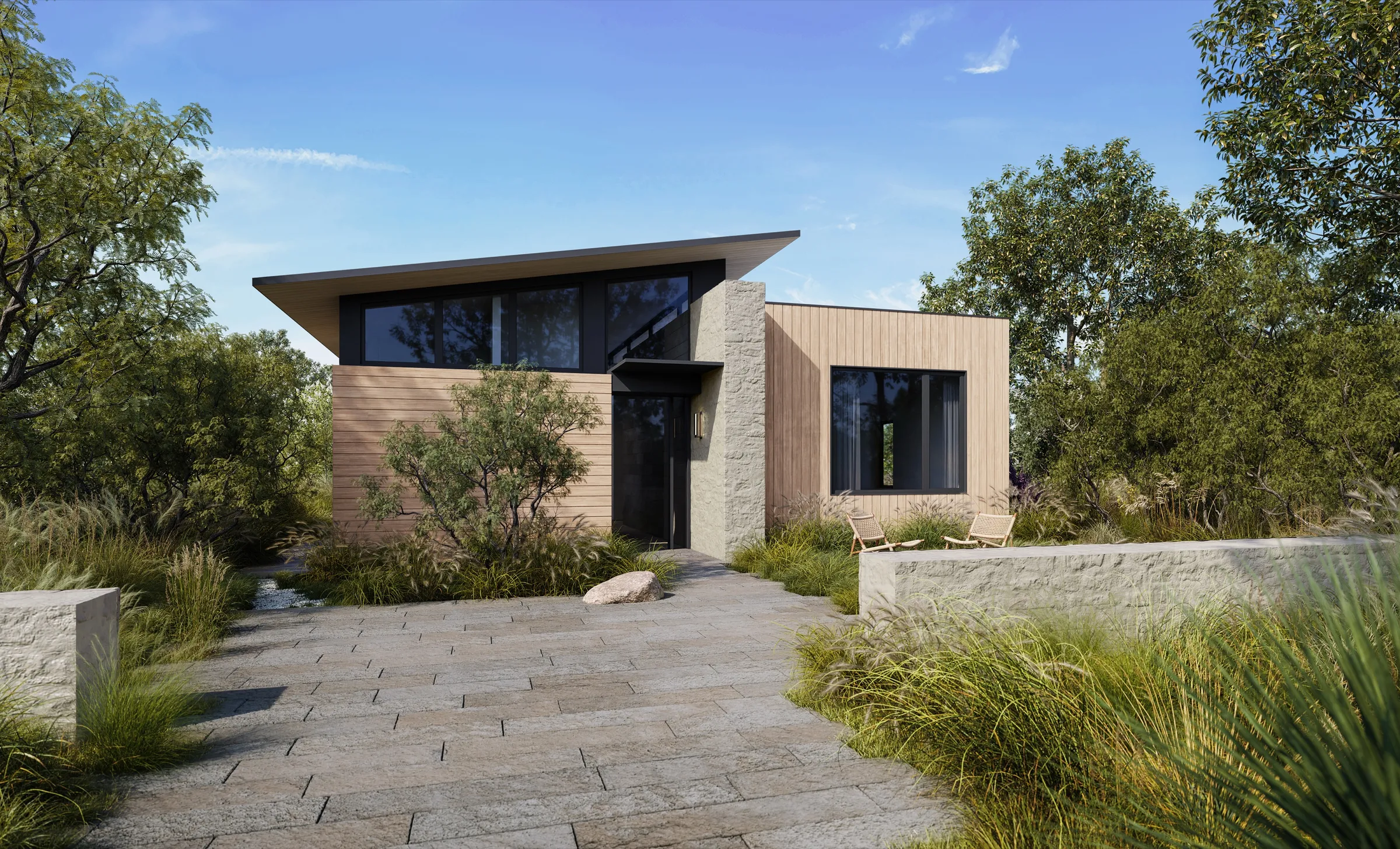
The same materials, stone bases, timber siding, and tongue-and-groove cladding, ran through three named palettes, Wave, Cliff, and Sand, carried across every home in the community. The combinations were varied from house to house so each home had its own character, without ever breaking the identity that made the club read as one coherent destination.
Material direction
Rooted in the Hill Country, Built for Surf-Resort Life.
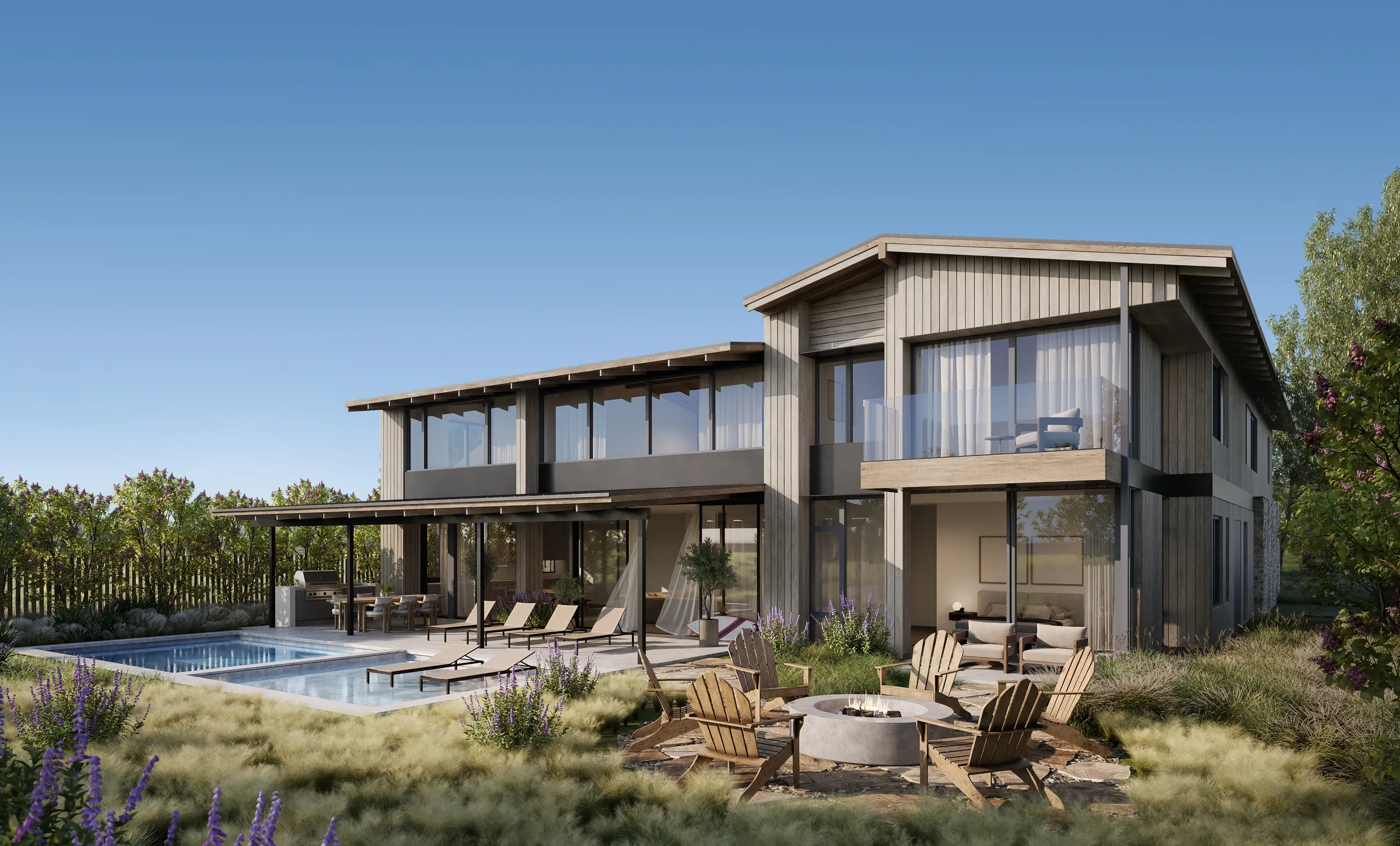
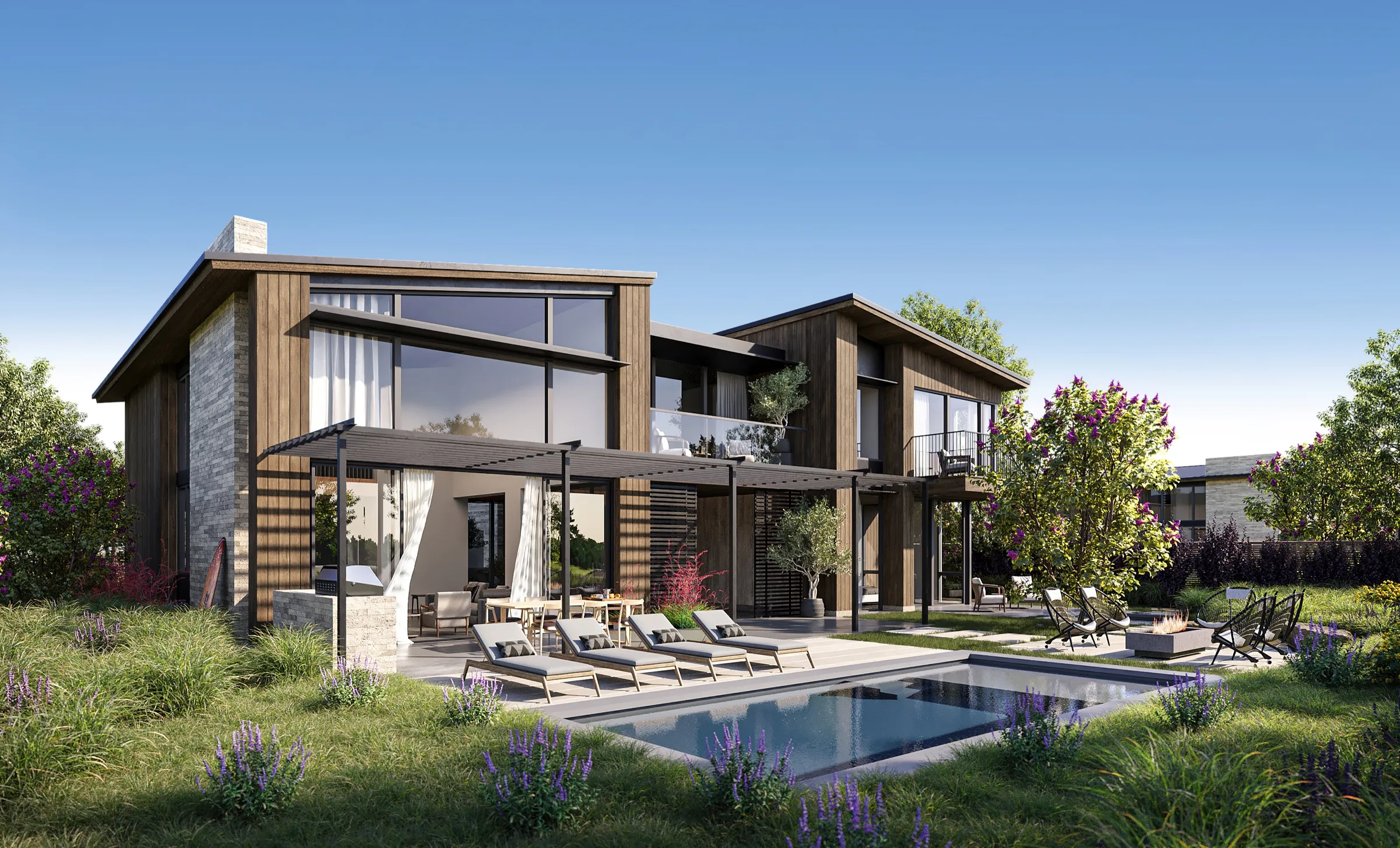
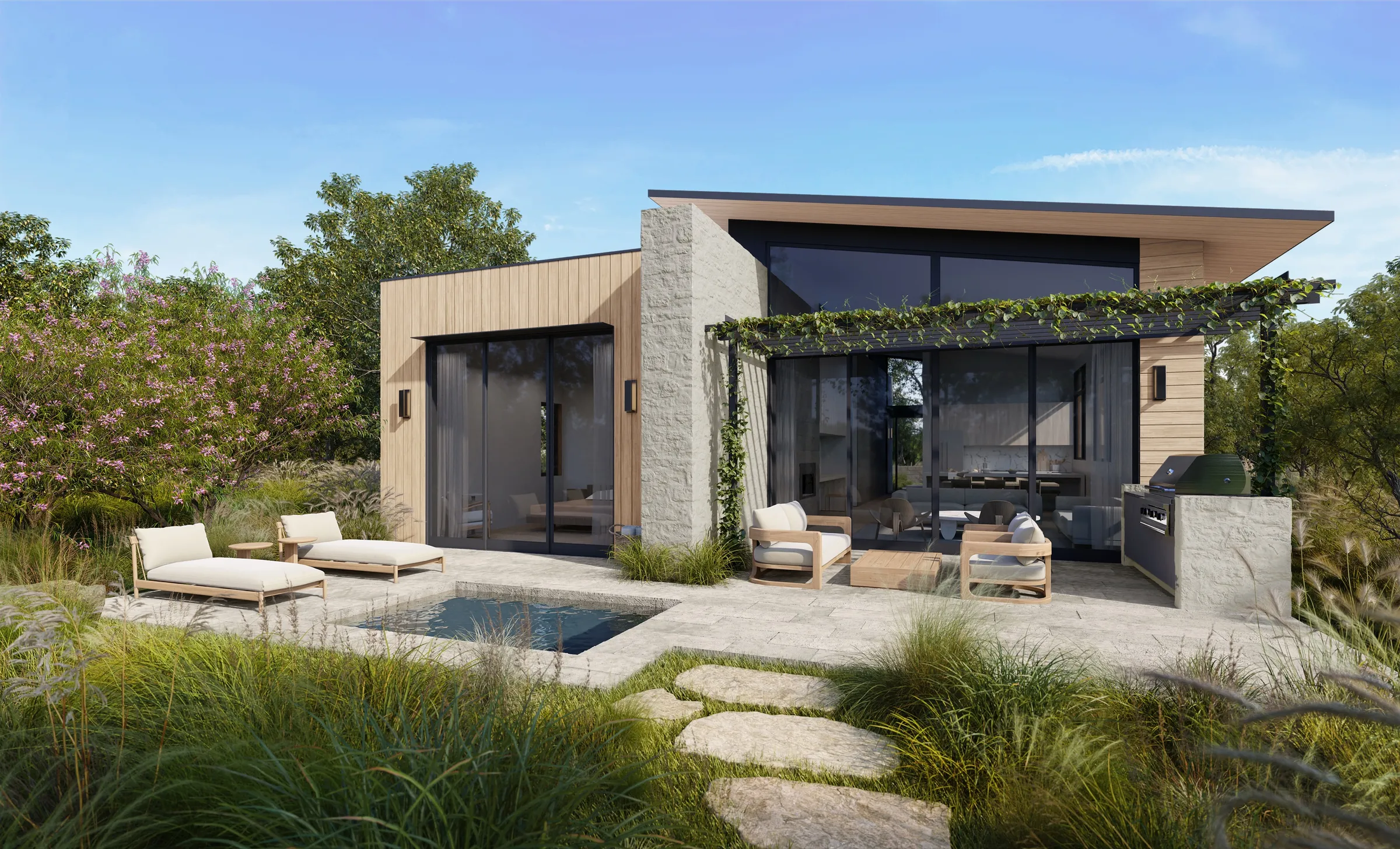
The look was rooted in the Texas Hill Country and in the relaxed, outdoor life of a surf resort. Stone bases grounded the homes; vertical timber and tongue-and-groove siding, in both dark and bleached tones, gave the upper levels warmth and texture. Native prairie grasses and drought-tolerant planting tied every home into the landscape rather than sitting on top of it.
The lifestyle cues were deliberate: covered terraces and outdoor kitchens, plunge pools, and the occasional surfboard leaning by a door, all there to help a buyer feel the way the community would actually live. Interiors carried the same restraint indoors, with quiet, natural materials so the focus stayed on light and space.
The outcome
The Renderings Went Straight Into the Club's Marketing.
As each home was delivered, the club's team put the renderings into its marketing materials and sent them out to members, and used them in meetings to present the duplexes and the other home types. Across the engagement the visuals did three jobs at once: they showed the community before it was built, they gave the design team a shared reference to align around as decisions were made, and they helped members choose finishes for their own homes.
Because every home was built on the same process and the same material language, the set of renderings held together visually even as it grew one house at a time. Architecture was approved before the final color renders were produced, so the images reflected real, signed-off design rather than a guess.
The work ran across three scopes from 2024 to 2025, from the first cottages through duplexes, suites, and beyond.
The community itself is still in development: construction paused in April 2026, and no restart date had been announced at the time of writing. What the renderings delivered was market-readiness, a coherent picture of every home type that members and the design team could use while the project was being planned.
Questions
Rendering a Resort Community
- How do you keep a community of different home types looking like one place?
- At Austin Surf Club, every home was built on a single family of materials, stone bases, timber siding, and tongue-and-groove cladding, organized into three palettes called Wave, Cliff, and Sand. The combinations were varied from house to house so each home had its own character, while shared camera angles, lighting, and landscaping kept the whole community reading as one coherent destination.
- Can you render a development while the design is still changing?
- Yes. For Austin Surf Club we locked each home's camera angles and massing in a white model first, then applied materials and color once the composition was approved, and held a feedback call for each house to resolve materials and lighting together. That process let the renderings keep pace with an evolving design instead of waiting for a final, frozen set of drawings.
- What are these renderings actually used for?
- Beyond a website, the Austin Surf Club visuals went straight into the club's marketing materials and sales presentations, gave the design team a shared reference while decisions were still being made, and helped members choose finishes for their own homes. The same images did marketing, design alignment, and member decision-making at once, across a phased engagement.
- With a landscape architect, a marketing team, and Discovery's corporate designers all reviewing, how did feedback stay manageable?
- Every comment reached us through one person, the club's director of architecture and design, who gathered notes from the landscape architect, the marketing team, and Discovery's corporate design reviewers into a single consolidated set before sending it over. We sized the schedule around that reality, agreeing on a two business day window so feedback arrived complete instead of trickling in after work had started, then resolved each set on a working call per home. Complete comments up front meant every change was rendered once, which is how the project kept its pace across dozens of images.
- How fast does our feedback need to be when the deadline is real?
- Fast, and the studio will tell you exactly how fast. When Austin Surf Club needed a set of renderings on screen for a sales event, the schedule was laid out to the day: black-and-white views on Friday, consolidated comments back by midnight, the team rendering from Saturday morning, finals the evening before the event. An extra review round was offered on one condition, that comments came back the same day. Feedback speed is the one part of the schedule only the client controls.
Services on this project
Related projects
Start with a discovery call
Every project starts with a conversation. The call is where we understand the project and whether we're the right studio to do the work.