

[ Pillar guide ]
Pre-construction marketing renderings: how to pre-sell real estate.
Sell it before you build it. The best time to market a property is before it exists. 3D visualization lets you put a finished home, a full community, or a repositioned building in front of buyers, lenders, and city officials while the site is still raw ground. This guide explains how developers, agents, and design teams use pre-selling visuals to move inventory early, fund construction, win approvals, and earn recognition, all before the first wall goes up.
By Lukas Berezowiec, CEO, NoTriangle Studio
Updated
[ Quick answer ]
Pre-construction marketing renderings let developers and agents sell, lease, fund and win approvals for property before it is built. A pre-sale set usually starts with one hero image, then stills, an aerial for communities, and often an animation and a virtual tour. The images must be ready when the sales window opens, and honest about what will be built.
[ What it means ]
What pre-selling with 3D visualization actually means.
Pre-selling is the practice of selling, leasing, or funding a property before it is built. 3D visualization is what makes it possible. Instead of asking a buyer to imagine a space from a floor plan, or waiting months for a finished building and a photo shoot, you show them a photoreal image of the finished result today.
The effect is deliberate. A well-made rendering looks close enough to a real photograph that buyers respond to it as if the building already stands. One developer we work with described watching prospects react to a presale rendering that looked so complete it briefly confused them, then land on the point that mattered: the building is not finished yet, but in a year and a half it will be, and this is exactly what it will look like. That gap, between what exists and what is coming, is where pre-selling lives.
This guide is written for three groups: developers marketing homes and communities off-plan, agents and brokers listing pre-construction or pre-renovation property, and the architects and design teams who need their concepts to sell before they are built.
[ Why pre-sell ]
Not about pretty pictures. About four business outcomes.
The through-line across all four: good visualization lets you win a project before it physically exists.
- Fund the build
- For many multi-unit and community projects, pre-sales are how the project gets financed. Reservations taken off the renderings become the evidence a lender needs, and construction financing is often contingent on hitting a pre-sale number. Developers open a pre-sale and start collecting buyer interest before contractors are even chosen, using the visuals as the primary sales asset. The aim is often to have every unit sold before construction finishes, with buyers placing deposits on a home that is still a hole in the ground.
- De-risk the project
- Building is the most expensive way to find out whether people want what you are making. Renderings let you test demand first. When a developer says they want visuals good enough to sell the house on their own, they are really saying they want to know the market is there before they commit the capital to build. Some owners go a step further and use a pre-sale set as a demand test: they put the images out, watch what interest they pull, and only commit to the build, or change course, based on the answer.
- Hit the market window
- Buyers are looking on a schedule, and the property needs to be in front of them at the right moment. Renderings bridge the gap between a plan and a finished building to photograph. For a rental they carry the pre-lease window. For a spec home they let an agent list and sell while the house is still framing.
- Win approvals and recognition
- The same visuals clear entitlements and win recognition on the strength of the concept alone. Renderings carry a project through a zoning variance and then keep working as the marketing that sells the units, and a strong concept can earn awards before a single element is built.
[ By property type ]
What pre-selling looks like depends on what you are selling.
Luxury single-family spec homes
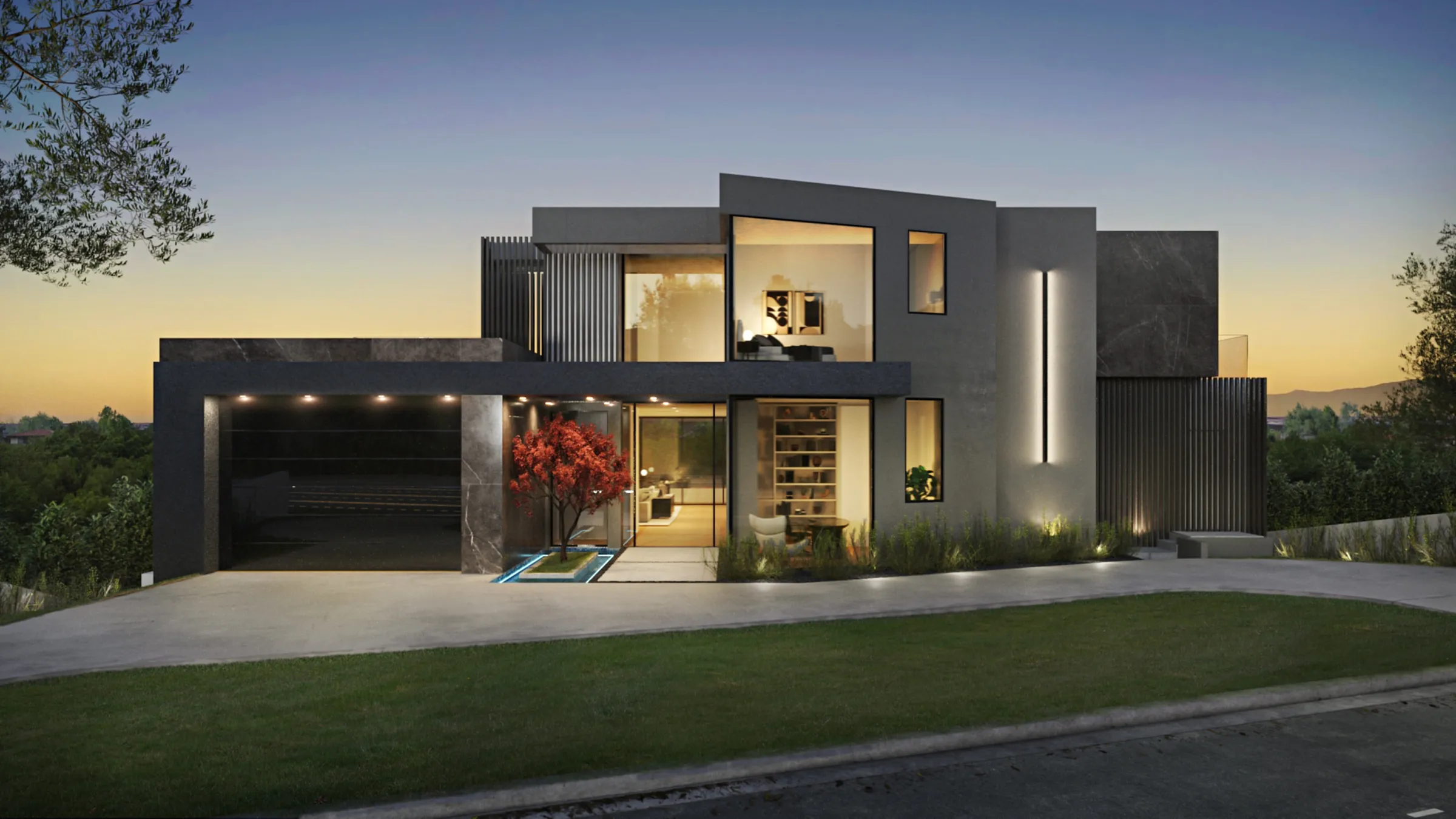
For high-end spec homes, the rendering is often the entire listing. The house may be months from finished, or not started at all, and the buyer pool is small, discerning, and frequently out of town. A single set of strong images can carry the sale. We have had spec homes sell off the renderings before construction began, and homes marketed with mid-construction visuals go on to set price records. The discipline here is quality over quantity. Two exceptional images will outperform four ordinary ones, because a luxury buyer is reading craft, not counting pictures.
Learn more
Multi-unit, community, and master-planned developments
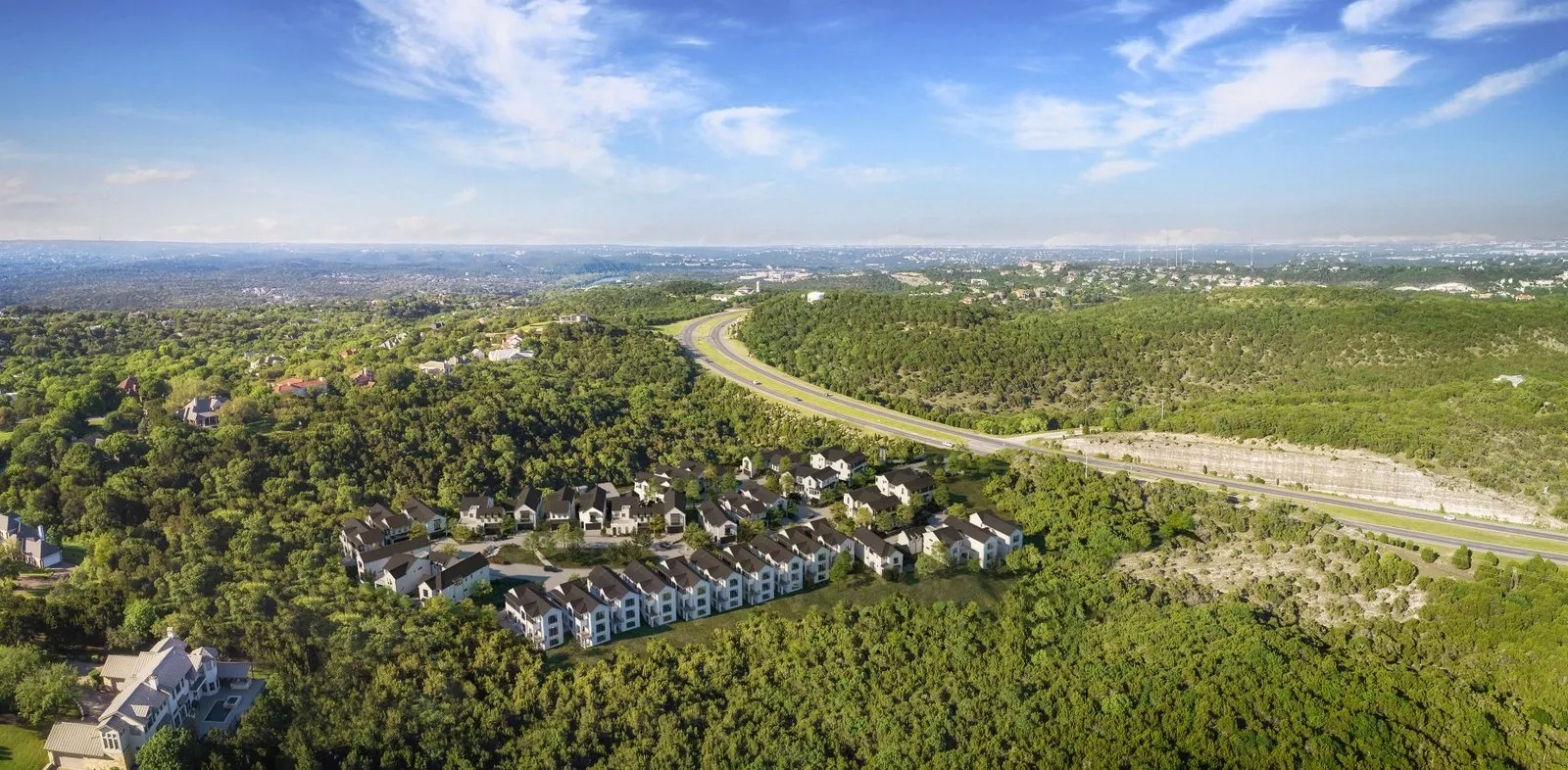
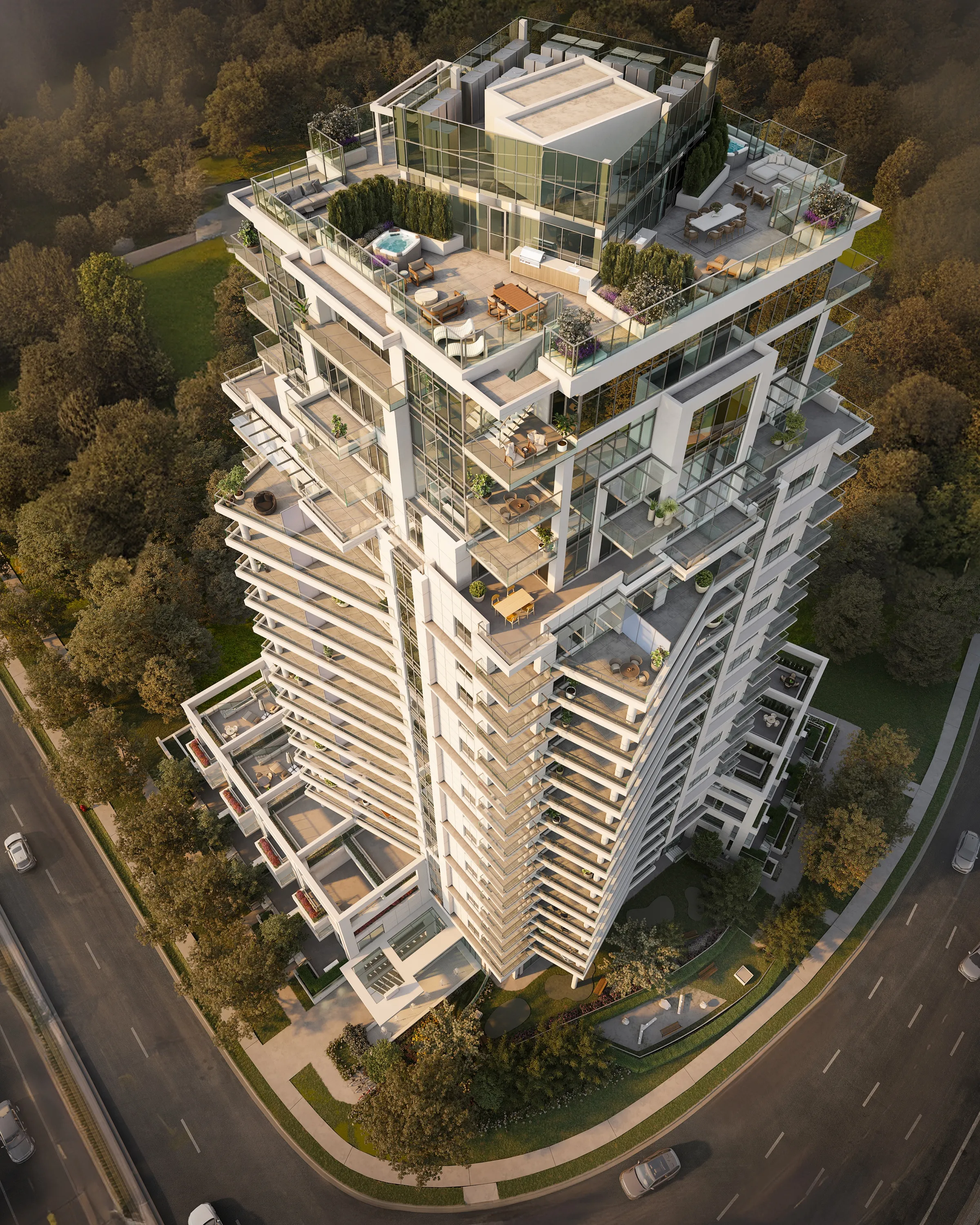
For communities, renderings do something subtler than sell a single unit: they steer demand. When some homes in a release are already sold and others are not, new images get made of the unsold inventory, at the best time of day and the most flattering angle, to pull buyers toward what is still available. A community sells on the whole picture, so the toolkit runs wider: an aerial establishing shot of every lot, individual home views, floor plans, animation, and a virtual tour. The same logic carries leasing. For a rental or student-housing community, renters commit to a place they cannot yet walk through, so the images sell the lifestyle, the amenity deck, the rooftop, the view toward campus, and let a prospect picture themselves there before a single unit is ready.
Learn more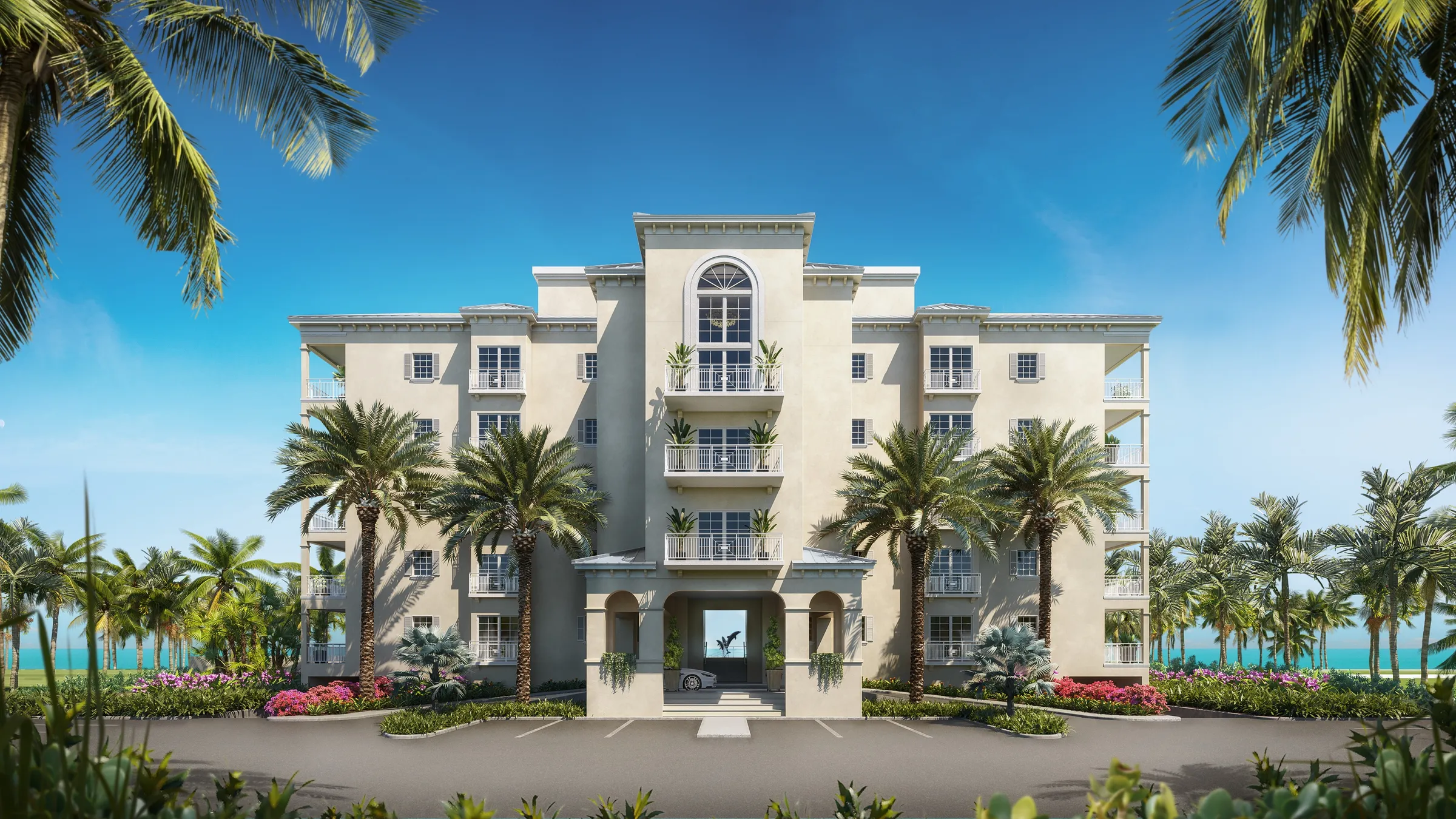
Hospitality and investor raises
Hotels and larger developments often use renderings to close a deal before breaking ground, and the audience is an investor rather than a homebuyer. For an offering memorandum, a common structure pairs a photo of the existing condition with a rendering of the new use from the identical vantage point, plus a cutaway dollhouse view of the whole floor. The goal is not fantasy. It is to make the opportunity feel feasible, so a decision-maker sees something credible and buildable rather than a stretch. The images also do quieter work between meetings. Lenders and investors forget the detail of what they funded, and a strong render keeps the finished vision in front of them, so every conversation starts from the same picture.
Learn more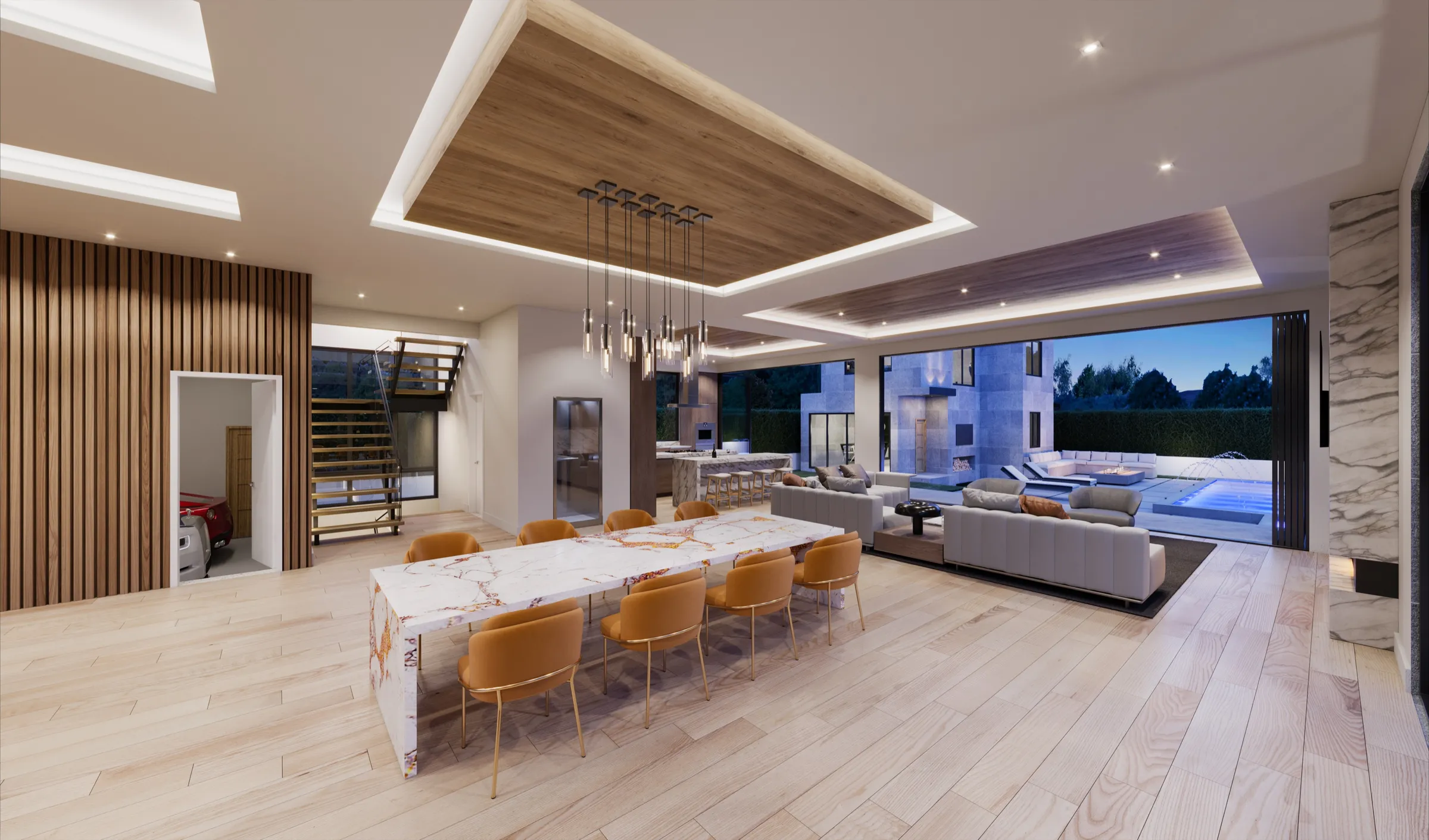
Agents and brokers
Agents listing pre-construction or heavily renovated property face a specific problem: the existing developer or architect renderings are often technically fine but not marketing quality. They lack the vibe that makes a buyer want the space. For a listing, the job is the most powerful shots, not the most shots. And because a rendering only needs to carry the pre-lease or pre-sale window, agents use it as a bridge: market with the renderings now, switch to real photography once the building is done. For a launch, agents put these renders on the screens and easels at a broker event and open a coming-soon listing, proving the line that runs through all of this: a home does not have to be built to be sold.
Learn more[ The toolkit ]
What actually sells.
Different jobs call for different deliverables. Match the tool to the sale.
The hero shot
One defining image that sells the whole property. Usually a specific view at a specific time of day, chosen deliberately. A building’s hero shot is often the water view at dusk, not the front elevation. On some homes it is one specific view, the money shot, often the view looking out from inside toward the water or the hills, that sells the whole house.
Stills
The core of any pre-sale: interiors and exteriors that let a buyer walk the space in their mind.
Aerials and flyovers
Essential for land, communities, and master plans. An establishing bird’s-eye view of every lot lets a sales team release a whole community from a single image before ground breaks.
Animation
A short film for the property. Handled well, it plays like a trailer and carries emotion a still cannot.
Virtual tours
Increasingly what buyers ask for by name, especially early, when there is nothing physical to walk through. Done well, a buyer can step into a headset, change the finishes in real time, and put down a deposit on a unit that is still an empty lot.
The dollhouse cutaway
A cross-section of a whole floor or unit, valuable in offering memorandums and for buyers who do not read floor plans naturally.
Before and after pairings
For repositioning and renovation, an existing-condition photo next to a rendering of the new use from the same vantage is one of the most persuasive formats there is.
Staging choices
Whether to show people and cars or keep a scene empty is a real decision. Corporate marketing often prefers clean images, while sales teams tend to want life in the frame. Both are valid, and the right call depends on who is using the image.
[ By stage ]
Which assets you need at each stage of the sales window.
| Stage | Assets | What they do |
|---|---|---|
| Demand test (private) | Hero image, two or three key stills | Test interest before committing to build or to a price |
| Financing and approvals | Aerial or site view, documentary exteriors, dollhouse cutaway | Show lenders and boards what will be built |
| Coming soon and broker preview | Hero, primary interiors, teaser film cut, landing page imagery | Build the list; give brokers something to show |
| Launch and reservations | Full stills set, floor plans, animation, virtual tour | Let a buyer walk the home in their mind and reserve |
| Ongoing sales push | New views aimed at unsold inventory, finish-option renders, social cutdowns | Steer demand to what is still available |
| Completion | Switch to photography; renders stay for later phases | Hand off once there is a finished building to shoot |
[ Timing ]
When to start and how the window works.
Timing is the most common question we get, and the answer shapes everything else.
Start before the building does. The whole value of pre-selling is compressed into the window between when buyers begin looking and when you have a finished building to photograph. Renderings own that window, then hand off to real photography. For a rental building, that window can be as short as the forty-five to sixty days of a pre-lease push. For a phased community, it stretches across each release. Either way, the images need to be ready when the window opens, not after.
Work backward from your launch. Pre-sale events, broker openings, and investor meetings are hard deadlines, and the renderings are usually the centerpiece. If a sales event is on the calendar, the images have to be done and in the marketing team’s hands with time to spare, not arriving the morning of.
And the window can slam shut fast. Developers talk about striking while the iron is hot: listing a home coming soon on the MLS before it is finished, aiming to sell within weeks while the market is running, because a comparable sale down the street just closed far above ask. When the market turns, the renderings are what let you move before it does.
Build in review time. On any project with more than one decision-maker, collecting feedback takes longer than the rendering revision itself. Plan the schedule around the slowest stakeholder, not the fastest.
When you do not need this. Not every property needs pre-sale visuals. We have advised clients to hold off when interest was already strong and the homes were confident to sell without support materials. If the demand is already there, we will tell you. Pre-selling visuals are a tool for creating or steering demand, not a tax on every project.
[ Selling honestly ]
The line you do not cross.
Pre-selling only works if buyers trust the image. The moment a rendering oversells, it stops being an asset and becomes a liability.
The rule we hold is simple: a rendering can be beautiful, but it has to be honest. Marketing polish is fair. Choosing the best angle, the best light, and a flattering but real staging is the craft. Showing an amenity that will not exist, a view the unit will not have, or a finish the buyer will not receive is not polish, it is misrepresentation, and it comes back as a complaint or worse when the building is finished.
In practice that means a few disciplines. Concept and sales imagery carries a clear subject-to-change disclaimer. When something is only conceptual, we say so. We hold visuals to what will actually be built, so no owner walks their finished home and asks where the feature they were shown went. And when a rendering is aimed at an investor, we tune it to read as feasible and buildable rather than as an impossible ideal. A credible image closes. An unbelievable one raises questions.
Remember what the buyer is doing on the other side of the image. On these projects they are signing large-value contracts, and placing deposits, on a home or a unit that does not physically exist yet, off the strength of the render. That is exactly why it has to be honest. The image is not decoration, it is the thing they are trusting.
There is a legitimate exception: conceptual space planning. When a landlord is marketing empty commercial or retail space, the goal is to show a prospective tenant what they could do with the space, not what is already committed. These images are presented as possibilities and understood as concepts, which is exactly their purpose. The honesty rule still holds, because the illustration is clearly labeled for what it is. This kind of speculative fit-out visualization is a common and valuable use of pre-selling renderings, and it is work we do.
[ How they get made ]
You do not need finished architecture, a furniture schedule, or professional site photography to start. Most pre-sale projects begin with partial information, and part of the studio’s job is to fill the gaps with experience. We model from CAD, Revit, or 3D files, use PDFs and partial drawings as reference to understand the design, and can even build on another vendor’s model, sourcing finishes and furnishings when the design is not final.
The process is built to catch problems early and keep multi-stakeholder projects coherent. Work moves from analysis, to a moodboard that fixes the look and lighting, to a white model stage where the geometry and layout are approved before any expensive texturing and lighting, then to full renderings with defined revision rounds. On big projects with many parties who have a stake in the outcome, we push for a single comments channel so feedback arrives together rather than scattered, and we act as the hub coordinating it.
[ Selected pre-sale work ]
Projects sold, funded, approved, and recognized before completion.
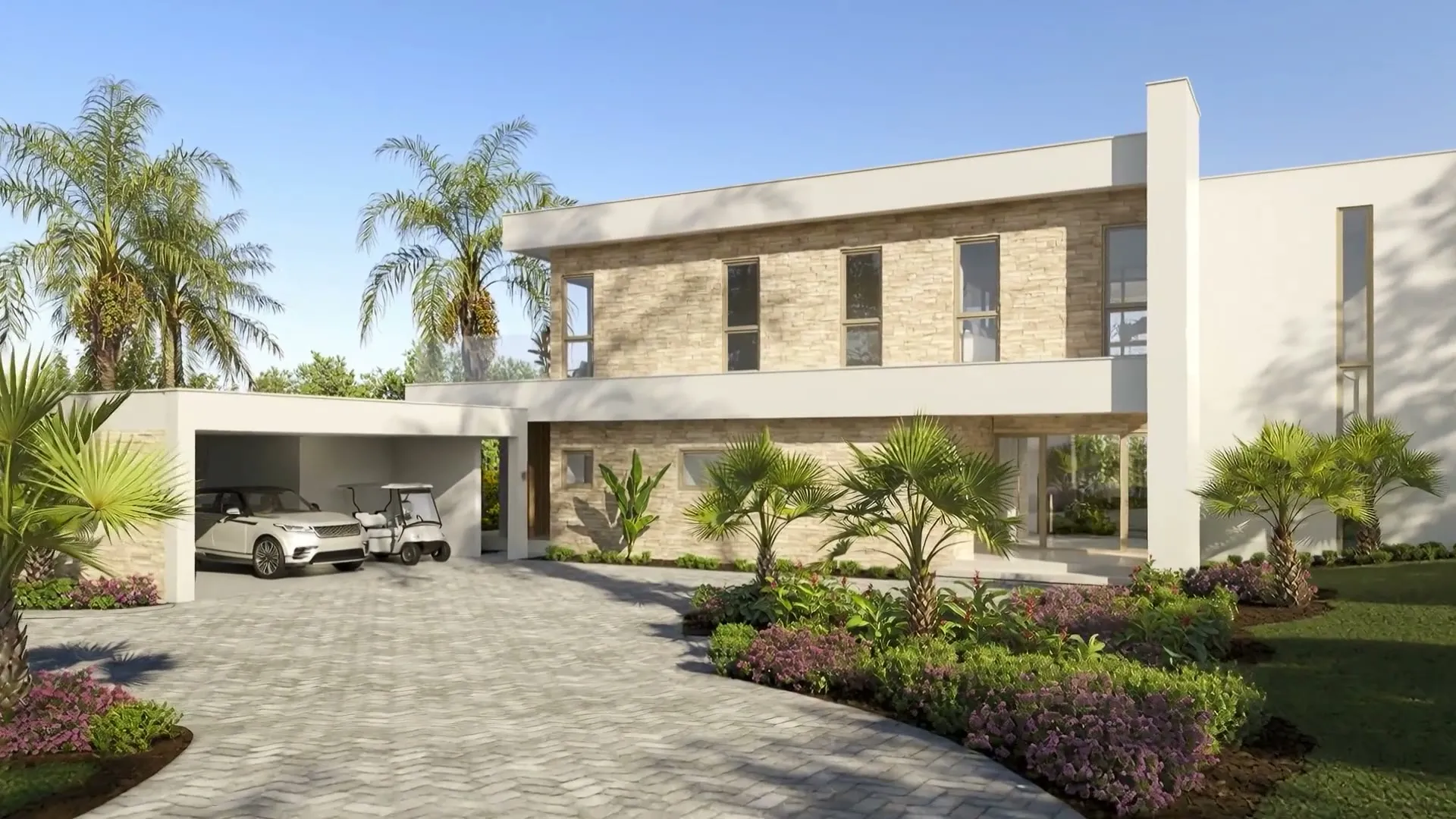
Villa Visala, Barbados
On the market off-plan, marketed entirely from its renderings.

Clear Creek Tahoe
A record sale for Northern Nevada outside the Tahoe Basin.
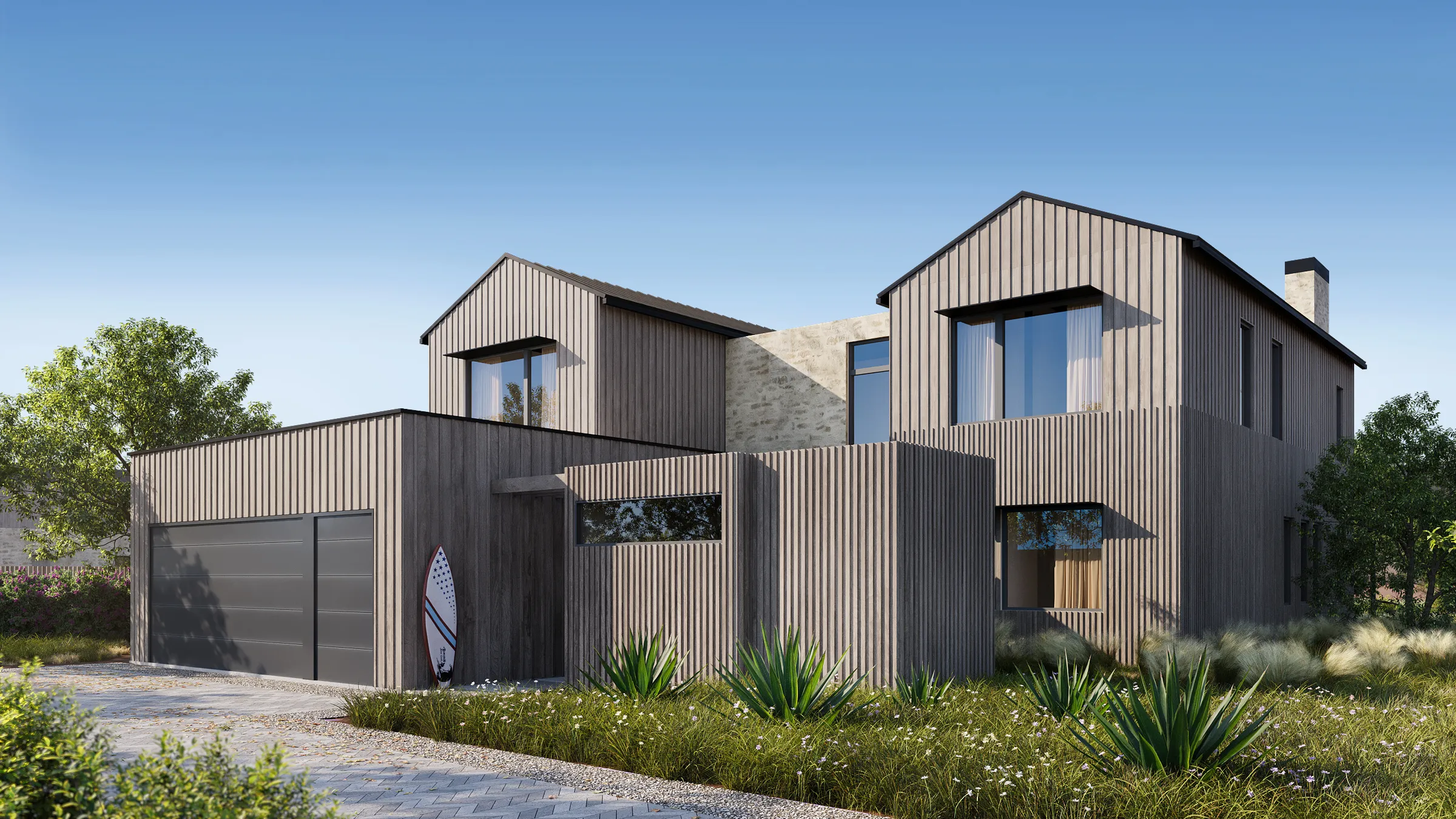
Austin Surf Club
Hero imagery for a branded surf-club community.
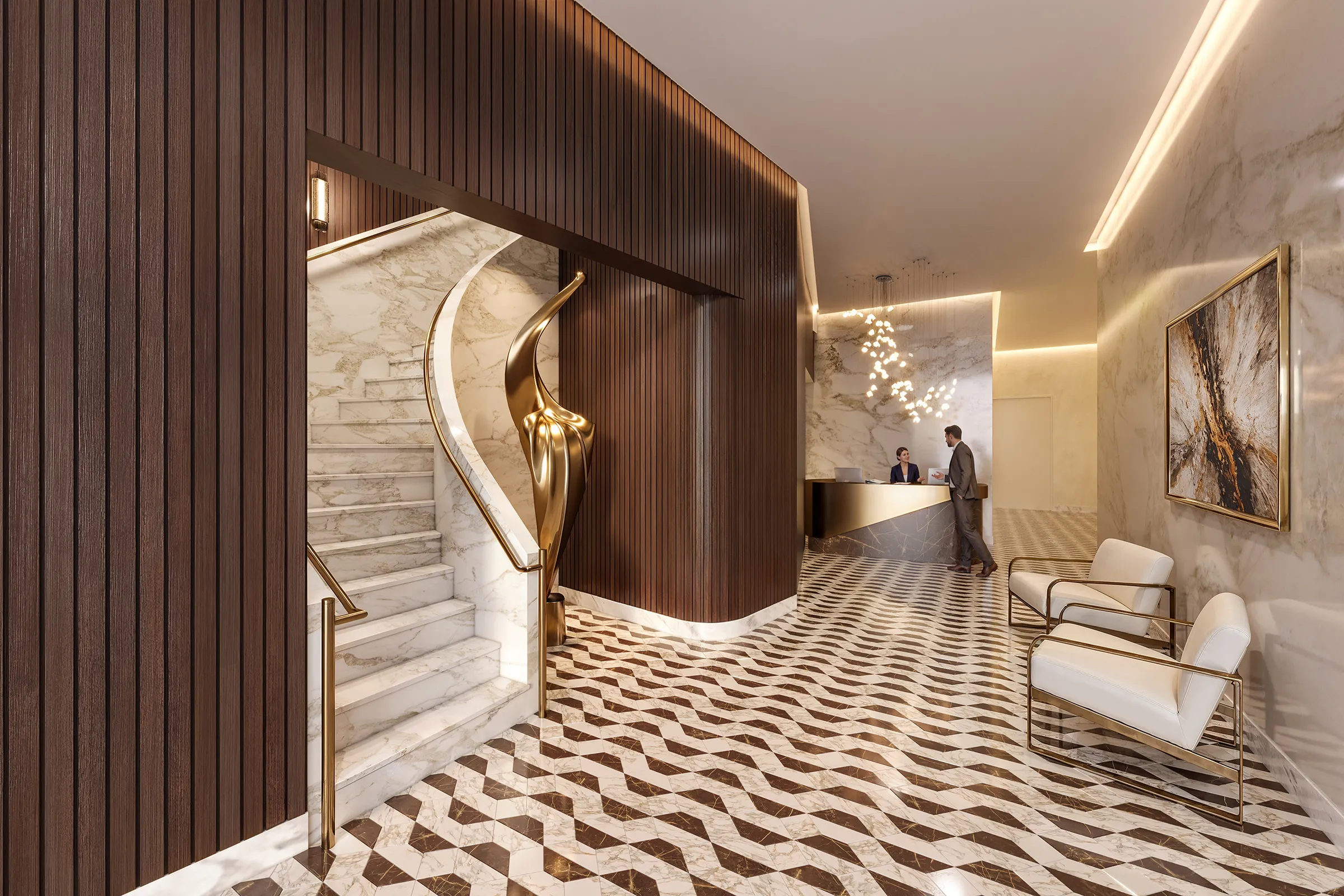
66 East 55th Street
An offering memorandum for investors.
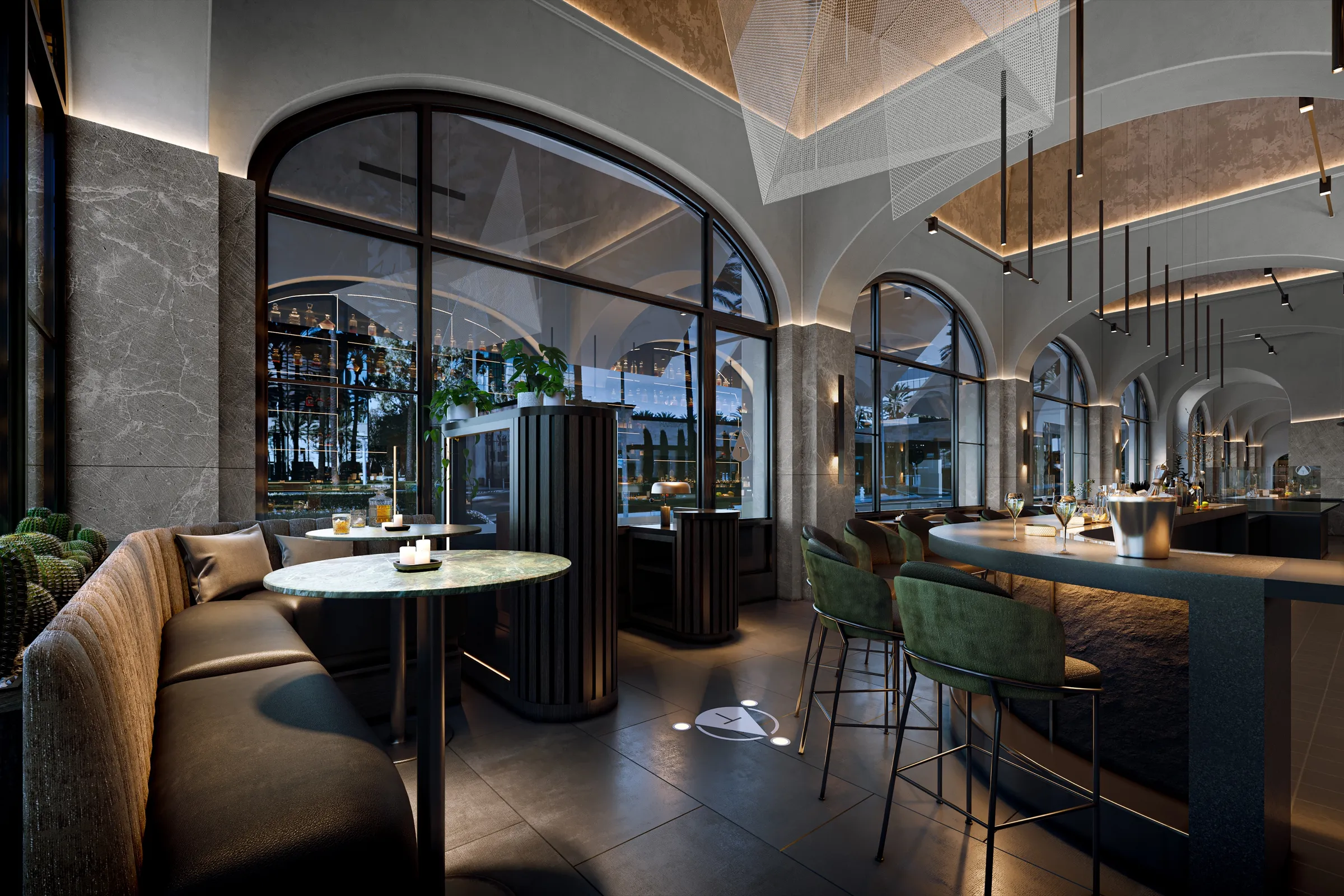
Teatro Angelina
Recognized before it was built.
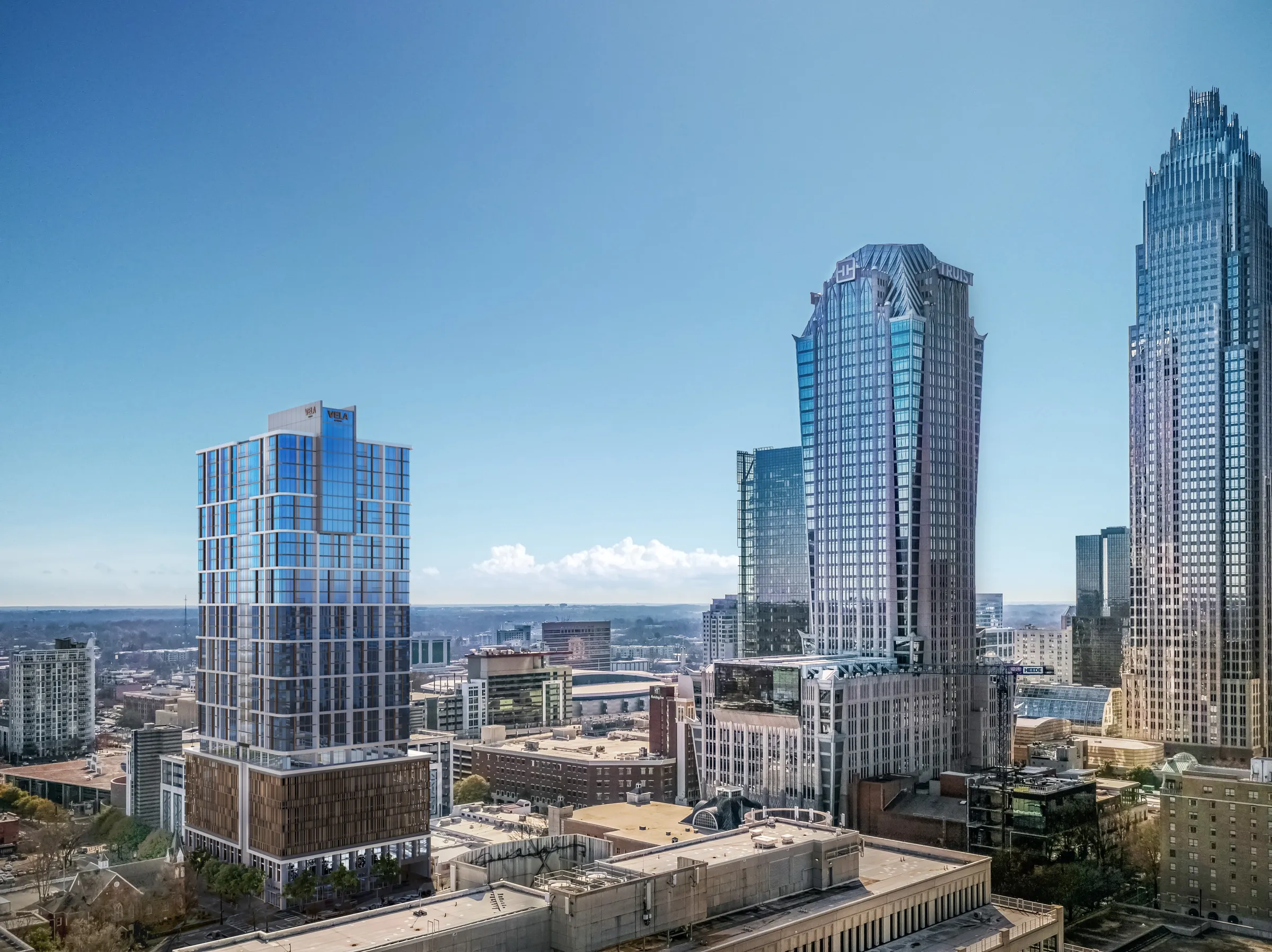
VeLa
Renderings that won approvals.

Sixth Street Viaduct
A winning competition submission.

Sankari Place, Dubai
Branded launch imagery.
Frequently asked questions
Can you work from just a PDF or partial drawings?+
We model from CAD, Revit, or 3D files. PDFs and partial drawings are useful for understanding the project, but a PDF cannot be imported into our software and built from directly. If a PDF is all you have, we will talk through what we need or develop the model as part of the scope. Most pre-sale work starts before the design is final, and we can fill the gaps.
Can you take over a model or renderings another studio started?+
Often, yes. Send us what exists and we will tell you honestly whether it is better to build on it or start clean.
What resolution do we get, and can we use it for print?+
The default is 4K, which suits most uses. If you need large-scale printing, tell us the paper size and we will adjust the resolution so you get exactly what you need.
Do we own the images, and can our agents use them?+
Usage is defined in your agreement so the property can be marketed across your website, listings, brochures, and agent packages. If multiple agents are marketing the same property, that is planned for.
What renderings do I need to pre-sell a property?+
Start with one hero image, the single view that sells the property, then interior and exterior stills of the rooms where a buyer decides. Communities add an aerial of every lot; larger launches add an animation and a virtual tour. The table on this page shows which assets fit each stage.
When should pre-sale renderings be ready?+
Before the sales window opens. Work back from the first hard date, a broker preview, a sales event or an investor meeting, and allow for review rounds, which usually take longer than the rendering changes themselves.
Do pre-sale renderings need a disclaimer?+
Yes. Concept and sales imagery should carry a clear subject-to-change note, and anything only conceptual should be labeled as such. Polish is fair; showing a view, amenity or finish the buyer will not get is not.
Can you work to a fixed launch deadline?+
It depends on scope, and we will give you a realistic range rather than an optimistic one. Timelines are a scope and capacity question, and we would rather commit to a date we can hold.
[ Proof ]
The results speak before the building does.
- A spec villa in Barbados, relaunched on eight renderings and a floor plan, sold before it was built. See the project
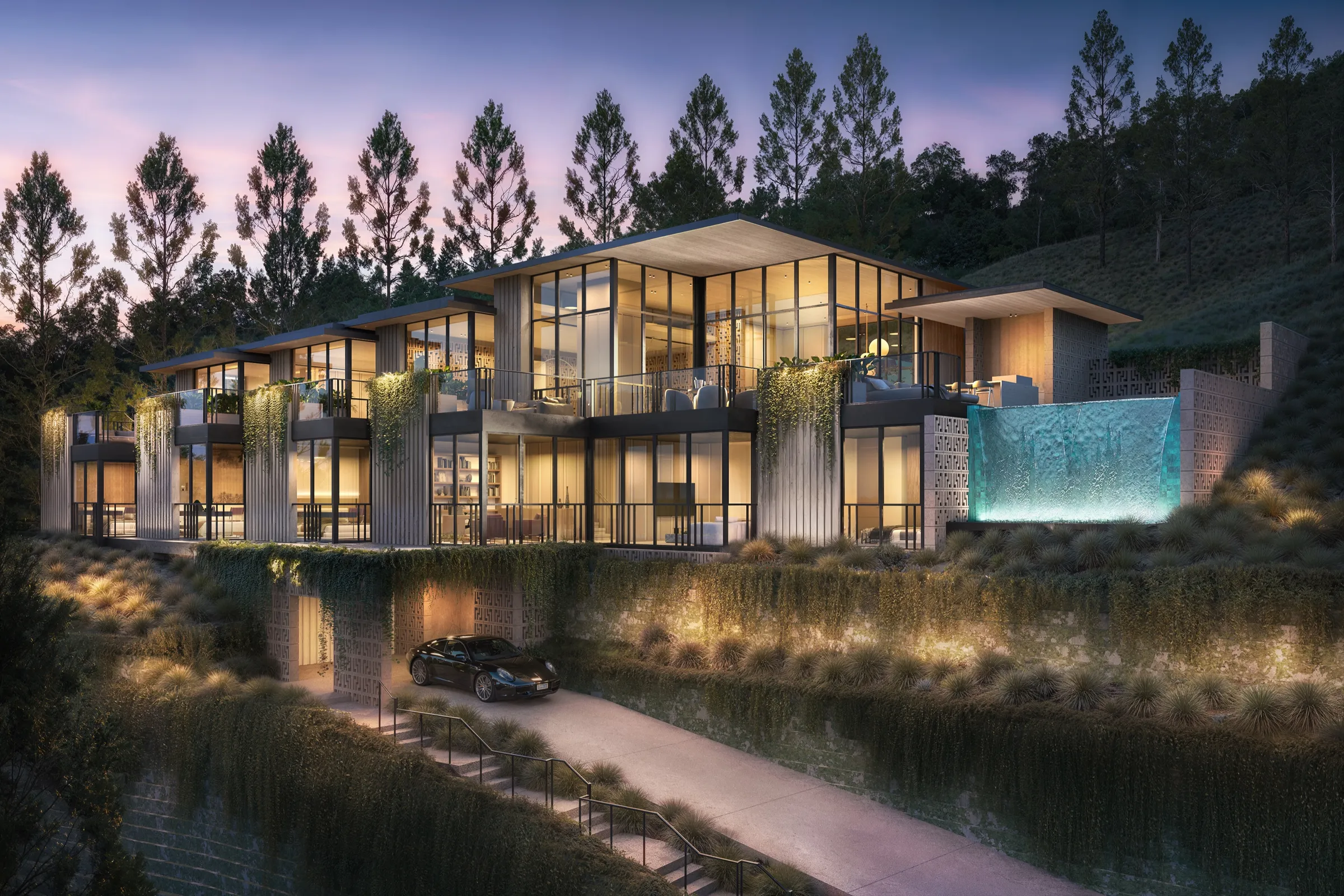
- A Clear Creek Tahoe estate we visualized during construction went on to sell before completion, a record sale for Northern Nevada outside the Tahoe Basin. See the project
- Teatro Angelina, rendered for VANROOY design, was recognized in the IIDA-LA Calibre Un-Built design award before it was built. See the project
- VeLa Development Partners advanced their Channelside towers in Tampa through city and FAA approvals with our visualization. See the project
- Our renderings were used in the winning competition submission for the Sixth Street Viaduct in Los Angeles. See the project
[ Explore further ]
Who it's for
Services
- Years in business
- 10+
- Projects delivered
- 500+
- Clients
- 150+
[ Start here ]
Every project starts with a discovery call.
Start with a discovery call. We will look at what you are building, who you are selling to, and which visuals will actually move it.
Book a call