
Case study
Villa Visala
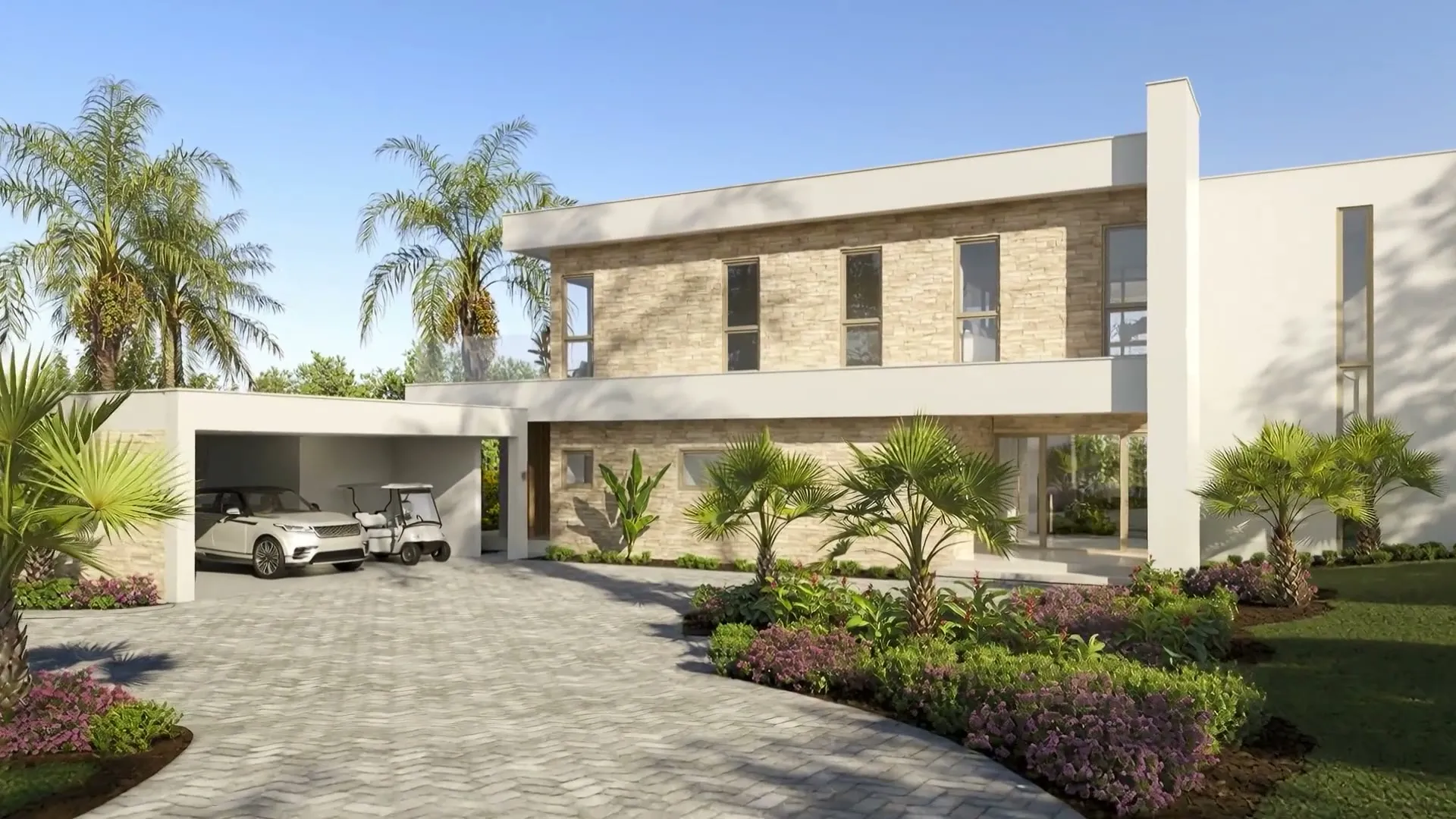
A two-story spec villa at Apes Hill, Barbados, whose architecture was finalized through the rendering process and which went to market off-plan on the renderings.
Project at a glance
Villa Visala is a two-story luxury home inside the Apes Hill golf community, set across the road from the developer's previous villa and oriented down a water course toward the golf course and ocean. The work had to do two things at once: market the home off-plan, and help finalize its design before a buyer ever saw it.
- End client
- Pure CMI, Barbados developer
- Building type
- Luxury villa, two stories
- Location
- Apes Hill, St. James, Barbados
- Purpose
- Off-plan pre-sales
- Status
- Marketed off-plan; on the market (September 2026)
- Scope
- Ten renderings, two floor plans, 60-second animation
- Engagement
- Second villa with the studio
The film
Sixty-second pre-sales animation
The challenge
A Design That Wasn't Finished Yet.
The home was to be sold off-plan, so the visuals were the product a buyer would judge. But unlike a finished design waiting to be rendered, Villa Visala arrived only partly resolved. The developer was working from architectural drawings that did not hold up under scrutiny:
- 01A guest bedroom drawn so that its door could not physically open.
- 02A closet running past nine feet deep that overpowered the room it sat in.
- 03Door and window heights inconsistent across the house.
- 04Sliding doors above the front entrance, pulling attention away from the arrival.
- 05A staircase that read, in the developer's own words, like a basement stairwell rather than a centerpiece.
A developer in this position has two paths. Send the drawings back to the architect for revision and resubmission, and wait through that cycle, or find a way to resolve the design inside the work already underway. With a tourist selling season approaching and the home needing to reach the market on time, the slower path was a real cost.
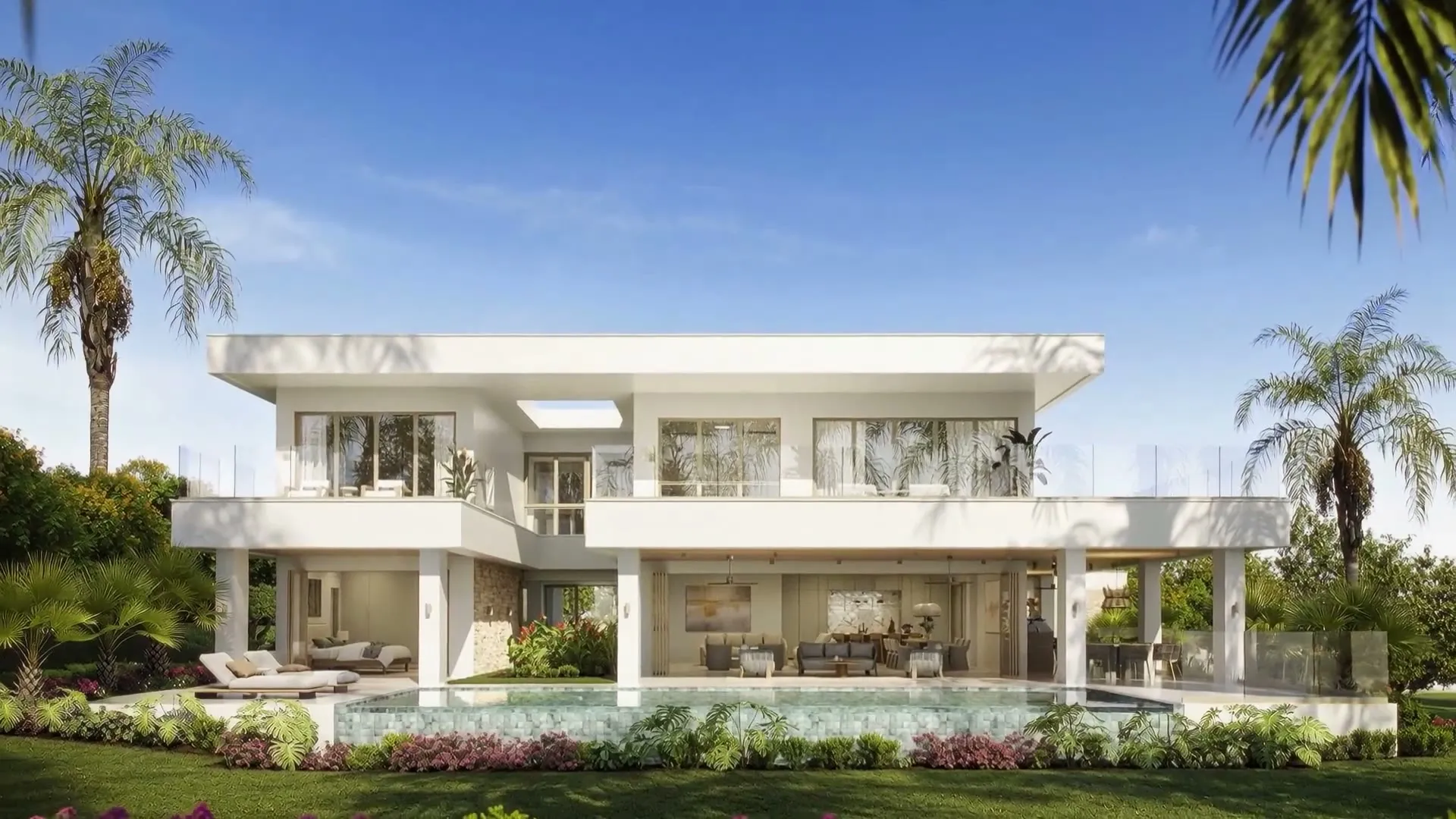
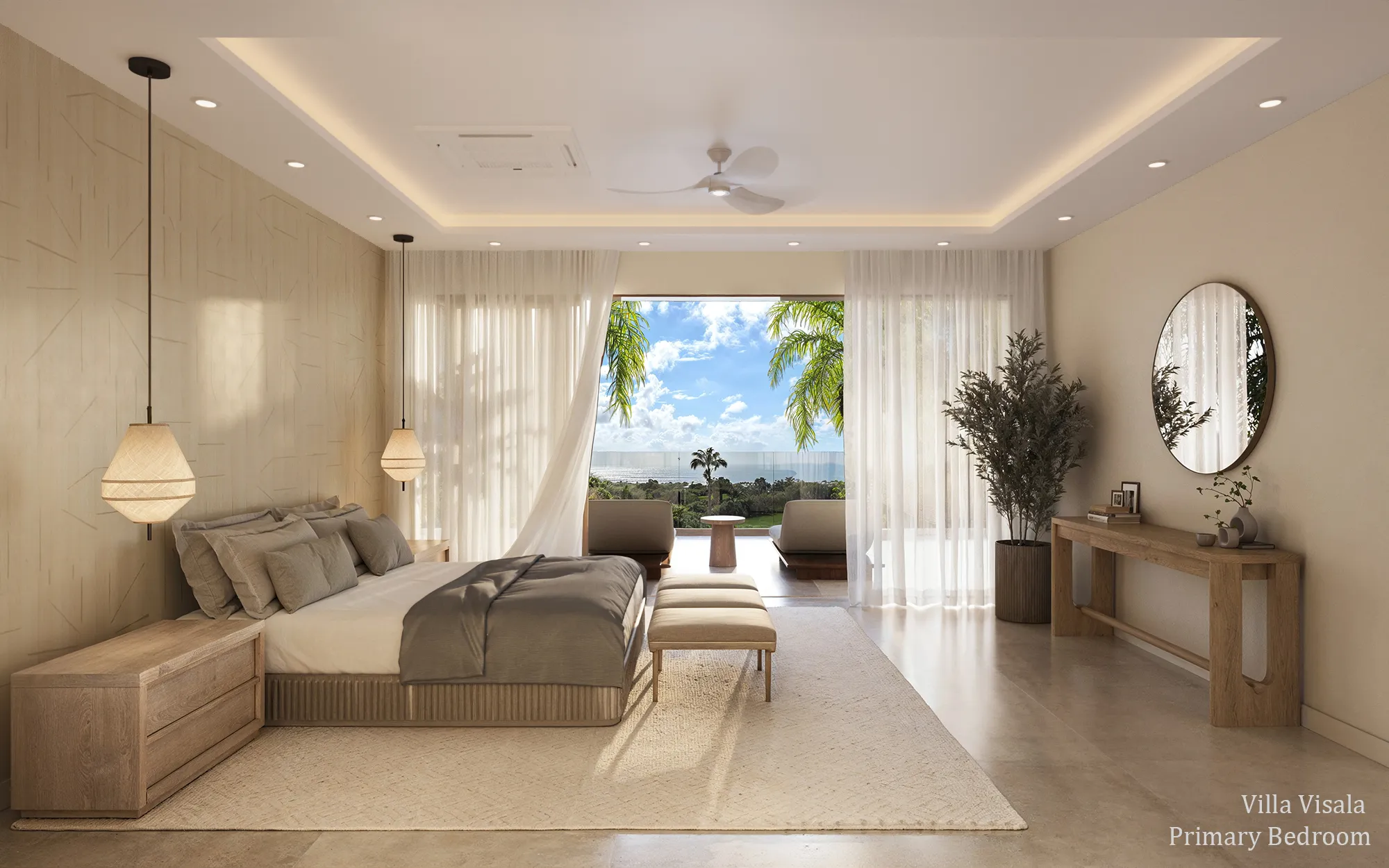
The home also had to be true to its setting. The upper floor commanded full ocean views, and the home was sited so that an adjacent lot would remain common area and never be built on, preserving the outlook. For an off-plan buyer who could not yet stand on the second floor, the renders had to prove those views were real. And the design had to suit Barbados itself. High humidity ruled out wall paneling that would not hold up. Operable windows were needed to pull breeze through the house. Nine-foot windows were expensive to procure and difficult to install on the island, which constrained the architecture in ways the renders had to respect.
The approach
The Render Became the Place the Design Got Resolved.
We treated the visualization process as the place where the design would be finalized, and ran the studio's full six-stage sequence with that purpose in mind.
Analysis and file review came first. Working through the drawings and the 3D model, we surfaced the errors the architect's set had carried, the bedroom door that could not open, the oversized closet, the inconsistent openings, and checked the room scales against the intended dimensions rather than taking the model at face value. Rather than route every correction back to the architect, we proposed absorbing the changes directly into the model. That decision is what kept the project moving.
In the model
A Staircase as the Centerpiece, Not a Back Stair.
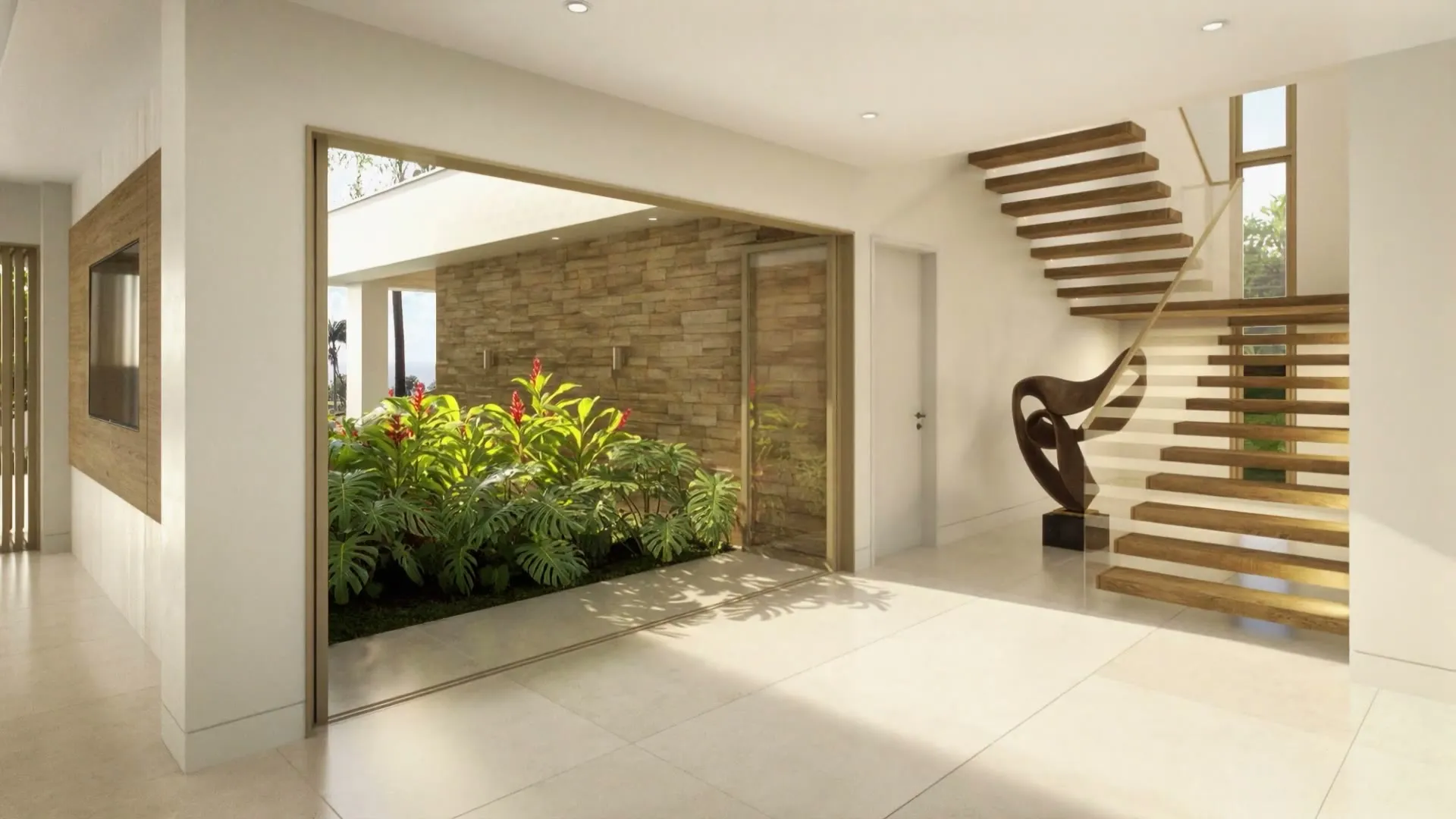
The white-model stage locked the camera angles with furniture already placed, so the developer approved composition before any surface was rendered, and it became the working surface for the design itself. We replaced the enclosed stair with a floating staircase and a glass balustrade, reconfigured the front entrance so the arrival read as the focal point, and brought the adjacent window down to the floor so the entry opened up and felt spacious.
In the revisions
What Changed in the Model.
Through the color-rendering and revision rounds, the design tightened further. Every fix below was made directly in the 3D model while the renderings were underway.
Before
An enclosed stair that read, in the developer’s own words, like a basement stairwell.
After
A floating staircase with a glass balustrade, the centerpiece of the entry.
Before
A guest-bedroom door that could not physically open, beside a closet running past nine feet deep.
After
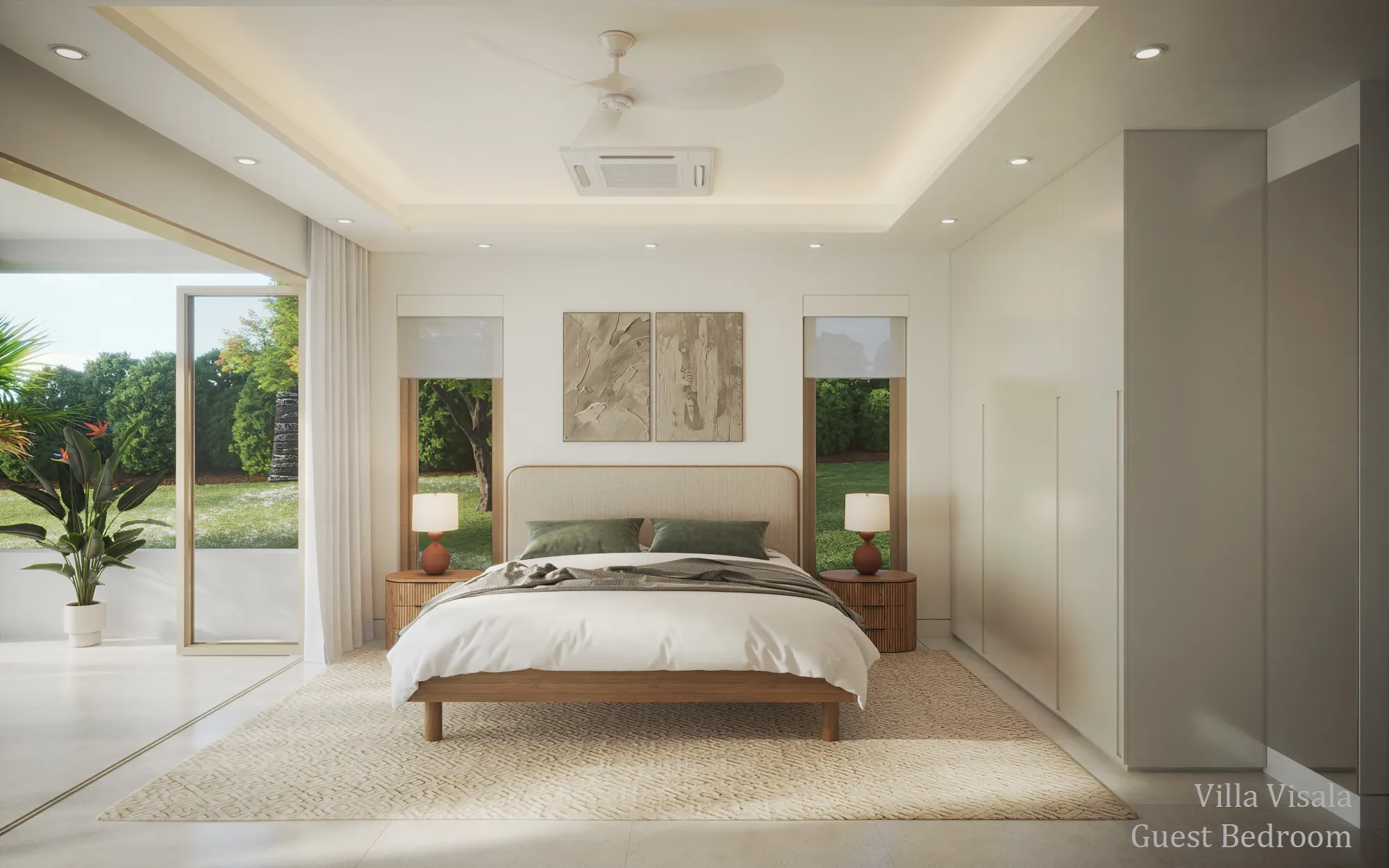
A guest room that works, with the closet brought back to the scale of the room.
Before
Door and window heights inconsistent across the house.
After
Every opening standardized to eight feet, one clean datum line that also solved the island’s procurement problem.
Before
Sliding doors above the front entrance, pulling attention away from the arrival.
After
An entrance reconfigured as the focal point, with the adjacent window brought down to the floor.
Before
Slatted ceilings, and a living area that needed more volume.
After
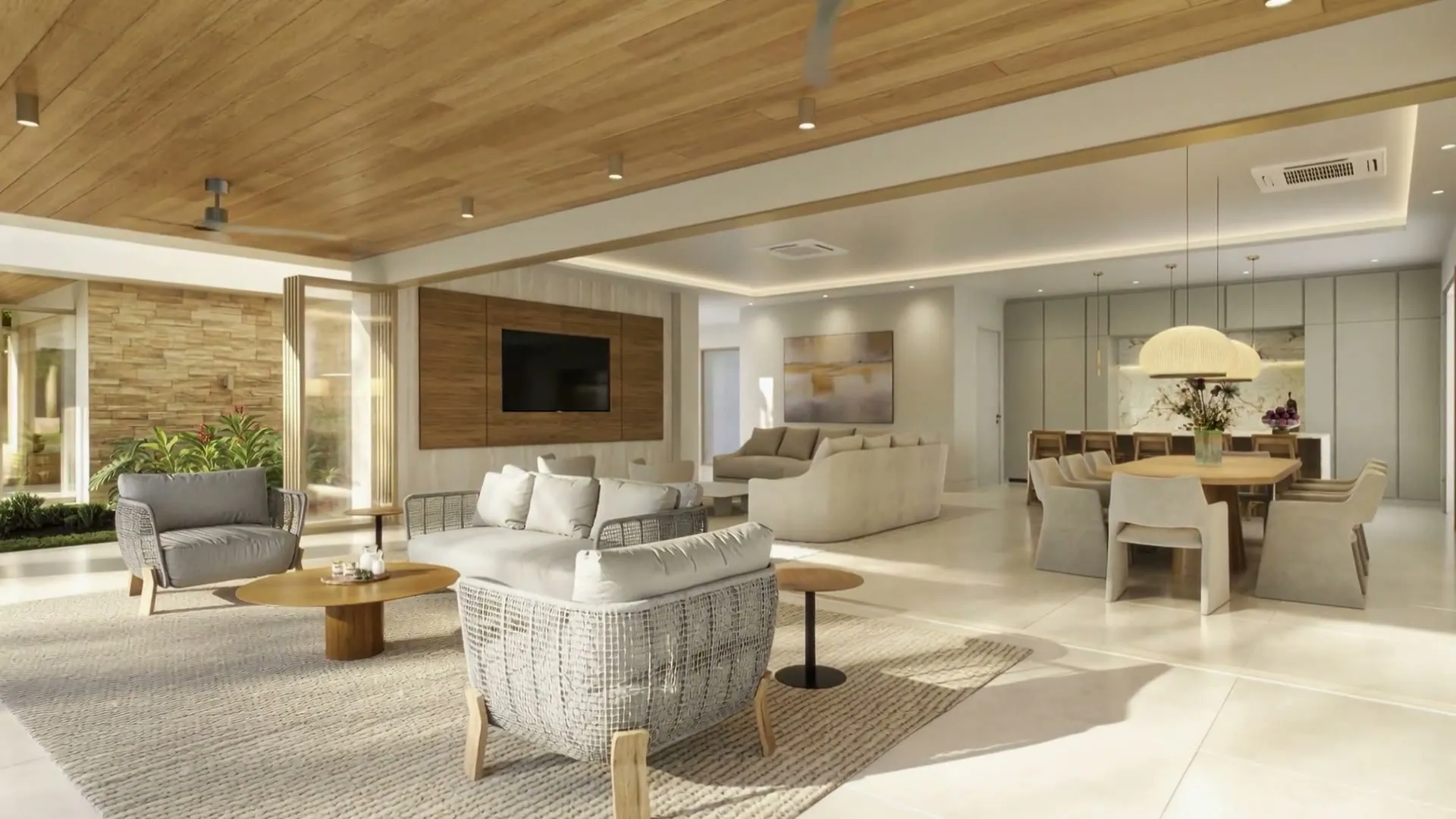
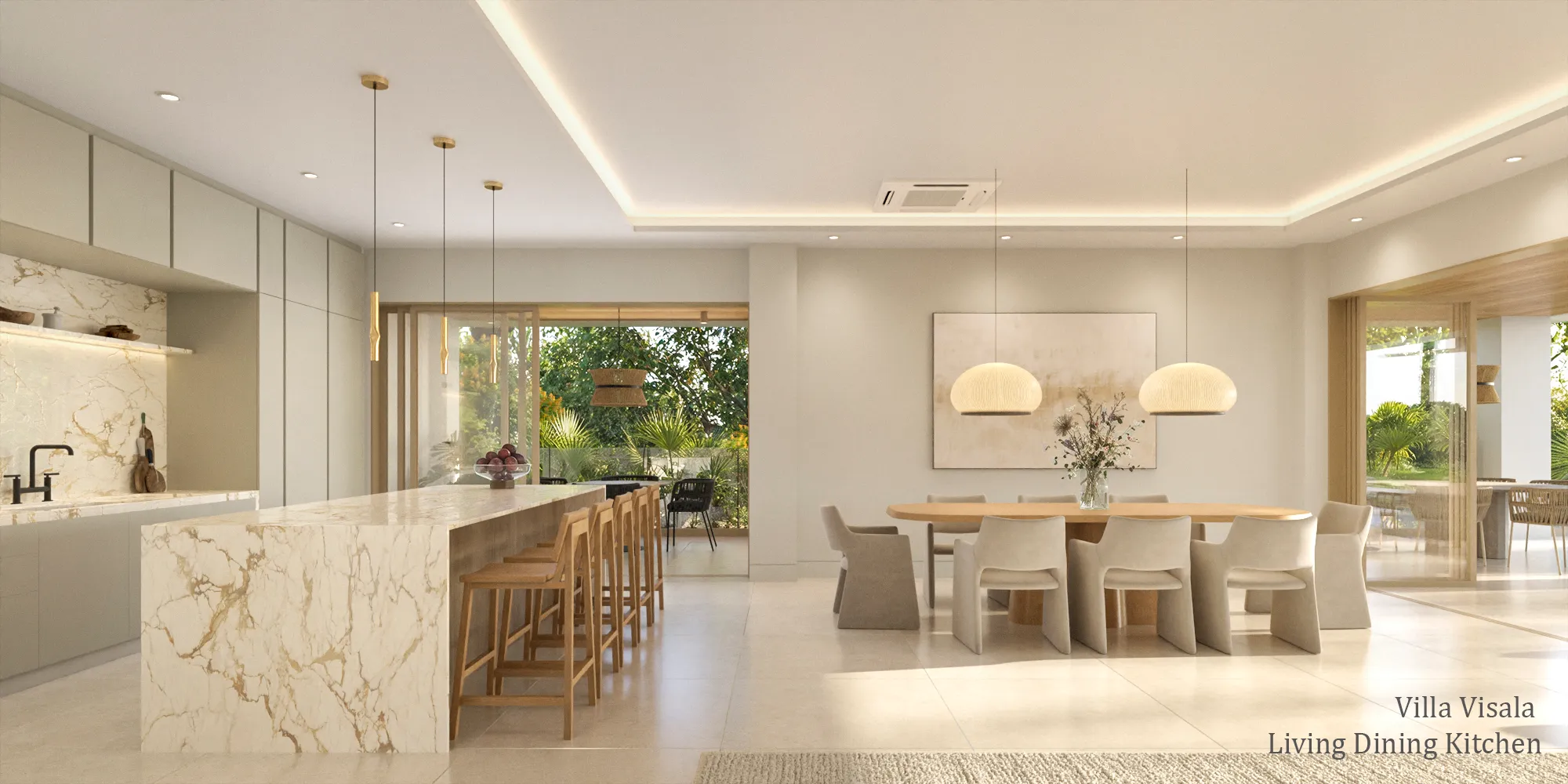
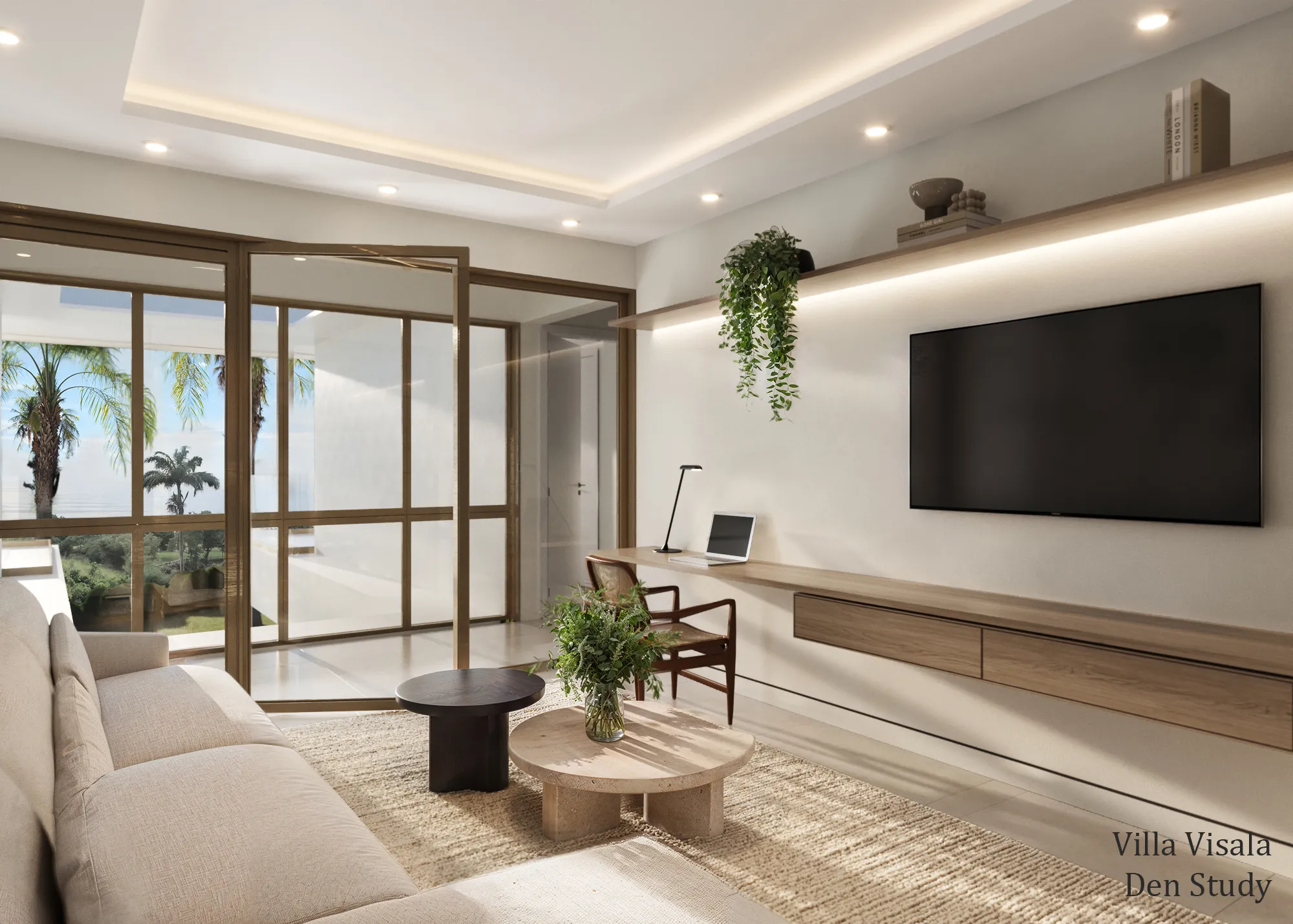
A warmer tongue-and-groove ceiling treatment, with a tray ceiling extended across the living area and a second air-conditioning unit to cool it.
Before
Visible drapery hardware and hard-to-maintain indoor planting.
After
Drapery hidden in ceiling coves, three warm-white lighting scenes in each room, and a sculptural piece lit from the stair.
Material direction
A Palette Built Not to Date.
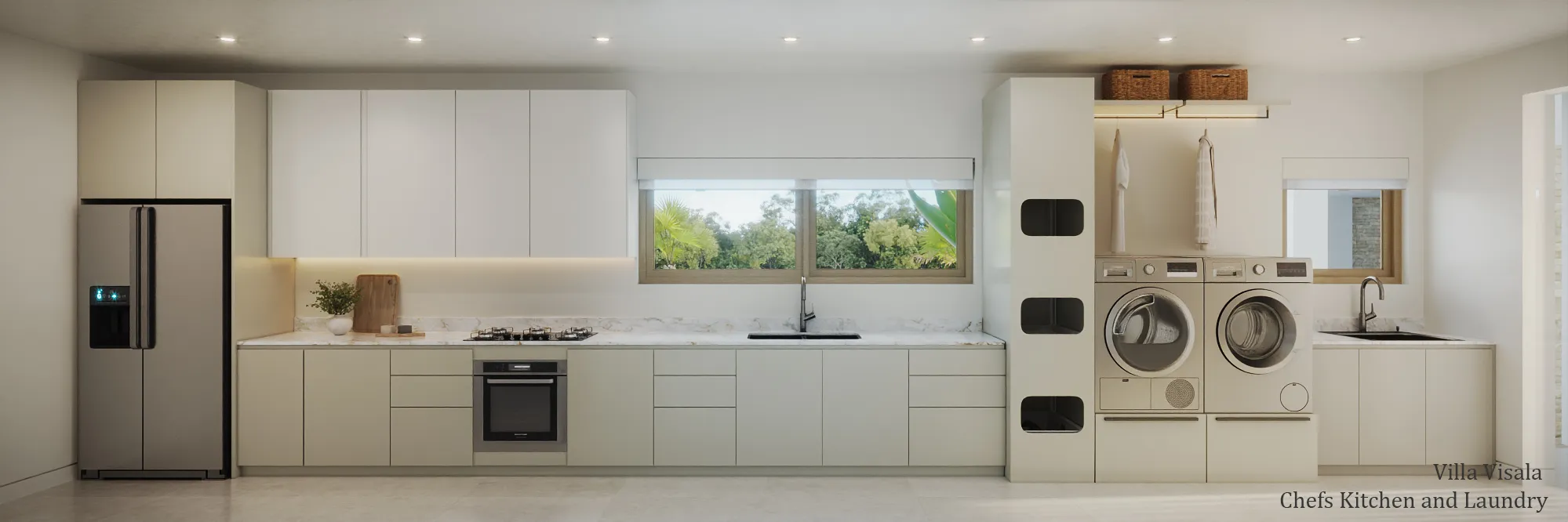
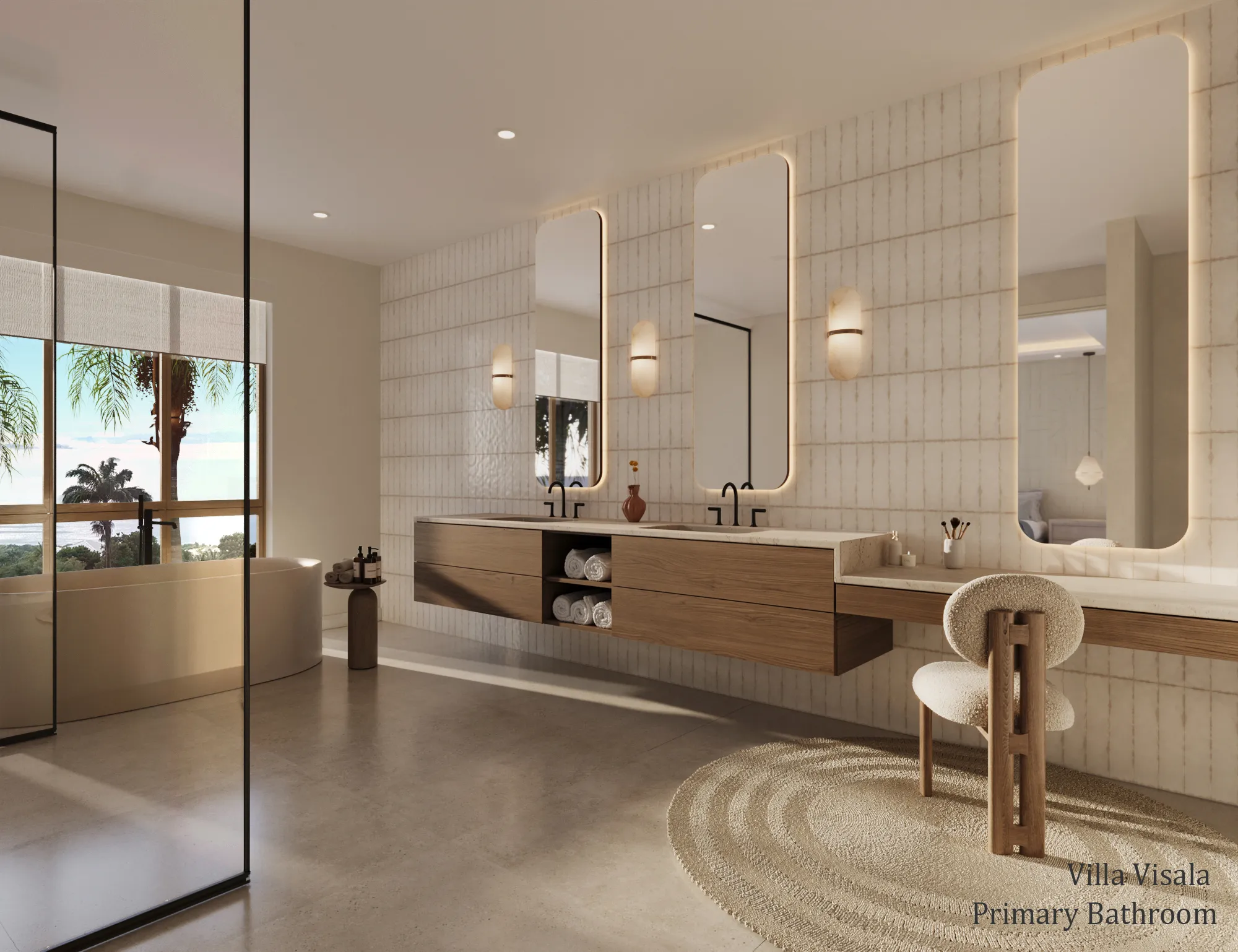
The material direction was deliberate and distinct from the prior villa. The palette stayed natural and neutral, built on limestone and warm, timeless tones meant not to date, with the front cladding of the earlier home dropped in favor of a cleaner facade. The two-tone kitchen treatment that had worked on the previous project carried forward. Fixtures that would compete with the view, like dark ceiling fans, were rendered white so the eye went to the ocean. Landscaping followed the natural vegetation of Barbados, with one palm thinned at the entrance so the house was not obscured.
To ground the upper-floor views, we prepared a drone shooting guideline so the developer's own operator could capture the actual ocean outlook at the angles our cameras used, then blended that footage into the renders. Each final image and floor plan carried the villa name and a label for the view, so a prospect could place every render in the house while the sale was being discussed.
The outcome
Finalized in the Model, Marketed Off-Plan.
The villa went to market off-plan on ten renderings, two floor plans, and a 60-second animation. With no finished home to walk through, that imagery is the sales material a buyer judges, and the natural, neutral material story that sets this villa apart from its predecessor was the face the home showed the market.
The deeper outcome is what the process resolved. The entrance, staircase, window layout, ceilings, lighting, and room proportions were all settled through the visualization process, in the model, without the delay of a redraw-and-resubmit cycle. The renderings did not simply present a finished design. They were the instrument through which the design became finished, and then the instrument that took it to market.
This was the developer's second villa with the studio. The first, Villa Solene, a single-story home across the road, had sold before it was built, and that result is what brought this commission back to NoTriangle. A shared visual language now carries across both homes, each marketed from its images, the kind of continuity that turns a single project into a standing partnership. More of that work, from Jamaica to Turks and Caicos, is on our Caribbean page.
Questions
Selling a Home Off-Plan
- Can you market a luxury home off-plan, before it is built?
- Yes. Villa Visala at Apes Hill, Barbados, went to market off-plan, marketed entirely from its visuals. With no finished home to walk, the renderings, floor plans, and animation were the product a buyer judged, which is why the design itself was finalized inside the rendering process before the home reached the market.
- Can rendering start from partial or unfinished files?
- Yes, and Villa Visala did. The drawings arrived only partly resolved, with a guest-bedroom door that could not open, inconsistent window heights, and a staircase that read like a back stair. Rather than send them back for a redraw-and-resubmit cycle, we absorbed the corrections directly into the 3D model, so the design was finalized without losing the selling season.
- How many renderings does an off-plan luxury home need?
- Villa Visala launched on ten renderings, two floor plans, and a 60-second animation. The count is chosen to cover the rooms and views a buyer actually decides on, not to picture every corner of the house.
Services on this project
Related projects
- Villa Solene, the same developer’s first villa, sold before it was built
- 3740 Sacramento Street, a San Francisco residence launched before completion
- Clear Creek, a Lake Tahoe estate sold before completion
- Chatsboro Drive, a custom home designed through rendering
- Playa Grande Coastal Villas, a Caribbean villa collection
Start with a discovery call
Every project starts with a conversation. The call is where we understand the project and whether we're the right studio to do the work.