
Case study
Muse
A 108-home condominium in Surrey's Guildford neighbourhood, made market-ready on fourteen renderings and a film.
Project at a glance
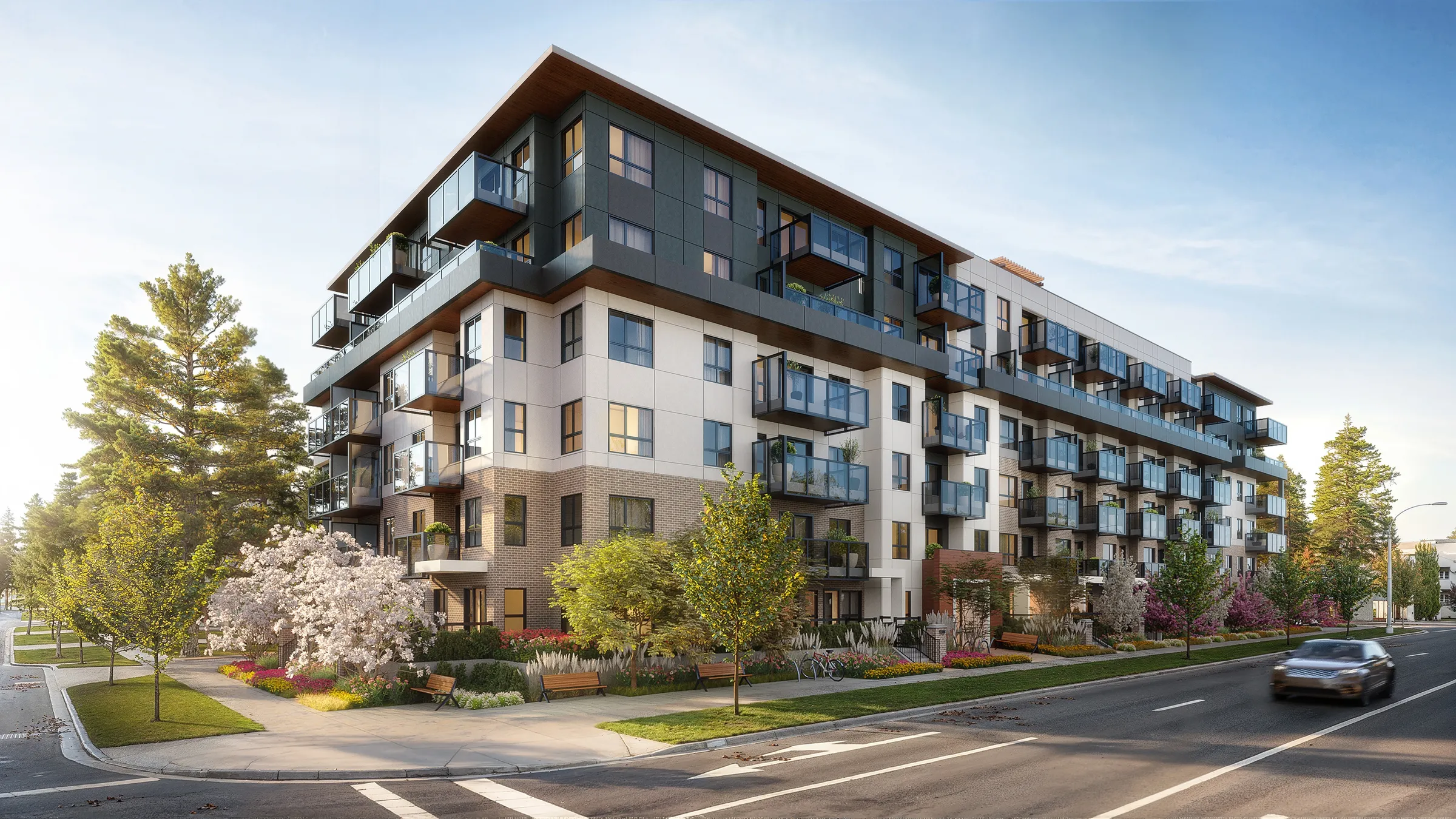
Muse is the debut of West Fraser Developments' Portrait Collection, a six-storey, 108-home condominium at 10277 150 Street in Guildford. MLA Canada engaged NoTriangle to build the visual set a pre-sales launch could run on, in a market where early buyer confidence decides launch performance. The building is under construction, and the homes have not yet been publicly launched.
- Client
- MLA Canada
- Developer
- West Fraser Developments
- Project
- Muse, six-storey, 108-home condominium
- Collection
- The Portrait Collection debut
- Unit mix
- 1 to 3 bedroom homes
- Location
- 10277 150 Street, Guildford, Surrey, BC
- Purpose
- Pre-sales launch marketing
- Timeline
- February to September 2025, seven months
- Status
- Under construction; public sales launch not yet held
- Scope
- 14 renderings, 1 animation
The film
The Muse pre-sales animation
The challenge
A Brand Debut in a Crowded Market.
When MLA Canada, one of Western Canada's most established real estate sales and marketing firms, engaged NoTriangle Studio, the brief extended beyond producing attractive imagery. Representing West Fraser Developments, MLA was preparing the pre-sale launch of a six-storey, 108-home residential community in Surrey's Guildford neighbourhood, a highly competitive market where early buyer confidence, clarity of positioning, and perceived value play a decisive role in launch performance.
The stakes were higher than a typical launch. Muse is the debut release of West Fraser's Portrait Collection, a residential brand that blends hospitality with everyday living, which made this a reputation-defining development for the client. The visuals were not a finishing layer. They were a core sales and communication tool, built to support pricing, absorption, and brand perception from the first release, and every asset had to be:
- 01Market-ready from first release.
- 02Aligned with Guildford buyer expectations and pricing strategy.
- 03Distinct from competing Surrey developments.
- 04Flexible enough for use across print, digital, sales centres, and advertising.
This is the common reality of pre-sale visualization in Canada. The imagery has to satisfy emotional appeal and commercial scrutiny at the same time, because at pre-sale there is no building to walk, only the pictures.
The approach
Marketing First, Cameras Second.
Rather than treating the work as a direct translation of drawings, we approached Muse with a marketing-first visualization strategy, shaped by audience, market context, and how each image would actually be used. Working closely with MLA, the starting point was not the model but the buyers: first-time buyers, young families, downsizers, and investors, each reading the same images for different reassurances. A competitive analysis of comparable Guildford developments followed, and from those two inputs came a visual tone that balanced accessibility with perceived quality.
Those inputs guided every decision that came after, from camera selection and lighting direction to material emphasis and lifestyle cues. The result was a cohesive visualization system designed not simply to look refined, but to build confidence, reduce buyer friction, and support early engagement.
Hero views
Every Hero Shot Answers a Buyer Question.
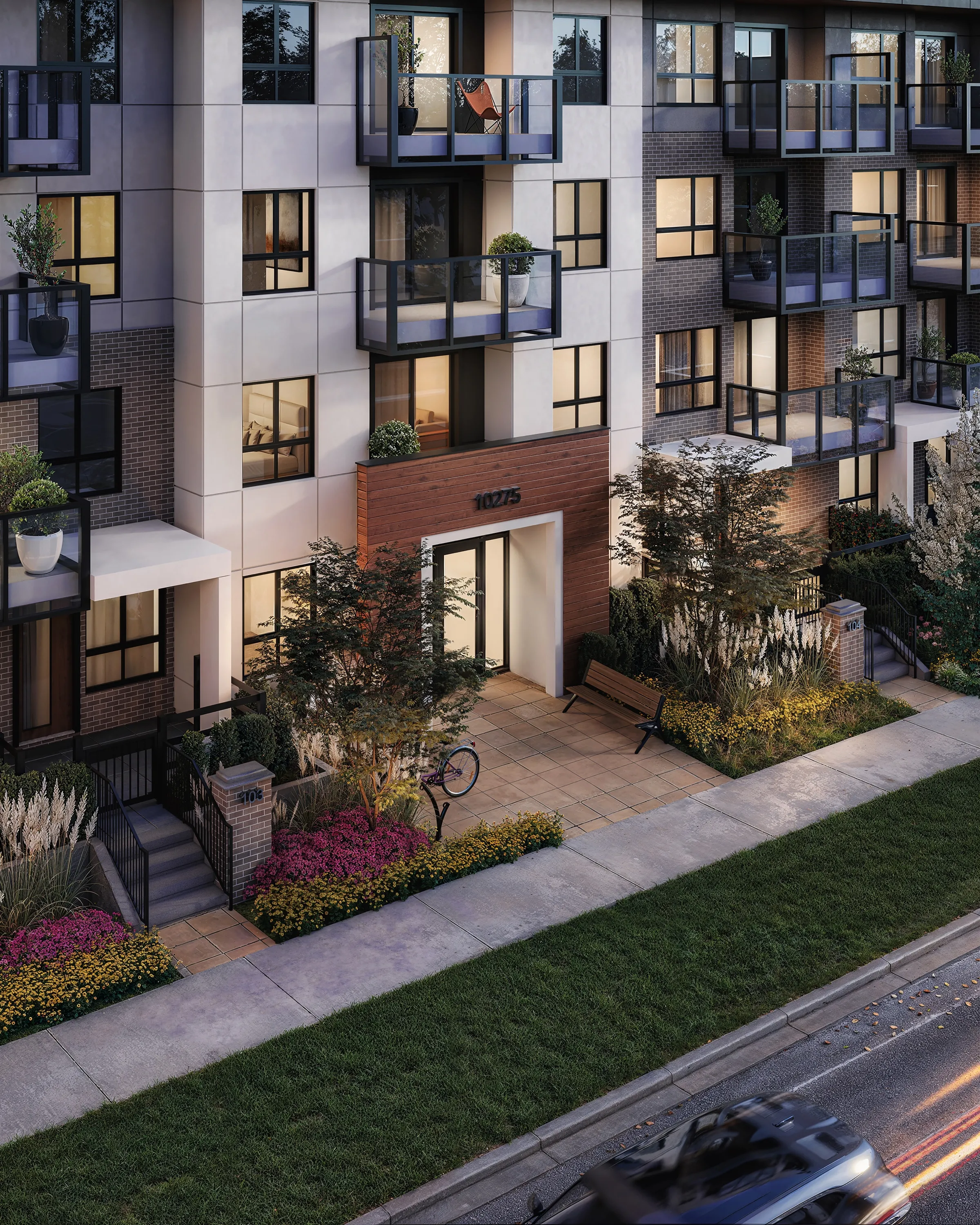
MLA arrived with preferred camera references, and our role was not to replace them but to elevate their impact. We strengthened visual hierarchy and composition, brought camera heights down to natural residential perspectives, used foreground framing to add depth and realism, and prioritized the views that communicated livability and spatial flow. Each hero shot was selected to answer a specific buyer question, so a viewer could understand the development quickly and confidently.
The production
Seven Months, and the Milestones Held.
The project ran from February to September 2025, roughly seven months, and the length reflected real development conditions rather than production drag. Every image passed through multi-layered internal reviews across MLA's marketing, design, and leadership teams. The scope itself grew along the way, from the twelve images first contracted to sixteen, plus an Animation Lite package. Drone photography was coordinated and deliberately timed for spring, so the aerials caught the neighbourhood's cherry blossoms in bloom. And the final files had to perform on paper as well as on screens, delivered as 24-inch, 300dpi print outputs for sales collateral.
MLA supplied an unusually comprehensive material package, including interior specifications, FF&E schedules, brand guidelines, and camera references. Even so, production surfaced the details that always need resolving: minor discrepancies between plans and intended use, mid-production model updates affecting exterior views, materials and construction details to confirm, and furniture assets that were unavailable and had to be replaced or custom modeled. The quality of the client's documentation let those clarifications resolve quickly, and the milestones held throughout. Once final imagery was approved, the animation phase progressed without delay.
In the revisions
Refined in Motion, Not Frozen at the Brief.
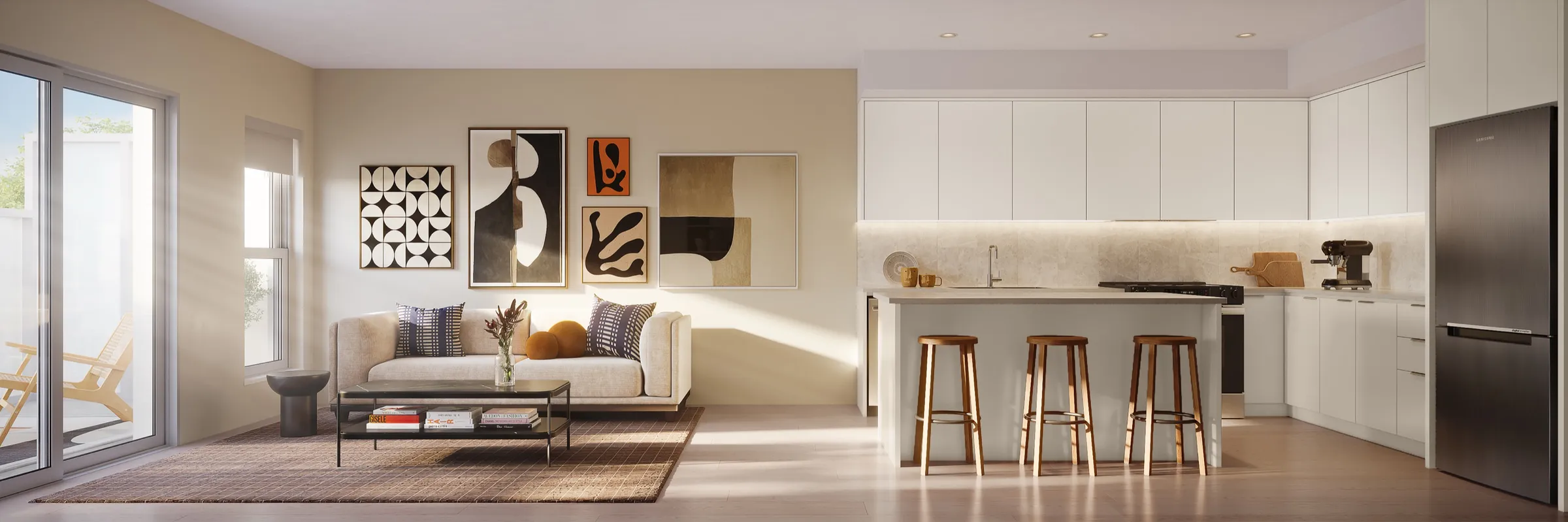
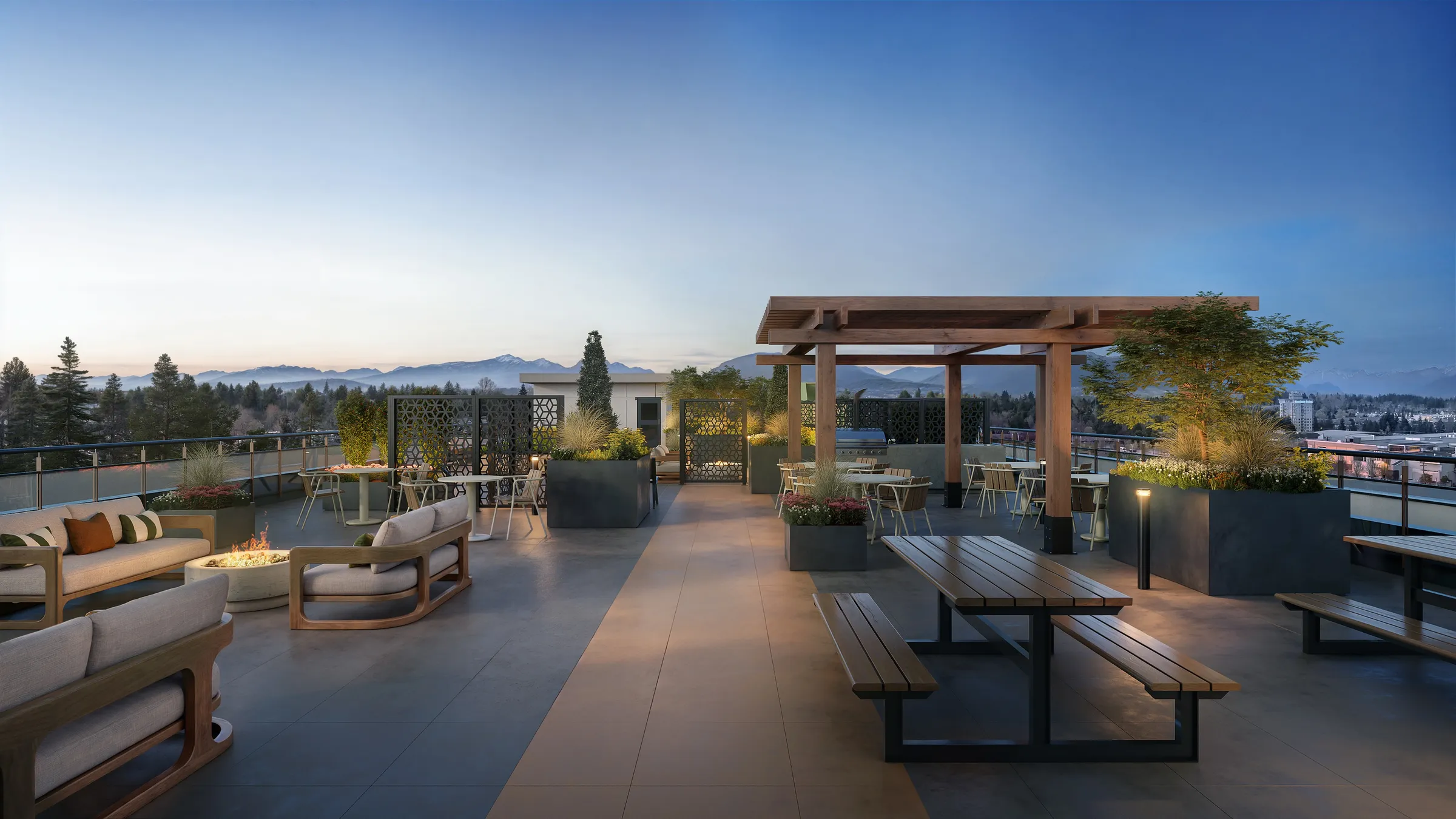
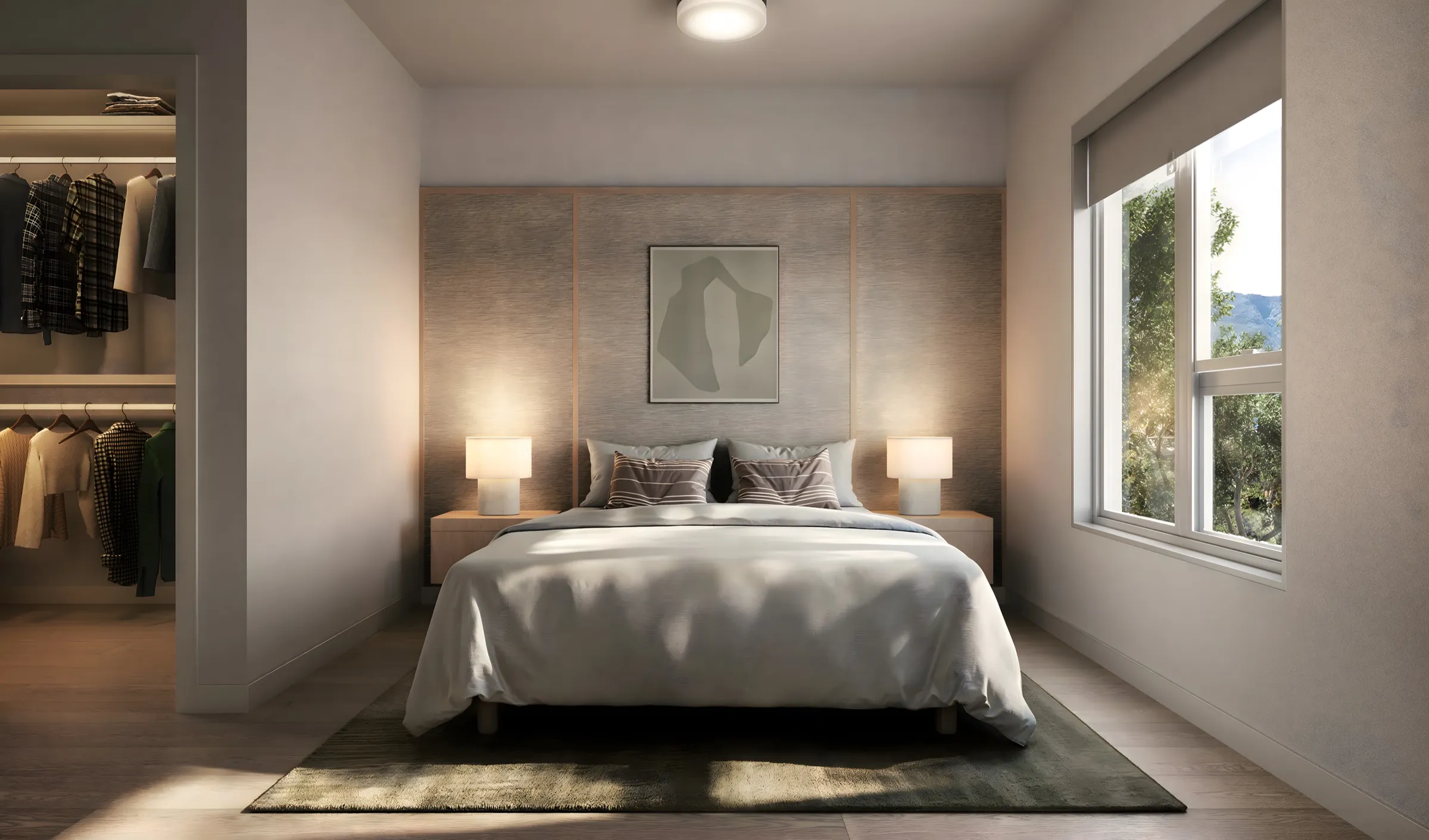
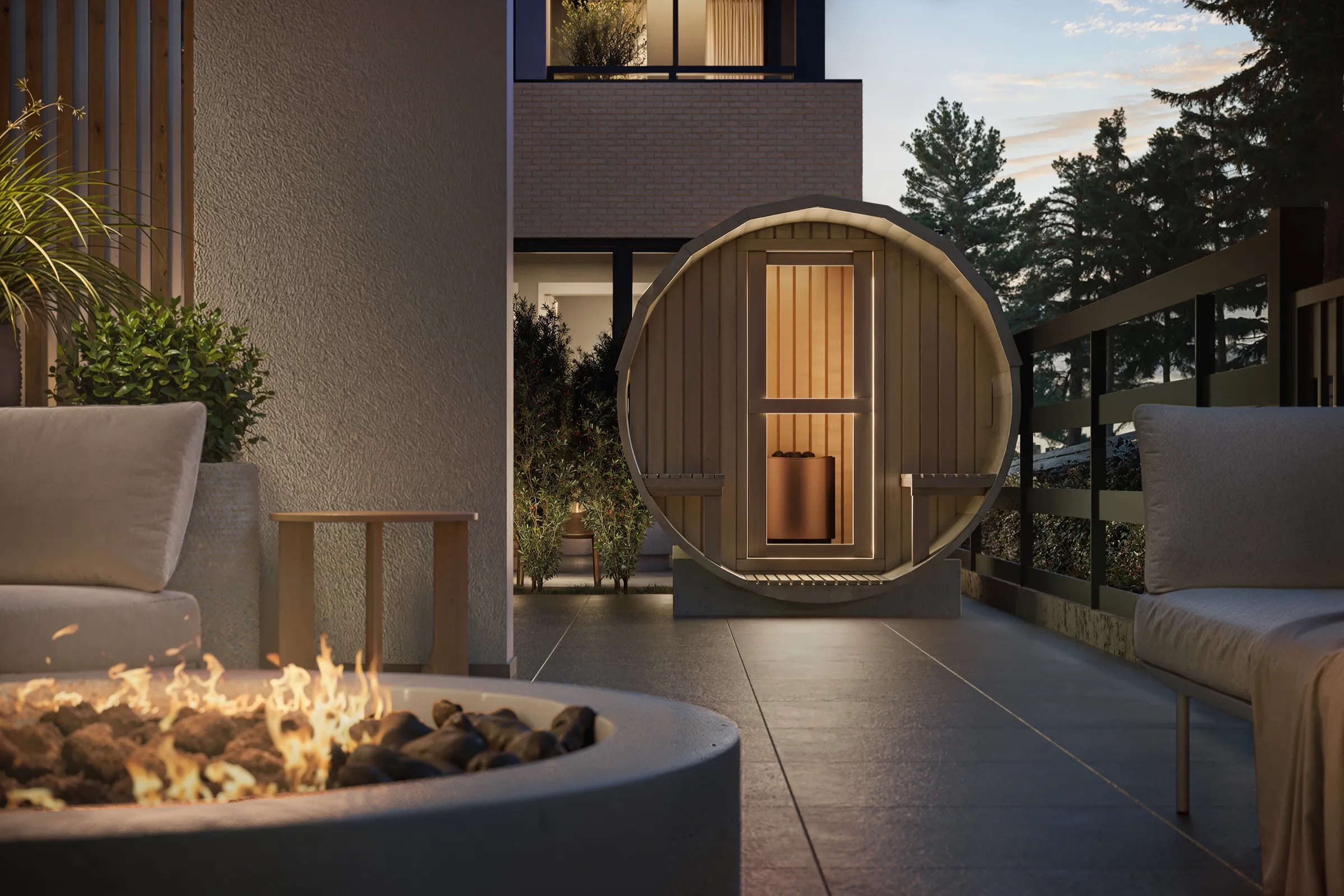
Even with a strong initial brief, the project evolved through multiple layers of refinement, which is typical for a development preparing to meet the market. People were repositioned within the key amenity scenes. The lifestyle pacing and content of the animation were adjusted, its camera order re-sequenced to improve narrative flow, and title cards introduced to strengthen storytelling continuity. Kitchen and bedroom layouts were refined as updated design feedback arrived.
To support this, we applied a flexible revision framework, extending select updates beyond contractual limits to maintain cohesion and make sure the final output reflected the client's evolving direction rather than a snapshot of where the brief had started.
Art direction
Aspirational Warmth, Built to Read as a Brand.
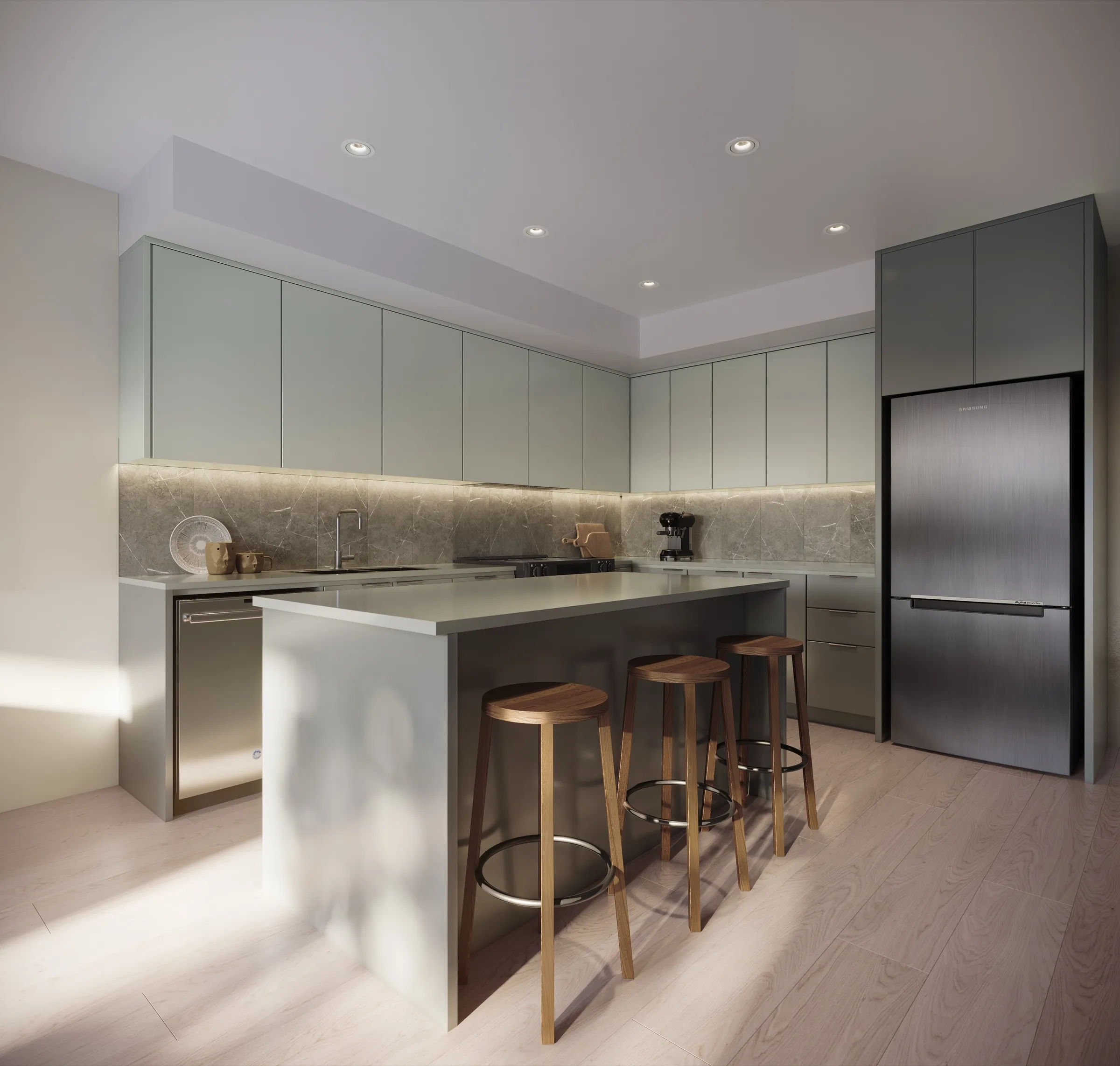
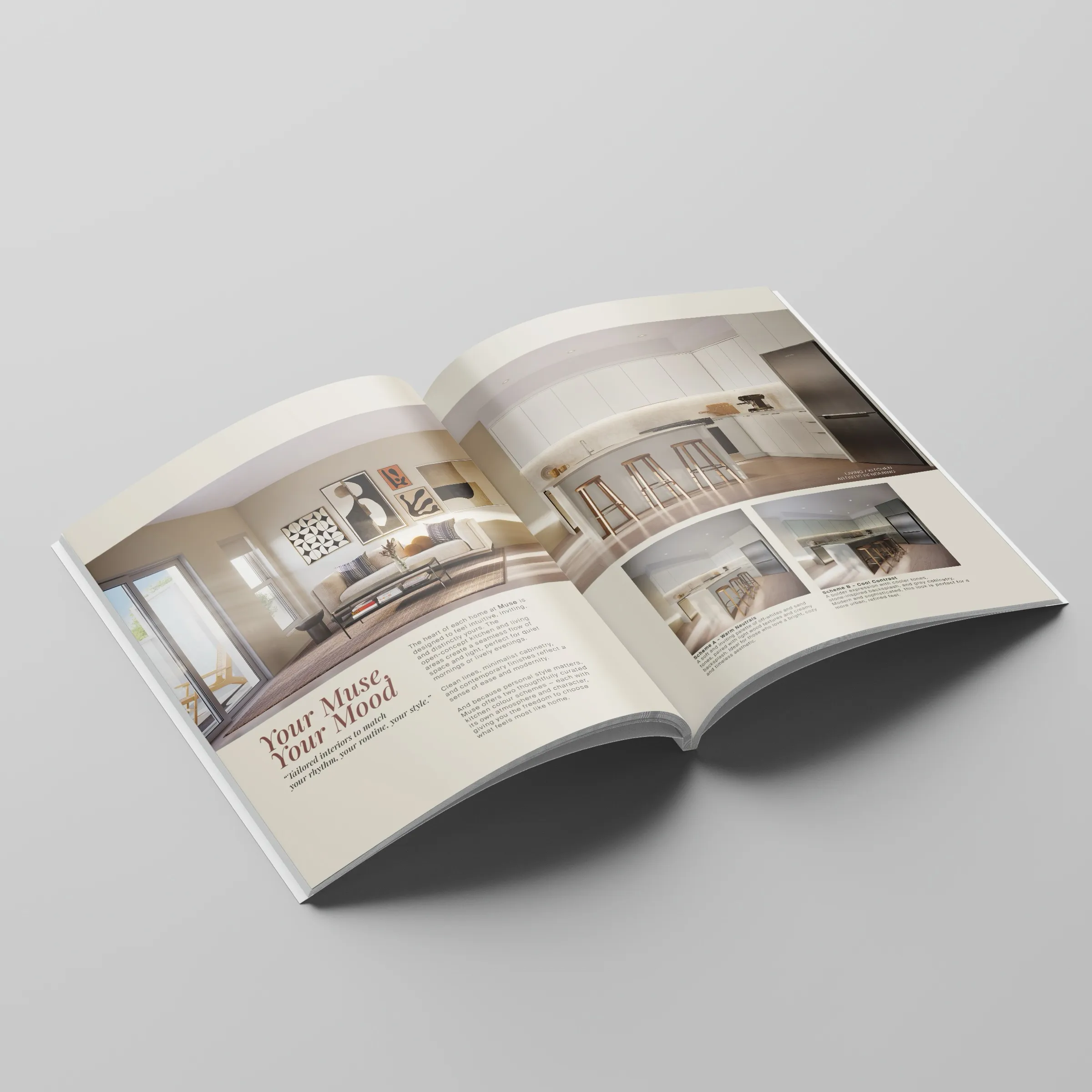
The interior palettes and furniture selections were already defined, so our contribution focused on translating specifications into emotional experience. The visual direction centered on aspirational warmth, clean, bright lighting with subtle warmth to convey comfort and desirability. Modern sophistication came from balanced neutrals, tactile materials, and controlled contrast. And because the set had to function as a single brand narrative, consistency at scale mattered as much as any individual frame: one unified visual language across all deliverables.
To position the development as modern and aspirational, the FF&E styling was curated to avoid a staged or generic feel, lighting behaved like premium photography with controlled reflections and depth, lifestyle cues were aligned with MLA's marketing language, and the Animation Lite package moved with cinematic camera work. The aim was to present Muse not simply as a building, but as a lifestyle buyers could immediately imagine themselves stepping into.
The package
Fourteen Renderings, One Film, Every Channel.
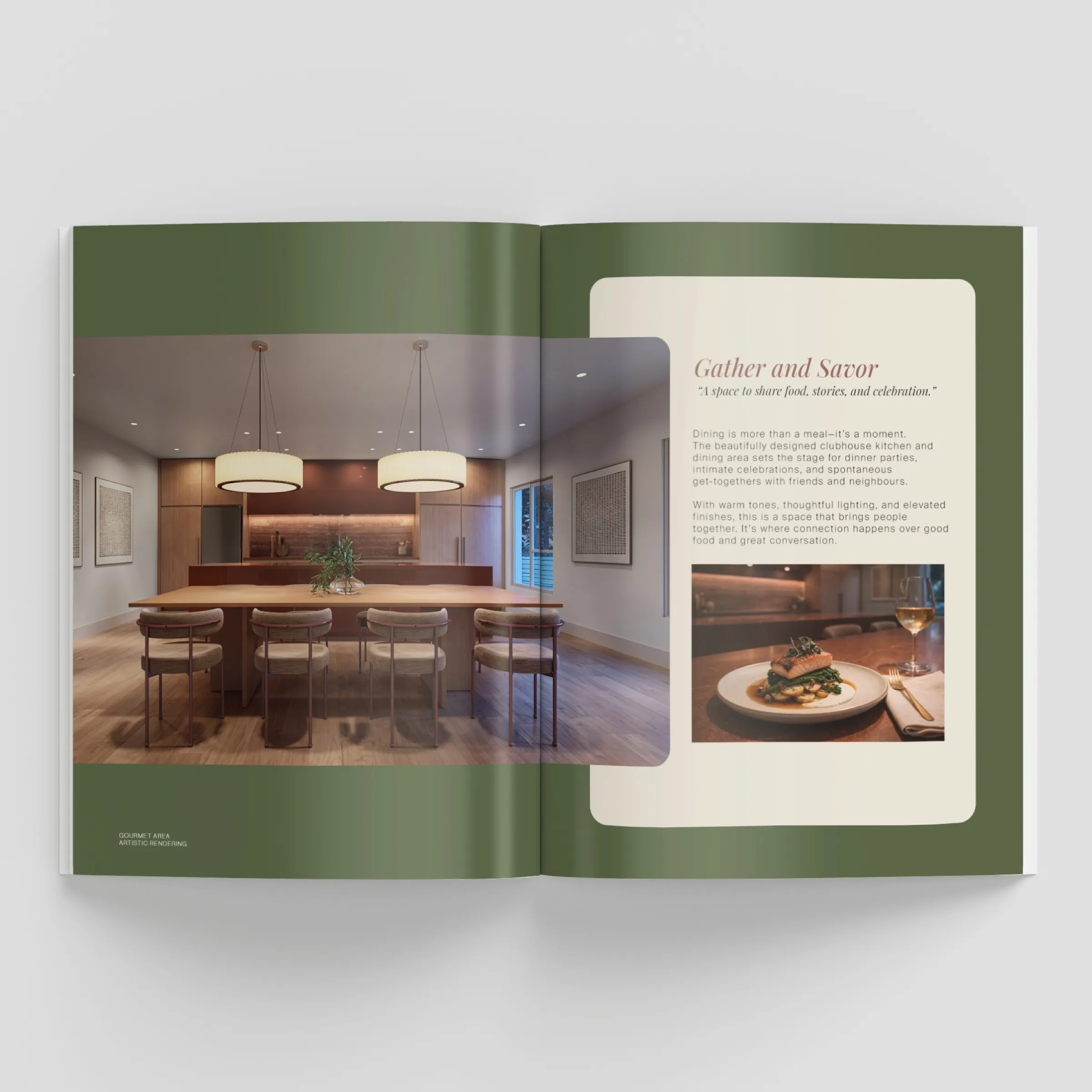
The final visualization package comprised three exterior renderings, four interior renderings, six amenity renderings, one aerial, and one animated film, delivered as 4K print-ready masters alongside assets optimized for web, MLS, social media, and advertising.
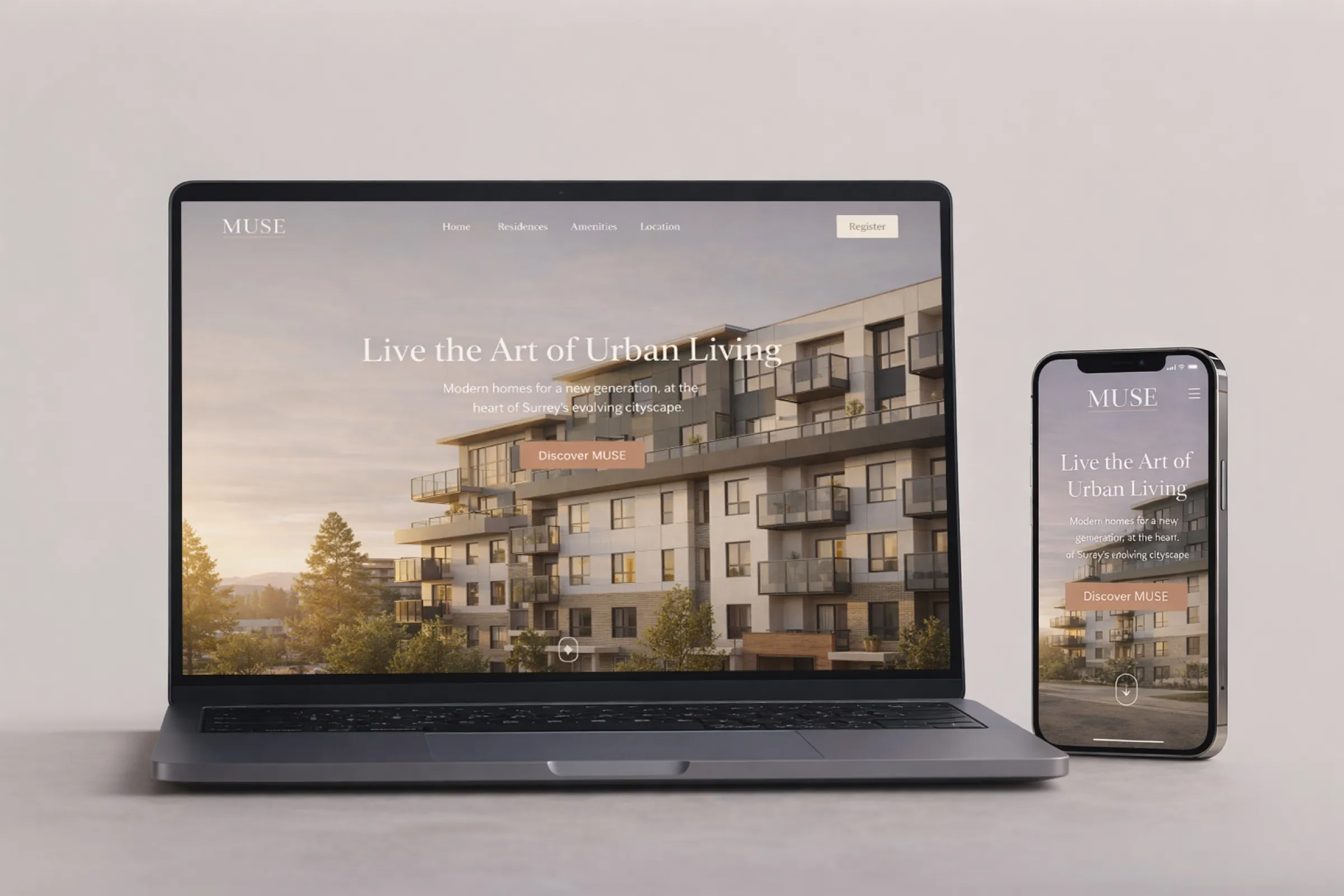
That set was built as the foundation of MLA's pre-sales and marketing rollout, sized for every channel it would need: the sales centre, brochures and A-kits, the project website, digital advertising campaigns, MLS and listing platforms, and social media and outdoor advertising.
The outcome
A Launch-Ready Set, Whenever the Market Call Comes.
Working with the NoTriangle team has been a pleasure. They were very easy to work with and delivered a great final product.
Surjan Pahal, Marketing Manager, MLA Canada
MLA and West Fraser came away with a complete, approved set, aligned with buyer expectations, competitive context, and MLA's sales strategy, and built to serve as the core pre-sales asset. There is no finished building to photograph and no show suite to walk, so whenever Muse meets buyers, this set of images is what they will see. The honest status today: the building is under construction, the homes have not been publicly launched, and the developer is still weighing how Muse will come to market. The package was built to work for whichever path it takes.
The deeper point is what made the set work. The set works because it was grounded in clear objectives, audience insight, and disciplined collaboration through seven months of reviews, scope growth, and design refinement. For a debut brand like the Portrait Collection, that consistency is the difference between a collection of pretty pictures and a launch identity.
For developers preparing a pre-sale launch in Vancouver, Surrey, and Western Canadian markets, Muse reflects how visualization operates not as decoration, but as a practical tool for pricing, investor communication, and pre-sales execution.
Questions
Pre-Sales Visualization for a Condominium Launch
- Why do developers commission 3D renderings before a condominium launches?
- At pre-sale there is no finished building to show, so the renderings are the product buyers evaluate. For Muse, a 108-home community in Surrey's Guildford neighbourhood, MLA Canada commissioned the visuals as a core sales tool, built to support pricing, absorption, and brand perception from the first release, not as a finishing layer added at the end.
- What goes into a pre-sale condominium visualization package?
- Muse ran on 14 renderings, covering exterior, interior, amenity, and aerial views, plus one animation and coordinated drone footage. The set was delivered as 4K print-ready masters with assets optimized for web, MLS, social, and advertising, so it is ready to carry a launch across the sales centre, brochures, and digital campaigns.
- How do renderings work as a sales tool rather than decoration?
- The work started from audience and market context, the buyer personas, competing Guildford developments, and how each image would be used, before any camera was set. Every hero view was chosen to answer a specific buyer question, so the imagery built confidence and reduced buyer friction instead of simply looking refined.
- How were revisions handled across seven months of reviews on Muse?
- Each Muse rendering carried two revision rounds, gathered as markup comments in our shared review platform on versioned files, and we told MLA up front where the line sat: swapping the rooftop railings to glass or adjusting furniture fits inside a round, while major architectural wall changes would be quoted as new scope. When the architect removed the slat walls around the outdoor wellness area mid-production, we updated the model and re-issued white model views as a matter of course rather than counting it against a round. And when MLA wanted extra camera angles, a kitchen detail shot and the clubhouse work area, we priced them as additional views and confirmed the cost in writing before starting.
Services on this project
Related projects
Start with a discovery call
Every project starts with a conversation. The call is where we understand the project and whether we're the right studio to do the work.