
Case study
1800 Park Avenue
A Workshop/APD concept for two residential towers over a public plaza in East Harlem, given visual form through rendering.
Project at a glance
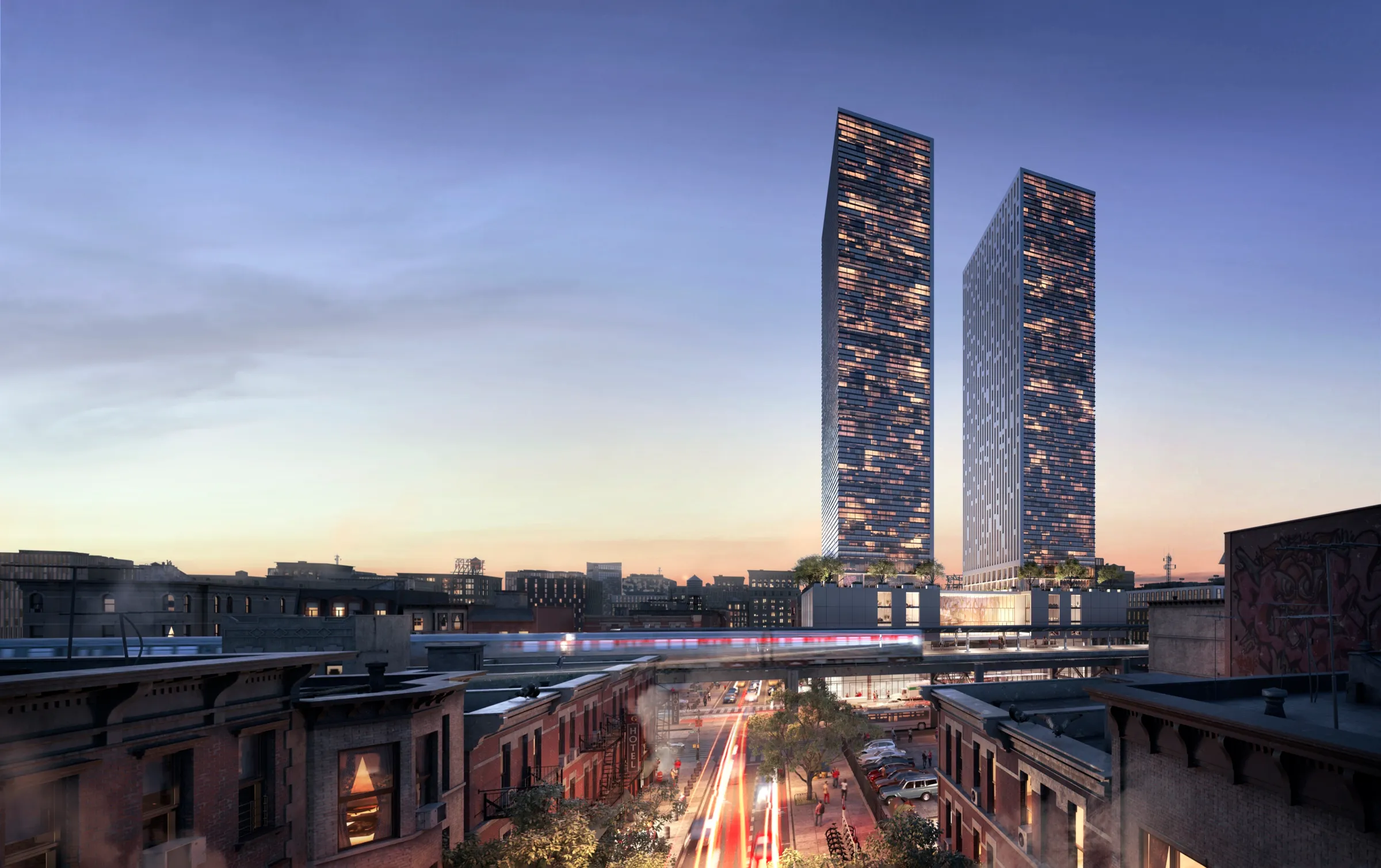
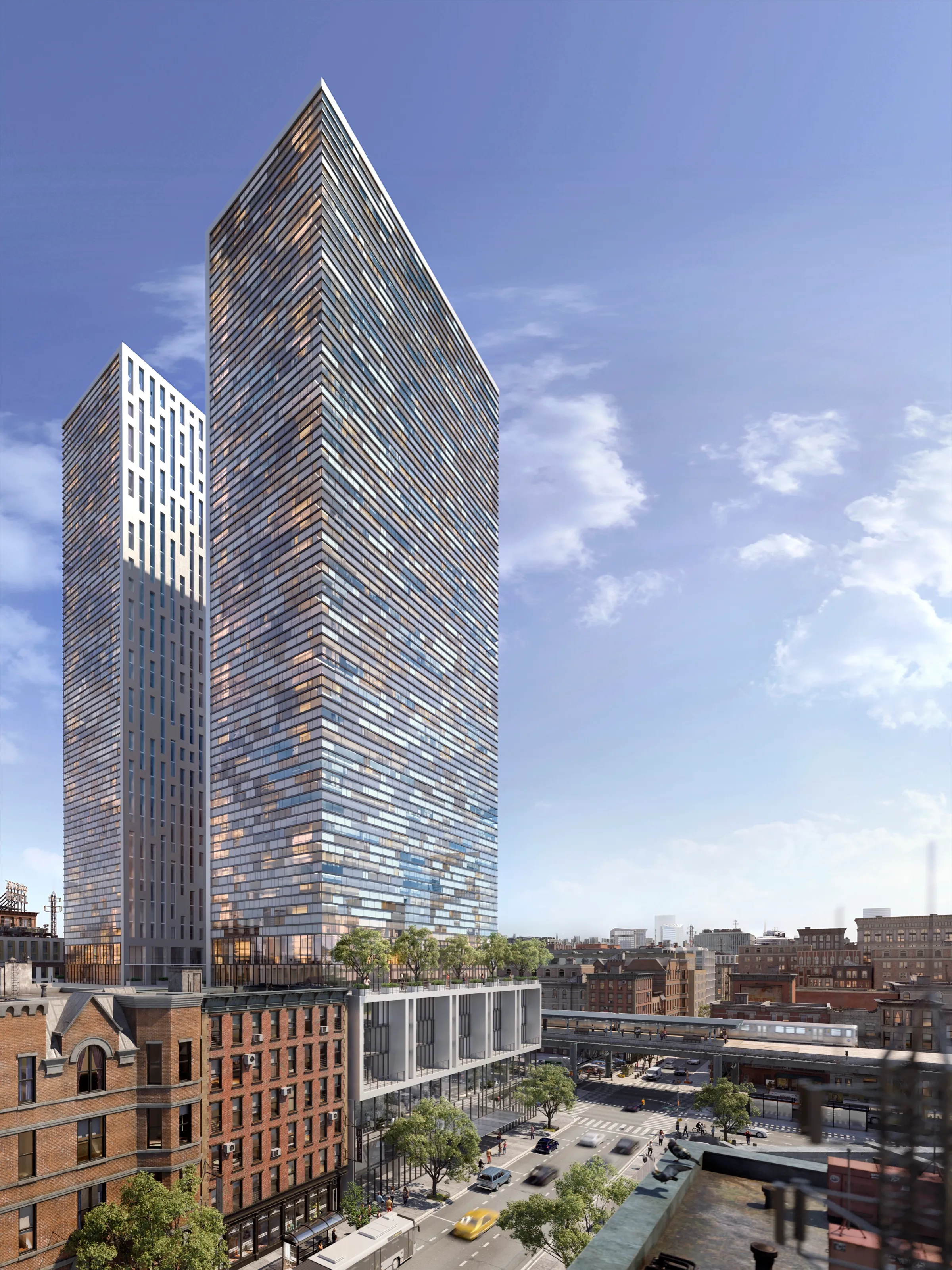
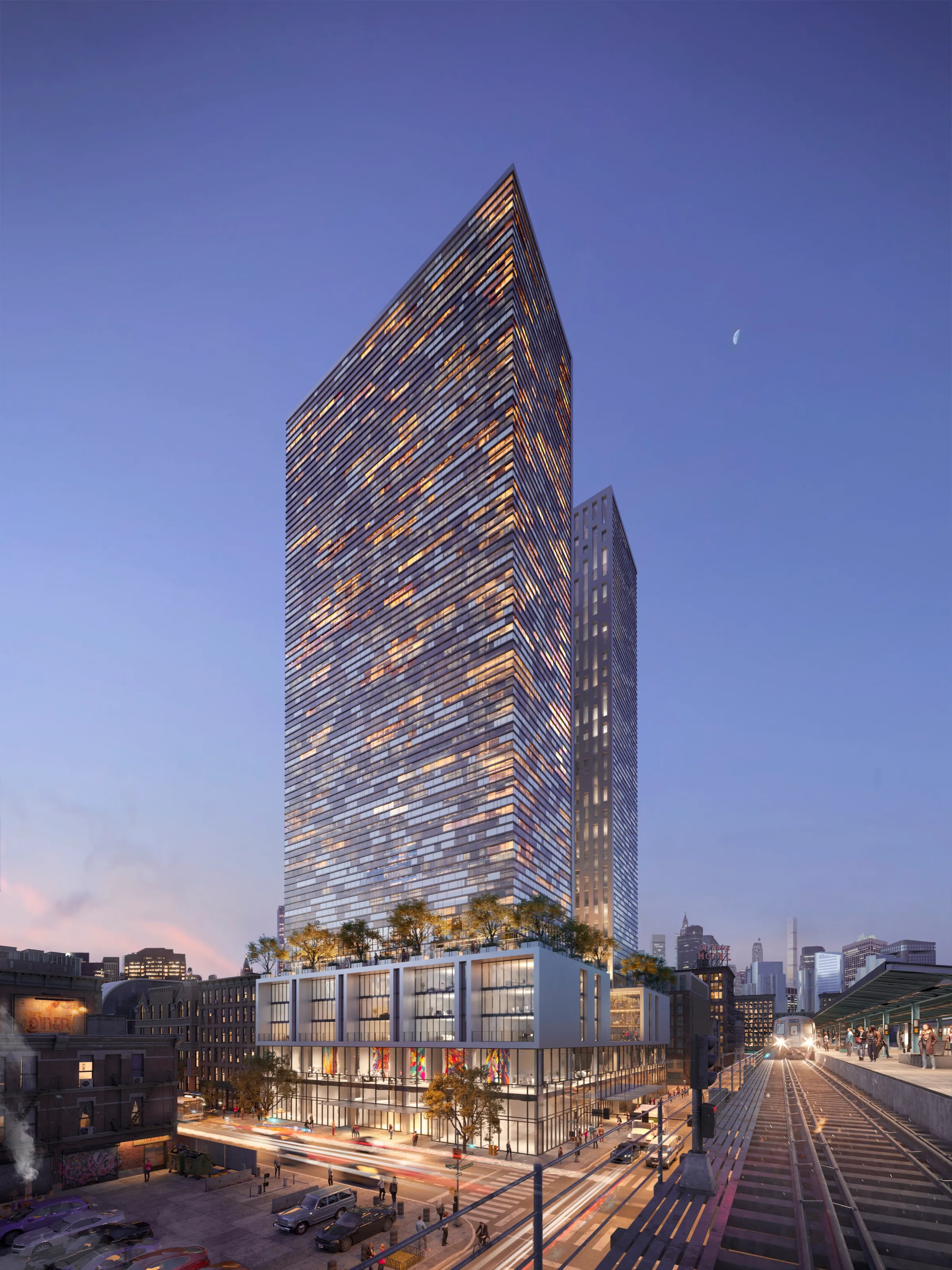
NoTriangle produced four renderings of Workshop/APD's concept for 1800 Park Avenue in East Harlem, two residential towers rising from a commercial podium beside the elevated Park Avenue rail line, with an elevated public plaza between them. The project is an unbuilt design concept, and the renderings are what give the idea visual form.
- Architect
- Workshop/APD
- Building type
- Twin residential tower concept over a commercial podium
- Location
- East Harlem, New York
- Purpose
- Give an architectural development concept visual form
- Scope
- Four renderings, skyline, elevated plaza, and two tower views
- Status
- Concept, unbuilt
- Engagement
- Part of an ongoing relationship with Workshop/APD
The concept
Two Towers and a Plaza in the Air.
Workshop/APD's scheme proposes two residential towers rising from a shared commercial podium in East Harlem, knit into a neighborhood defined by its elevated rail line. The towers wear a facade of translucent and opaque panels and windows, a matrix flexible enough to carry mixed programming, from plaza-level townhomes with private outdoor space to apartments above and a hospitality component within.
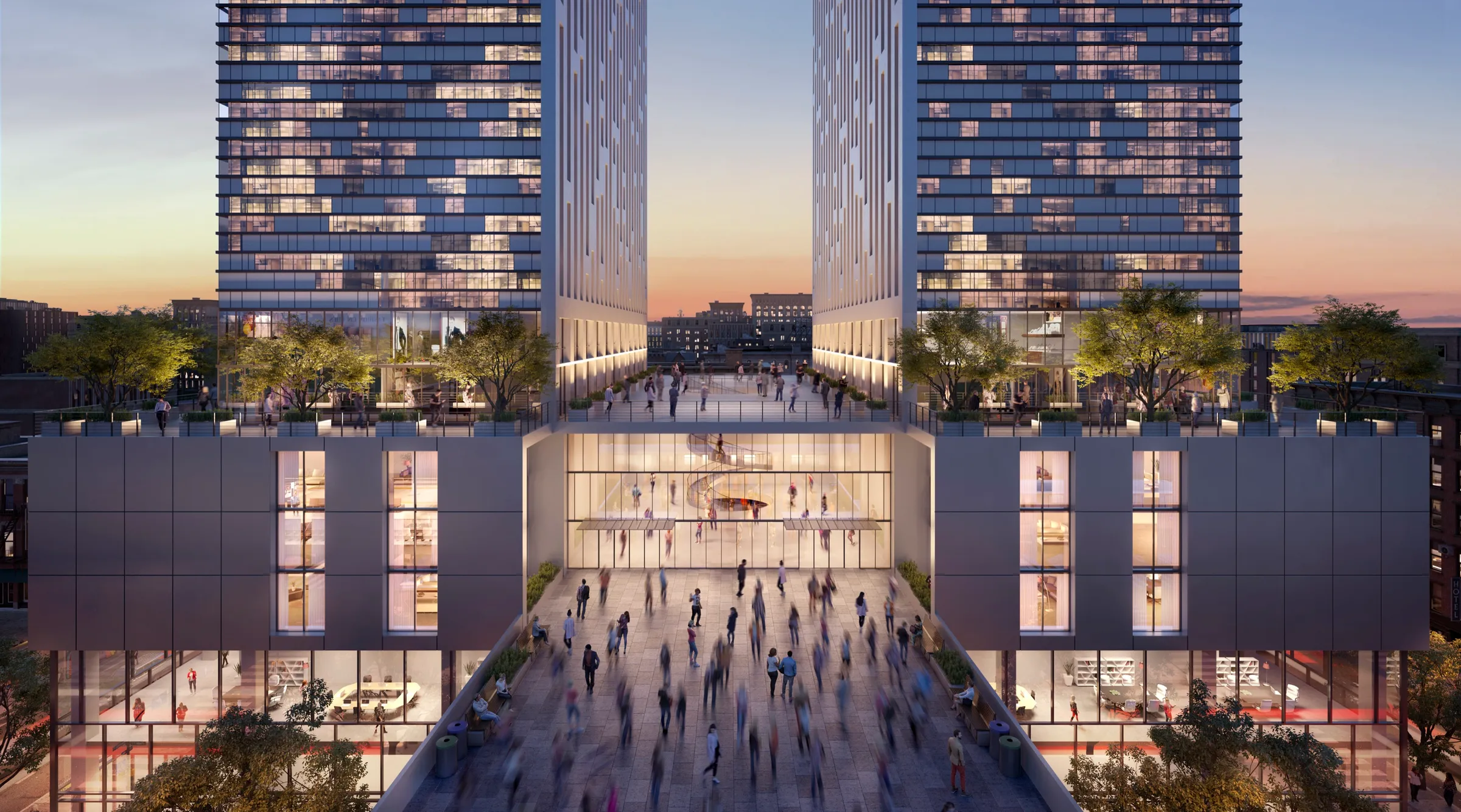
The idea at the heart of the design is the elevated public plaza between the towers, lifted above the street on the podium and connected to the 125th Street station, a piece of public space meant to give back to the community as much as the building takes from the block. It is an ambitious, civic-minded concept, and one that only exists, for now, as a design.
The public room
Where the Concept Comes to Life.
The plaza render is the one that explains the whole idea: an elevated public room between the towers, filled with people at dusk, the retail and amenity floors glowing beneath it. Putting life into the scene, the crowds, the lit storefronts, the warmth, is how a render turns a civic ambition into something a viewer can imagine standing in.
Rendering a concept
Grounded in the Real City.
A concept lives or dies on whether people can picture it. To make this one believable, the renderings set the towers into the actual fabric of East Harlem, the brick rooflines, the lit elevated train running below, the Manhattan skyline on the horizon, and lit the scenes across the day, from daylight to blue hour to dusk, so the design read with real depth and atmosphere.
The work was a refinement process with the architect, with rounds of feedback on composition and detail and final views delivered at high resolution for presentation. Anchoring a speculative idea in a true context, with honest light and real street life, is what lets an unbuilt scheme be presented as a place rather than a diagram.
The outcome
A Vision, Given Form.
1800 Park Avenue remains a concept, an unbuilt vision for what two towers and a public plaza could bring to this corner of East Harlem. The renderings are the form the idea takes: the way it is seen, shared, and discussed. For a project that exists only as a design, that is the entire job, and it is one the studio takes as seriously as any building headed for construction.
The work was part of an ongoing relationship with Workshop/APD, one of the studio's longest-standing architecture partners, a collaboration that has run across residential, hospitality, institutional, and conceptual work over many years.
Questions
Rendering an Unbuilt Concept
- What is the 1800 Park Avenue project?
- It is a Workshop/APD concept for two residential towers in East Harlem, rising from a commercial podium beside the elevated Park Avenue rail line, with an elevated public plaza linking them to the 125th Street station. It is an unbuilt design concept, not a constructed building, and NoTriangle produced the renderings that gave the idea visual form.
- Why render a building that is only a concept?
- Because a concept has to be seen to be understood and discussed. Renderings turn a massing study and a set of ideas into a believable place, set in its real context, so the architect can present the vision to stakeholders and the public and test how it sits in the city. For an unbuilt scheme, the rendering is often the only way the idea exists.
- How do you make a speculative tower look believable?
- By grounding it in the real city. The 1800 Park Avenue renderings place the towers against the actual fabric of East Harlem, the brick rooflines, the lit elevated train below, and the Manhattan skyline beyond, in daylight, at blue hour, and at dusk. Anchoring an unbuilt idea in a true context, with real light and real street life, is what makes a concept read as a place rather than a diagram.
- What keeps a concept rendering from looking like sterile CGI?
- Atmosphere. When Workshop/APD commissioned these images, the direction was to feel "the weight of the air", a little grit in the light, the haze and imperfection a real city has. The studio worked that atmosphere into the scenes themselves, which is why the towers read as photographs of a place rather than a computer model of one.
Services on this project
Related projects
Start with a discovery call
Every project starts with a conversation. The call is where we understand the project and whether we're the right studio to do the work.