
Case study
3740 Sacramento Street
Photoreal renderings of a five-bedroom designer residence in Presidio Heights, built to launch its sale before the house was finished.
Project at a glance
NoTriangle delivered the visual package that launched a Presidio Heights residence to the market while it was still under construction, giving the developer marketing-ready renderings for the property website, the sales gallery, and printed presentation boards ahead of a fall 2026 completion.
- End client
- The Deason Group, Vanguard Properties
- Asset type
- Single-family designer residence, four levels, five bedrooms
- Size
- About 4,200 sq ft on a 3,510 sq ft lot
- Location
- 3740 Sacramento Street, Presidio Heights, San Francisco
- Purpose
- Pre-completion sales launch
- Scope
- Seven photoreal views
- Engagement
- First project with the studio
The challenge
The House Wasn’t Finished. The Market Wouldn’t Wait.
The Deason Group had a problem that comes with building at the top of the market: the home that would sell the home did not exist yet, at least not in any form a buyer could see. Their most ambitious project to date, a ground-up reimagining of a 1900 Presidio Heights home into a four-level, five-bedroom designer residence, was still under construction, with completion months away. The market, in their read, was not going to wait. They had already stood up a property website and gathered a list of interested buyers, and they wanted to open a sales gallery and start writing contracts off the strength of the imagery alone.
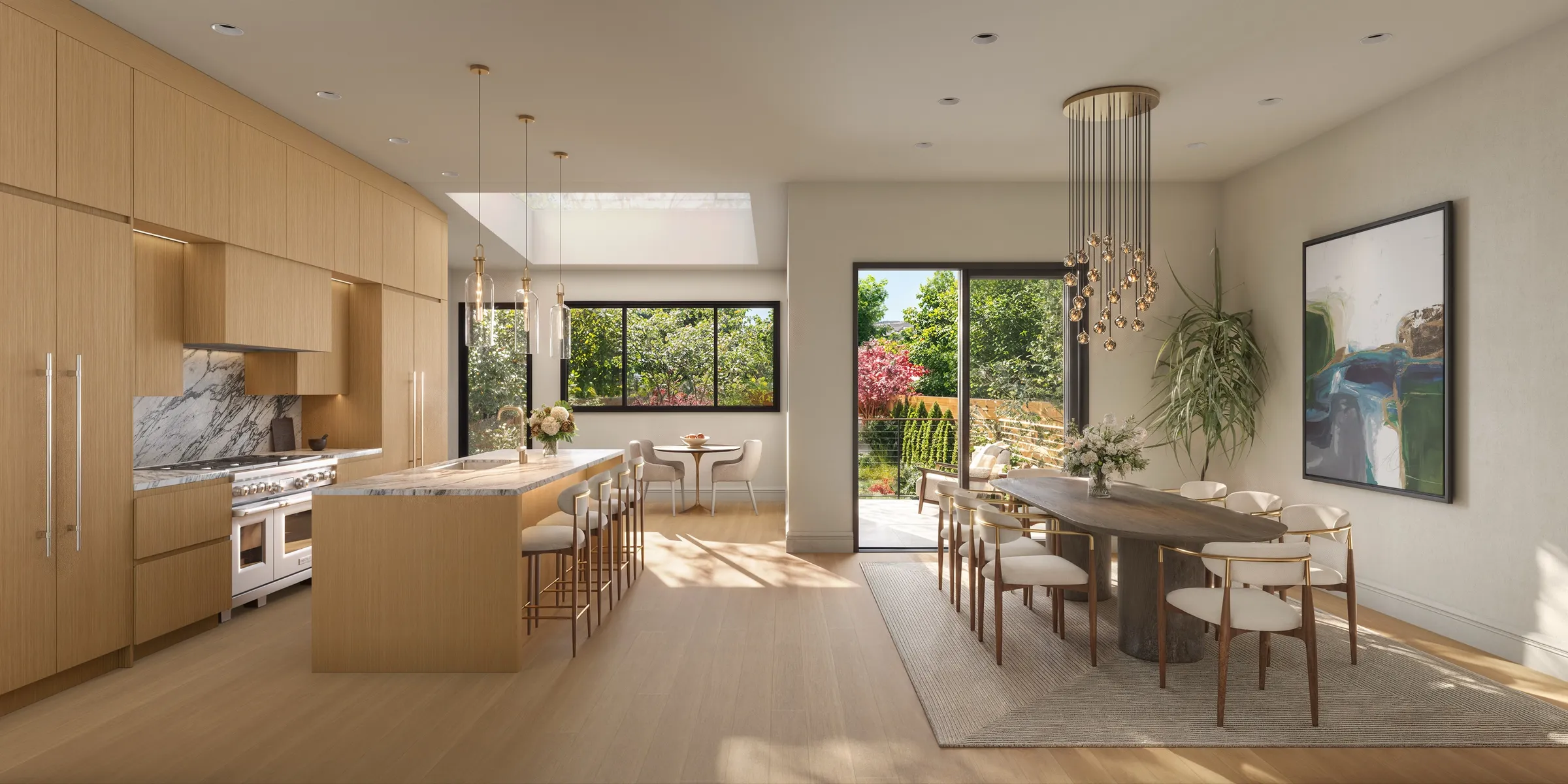
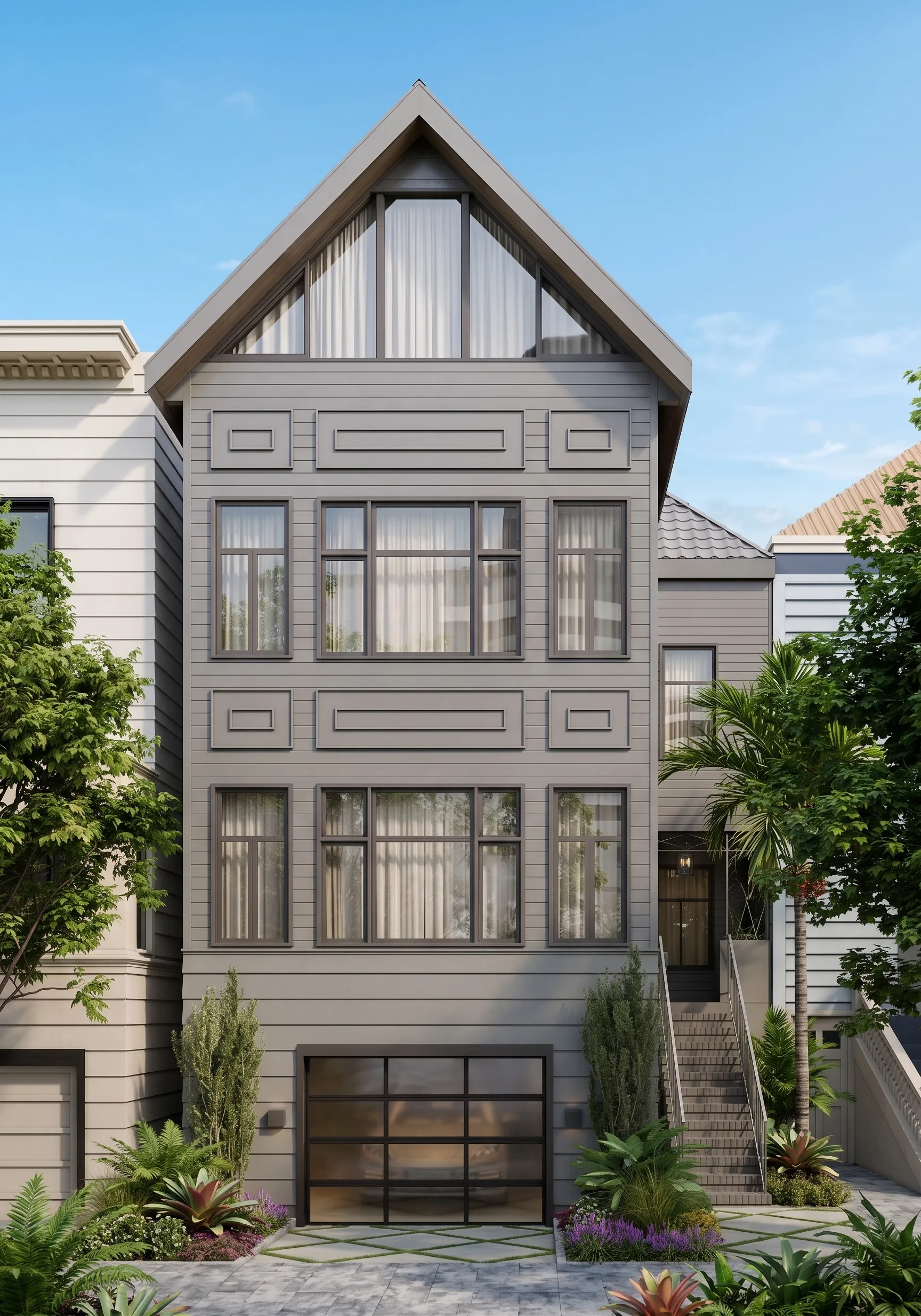
The only pictures they had were a stand-in. The developer had generated the facade himself in AI and dropped the new home into a generic, moody streetscape, which was enough to hint at the address but nowhere near the standard a listing at the top of the San Francisco market demands. Every interior finish, on the other hand, was real and specified down to the slab: Calacatta Monet marble, mitered stone with hidden drains, custom millwork, venetian plaster, a 48-inch Thermador range. The brief was blunt. Replace the guesswork with renderings that look so exact and so expensive that a buyer feels the house before it is built.
The approach
Built From the Drawings, Not a Reference Photo.
Accuracy at this level comes from the real drawings, not shortcuts, so the work began there. The studio modeled from the architectural CAD, Revit and DWG files, the SketchUp, the landscape plans, and the prior listing photography, rather than interpreting a single reference image. Where the developer had real samples, the team matched them precisely, building a side-by-side comparison sheet for the kitchen’s wood veneer and offering tone variations so the client could sign off on the exact color rather than discover a mismatch later.
Because the renderings had to read as the finished house and not a simulation, the team blended in real context wherever it would land. Window views were composited from photographs taken on site, floor by floor, so the light and the city outside the glass belonged to this address. The neighboring buildings were modeled only enough to seat the home in its block without competing with it. The result was a set of images calibrated to the developer’s own standard, the level of finish a buyer expects to walk into on closing day.
The production
Seven Views to Carry the House.
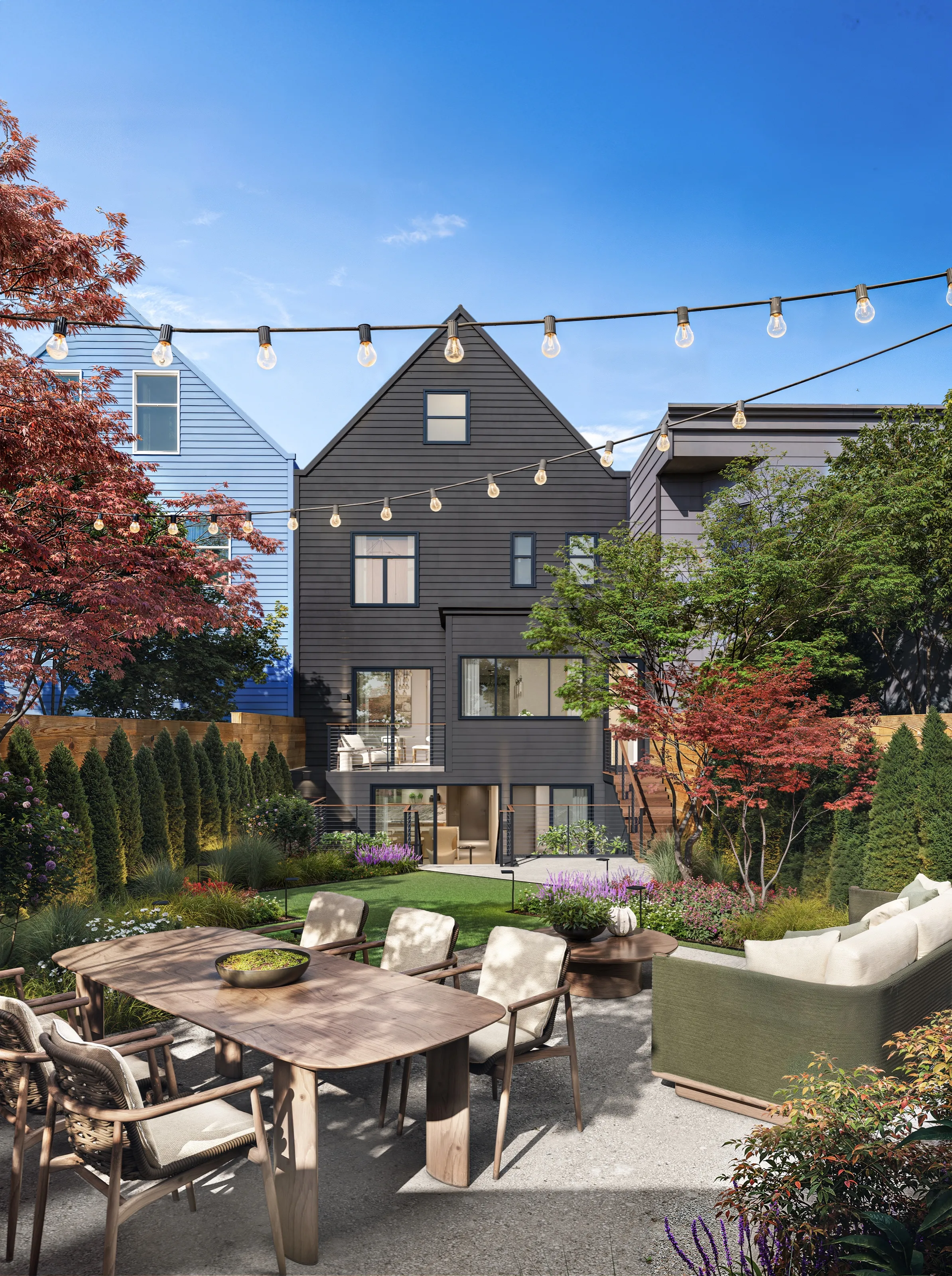
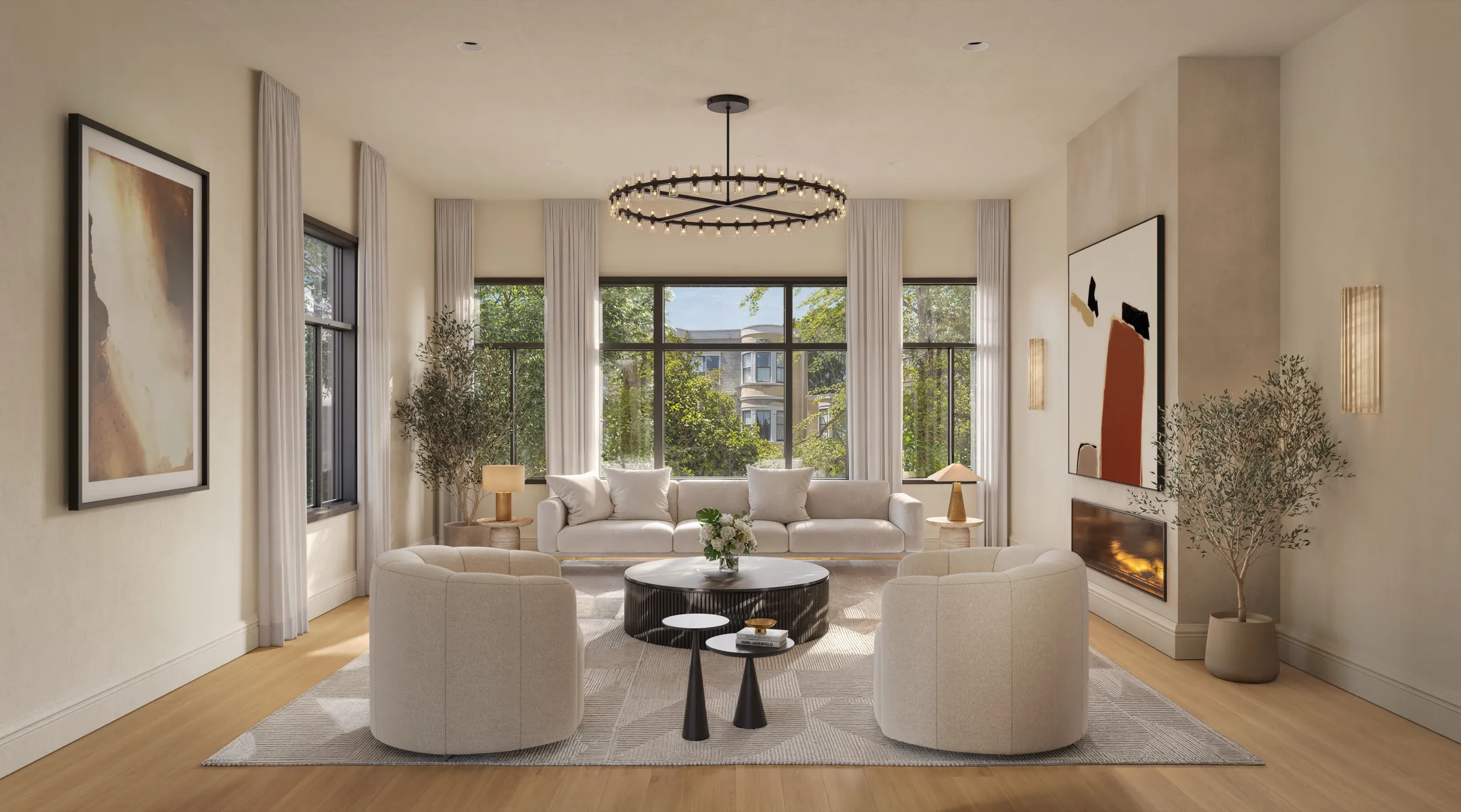
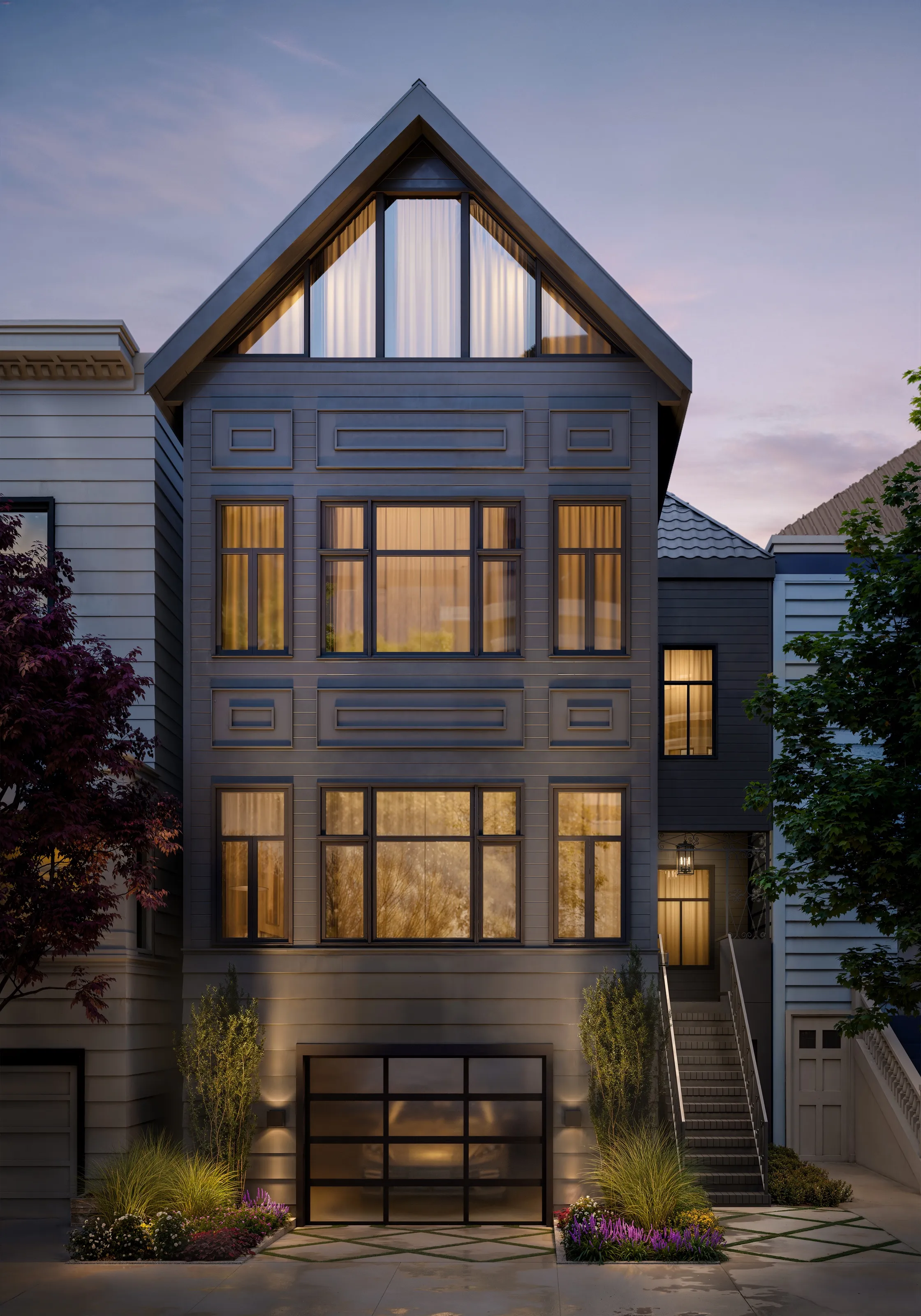
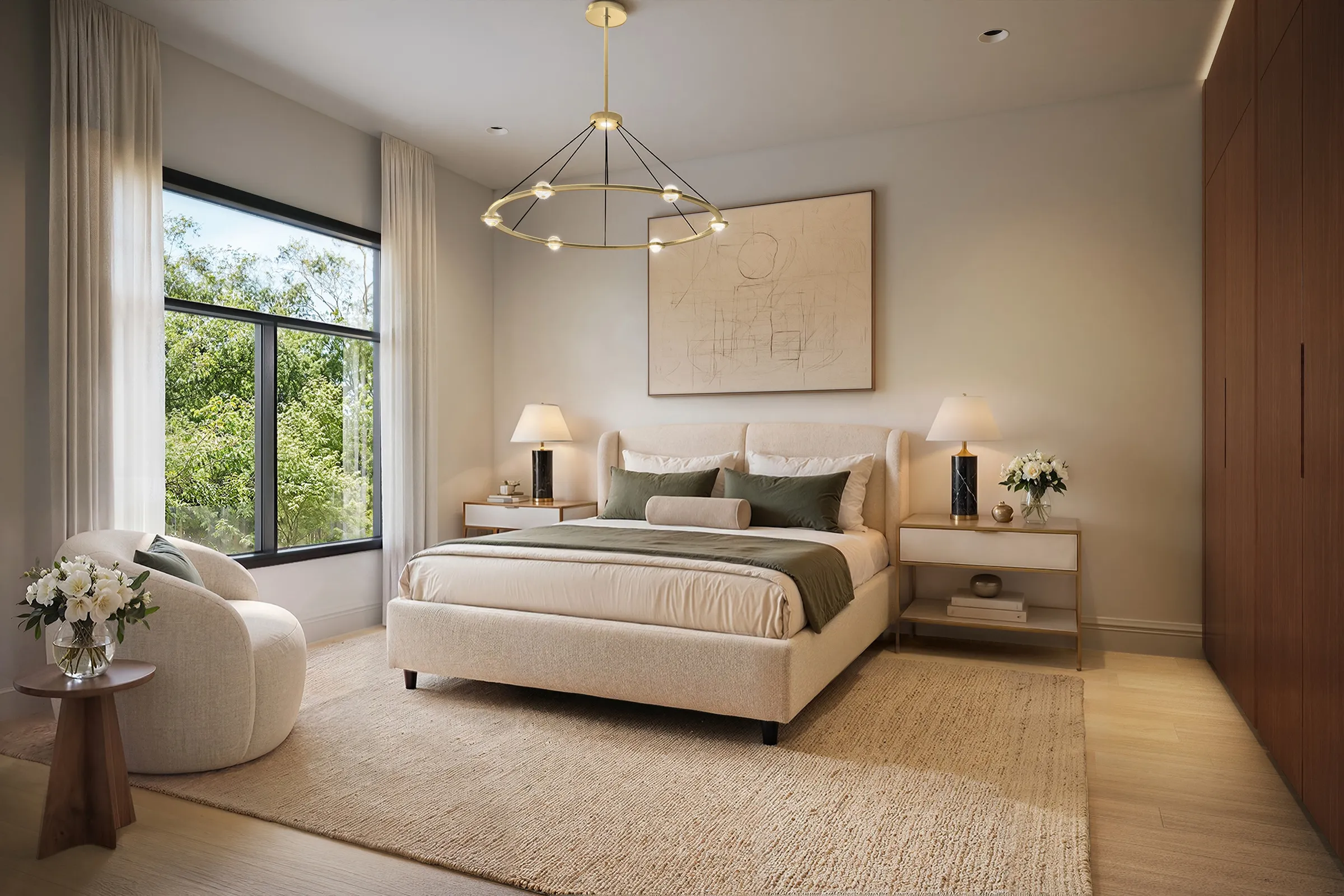
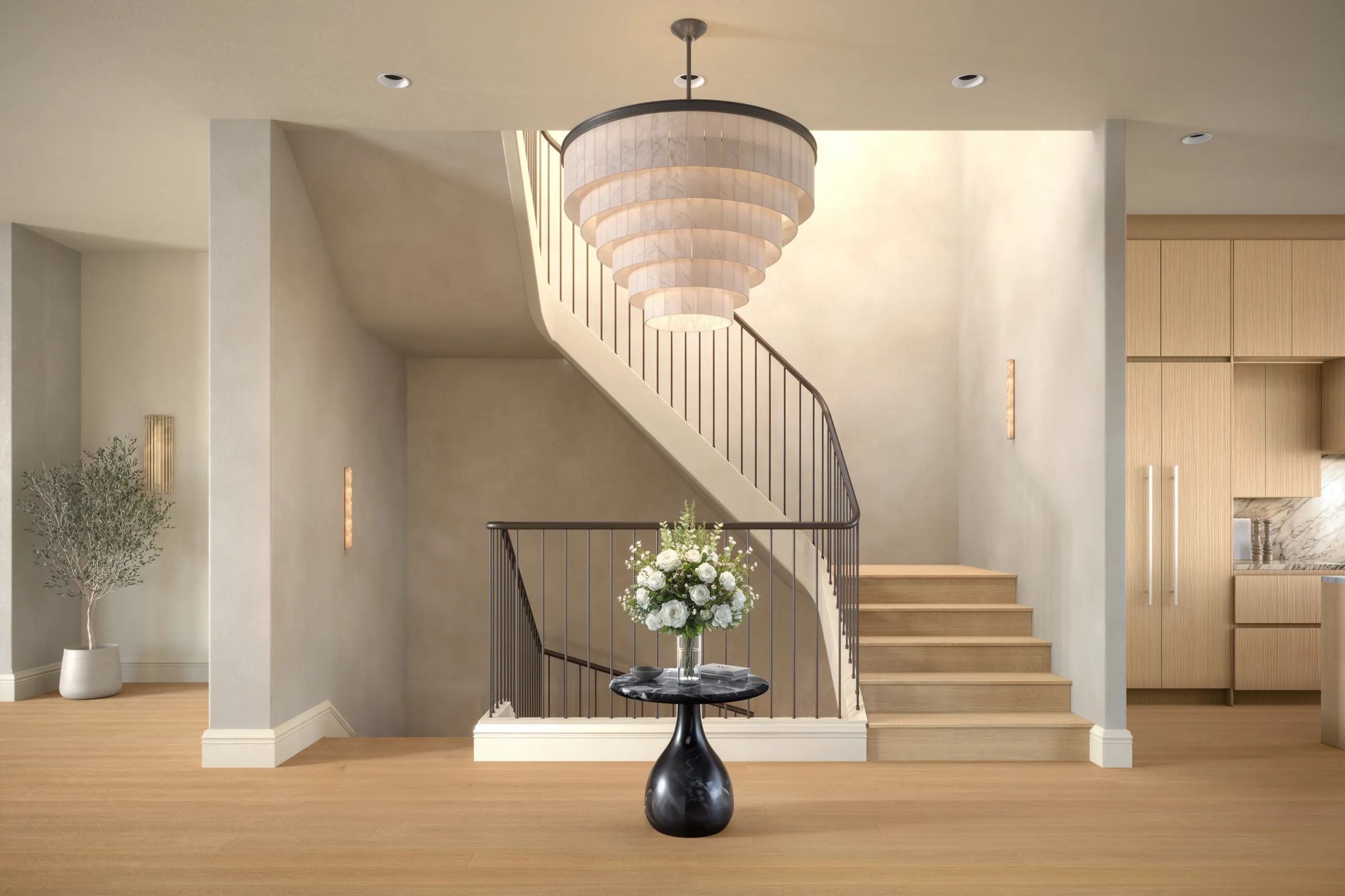
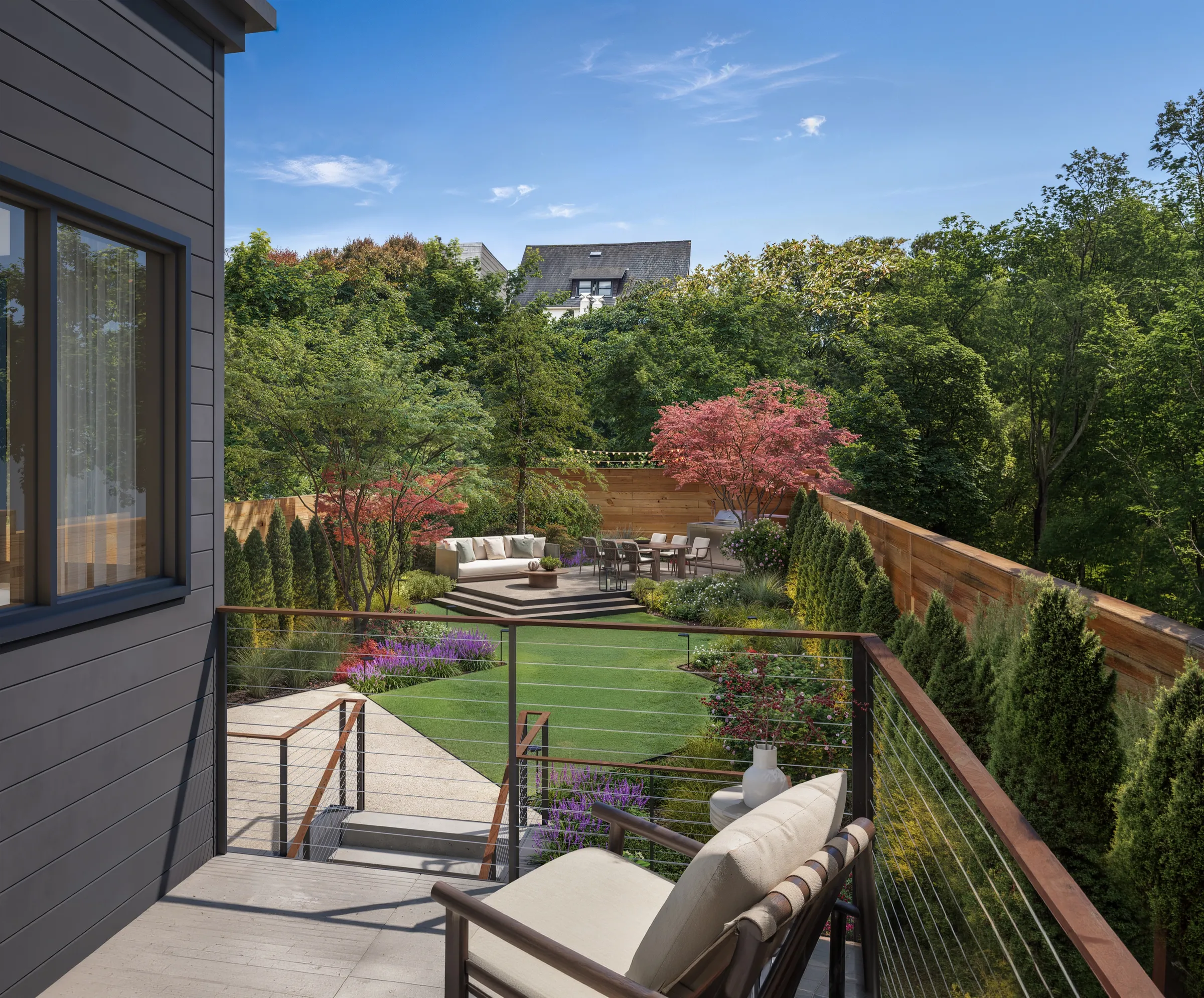
Seven views carried the house. Two exteriors set the address, the street-facing front and the rear elevation reading back across new decks, planters, and an outdoor kitchen into the garden. Five interiors did the selling: the kitchen and dining, the living room, the primary bedroom, the rear garden seen from the entertaining deck, and, as the emotional center of the set, the foyer.
The set went through real revision rounds against the developer’s exacting eye: the direction of the hardwood, mismatched molding, the precise dimensions of the primary bedroom window, art placement around the fireplace, the run of the venetian plaster. None of it was cosmetic. A developer who miters every stone edge and hides every drain needed the renderings to be as intentional as the build.
On arrival
The Moment of Arrival.
The developer wanted the foyer to do more than document a staircase. The brief was to drop a viewer just inside the front door on the main level and let them feel the grandeur of the sculptural stair, light trickling down from the skylight above, the kitchen and living spaces opening to either side. The shot had to feel like the moment of arrival.
The outcome
A Launch on the Developer’s Timeline.
The renderings became the public face of 3740 Sacramento Street. They anchored the property website, supplied the sales gallery, and were prepared at print resolution for the physical presentation boards the team used to walk buyers through a home that was still taking shape on site. The house came to market with completion set for late fall 2026, carried by imagery rather than by a finished interior.
For a developer whose entire pitch is that the rendered house and the real house are indistinguishable, the value was simple: the marketing could begin on the developer’s timeline rather than waiting on the construction schedule. The studio gave the Deason Group a launch-ready visual package for their most expensive residence to date, accurate enough to sell against and ready while the market was hot.
Questions
Selling a Home Before It Is Built
- Why would a developer need renderings if the house is almost built?
- Timing. At the top of the market, the months between under construction and move-in ready are months a developer cannot market the finished product, because the finished product does not photograph yet. Accurate renderings let the sales effort, the property website, the gallery, and the buyer conversations, begin on the developer’s schedule rather than waiting on the build. For 3740 Sacramento Street that meant launching a Presidio Heights residence to its buyer list before completion.
- How do you make a rendering accurate enough to sell a luxury home that does not exist yet?
- You model from the real drawings, not a reference photo, and you match real samples exactly. On this project the team worked from the architectural CAD, Revit and SketchUp files and the developer’s specified finishes, built a side-by-side comparison sheet to lock the kitchen’s wood veneer color, and composited real on-site window views into the images so the light and the city outside the glass belonged to the actual address. The goal is a rendering a buyer cannot tell from the house they will eventually walk into.
- What makes a presentation set possible while a home is still under construction?
- Complete files and confirmed finishes. This package of seven photoreal views was possible because the studio models from real CAD and confirmed specifications rather than designing the interiors from scratch. The constraint is rarely the rendering; it is how completely materials, fixtures, and feedback are confirmed.
Services on this project
Related projects
- Villa Visala, a luxury single-family villa carried by off-plan renderings
- Chatsboro Drive, a private Los Angeles residence
- Clear Creek, an ultra-luxury Tahoe estate sold before completion
- Serenity, a Santa Monica spec farmhouse marketed before it was built
- Carrizo Lots, a four-home La Jolla development launched before the build
Start with a discovery call
Every project starts with a conversation. The call is where we understand the project and whether we're the right studio to do the work.