
Case study
Homewood Mountain Resort
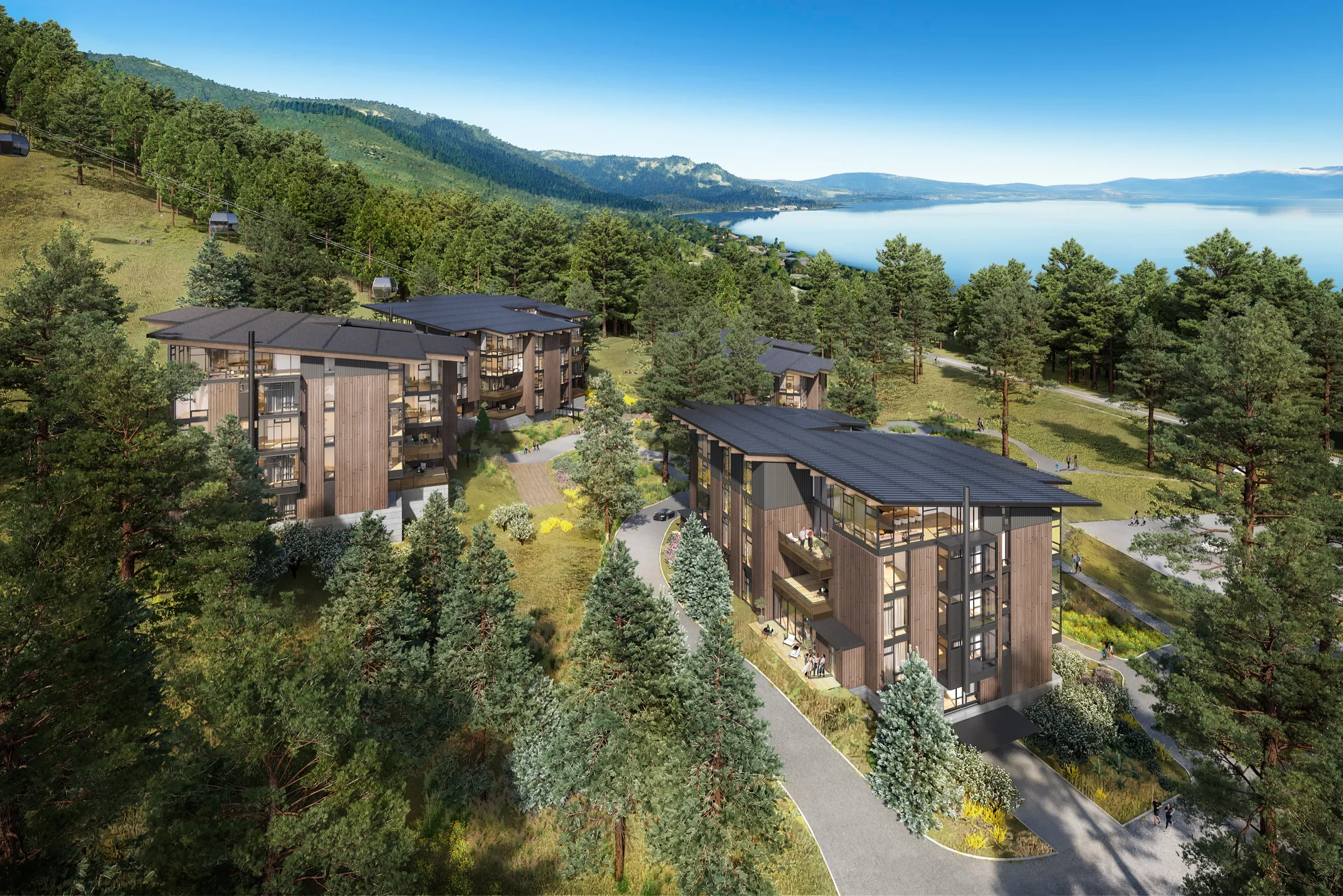
A six-image visualization set of the North Base residences for one of Lake Tahoe's most closely watched mountain redevelopments, modeled from six design teams' files and delivered through the holidays to meet a county review deadline.
Project at a glance
NoTriangle delivered the visualization package JMA Ventures and Discovery Land Company used in the county design-review process for the first phase of homes at Homewood Mountain Resort, assembling the architect's, landscape architect's, and gondola engineer's files into one coherent set of six photoreal renderings, produced across the Christmas holiday to land ahead of an early-January submission deadline.
- End client
- JMA Ventures, LLC
- Development partner
- Discovery Land Company
- Building type
- Phase 1 resort residences, North Base
- Location
- Homewood Mountain Resort, West Shore of Lake Tahoe, California
- Project team rendered
- Olson Kundig (architecture), Walton A+E (residences), VITA (landscape), Doppelmayr (gondola)
- Purpose
- County entitlement and design review
- Scope
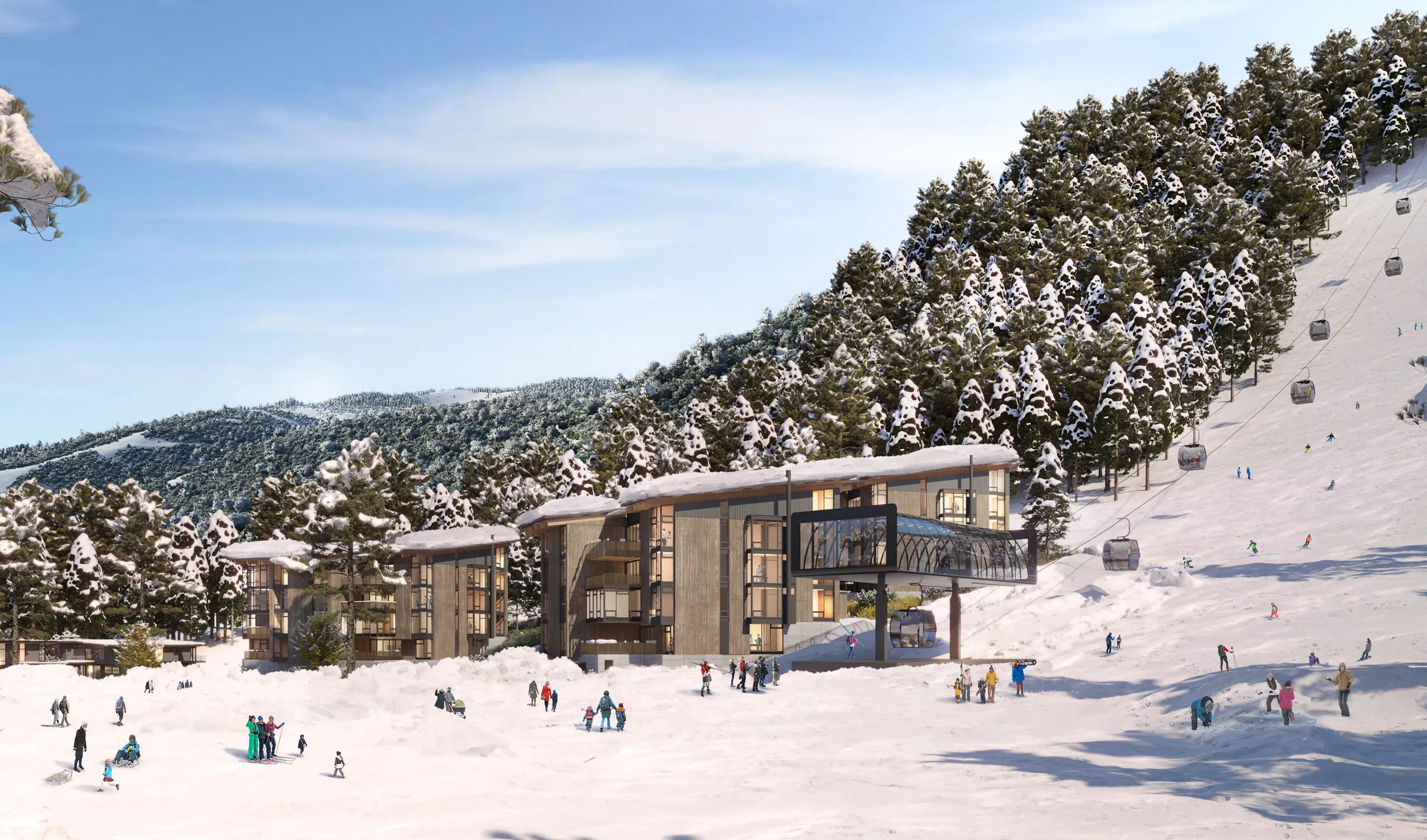
- Six photoreal renderings, one aerial master-plan view and five eye-level views, in summer and winter
- Timeline
- November 2022 to January 2023
- Engagement
- First project with the studio
The challenge
A Picture a County, an Agency, and a Community Would All Study.
Homewood Mountain Resort is not an easy place to build a picture of. It sits on the West Shore of Lake Tahoe, and any change to it is studied closely, by the county, by the regional planning agency, and by a community that watches the West Shore like family land. JMA Ventures and its development partner, Discovery Land Company, were carrying the first phase of residences through entitlement, and they needed renderings that could do something specific and difficult: show new buildings at the resort's North Base that read as belonging to the mountain rather than imposing on it.
The brief came with two pressures at once. The first was coordination. The information needed to build the images was spread across six different teams, the master-plan architecture from Olson Kundig, the residence plans from Walton A+E, the landscape and planting schedules from VITA, and the gondola base terminal from Doppelmayr, with the owner and the operator both reviewing. No single file held the project. Someone had to gather all of it and reconcile the small conflicts between drawings into one accurate model.
The second pressure was the calendar. The kickoff call happened in late November, and the developer needed renderings in hand to submit to Placer County in the first days of January, with several images required by the end of December. That meant producing a full first set of color renderings straight through the Christmas and New Year break, against a milestone map agreed up front.
The approach
Modeled From Six Teams' Files, Built to Belong to the Mountain.
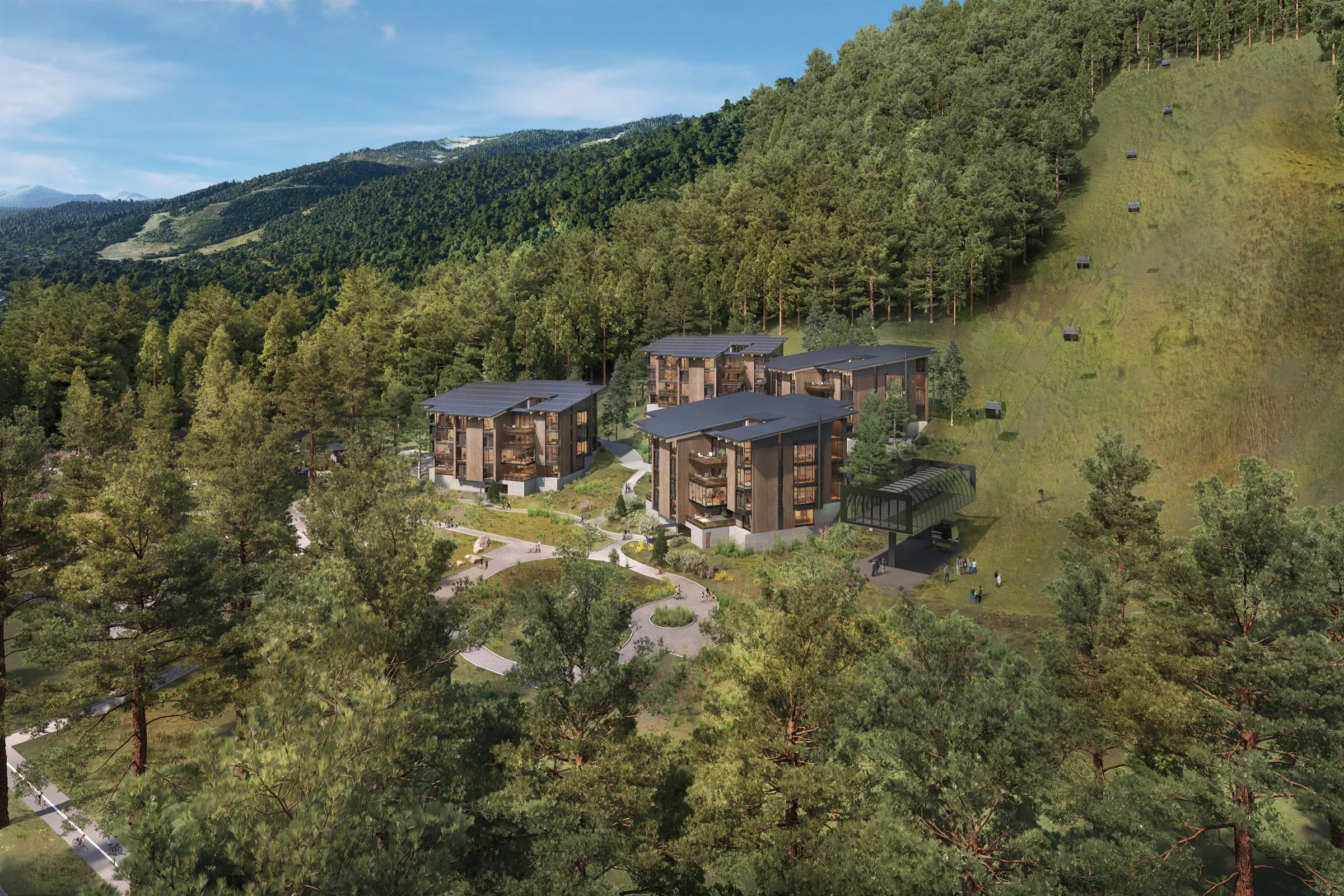
Accuracy at this scale starts with the real drawings, so the studio modeled from the source files rather than from any single reference. The North Base residences were built from Olson Kundig's Revit model, including the later pop-out additions to the building elevations; the companion residence plans came from Walton A+E's CAD in their Type A and Type B layouts and mirrored variants; the site, paths, and planting were placed from VITA's most current base plan and vegetation schedules; and the gondola base terminal was constructed from Doppelmayr's design datasheet. Where versions disagreed, the team flagged it and confirmed which file was current before committing it to the model.
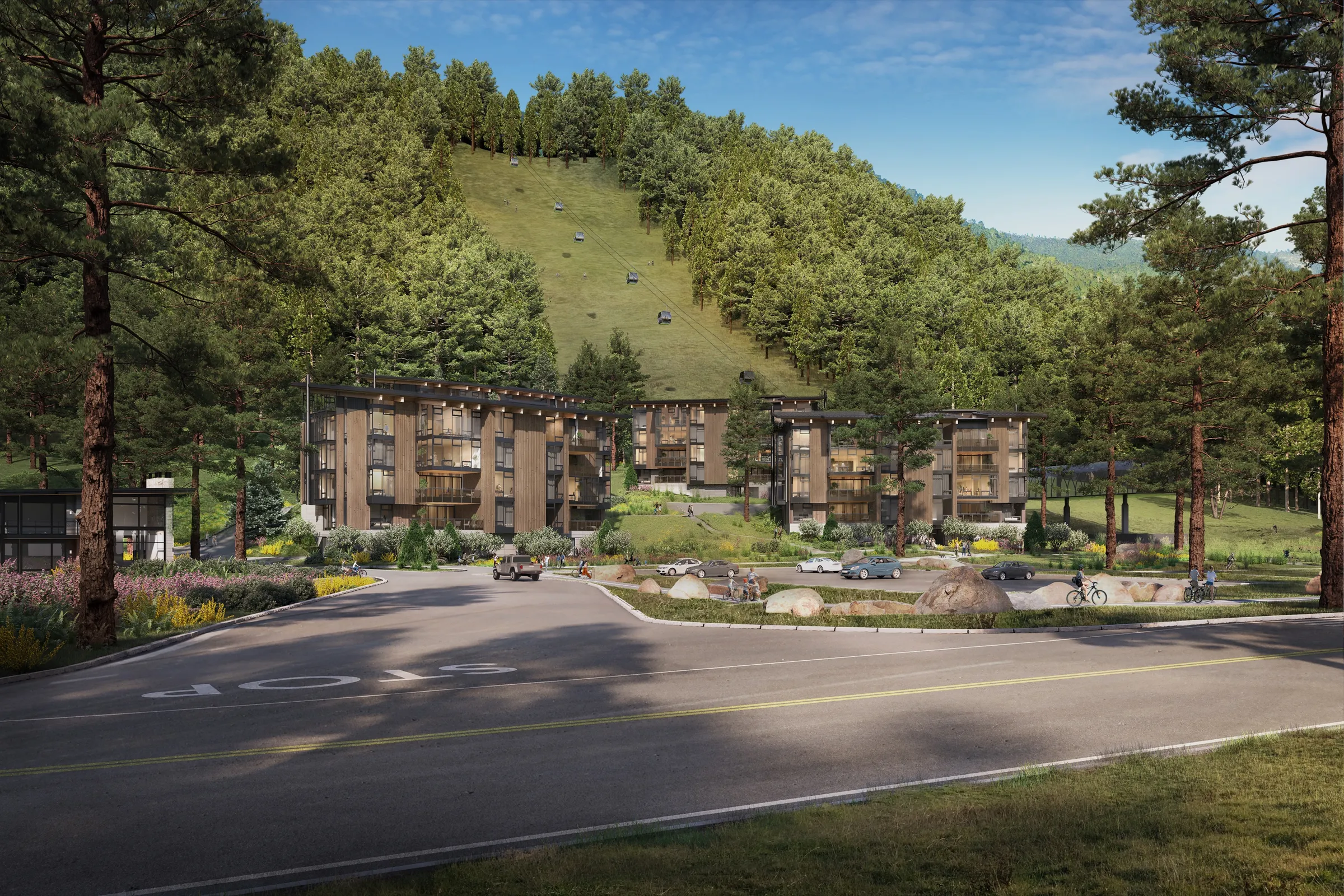
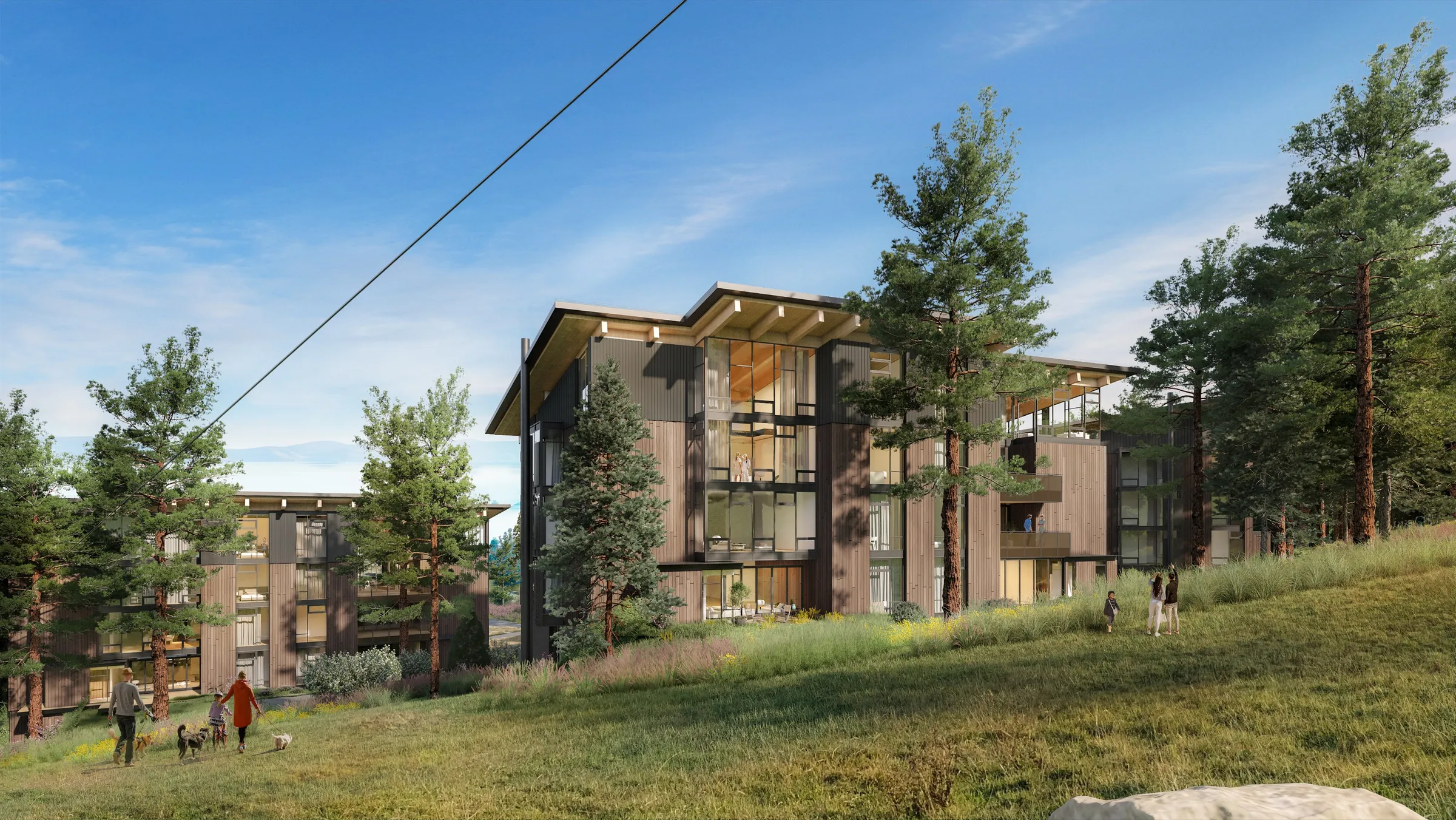
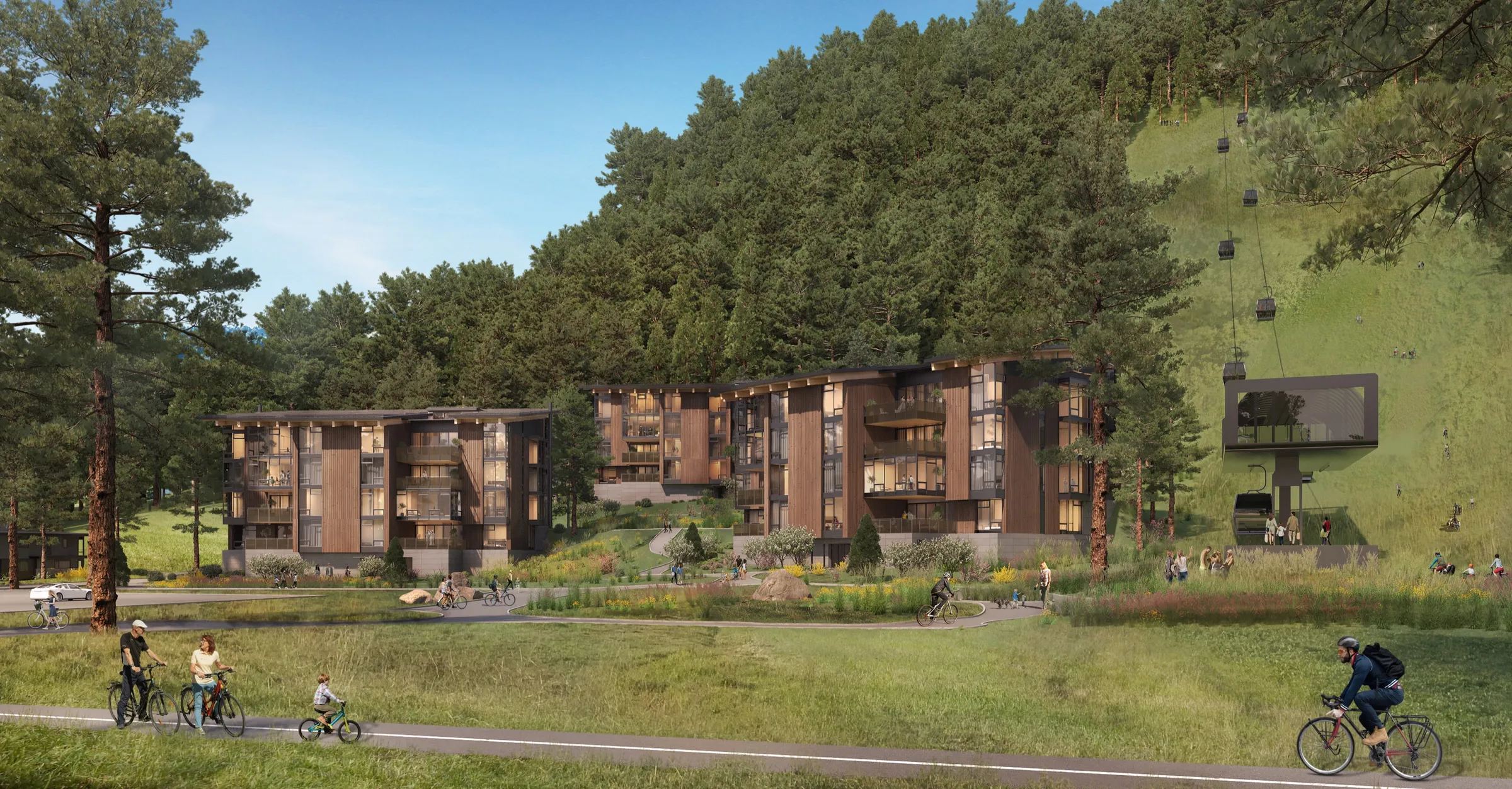
The governing design idea ran through every decision: the buildings had to sit lower than the tree canopies and settle into the slope, not stand above it. The studio set camera heights and tree heights so the architecture read as nestled into the forest, raised the pines and firs around the buildings, and scaled the gondola base terminal down so it supported the view instead of dominating it. To make the images read as the real place, the team planned the renderings to blend with real site photography, producing a drone-capture guideline so the developer's photographers could shoot the matching plates only after the camera angles were locked, ensuring the light and the lake belonged to the actual vantage points.
The design idea
Lower Than the Tree Canopies.
The governing instruction ran through every frame: the buildings had to sit below the tree canopies and settle into the slope, not stand above it. Camera and tree heights were set to nestle the architecture into the forest, and the gondola terminal was scaled down so it supported the view rather than dominating it.
The production
Six Views, Summer and Winter.
Six renderings carried the phase. One was an aerial master-plan view, framing both of the residential lots, the street layout, the gondola cable route, and generic vegetation standing in for the lots not being shown, so a reviewer could read the whole plan at a glance. The other five were eye-level views, set across summer and winter so the resort could be seen in both seasons it operates in. The studio first presented roughly forty camera-angle options in an online review tool, let the developer's team mark up the ones they wanted, and then built the chosen views, iterating on height, lens width, and how far the camera pulled back until each frame told the right story about scale.
The revision rounds were granular and architect-driven. Olson Kundig and the developer marked up exterior wall paneling to match the design-review elevation coloring, asked for the metal roofing to read darker than the wood and for a ribbed texture under the gables, called for indigenous planting pulled from VITA's schedule rather than generic shrubs, and added a blue band to the gondola terminal edge and cabins. To prepare the set for public outreach, the team also populated the renderings with people, walking the paths, gathering at the buildings, hiking the slope, so the images felt activated rather than empty. Across the break, with a reduced holiday crew, the studio delivered the first six color renderings and then an updated round in early January.
The outcome
Seen Clearly While Still on the Drawing Board.
The renderings gave JMA Ventures and Discovery Land Company the visual package they needed for the county design-review process, accurate to the architect's elevations, true to the landscape plan, and calibrated to the message that mattered most for a development under this much scrutiny: that the new homes would tuck into the mountain rather than crowd it. They were produced to a hard external deadline, through a holiday, across six design teams, and delivered as one coherent set.
Homewood's redevelopment has since moved forward. After an extended public review in which the plans were revised, the resort's amended master plan was approved by the Tahoe Regional Planning Agency in January 2025, with a new Doppelmayr gondola and the North Base residences among the elements carried ahead. The studio's role was the entitlement-stage visualization for the first phase of homes, the imagery that let a complicated, closely watched project be seen clearly while it was still on the drawing board. The relationship continued past the renderings, too: the developer returned to ask the studio about an animation for a public meeting and outreach to officials, a sign the first set had done its job.
Questions
Renderings for Entitlement and Design Review
- What were the Homewood Mountain Resort renderings actually for?
- Entitlement and design review. JMA Ventures and Discovery Land Company were carrying the first phase of North Base residences through the approval process and needed accurate renderings to submit to Placer County, with several images required on a hard early-January deadline. The studio delivered six photoreal views, one aerial master-plan image and five eye-level views in summer and winter, built to match the architect's design-review elevations.
- How do you render a development that has to satisfy a county, a regional planning agency, and a watchful community?
- You make accuracy and restraint the whole point of the image. On Homewood the governing instruction was that the buildings sit lower than the tree canopies and blend into the slope rather than impose on it, so the studio set camera and tree heights to nestle the architecture into the forest, scaled the gondola terminal down so it never dominated the frame, used indigenous planting from the landscape architect's own schedule, and matched the wall paneling and roofing to the architect's design-review coloring. The renderings were built to be believed by reviewers, not just admired.
- Six design teams worked separately. How did that become one rendering?
- By making the studio the place where the files reconcile. The residences were modeled from Olson Kundig's Revit model with its later pop-out additions, the companion homes from Walton A+E's CAD in their Type A and Type B layouts, the paths and planting from VITA's current base plan and vegetation schedules, and the gondola terminal from Doppelmayr's design datasheet, with the owner and the operator reviewing above them all. Where two files disagreed, the team flagged the conflict and confirmed which version was current before it entered the model, so the county saw one coherent project rather than six overlapping ones.
- Why show a ski resort in both summer and winter?
- Because the resort operates in both, and reviewers needed to believe it in both. The season for each of the six views was agreed view by view before rendering began, summer for the meadow and arrival scenes, winter for the skiers gathered at the gondola base under snow-laden pines. Same architecture, same accuracy standard, two different mountains.
- Can a full rendering set really be produced over the Christmas holidays?
- It can, with planning and source files in hand. The Homewood set was kicked off in late November and the developer needed images to submit in the first days of January, so the studio produced its first six color renderings straight through the holiday break with a reduced crew, against a milestone map agreed up front, which images the county needed by Christmas week, when previews would land, and when feedback had to be back, then delivered an updated round in early January. The constraint on a calendar like that is rarely the rendering itself; it is reconciling files from multiple design teams and getting feedback back quickly.
Services on this project
Related projects
Start with a discovery call
Every project starts with a conversation. The call is where we understand the project and whether we're the right studio to do the work.