
Case study
LinkedIn Headquarters
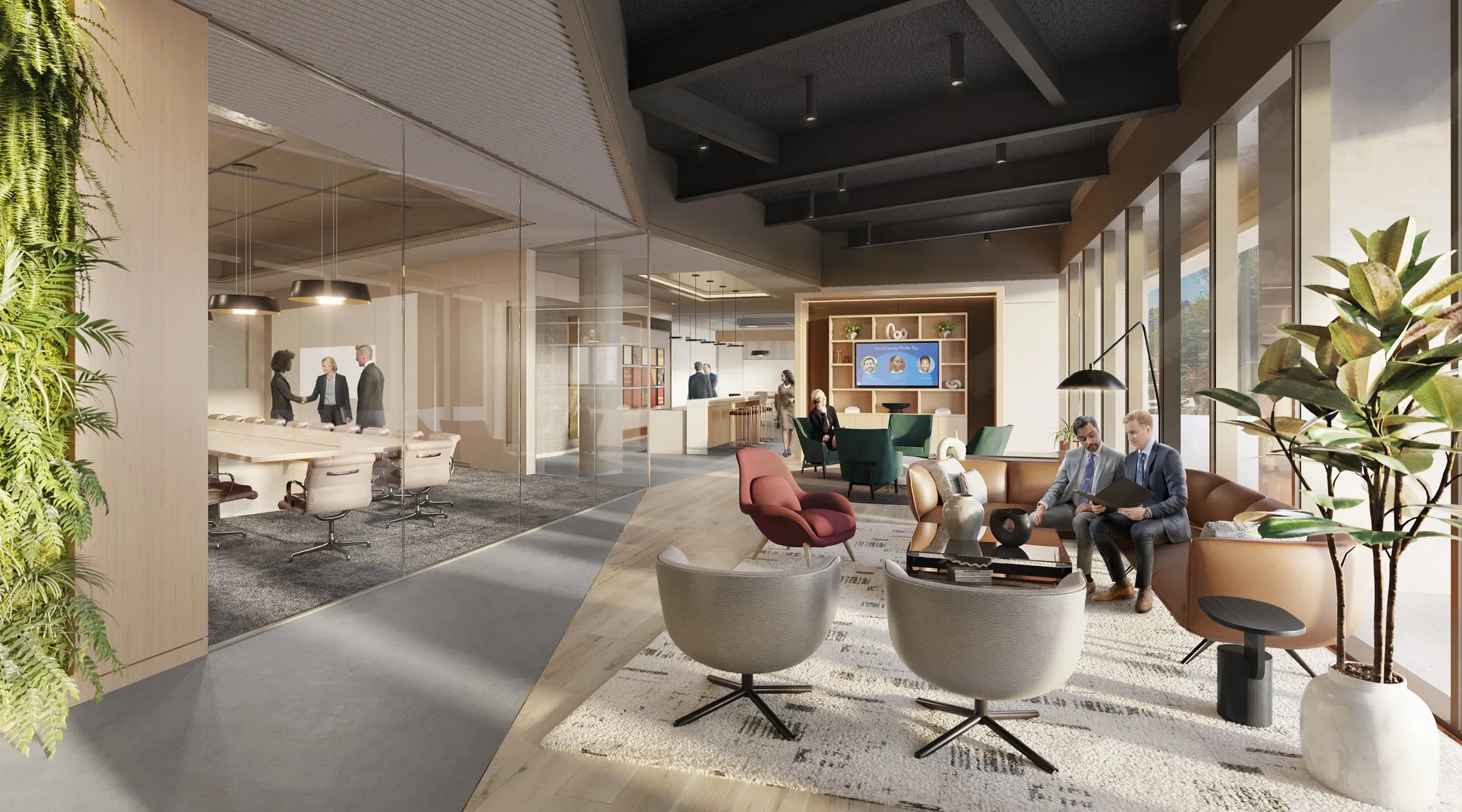
Ten interior renderings of LinkedIn's Building One, developed with NBBJ to support design development, stakeholder review, and decision-making before construction.
Project at a glance
Ten photoreal interior renderings of Building One at LinkedIn's Middlefield campus in Mountain View, developed with NBBJ not as a marketing exercise but as a live design tool, imagery that evolved alongside the architecture and supported design development and review before construction, nine for the launch and a tenth Quiet Space view delivered in 4K that autumn. Building One, the six-storey arrival building of the campus and the hub for LinkedIn's senior leadership, opened in 2022.
- Client
- NBBJ, interior design and master planning
- End client
- Location
- Middlefield campus, Mountain View, California
- Building type
- Corporate headquarters, workplace interiors
- Building
- Building One, six storeys, roughly 240,000 square feet
- Scope
- Ten office interior renderings, including a 4K Quiet Space view
- Timeline
- July 2021, plus a Quiet Space view that autumn
- Engagement
- One of many projects for NBBJ
The brief
The Front Door of a Campus, Redrawn for a New Era of Work.
When NBBJ commissioned NoTriangle Studio to visualize Building One at LinkedIn's new Middlefield campus in Mountain View, the objective was not simply to illustrate an architectural proposal. Building One, a six-storey building of roughly 240,000 square feet, was the front door of the campus, and it was being redesigned as the hub for LinkedIn's senior leadership. The visuals needed to communicate a broader shift: how a global technology brand was redefining the workplace in a post-pandemic world.
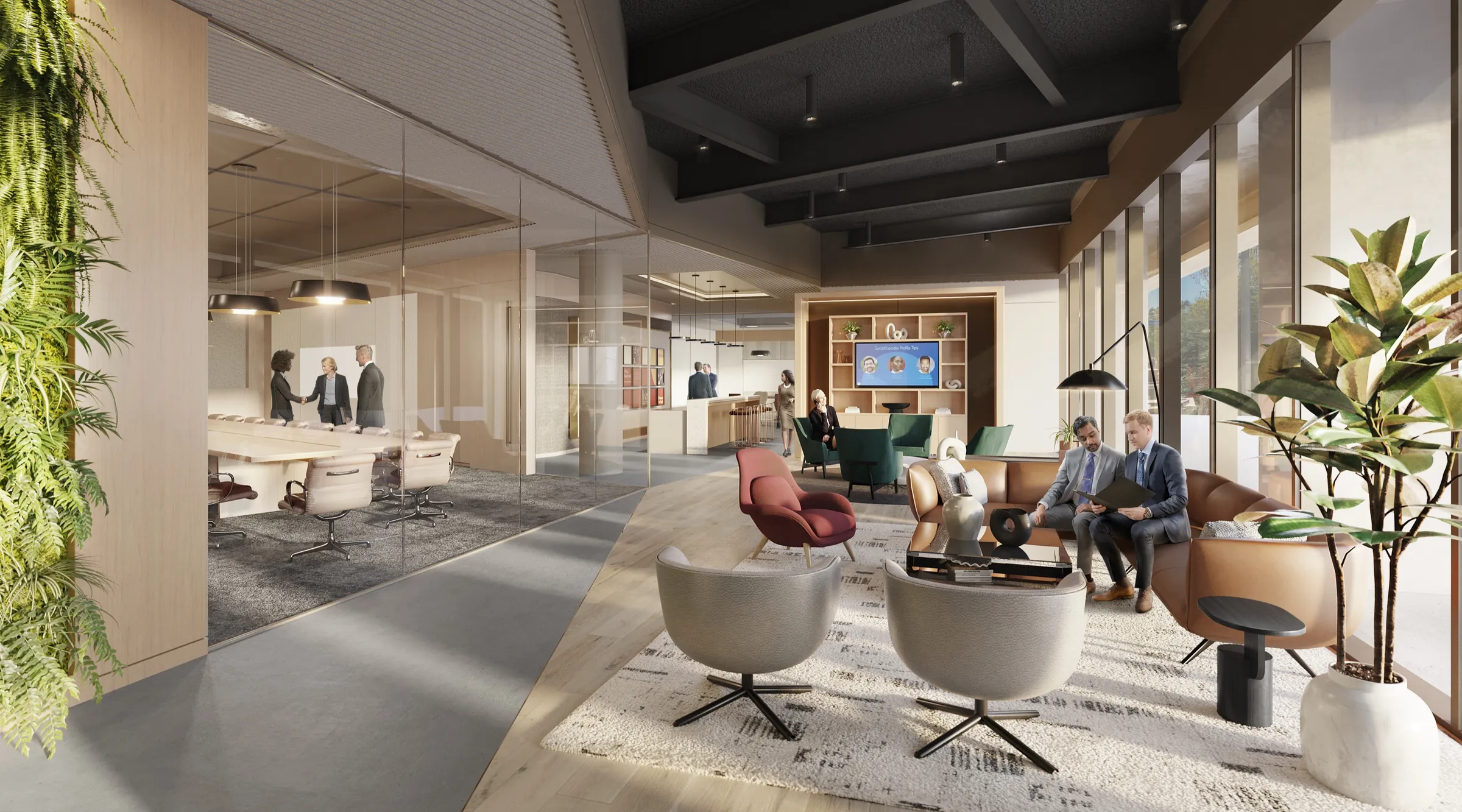
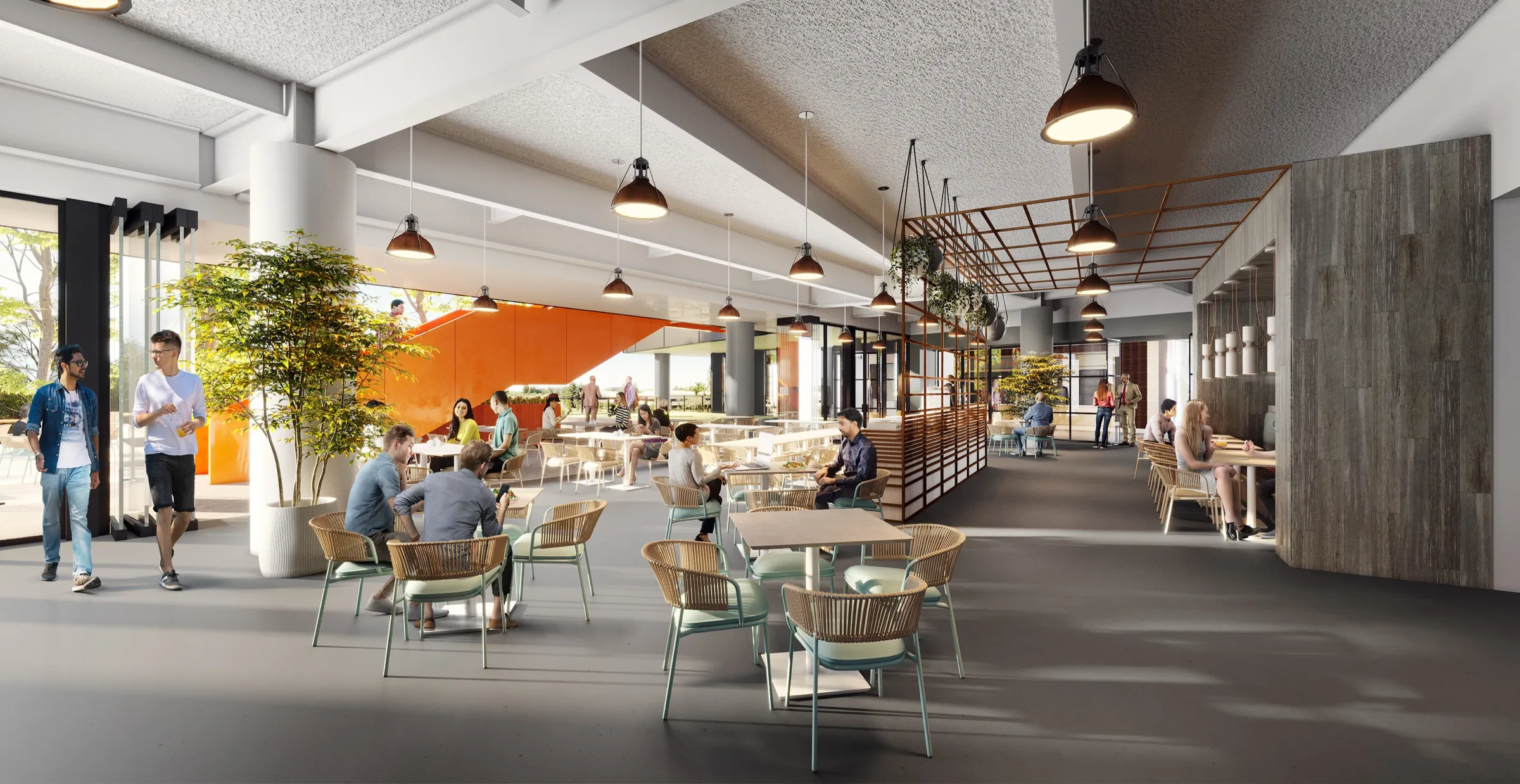
NBBJ commissioned the studio to put its best people on a confidential, high-resolution job, with day-to-day design direction coming from its interior design team. The nine views spanned the building's most public moments and its working core: the lobby and barista counter, the executive business center, cafes on levels one and three, the level-two pre-function and lobby, and the open workplace neighborhoods. The imagery would support internal reviews, stakeholder alignment, and conversations around space, culture, and hybrid work.
This was not a marketing exercise. It was a live design tool.
The challenge
Rendering a Design That Refused to Sit Still.
The documentation was evolving. The design intent was ambitious. In July 2021, while layouts, finishes, and workplace strategies were still being refined, NBBJ needed visuals that could operate in parallel with the design process, not at the end of it.
The core challenge was to translate incomplete and shifting information into imagery that could:
- 01Reflect the latest design decisions.
- 02Maintain architectural accuracy.
- 03Convey how the space would actually feel to use.
- 04Support executive-level discussions before construction.
In the model
The Building Was Approved in White First.
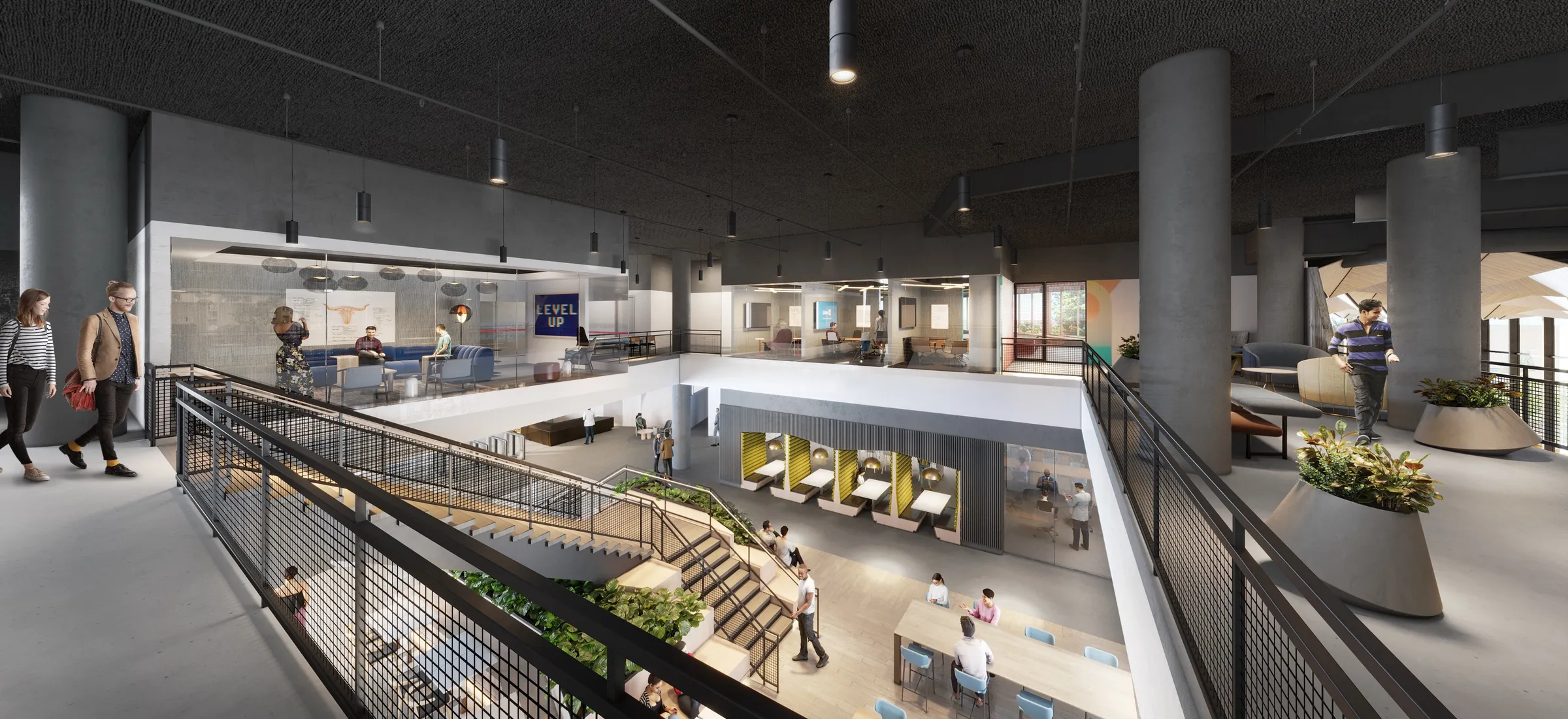
We rebuilt the headquarters in 3D and developed white-model views to test spatial composition, light flow, human scale, and key sightlines. In spaces like the multi-level atrium, those studies let NBBJ and LinkedIn evaluate proportions, circulation, and hierarchy before committing to a single detailed finish.
The production
A Live Picture of a Moving Design.
We began with structured onboarding and data verification, consolidating concept packages, adjacency diagrams, workplace strategy documents, and reference material into one coherent spatial framework. Rather than treating the project as a static rendering task, we structured it as a design communication workflow, moving from white model to camera strategy to full color.
Camera angles were selected based on how executives would interpret the space, not on architectural symmetry. Each view was designed to place the viewer inside the environment, moving through open neighbourhoods, focus zones, informal collaboration areas, and hospitality-inspired social hubs. The goal was to show how people move, work, and interact, not just how the building looks.
As the design evolved, we transitioned into full-color rendering and adapted continuously: updated floor layouts, revised furniture systems, changing material palettes, acoustic and lighting adjustments. The visuals functioned as a live representation of the project, evolving in real time alongside the architecture.
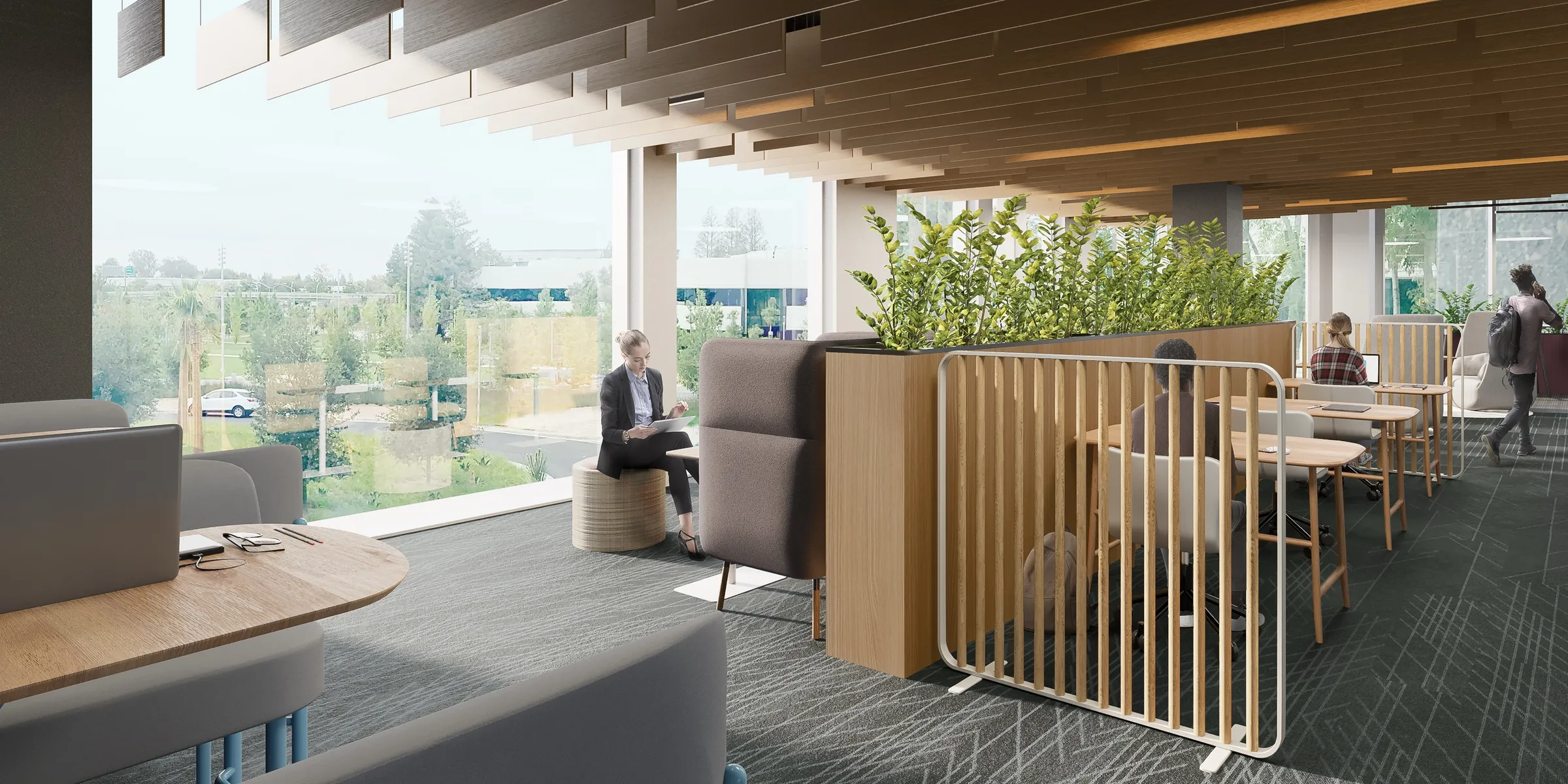
Art direction
Real Backgrounds, Real Furniture, Real People.
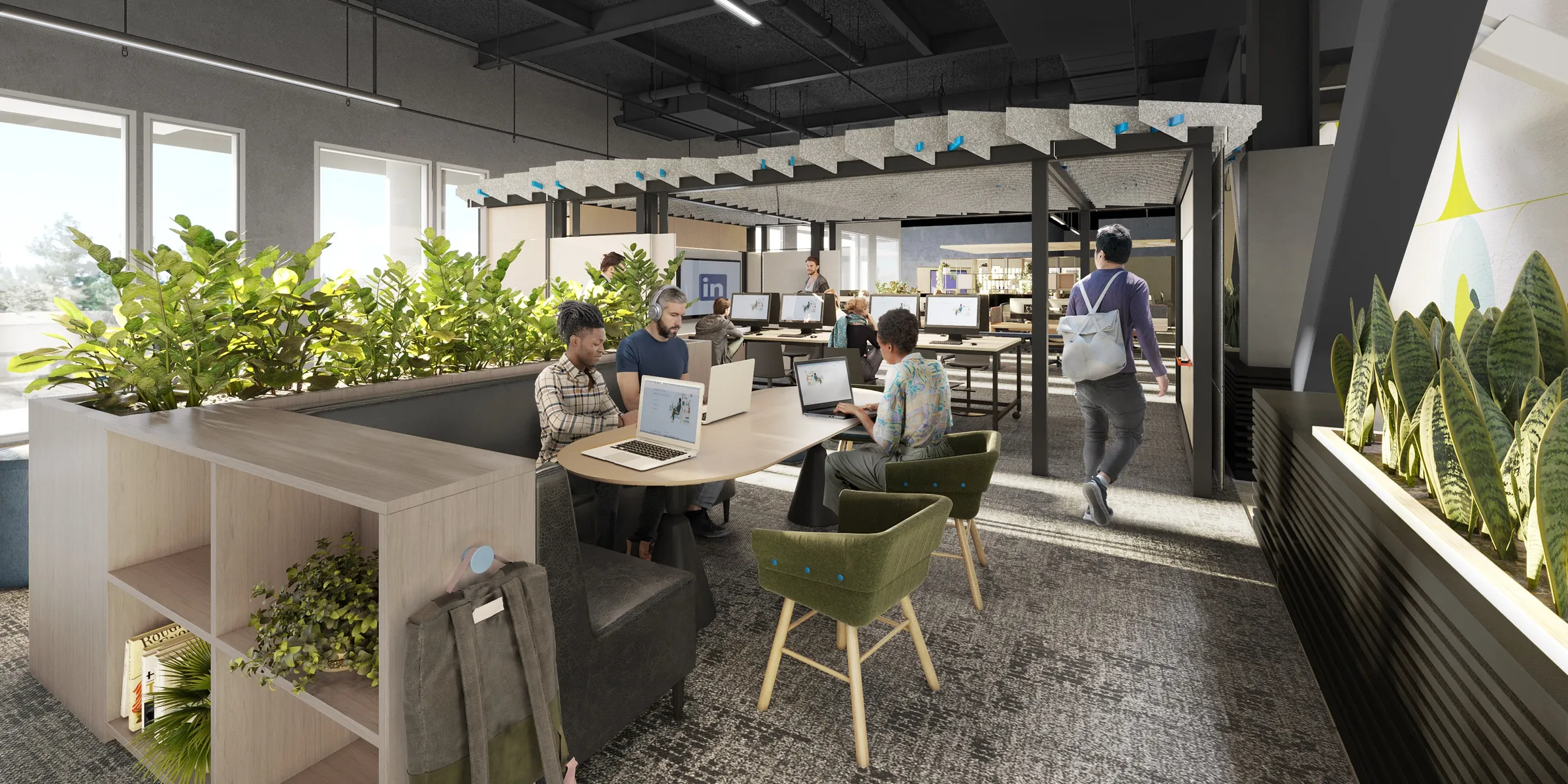
A key requirement was to balance realism with atmosphere. The lighting setup combined natural California daylight, warm interior illumination, and subtle ambient contrast, a visual language that felt optimistic, grounded, and human, aligned with LinkedIn's brand values. People were introduced not as decoration but as narrative elements: diverse, naturalistic figures engaged in real work scenarios, so the imagery communicated culture and usability, not just spatial aesthetics.
The interiors themselves were built from NBBJ's SketchUp models and material boards, but the world outside the glass was real. NBBJ's team photographed the surroundings on the job site while the campus was still under construction, and we composited those backgrounds behind the windows so each room read as placed in its actual setting rather than floating against a synthetic sky.
Every piece of furniture, fixture, and fitting was custom-built in 3D from NBBJ's specification sheets and material boards rather than pulled from a stock library, so each chair, light, and table in the renderings matched the real product schedule the team had selected.
The outcome
Persuasive Before the Images Were Even Finished.
The final visual suite became a core communication asset for both NBBJ and LinkedIn. The imagery supported executive design reviews, resolved spatial and functional questions, aligned stakeholders around a shared vision, and communicated the workplace concept internally before construction. It enabled decision-making under uncertainty, letting complex architectural ideas be evaluated, discussed, and approved with clarity.
The clearest proof came partway through the engagement. With the images not yet final, NBBJ asked for near-complete views to show in a client proposal going out that same morning. The work was persuasive before it was finished. NBBJ came back that autumn for a tenth view, a single rendering of the building's Quiet Space delivered in 4K, priced on the same per-image basis as the original nine. Building One opened in 2022 as the campus's arrival building and the home of LinkedIn's senior leadership.
This project shows how visualization can function as part of the design process itself, not just a final deliverable. By turning evolving, incomplete documentation into clear, human-centred imagery, the work helped a global brand and its architects make confident decisions about space, culture, and hybrid work before a single wall was built.
Questions
Rendering a Workplace in Motion
- Can 3D renderings keep pace with a workplace design that is still changing?
- Yes. For LinkedIn's Building One at the Middlefield campus, layouts, finishes, and furniture were still being refined while we rendered. We ran a white-model stage first to lock the camera angles and composition, then moved into color and absorbed the updated floor plans, furniture systems, and material palettes as the design evolved, so the imagery stayed current with the architecture rather than lagging behind it.
- How many renderings does a corporate headquarters need?
- LinkedIn's headquarters launched on nine interior renderings covering the lobby, executive business center, cafes, pre-function spaces, and open workplace neighborhoods, with a tenth Quiet Space view, rendered in 4K, added that autumn. The count is set by the spaces leadership actually reviews and decides on, not by picturing every room.
- How do you render an interior when the building is still under construction?
- We build the rooms from the architect's SketchUp models and material boards, then composite real exterior backgrounds, photographed on the job site, into the windows. For LinkedIn's Mountain View campus, NBBJ's team shot the surroundings on site while construction was ongoing, and we blended those views behind the glass so each interior read as placed in its real setting.
Services on this project
Related projects
- Capital One Café, three Manhattan flagships approved and open
- Westin Charleston, hotel renderings for brand approvals
- Sixth Street Viaduct, a winning competition entry in Los Angeles
- University of Health and Performance, a veterans campus rendered before construction
- Four Walls, a Tucson flex and industrial park repositioned for lease
Start with a discovery call
Every project starts with a conversation. The call is where we understand the project and whether we're the right studio to do the work.