
Case study
Carrizo Lots
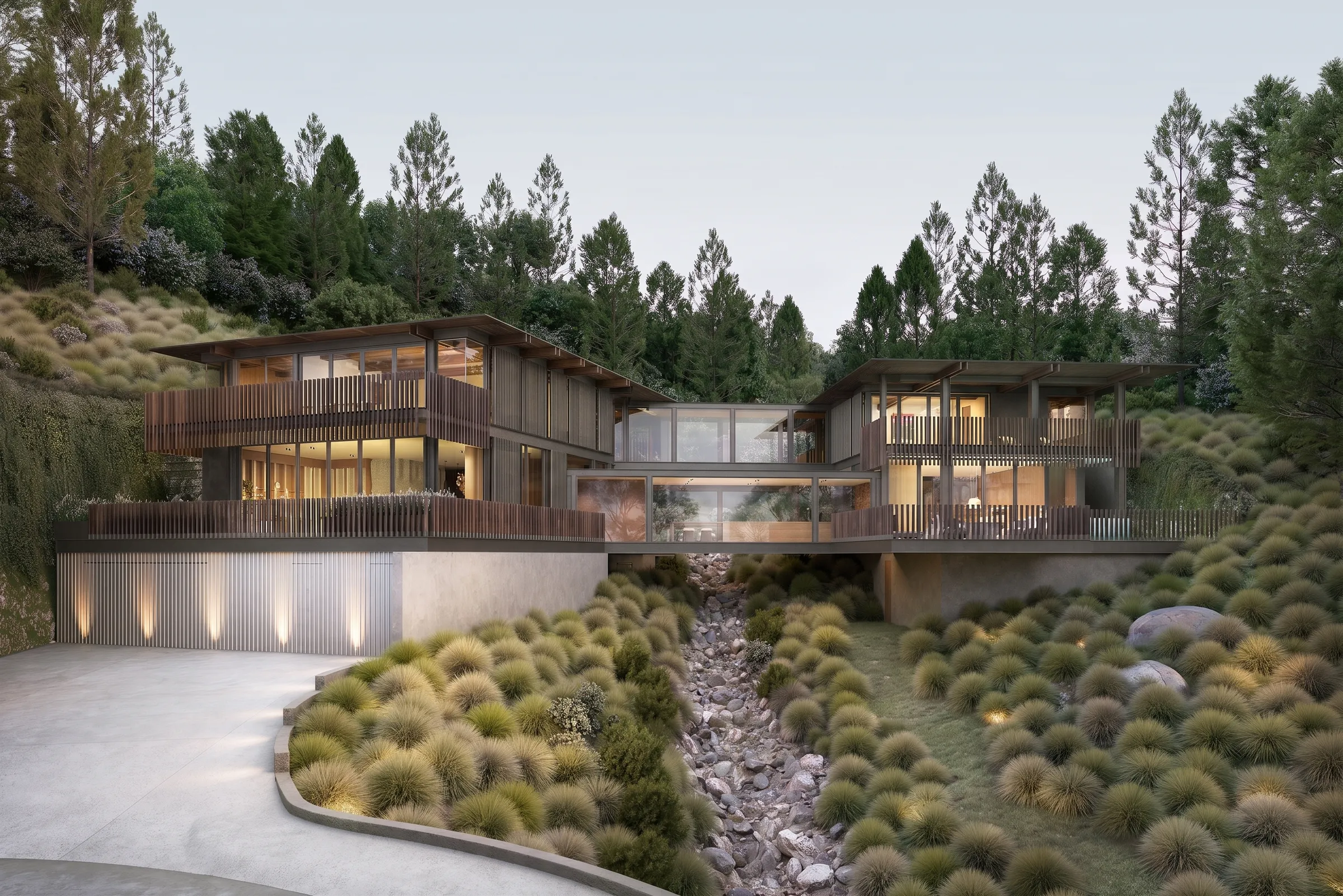
Dramatic exterior renderings of a four-home luxury development, built to sell the shovel-ready lots and their approved designs before a single house broke ground.
Project at a glance
NoTriangle delivered the visual package that took the Carrizo Lots development to market while it was still pre-construction, giving the Jules Wilson Design Studio and Basile + Wilson team marketing-ready renderings of all four approved homes for the project website, MLS listings, brochures, and large-format presentation boards, so the lots and their designs could be sold to a developer or to individual buyers ahead of the build.
- End client
- Jules Wilson Design Studio / Basile + Wilson, San Diego
- Asset type
- Four ground-up luxury single-family homes on four new lots
- Size
- Five bedrooms each, about 5,200 to 7,000 sq ft per home
- Location
- Carrizo Drive, Country Club area of La Jolla, San Diego
- Architecture
- Organic architecture in wood, concrete, steel, and glass, a distinct design per house
- Purpose
- Pre-construction sales launch of the shovel-ready lots and approved designs
- Scope
- Thirteen exterior renderings across nine camera angles
- Timeline
- Delivered in three staged groups
- Engagement
- First project with the studio
The challenge
Selling Four Homes That Don’t Exist Yet.
The hardest thing to sell in luxury real estate is a house that does not exist yet, and Carrizo Lots asked NoTriangle to sell four of them at once. The development, led by interior designer Jules Wilson and her real-estate development partnership Basile + Wilson, had spent years getting a four-home project approved on a quiet street in the Country Club area of La Jolla. The plan carves four new lots out of the hillside, extends Carrizo Drive with a new cul-de-sac, and places a distinct organic-architecture home on each one, five bedrooms apiece, built from wood, concrete, steel, and glass. With the permits in hand, the team’s next move was not to build. It was to sell the opportunity: either a single developer buys all four lots and builds out the approved designs, or individual buyers each take a lot and build one. Both routes needed the same thing first, images convincing enough to make a buyer want in before there was anything on site but graded dirt.
The team had already tried. A previous rendering vendor had produced a set, and it had not landed. The homes read flat and small, the lighting was ordinary, the crops cut off the very houses they were meant to showcase, and the landscaping looked nothing like coastal Southern California. Jules Wilson’s read was blunt: this did not look like the landscape work you would see at a home of this caliber. JWDS designs its interiors in house, but the exterior renderings had grown too cumbersome to keep there, and the quality the project demanded was not arriving. The brief to NoTriangle was specific. Make these homes feel monumental. Light them so they have drama and a wow factor. Make the planting feel genuinely like La Jolla, lush but not a rainforest, refined near the houses and indigenous at the edges. And get it all done in time for the sales push, which had a launch date.
The approach
Built for Scale, Planted Like La Jolla.
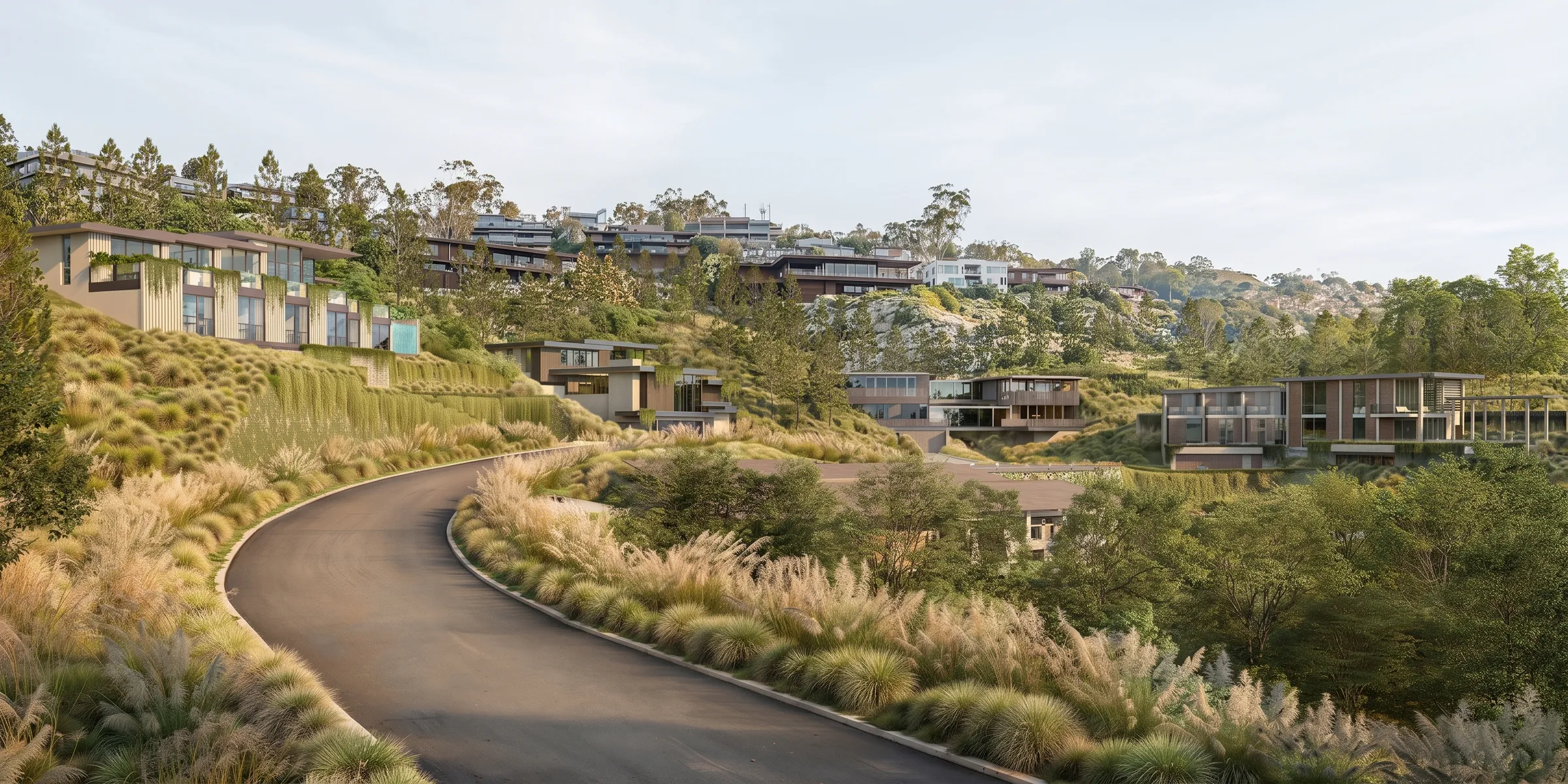
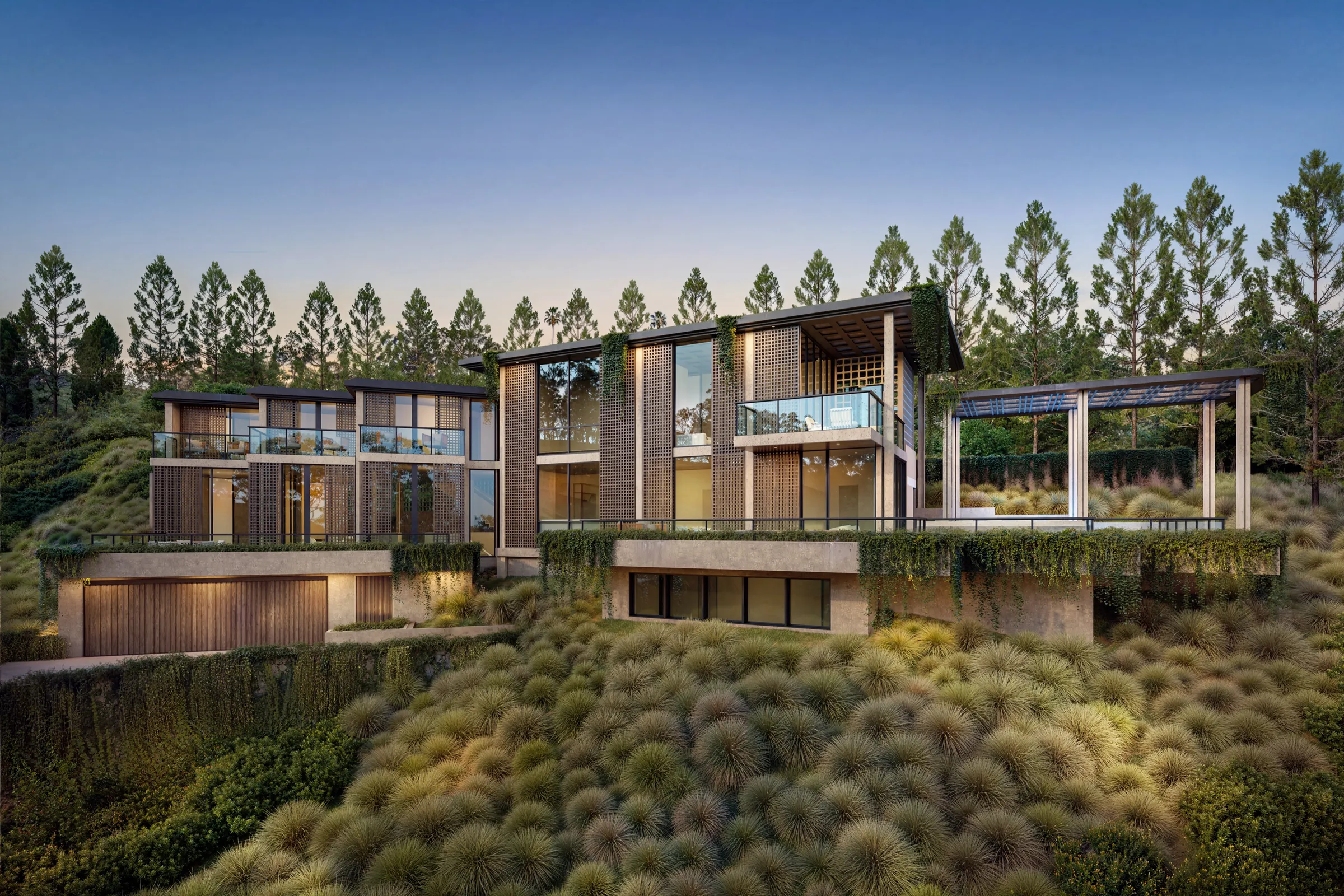
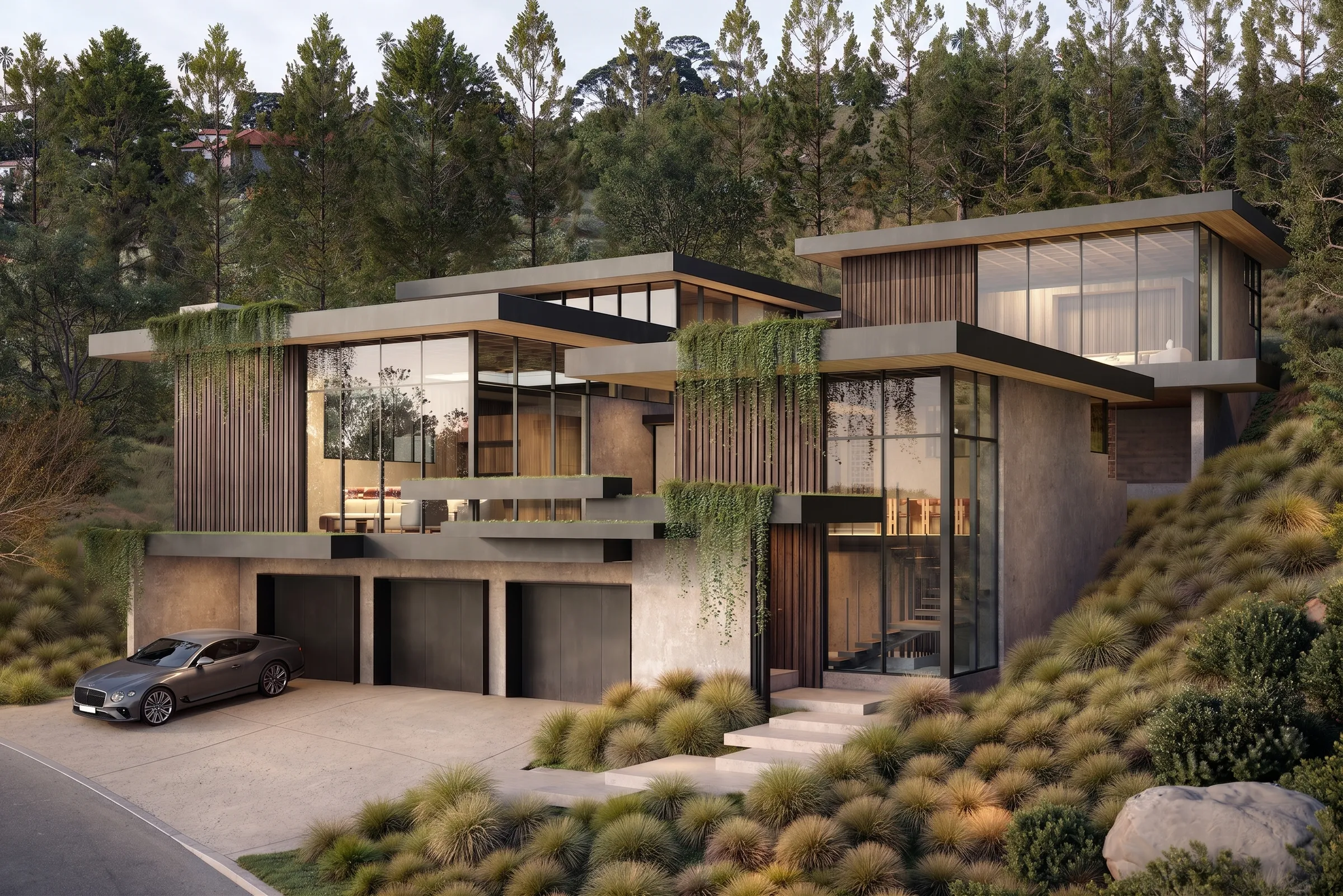
The team started from the client’s own SketchUp model, which arrived rough, with overlapping geometry that needed cleanup, alongside the landscape plans, the design markups, and reference photography. Rather than interpret a single hero image, the studio rebuilt the development as a working 3D scene it could light, plant, and re-camera at will. That mattered, because the most important note from the client was about scale. These are large homes, and the previous renderings had made them look squished into the hillside. NoTriangle treated the camera as a design tool, tuning angle, height, and focal length on each view to exaggerate the architecture’s monumentality and let a buyer almost look up at the houses, while keeping enough of the street, the neighboring homes, and the real context in frame to read as a real place rather than a model.
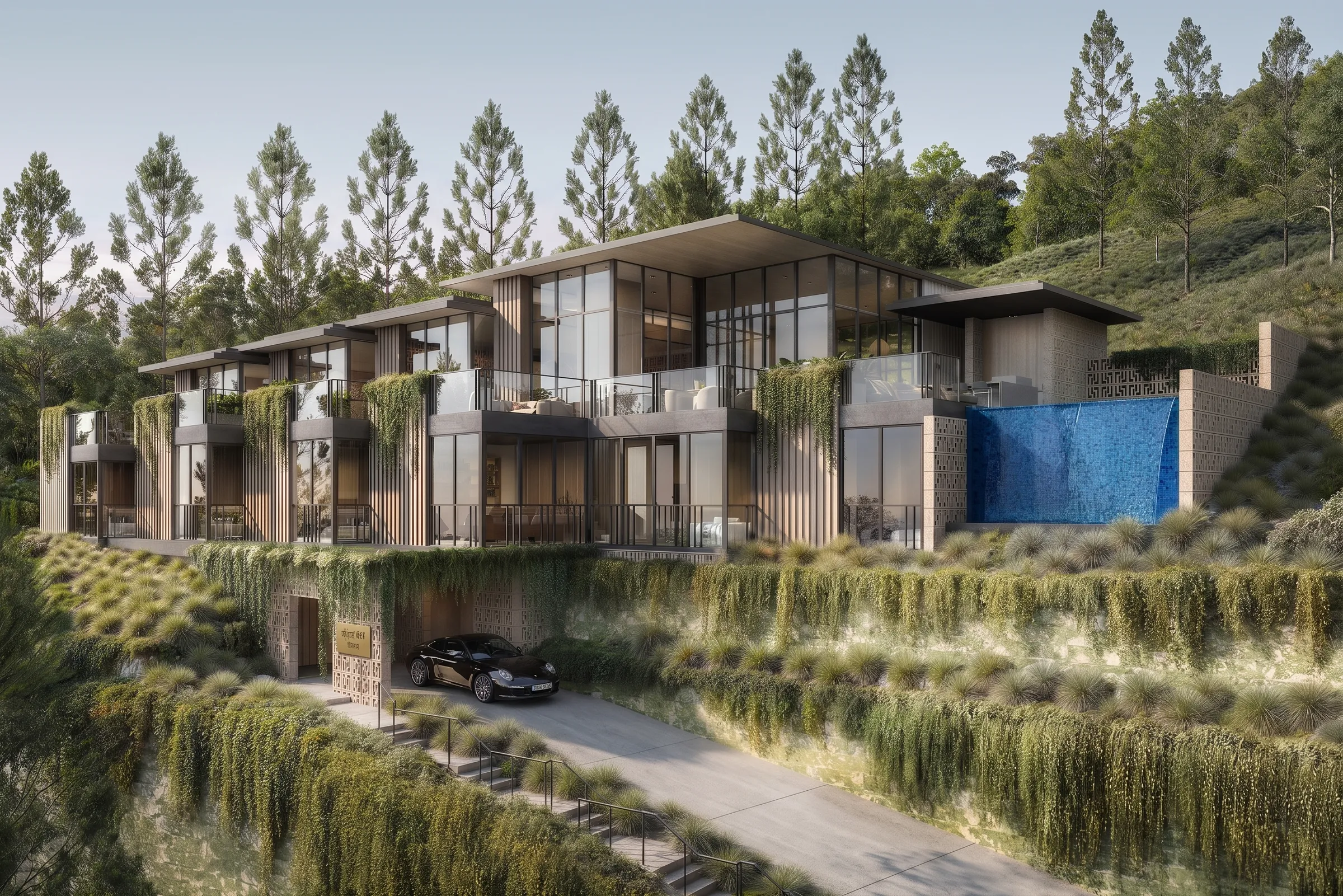
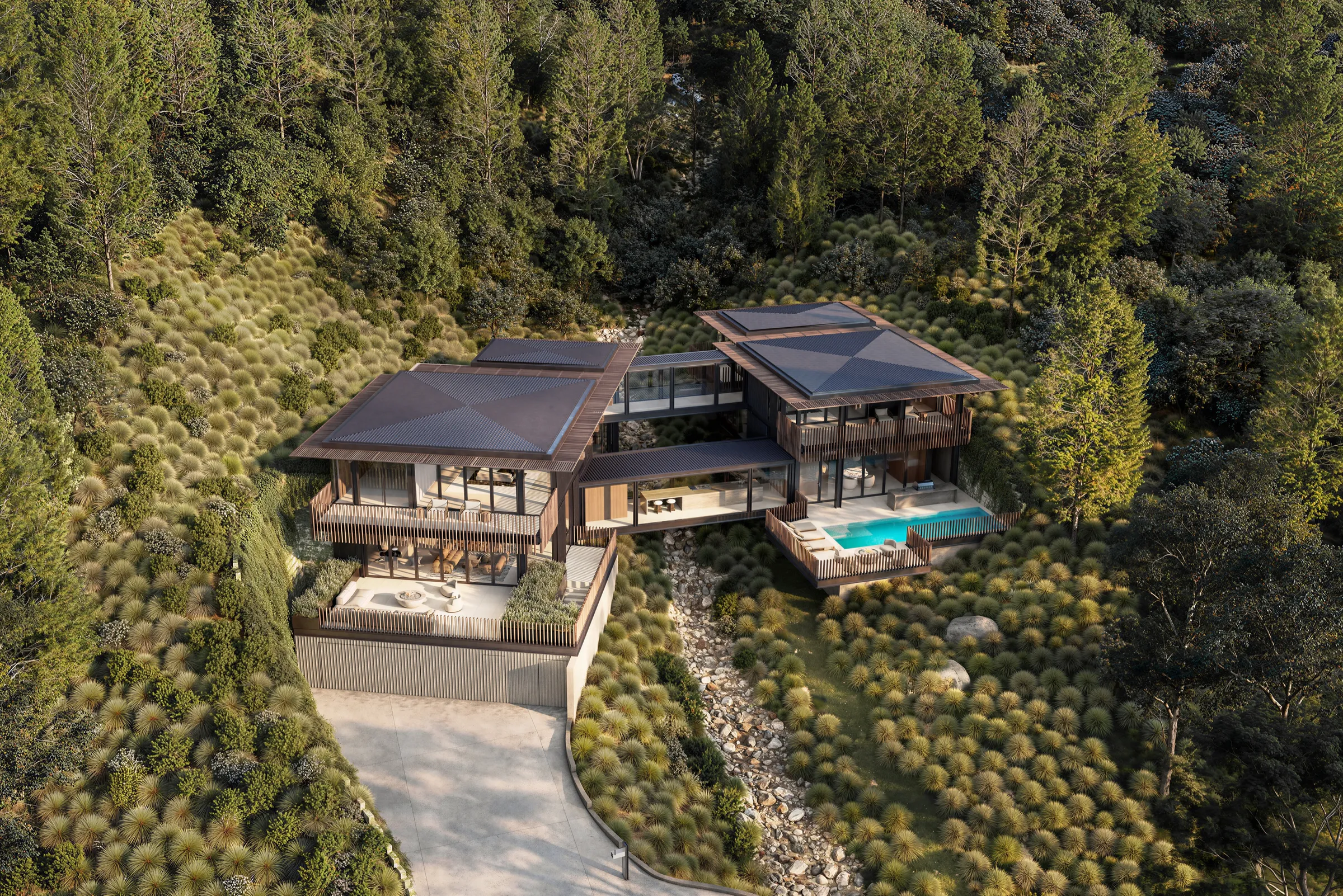
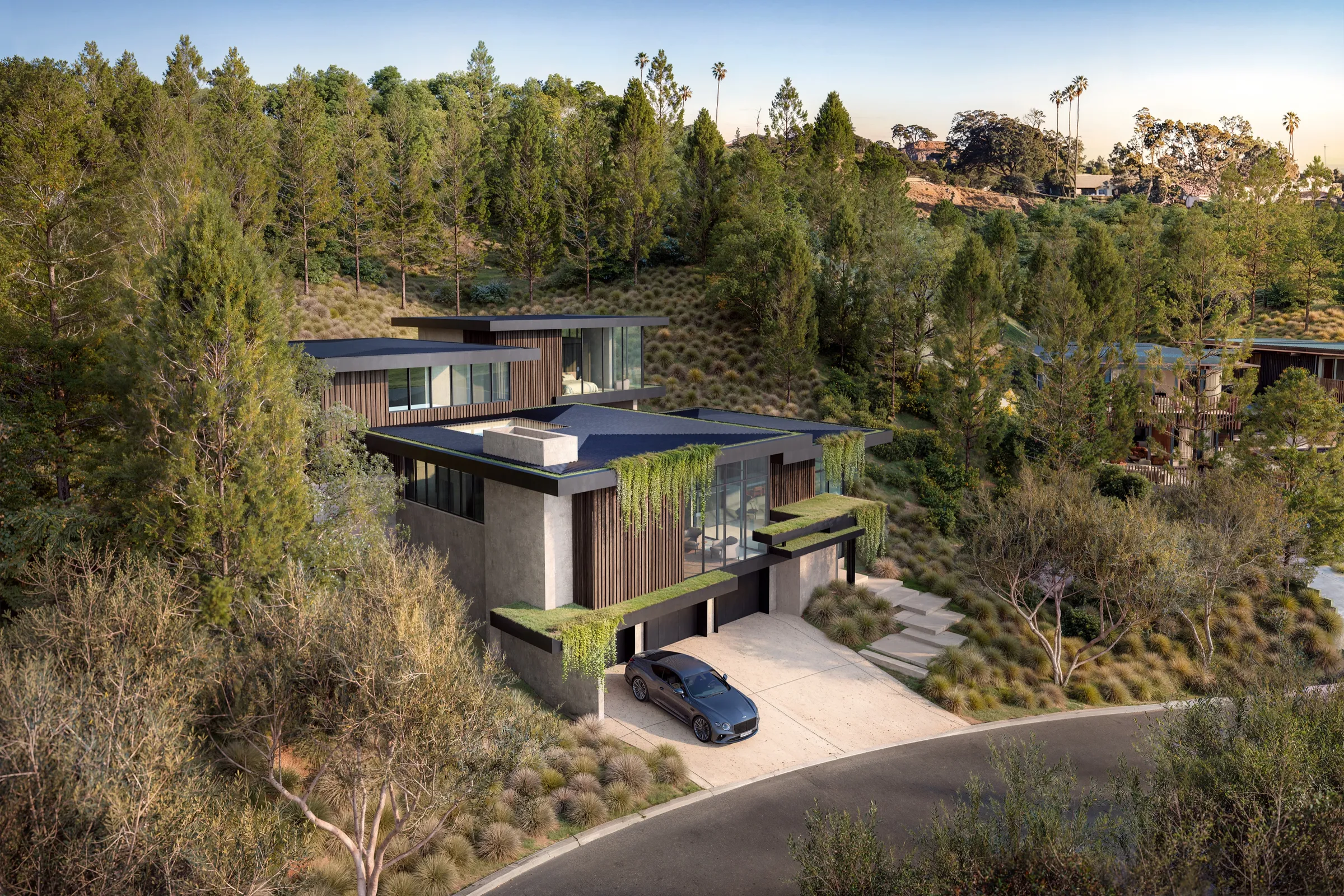
Landscape was the project’s slowest and most contested ingredient, so the team handled it deliberately. Because building planting in 3D is expensive to revise, NoTriangle used light AI-assisted reference passes to settle the look with the client first, the indigenous Cook pines and lemonade berry that ring the property, the feathery vines on the board-form and shotcrete retaining walls, the manicured beds near the homes giving way to wilder, native growth at the edges, before committing any of it to the heavy 3D scene. There were no palms anywhere on the project, a detail the client was firm about. One specific constraint shaped the aerial view directly: the pine count had to come down to satisfy the local Fire Department’s approval process, so the trees read as a thin border rather than a forest. Throughout, the studio worked against JWDS’s exacting design eye, matching the organic concrete finishes and the precise wood tones the architecture depends on.
The production
Nine Angles, Thirteen Images, Three Deliveries.
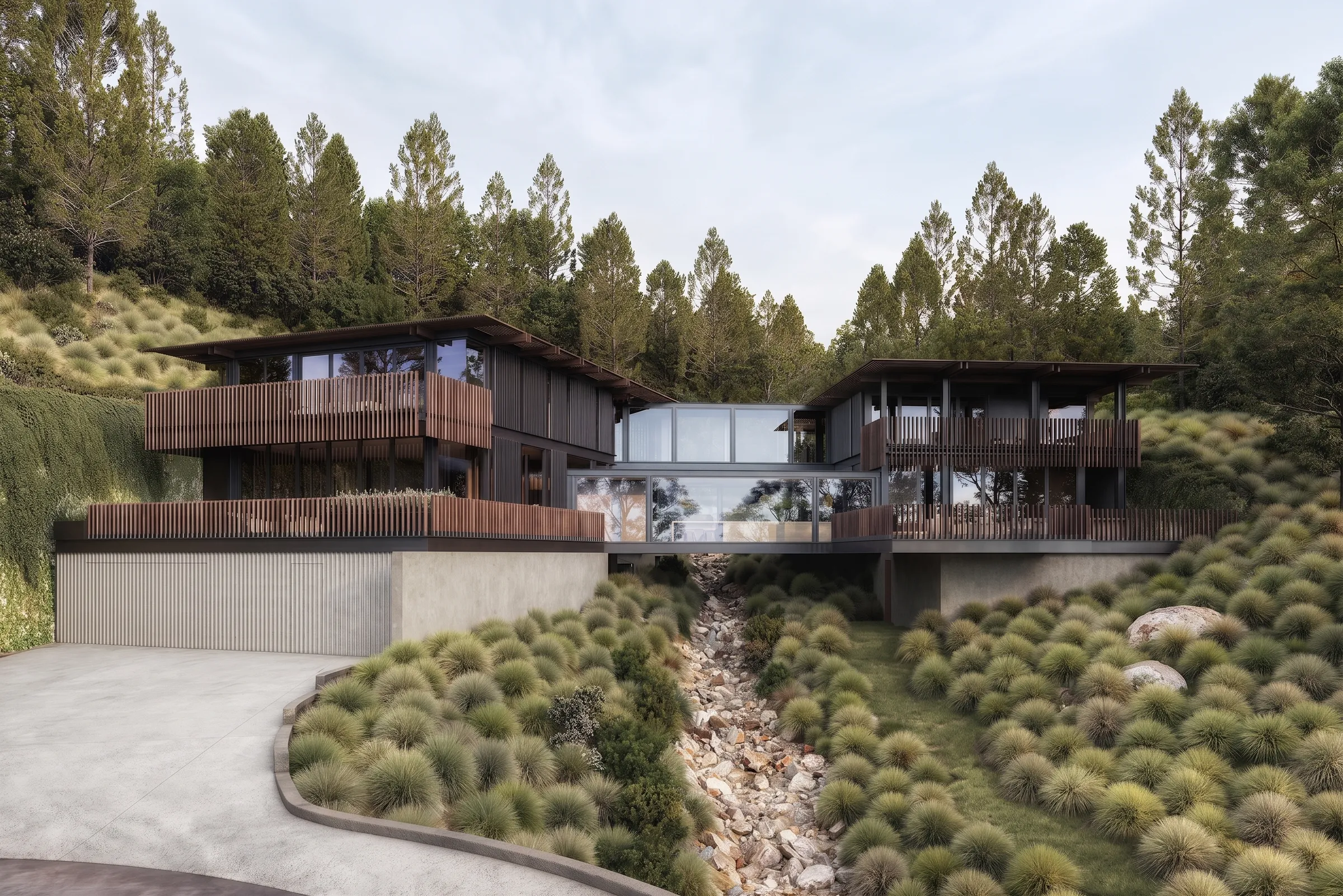
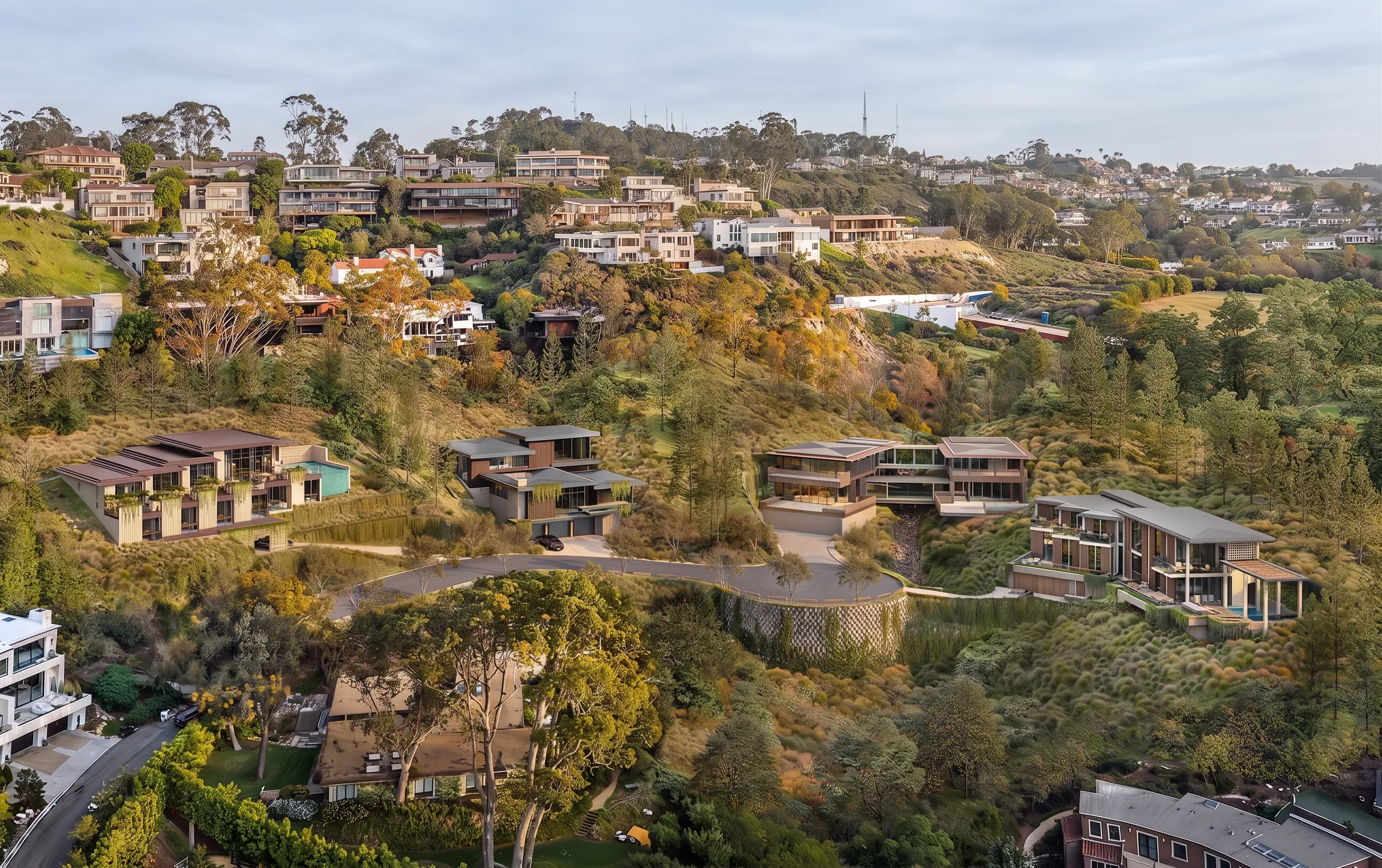
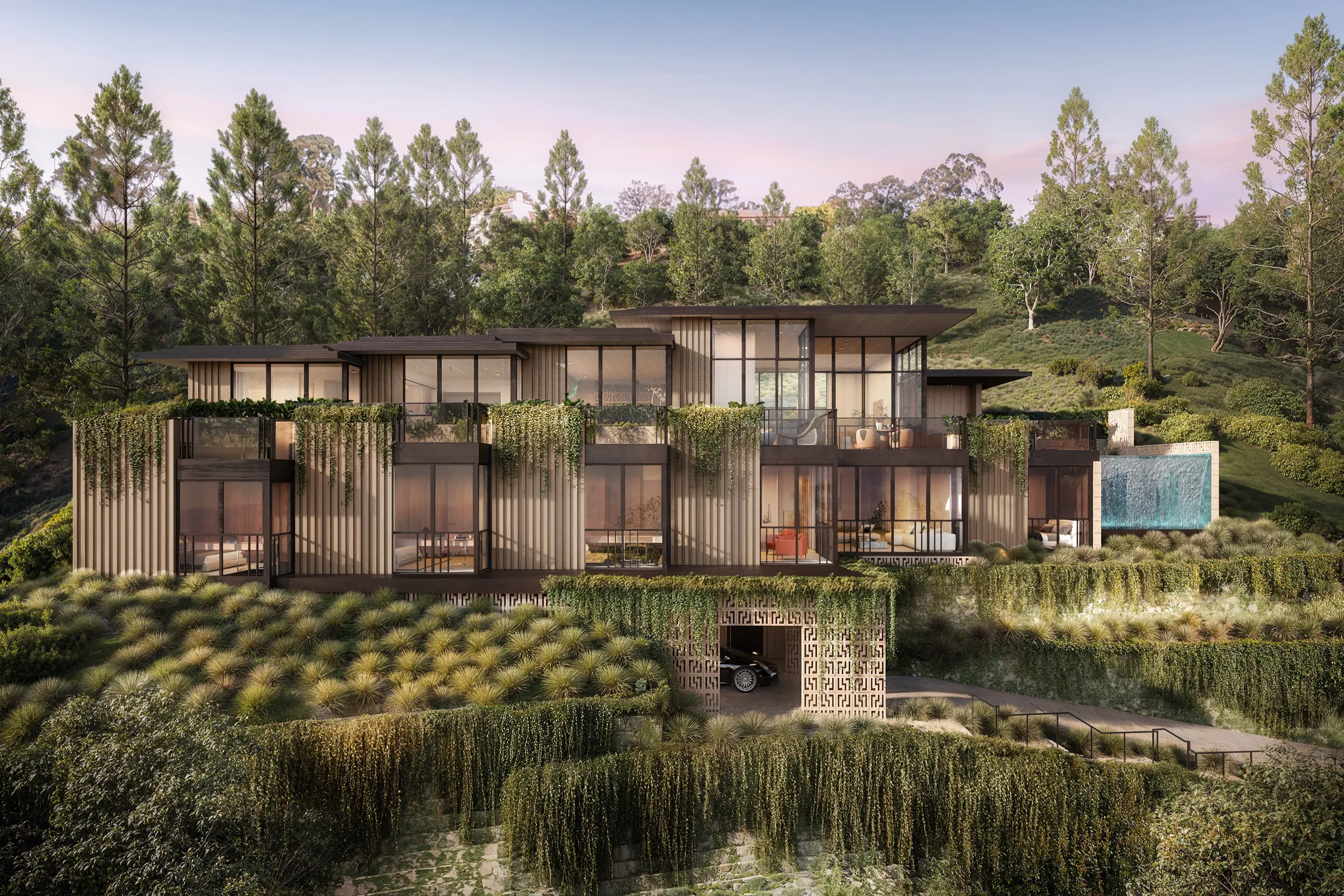
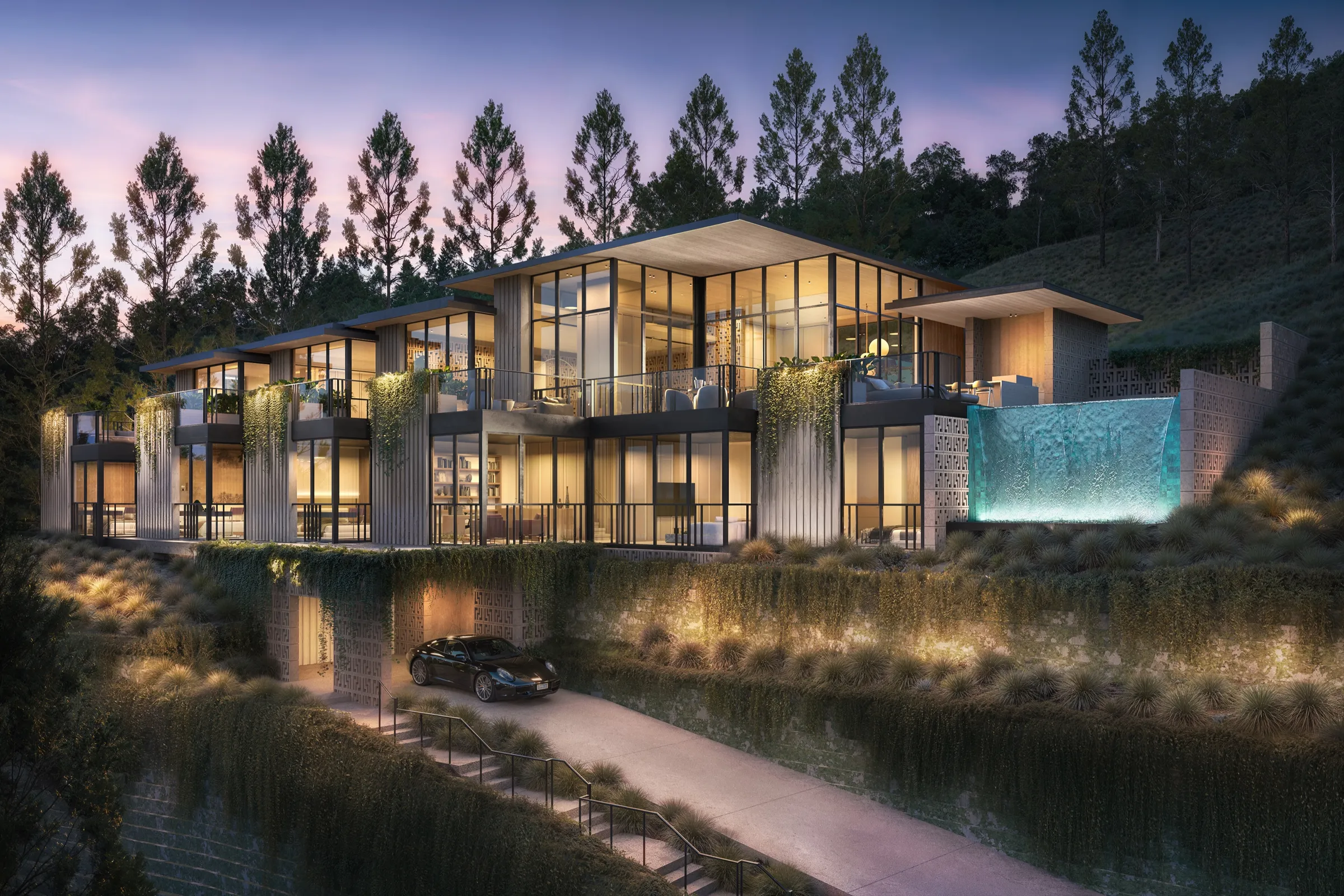
Nine camera angles carried the development, rendered out to thirteen final images. Each of the four homes got an eye-level hero, the angle a buyer would feel standing at the arrival point, in two lighting treatments: a warm daytime or sunset version, and a night or blue-hour version where the house glows from within. Each home also got an elevated aerial that placed it in its landscape and showed the surrounding context. And one overall site view tied the whole project together, the development’s money shot, shot in low evening light for maximum drama, the image meant to make a developer want all four lots at once.
To keep the schedule moving, deliveries were split into three groups so feedback on lighting, landscaping, and materials could be locked on the first homes and then applied across the rest. The revision rounds were detailed and constant: lowering camera angles toward eye level, tightening fields of view so a home filled more of the frame, balancing the sunset palette away from over-saturated orange toward purples and blues, calming the wood tones on a garage that read too hot, removing a stray fence along a driveway, reshaping a retaining wall that had been modeled too angular, and dialing the planting between manicured and wild. The overall evening site shot wanted real drone photography taken at the right hour to anchor it; when that footage was slow to materialize, the studio planned around it, prepared to compose the angle and transform daylight toward blue hour rather than let the launch slip.
After dark
Lit for Drama.
The brief asked for drama and a wow factor, the quality the previous renderings never reached. Each home was given a night or blue-hour treatment where the architecture glows from within, glass walls lit warm against a twilight sky and the turquoise waterfall feature illuminated below. The sunset palette was pulled away from over-saturated orange toward purples and blues, so the light felt expensive rather than ordinary.
The outcome
A Launch Ahead of the Build.
The renderings became the public face of a development that did not physically exist yet. They were built to anchor the project website, feed the MLS marketing and the brochures, and print at large scale for the physical presentation boards the team used to walk developers and buyers through the opportunity. With the homes themselves still ahead of a build, the team estimated roughly six months to put in the street and around fourteen months to build each house, the marketing could not wait for construction, and now it did not have to. The images gave the Basile + Wilson team a way to sell the lots and their approved designs on the strength of the visuals, whether to one developer taking all four or to individual buyers building one at a time.
For a project whose entire pitch is the finished home, rendered convincingly enough that a buyer feels its scale and its light before the foundation is poured, the value was straightforward. NoTriangle gave a respected San Diego design studio a launch-ready package for its own development venture, accurate to the approved architecture, dramatic enough to create desire, and timed to the sales team’s calendar rather than the construction schedule.
Questions
Selling a Development Before It Is Built
- Why would you render four homes that haven’t been built yet?
- Because the product being sold is the opportunity, not a finished house. Carrizo Lots is a fully approved, shovel-ready development: the lots and their designs can be sold to a single developer or to individual buyers who then build. None of that can be marketed off a patch of graded dirt. Accurate, dramatic renderings let the website, the MLS listings, the brochures, and the printed presentation boards go live on the sales team’s schedule, years before construction wraps, so buyers can commit to a home they can already picture standing on the hillside.
- Why does landscaping matter so much in a luxury exterior rendering?
- Because at this level the landscape is half the sell, and getting it wrong reads instantly as fake. The client’s previous renderings failed largely on planting that looked nothing like coastal Southern California. For Carrizo Lots the studio built the landscape to feel genuinely like La Jolla, indigenous Cook pines and lemonade berry around the property’s edges, feathery vines on the board-form concrete walls, beds that are manicured near the homes and wilder further out, and no palms anywhere. Because 3D planting is slow to revise, the look was locked first with quick reference passes before being committed to the final renders, which also let the team thin the pines in the aerial view to satisfy the local Fire Department’s approval process.
- How do you keep a rendering set on schedule for a sales launch?
- By staging the work and locking decisions early. This set of thirteen images was delivered in three groups, so lighting, landscaping, and materials could be approved on the first homes and then applied efficiently across the rest. The studio also models from the client’s real files and approved designs rather than inventing the architecture, which is what keeps the schedule on track. The constraint is rarely the rendering itself; it is how quickly references, materials, and feedback come back.
- Was this the client’s first project with NoTriangle?
- Yes. Jules Wilson Design Studio came to the studio by referral with a single development and a launch deadline, and their main concern, learned on rendering projects elsewhere, was how revisions would be handled. So the engagement was built to show control early: camera angles approved on white models, deliveries staged in three groups so decisions on the first homes carried to the rest, and the founders present in the review calls. Every image was produced start to finish by the studio’s own team, and the client’s verdict was simple: "We are very happy with the outcome and quality."
Services on this project
Related projects
Start with a discovery call
Every project starts with a conversation. The call is where we understand the project and whether we're the right studio to do the work.