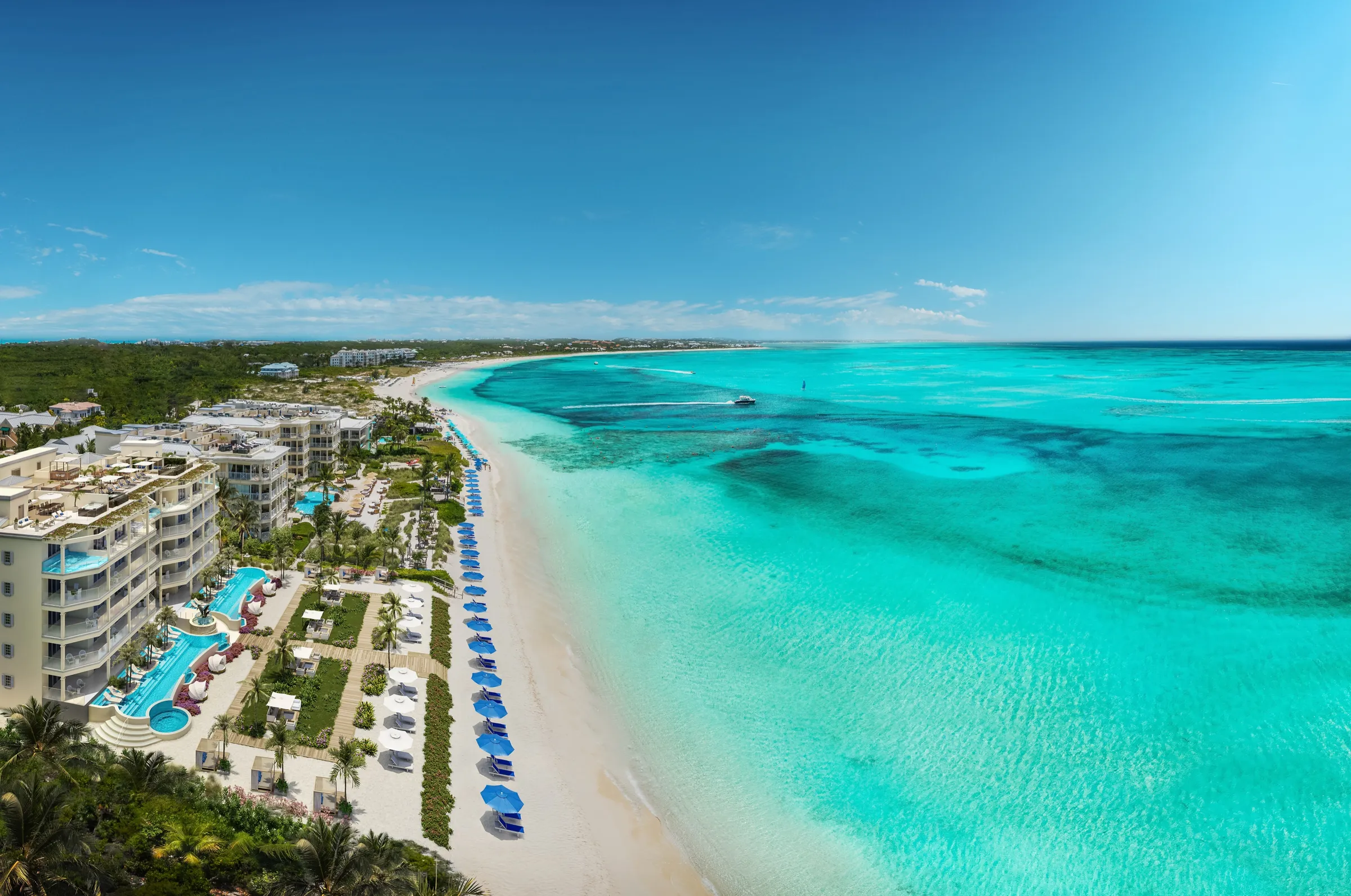
How to Pre-Sell Caribbean Real Estate to Buyers Who May Never Visit

Lukas Berezowiec · CEO of NoTriangle Studio
Updated · 10 minutes
Key takeaways
On an island project, the renderings are not supporting material for a site visit. They stand in for it.
- Why
- Lenders want sales before they fund
- Buyers
- What these buyers share is distance
- Trust
- The real site and the real water, light and orientation, finishes, floor plans and movement
- Brokers
- Brokers need material they can forward without explaining it
A Caribbean off-plan sale usually happens a long way from the lot. The buyer is in Toronto, London, or New York, looking at a set of images on a phone, a broker’s PDF, and maybe a short film. Some of them will not fly down before they sign the reservation agreement, and some will not see the house until it is finished. Whatever they decide, they decide from the visuals.
On an island project, the renderings are not supporting material for a site visit. They stand in for it. This post covers why pre-sales carry so much weight in the Caribbean, what a remote buyer needs to see before they trust a project, how brokers put the material to work, and the mistakes that cost developers credibility with buyers they will never meet in person.
If you want the general case for pre-selling with 3D visualization, across property types and markets, our complete guide to pre-selling real estate is the deep dive. This post is the island version: what changes when the site, the buyer, and the broker are in three different countries.
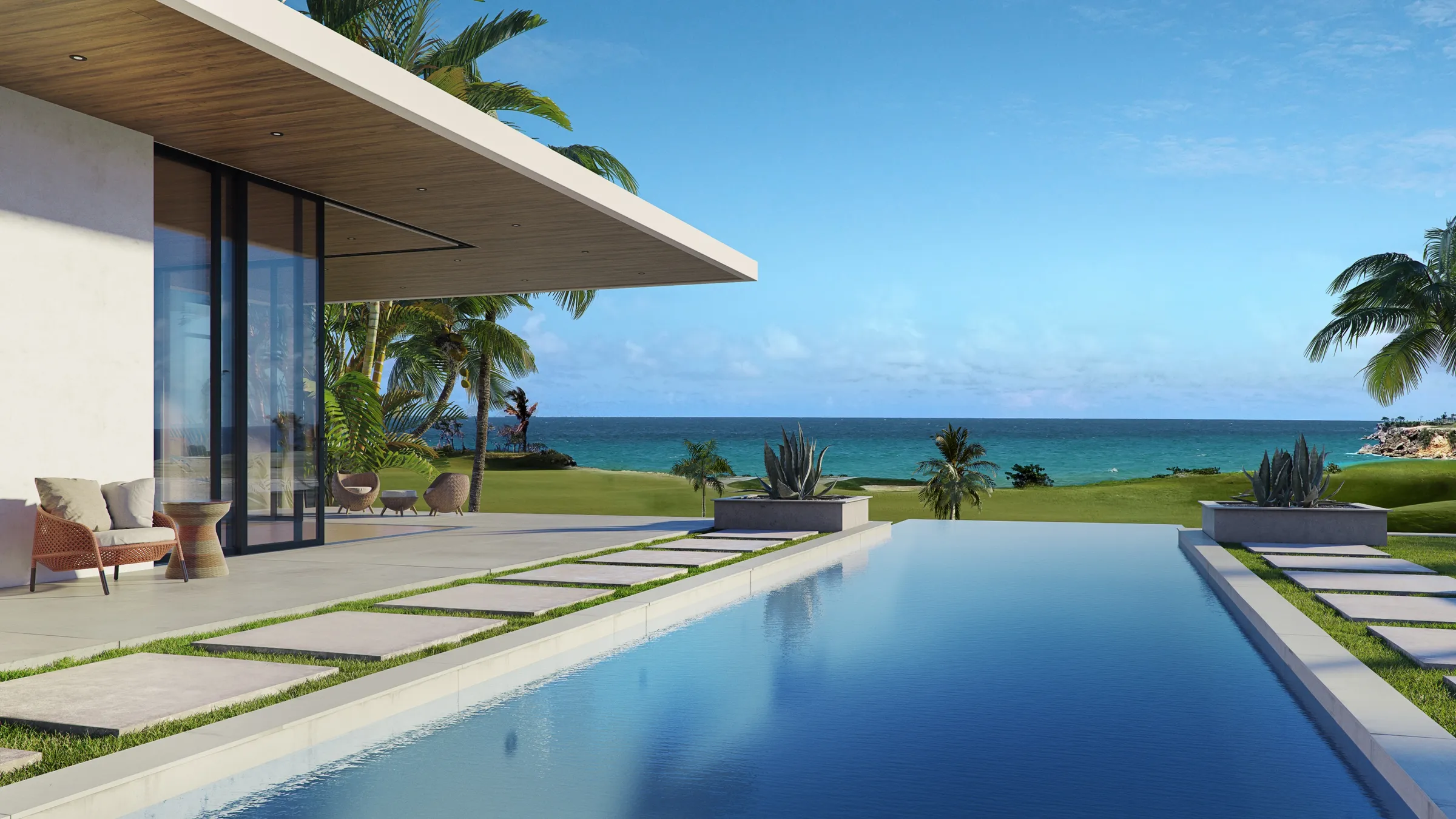
Why Pre-Sales Carry Caribbean Projects
In most island markets, pre-sales are not a marketing preference. They are part of how the project gets built.
- Lenders want sales before they fund. Dentons’ Turks and Caicos chapter of the Chambers Real Estate 2026 guide puts it plainly: developers must demonstrate sufficient unit sales before construction funding is fully released, and pre-sale thresholds and staged drawdowns are often aligned with lender requirements. The renderings are what those early sales are made on.
- Deposits arrive in stages. The same guide notes that off-plan deposits are typically staged and linked to construction milestones. A buyer who pays a first deposit on the strength of the images is then asked to keep paying as the building rises, so the visuals have to hold up for the whole build, not just the launch weekend.
- On branded projects, the residences carry the capital stack. In a May 2026 piece, HVS describes how units sold off-plan, with payments staged against construction milestones, bring money into a project long before the hotel opens, and how a branded residential component can turn a marginally bankable project into a clearly financeable one. In that model, the residences are often sold first so the resort can get built.
That last point matters more every year. Savills’ Caribbean Islands 2024/25 report counted 28 operating branded residential developments across the region as of July 2024, with 1,800 residences, and 36 more in the pipeline that would add another 4,400. Each of those projects needs buyers, and in an off-plan model they are found while the site is still raw ground, often by people who will judge it from a screen. Our branded residence launch guide covers how the operator’s standard shapes that imagery.
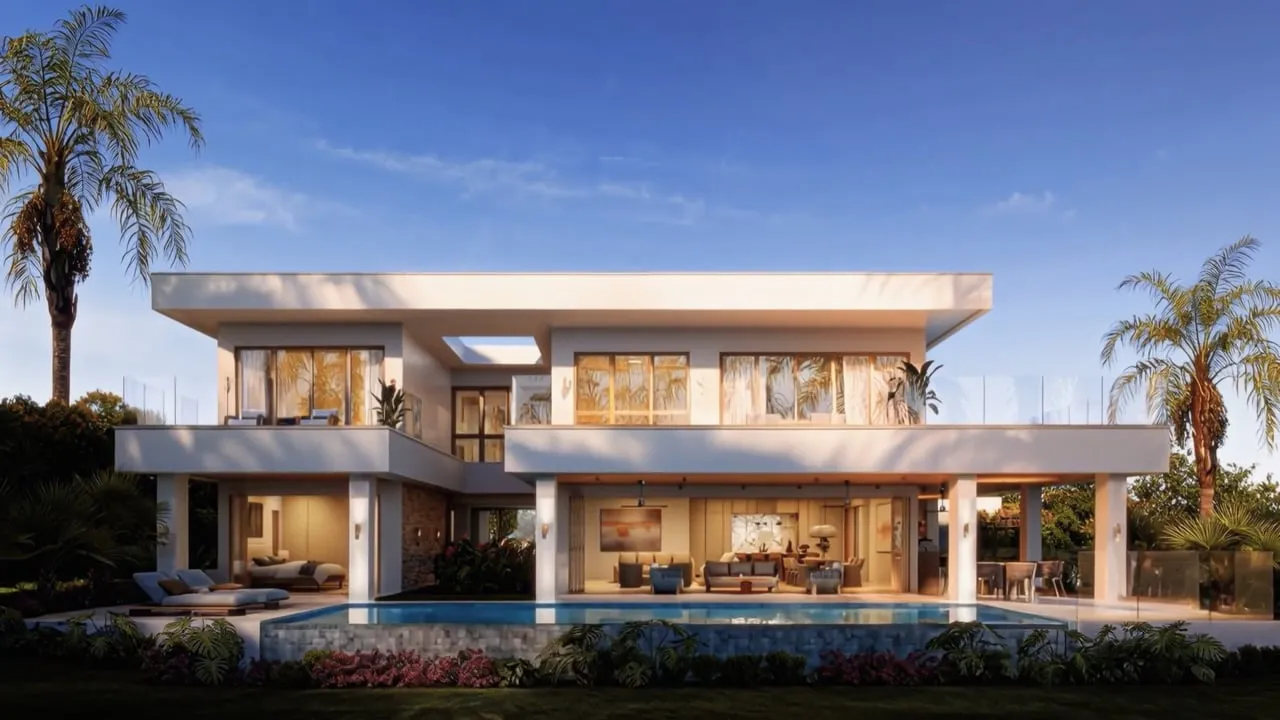
Who Is Buying, and from Where
The buyer pool differs island by island, and it shapes what the images need to say. The same Savills report found that most prime residential buyers in Turks and Caicos come from three markets: the United States (60%), Canada (30%), and the United Kingdom (10%). In Barbados the balance tips the other way: travellers from the UK make up the majority of holiday home owners, with Canadians and Americans rounding out the top three source markets.
What these buyers share is distance. They know the island from a holiday or a broker’s call, and they compare your renderings to that memory and to the best hotels they have stayed in, not to a model unit they can walk through. So we treat every Caribbean set as a remote-first sale: each image has to answer a question the buyer cannot answer by visiting.
What a Buyer Needs to See from a Thousand Miles Away
A local buyer can stand on the lot at five in the afternoon and look. A remote buyer trusts the images to have done that for them. In our experience, five things decide whether that trust holds.
The Real Site and the Real Water
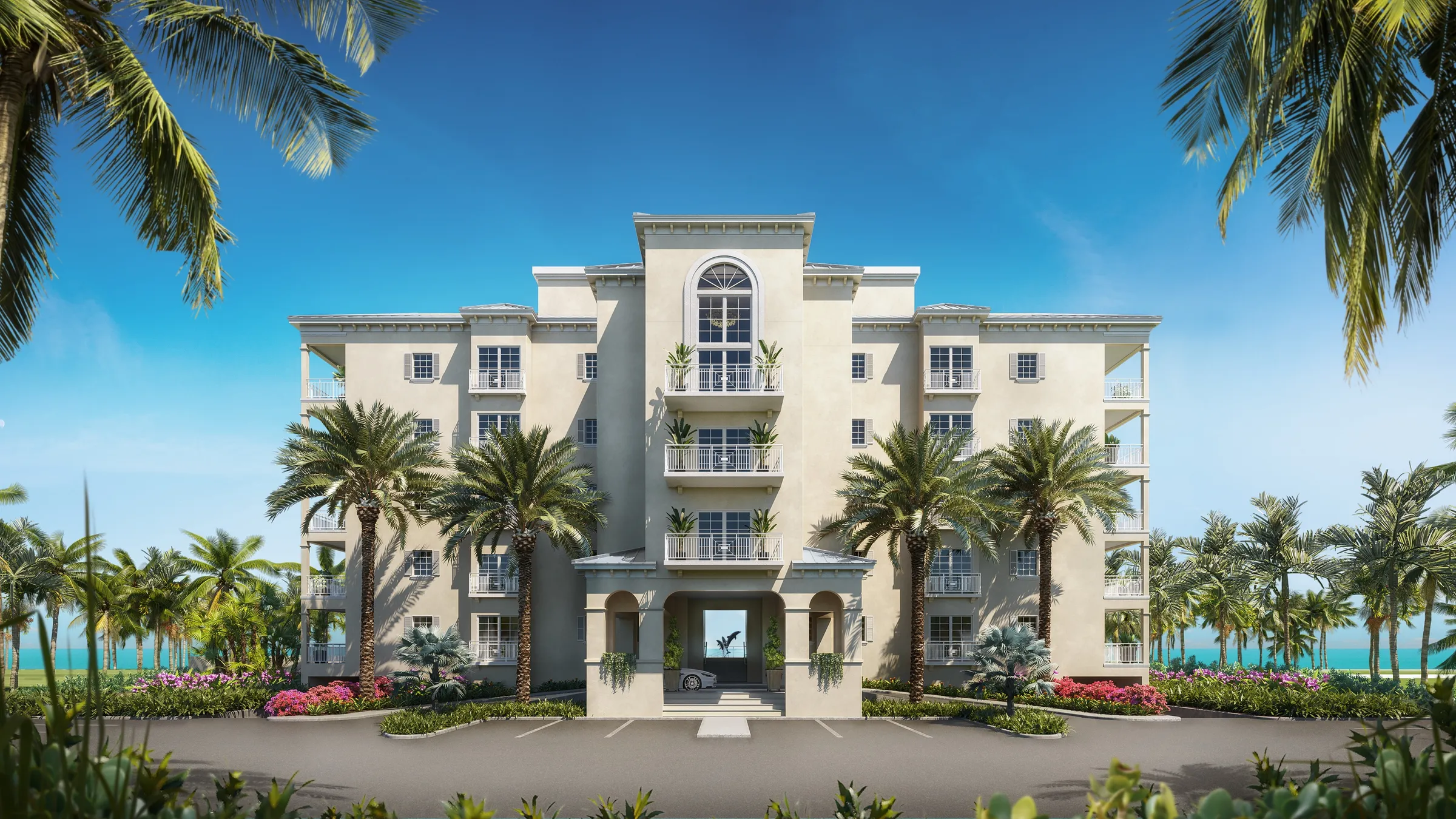
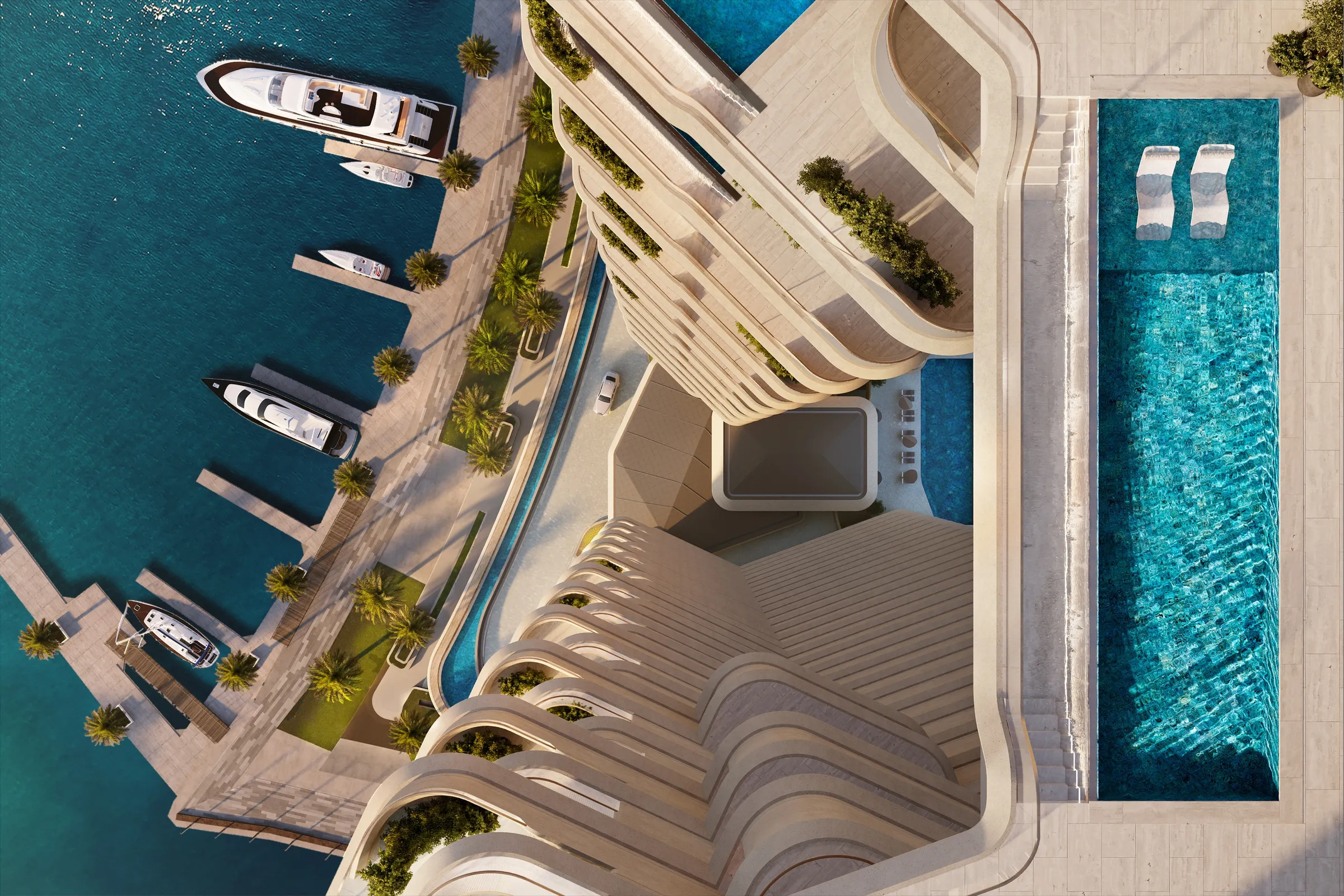
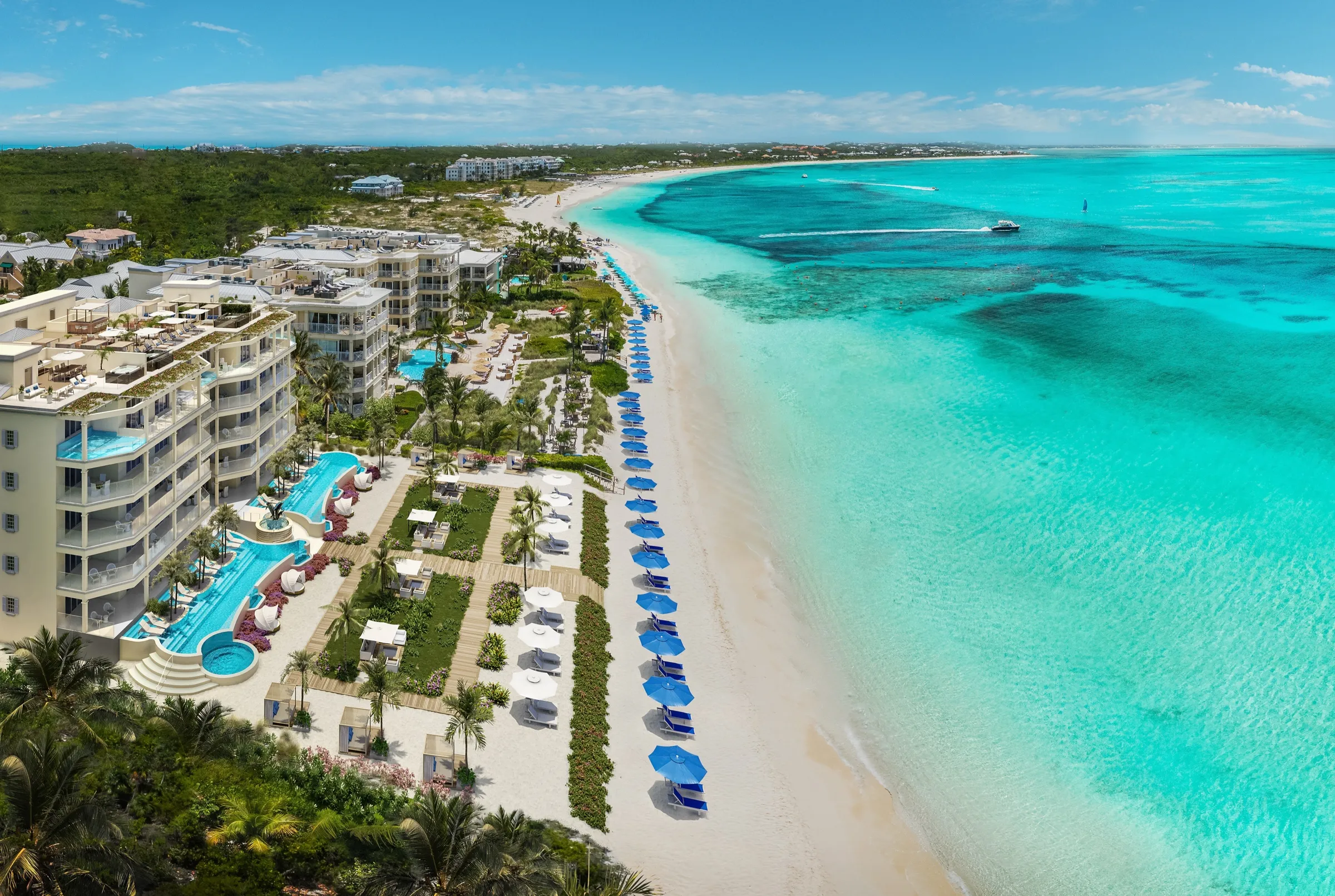
On a beachfront site, the water is often the single most persuasive asset, and it is the one thing a studio cannot convincingly invent. A photoreal building in front of a generic blue sea reads as a stock backdrop, and a buyer who knows the island will notice. For a Turks and Caicos oceanfront resort, we built every exterior as a drone photomontage: the architecture modeled and lit in 3D, then composited into real aerial photography of the beach and reef. We wrote the developer’s on-island drone operator a shot guide with exact positions, elevations, and panorama overlap, so one shoot could feed every view, with the sand raked and the reef at its brightest.
The same principle applies inland. On a golf community, the real context is the fairway, the tee boxes, and the line down to the sea. Real context is also what the buyer is paying for: Savills notes that in Barbados, properties with a view can be up to 25% more expensive than those without, and beach frontage can nearly double the price of a comparable property. If the premium is in the view, the image has to prove the view.
Light and Orientation
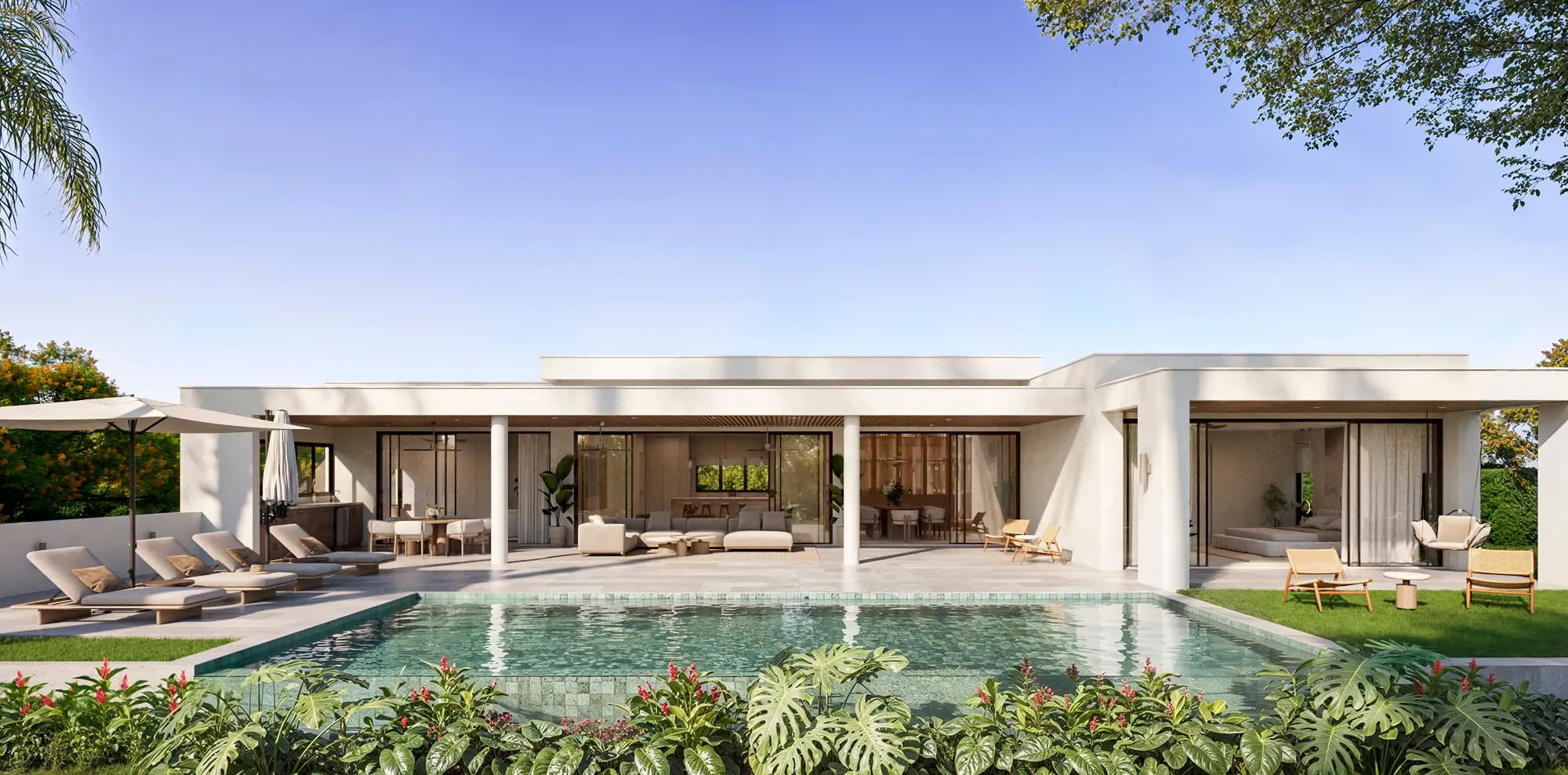
A remote buyer wants to know which rooms get the evening light and what they will see from the pool deck. For Villa Solene at Apes Hill, Barbados, we walked the site plan with the developer at kickoff to confirm where north fell and how the lot sat on the course, with the tee boxes to one side and the fairway running toward the ocean on the other. Those positions set where the cameras looked. The sun sits where it really will, and the view from the guest bedroom is the view that bedroom really has.
Finishes the Buyer Can Hold You To
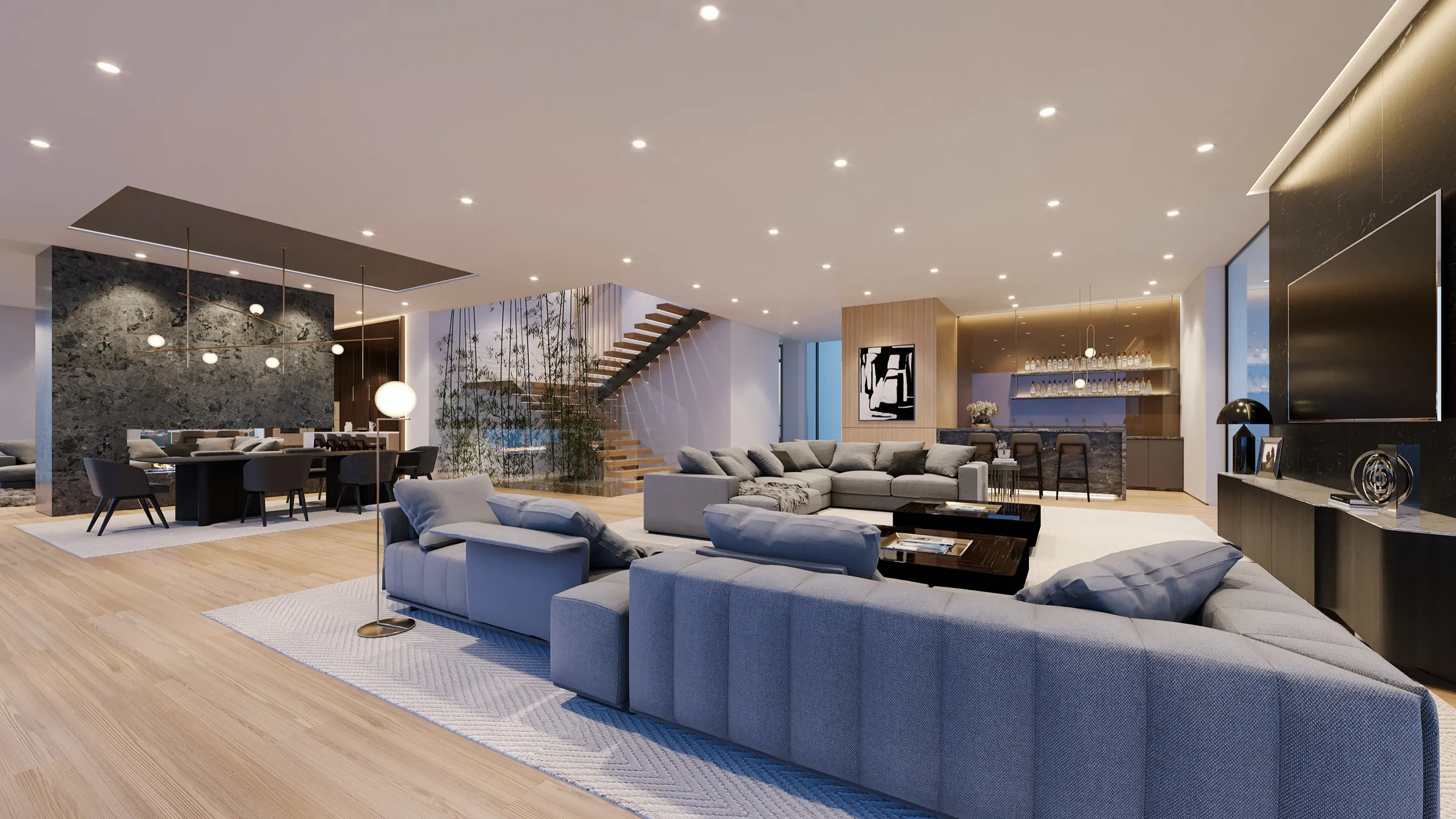
An off-plan buyer is buying a specification, and the renderings become part of how they remember it. On Villa Solene, every finish came from the developer’s existing suppliers and stayed inside the price point set for the house, and the planting followed what actually grows on Barbados, palms and local tropical species, with nothing like olive trees that would never survive there. Accuracy here protects the sale at handover, when the buyer compares the finished home to the image they committed to.
Floor Plans That Place Every Image
For Villa Solene we produced a color floor plan of the full layout, and every rendering carried the villa name and a label for the view, so a prospect on a call with a broker could place each room in the house. A small detail, and it removes a lot of back-and-forth when the buyer is an ocean away.
Movement: Animation and Virtual Tours
Stills sell rooms. Movement sells arriving, which is what a buyer who has never been there is missing most. For The Elysian, a 48-unit condominium in Montego Bay, Jamaica, the package combined 12 interior and exterior renderings, a narrative animation, and a marketing website. The film moved through the homes and every amenity, with lifestyle imagery woven through so buyers could feel the resort, not just see the architecture. Villa Visala, a two-story villa at Apes Hill, went to market off-plan on ten renderings, two floor plans, and a 60-second animation. For buyers who want to step inside, a virtual tour lets them move through the rooms at their own pace, and architectural animation gives the broker a film to send ahead of the first call.
How Brokers Use the Material
In the Caribbean, the broker is often the bridge between the project and a buyer who lives abroad. Firms like Turks and Caicos Sotheby’s International Realty, which describes a significant foothold in new development and trophy properties, carry a project’s imagery into their listings, their international referral networks, and their calls with prospects abroad. The renderings travel further than the developer ever will.
That shapes how the set should be built. Brokers need material they can forward without explaining it:
- A hero image that works as a thumbnail. It will be seen first in an email preview or a listing grid, so it has to read at small size. Our post on renderings for broker opens, MLS, and PR covers how one set serves each channel.
- Labeled views and a plan. So a broker can answer “which bedroom is this” on the phone without calling the developer.
- A film they can send before the call. It does the first walkthrough for them.
- A home for all of it. On The Elysian, the marketing website became the launch hub, with lead forms that drop every inquiry into the developer’s CRM already tagged with the campaign that produced it.
If you are the broker rather than the developer, an agent’s brief for a rendering studio covers what to ask for.
The Pitfalls That Cost Remote Buyers’ Trust
A remote buyer has fewer ways to verify what they are told, so they read the images more skeptically, not less. These are the mistakes we see most often on island projects.
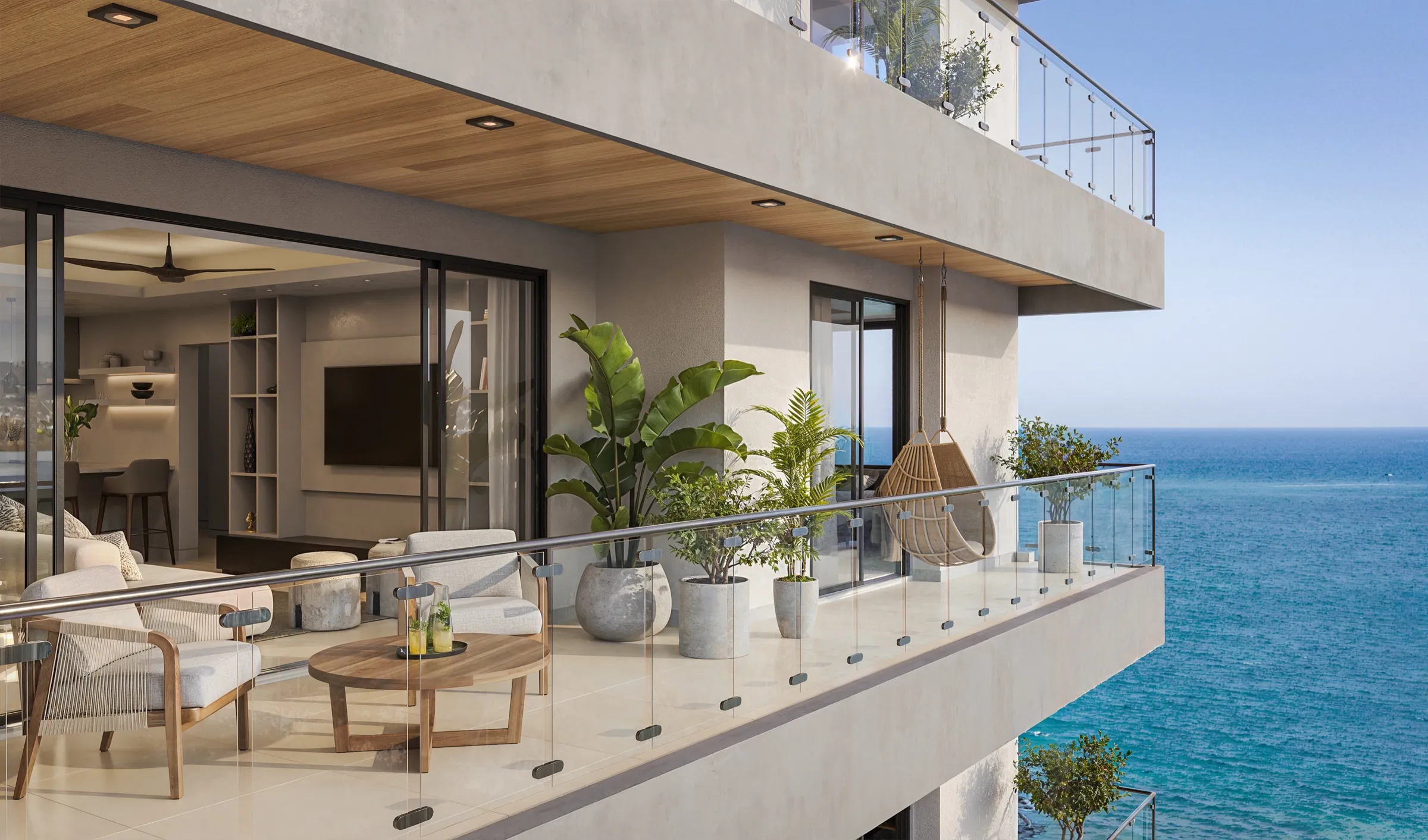
- Generic, stock-looking CGI. Invented oceans, library palms, and flat midday light. Buyers who have holidayed on the island recognize a place that is not there, and a mid-tier image signals a mid-tier project. Our post on why renderings fail to sell goes deeper on this.
- Views that do not exist. A sea view from a unit that faces the car park, or a horizon with the neighboring building removed. It will not survive the buyer’s first visit or their lawyer’s first question. Drone plates shot at the actual camera positions are the fix.
- Overpromising what surrounds the project. Beaches, marinas, and attractions nearby are part of the appeal, but they are not part of the development. On The Elysian, a disclaimer on the closing frame of the animation made clear that nearby attractions shown were not part of the project, which protects the developer against misrepresentation claims later.
- Finishes and planting the budget cannot deliver. If the render shows stone the supplier cannot source on the island, or trees that will not grow there, the gap shows up at handover, in front of a buyer who has been paying staged deposits through the whole build.
- Relaunching a listing with the same images. Villa Solene had been to market once on an earlier set. We kept the approved plan, gave the house a new exterior identity and interior palette, and it sold on the new renderings, before it was built.
A Practical Checklist for an Island Pre-Sale
- Name the buyer and the market. A Turks and Caicos condo pitched mostly to Americans and Canadians and a Barbados villa pitched largely to British buyers may need different emphasis and different channels.
- Name the selling point before anything is modeled. The view, the beach, the golf, the rooftop. If the image misses it, it is not worth making.
- Confirm orientation on the site plan. North, sun path, neighbors, and what each key room actually looks at.
- Plan the drone shoot early. Write a shot list with positions, heights, and time of day, and brief the on-island operator. Weather windows on islands are short, and the Atlantic hurricane season officially runs from June 1 to November 30, so build that into the schedule.
- Lock composition in white model first. Approve camera angles in greyscale before any surface is rendered. It is the cheapest point at which to change your mind.
- Specify real finishes and local planting. Only show what the budget, the island’s supply chain, and the climate can deliver.
- Label every view and include a floor plan. So a buyer on a call can place every image in the home.
- Build the broker kit. A hero that reads as a thumbnail, a labeled set, an animation to send ahead, and a website that captures and tags leads.
- Add disclaimers where context is shown. Anything visible that is not part of the development should be marked as such.
- Plan for design changes. Keep the 3D model on file, so a revised pool deck or facade can be updated without starting over.
Where to Go from Here
Every island has its own approval process, buyer mix, and selling season. Our Caribbean hub brings our regional work together, with island pages for Barbados, Turks and Caicos, and the Dominican Republic. If your project is still in approvals, start with our Barbados planning approval guide or our look at Turks and Caicos off-plan development in 2026.
We have spent more than ten years building visuals that sell projects before they exist. If you are preparing an island launch and want a second opinion on your brief, your drone plan, or the set you already have, that is a conversation we are happy to have.
FAQs
Can Caribbean property really sell to buyers who never visit?+
Yes. Villa Solene at Apes Hill, Barbados, sold before the house was built, and Villa Visala across the road went to market off-plan on the same kind of imagery: renderings, floor plans, and an animation. With nothing standing on the lot, the visuals were the house the buyer committed to.
Why do Caribbean developers need pre-sales before building?+
In many island markets, lenders release construction funding only once a project shows enough unit sales, and buyer deposits are staged against construction milestones. On branded resorts, off-plan residence sales bring in money well before the hotel opens, which can make the whole project financeable.
How do you show real ocean views in a rendering of an unbuilt project?+
With drone photomontage. A drone operator photographs the site from the exact camera positions and heights the renderings will use, and the 3D building is composited into that real photography, so the water, beach, and horizon in each view are the ones the property actually has.