
Editorial vs Listing-Grade Renderings for Luxury Homes

Lukas Berezowiec · CEO of NoTriangle Studio
Updated · 8 minutes
Key takeaways
For a home marketed as luxury, editorial is the standard. It takes more time, and it cannot be added to a weaker image afterwards.
- Point 01
- Two different jobs, not two price points.
- Point 02
- The tell: custom-built furniture versus library furniture.
- Point 03
- Editorial quality is, more than anything, a function of time.
- Point 04
- You cannot fix a listing-grade image; it has to be rebuilt.
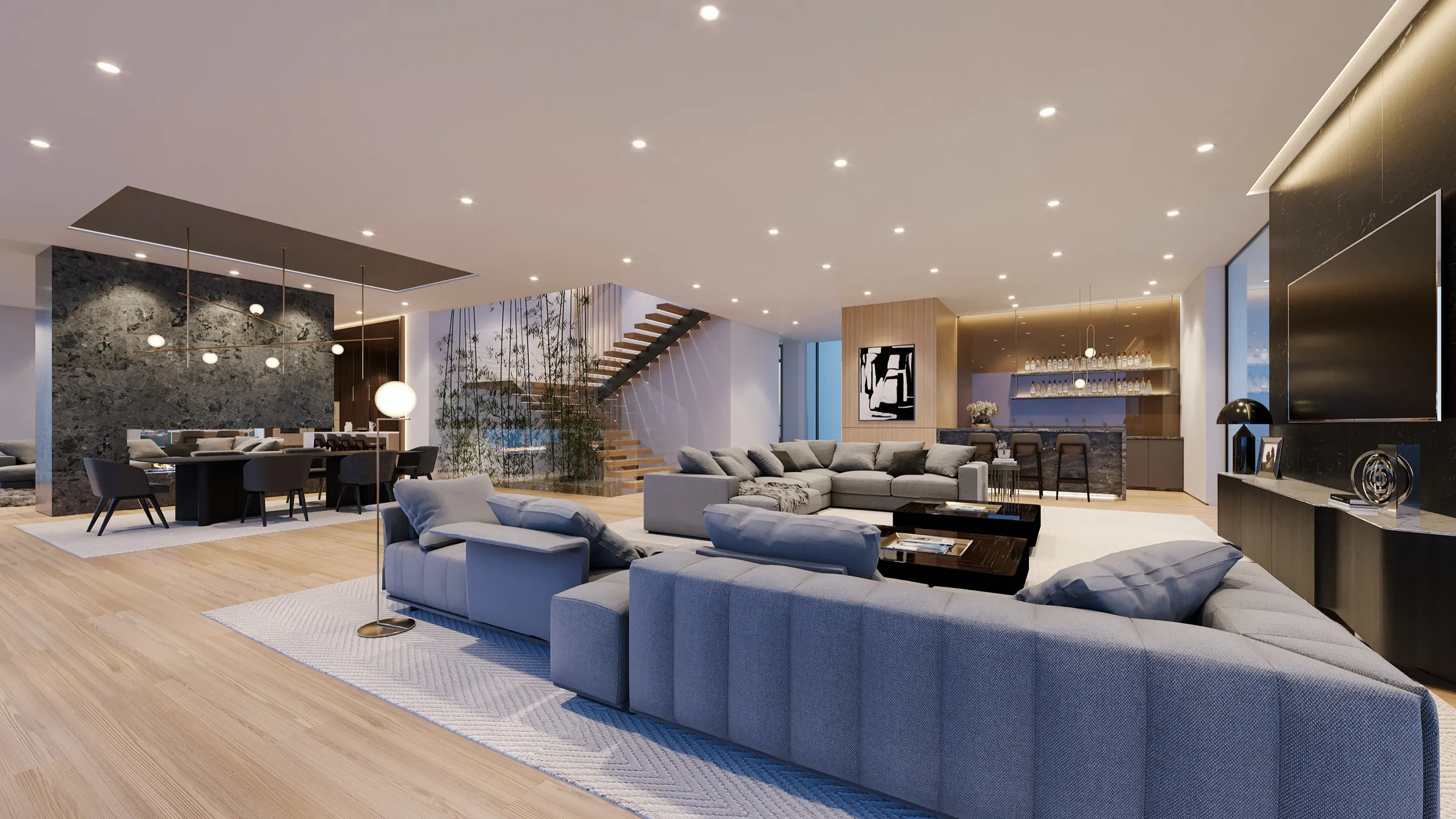
A listing-grade rendering shows a room clearly enough to explain it. An editorial rendering is art-directed like a magazine shoot: furniture modeled from the real specification, light controlled, details reviewed until they hold up. For a home marketed as luxury, editorial is the standard. It takes more time, and it cannot be added to a weaker image afterwards.
A developer selling a Bay-view custom home once sent us a short, exact brief. The priority was quality, he wrote, and he wanted the highest-end package possible, realism, lighting, atmosphere, materials, landscaping, a truly luxury presentation. Then the line that framed the whole project: these need to feel like high-end editorial photos. To make sure we understood the gap, he linked the home’s existing listing photos as the thing he did not want. He was drawing a line most buyers feel but rarely name, the line between a listing-grade rendering and an editorial one.
That distinction decides more about how a luxury home is received than almost any other choice in the process. Below is what actually separates the two tiers, why editorial costs more time and money, and why a weak image usually cannot be rescued, only rebuilt.

Two Different Jobs, Not Two Price Points
Listing-grade and editorial are not the same work done to two budgets. They are two different jobs. A listing-grade rendering exists to communicate: here is the room, here is the layout, here is roughly how it will look. It is functional, and for a lot of property it is enough. An editorial rendering exists to make someone want the home. It is art-directed like a photo shoot, styled and lit and composed so that it could sit inside a design magazine and not look out of place. In the markets where luxury homes actually sell, that is the register buyers already read in, so it is the register the imagery has to match. Editorial here means a production standard, not a mood. An editorial-grade image can be bright and documentary or dark and dramatic; that second choice is a different question.
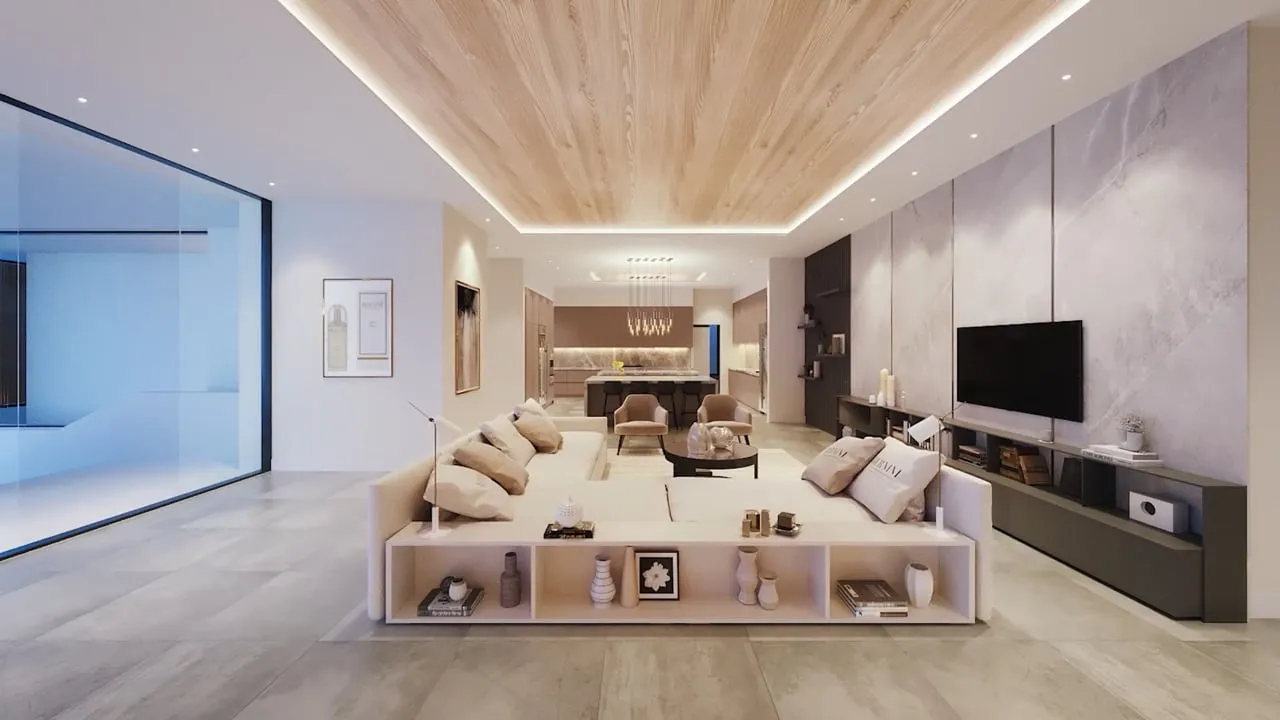
This is simply the work we do. On a discovery call, we describe it the same way every time: what we produce is high-end marketing, for pre-sales, for launches, for investor presentations, so quality matters enormously, we only work in a highly photorealistic register, and we follow a detailed process to make sure we capture what the client is actually after. Editorial is not an upsell on top of our standard product. It is the standard.
The Tell: Custom-Built Versus Library
If you want one concrete difference between the tiers, it is the furniture. A studio working to a listing-grade standard populates a room from a library, generic sofas and lamps and chairs pulled off a shelf and dropped into the scene. It reads as fine until you notice that nothing in the room is quite the thing that will actually be there. On the Bay-view home, we asked the client for the full furniture list, model and manufacturer names included, because we were going to build each piece as a custom 3D model. As our team put it to him, we would not be using library furniture, it is more work, but for editorial renderings it is the difference between generic and specific. That specificity is the whole game. Editorial images feel real because the things in them are the real things, modeled from the actual specification rather than approximated.
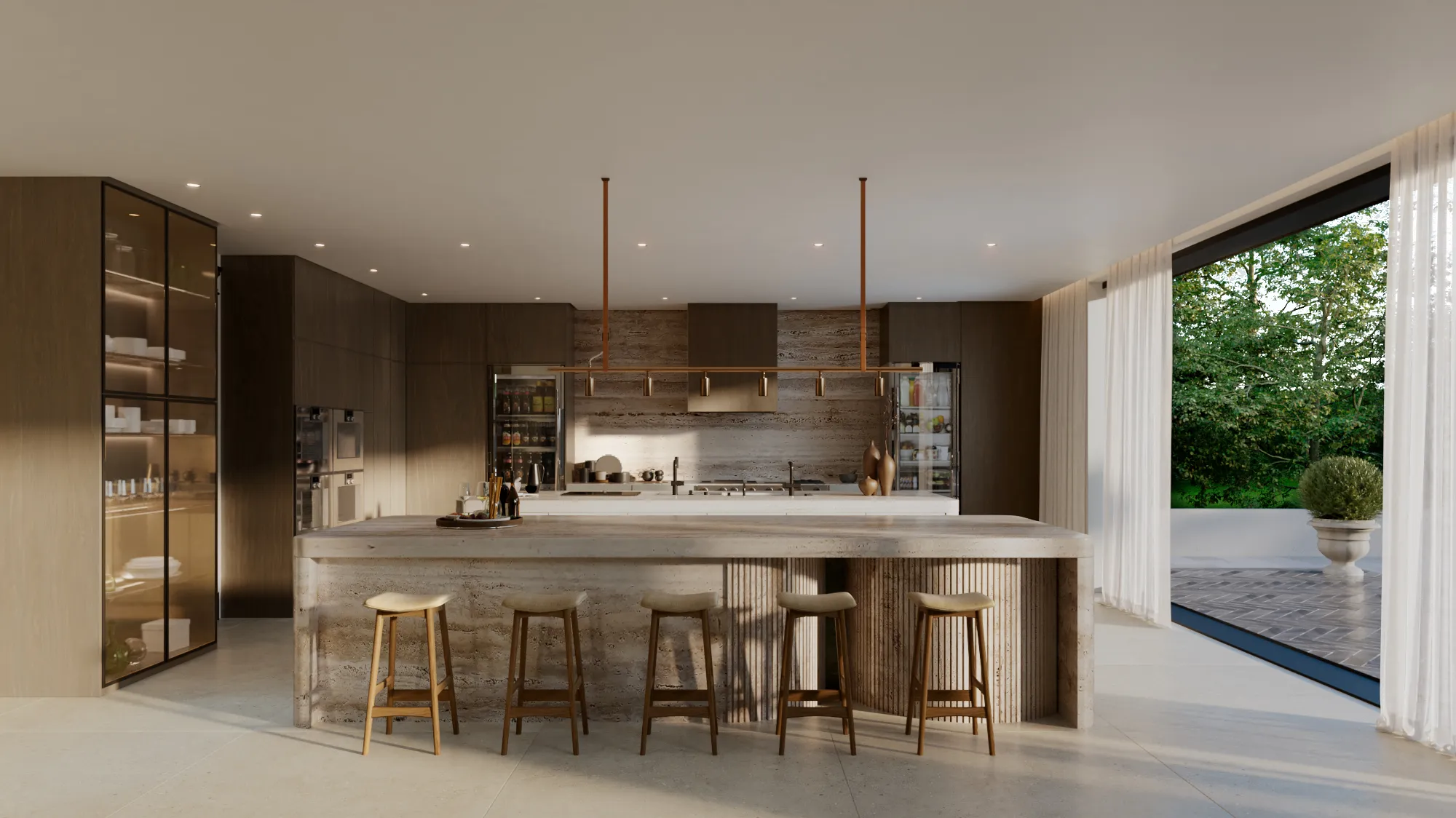
The same care shows up everywhere in an editorial pipeline: a white-model review to lock the camera angles and composition before any color goes on, moodboards to set the art direction, and, when there is real architecture to match, a drone photography guide that tells the client’s own photographer exactly where to stand and at what time of day, so the finished 3D marries cleanly to real background plates. None of that is visible in the final image as a separate feature. It is visible only as the thing people mean when they say a rendering looks expensive.
Why Editorial Takes Time
Editorial quality is, more than anything, a function of time. On the same project, when the client pushed for speed, we were straight with him: as much as we would like to move at full pace, editorial renderings carry their own constraints, this level of work needs more time to handle the details properly and to run the additional internal reviews that let what you present externally hold up at a high standard. The preparation stage alone is naturally more involved. When the schedule and the ambition collided later, the client chose to raise the budget rather than lower the bar, on the condition that we staffed the project to protect the editorial quality. That is the correct trade, and a telling one. At this tier, clients defend the quality, not the deadline.
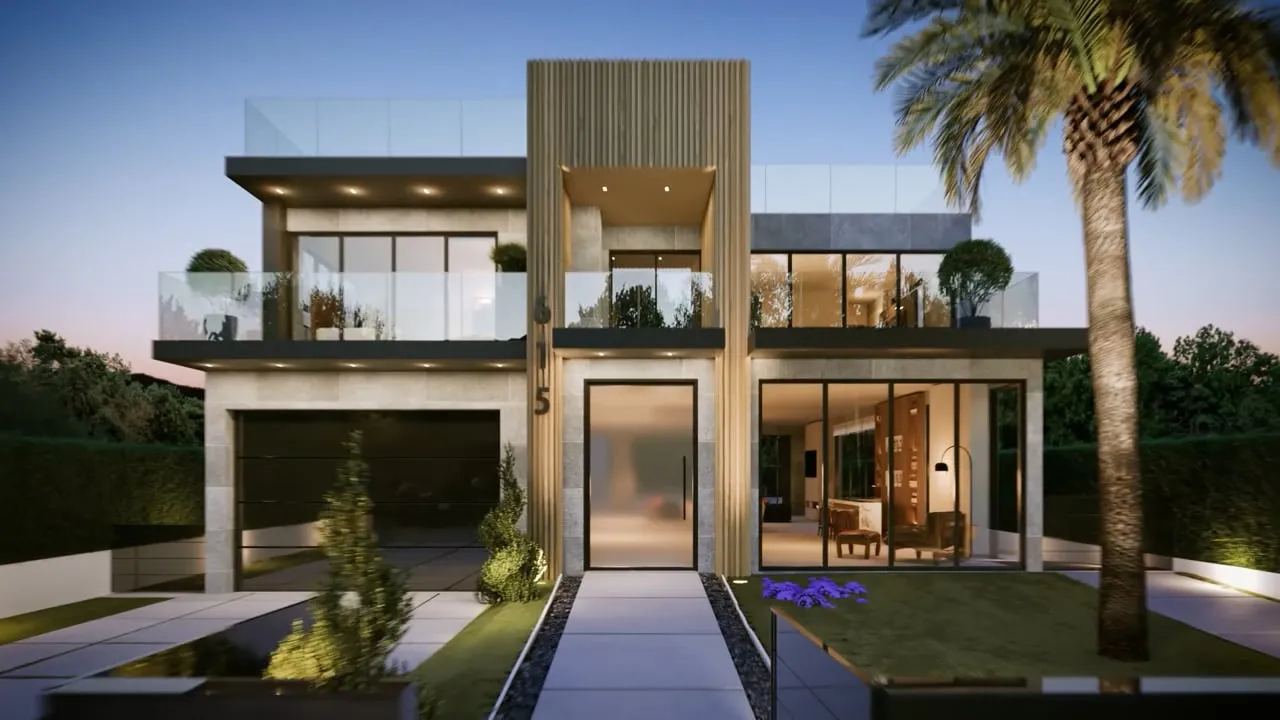
The corollary is a useful piece of buyer protection, and it is worth saying plainly. Producing top-quality images takes time, so be very suspicious of anyone who promises great results in just a few days. Speed at this tier is not a sign of efficiency. It is usually a sign that the corners you cannot see are being cut.
Why You Cannot Fix a Listing-Grade Image
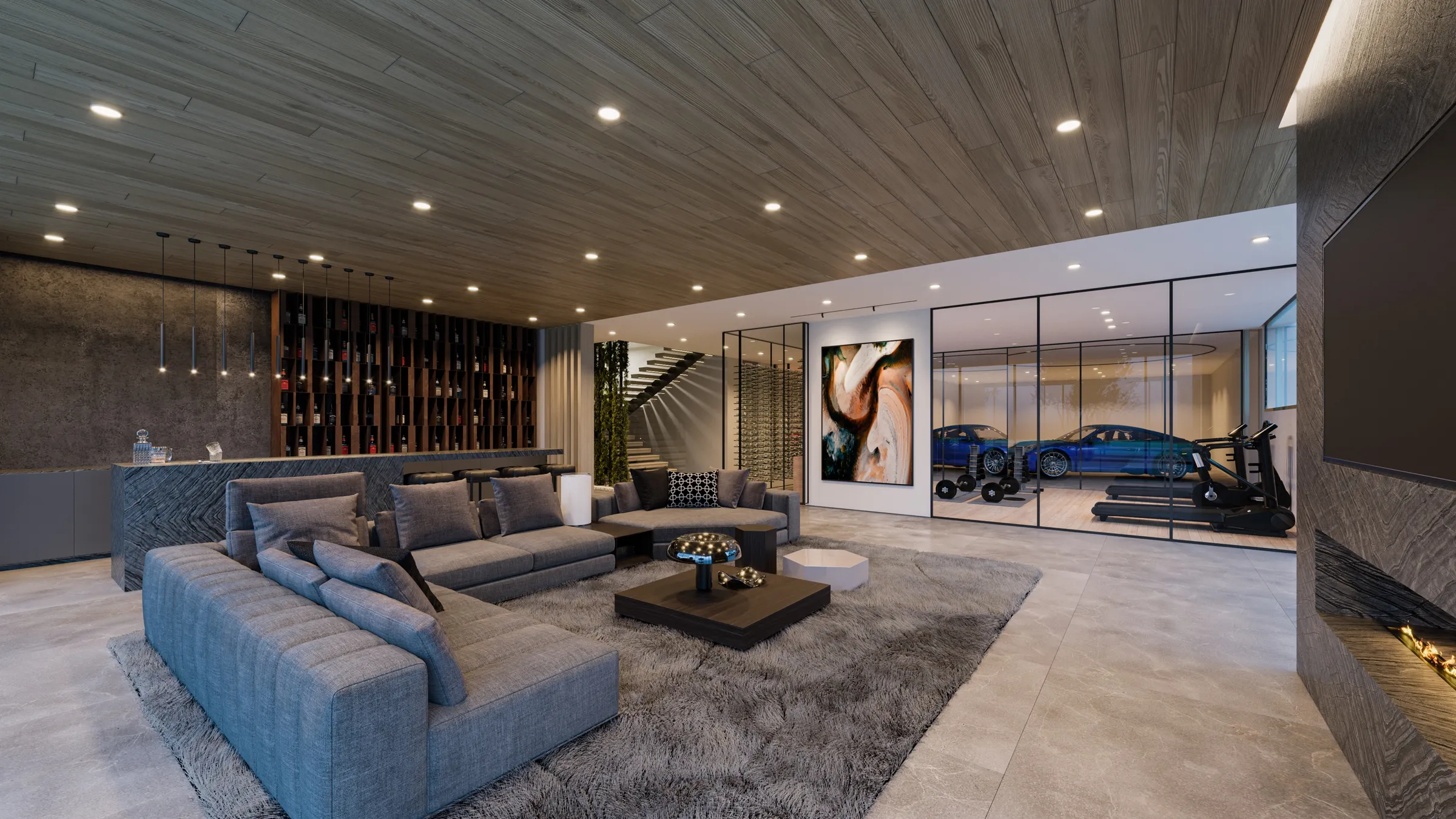
Clients often arrive with a set of images that fell short and ask us to touch them up. It is a reasonable hope and, most of the time, not possible. When a client with existing renderings asked exactly that, we had to tell him the truth: we did not believe the quality of those images could be significantly improved without redoing them. The reason is structural. The gap between listing-grade and editorial lives in the modeling, the materials, and the lighting, the layers underneath the picture, not in a filter applied on top. You cannot retouch a library sofa into a custom one. Editorial is a decision made at the start of the work, not a finish applied at the end.
This is also why editorial pairs so naturally with a smaller set. For a client marketing in a high-end area, our advice is usually to focus on quality and, if budget is a concern, reduce the number of images rather than the standard, so you still walk away with top-quality images fit for a magazine. Even our own art directors push in this direction unprompted. On one project, our art director took the initiative to refine a set further and introduced a second version with a cleaner, more editorial aesthetic than the brief had asked for, because that is the instinct at this tier: not more images, better ones.
Bringing This to Your Project
Before you commission, decide which job you are buying. If the home is priced and marketed as luxury, listing-grade imagery quietly undersells it, and no amount of retouching later will close the gap. Brief for editorial from the first conversation, expect it to take more time, and protect the standard when the schedule gets tight. That is the version of the work that actually matches the home. If you are marketing a luxury home and want imagery at this standard, Book a call and bring the furniture list; that is where editorial starts.
For the economics behind this, read what premium rendering costs and why, see how to choose a 3D rendering studio, or read why four great renderings beat fifteen average ones. You can also see how we approach luxury single-family homes, or see an editorial set for a Pacific Palisades estate on 1660 Casale Road.
FAQs
What is the difference between a listing-grade rendering and an editorial rendering?+
A listing-grade rendering communicates layout and rough appearance, usually built from library furniture and standard lighting. An editorial rendering is art-directed like a magazine shoot: key pieces modeled from the real specification, light and composition controlled, and details checked in internal reviews. The first explains a room. The second makes a buyer want the home.
Why do editorial renderings take longer?+
Because the work sits underneath the picture. Custom-modeling furniture from the manufacturer list, reviewing a white model to lock the cameras, building moodboards, and running extra internal reviews all take time. At this tier clients tend to protect the quality rather than the deadline, and a promise of editorial results in a few days usually means corners are being cut where you cannot see them.
Can existing listing-grade renderings be upgraded to editorial quality?+
Rarely. The gap lives in the modeling, materials, and lighting, not in a finish applied on top, so retouching cannot turn a library sofa into the real one. In most cases the honest answer is to rebuild the key images from the model up, starting with the views that sell the home.
What if the budget does not cover a full editorial set?+
Reduce the number of images, not the standard. Four editorial images of the moments that sell the home do more than a larger set at listing grade, and they still hold up in a magazine or a luxury listing. That is the argument in our post on why four great renderings beat fifteen average ones.