The Money Shot: Why Four Great Renderings Beat Fifteen Average Ones

Lukas Berezowiec · CEO of NoTriangle Studio
Updated · 8 minutes
Key takeaways
A large, uncurated set of competent renderings sells a home more slowly than a small set built around one or two images that do the actual selling.
- Point 01
- A money shot is the single image a buyer has to see to want the home.
- Point 02
- Fifteen average images sell worse than four great ones.
- Point 03
- Find the one angle and build it before anything else.
- Point 04
- Perfect one, then apply it to the rest.
When a developer asks us for a rendering package on a luxury home, the first instinct is often to name a number, and the number is usually too high. Twelve views. Fifteen. One of every room. It feels safe, because more images sound like more marketing. In practice it is the opposite. A large, uncurated set of competent renderings sells a home more slowly than a small set built around one or two images that do the actual selling.
Those one or two images have a name in this business. They are the money shots. Below is what a money shot really is, why quantity works against you at the top of the market, and how a serious studio finds the angle that carries a whole home before it produces anything else.
What a Money Shot Actually Is
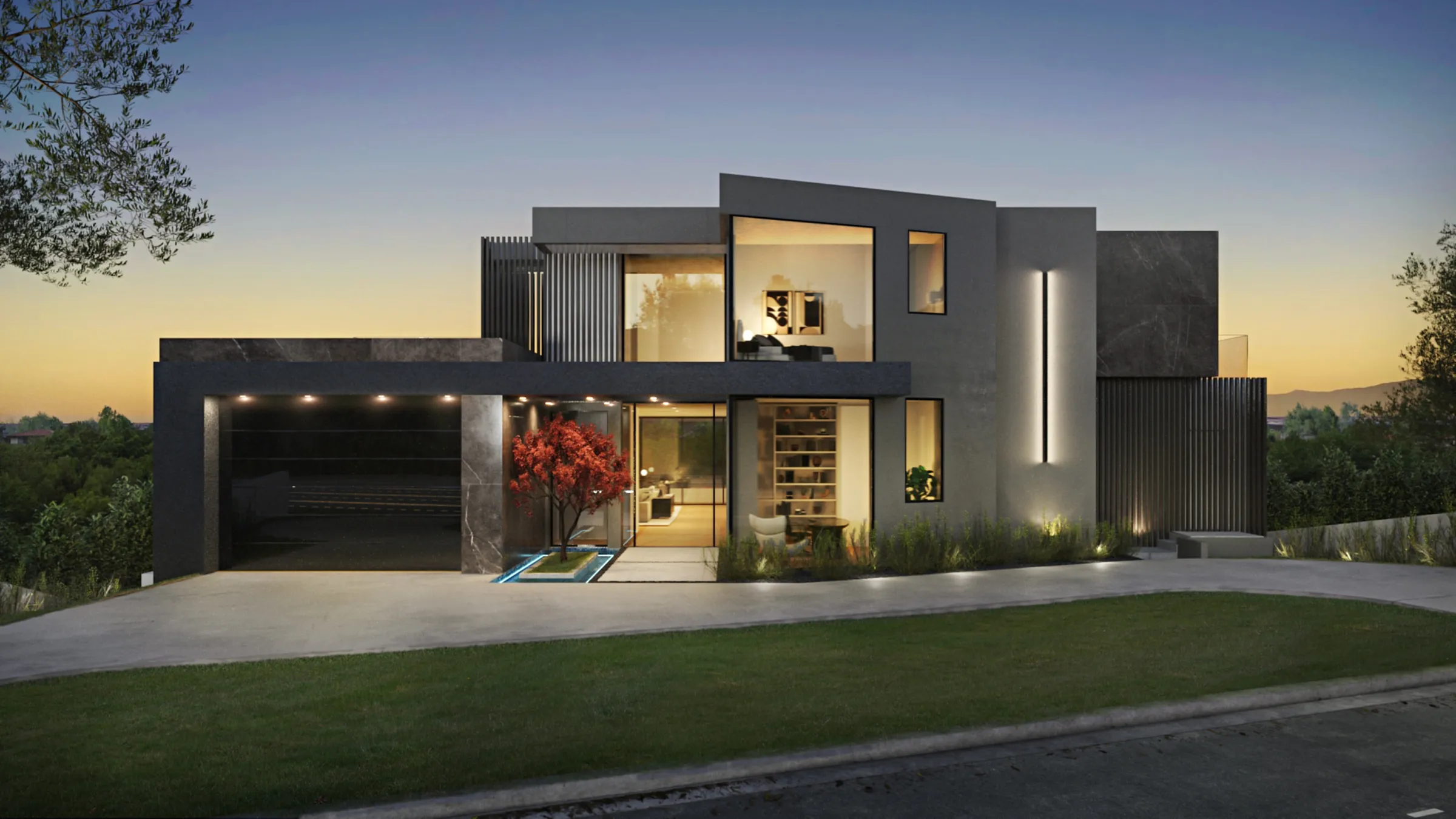
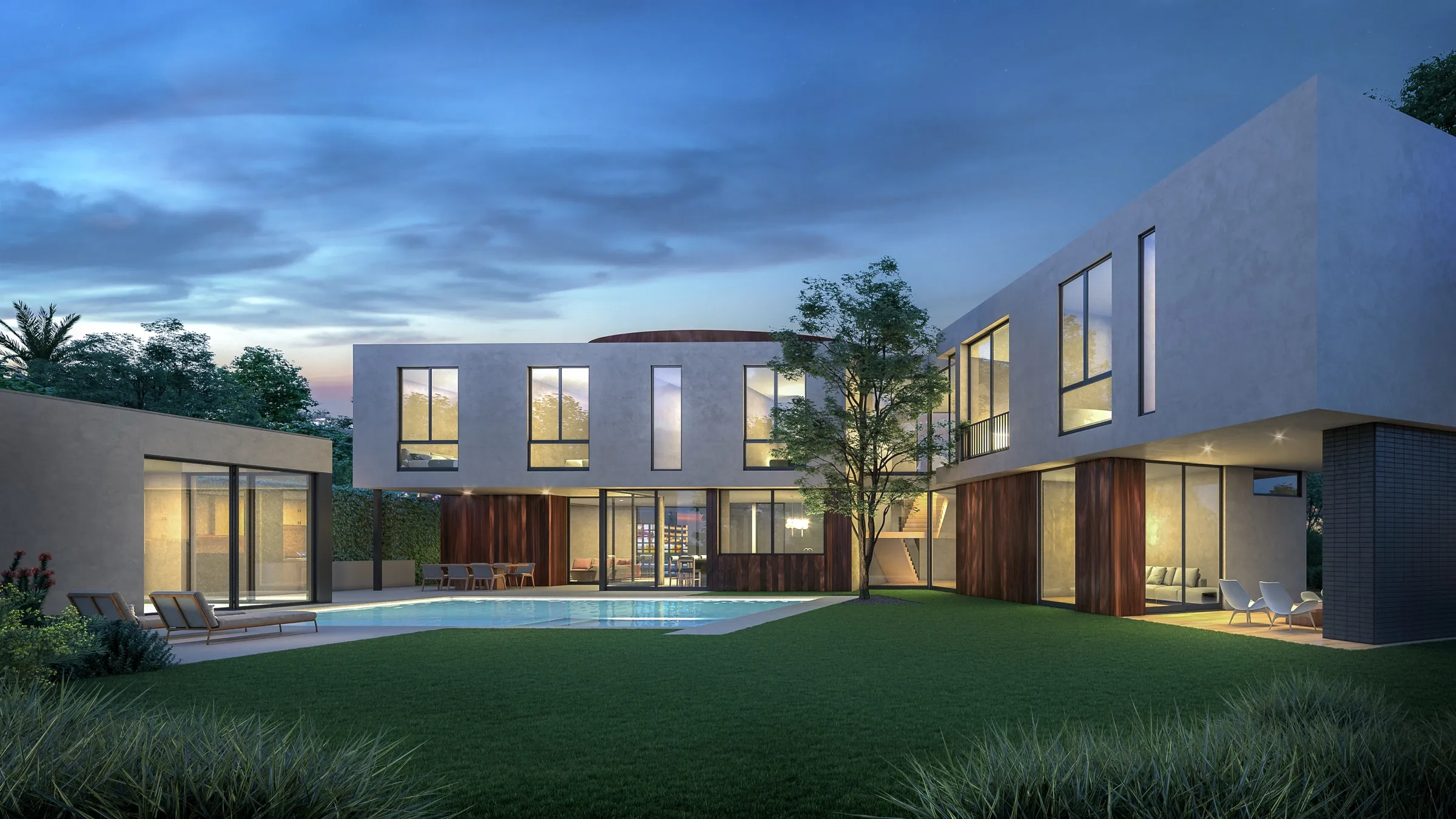
A money shot is the single image a buyer has to see to want the home. It is not the most complete view or the most technically demanding one. It is the one that carries the feeling: the great room opening through pocket doors to the pool, the twilight exterior where the whole house glows from within, the elevated angle that shows the home sitting in its landscape. On most luxury single-family projects there are four to seven renderings in the set, and one or two of them are doing the heavy lifting while the rest support.
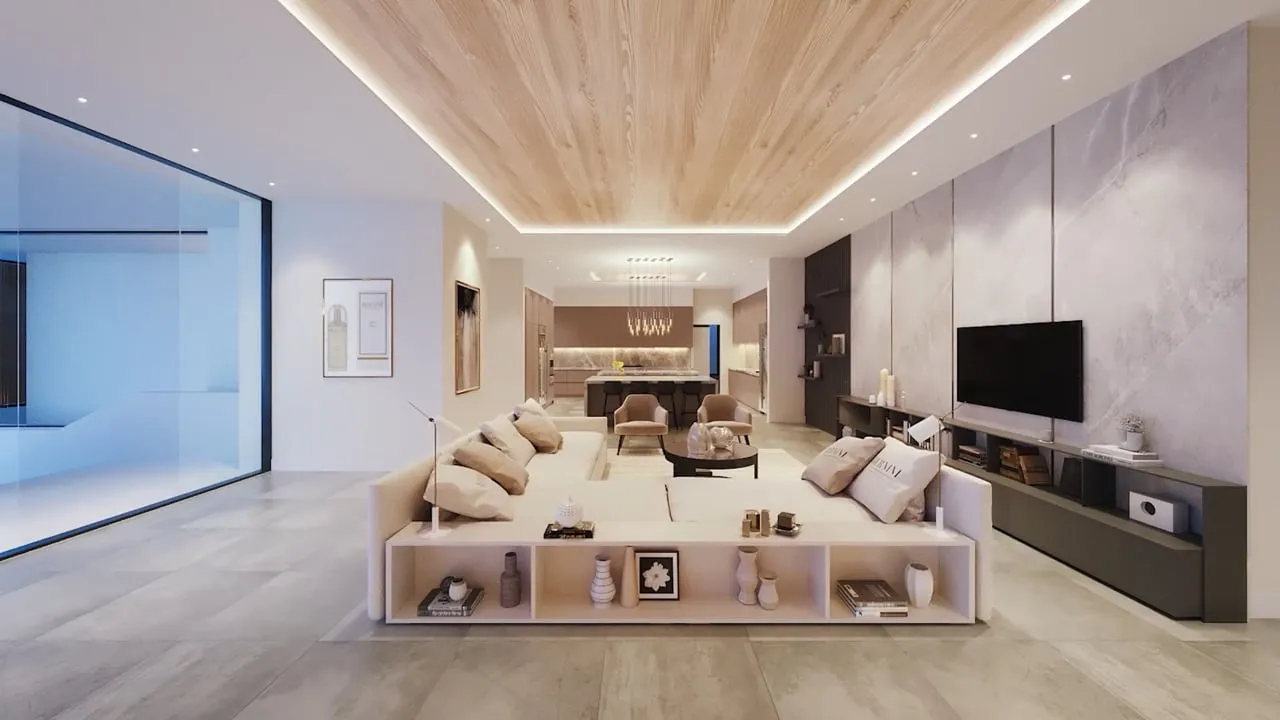
Experienced clients talk this way without prompting. On one residential project, a developer walked our producer through the space and stopped cold at a single view: coming up the stairs, looking out across the terrace and on to the water beyond. That, he said, was the shot they wanted for the marketing. Our producer agreed on the spot, and from there the two of them curated the rest live, a good angle on the kitchen, a cozy corner with a fireplace, and one bathroom view they agreed to skip entirely. The finished set was four images. Nobody argued for fifteen, because the person selling the home already knew which view would do the work.
Why Fifteen Average Images Sell Worse Than Four Great Ones
The math on a rendering budget is unforgiving. The money that would make one image extraordinary, the custom furniture, the controlled light, the extra internal reviews, is the same money that gets spread thin across fifteen images to make them all merely fine. You cannot have both from one budget. So the real choice is not four versus fifteen. It is four that stop a buyer versus fifteen that a buyer scrolls past. Many sets split the difference: Premium on the hero, Standard on the rest.
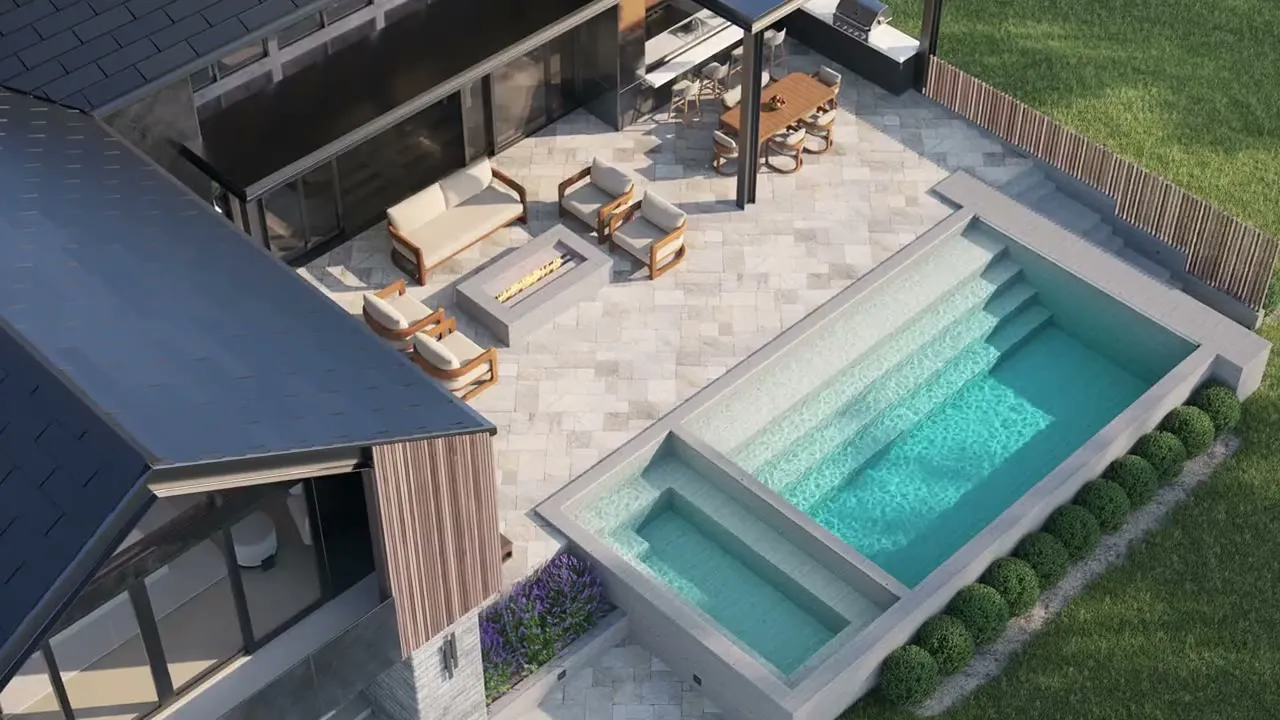
The clearest version of this we have seen came from a marketing director on a high-end residential project who cut her own set down on purpose. Instead of three exterior views she took two. Instead of two of the living room she took one. She moved the freed-up budget to the view she could not do without, the terrace and private pool, because, as she put it, she did not have a single image that showed what the outdoor experience would feel like. Her verdict on the competent renderings she already had was precise: they were nice, they showed the interior design, but they did not give her the emotional hook she needed for the launch. She would rather have one image that did than five that did not.
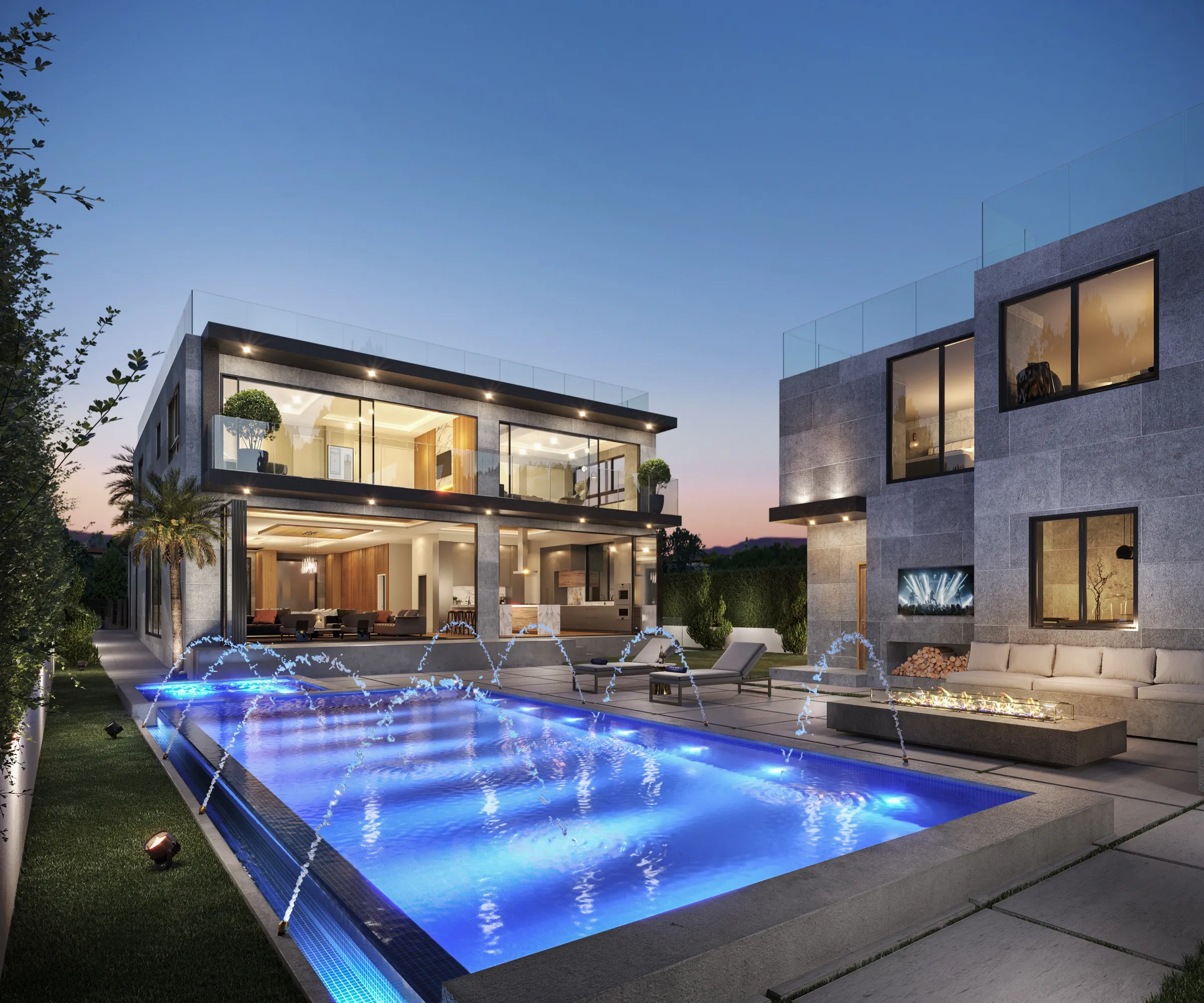
Left to their own devices, most clients keep everything. Reviewing a large option set, one client told us plainly that he was trying to decide which images to cut and liked them all, so maybe they should just keep the ones that were not too hard to change. That is the natural pull, and it is exactly the pull a good studio pushes back on. The value we add at that moment is not another image. It is helping you decide which few are worth making unforgettable.
Finding the One Angle Before Anything Else
Because so much rides on the hero, we do not treat it as one image among many. We find it and build it first, because once it is right it becomes the reference that resolves the whole set: the light, the mood, the level of finish, the story the home is telling. Our producer put the working rule simply on one project: to avoid unnecessary revisions across all the images, focus on one first, start with the hero shot, get a clear vision of everything through it, and only then move to the next view.
Getting that one right can mean bending reality a little in service of the feeling. On a series of large luxury spec homes, the designer leading the project wanted the houses to read as almost monumental, their scale gently exaggerated so each one felt commanding in its setting. The image he was chasing was a single dramatic, sellable hero, ideally at sunset, where the home is lit from inside and glows in the landscape. That is the whole point of the money shot: it is not a neutral record of the architecture, it is the most persuasive true picture of what it will feel like to live there.
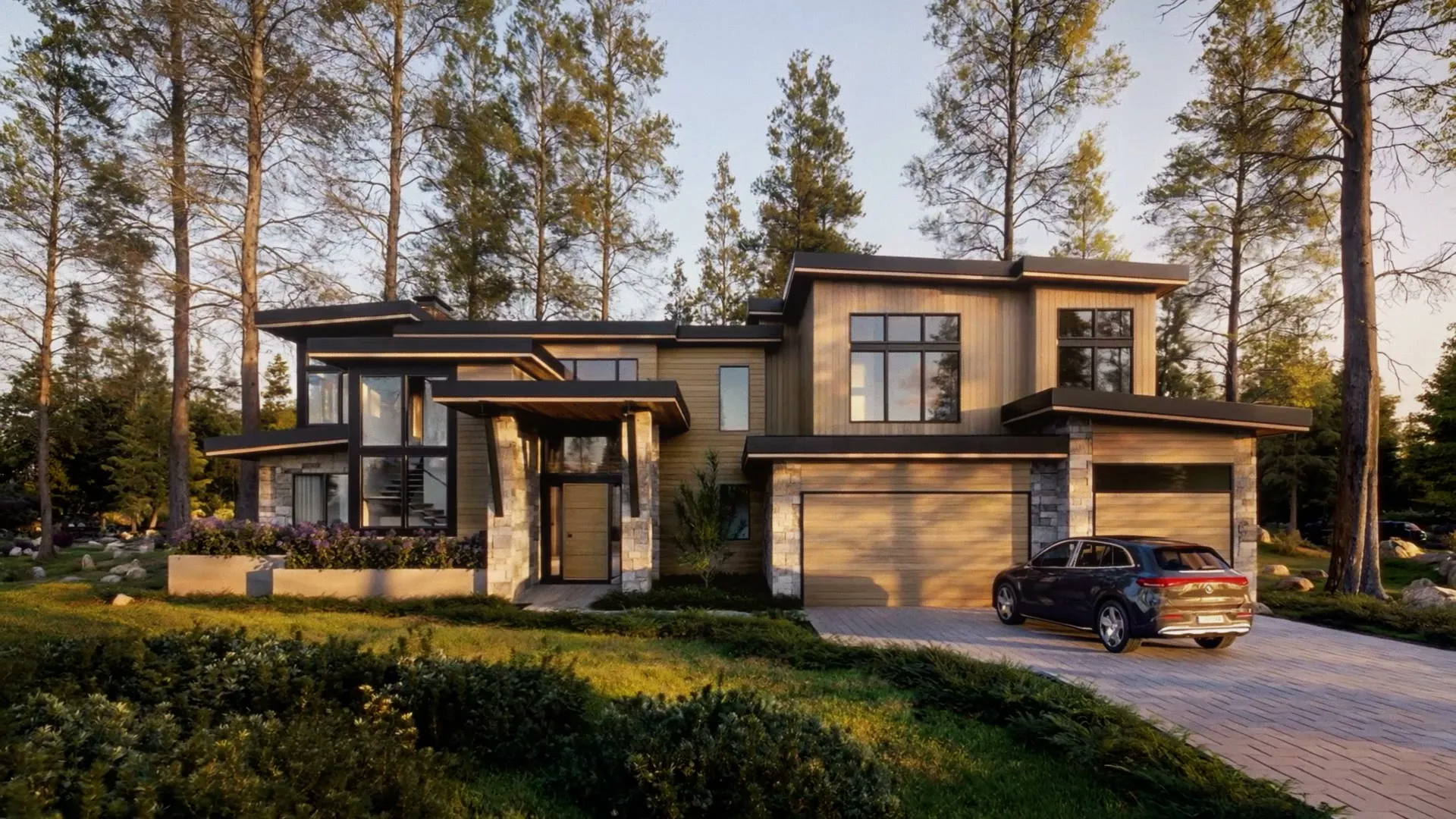
There is a hard commercial reason to obsess over the hero, and a client on a road-facing project said it better than we could. Traffic on that road moves fast, he noted, so you have to get that one view right, because most people will never come inside to see the rest. Every home has a version of that. One image is seen by everyone; the others are seen by the people the first image has already convinced.
Perfect One, Then Apply It to the Rest
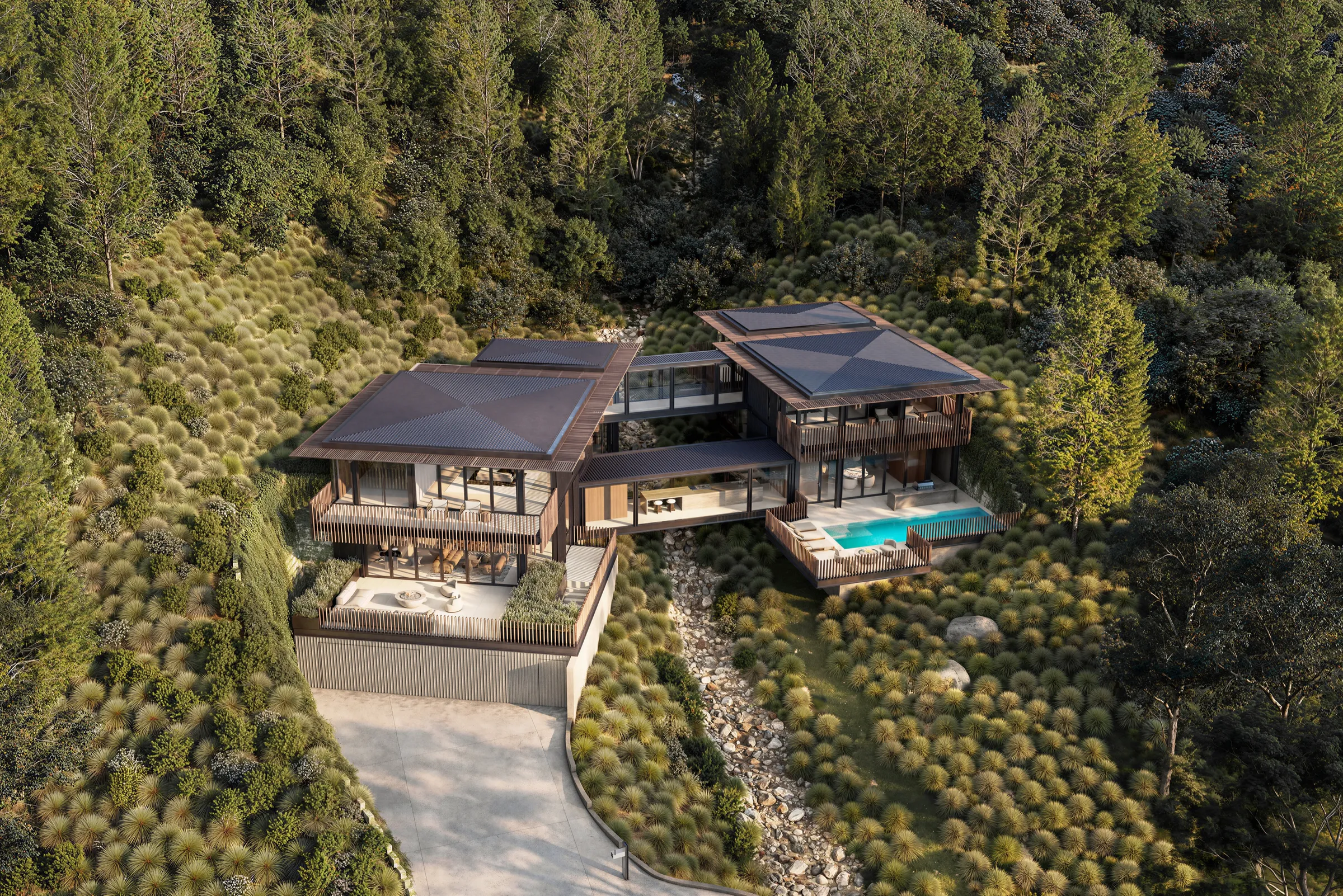
Concentrating on the hero is not only better marketing, it is a better production method. Once the standout image is dialed in, the camera, the landscaping, the light, the finish, that image becomes a template. Our producer described the approach to the spec-home designer directly: choose one to focus on, get the camera and the landscaping and everything else looking exactly right, lock it, and then apply the same recipe to the remaining homes. The discipline of nailing one image is what lets the rest of the set come together without a long tail of revisions.
This is why the four-versus-fifteen question is really a question about strategy, not budget. A curated set is not the cheap option. It is the choice to spend where it moves a buyer and to stop spending where it does not. A large set spreads the same money into a flat, forgettable evenness. A tight one puts it all behind the two or three views that make someone stop, look, and ask to see more.
Bringing This to Your Project
If you are briefing a studio on renderings for a luxury home, resist starting with a count. Start with a question: which one image, if it were perfect, would sell this home. Build the set outward from that answer, and let the number fall where it falls. It is almost always fewer images than you first imagined, and it almost always sells better.
For more on how this fits the wider marketing picture, read our guide to pre-selling real estate with 3D visualization, see why a hero angle is often rendered at day, dusk and night, with the twilight version so often becoming the money shot, or look at how we approach luxury single-family homes. You can also see finished hero-led sets on Clear Creek Tahoe and Carrizo Lots.