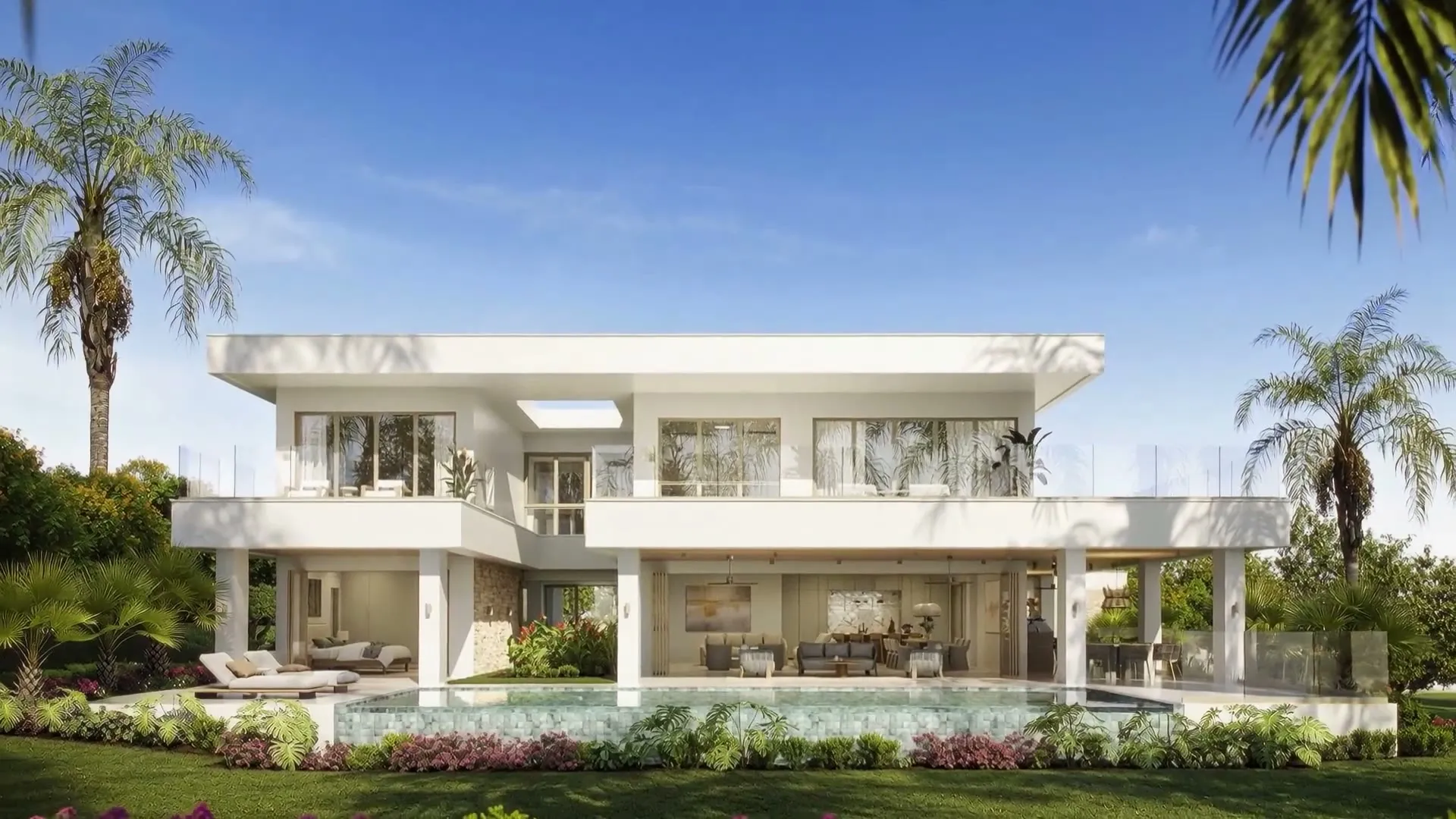
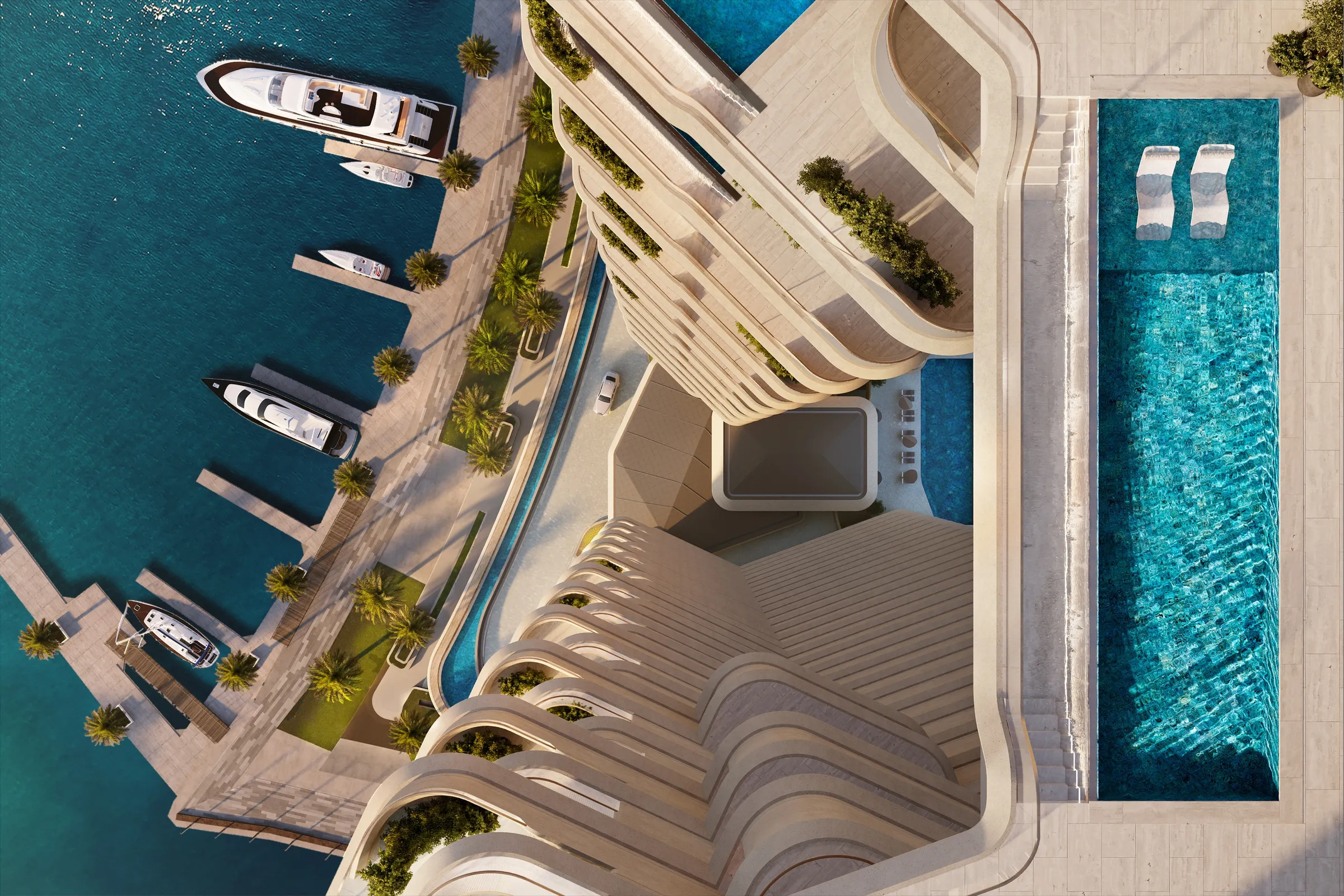
Renderings for Capital Partners vs Renderings for Buyers

Lukas Berezowiec · CEO of NoTriangle Studio
Updated · 8 minutes
Key takeaways
Renderings for capital partners and renderings for buyers do different jobs. Most branded and multi-unit projects need both.
- Capital
- Investor images argue that a project is feasible and worth funding, so they focus on site, context, and scale
- Buyers
- Buyer images create desire for a specific unit, in an editorial register, timed to the launch
- Timing
- The capital set often comes first and stays private
- Approvals
- A third job: renders that get a project past a review board or a planning meeting
Renderings for capital partners and renderings for buyers do different jobs. Investor images argue that a project is feasible and worth funding, so they focus on site, context, and scale, and often stay private. Buyer images create desire for a specific unit, in an editorial register, timed to the launch. Most branded and multi-unit projects need both.
A developer building a branded or multi-unit project usually needs renderings for two very different audiences, and the mistake is treating them as one order. The first audience is capital: the investors, lenders, and partners who decide whether the project gets funded at all. The second is buyers: the people who will eventually reserve a unit. The images that move money and the images that move buyers are not the same picture used twice. They are two jobs, with different purposes, different timing, and sometimes very different rules about who is allowed to see them.
Getting the distinction right is one of the first things we scope. Below is how capital-facing and buyer-facing renderings actually differ, and why a single project so often needs both.

The Same Studio, Two Different Jobs
Before we scope a project, we ask a single question that sorts most of this out: how will the visuals be used, whether for design approvals, investor presentations, pre-sales, or a marketing launch. We ask because the answer changes both the narrative focus and the level of finish. An investor deck and a sales campaign are not two budgets for the same work. They are different briefs, and a studio that does not ask which one it is building tends to deliver something that half-serves both.
Developers themselves often name both audiences in one breath, which is exactly why they need separating. On one project, the client was eager for renderings both to show their investors and to use for marketing, a completely normal pairing. The point is not that the two never overlap. It is that each has a different job to do, and the images are stronger when you know which job is in front of you.
What Capital-Facing Renders Have to Do
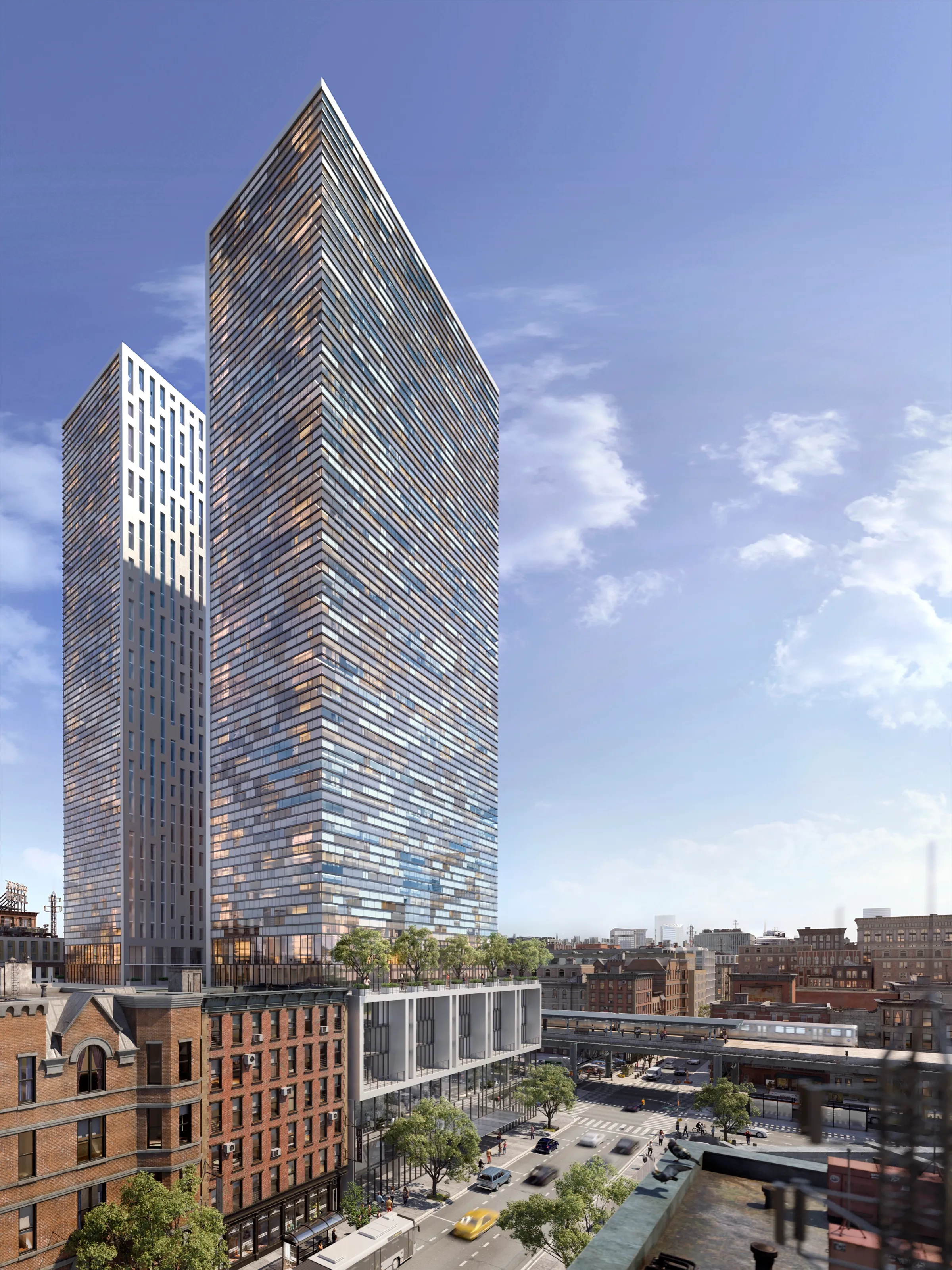
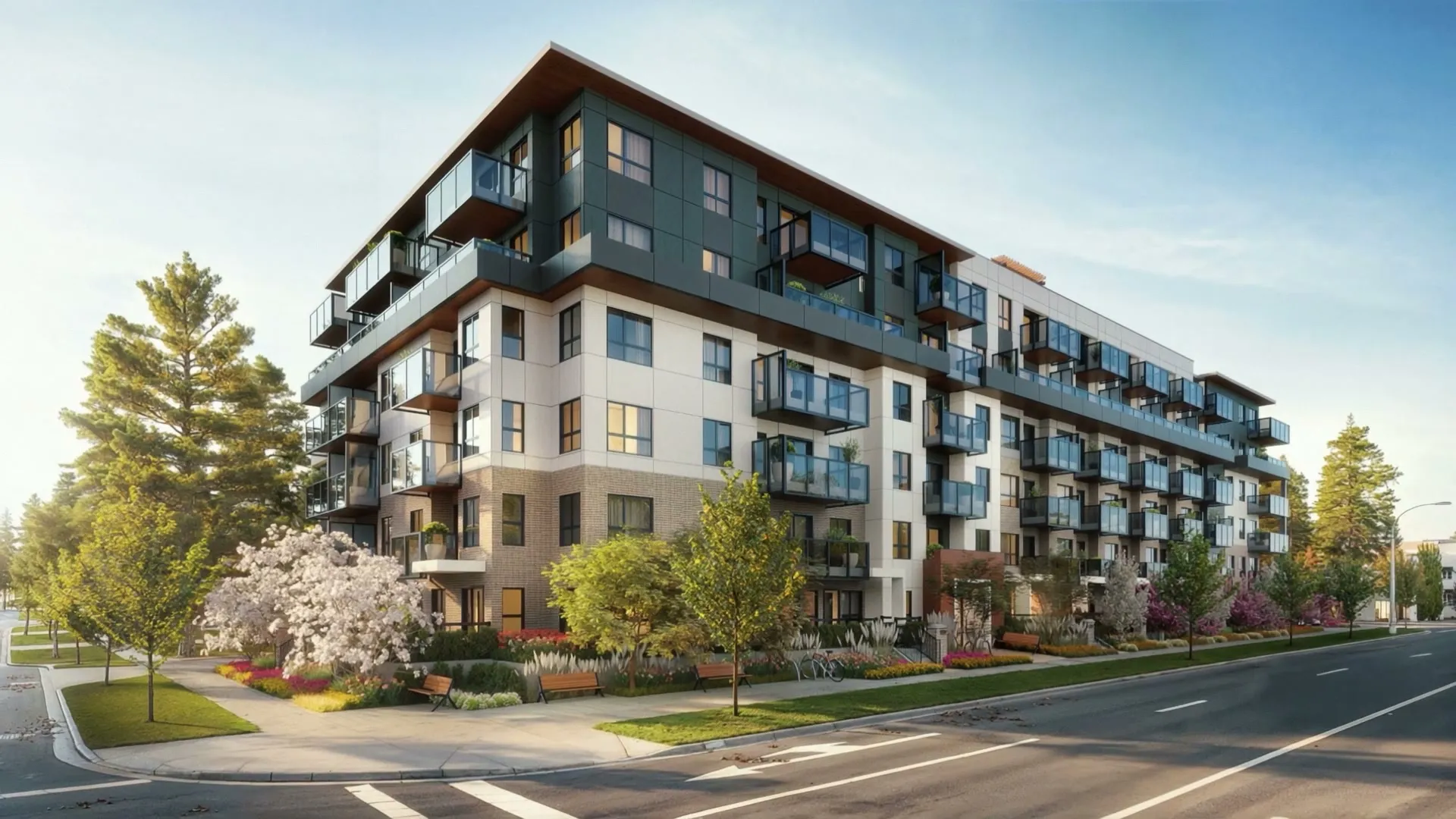
A capital-facing render argues that a vision is real, feasible, and worth funding. It is often about context and scale rather than lifestyle: where the project sits, what surrounds it, why the location works. On one development, the goal of the imagery was explicitly to educate potential investors about the site by highlighting the well-known landmarks and major industries nearby, the case for the place as much as the building. These images answer a numbers question, not a taste question.
Because they support a financial argument, capital-facing renders are frequently built for a specific document and a specific feeling. On a repositioning project, the renders were made for an offering memorandum laid out as a before-and-after: the current condition on the left page, the proposed use from the same vantage point on the right. The client’s direction was pointed. They wanted the new vision to feel less of a stretch, so an investor coming in would read it as feasible rather than fanciful. That is the capital-facing job in one line: make the ambitious look achievable. And on the biggest projects, capital shapes the design itself. On one tower, a prospective investor’s priorities drove the creative direction, and once the work had, in the developer’s words, sufficiently impressed those investors, it was folded straight into the project’s pro forma and held back from public release until the financing story was ready.
What Buyer-Facing Renders Have to Do
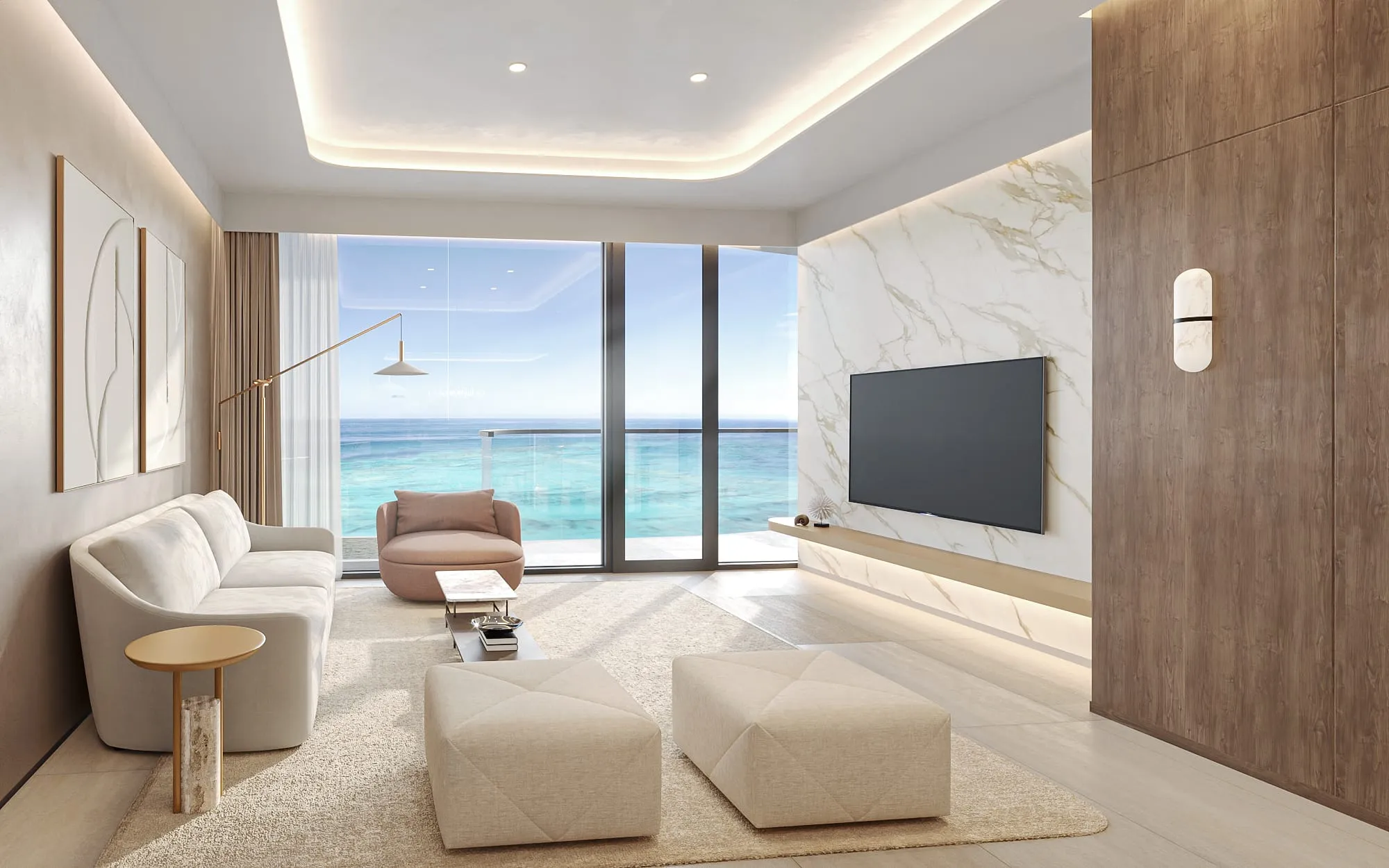
A buyer-facing render has the opposite emphasis. It is not arguing feasibility, it is creating desire. It gets specific and aspirational: the actual unit, the finishes a buyer will live with, the light through the actual windows, the feeling of the terrace. Where a capital render can succeed with a convincing massing in its context, a buyer render has to make one person imagine their life inside a specific room. It is the editorial, lifestyle register, and it is tied to the sales calendar rather than the financing one, sequenced to a teaser, a launch, and the collateral deadlines that surround a public release.
This is why the same building can need both. The investor set proves the project deserves to exist. The buyer set, produced later and to a different standard, sells the units once it does. Asking one image to do both usually means it does neither especially well, too lifestyle-focused to carry a feasibility argument, too contextual to make a buyer fall in love.
Why They Are Timed, and Gated, Differently
The two sets run on different clocks, and the capital set often comes first and stays private. Investor images answer to the financing calendar and the entitlement process, not the launch. On one project, an investor invoked a revision and needed changes done in time for a meeting the next day, so the updated render could go up on the city’s screen rather than onto printed boards. On another, a project animation was pulled from public view at the client’s request precisely because it had been made to go directly to investors: the developer planned to make it public months later, but while the project was still going through city approvals, they did not want someone searching the project online, finding it early, and mounting opposition before the entitlement was secured.
That points to a third, capital-adjacent job worth naming: approvals. Some renders exist mainly to get a project past a review board or a planning meeting, and they answer to a submission date and a set of officials rather than to investors or buyers at all. A developer who understands that these are distinct jobs, capital, approvals, and buyers, briefs each one for its real audience, and gets imagery that actually does the work in front of it rather than a single compromise set stretched across all three.
Bringing This to Your Project
Before you commission, decide who each image is for. If you are raising capital, brief for feasibility, context, and the pro-forma story, and expect that set to stay private until the financing and entitlements are ready. When you turn to sales, brief a separate, buyer-facing set to the editorial standard and time it to your launch. Naming the audience for each image up front is what keeps a project from paying for renders that try to do everything and persuade no one. If you are preparing an investor presentation or an offering memorandum ahead of a launch, Book a call and we will scope the capital set and the sales set separately.
For more, read our guide to visualization for capital raises, or see how we work with branded and multi-unit developers.
FAQs
How are investor renderings different from sales renderings?+
Investor renderings answer a feasibility question: where the project sits, what surrounds it, why the location works, and whether the vision is achievable. Sales renderings answer a desire question: what living in a specific unit feels like. Different purpose, different finish, different timing, and often different people allowed to see them.
Should investor renderings be made public?+
Often not at first. On projects still going through city approvals, developers have kept investor imagery private so that opposition could not form around an early image, and released it months later. Agree the release plan with the studio before delivery, including where the stills and animations may be posted.
Can one set of renderings serve both investors and buyers?+
Sometimes they overlap, but asking one image to do both usually means it does neither well: too lifestyle-focused to carry a feasibility argument, too contextual to make a buyer fall in love. We ask how the visuals will be used, for approvals, investors, pre-sales, or a launch, before we scope the work.
What do capital-facing renderings usually show?+
Context and scale more than interiors: aerials of the site and nearby landmarks, the massing in its surroundings, and, on repositioning projects, before-and-after views from the same vantage point laid out for an offering memorandum. The aim is to make an ambitious plan read as achievable to the people funding it.