

“Should we render it or photograph it?” We hear this question from developers, agents and owners of existing buildings alike, and it deserves a straight answer rather than a sales pitch from a rendering studio.
The answer comes down to two questions. Does the property exist yet? And if it does, does it look the way you want to sell it? A finished, well-staged home in good light should be photographed. A building that is still a set of drawings cannot be. Most of the interesting cases sit in between, and that is where the choice matters.
The Quick Answer, Situation by Situation
| Situation | Use | Why |
|---|---|---|
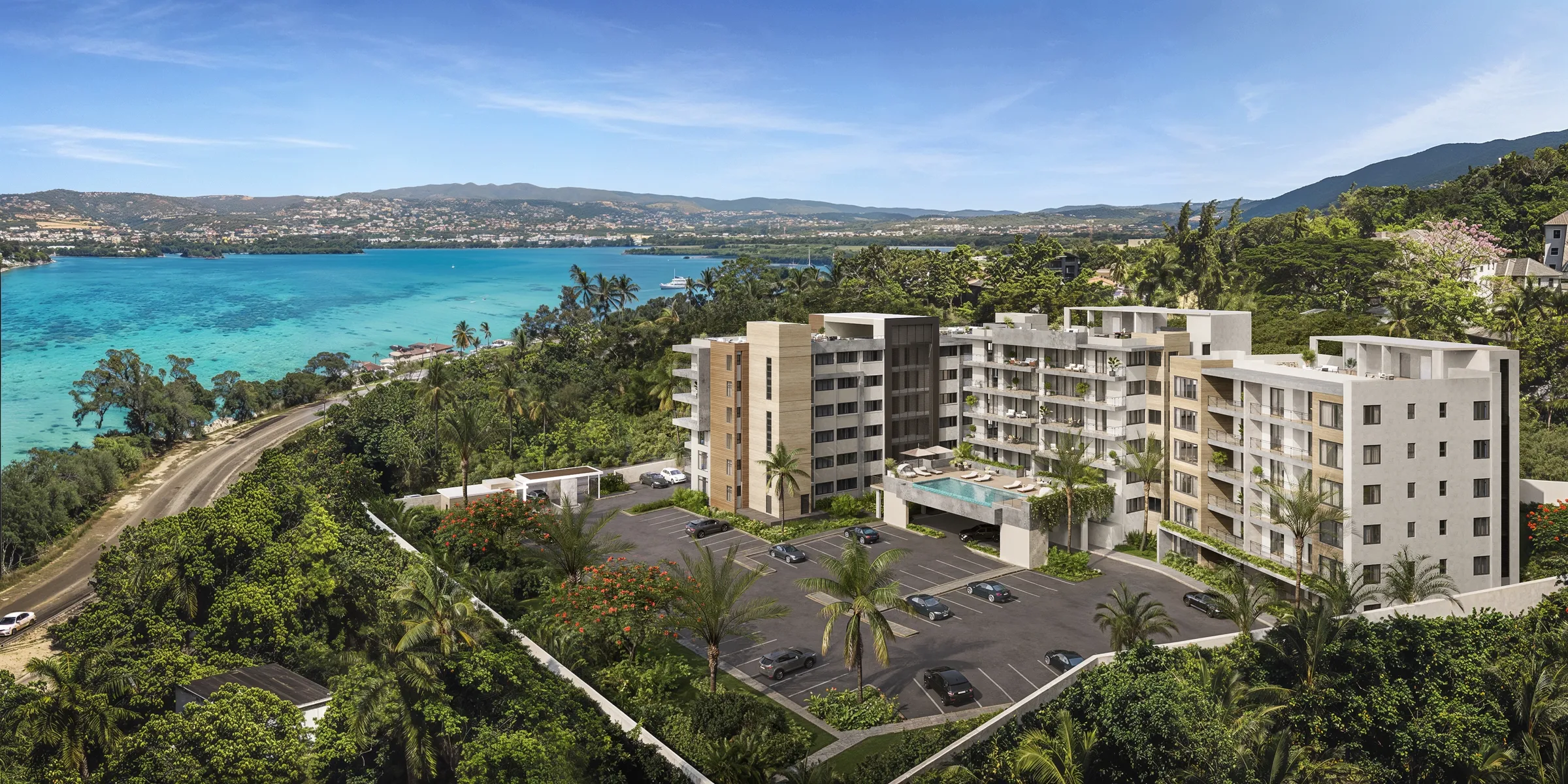
| Pre-construction or off-plan sales | Renderings | There is nothing to photograph yet |
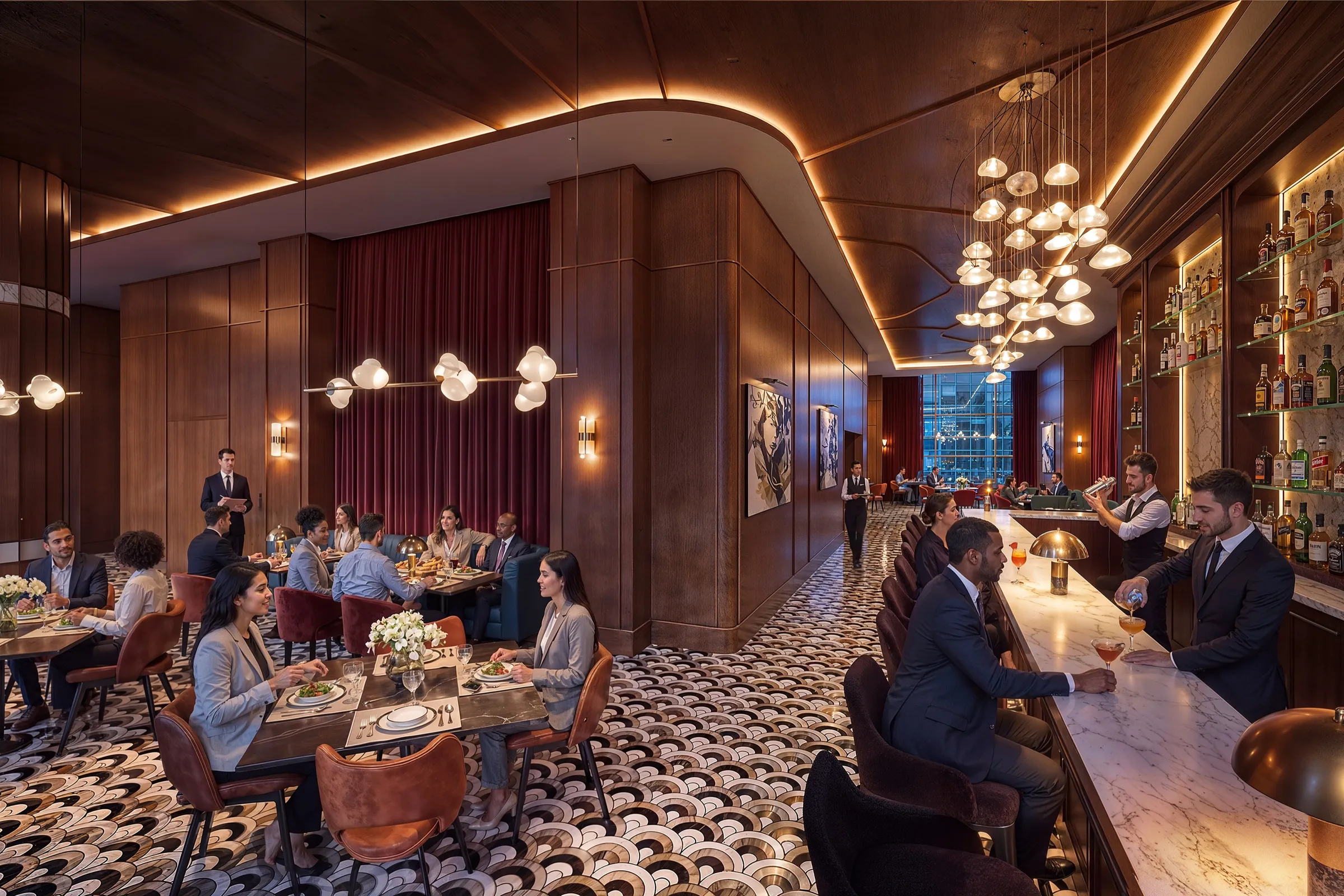
| Units finished, amenities not | Both | Photograph the units, render the pool, rooftop or lobby |
| Finish options or upgrades | Renderings | One camera, several schemes, nothing to install first |
| Empty or dated existing space | Renderings, often photo-matched | Shows what it could become, next to what it is |
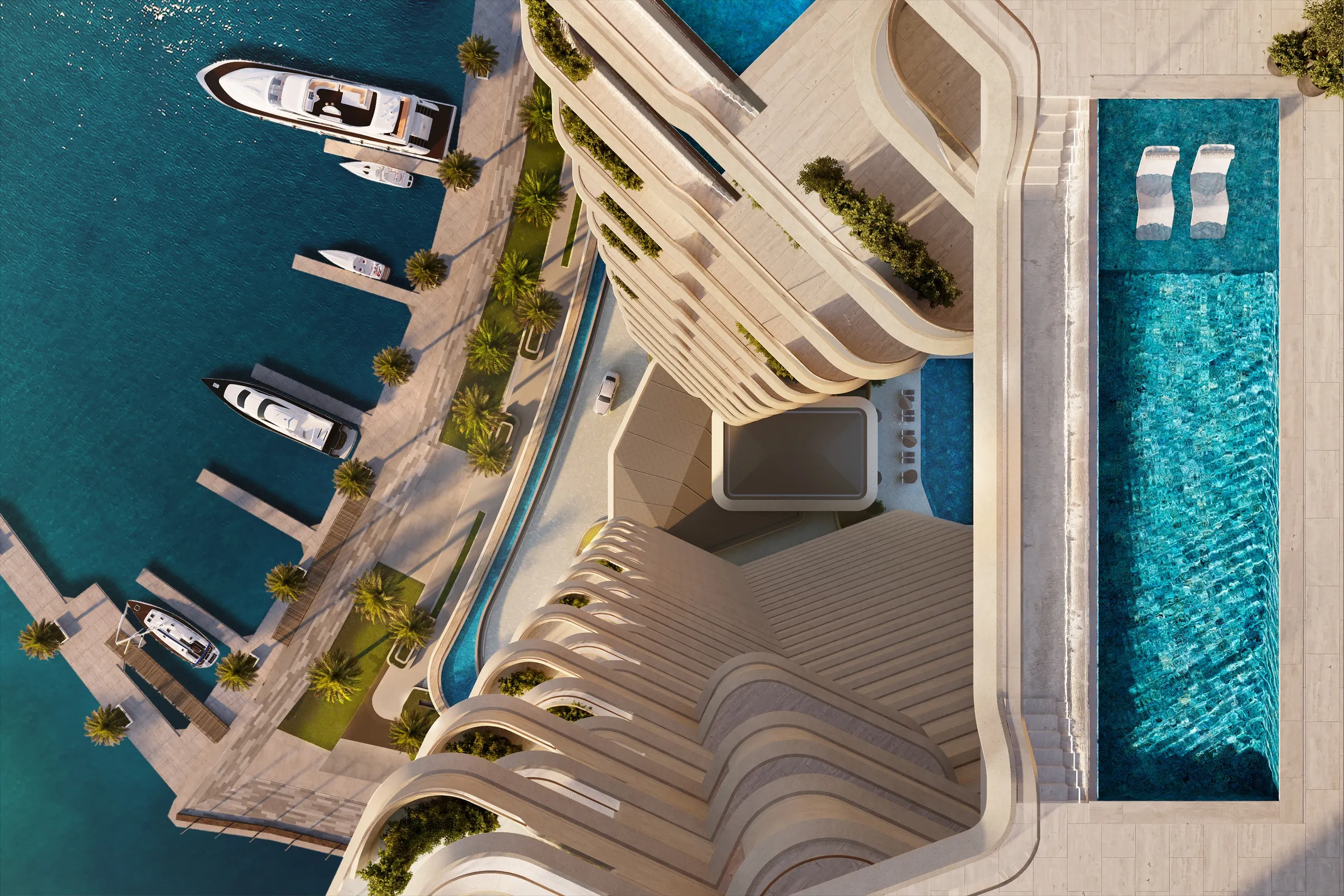
| New building on a real site | Both (drone photomontage) | Real land and views, proposed building |
| Finished home that shows well | Photography | Proof that it exists, usually the simpler job |
| Resale listing | Photography | Buyers expect to see the real home |
| Neighborhood and lifestyle | Photography | The real street, park and coffee shop sell the location |
Five Cases Where Renderings Win
1. It Is Not Built Yet
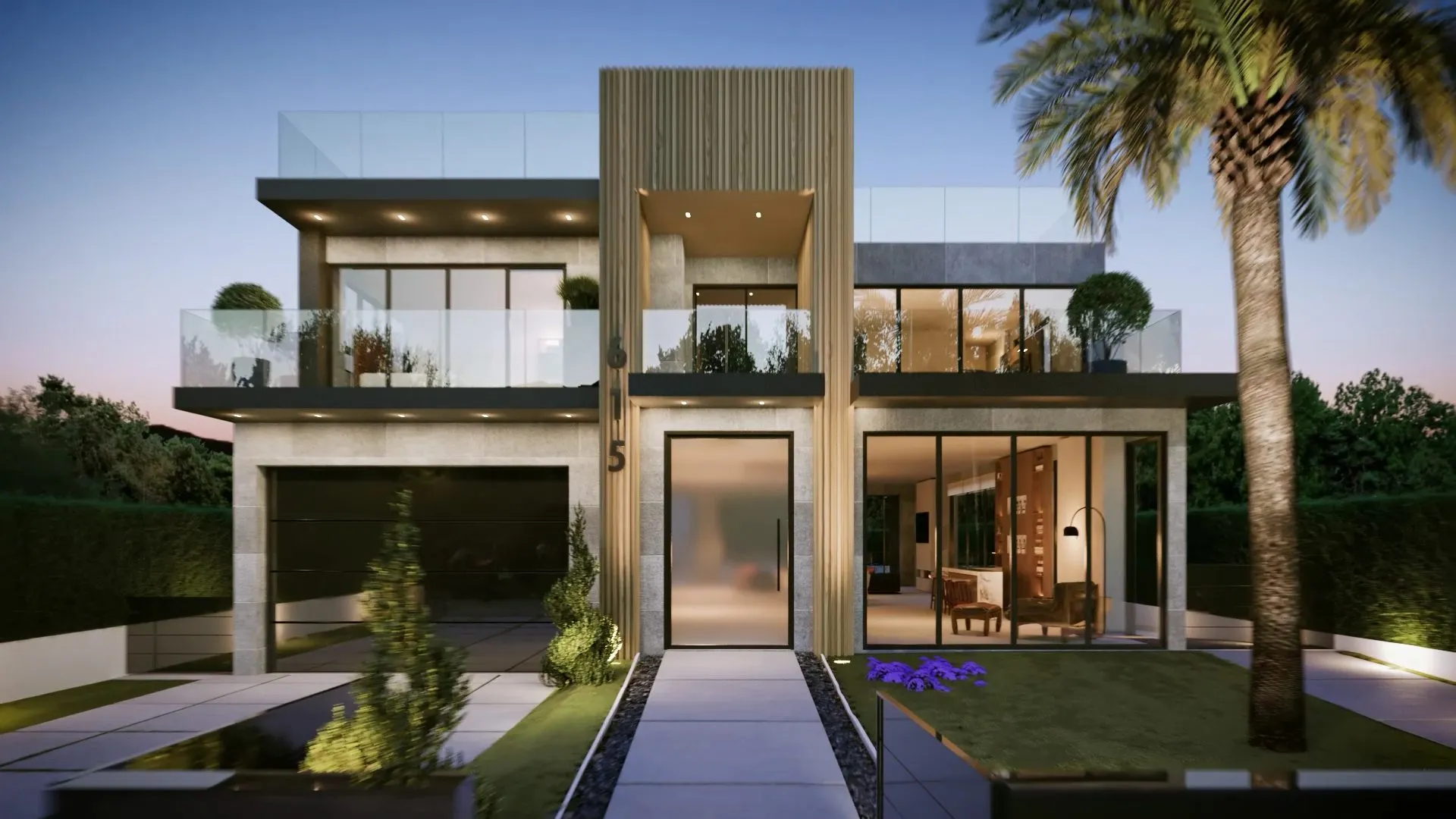
This is the obvious one, and it is most of what we do. Before construction, the renderings are the product. Buyers reserve, brokers pitch and lenders decide based on images of something that does not exist. At 600 Hartz Avenue in Danville, sixteen renderings and an animation were used to pre-sell the homes and lease the ground-floor retail while the building was still under construction, when there was nothing finished to photograph.
The same goes for a single home. A launch film for a house that is still on paper gives it a finished identity months before a photographer could do the same. For what a full pre-sales set should include, see our pre-sales toolkit for developers.
2. Part of It Is Not Finished
Projects rarely finish all at once. The first units are ready while the pool, the rooftop or the clubhouse are still under construction, and those amenities are often what buyers are paying for. Photograph what is finished, render what is not, and keep the two looking like one set.
3. You Want to Show Options
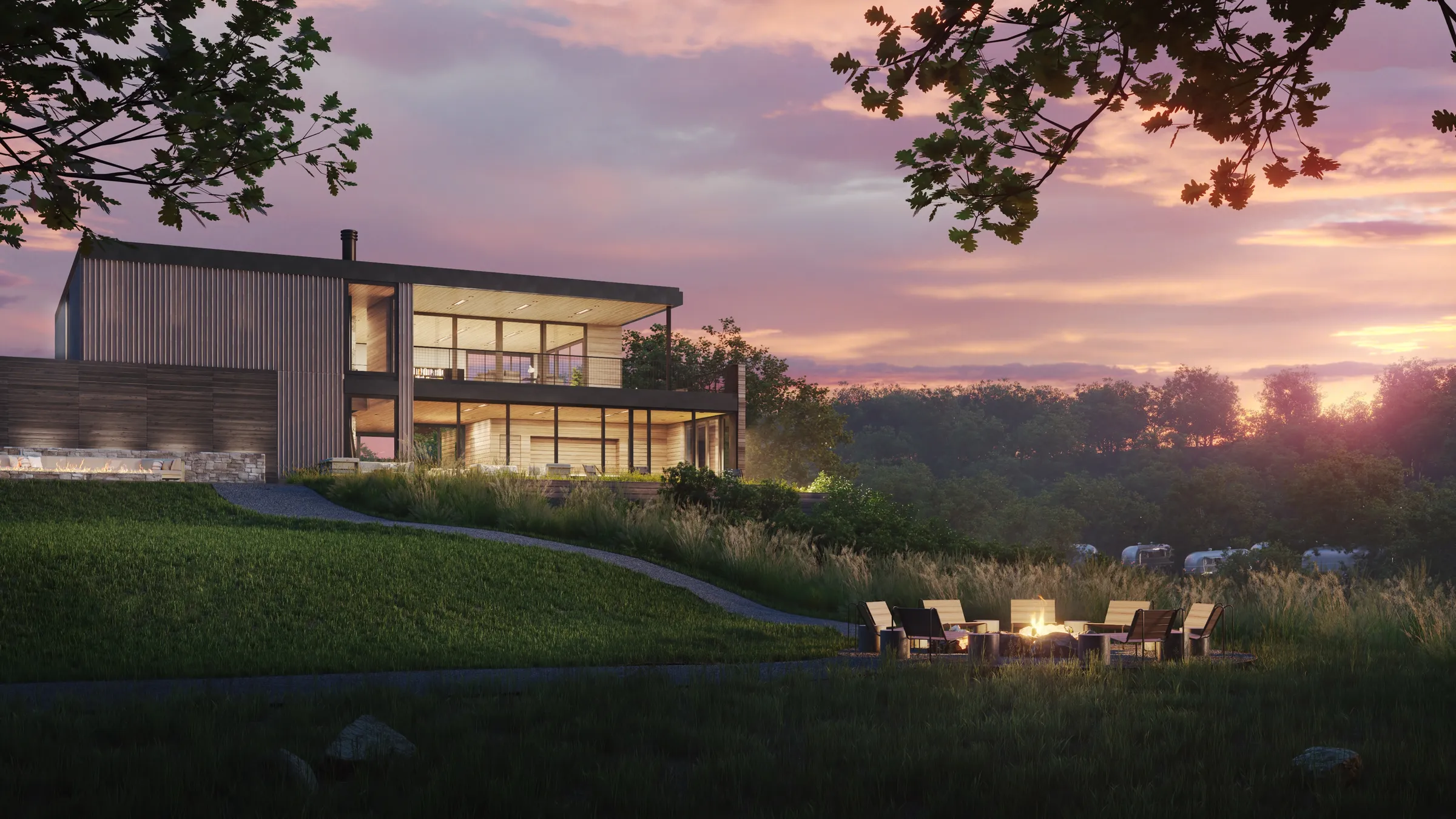
A photo shows one finish, the one that was installed. A rendering can show the same kitchen from the same camera in two or three schemes, so buyers compare like for like. At The Haystack, a mountain-modern home at Tamarack Resort in Idaho, we rendered the kitchen and the primary bath in two finish schemes, built from the plans and spec sheets. More on this in interactive finish selection.
4. The Space Exists but Does Not Show Its Future
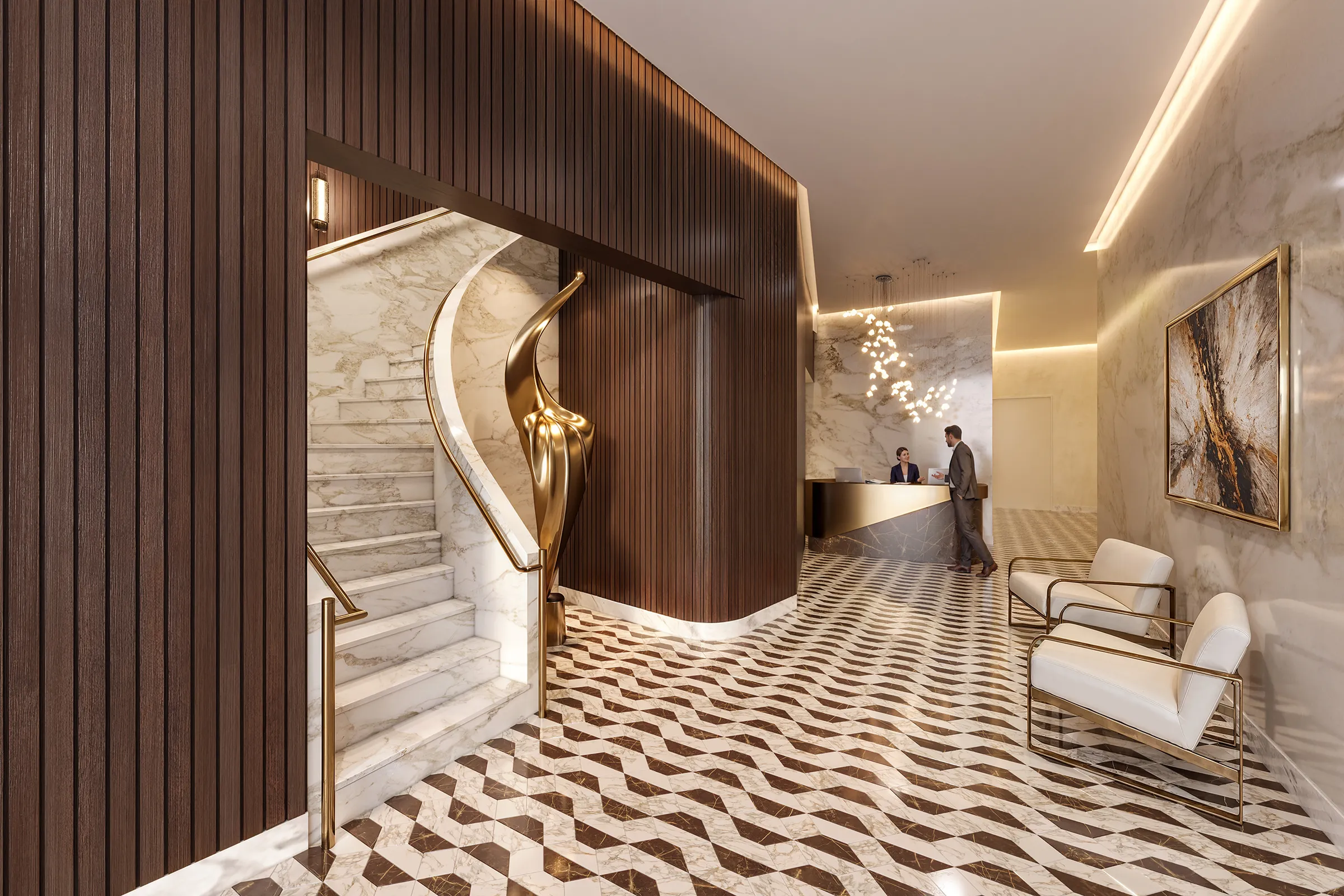
Existing buildings are where people least expect renderings, and where they can do the most. An empty floor, a dated interior or a building with a new use in mind photographs as exactly what it is. A rendering shows what it could be.
When Colliers Capital Markets brought the former Core Club at 66 East 55th Street to market, the offering memorandum paired a professional photo of each space as it stands with a rendering of a new use, taken from the same spot. Investors could lay the two side by side and see six different futures for the building.
5. You Need Control Over Light, Season and Consistency
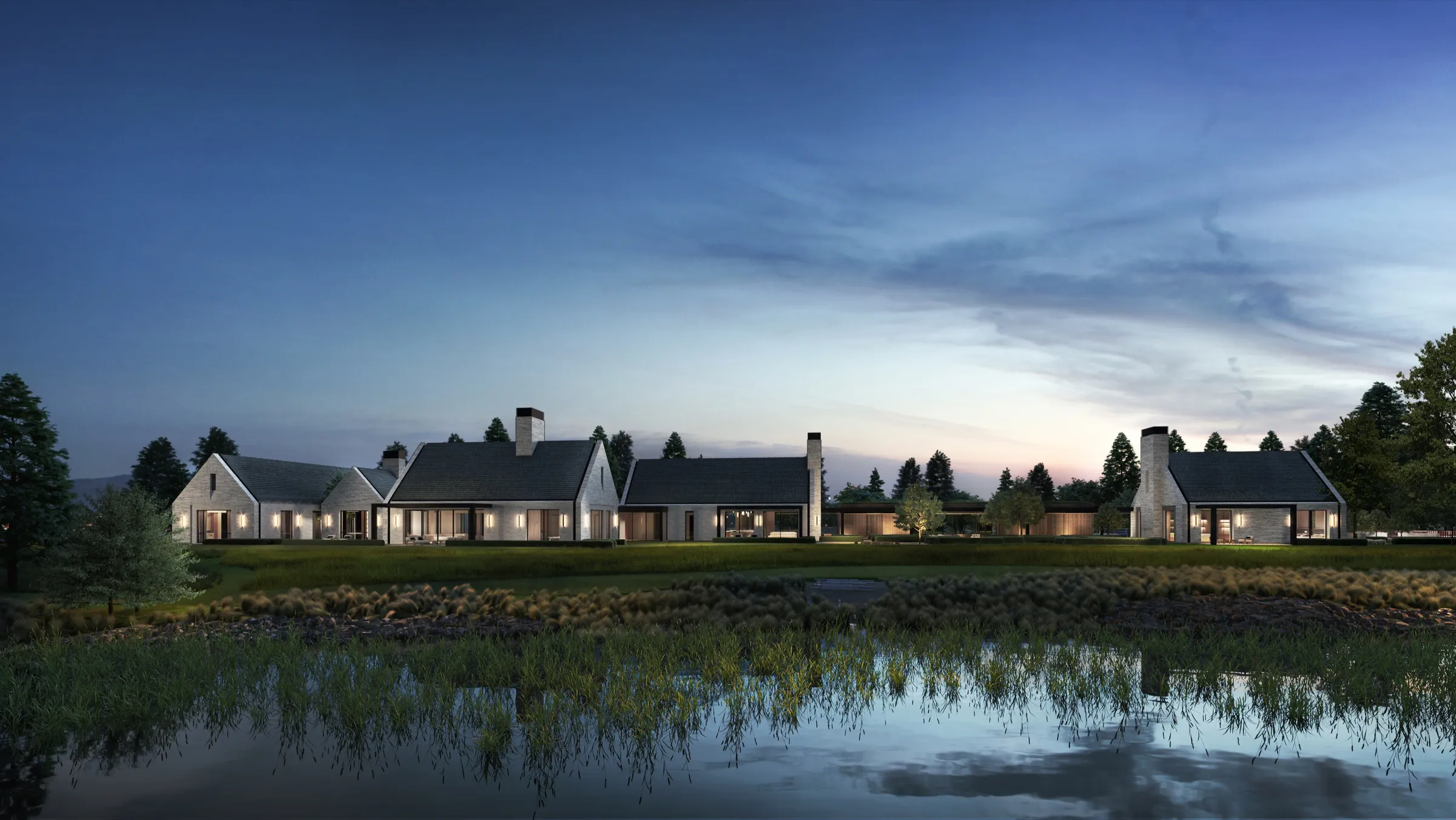
A photographer waits for the weather. A rendering chooses it. Every view in a set can share the same time of day, the same season and the same mood, which matters when the images run side by side on a website, a brochure and a billboard. The same model can also give you day, dusk and night versions of one view, or show the property across the seasons.
Where Photography Wins
We are a rendering studio, and we still tell clients to photograph when photography is the right call. It usually is in these cases:
- The home is finished and shows well. When the property is built, furnished and looks the way you want to sell it, a good photographer gives you the most convincing images there are: proof that it exists. It is usually the simpler job, too.
- Resale. Buyers of an existing home expect to see the real rooms, worn floors and all. A rendering here invites the question “what are they hiding?”
- The neighborhood. The real street, the park, the beach and the coffee shop on the corner sell a location better than any image we can make of them.
- Trust after completion. Once a building opens, photos of the real thing reassure the last buyers in a way renderings cannot.
One caution that applies to both: whatever you show has to be honest. A photo can mislead with a wide lens as easily as a rendering can with an invented view. The difference is that a rendering is a promise about something not yet built, so materials, proportions and views must match the design. Styling (the light, the furniture, the season) is fine; changing the building is not. Our post on approval renderings vs sales renderings shows how the same design is shown plainly for a review board and styled for buyers. Before putting renderings on a listing, check your listing service’s own rules on them; renderings for broker opens, MLS and PR covers how to use them there.
Mixing Both: Drone Photomontage and Photo-Matched Renderings
The best answer is often both at once, in the same image.
Drone photomontage. The land and the views are real; the building is not built yet. A drone captures the actual site, and the rendered building is blended into that footage. For the Thailand Retreat Community, the architect’s own drone operator flew the real valley following a photography guide we prepared, with camera positions, height and light, and we placed the proposed community into it. The aerial showed a real place, not an invented one, which is what a fundraiser audience needed to believe in it.
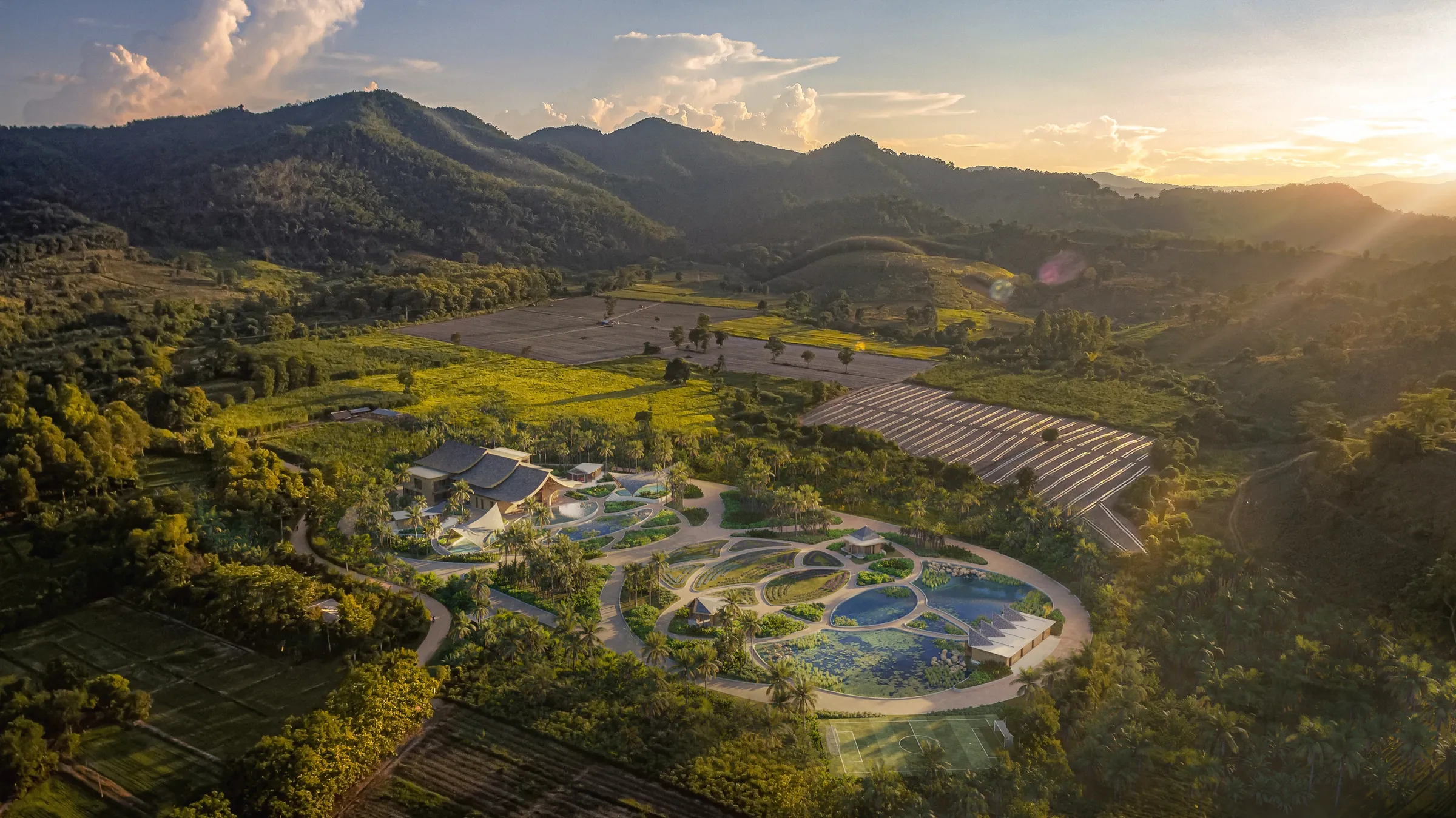
Photo-matched renderings. For existing buildings, each rendering recreates the exact camera of a professional photo, as we did at 66 East 55th Street. We confirm every camera with a white-model preview before rendering, because if the angle drifts even slightly, the side-by-side comparison falls apart.
If you are planning a shoot and renderings together, the drone footage and the renderings should be planned together too, so the light and the angles agree. Our guide to real estate drone photography covers the shoot, and exterior rendering without a drone covers the options when flying is not possible.
After Completion: When Photos Take Over
When the building is finished, photograph it. Buyers trust the real thing, and the units that exist should be shown as they are. But the 3D model does not stop working on opening day. It can still show units that are sold out or unfurnished, a new finish package, a penthouse that is not staged, or the next phase on the empty lot next door. The renderings and the photos end up working side by side, each doing the job it is best at.
Five Questions to Decide
- Does it exist yet? If not, render it.
- Does it look the way you want to sell it? If yes, photograph it. If it is empty, dated or unfinished, render it.
- Is the site real but the building not? Plan a drone shoot and a photomontage together.
- Do buyers need to compare options? Render them from one camera.
- Will the images run side by side across a launch? Make sure they share one light and one look, whichever way they were made.
If your project sits somewhere between those answers, as most do, that is a good conversation to have before anyone books a photographer or a studio. Tell us about the project, where it stands and what the images have to achieve, and we will tell you honestly which images should be rendered, which should be photographed, and which should be both.
Frequently Asked Questions
Is 3D rendering better than photography for real estate?
Neither is better in general. Renderings win when the property is not built yet, when spaces are empty or dated, or when you need options and a consistent set across a launch. Photography wins when the home is finished and looks the way you want to sell it, because nothing is more convincing than proof that it exists. Many projects use both.
When should a developer use renderings instead of photos?
Whenever there is nothing finished to photograph yet: pre-construction and off-plan sales, amenities that open after the first units, and finish options buyers choose from. Renderings also help with existing buildings, when the space as it stands does not show what it could become.
Can you mix renderings with real photos or drone footage?
Yes. Two common ways are a drone photomontage, where the new building is blended into real drone footage of the site, and photo-matched renderings, where each rendering is taken from the exact spot of a photo so the two can be shown side by side. See real estate drone photography for how the footage is captured.
Should renderings be replaced with photos once the building is finished?
Usually, yes, for the units and spaces that now exist, because buyers trust photos of the real thing. The 3D model still earns its keep: it can show units that are sold out or unfurnished, new finish options, or the next phase.
Do renderings have to look exactly like the finished building?
They should. A rendering used to sell a home is a promise of what the buyer will get, so materials, views and proportions must match the design. Styling choices, such as the time of day and the furniture, are fine as long as the building itself is shown honestly.