
Case study
Chatsboro Drive
Project at a glance
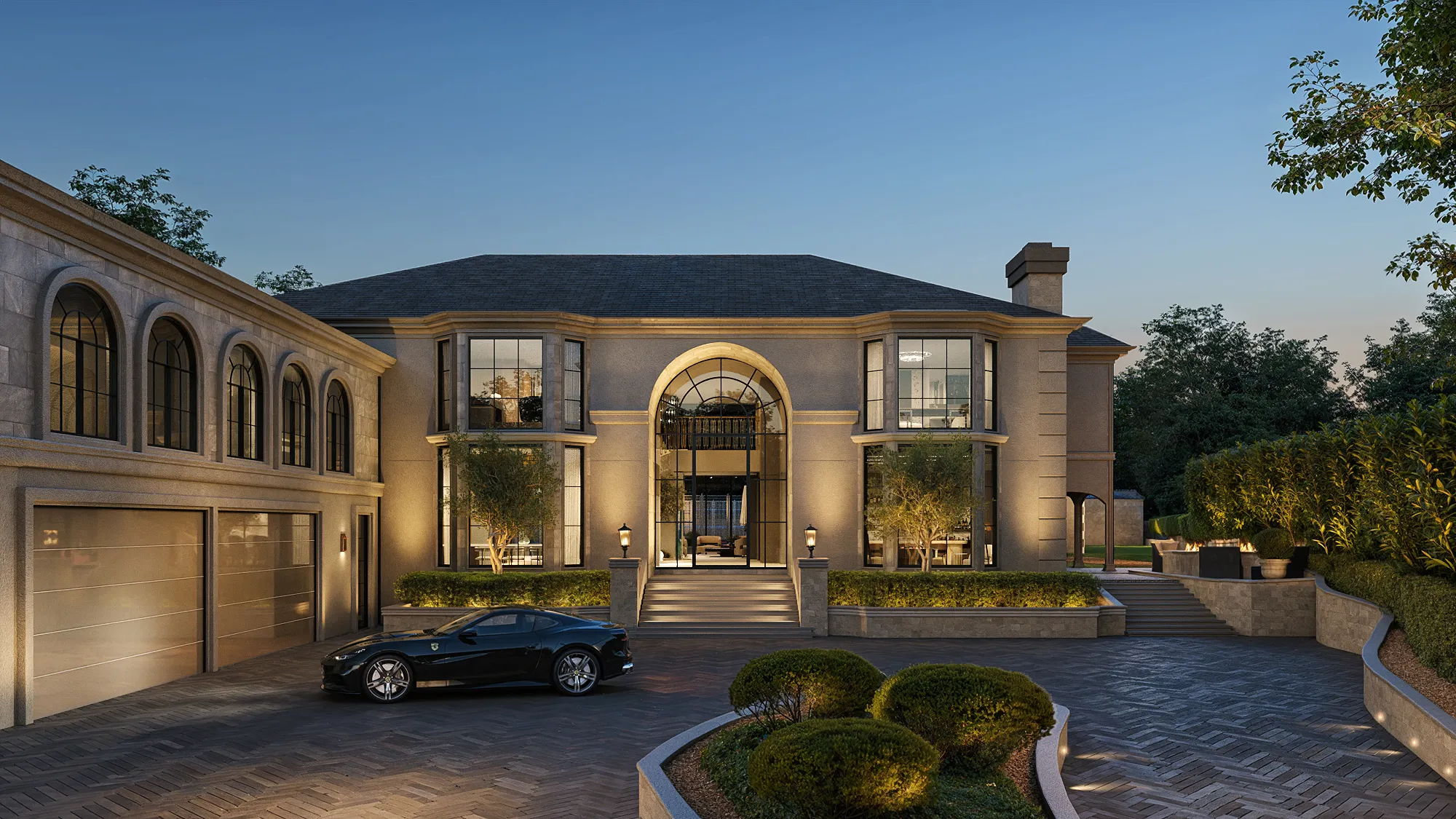
For a homeowner with a strong vision but no resolved design, the renderings became the design tool: white-model studies settled layout, ceilings, and cabinetry before construction, then photorealistic interiors and exteriors became the contractor reference for the build.
- Client
- Private homeowner
- Interior designer
- D Design, Inc.
- General contractor
- Dixie Builders Inc
- Building type
- Luxury single-family residence
- Location
- Woodland Hills, Los Angeles
- Purpose
- Design decisions and construction reference
- Scope
- 23 renderings (3 exterior, 20 interior) plus design consulting
- Timeline
- 2024 to 2025
- Engagement
- Direct homeowner commission
The brief
A Strong Vision Without a Design to Hold It.
A private homeowner on Chatsboro Drive in Los Angeles approached NoTriangle Studio with a strong emotional vision for her future home, but no fully defined design system to bring it together.
She did not just need renderings. She needed a visual strategy partner who could help her clarify the design direction, make confident decisions before construction, avoid costly mistakes during the build, and make sure the finished home matched her intention.
The project became a clear example of how photorealistic home renderings, used strategically, function as a design decision and execution tool, not just a visual deliverable.
The goal
Turning Inspiration Into a Build-Ready Vision.
The homeowner knew how she wanted her home to feel, but the details were fragmented: mixed reference images, incomplete plans, uncertain layouts and materials. The goal was not speed or marketing. The goal was clarity.
Our role was to guide her through a visual decision-making process that would align architecture, interiors, and mood, resolve uncertainty before construction, and give contractors precise, reliable references.
In the renders
Photorealism That Reveals Everything.
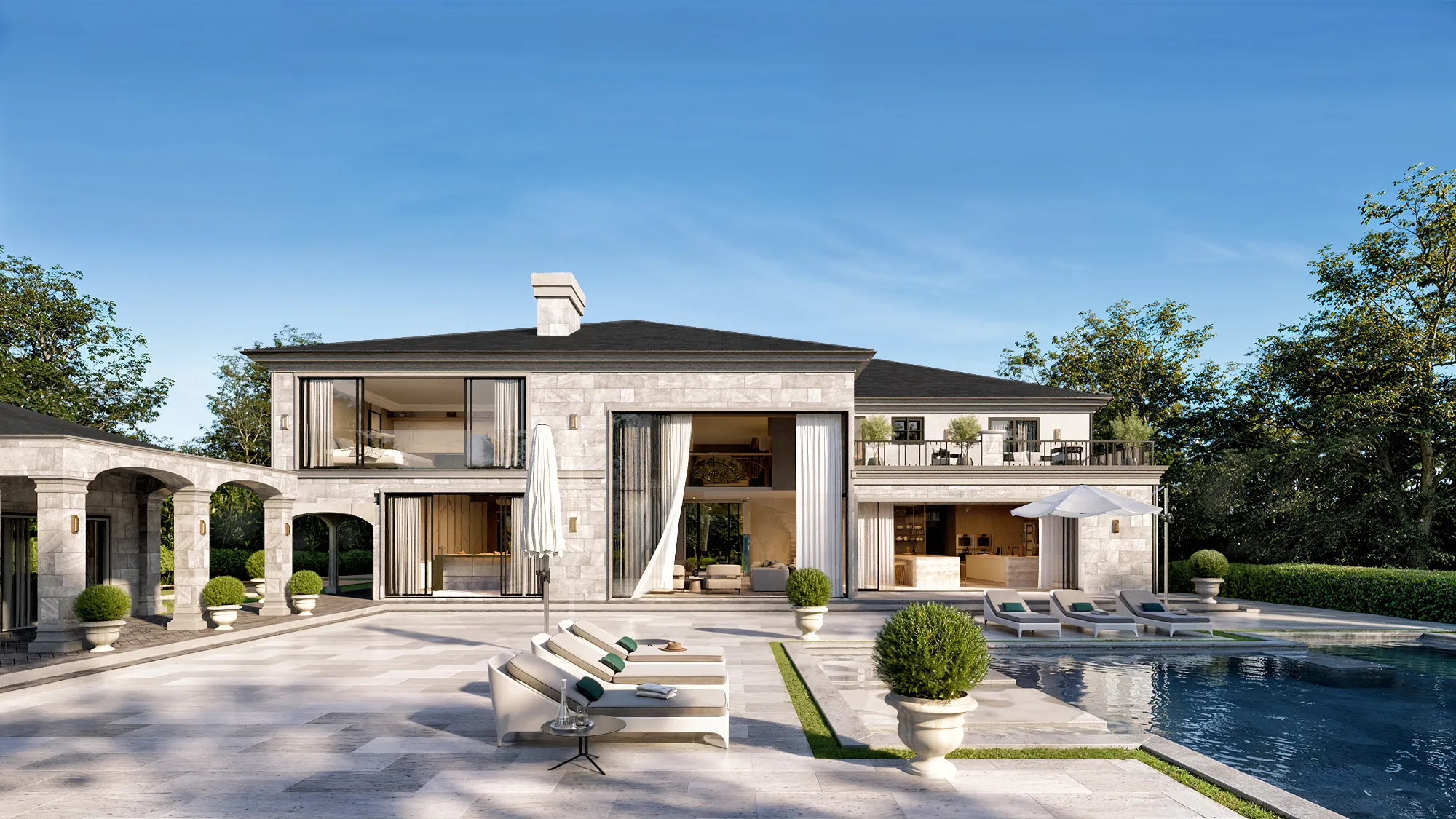
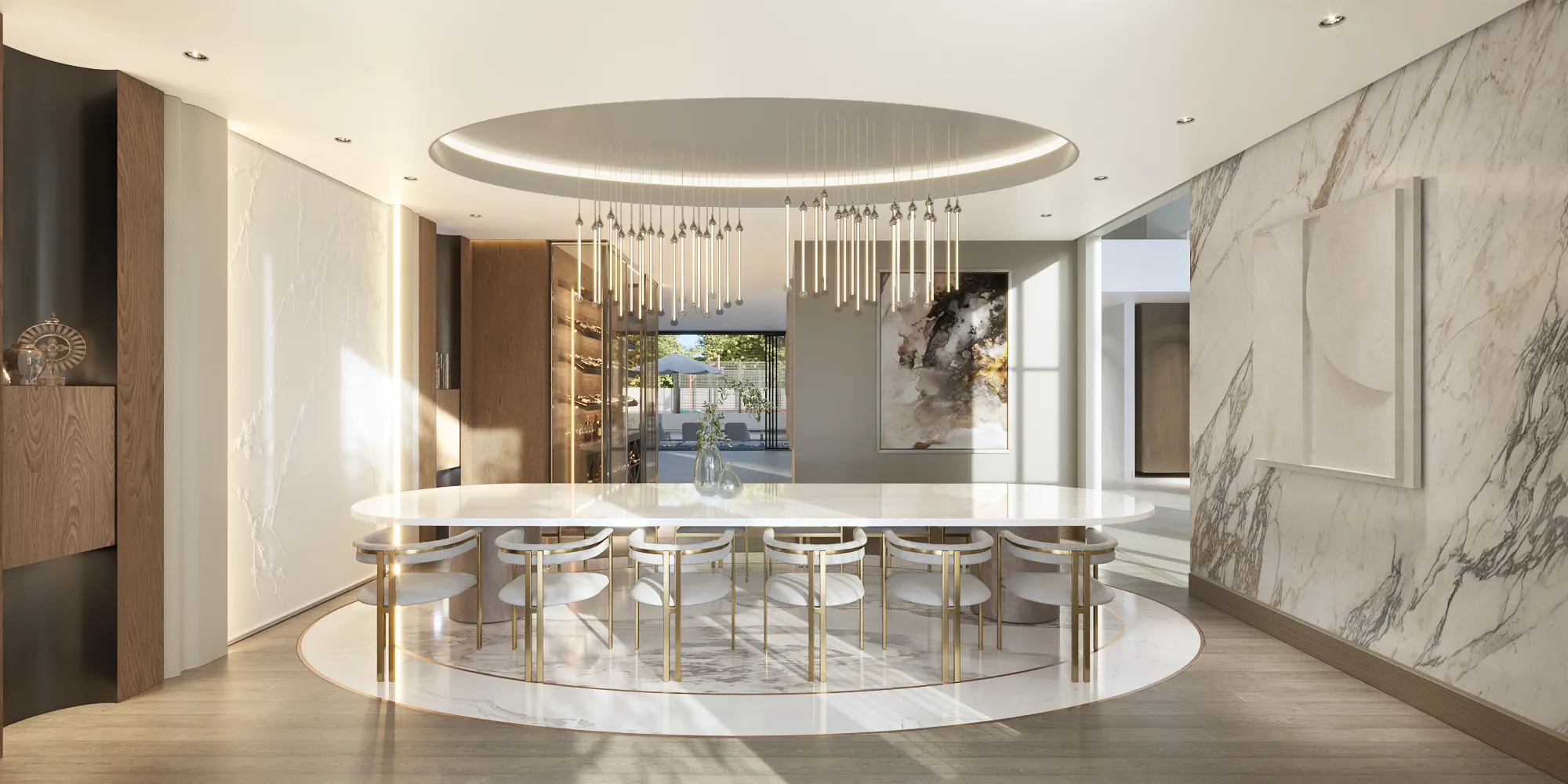
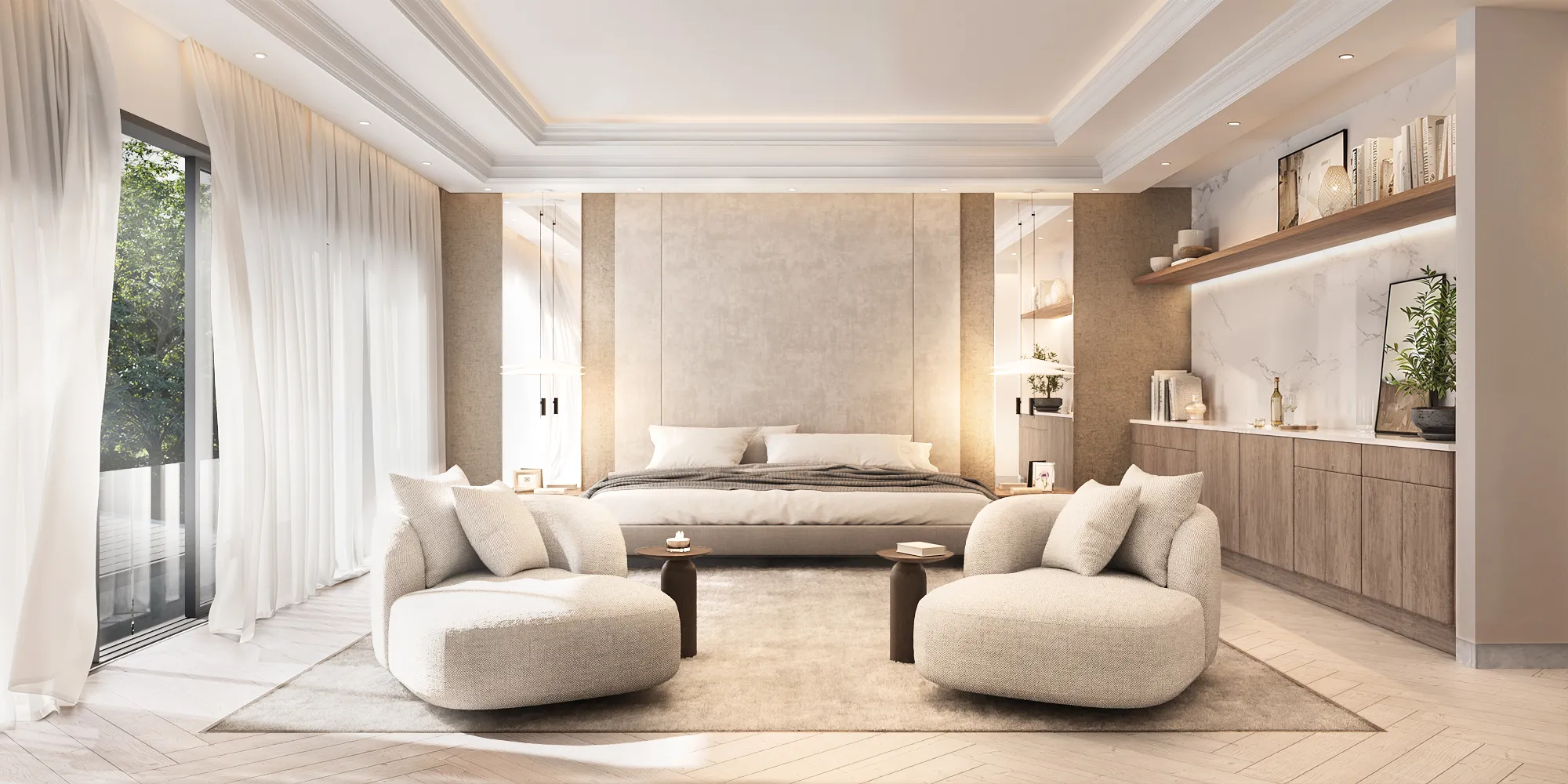
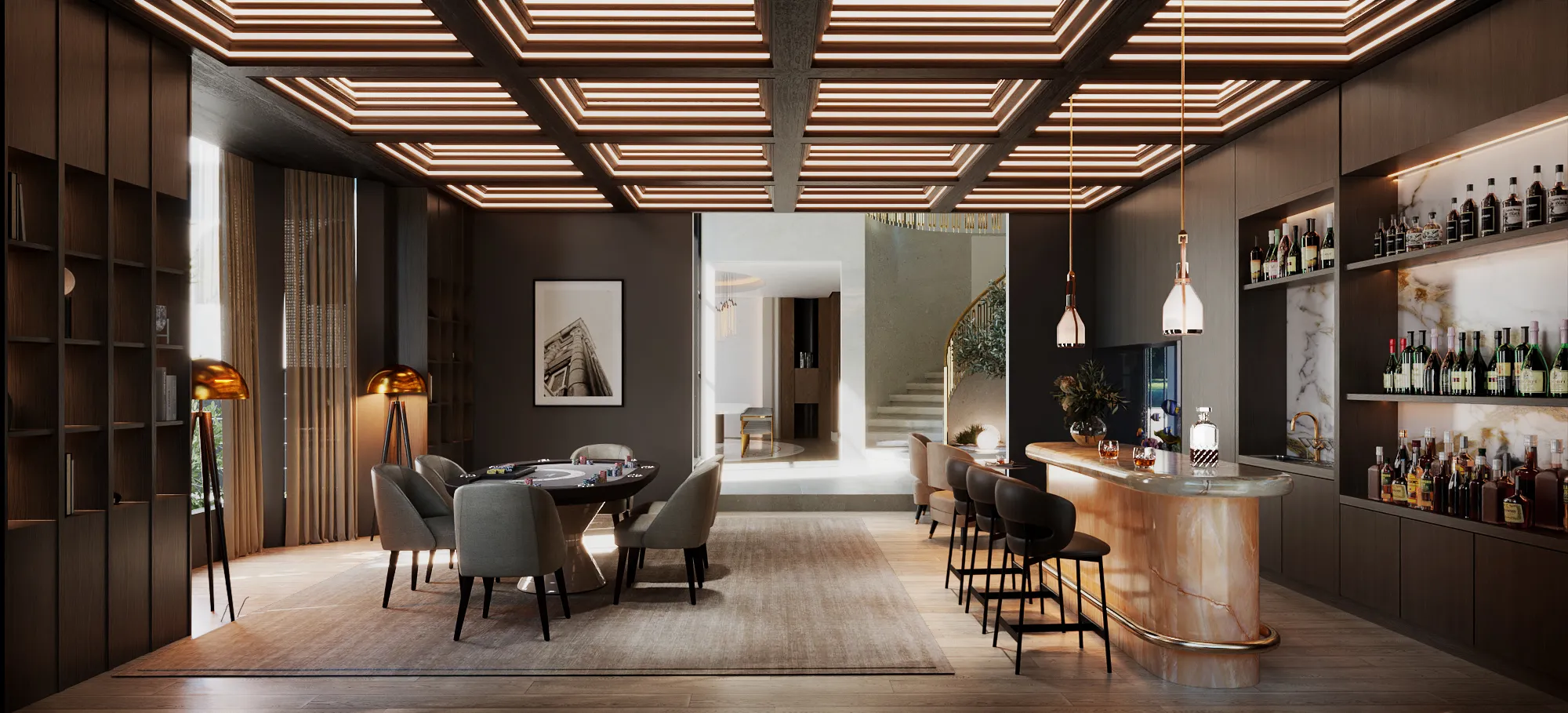
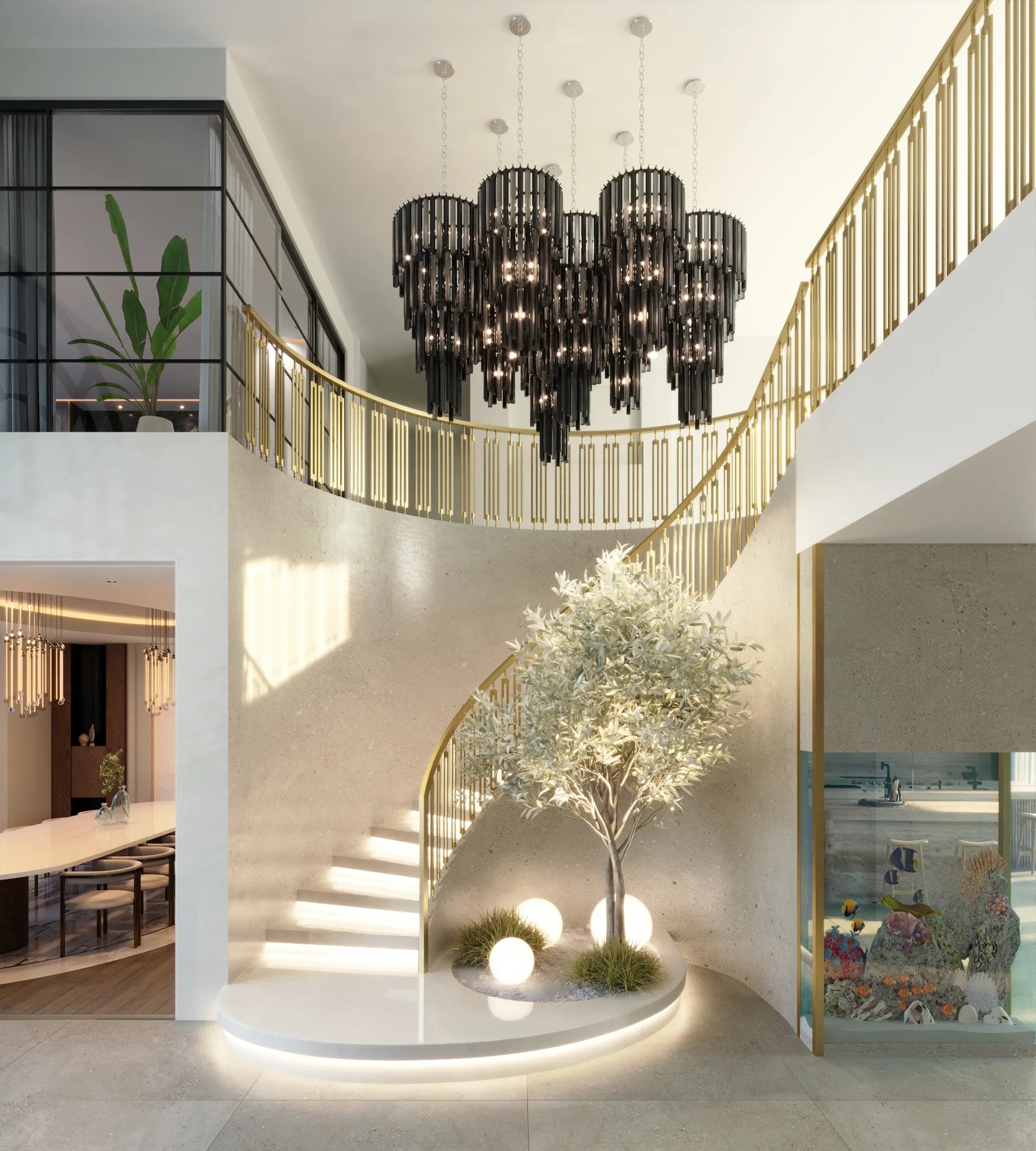
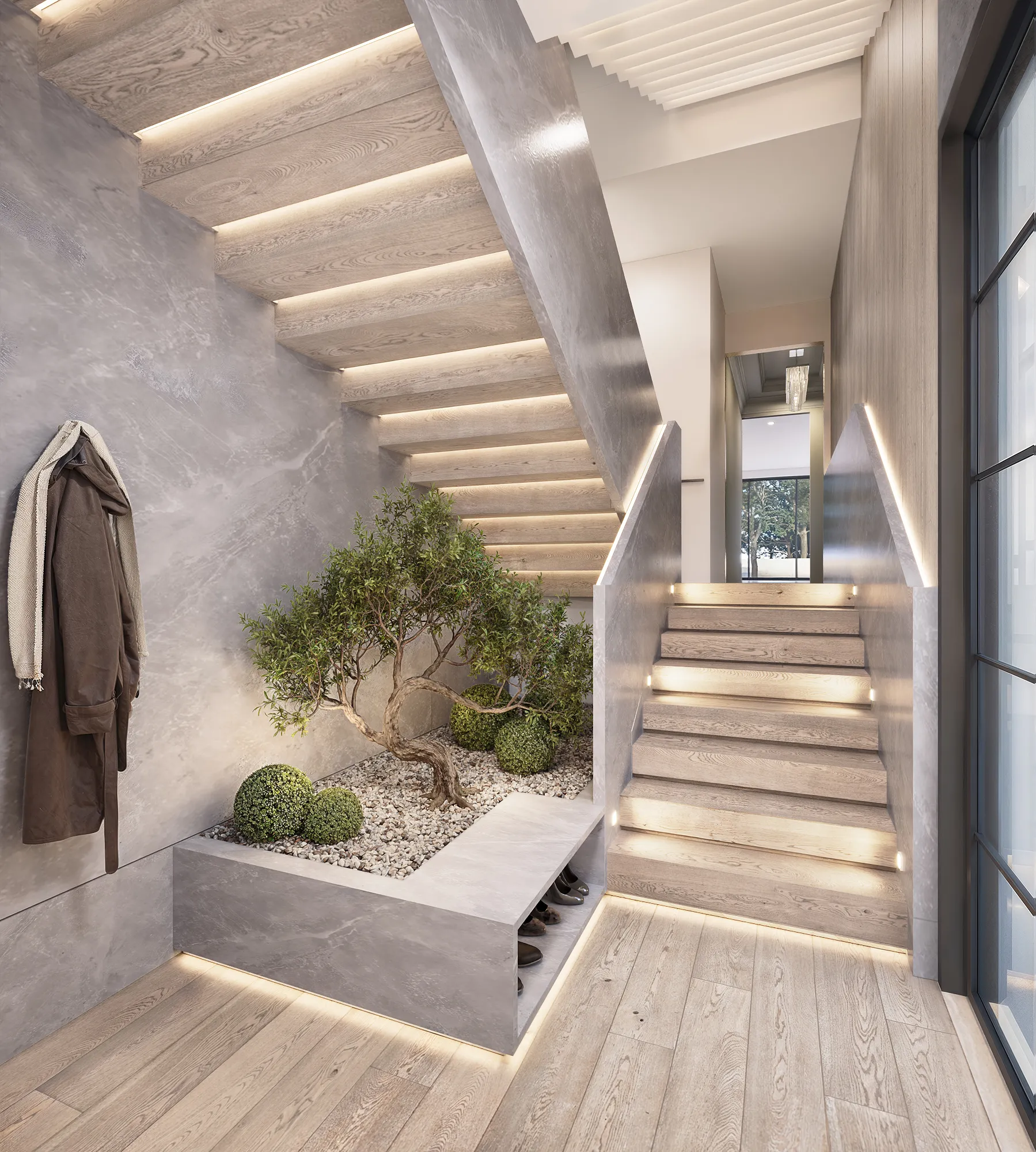
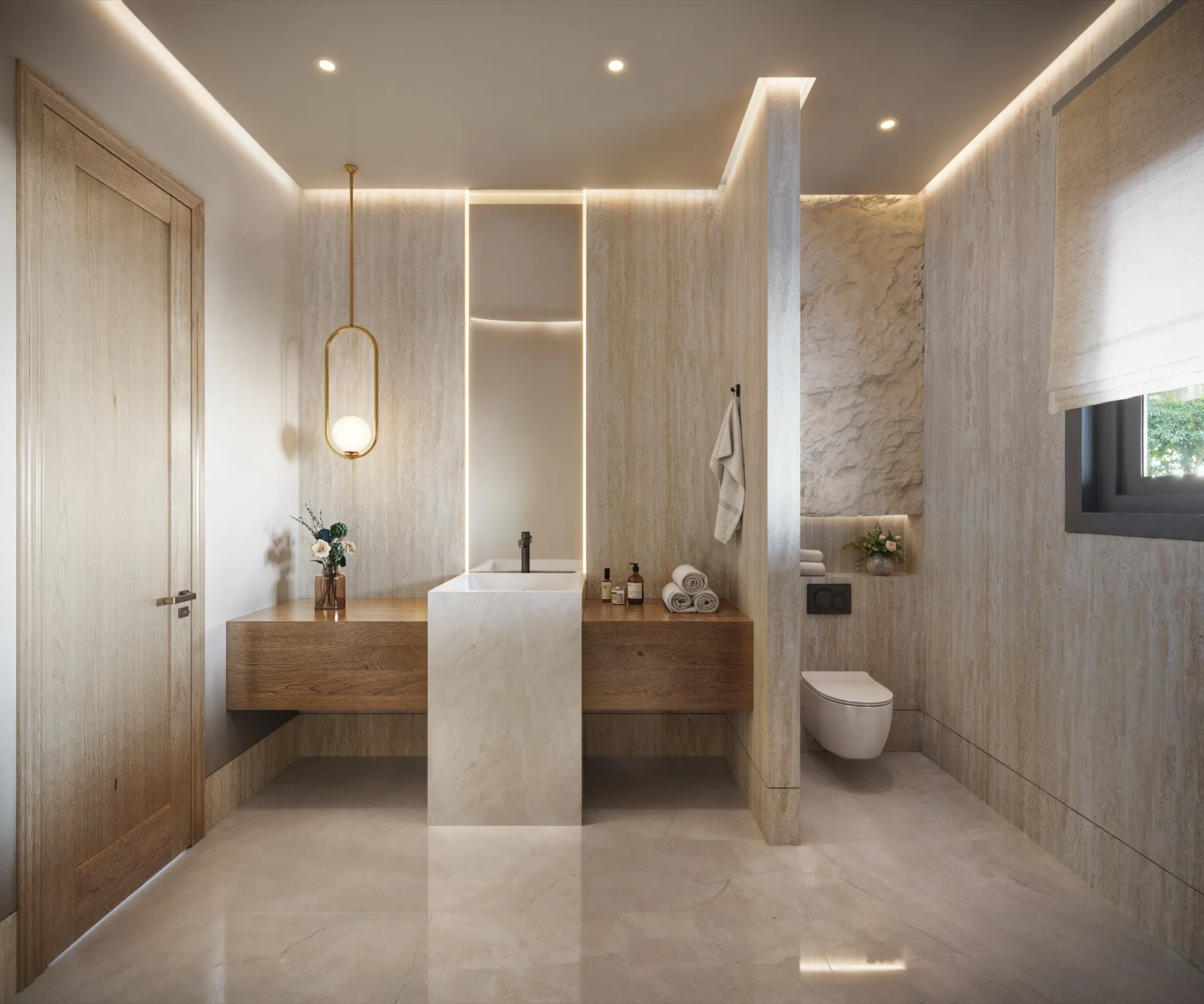
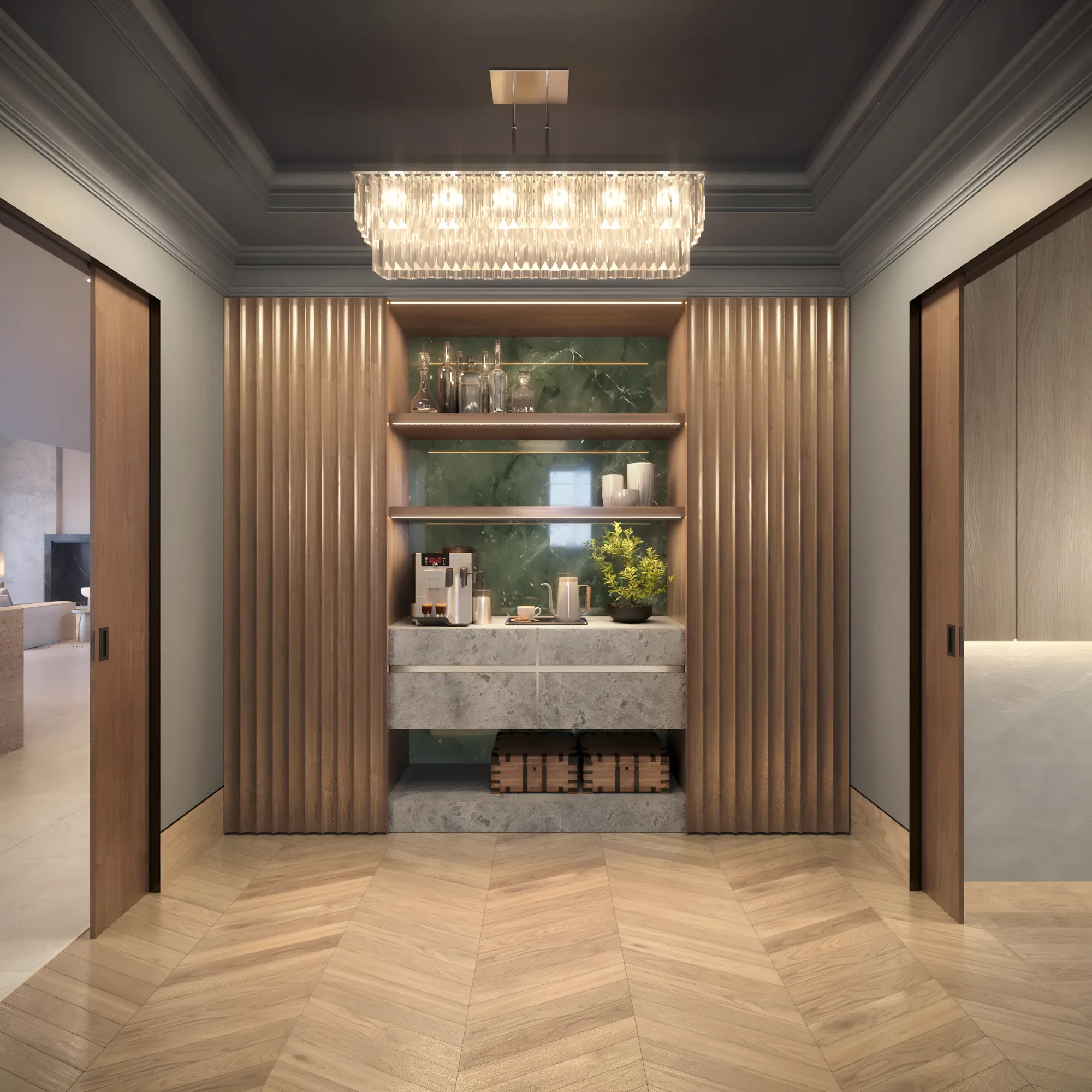
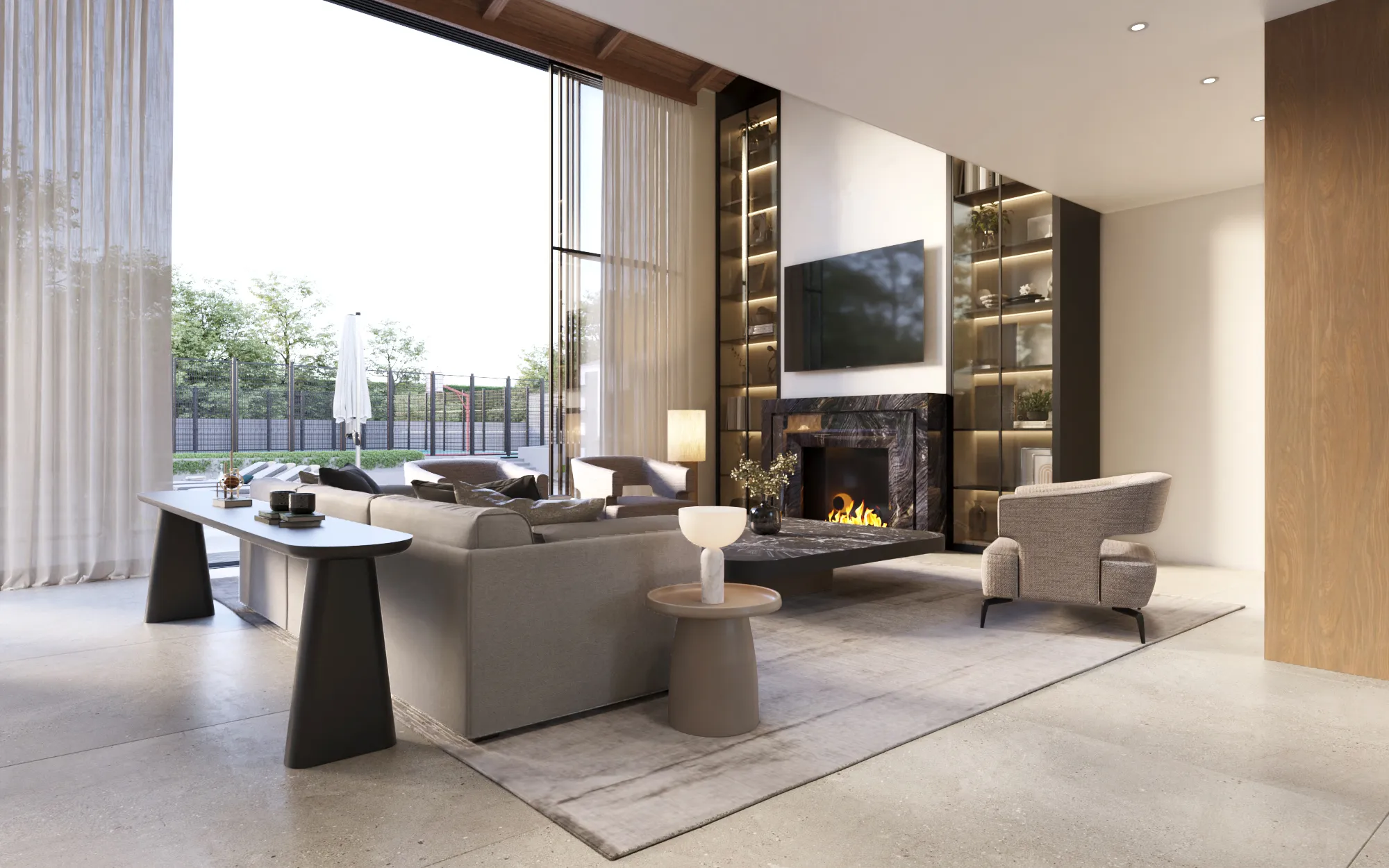
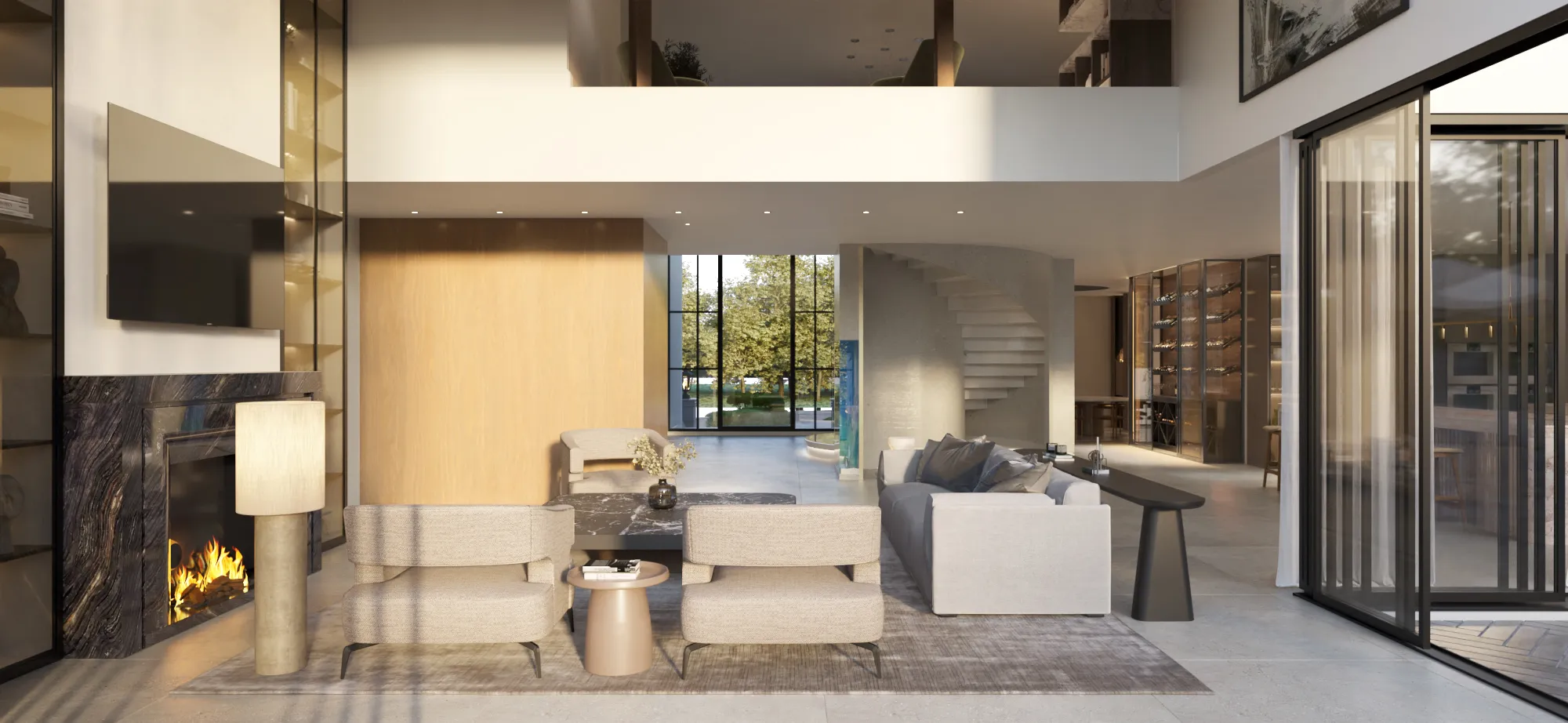
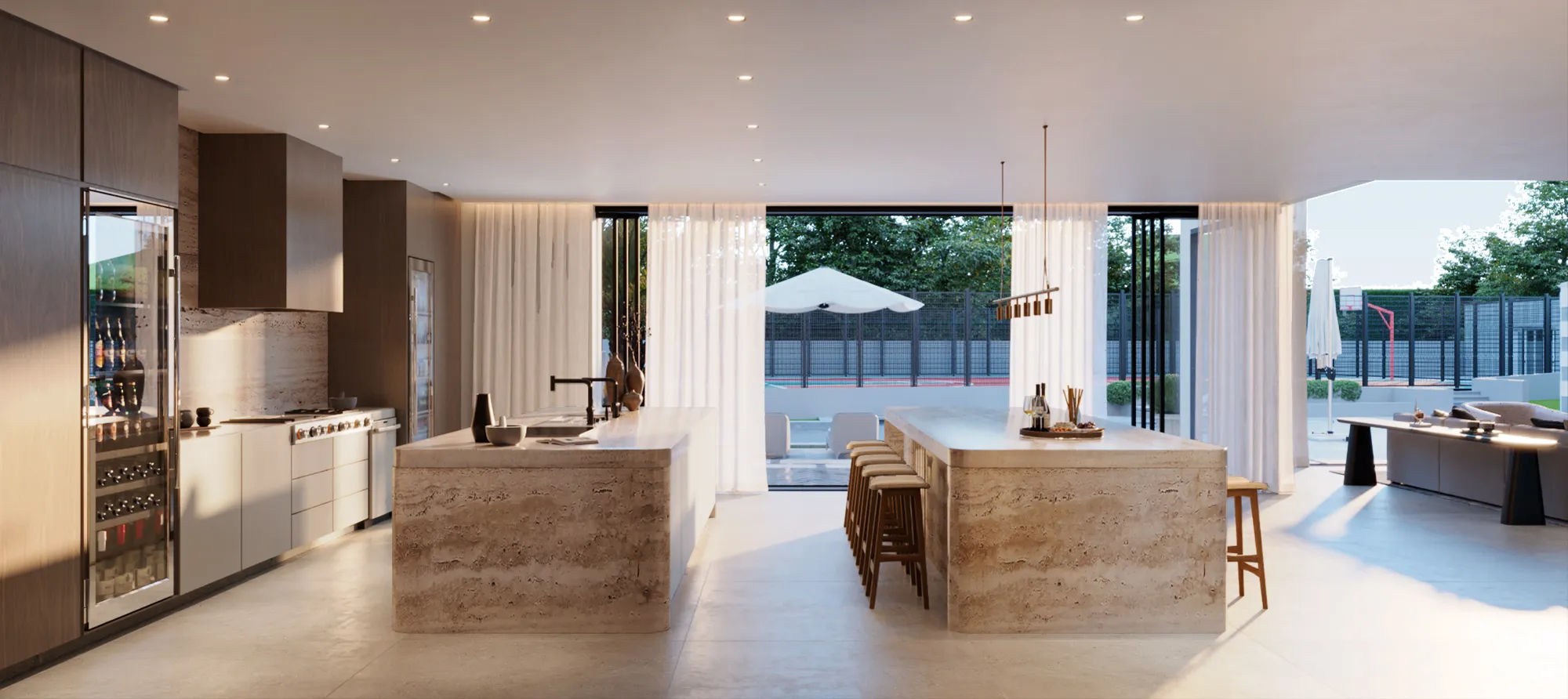
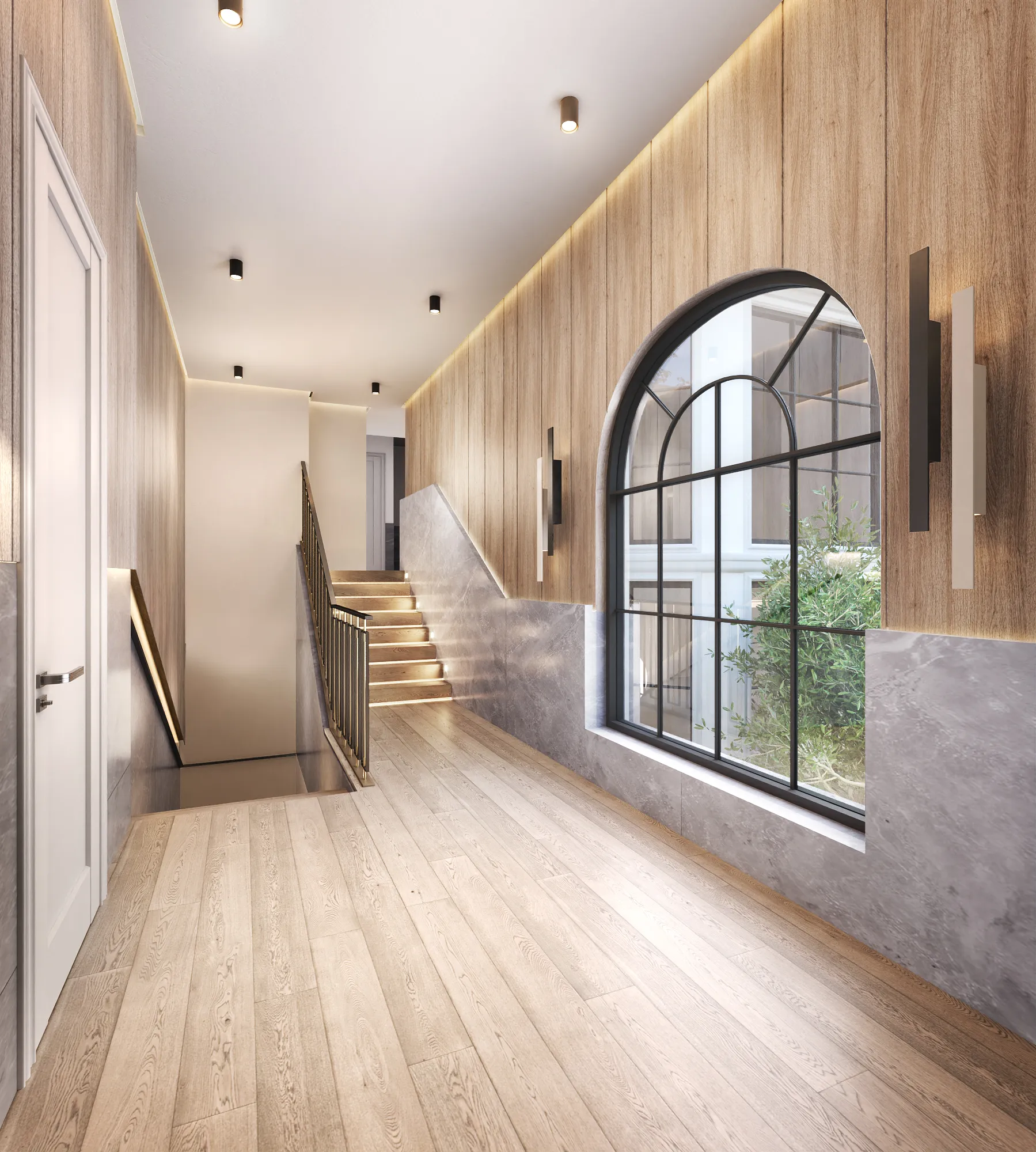
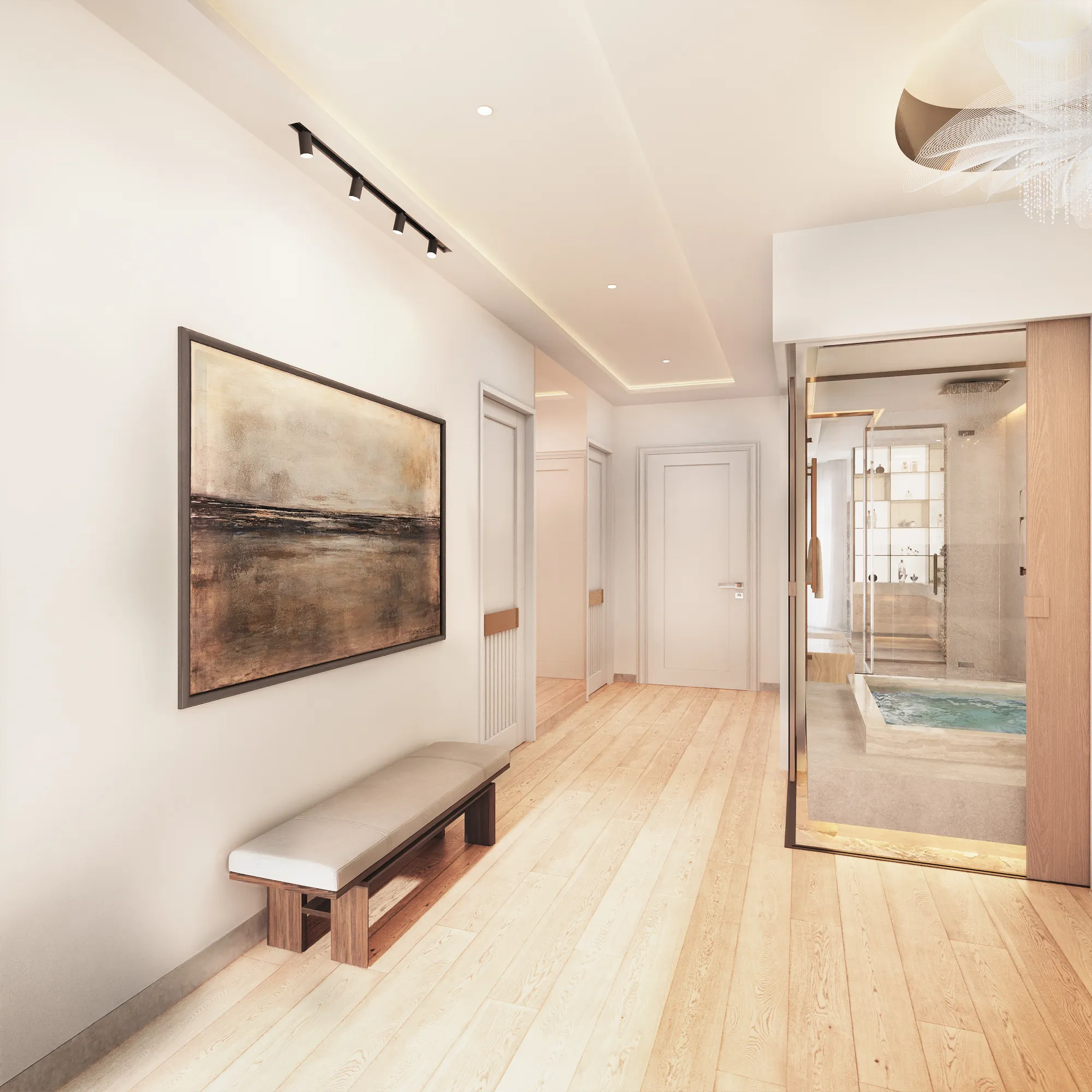
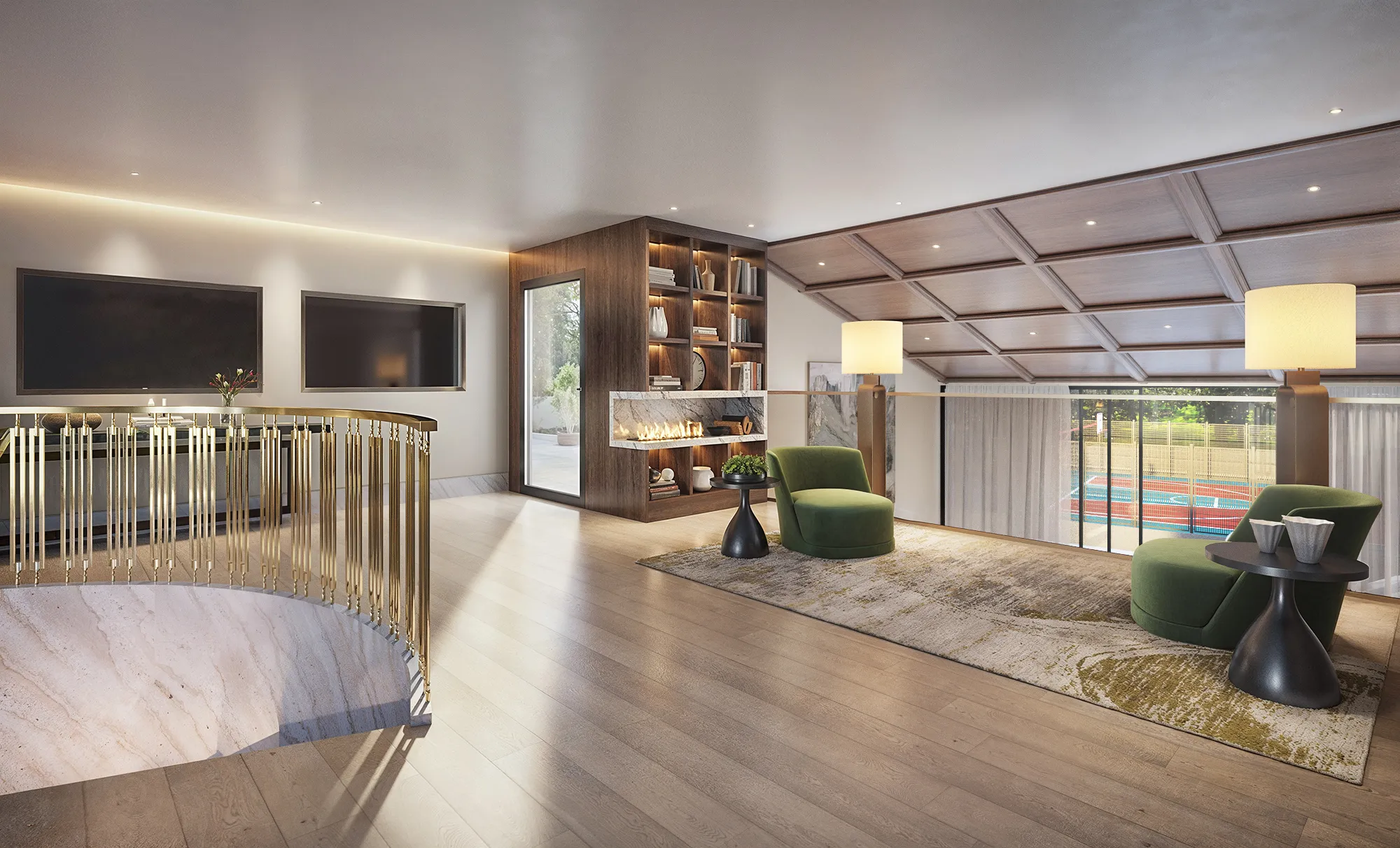
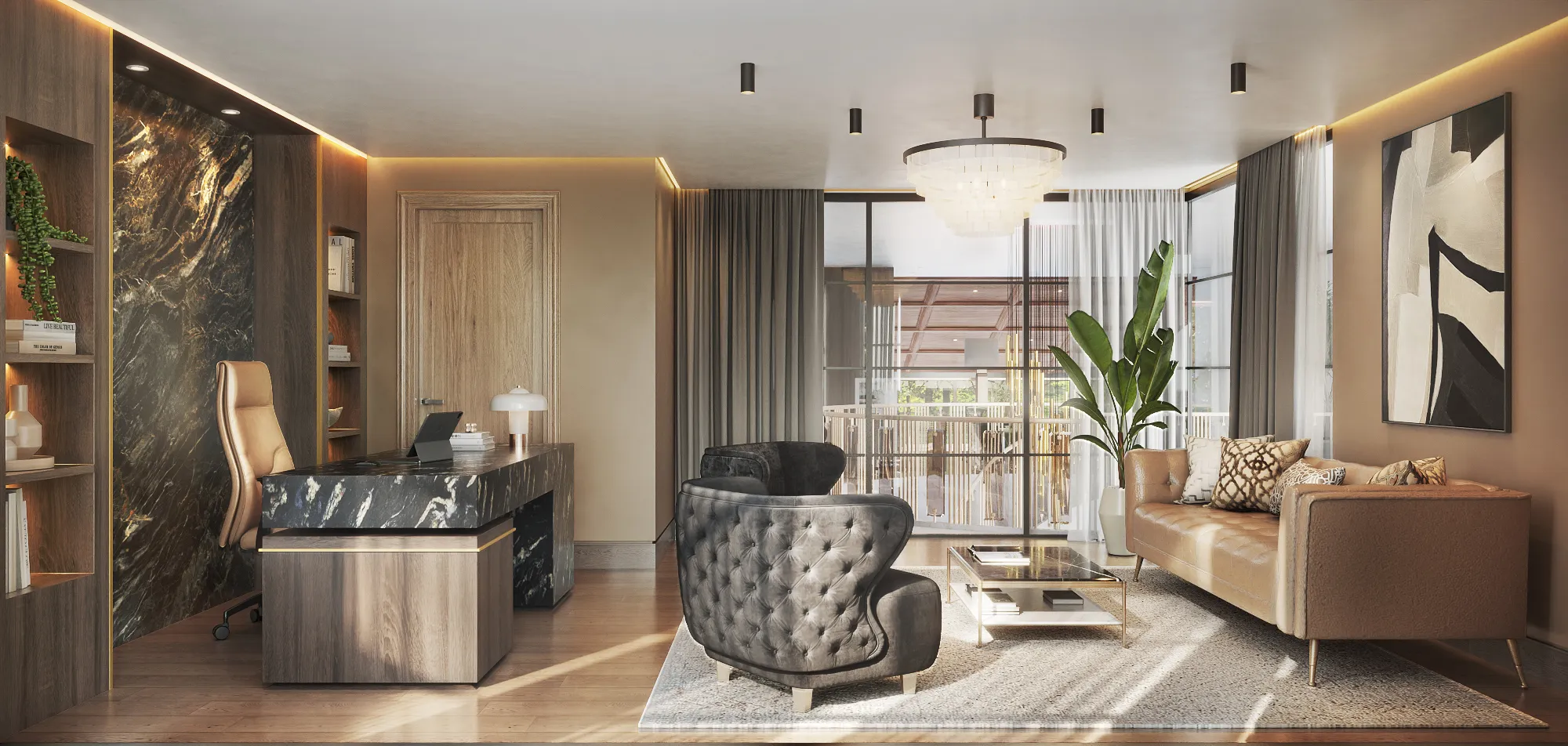
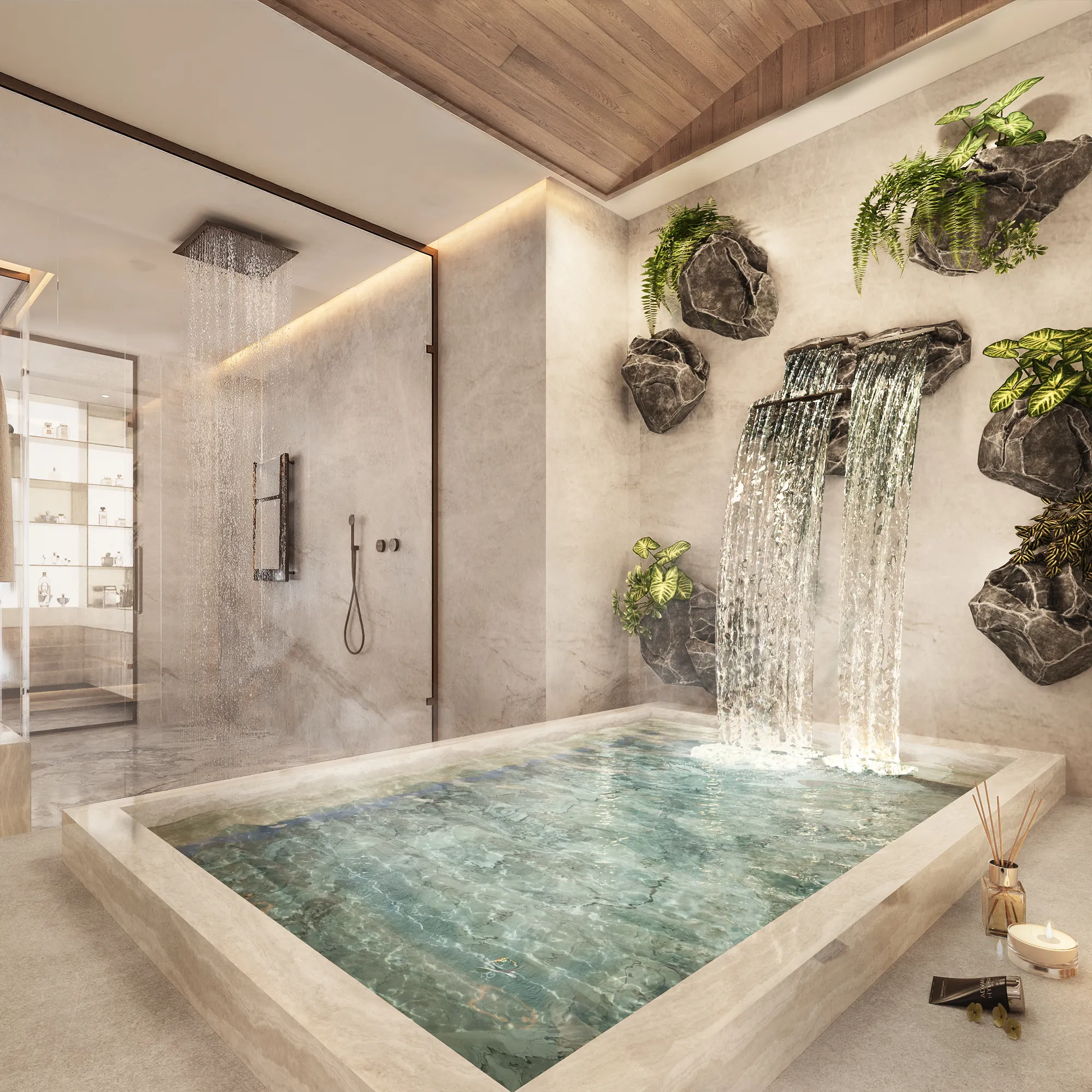
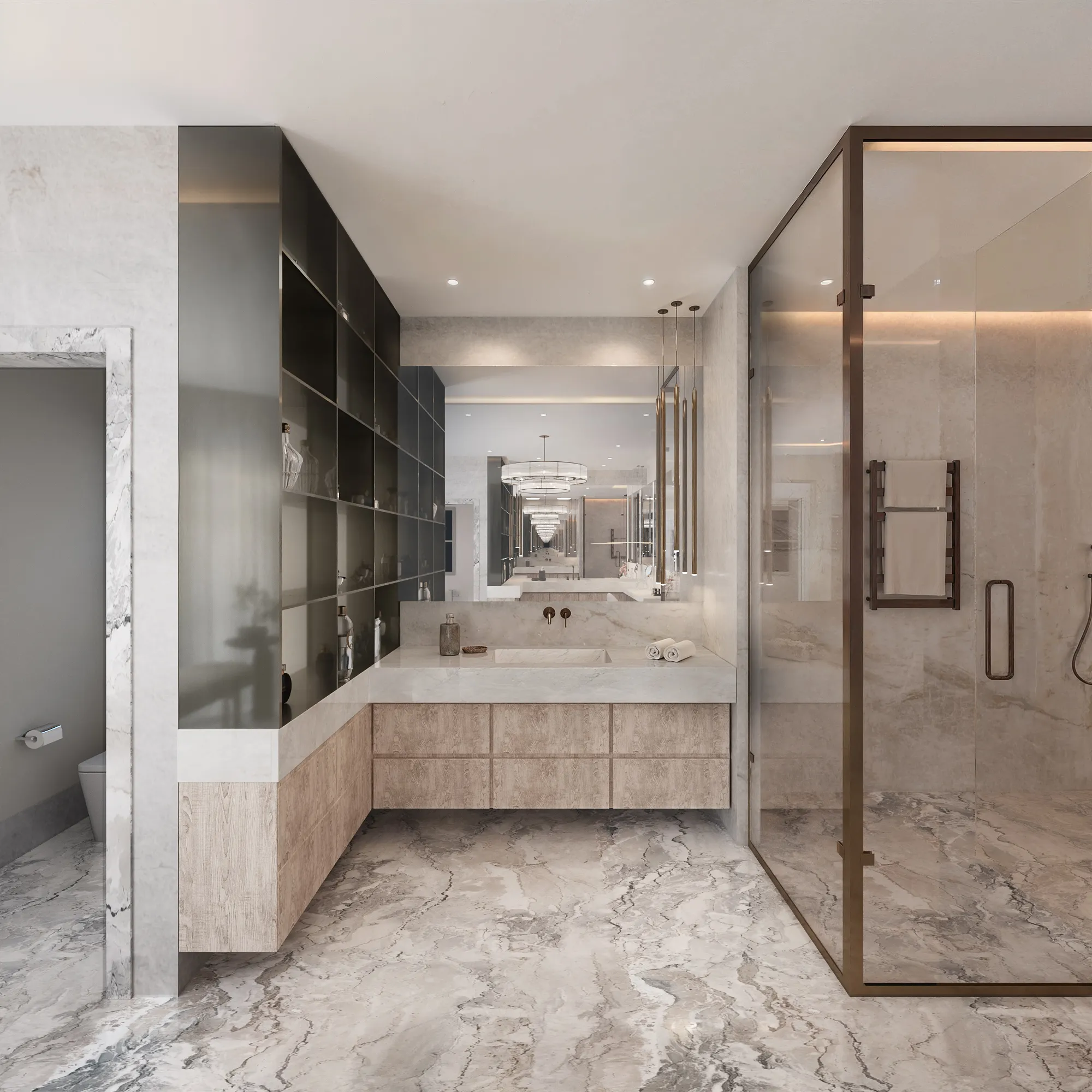
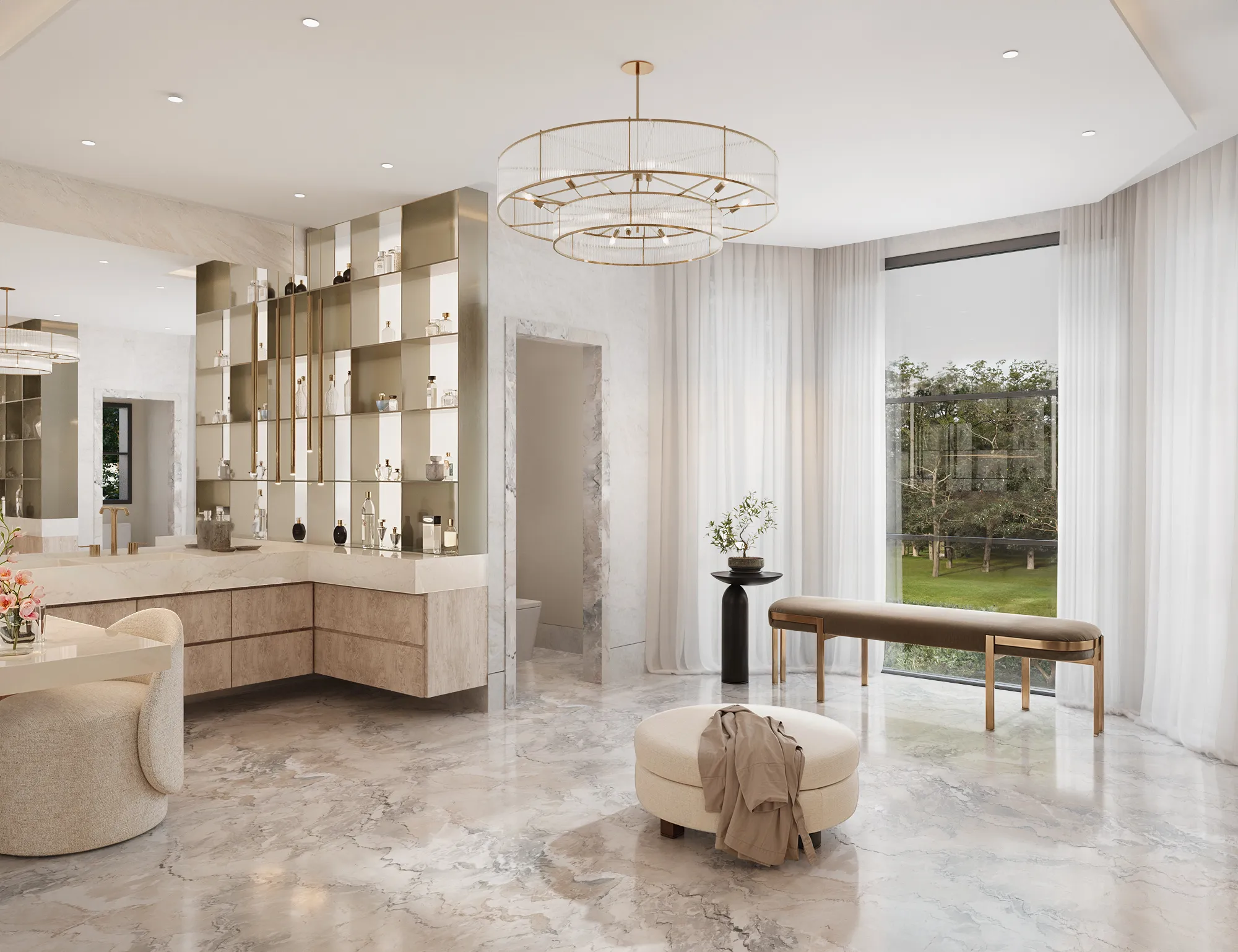
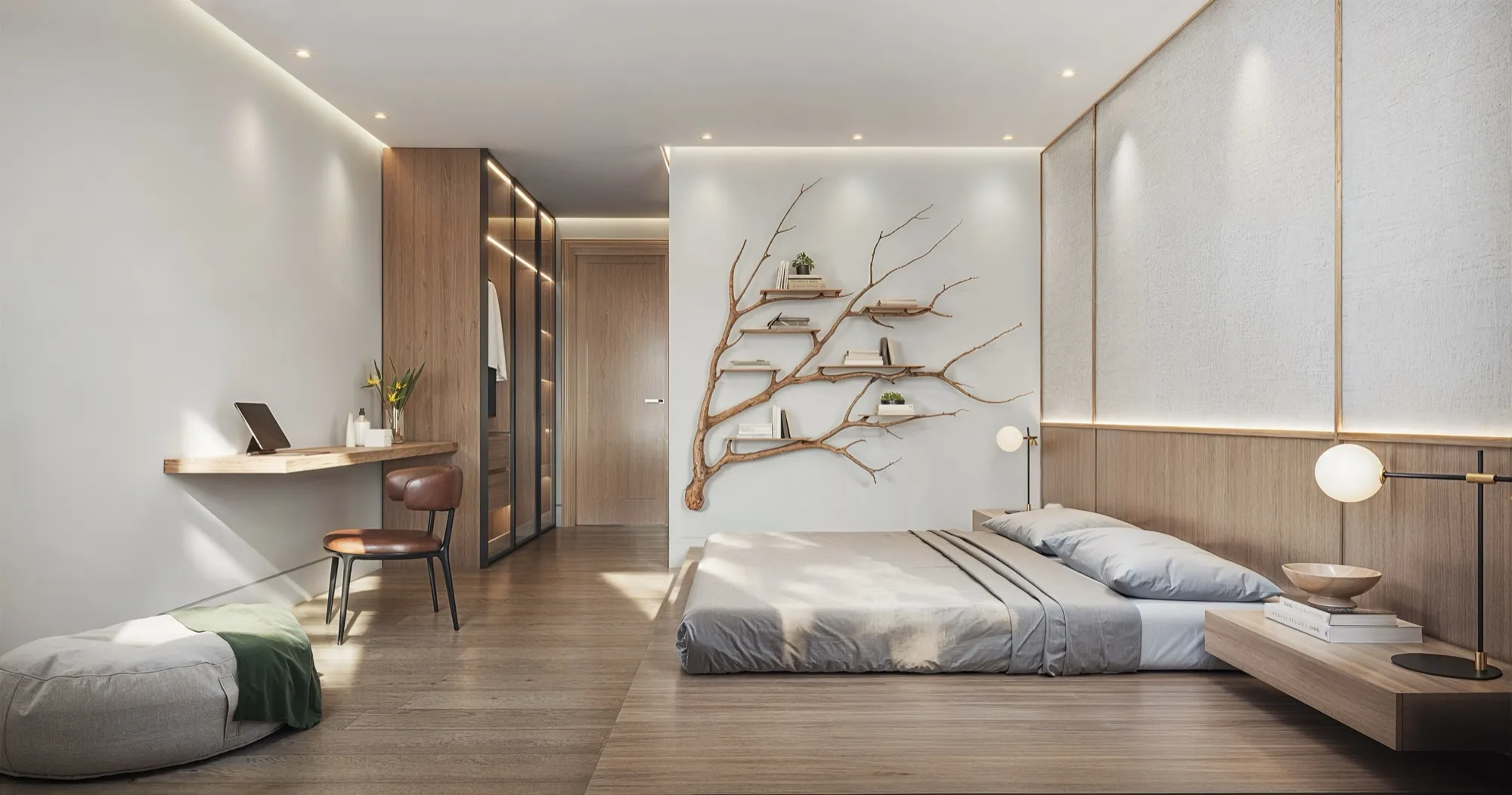
Once the design direction was approved, we developed full photorealistic interiors and exteriors, with detailed lighting, decor, materials, and exterior architectural finishes. Because photorealistic images reveal everything, they prompted another round of refinement: materials, finishes, proportions, and decor were adjusted to match her exact vision. This stage is critical for avoiding the late-stage changes that drive up cost and stress on site.
The challenge
Five Problems Between the Vision and the Build.
The path from the homeowner's vision to a build-ready design ran through five problems:
- 01No clear design direction. Her preferences were broad and undefined.
- 02Fragmented reference materials. Dozens of images, screenshots, notes, and sketches made it difficult to see the full picture.
- 03Options that needed guidance. Layouts, ceiling heights, cabinetry, and lighting all needed validation, and 2D plans were not enough.
- 04Changing architectural elements. Ceiling heights, wall positions, window designs, cabinetry, and baseboards all had to be tested visually and refined in 3D.
- 05Mid-render adjustments. Even after the early design rounds, photorealistic renderings revealed opportunities to refine the look further as her taste evolved.
Our recommendation was the same at every step: start with visual structure, not aesthetics. Organize the ideas into a coherent, room-by-room direction, translate inspiration into design logic with curated visual boards and controlled iterations, and validate every spatial decision in 3D before committing to detail.
The approach
White Models First, Photorealism Second.
We gathered every image, plan, and note the client shared and sorted them into clear themes. From there, we created detailed design boards for each major space. The boards helped the homeowner see how materials, colors, lighting, and furniture would work together in the final home, and transformed abstract inspiration into actionable design clarity.
The white-model stage then carried the iterative design development. Furniture layouts, wall positions, ceiling heights, window designs, built-in cabinetry, baseboards, and the overall spatial flow were all tested and refined in 3D, with photorealism held back until those spatial decisions were resolved.
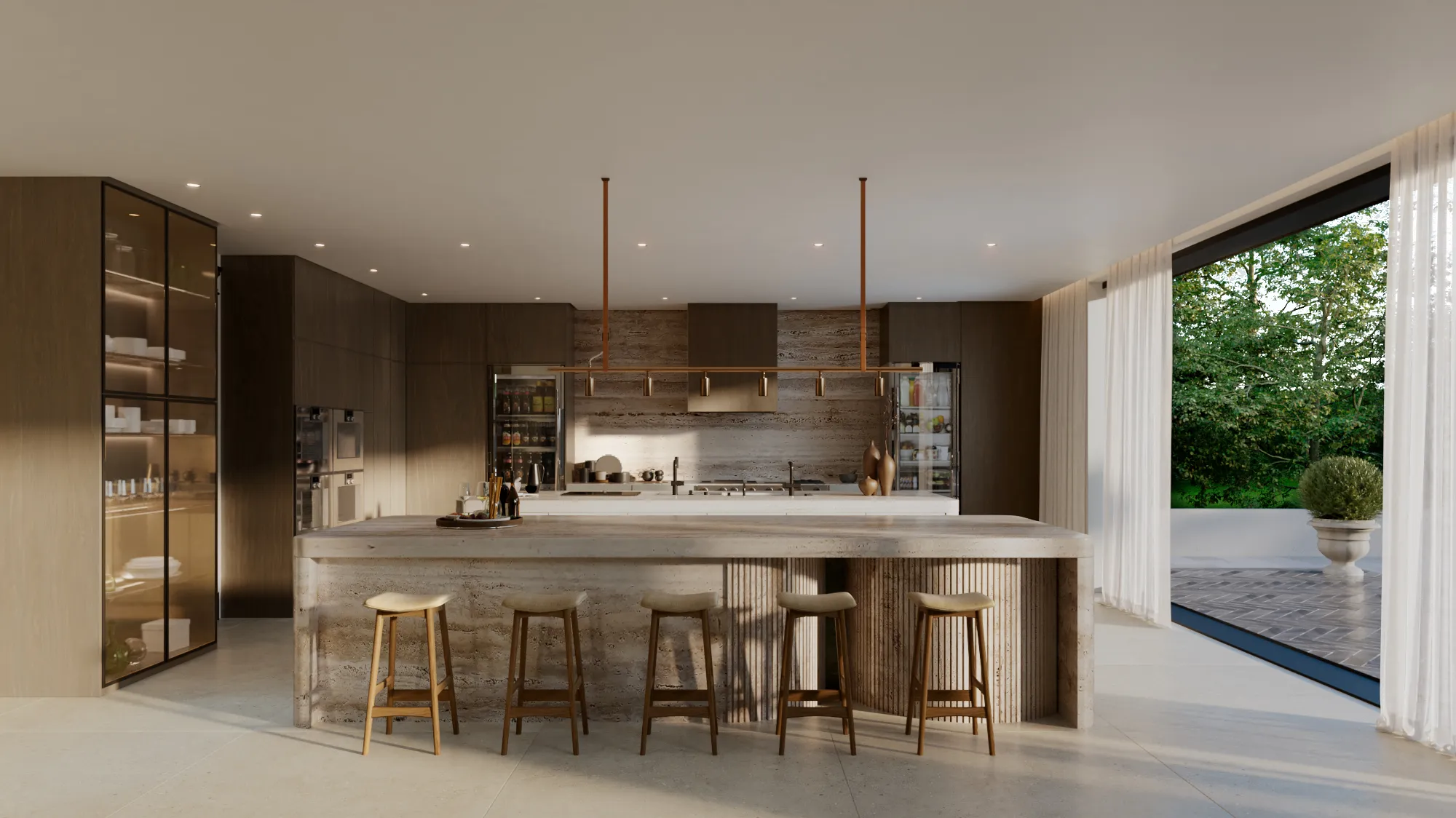
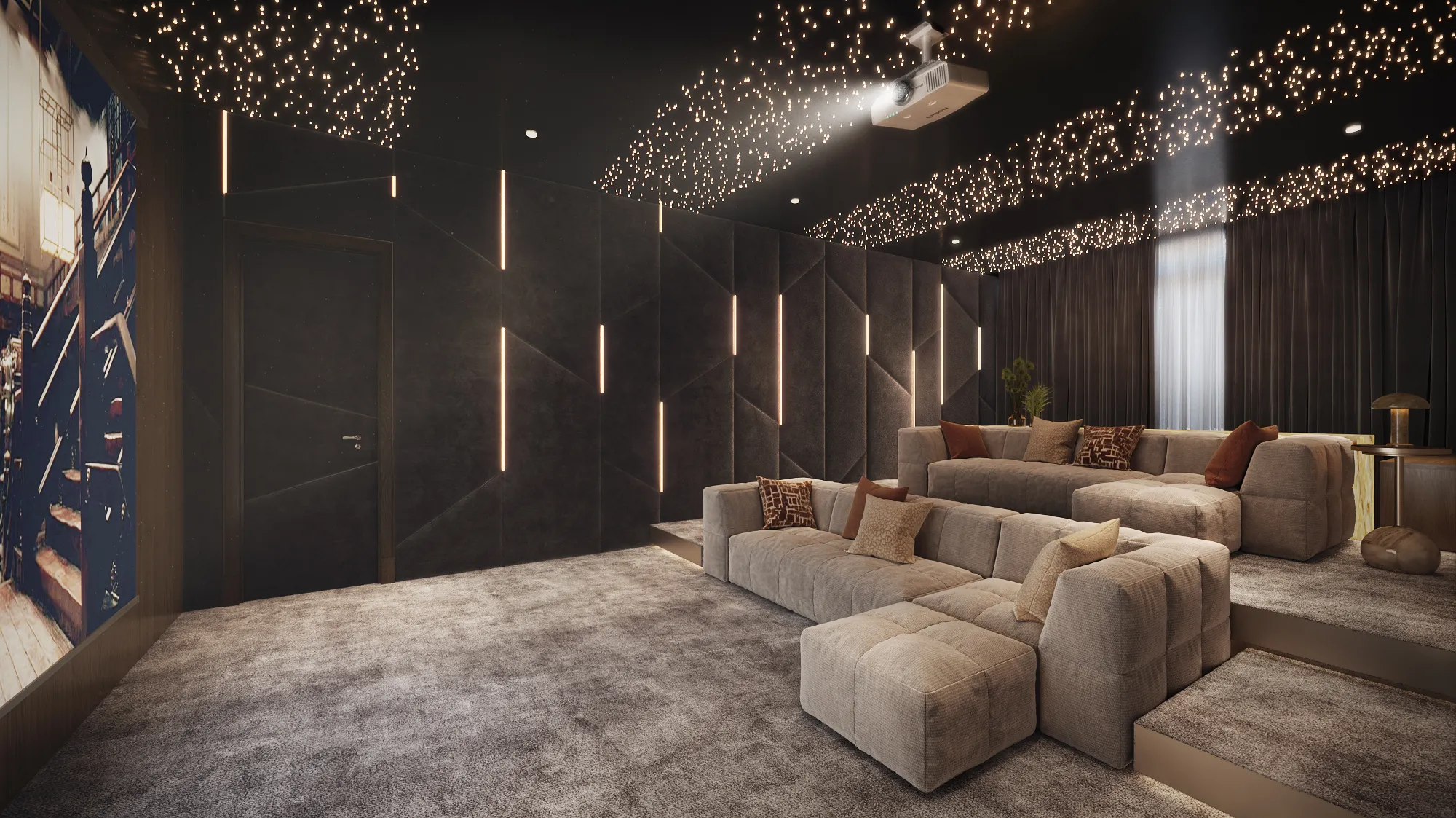
The final renderings were treated as construction reference documents. Realistic materials, lighting intensity and reflection behavior, precise proportions, shadow and surface detail, and true-to-life finishes gave the contractor an exact picture of the intended result rather than a flat plan to interpret.
The outcome
A Home Resolved Before Construction Began.
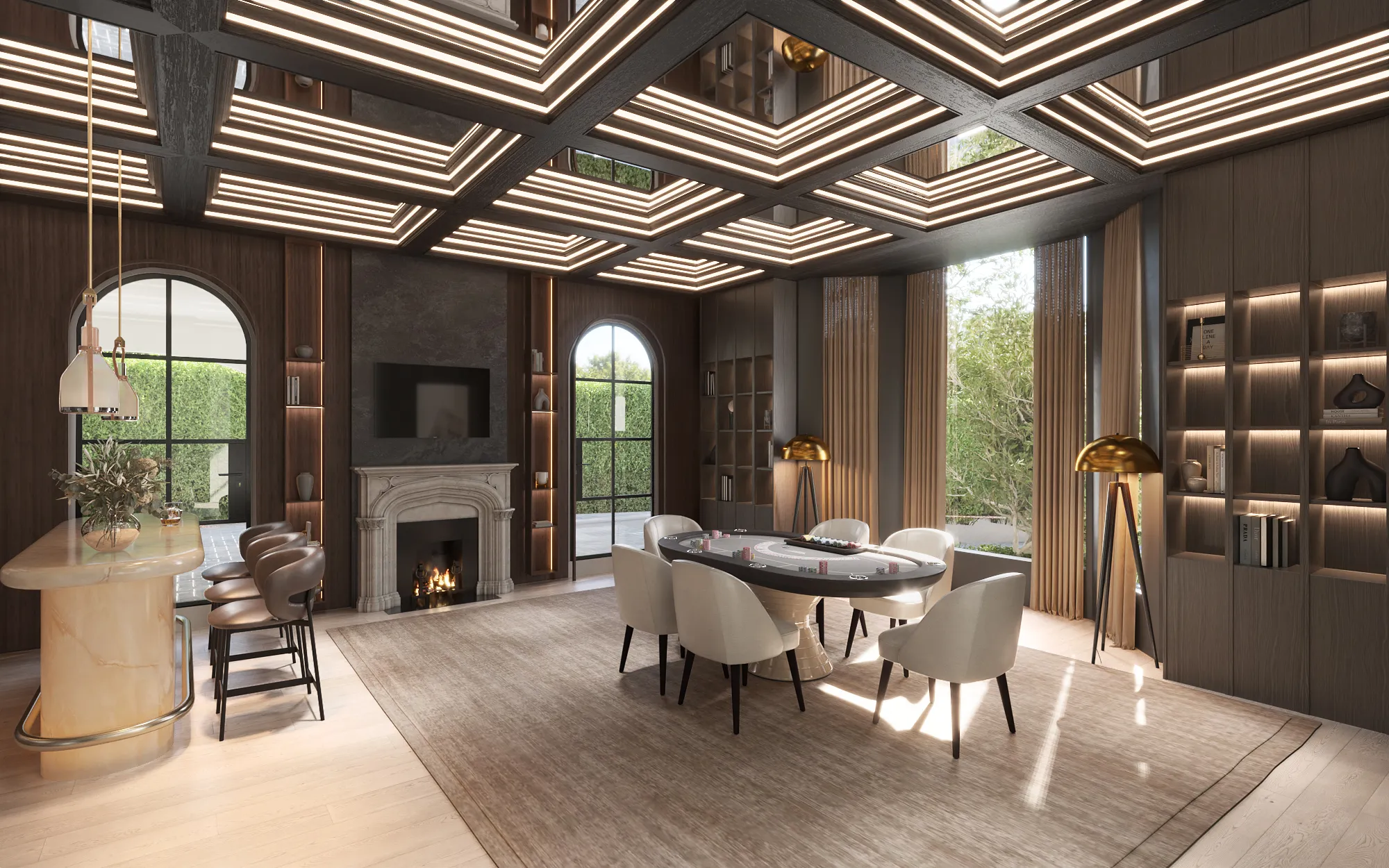
The engagement delivered room-by-room design boards, multiple white-model iterations, fully refined design concepts, photorealistic interior and exterior renderings, and construction-ready documentation.
Design decisions came with more confidence, a unified direction carried across every room, and the contractor worked from precise visual references instead of interpretation, with fewer miscommunications on site. The final result stayed aligned with the client's intention, and the homeowner was highly satisfied.
The project highlights what many clients discover when they work with us: we do not just render designs, we help shape them, from architectural and interior design support and concept refinement through layout exploration, reference organization, and contractor-ready documentation. For a homeowner without a finished design, that combination is what turns inspiration into a buildable home.
Questions
Rendering a Home Without a Finished Design
- Can you use 3D renderings to make design decisions before a home is built?
- Yes, and it is one of the most valuable ways to use them. On the Chatsboro Drive residence the homeowner had a strong vision but no resolved design, so we began with white-model studies to settle layout, ceiling heights, cabinetry, and window design before any surface was rendered. Only once those spatial decisions were locked did we move into photorealistic interiors and exteriors, which kept costly changes off the construction site.
- How do photorealistic renderings help during the build itself?
- They become precise reference documents for the contractor. Because photorealistic images show true materials, lighting behavior, proportions, and finishes, the builder works from an exact picture of the intended result rather than interpreting flat plans. On Chatsboro Drive this reduced miscommunication and kept the finished rooms aligned with the homeowner intention.
- What does full design-support rendering involve for a custom home?
- It scales with the number of rooms and the depth of design work, not a flat per-image count. The Chatsboro Drive engagement spanned white-model studies, room-by-room design boards, and 23 renderings across the home (3 exterior and 20 interior). A home that needs the renderings to double as a design-decision tool, rather than only marketing images, calls for the fuller treatment because the work resolves the design, not just pictures it.
- Can a custom home be rendered without a 3D model or finished drawings?
- Yes. Chatsboro Drive began with a rough preliminary floor plan and early elevations the homeowner already wanted to change, arched windows here, resized openings there, and no 3D model at all. The studio built the model from those 2D drawings, then used white-model studies and inspiration photos to settle everything the plans left open.
Services on this project
Related projects
- Villa Visala, a Barbados golf villa marketed off-plan
- Clear Creek, a Lake Tahoe estate sold before completion
- 122 Pine Cone Road, a mountain-modern Lake Tahoe rebuild marketed before completion
- Bellagio Estate, a Henderson hilltop mansion built to its renderings
- 3740 Sacramento Street, a San Francisco residence launched before completion
Start with a discovery call
Every project starts with a conversation. The call is where we understand the project and whether we're the right studio to do the work.