Should a Developer Hire a Rendering Studio or a Freelancer?

Lukas Berezowiec · CEO of NoTriangle Studio
Updated · 9 minutes
Key takeaways
A freelancer can suit one image or a small job with a clear brief; a development set usually needs a studio.
- Consistency
- Consistency across the whole set: one model, one material library, one art direction.
- One team
- One team from white model to animation, so each new deliverable starts from approved work.
- Revisions
- Revisions that keep up with a moving design.
- Continuity
- Capacity when the scope grows, and continuity across phases and years.
If you need one image, a quick concept for an internal meeting, or a small job with a clear brief, a skilled freelancer can be the right hire, and often the simpler one. If you need a full marketing set for a development, consistent across every view and unit type, kept in step with design changes, and carried into animation, floor plans, and later phases, a studio is usually the safer choice. At developer scale the work depends on a team, a process, and continuity, not on one person’s calendar.
This is not a question of talent. Plenty of freelancers are excellent artists, and some of the best renderings in the market are made by one person. The question is what the job actually needs once it grows past a single image. Below is how we think about it, where each option fits, and the questions worth asking either one before you sign.
A quick note on where this comes from. We are a studio, so read this with that in mind. We have also spent more than ten years and 500+ projects watching which setups hold up on real development work, including projects that came to us after an earlier set could not be carried forward. If you want the broader decision, criteria and red flags included, our guide to how to choose a 3D rendering studio covers it in full.
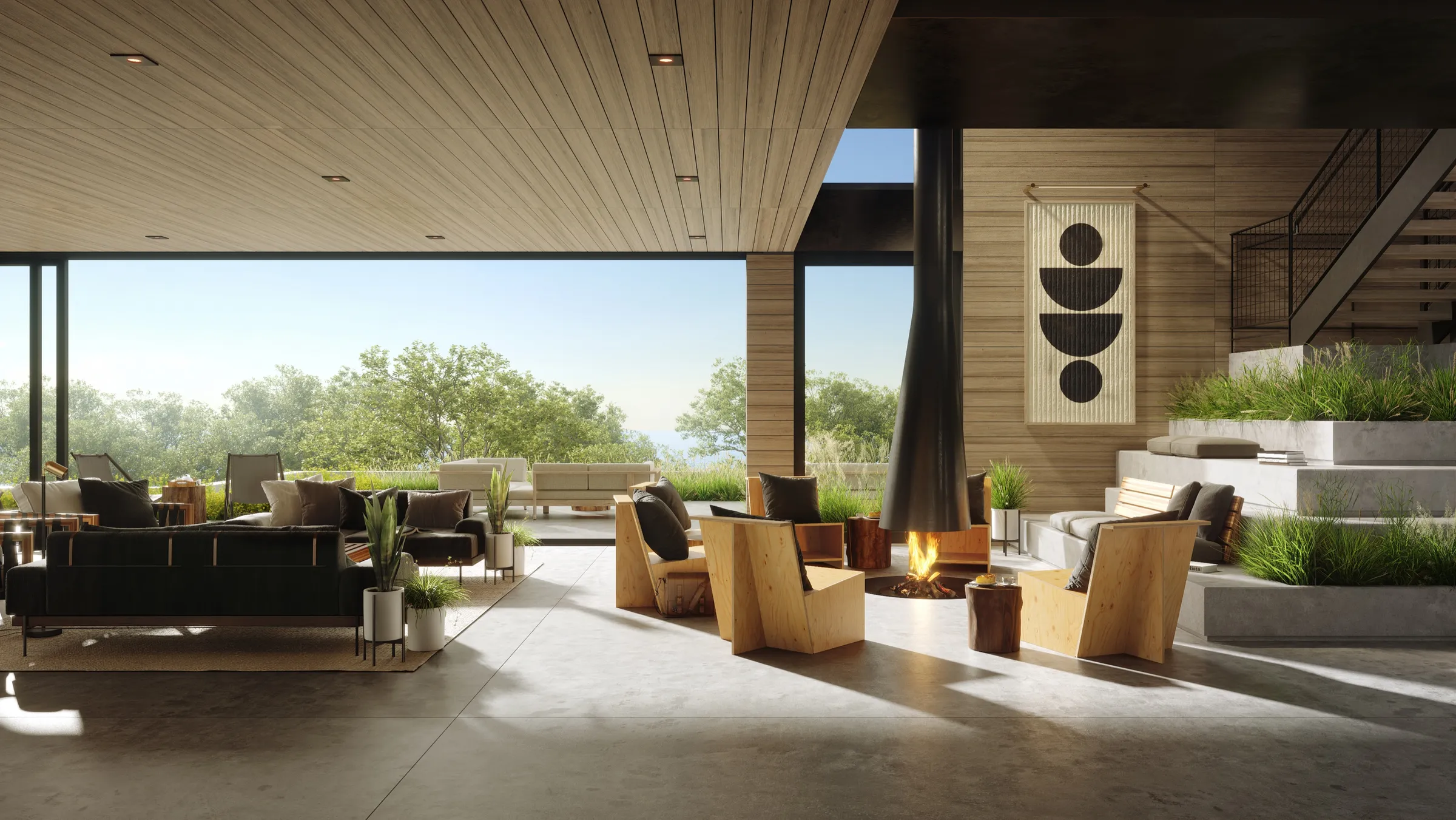
When a Freelancer Is the Right Call
There are jobs where hiring a studio adds process you do not need. A freelancer is often a good fit when:
- The job is one or two images. A single hero exterior for a small project, a quick view for a lender update, a concept image for an internal conversation. One capable artist can own that start to finish.
- The design is settled. If the drawings are final and nothing is going to move, the coordination work a studio does around changes matters much less.
- You want one specific artist’s style. If you have seen a freelancer’s work and it is exactly the look you want, hiring that person directly is a reasonable way to get it.
- Nothing downstream depends on it. No animation planned, no second phase, no floor plans or tour built from the same model. The image is the whole deliverable.
In those cases, the honest answer is that a good freelancer can serve you well, and you should judge them on the same thing you would judge a studio on: the quality of their finished work on projects like yours.
What Changes at Developer Scale
A development launch is rarely one image. It is a set that draws on several services at once: exteriors, interiors, amenities, aerials, often a film, floor plans, and assets cut for the website, MLS, brochures, and social. It is reviewed by several people, it changes while it is being made, and it usually outlives the first launch. That is where the difference between one person and a team starts to show.
Consistency Across the Whole Set
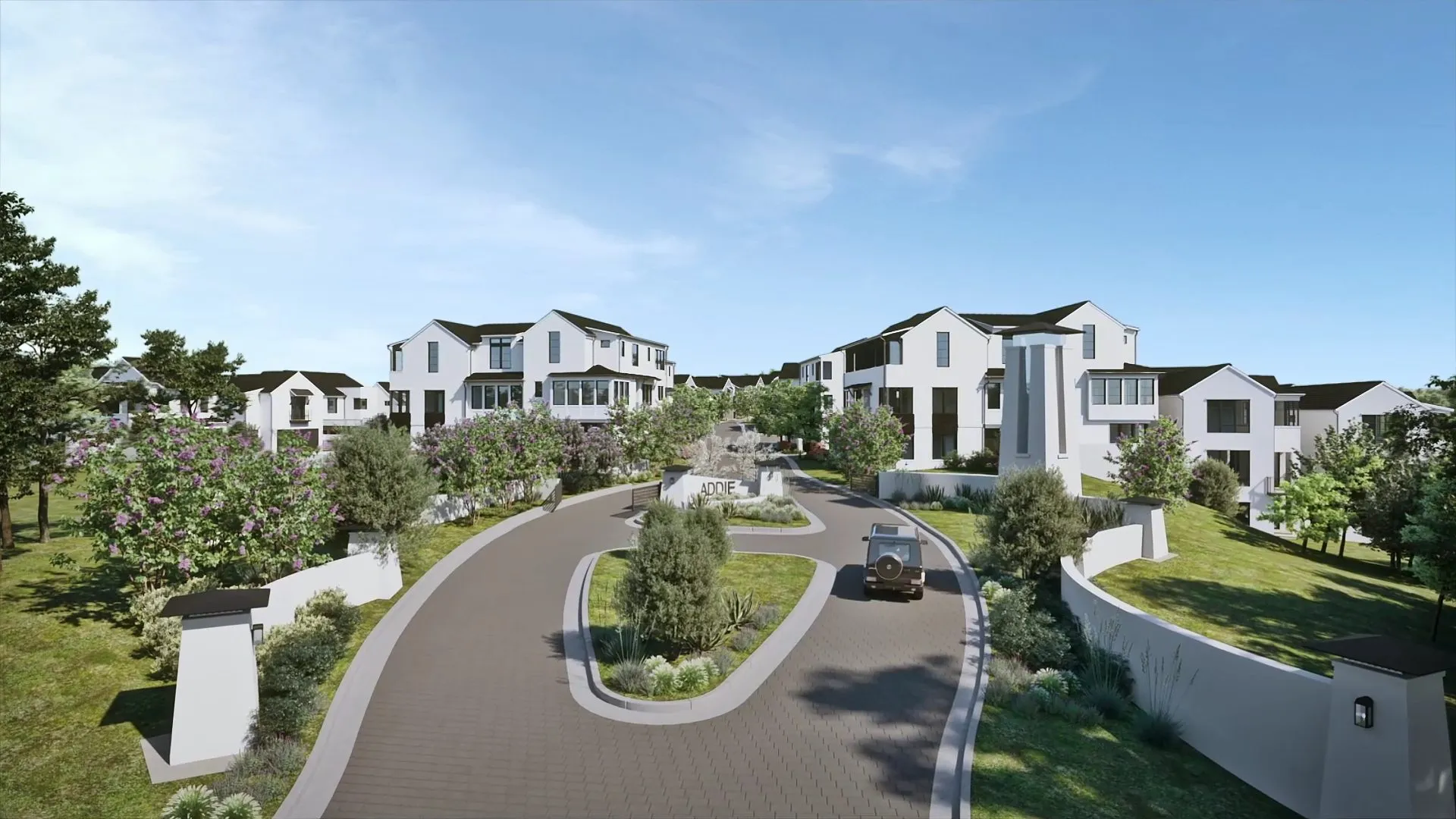
A buyer who flips from the aerial to the kitchen to the rooftop should feel they are looking at one building. That means the same materials, the same light, and the same level of finish in every frame. On The Addie at Westlake in Austin, a 46-home gated community, the set covered both single-family homes and townhomes while the architectural documentation was still being refined. Revisions had to land across several unit types at once, and the stills and the animation were built on one shared asset base so the interiors belonged to the same homes shown outside. The community sold out off-plan, largely before the homes rose.
Consistency at that scale is less about skill than about system: one model, one material library, one art direction, and a team that reviews every frame against the others.
One Team from White Model to Animation
On a development, the rendering model is the foundation for everything that follows. The film, the VR tour, the floor plans, and the next phase all draw on it. When one team builds and keeps that model, each new deliverable starts from work that is already approved.
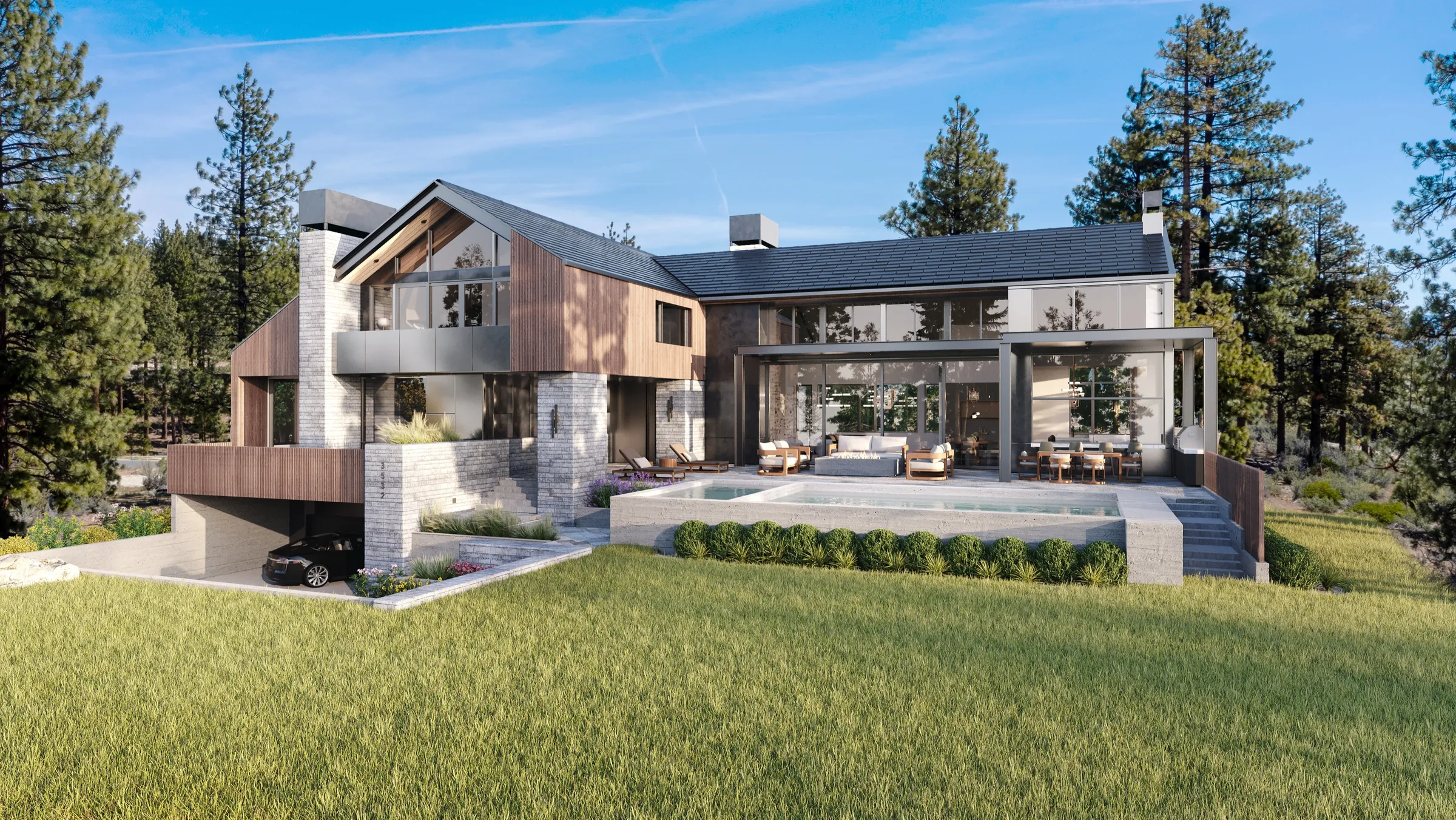
For the Clear Creek estate at Lake Tahoe, we acted as the single visualization partner: fifteen renderings, a 60-second animation, a VR tour, a property website, and floor plans, all telling one story. The stakeholder group included the architects and designers, a marketing agency, the development team, the brokerage, and interior consultants, and they all worked from one visual brand. The home sold while it was still under construction.
The process matters here too. Every camera angle is approved as an untextured white model before any color, material, or lighting work begins, so composition is settled while changes are still cheap to make. We explain why in why we white-model every angle first, and the full sequence is in the architectural visualization process, stage by stage.
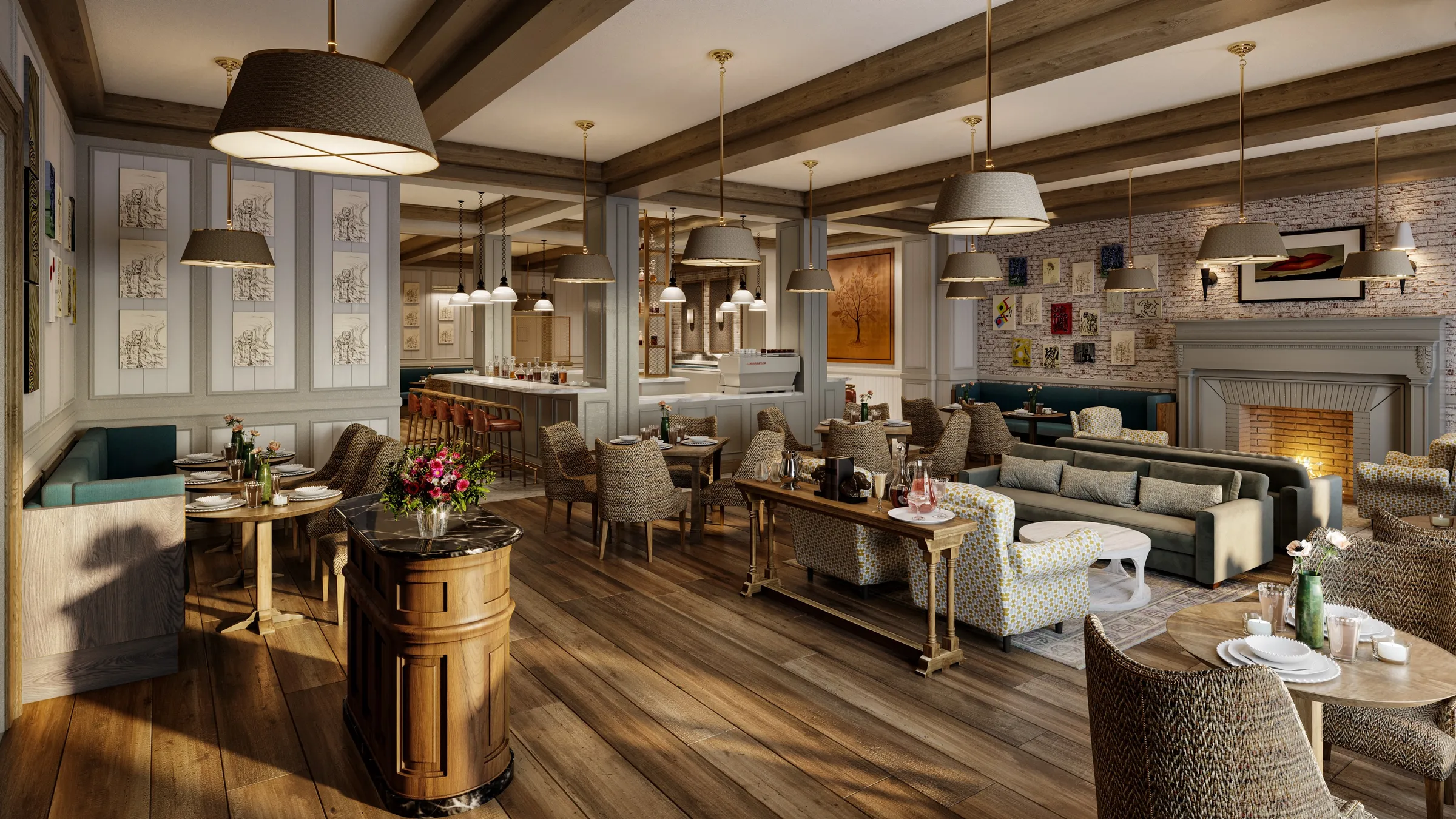
Revisions That Keep up with a Moving Design
Developers rarely hand over a frozen design. Walls move, finishes change, and the marketing team, the architect, and leadership all have comments. The question is not whether revisions will happen. It is whether the setup can absorb them without the set falling apart.
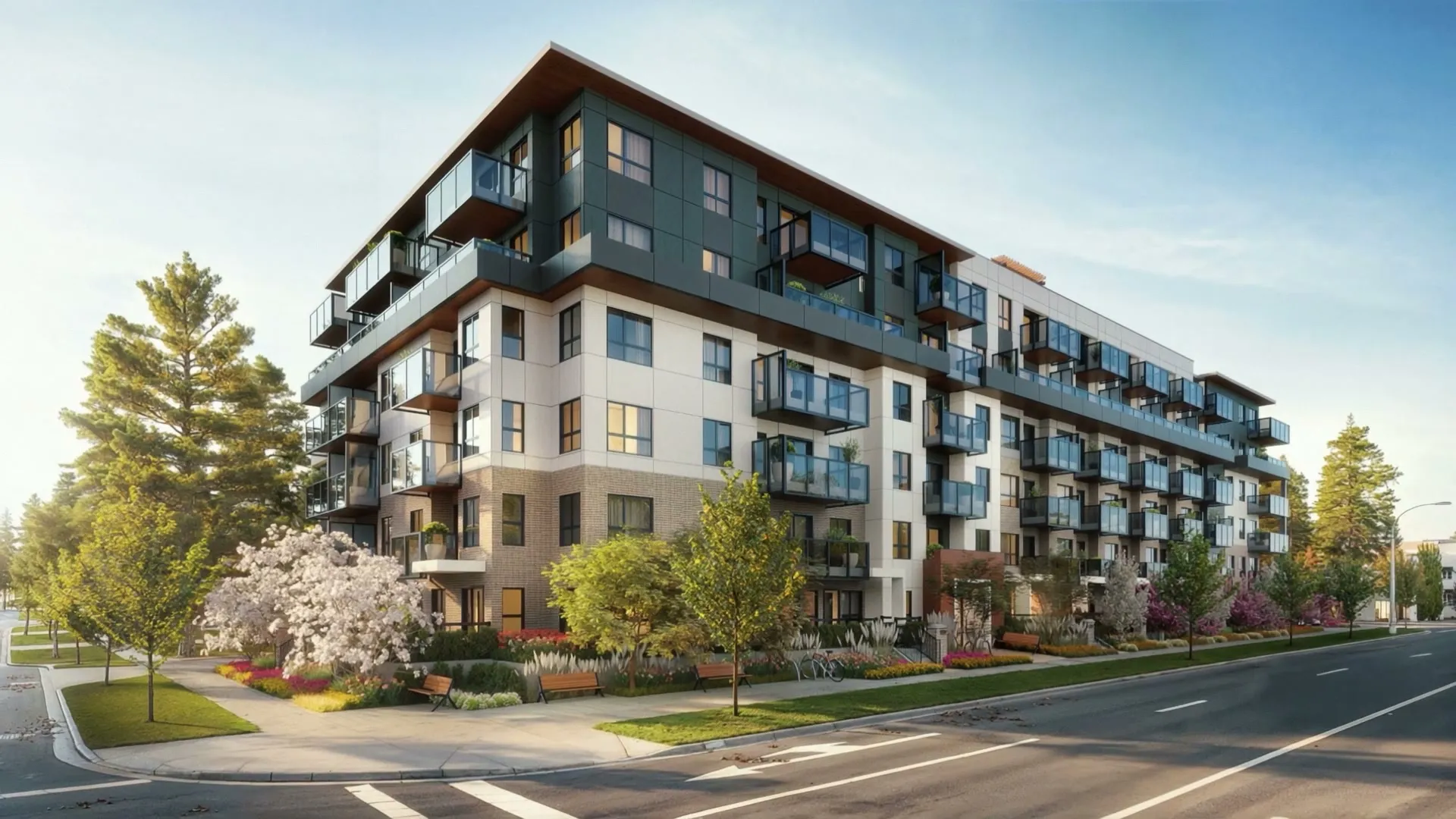
On Muse, a 108-home condominium in Surrey, every image passed through reviews across the sales and marketing firm’s marketing, design, and leadership teams. The scope grew past what was first contracted, and an animation package was added. When the architect removed the slat walls around the outdoor wellness area mid-production, we updated the model and re-issued the white-model views as a matter of course. Comments were gathered as markup on versioned files in a shared review platform, so nothing was lost between reviewers.
On 1660 Casale Road in Pacific Palisades, the renderings were revised as the house was being built: an entry water feature became river stone and a red maple, the blue pool tile became a lighter grey plaster, and a retaining wall was matched to a photo the developer took on site that morning. The imagery that launched the home and the finished house are the same property.
Capacity When the Scope Grows
Development scopes grow. A launch set turns into a second phase, an amenity package, a film, a set of unit-type interiors. With one person, every addition competes with everything else on their desk. A studio can bring more artists onto the same model under the same art direction, and the project does not stop if one person is out.
Our production is fully in-house, with a team of 20 to 30 people. We do not subcontract. That is worth asking any provider about directly, studio or freelancer, because it tells you who is actually touching your files.
Continuity Across Phases and Years
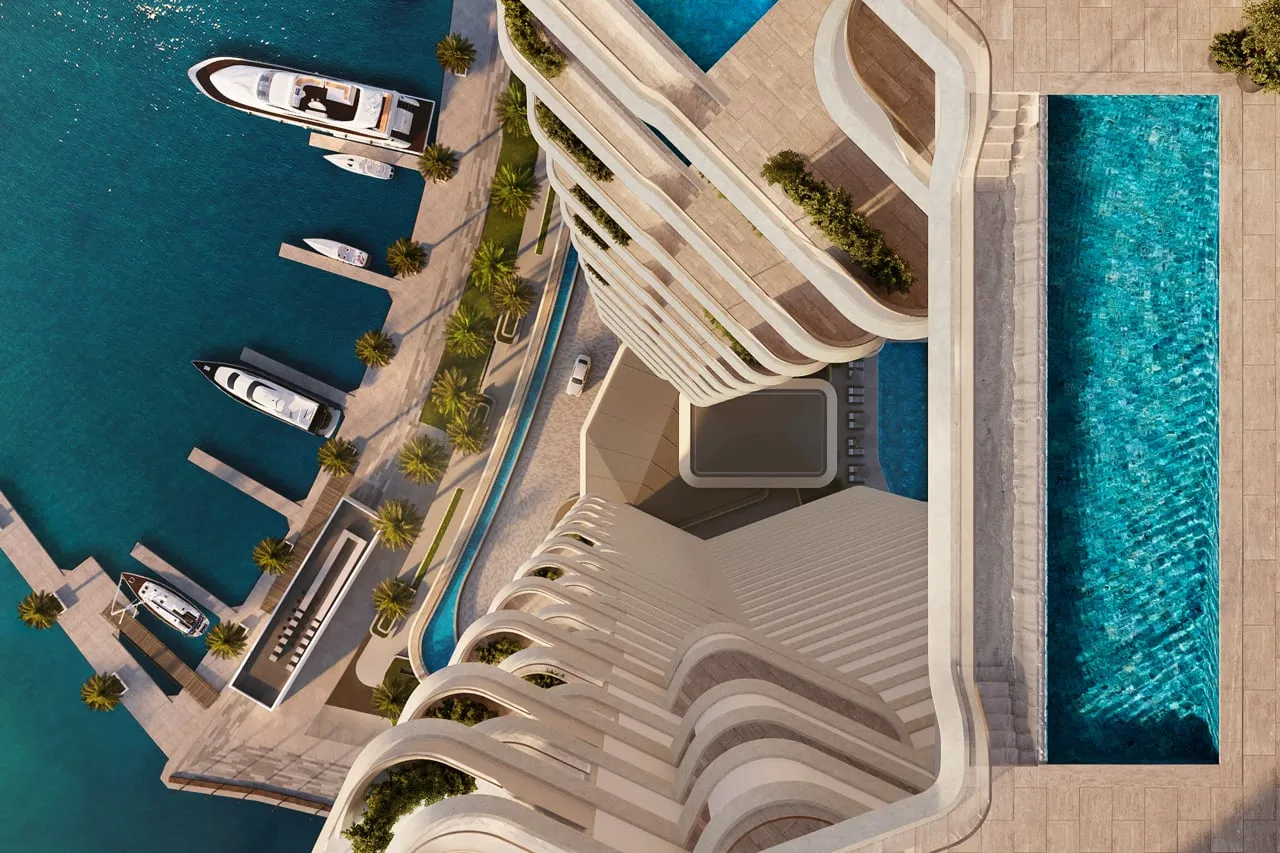
Large projects are marketed in stages, sometimes over years. Sankari Place in Dubai, the world’s first standalone Regent Residences, designed by Foster + Partners, ran from a pre-launch teaser film and hero renderings into a sales phase with interior and amenity views. The later images had to extend the same brand language as the first ones.
Sankari also shows what a break in continuity costs. The project arrived with exterior renders from a previous agency built on an earlier version of the facade, and interior models without materials. We remodeled the tower from the latest Revit file before any new imagery could be made. That is not a criticism of anyone. It is simply what happens when the model and the people who know it do not carry forward from one phase to the next.
The same logic applies to relationships. The Addie’s client came back years later for a film on another Texas community, and asked for the same treatment. Continuity is easier when the team that made the first set is still there to make the next one.
Who Holds the Files
Whoever you hire, be clear about what you own and what you receive. With us, you receive full usage rights to the final deliverables once the project is paid, and editable or source files, including the individual clips of a film, can be arranged as part of the scope. The details are in who owns the renders and rendering deliverables and file rights.
With any single provider, also ask where the working model lives and how it is kept. If phase two is a year away, you want to know the model will still exist and still be usable.
What a Studio Asks of You in Return
A studio is not the right answer for everything, and it is fair to say what it asks of you.
- More process up front. We start every project with a discovery call and a look at who the buyers are and what the project has to say. For a single image with a settled brief, that can feel like more than you need.
- More than one person in the loop. You work with a project manager as well as the artists. For most developers that is the point, but if you want to talk to exactly one person about one image, a freelancer is closer to that.
- A structured review path. Approvals happen at defined stages, white model first, then photoreal. That protects the set, but it asks you to give feedback in order rather than all at the end.
Questions to Ask a Studio or a Freelancer
These questions work for either option. The answers tell you more than a portfolio does.
- Who will actually do the work? Is any of it passed to someone outside your team?
- Can I see a full set from one project? Not the best single images from ten projects, but every view from one development, so you can judge consistency.
- Do I approve camera angles before rendering starts? And what happens if the design changes after that?
- What counts as a revision, and what counts as new scope? Get the line written down before work starts.
- If we add a film, a tour, or floor plans later, who builds them, and from which model?
- How do you collect feedback from several reviewers? One channel, or scattered emails?
- When do usage rights transfer, and which files do I receive? Finals only, or source files and the model too?
- If you are unavailable mid-project, what happens to my set?
- Will you sign an NDA before I share files? Most pre-launch work is confidential.
How to Decide
Start with the job, not the provider. Count what you actually need across the life of the project: how many images, which formats, how many reviewers, how likely the design is to change, and whether there is a second phase. If the honest answer is one or two images on a settled design, a skilled freelancer is a sensible choice. If the answer is a set that has to sell a development, stay consistent, and keep going after launch, you are hiring a team and a process, and that is what a studio is for.
If you want to see how that plays out for multi-unit work specifically, how we work with multi-unit developers walks through it. And if you would like a second opinion on the scope before you choose anyone, that is a conversation we are glad to have.
FAQs
Is a rendering studio better than a freelancer?+
Not always. A skilled freelancer can be the better fit for one or two images on a settled design. A studio is usually the safer choice for a full development set that needs consistency across views and unit types, coordinated revisions, animation from the same model, and continuity into later phases.
When should a real estate developer use a freelancer for renderings?+
When the job is small and self-contained. A single hero image, a concept for an internal meeting, or a quick view for a lender, where the design will not change and nothing else, like a film or a tour, will be built from the same model.
Why does consistency matter across a rendering set?+
Because buyers read the set as one building. If the materials, light, or finish shift between the aerial, the kitchen, and the amenity views, the project looks less certain. On The Addie at Westlake, stills and animation were built on one shared asset base so every view matched across two home types.
Who owns the renderings when I hire a studio?+
You do, once the project is paid. With NoTriangle you receive full usage rights to the final deliverables, and editable or source files can be arranged as part of the scope. Whoever you hire, confirm when rights transfer and which files you receive before work starts.
Can a studio take over renderings started by someone else?+
Yes. Sankari Place arrived with exterior renders from a previous agency built on an earlier facade, so we remodeled the tower from the latest Foster + Partners Revit file and carried the project from pre-launch into the sales phase.