
Case study
The ’Quin House
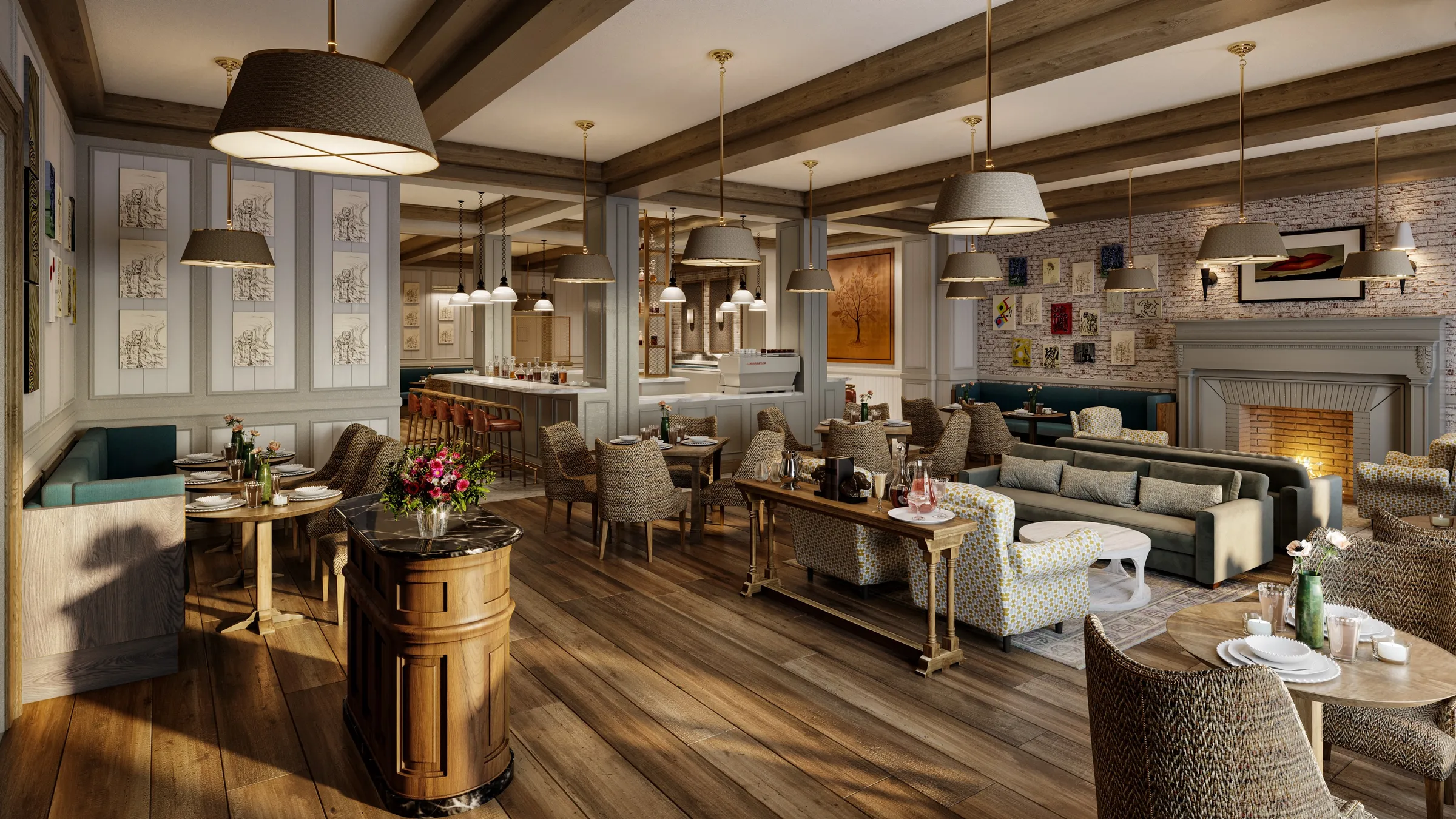
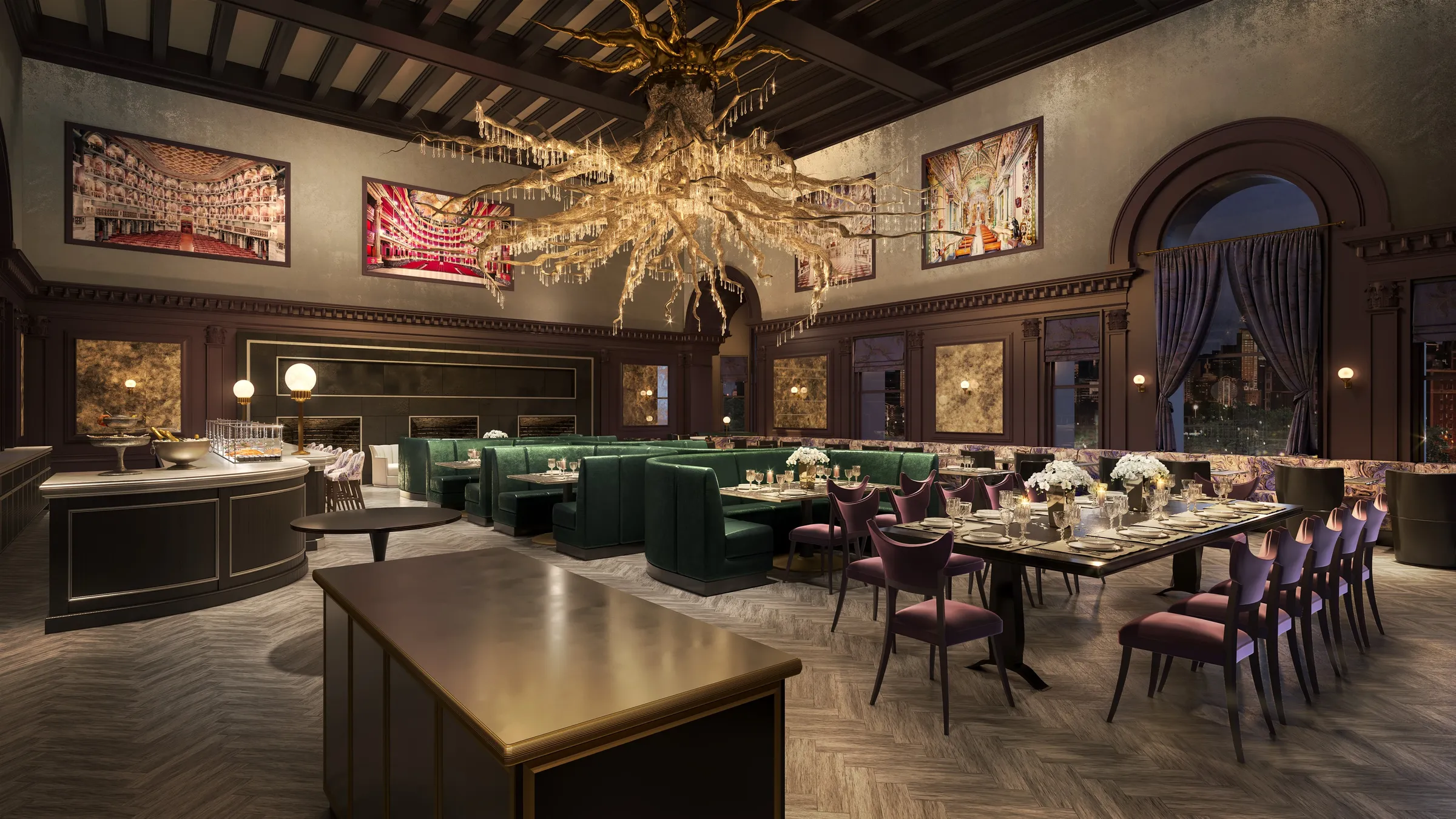
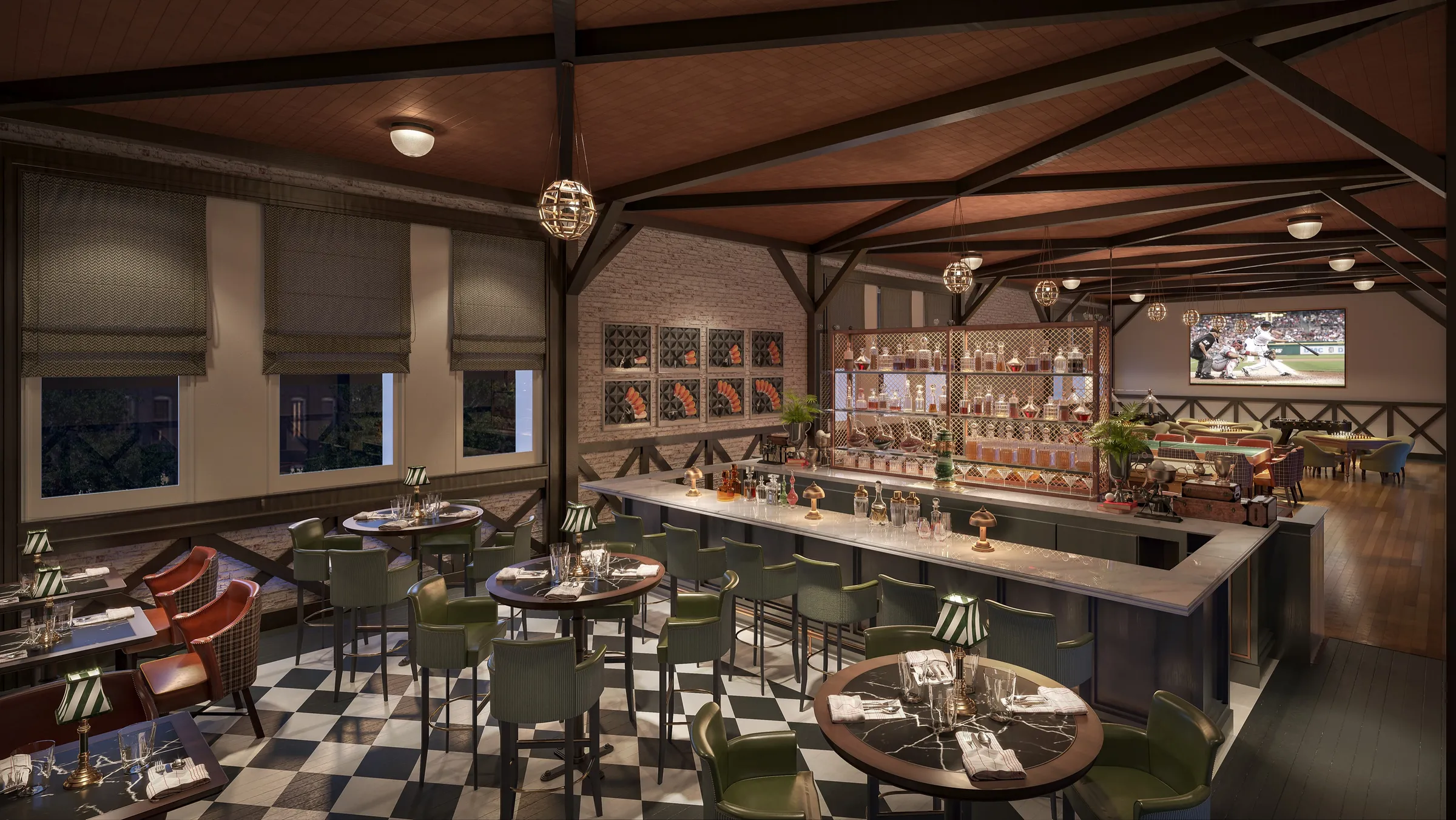
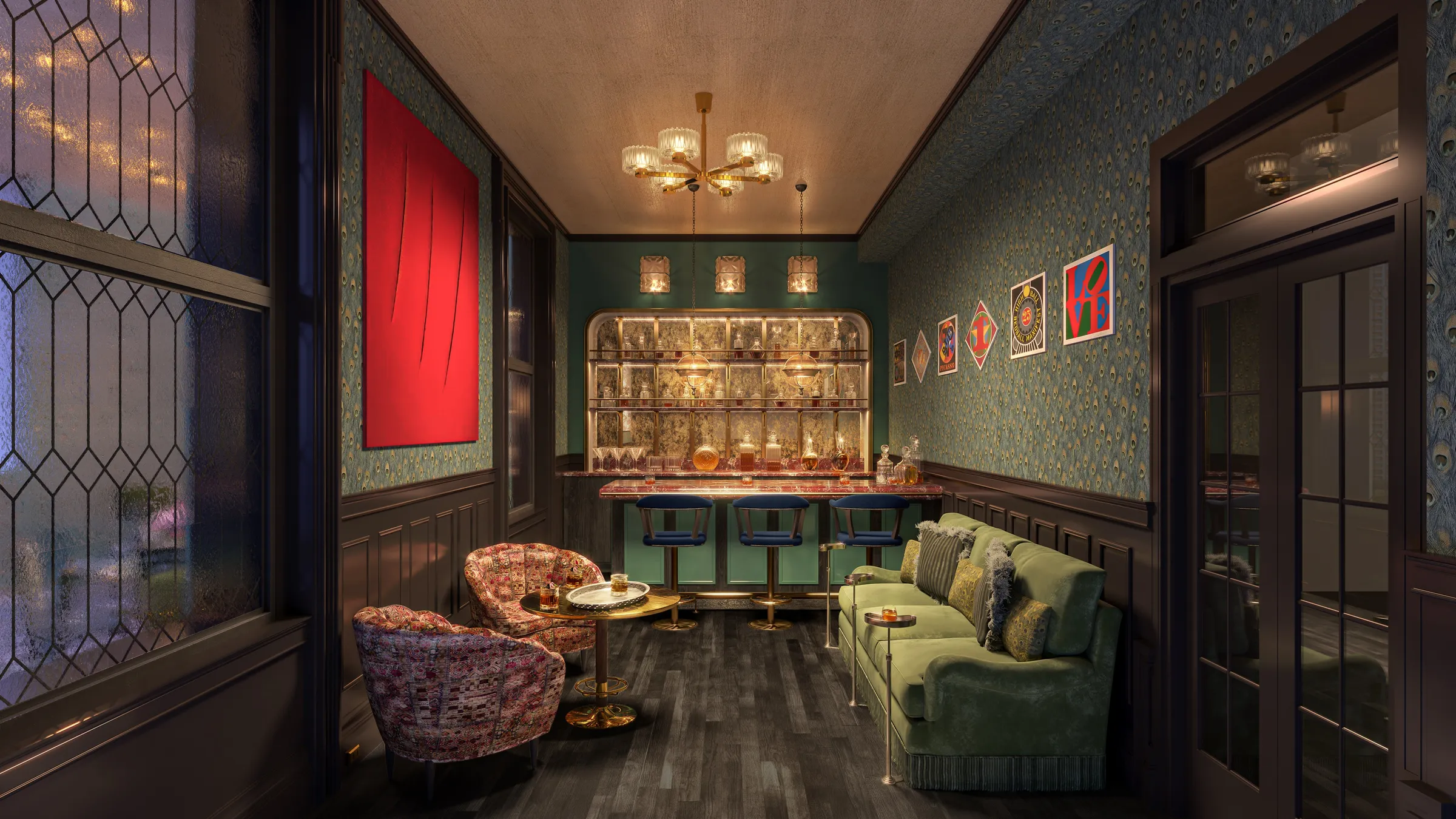
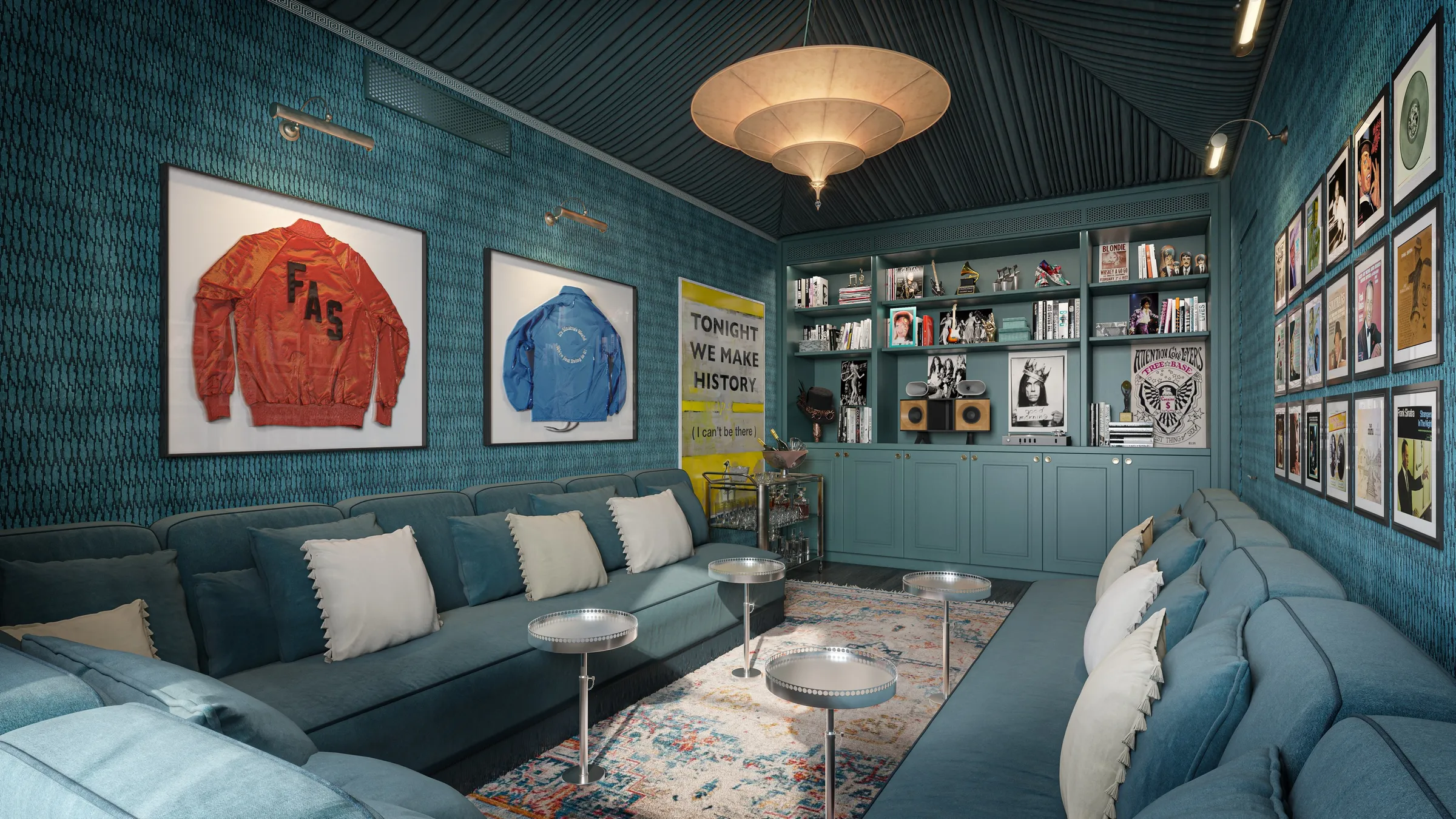
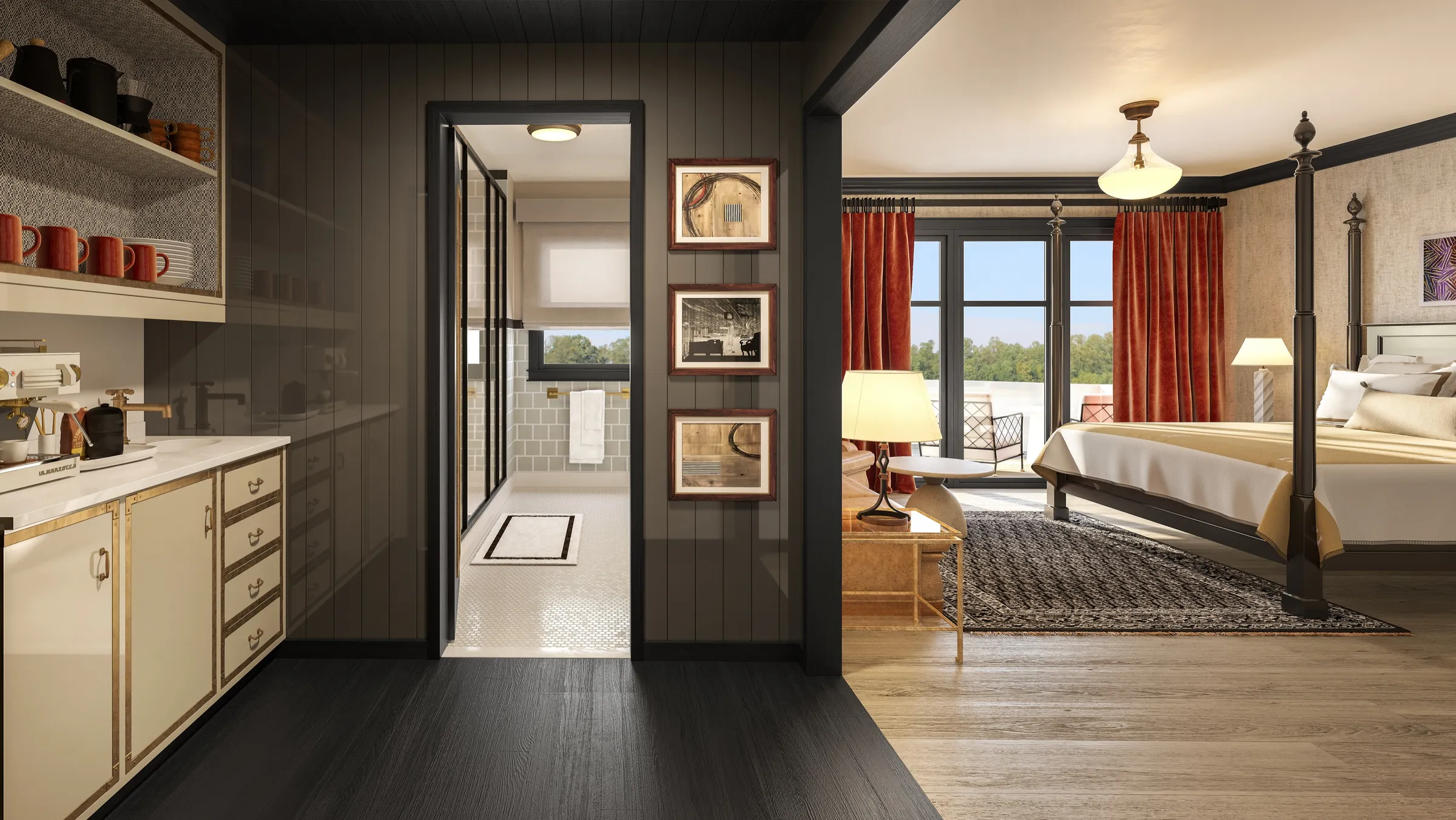
Interior renderings created for designer Ken Fulk to present and approve every room in the transformation of Boston’s landmark Algonquin Club into The ’Quin House, the private social club that opened in 2021.
Project at a glance
NoTriangle produced the design-development renderings Ken Fulk, Inc. used to present and lock the interior design of the Algonquin Club’s transformation, room by room, across the club’s restaurants, bars, lounges, guest quarters, and roof deck, for a roughly $25 million reinvention of an 1888 McKim, Mead & White landmark that reopened as The ’Quin House in July 2021.
- End client
- Ken Fulk, Inc. (creative direction and interior design)
- Project owners
- Sandra and Paul Edgerley, founders of The ’Quin House
- Building
- The former Algonquin Club, an 1888 McKim, Mead & White clubhouse, 56,000 square feet
- Asset type
- Adaptive reuse of a historic clubhouse into a members-only social club
- Location
- 217 Commonwealth Avenue, Back Bay, Boston, Massachusetts
- Project value
- Roughly a $25 million reinvention
- Purpose
- Design development and client approval, room by room
- Scope
- Interior renderings across thirteen of the club’s spaces, plus roughly 120 custom-modeled furniture and accessory pieces, with key spaces delivered at 6K
- Engagement
- Multi-phase hospitality account, with related Ken Fulk work in Boston
- Recognition
- Boston Magazine Best of Boston, three years running: Best Private Club (2023), Best Social Connector (2024), Best Members-Only Club (2025)
The challenge
A Landmark to Reinvent Without Losing It.
The Algonquin Club had stood at 217 Commonwealth Avenue since 1888, a McKim, Mead & White clubhouse. By 2018 it had been bought by Sandra and Paul Edgerley, who set out to do something delicate: keep the gravity of a 130-year-old Back Bay landmark while reinventing the inside of it as a modern, vibrant private club. They brought in designer Ken Fulk, known for theatrical, story-driven interiors, to reimagine the building space by space, a roughly $25 million transformation that would eventually reopen as The ’Quin House.
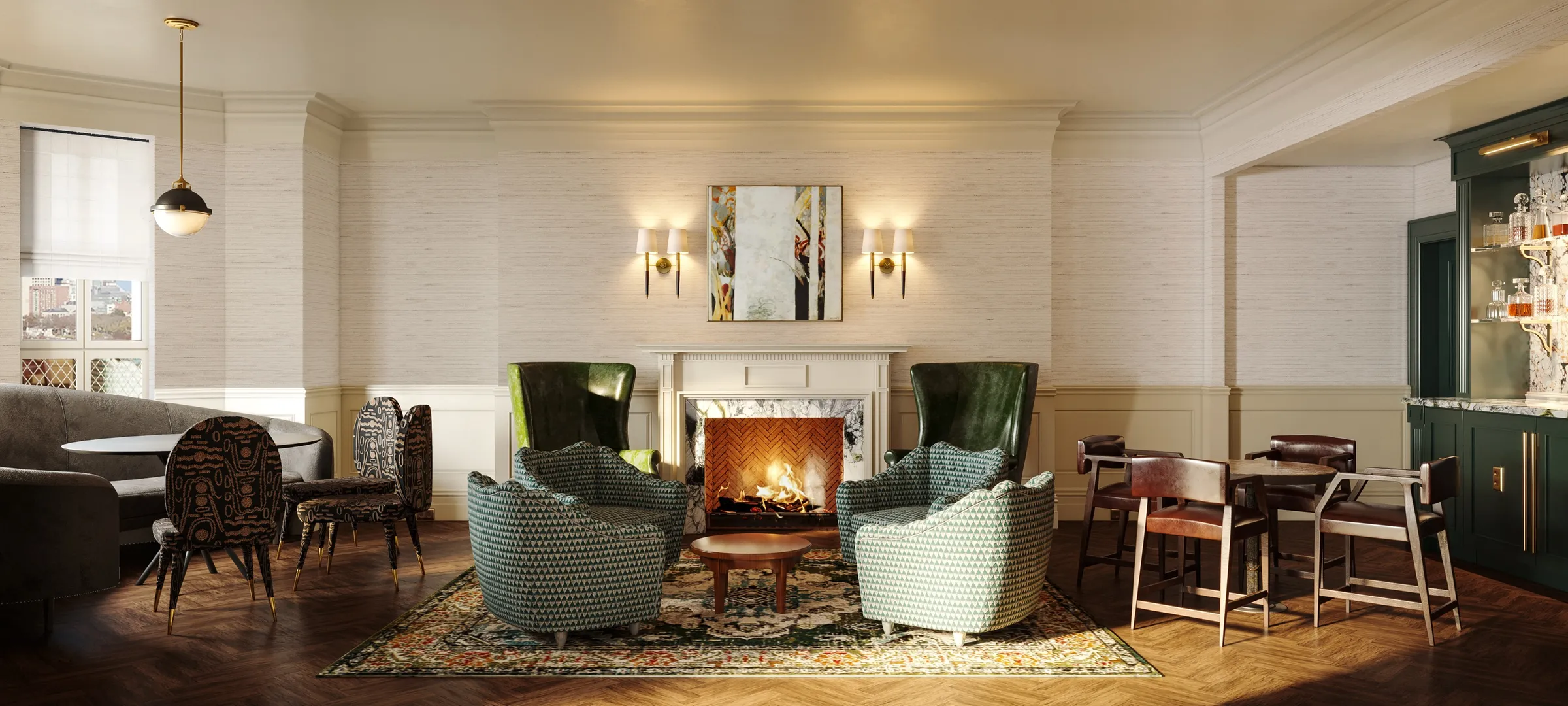
A project like that lives or dies on whether everyone can see the same room before it is built. Ken Fulk’s studio was designing a long list of distinct spaces, each with its own character: a Pub, a Main Dining room, an all-day cafe, a Wine Room, the Founders Room, a Living Room, a clubby Hideaway, the bar called Scottie’s, a Dive Bar, guest rooms, and a new roof deck added in the renovation. Every one of those rooms needed to be shown to the client convincingly enough to approve the design, the furniture, the materials, the art, and the lighting, before a single finish was ordered for a building this expensive and this scrutinized.
The approach
The Render Became the Design’s Approval Tool.
The work came to the studio through a referral, a hospitality consultant who had worked with NoTriangle on a Miami project introduced the studio to Ken Fulk’s lead architect, which set the tone: this was a partner brought in to help a top-tier design firm get its own vision approved, not a vendor handed a finished design to illustrate.
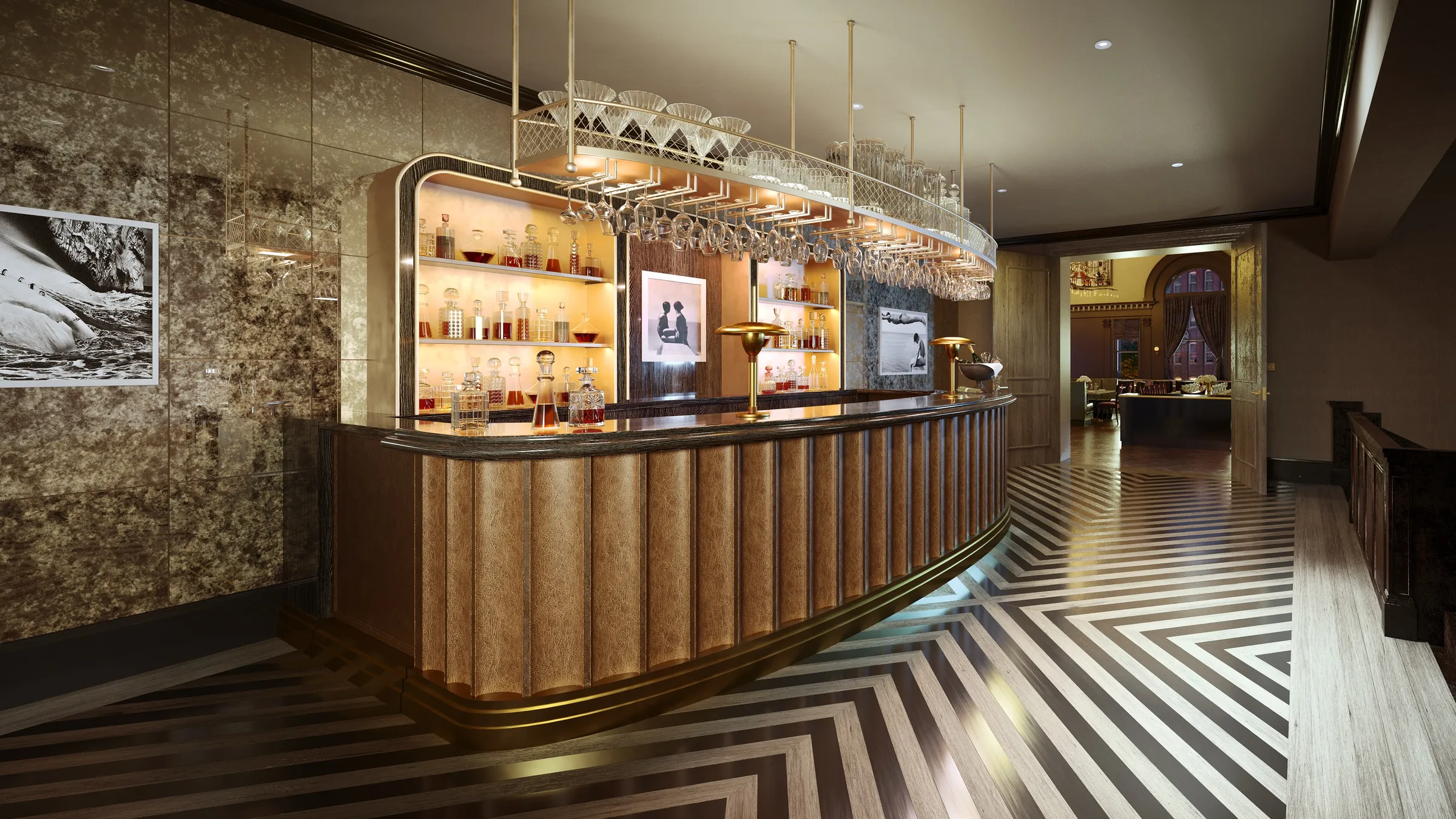
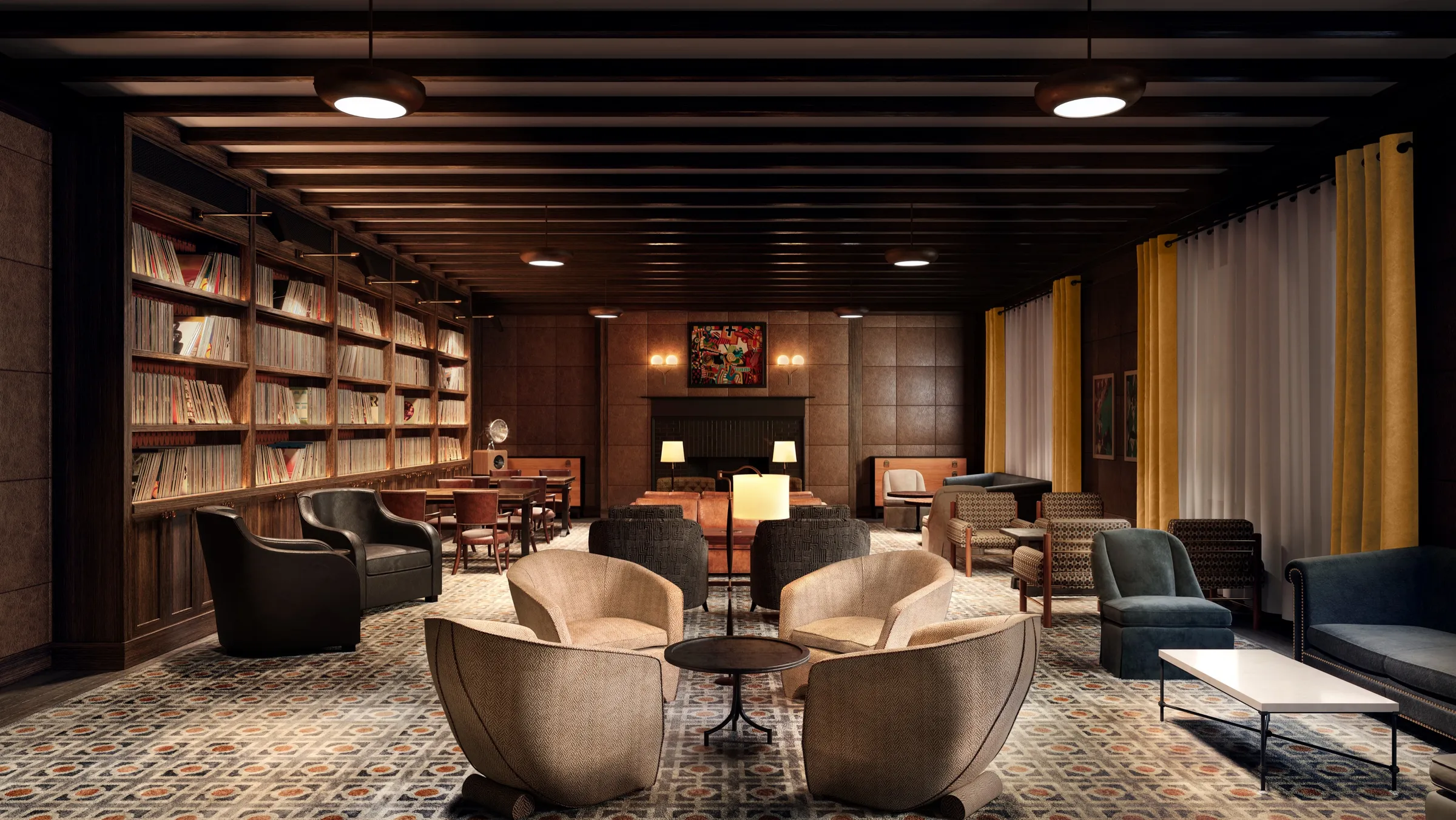
The studio built each space from Ken Fulk’s drawings and specifications and treated the renderings as design tools, not just pretty pictures. Furniture and accessory packages were sized per room and carried over between spaces where pieces went unused, so the budget tracked the design rather than padding it.
In the rooms
Built From the Objects a Fulk Room Is Carried By.
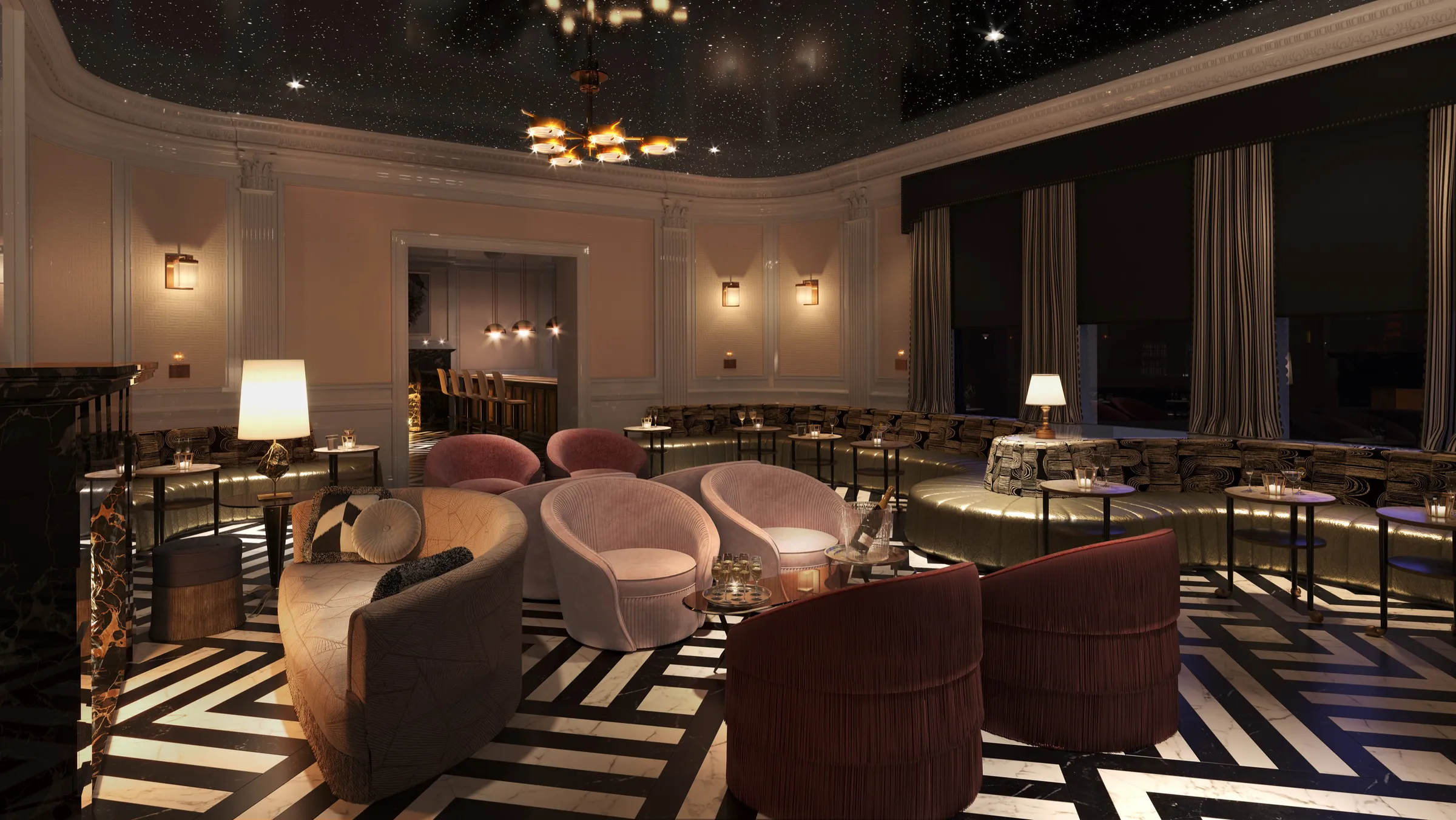
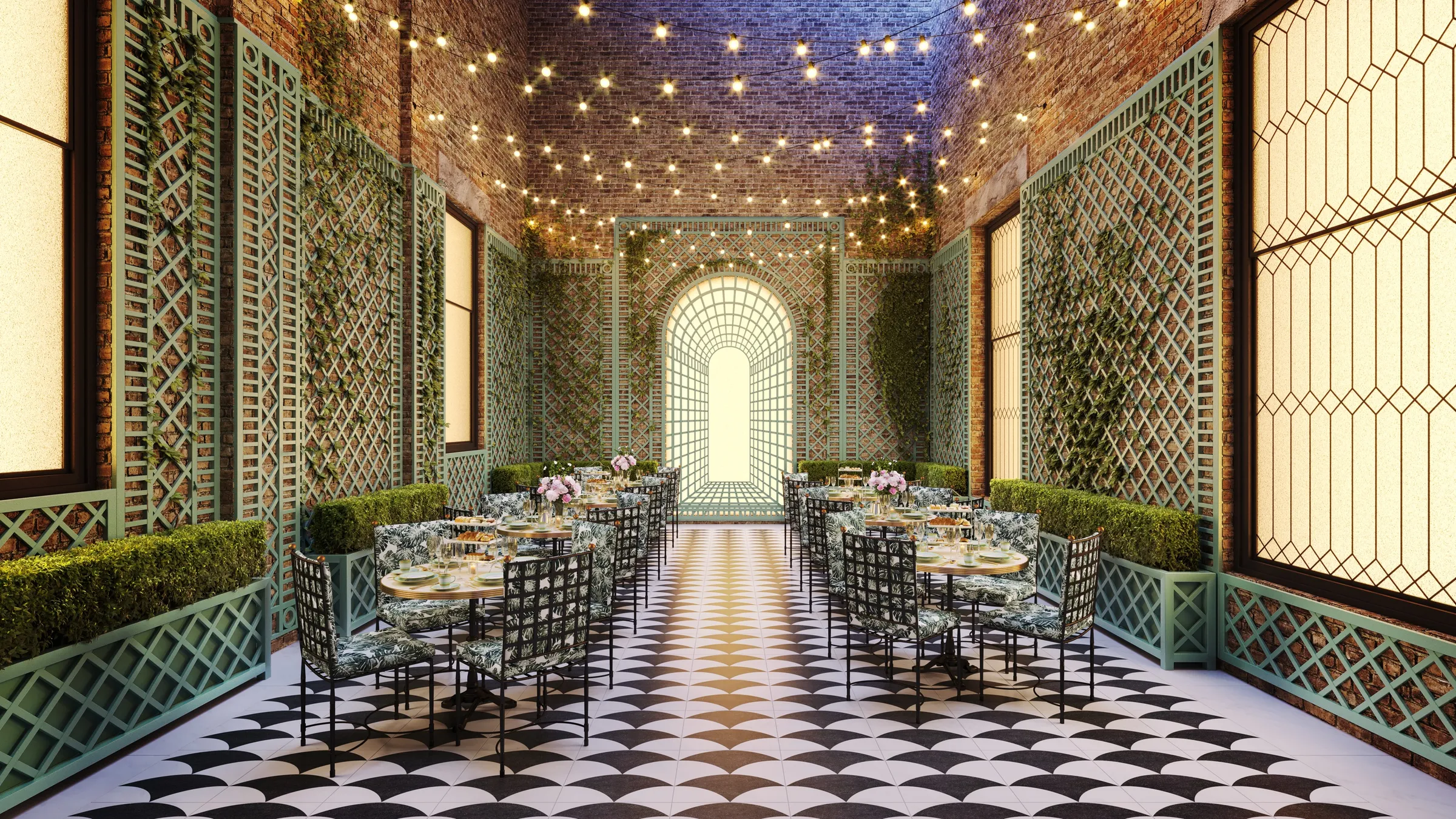
Because a Fulk interior is carried by its specific objects, the lamps, the planters, the bespoke seating, the art on the walls, the work went deep on custom modeling. Across the project the team built on the order of 120 custom furniture and accessory pieces, from table lamps and outdoor planters on the roof deck to the shelf objects, decor, and art that make a room read as lived-in rather than showroom-empty.
Art direction
Exact References, Down to the Fabric.
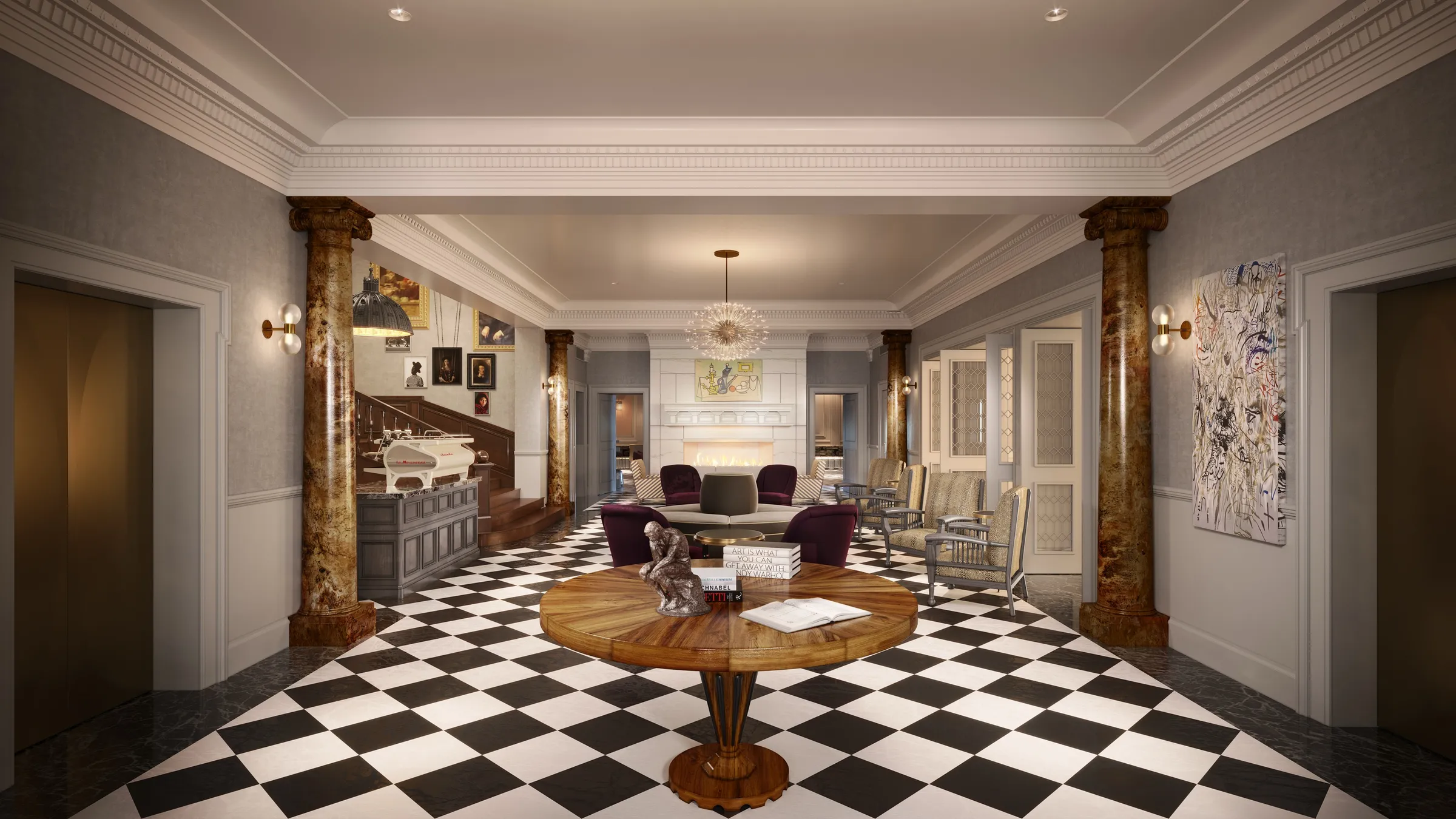
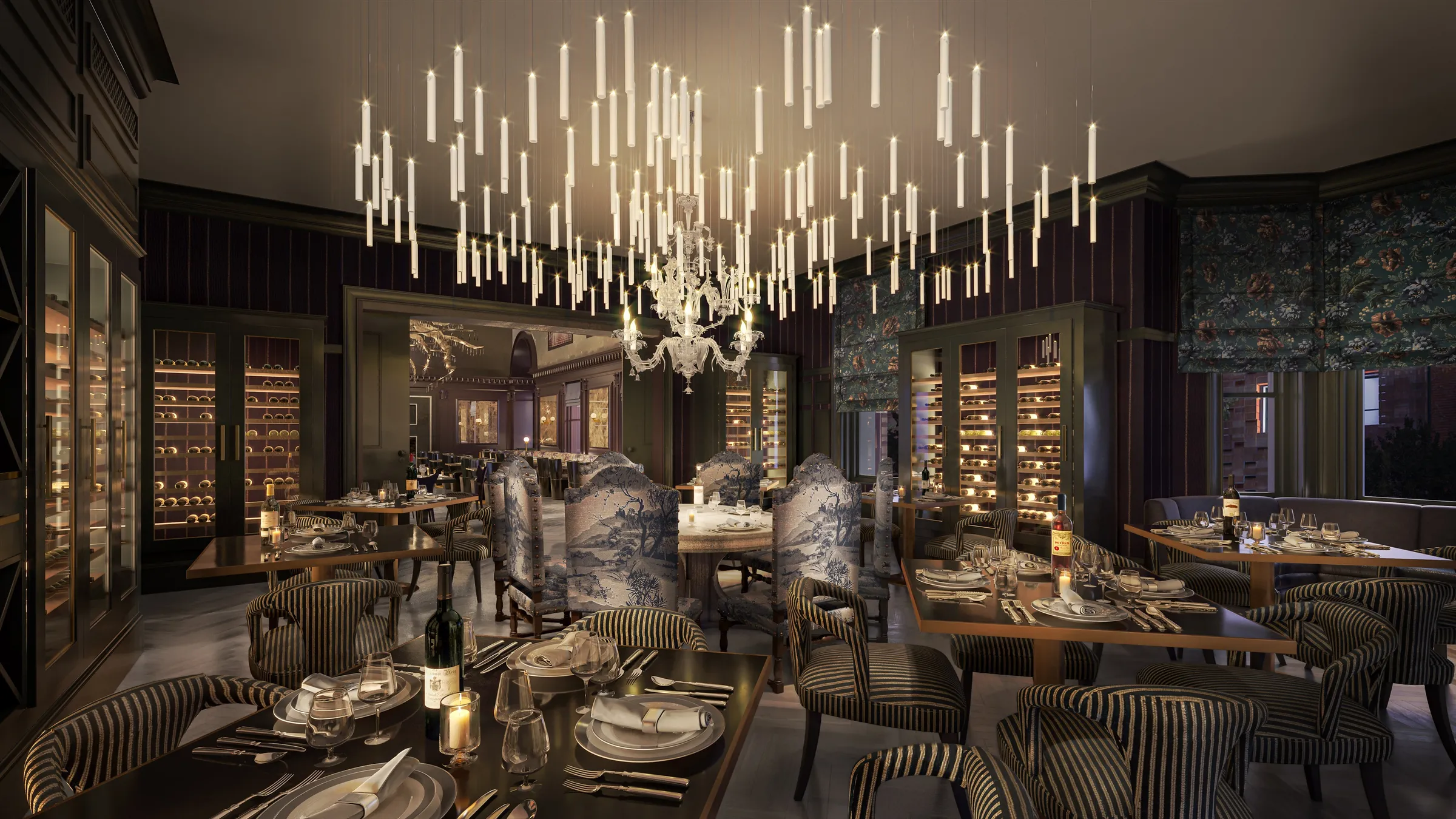
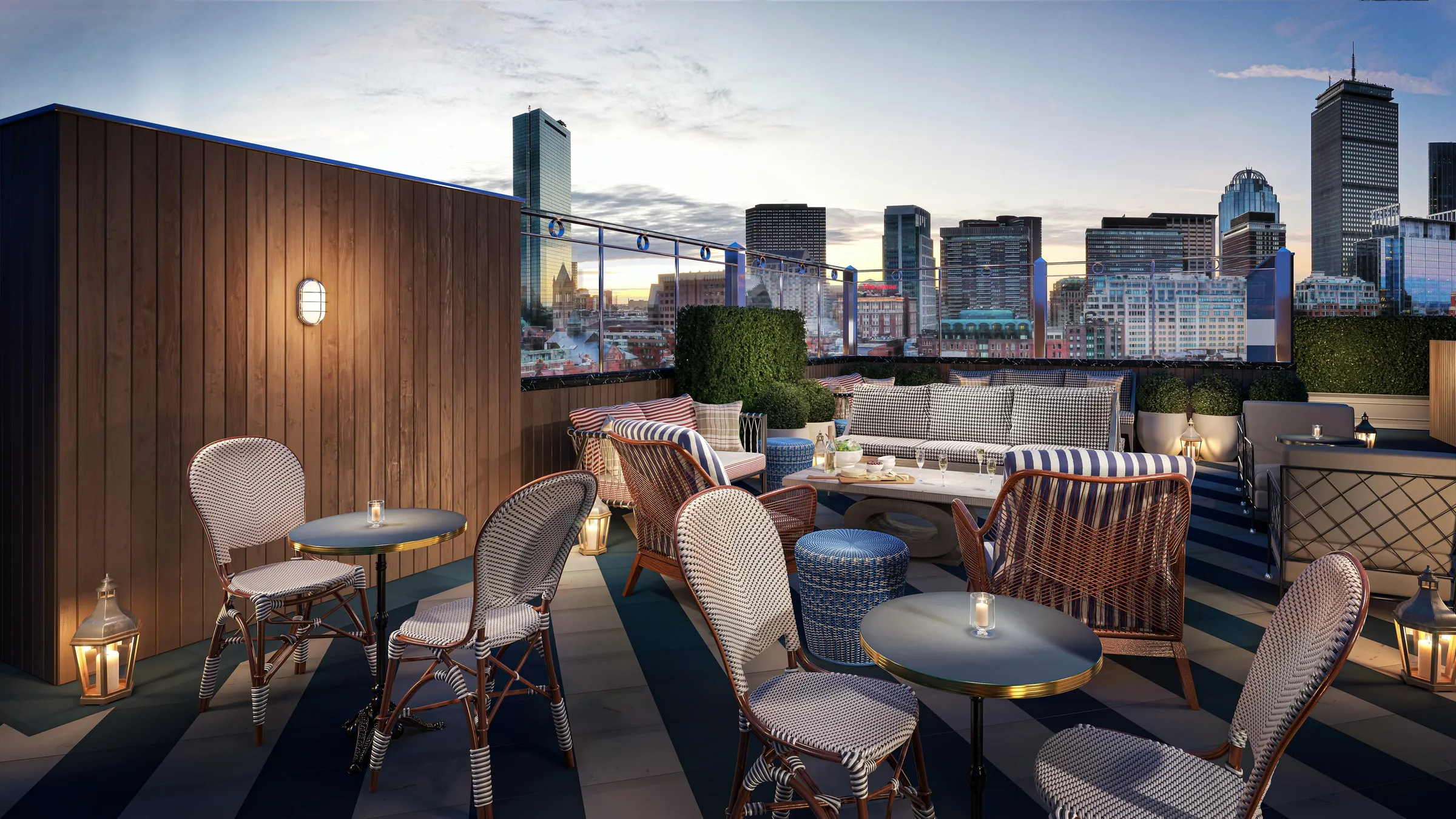
The revision rounds were exacting and designer-driven, which is exactly what a project at this level needs. Fabrics were matched to specific references, a Dedar outdoor fabric for a roof-deck sofa, copper dock-light sconces aligned vertically on a wall, the exterior wall built to match a construction detail, and art for spaces like the Founders Room, the Pub, the Living Room, and the Hideaway placed exactly as the designer specified, with the team requesting high-resolution artwork files so the pieces on the walls would hold up in the final image. Where the architect of record had comments, those were folded in alongside the designer’s.
The roof deck
Renders Built to Blend With the Real View.
For the roof deck, a new element with real outdoor views over Back Bay, the studio planned the renderings to blend with real site photography and prepared photography guidelines so the developer’s photographer could shoot the matching plates correctly the first time. As the design firmed up, the most important spaces were re-delivered at 6K resolution so the renderings could carry into marketing once the rooms were approved.
The outcome
Approved Room by Room, Then Opened.
The renderings gave Ken Fulk, Inc. a room-by-room way to present and approve the design of The ’Quin House while it was still on paper: every restaurant, bar, lounge, guest room, and the new roof deck, each shown with its real furniture, materials, art, and light, so the design intent could be signed off before a landmark building was committed to the build.
The Algonquin Club closed in October 2020 for the renovation and reopened as The ’Quin House in July 2021, a 56,000-square-foot private club with multiple restaurants, lounges, bars, guest quarters, a roof deck, and a fitness and wellness center, widely covered as one of Boston’s most talked-about openings. The club was later named to Boston Magazine’s Best of Boston three years running, as Best Private Club in 2023, Best Social Connector in 2024, and Best Members-Only Club in 2025. The studio’s role was the design-stage visualization: the imagery that let a celebrated designer and his client see, refine, and agree on each room of a historic clubhouse before it was rebuilt. The relationship has continued past it, into related Ken Fulk work in Boston and inquiries on new projects years later.
Questions
Rendering for Design Approval
- What were the renderings for The ’Quin House actually used for?
- Design development and client approval. Ken Fulk, Inc. was reimagining the interiors of Boston’s former Algonquin Club space by space, and used the renderings to present and sign off the design intent of each room, the furniture, materials, art, and lighting, before the build. The studio produced photoreal interiors across the club’s restaurants, bars, lounges, the Founders Room, the guest rooms, and the roof deck, with the most important spaces later delivered at 6K resolution for marketing.
- How do you render the interiors for a designer like Ken Fulk?
- By building the specific objects, not generic stand-ins. A Fulk room is carried by its lamps, planters, bespoke furniture, and the art on the walls, so the studio custom-modeled roughly 120 furniture and accessory pieces across the project and matched exact fabrics, finishes, and fixtures to the designer’s references: the Dedar outdoor fabric specified for the roof deck, a pendant resized to the designer’s ten-inch diameter, marble floors corrected from polished to honed, and lighting held to warm glows in the 2700 to 3000K range rather than a cold LED look. The renderings were built to be approved by the designer and the client, which means getting the details a discerning eye would catch.
- What goes into a multi-space hospitality rendering package like this?
- A project like The ’Quin House needs each space rendered with equal conviction and built from the designer’s own drawings and specifications, with custom-modeled furniture and accessories, exact materials and lighting, real artwork placement, and revision rounds run with the designer and the architect of record. Roof-deck and exterior views are planned to blend with real site photography, and key images can be finished at higher resolution for marketing once the design is approved.
Services on this project
Related projects
- 66 East 55th Street, the former Core Club brought to market
- Capital One Cafe, commercial interiors for executive approval
- Teatro Angelina, a lighting-led restaurant interior
- University of Health and Performance, a veterans campus rendered for its experience
- Epiphany Cathedral, a cathedral renovation presented before groundbreaking
- Coquette, night renderings of a Seaport restaurant in the Omni Boston Hotel
Start with a discovery call
Every project starts with a conversation. The call is where we understand the project and whether we're the right studio to do the work.