Developing and Pre-Selling Off-Plan in Turks and Caicos in 2026

Lukas Berezowiec · CEO of NoTriangle Studio
Updated · 10 minutes
Key takeaways
Turks and Caicos has a crowded pipeline of branded resort residences, and a government that has just told Providenciales to slow down.
- Market
- The branded pipeline as of September 2026, and the Providenciales pause and the turn to the Family Islands.
- Buyers
- The buyer is mostly North American, and sales run through a small number of island brokerages.
- The view
- Every Grace Bay buyer is paying for the water, so the view has to be built from the site.
- Resilience
- Hurricane-ready design, shown honestly: model the impact glazing, frame depths and shutter systems actually specified.
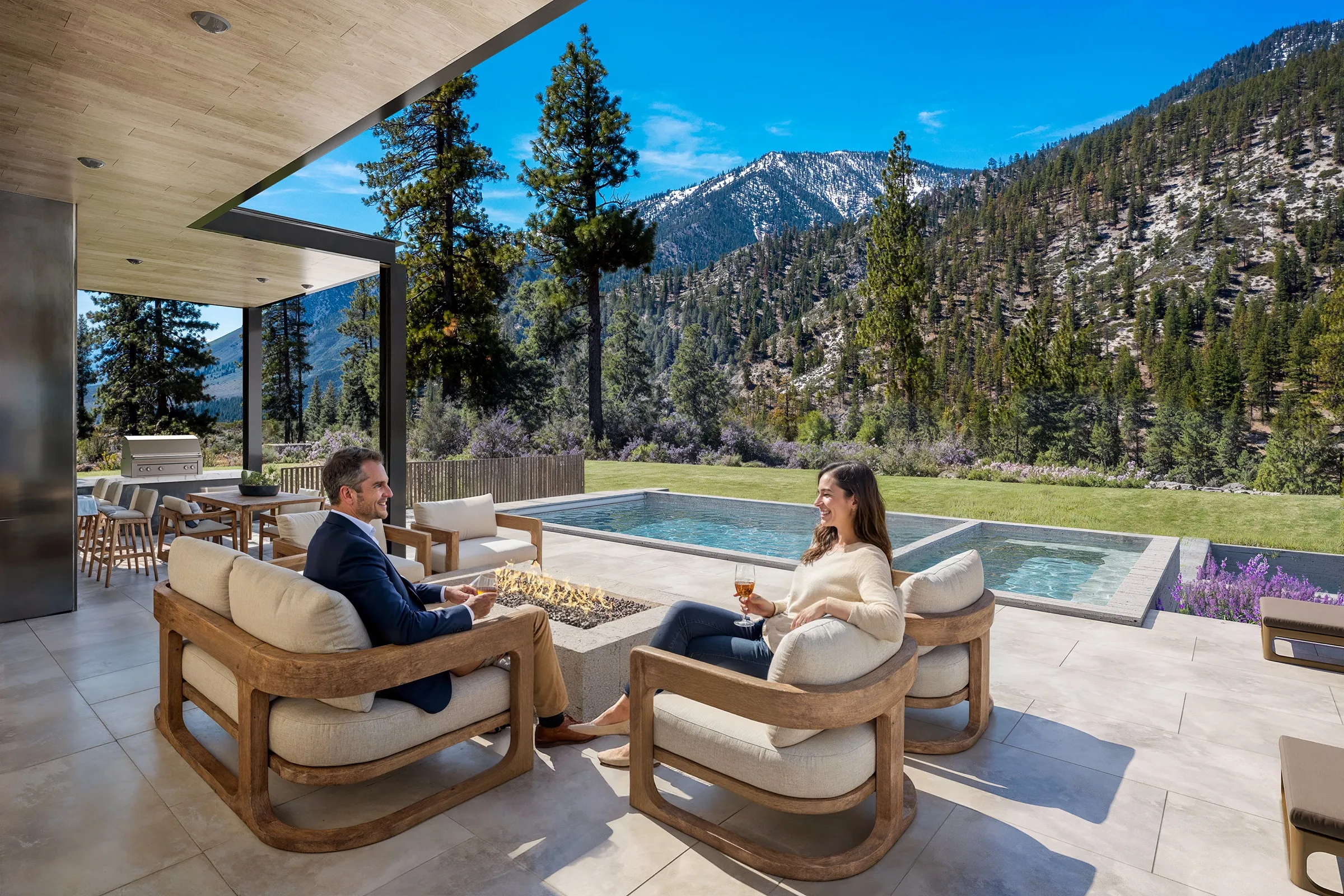
Turks and Caicos has a crowded pipeline of branded resort residences, and a government that has just told Providenciales to slow down. (For what a branded residence launch needs from its imagery, see our guide.) If you are developing on the islands, or marketing a project that is, both facts shape your sales launch. They also shape what your renderings have to prove, because off-plan in Turks and Caicos means selling a view over some of the most famous water in the Caribbean to a buyer who is almost certainly not standing on the beach.
This guide covers the market as it stands in September 2026: the pipeline, the policy shift, the planning basics that decide what you can build, how off-plan residences are actually sold here, and what all of that means for the images that carry the sale. It is written for developers and their marketing teams. It is not legal, planning, or investment advice. Rules and timelines here move quickly, so confirm anything material with the Planning Department and a Turks and Caicos attorney.
The Branded Pipeline, as of September 2026
The short version: nearly every major luxury flag now has a residence product on or near Grace Bay, and several of them are selling off-plan at the same time. The table below lists only projects we could source to a public announcement. Dates are the operators’ and developers’ own stated targets, and in this market those slip. The Andaz on Grace Bay was first announced for 2021 and is now taking reservations from June 2027, as One Mile at a Time noted.
| Project | Where | Status, as publicly stated |
|---|---|---|
| Andaz Turks & Caicos at Grace Bay | Grace Bay, Providenciales | 59-room hotel with branded residences, bookable from June 2027 |
| St. Regis Turks & Caicos, The Residences | Grace Bay, Providenciales | Broke ground March 2024, debut targeted for late 2027 |
| Kempinski Grace Bay | 11 acres on Grace Bay | Broke ground December 2025, completion targeted for 2028 |
| The Point, Grace Bay Resorts | Grace Bay, Providenciales | Reported 75 percent sold at groundbreaking in February 2025, completion targeted for 2027 |
| Corinthia Turks & Caicos | Grace Bay, Providenciales | Announced 23 September 2026, heading toward formal planning approval, construction expected in 2027 |
| Waldorf Astoria Turks and Caicos Dellis Cay | Dellis Cay, a boat ride from Providenciales | Signed 2025 with 65 residences, opening targeted for 2028 |
| Janu Turks and Caicos | Northwest Providenciales | Aman Group’s first Janu in the Americas, hotel and residences |
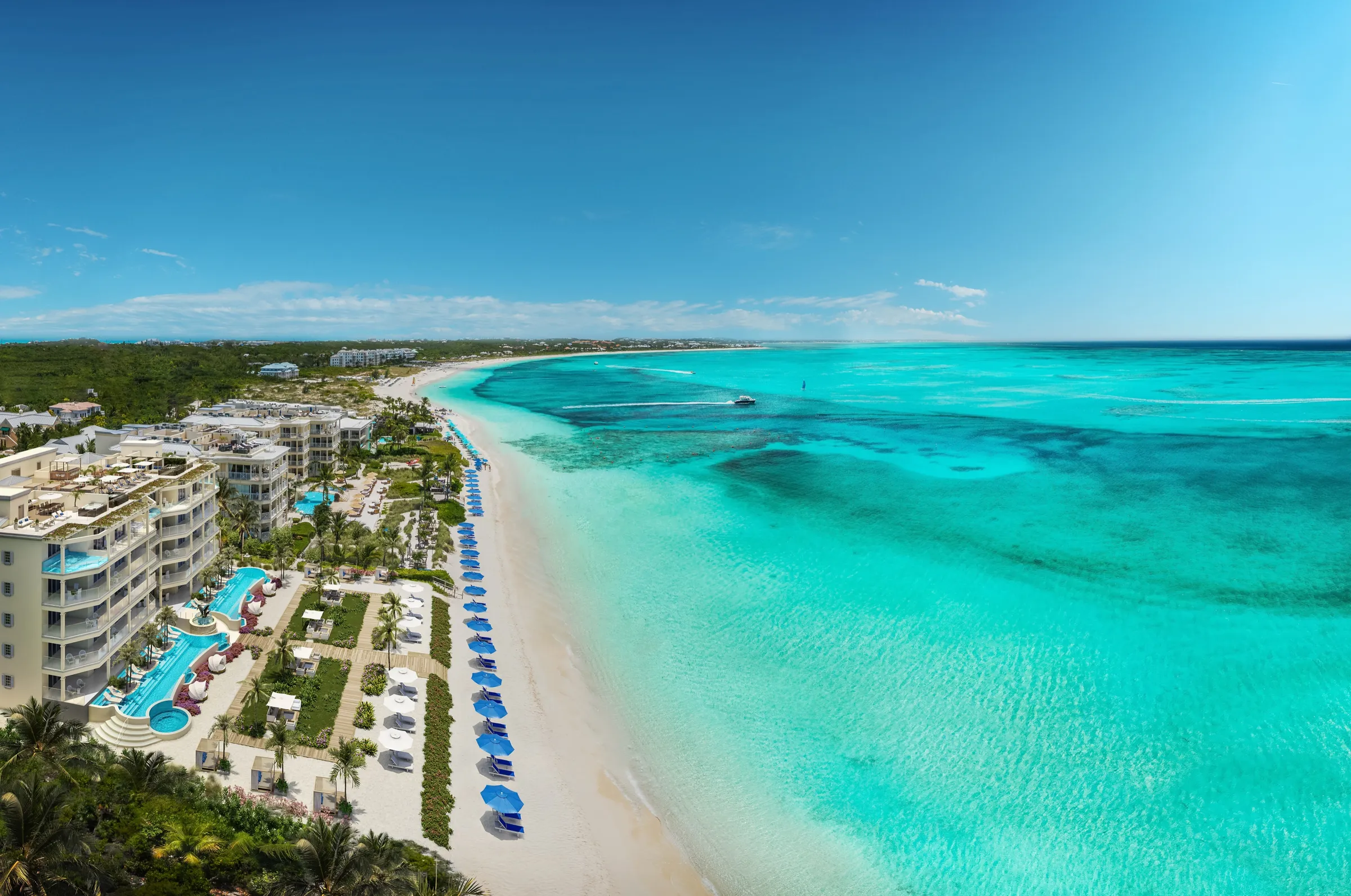
Most of this competition sits on the same few miles of beach, so a buyer comparing projects is comparing images of nearly identical water. And the Corinthia announcement described its site as the last remaining undeveloped beachfront parcel on its stretch of Grace Bay, which tells you where the market goes next.
The Providenciales Pause and the Turn to the Family Islands
In May 2026 the Premier announced that the government was pausing approvals for new tourism developments in Providenciales pending public consultation, describing the move as pro-sustainability rather than anti-investment, and said concessions for large-scale Providenciales projects were being withdrawn while incentives stay available on the Family Islands. In July, Cabinet added a six-month moratorium on new commercial Crown land applications while it inventories its holdings, as Magnetic Media reported.
The Speech from the Throne on 8 September 2026 confirmed the direction. It described a temporary pause on certain Providenciales developments so that growth can be planned and sustainable, named five Cabinet-approved projects worth roughly $1.18 billion (Royal Reef on North Caicos, Dellis Cay, Janu, Corinthia, and Grace Retail and Residences), and said the government supports appropriately scaled development on Grand Turk, South Caicos, North Caicos, Middle Caicos, and Salt Cay, according to Newsline TCI’s summary.
For marketing, this does two things. Projects already approved on Grace Bay now have a scarcity story that is real, and they should tell it carefully rather than overclaim it. Projects moving to North Caicos, Dellis Cay, or South Caicos face the opposite problem: a buyer who knows Grace Bay by name and has never seen the island you are building on. There, the images have to establish the place before they can sell the unit.
Planning Basics and the Grace Bay Height Rules
Applications go through the Department of Planning to the Physical Planning Board, and larger coastal projects typically need an environmental impact assessment, with terms of reference set by the Department of Environment and Coastal Resources. Environmental impact statements for major applications are published on the Planning Department’s site, which is worth reading before you brief a studio, because the approved massing is what your renderings will be held to.
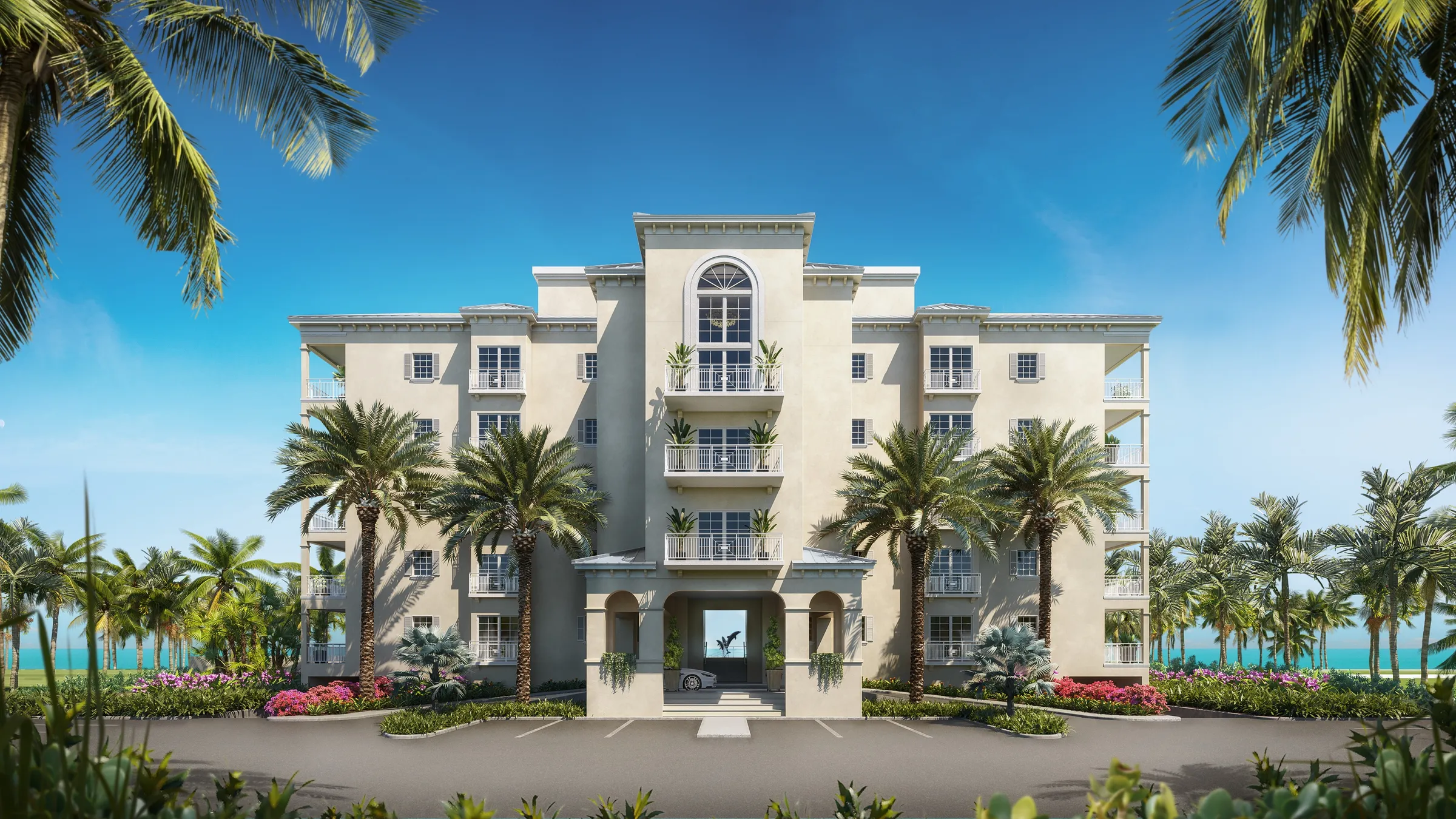
On height, the rule most developers work from is the 2016 Cabinet decision for the Grace Bay, Bight, and Turtle Cove tourism zone: up to twelve floors and 150 feet for hotels, apartments, and condominiums, with no habitable floor above 135 feet, but only on a plot of at least five acres. Below five acres, the cap is seven floors or 90 feet, per the published Cabinet statement. Verify the current position with the Planning Department before you commit to a massing, since a national physical development plan has been under revision for several years.
Why this matters for visuals: the floor count decides the view. On a seven-storey building the top floors see over the palms and the neighbors. On a twelve-storey tower the difference between floor four and floor ten is the difference between a garden outlook and the reef. That is a price difference, and your renderings should show it floor by floor rather than use one aerial for everything.
Who Buys, and How Off-Plan Is Sold on the Islands
The buyer is mostly North American. When the Ritz-Carlton Residences became the islands’ first twelve-storey project, the broker marketing it said the vast majority of condo buyers were from North America and planned to use their units as vacation homes, and many already owned the brand elsewhere. That pattern still describes the market: a US or Canadian buyer, often a repeat guest, frequently buying a branded product because they trust the operator more than an unknown developer.
Sales run through a small number of island brokerages. Turks and Caicos Sotheby’s International Realty marketed The Point, and Christie’s International Real Estate Turks and Caicos is marketing both the St. Regis and Kempinski residences, alongside Engel and Völkers on the latter. The market is active but careful. The same brokerage’s first-half 2026 report counted 107 conditional sales and more than 25 condo deals above $1 million under offer, mostly in Grace Bay, and called it too early to call a recovery.
In practice that means your visuals serve three audiences at once: the operator, who will approve them against brand guidelines; the brokers, who need a set they can send, print, and talk through on the phone; and the remote buyer, who decides from a screen. We cover the remote-buyer side in depth in our guide to pre-selling Caribbean real estate to remote buyers.
Selling a View That Does Not Exist Yet
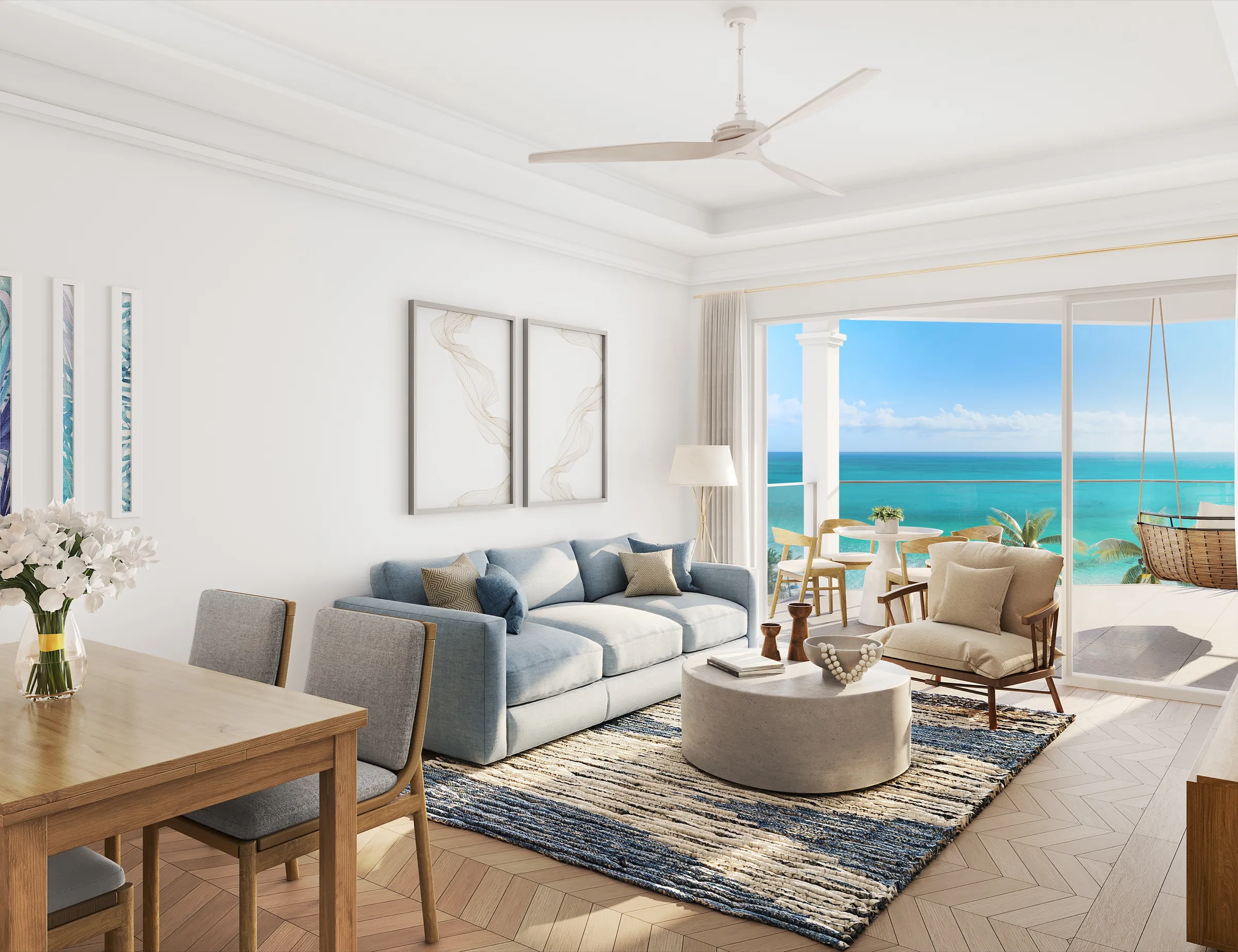
Every Grace Bay buyer is paying for the water. The problem is that the view from a fifth-floor unit does not exist until the building does, and the buyer knows exactly what Grace Bay looks like from a hundred photographs. A generic blue ocean behind a photoreal building reads instantly as a stock backdrop, and it undercuts the one thing the image exists to prove.
So the view has to be built from the site. That means real reference of the water, the reef banding, and the horizon, captured from the heights and orientations the units will actually occupy. It also means showing the view each floor really commands. If floor two looks through palms, show floor two looking through palms and sell it on what it is. Buyers at this level compare notes with their brokers, and an image that flatters the lower floors will cost you credibility on the upper ones.
Drone Photomontage or Pure CGI
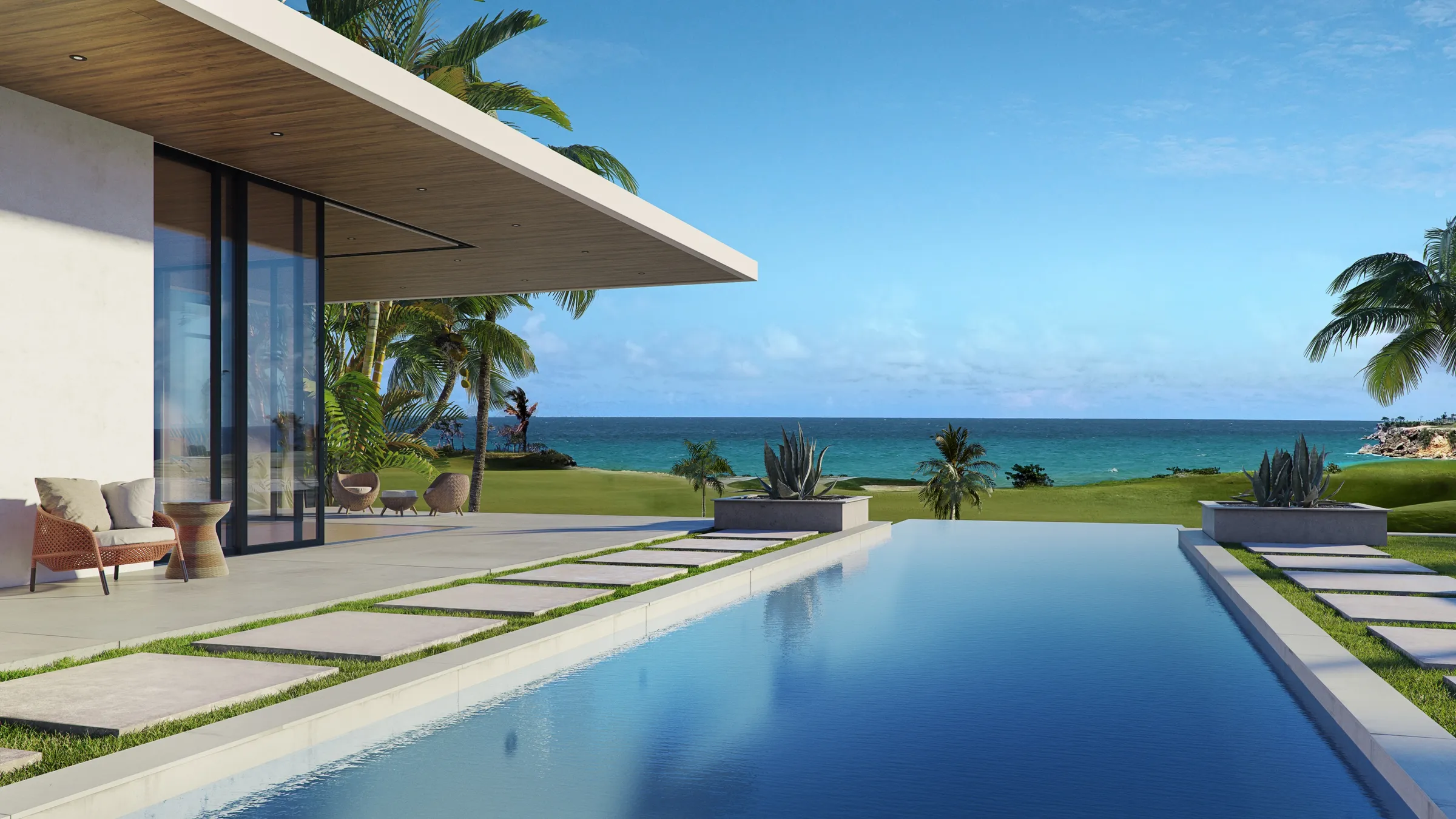
For beachfront Turks and Caicos, our default is a drone photomontage: the architecture modeled and lit in 3D, then composited into real aerial photography of the site. The water is the product, and no studio invents that particular turquoise convincingly from scratch.
That is how we approached a Phase II beachfront condominium building on Providenciales. Rather than fly on spec, we wrote a detailed drone guide for the developer’s on-island operator: exact shot positions, camera elevations and angles, and 360 and 180 degree panoramas with specified overlap, so one shoot could feed every rendering. The guide also asked for the sand raked and the reef captured at its brightest, before foot traffic and before the light flattened. Weather windows on a remote island are short, so the guide is what makes the shoot count.
Pure CGI still has its place: interiors, amenity views inside the building, and sites where you cannot fly or where the plate would be dominated by a construction zone. Many sets end up mixed. We wrote about the alternatives when a drone is not possible in exterior rendering without a drone, and about briefing the shoot itself in drone footage and 3D rendering.
Phasing Next to an Operating Resort
Some new supply on Grace Bay is a later phase added to a resort that is already open. That changes the brief. The new building has to sit convincingly beside the existing one, at the exact position and setback the architect specified, and the existing resort becomes part of the pitch, because its guests are a natural first audience.
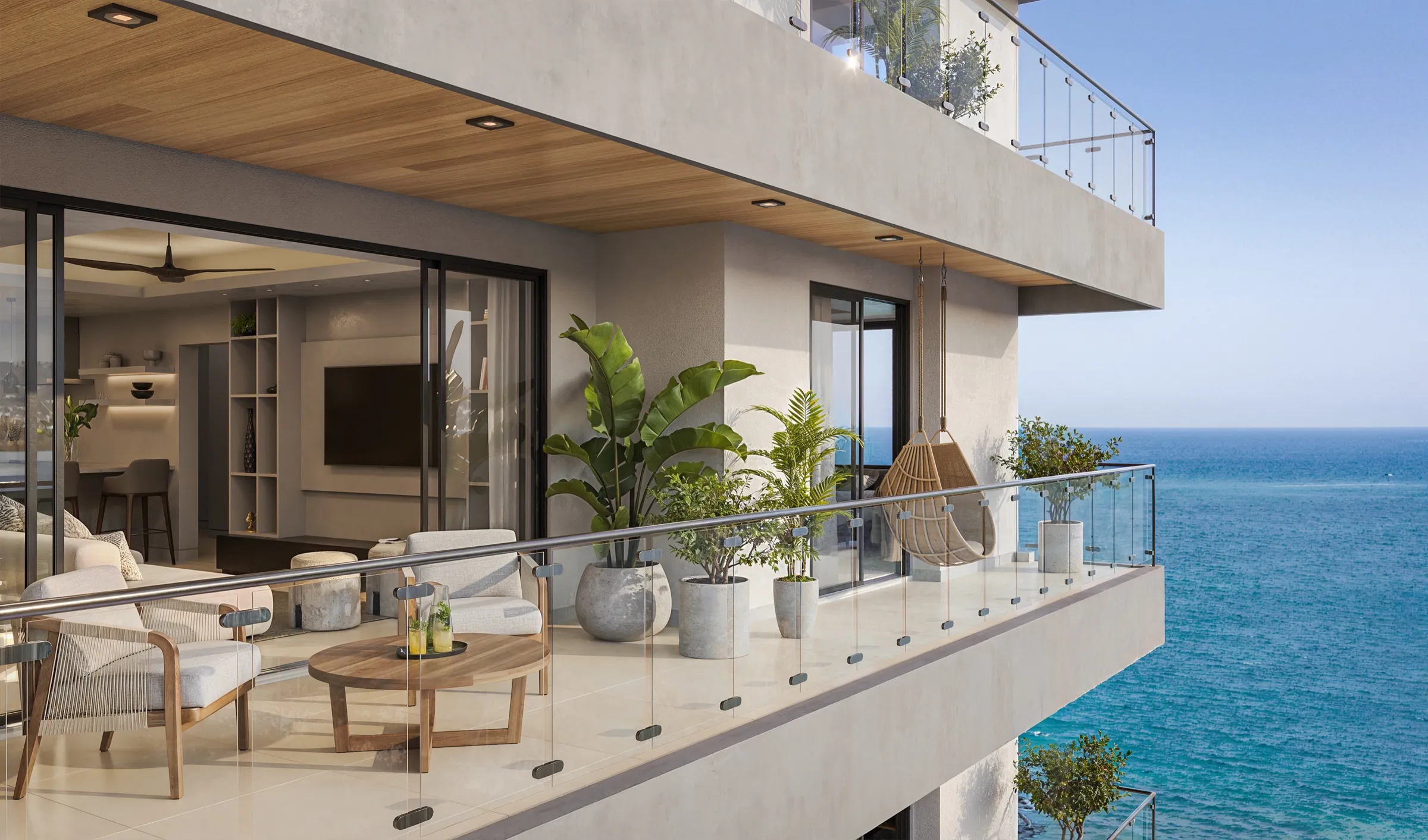
On the Providenciales project, every view was approved first as a greyscale white model with the camera locked, so the developer chose composition before any surface was rendered, and the relationship between the old and new buildings was settled early. Each finished view was labeled so a prospect could place it in the building during a sales conversation. Beyond the exterior and aerial, the set carried the amenities: the rooftop terrace, and a penthouse view proving the private skypool and its open horizon, the image that carries a top-floor premium.
Phasing also means your visuals need a life after launch. On that project the developer later shifted emphasis from pre-selling the final phase to owners holding units for rental income, and came back three years after the first set for a one-bedroom interior. The Phase II building has since been completed and welcomes guests. A set planned with consistent cameras, consistent light, and a model that can be reopened serves both the launch and the rental program that follows. We go deeper on this in our post on phasing visualization across a branded launch.
Hurricane-Ready Design, Shown Honestly
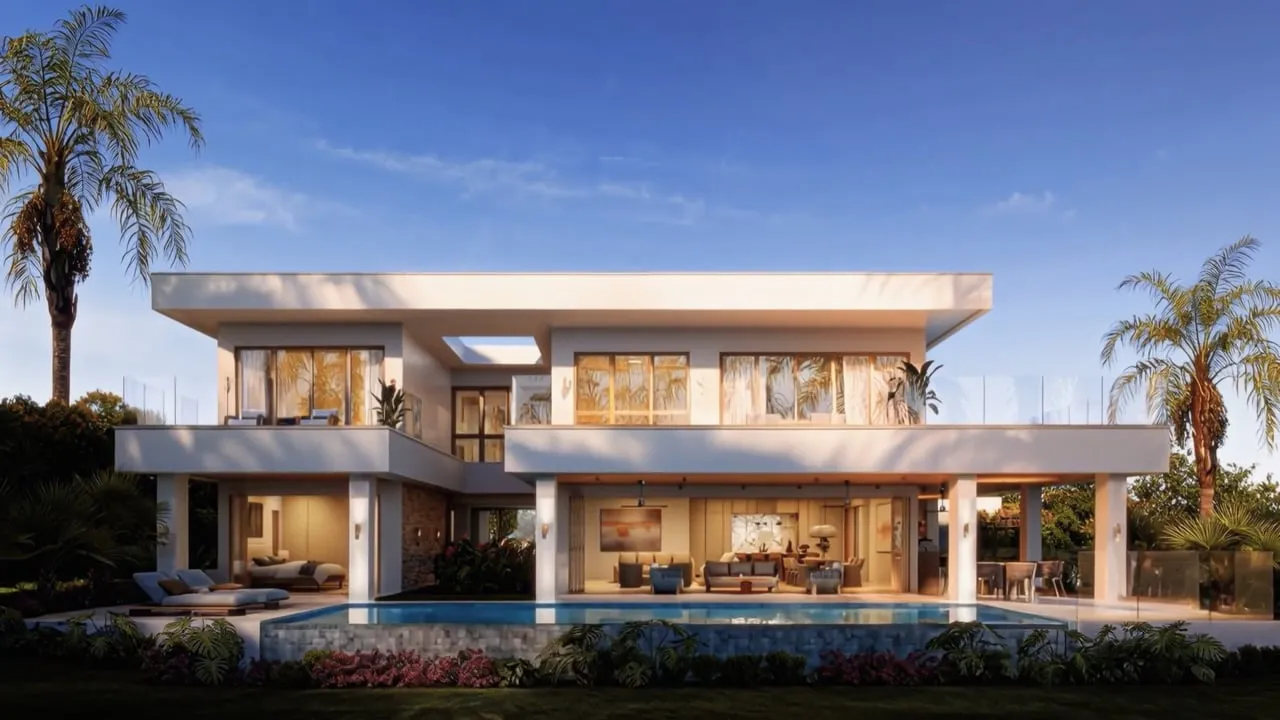
These islands sit in the hurricane belt, and buyers know it. The Turks and Caicos took the northern eyewall of Hurricane Irma in September 2017, and a US buyer who has dealt with insurers in Florida will ask how your building is built before they ask about the finishes.
The temptation is to render resilience away: frameless glass with no visible mullions, balconies with nothing that could possibly be a shutter track, mature palms pressed against the facade. Our advice is the opposite. Model the impact glazing, the frame depths, the shutter or screen systems, and the raised finished floor levels the architect has actually specified. Show the landscape at a size it will plausibly reach, not at twenty years’ growth. Done well, these details do not cheapen the image. They make it believable, and they give the broker something concrete to point to. A rendering the finished building contradicts is a liability.
Bringing This to Your Project
If you are developing in Turks and Caicos, start the visual brief with two questions. What is the single view that, if we get it wrong, loses the sale? And what will this buyer check against reality, the water, the neighbors, the height, the storm detailing? Build the set from those answers.
You can see our island work on the Caribbean page and, more specifically, on Turks and Caicos. For the full case study behind this post, see the Turks and Caicos Oceanfront Resort. For the services involved, see exterior rendering, interior rendering, and architectural animation, or read how we work with branded and multi-unit developers. For how approvals run on another island, see our Barbados planning approval guide.
FAQs
Can I still get a new tourism project approved on Providenciales?+
As of September 2026, the government has paused approvals for new tourism developments on Providenciales pending consultation, while projects already approved continue. The details are changing, so check the current position with the Planning Department and a local attorney before committing to a site.
How tall can a building be on Grace Bay?+
Under the 2016 Cabinet decision for the Grace Bay, Bight, and Turtle Cove tourism zone, up to twelve floors and 150 feet on plots of at least five acres, and seven floors or 90 feet below that. Confirm the current rule for your specific plot before you design to it.
Should Turks and Caicos renderings use drone footage?+
For beachfront exteriors and aerials, usually yes. A photomontage keeps the real reef water and horizon, which is what buyers are paying for. Interiors and some amenity views are better as pure CGI, and a briefed drone guide lets one shoot serve the whole set.
Can you render a project on an island I cannot easily reach, such as North Caicos or Dellis Cay?+
Yes. We work fully remote. With a briefed on-island drone operator, or with mapping data and site photos where flying is not possible, we can build an accurate context for a less-developed island and establish the place for a buyer who has never been there.