
Case study
Greenwich Compound
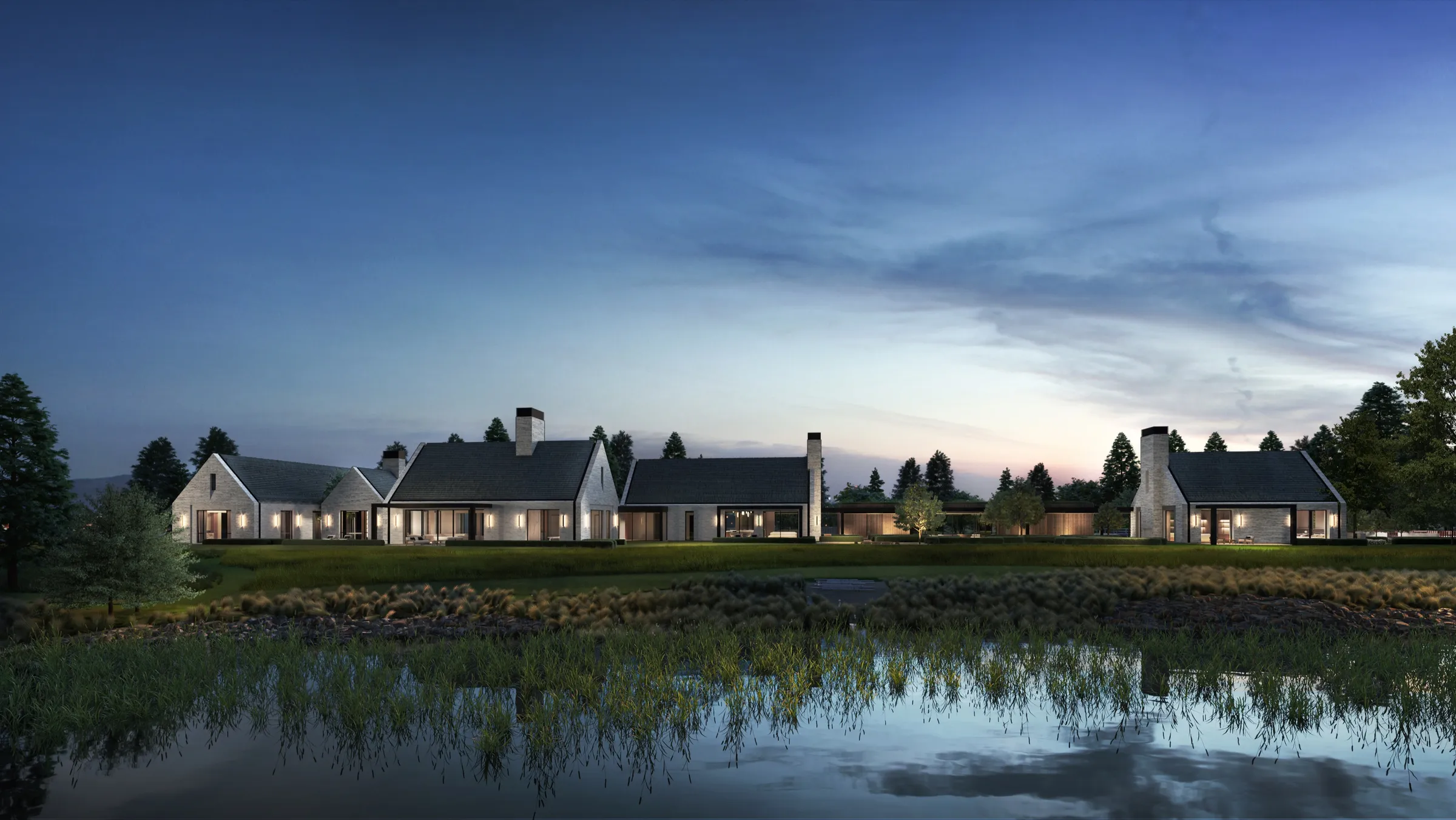
A modern waterfront compound by Workshop/APD, visualized from the drive, the water, and the air while the design was still taking shape.
Project at a glance
NoTriangle produced seven exterior renderings of a private waterfront compound Workshop/APD designed in Greenwich, Connecticut, a cluster of modern white gabled volumes on a wooded peninsula. The images visualized the home from the entry drive, across the water, and from the air during design.
- Architect
- Workshop/APD
- Building type
- Private waterfront residential compound
- Location
- Greenwich, Connecticut
- Purpose
- Visualize the home's design before and during construction
- Scope
- Seven exterior renderings, elevations, aerial, waterfront, and the greenhouse
- Stage
- Visualized during design
- Engagement
- Part of an ongoing relationship with Workshop/APD
The brief
A Modern Compound on the Water.
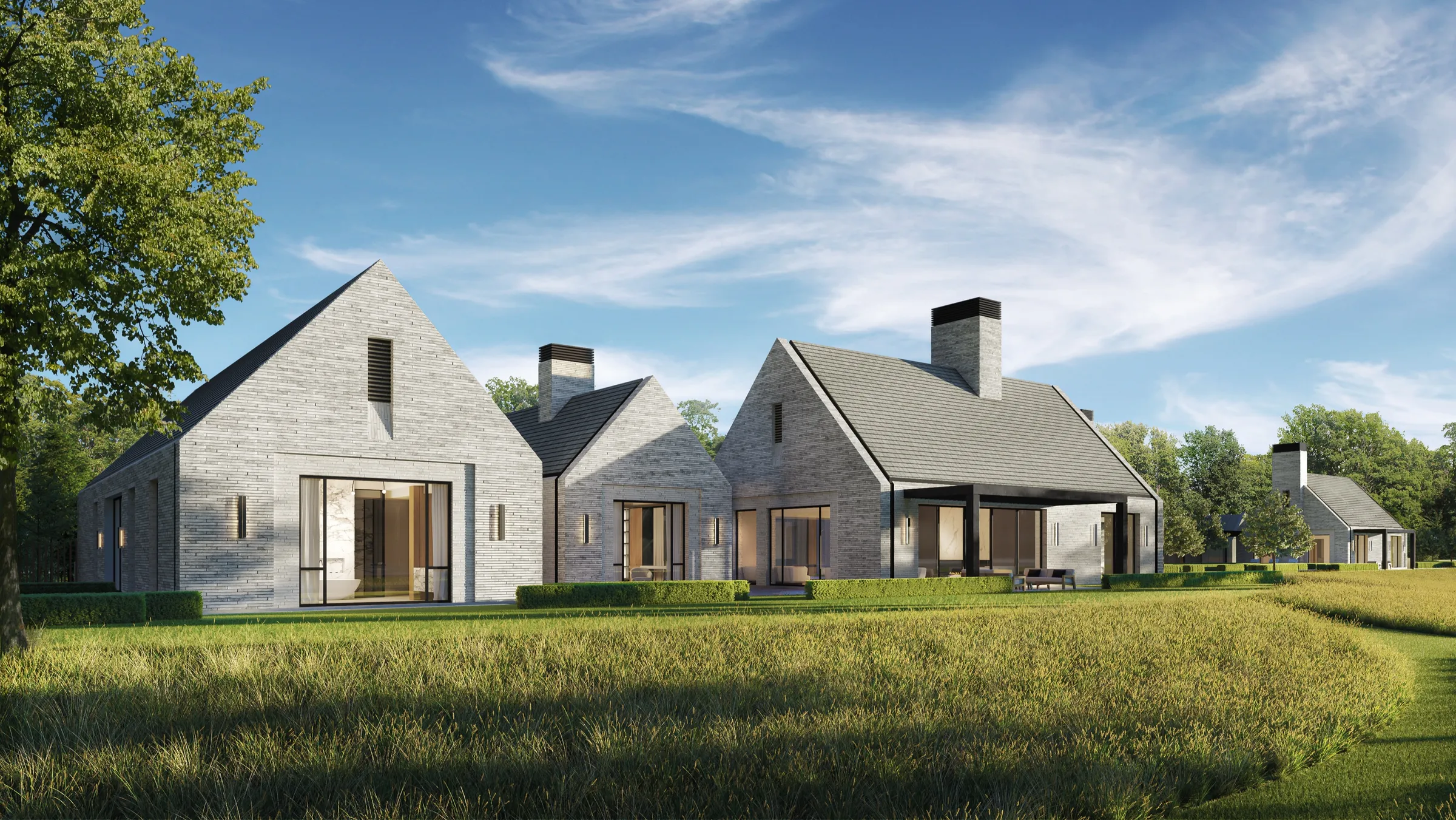
Workshop/APD designed a private waterfront compound in Greenwich, Connecticut: a family of modern white-brick volumes with steep gabled roofs, set low across a wooded peninsula that reaches into a tidal inlet. Rather than a single house, the design reads as a small hamlet of connected buildings, with a glass greenhouse and a barn among the outbuildings.
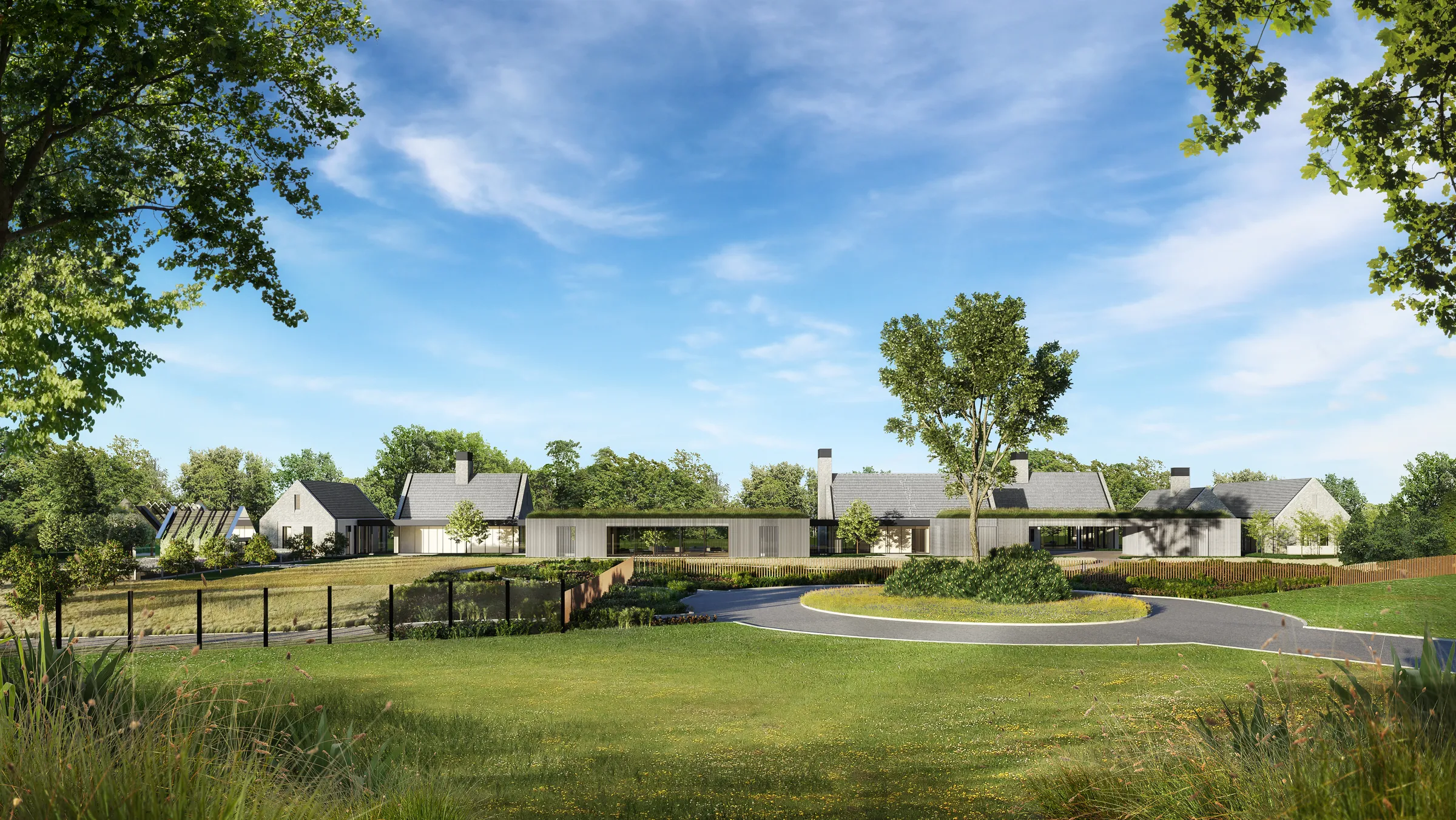
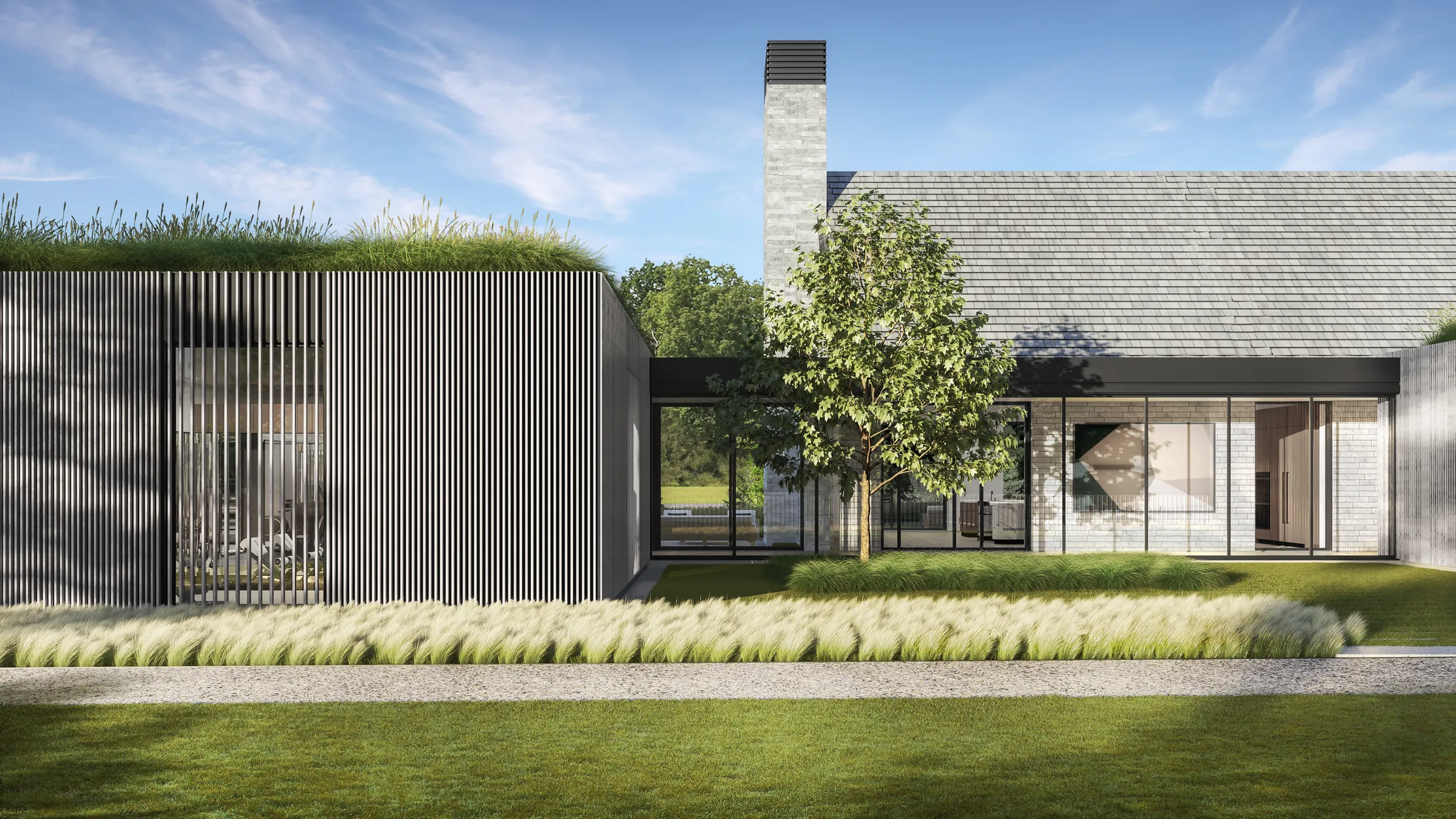
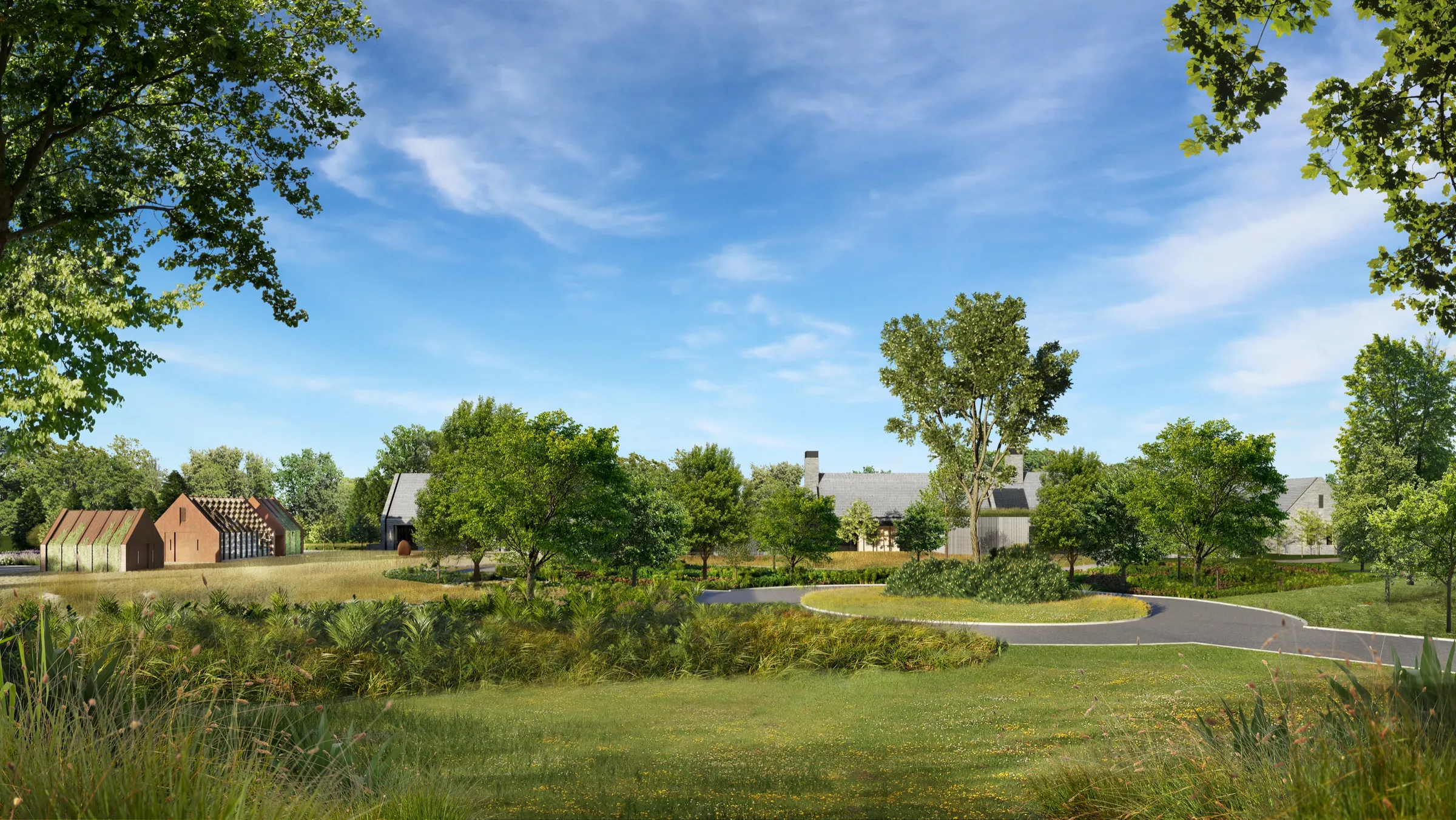
NoTriangle was brought in to visualize the exterior of the home as the design developed. The brief was a set of exterior views, the front approach, the elevations, the house seen across the water, and an aerial that captured the whole site, so the architect and the owner could read the massing, the materials, and the way the compound sits in its landscape long before it was built.
The setting
Read the Whole Site From the Air.
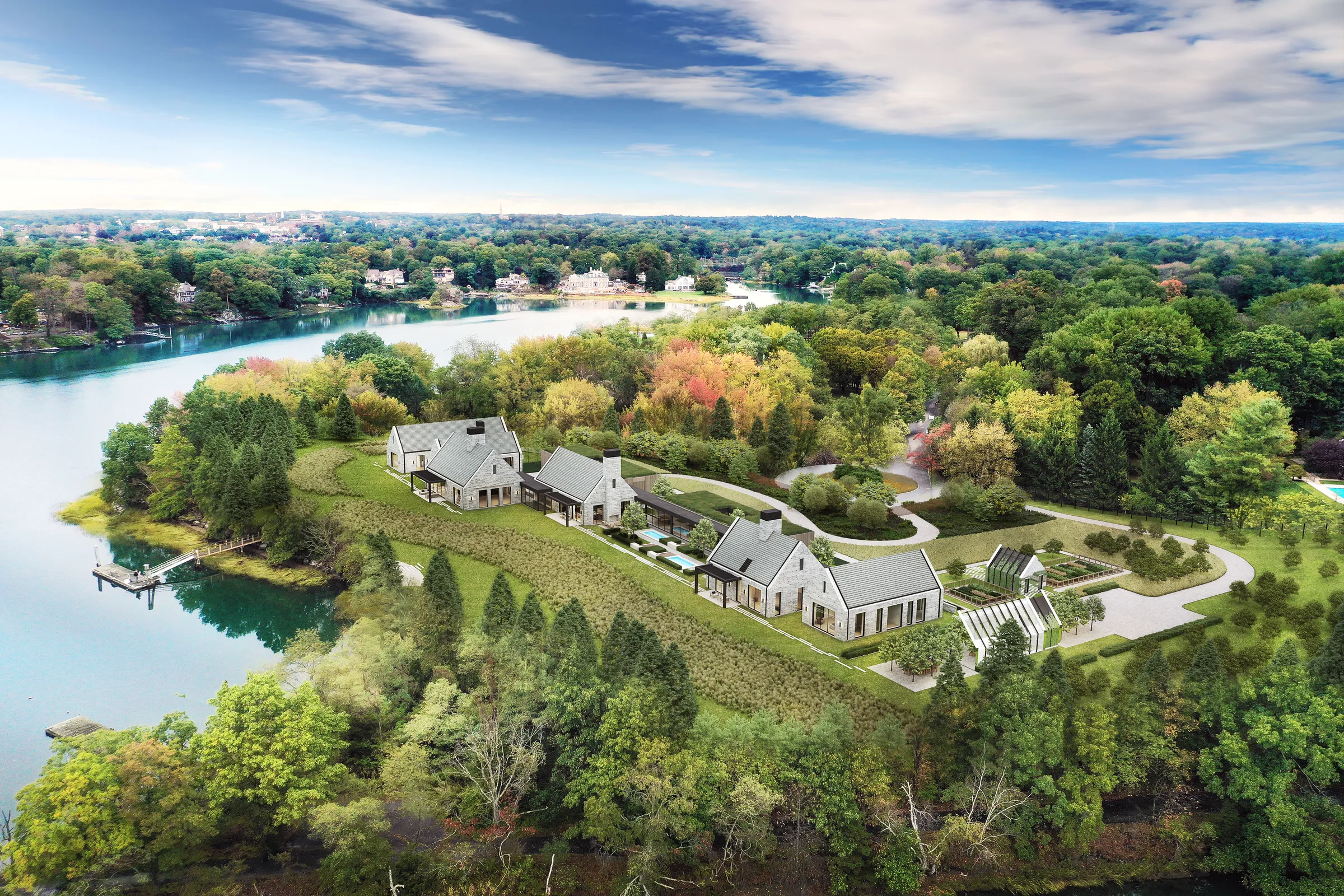
The aerial view sets the compound on its peninsula, the cluster of gabled houses and their green roofs reaching out between the water on both sides. For a waterfront property, this is the image that explains the design: how the buildings are placed, how the grounds and pool work, and how the whole site meets the inlet. It let the team judge the architecture against the land it actually occupies.
The approach
Built From the Architect's Design.
The renderings were modeled from Workshop/APD's design and developed through the studio's exterior process, with camera angles confirmed before the images were finished so each view earned its place: the arrival, the elevations that show the white-brick volumes and their gabled roofs, the courtyard between them, and the house reflected in the water at dusk.
The set grew as the design did. What began as a handful of exterior views expanded round by round, adding the glass greenhouse wing and other studies as the compound resolved. Keeping one studio across those rounds held the modeling, materials, and lighting consistent, so the views read as one home rather than a collection of separate images.
The grounds
Outbuildings in the Landscape.
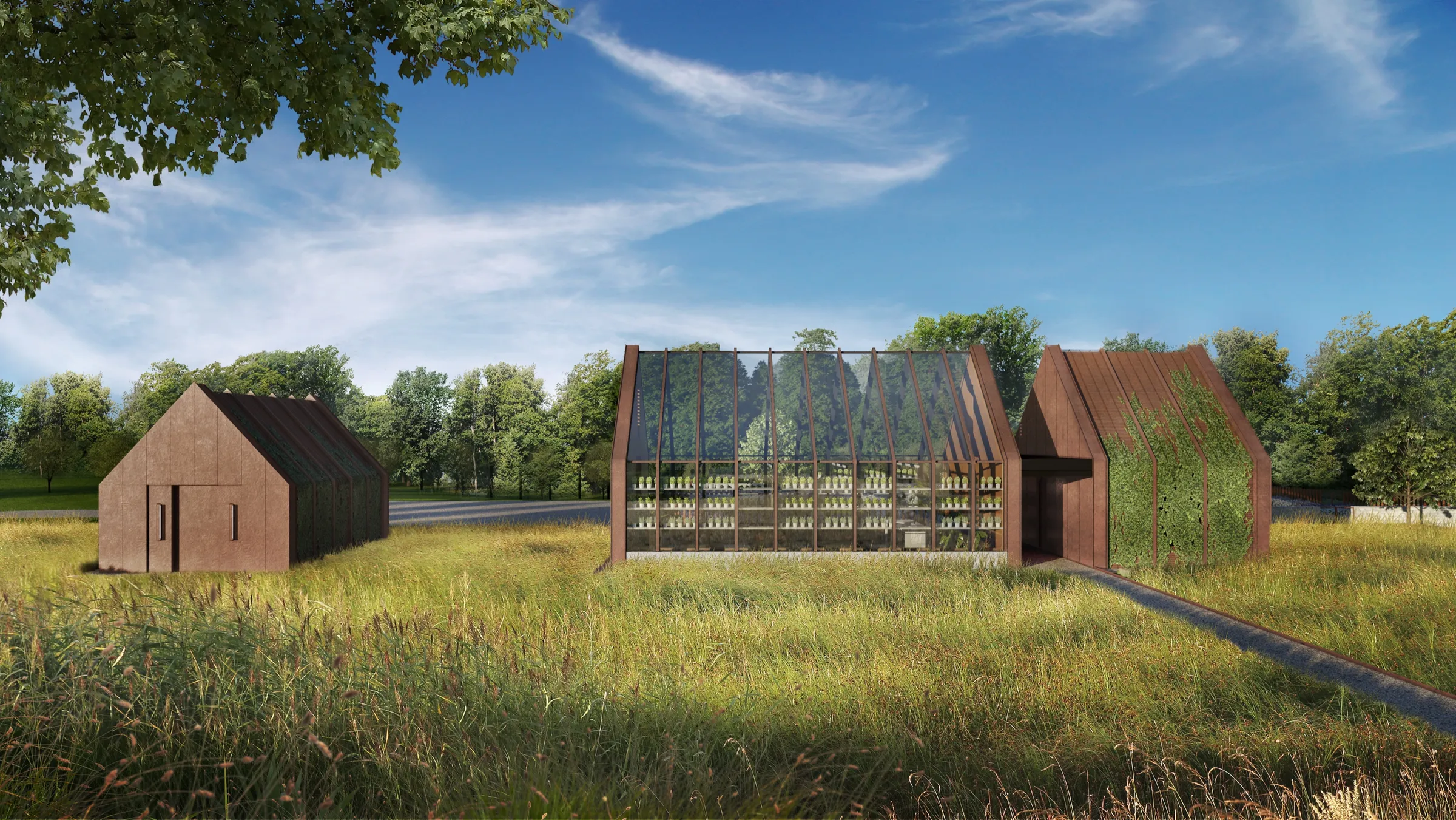
Beyond the main volumes, the compound includes a copper-clad greenhouse and a barn set into the meadow, the working pieces of the grounds. Rendering them in the tall grass, with the planting visible through the greenhouse glass, showed how the landscape and the outbuildings were meant to feel as much a part of the home as the rooms themselves.
The outcome
Resolved on Screen, Now Rising on Site.
The renderings did their work during design: they gave Workshop/APD and the owner a way to see the compound from the drive, the water, and the air, and to study its massing, materials, and setting while decisions were still being made. The set grew alongside the architecture, holding a single consistent picture of the home as it developed.
The work was part of an ongoing relationship with Workshop/APD, one of the studio's longest-standing architecture partners, a collaboration that has run across residential, hospitality, and institutional projects over many years.
Questions
Rendering a Home in Design
- What are exterior renderings used for in a private home's design?
- They let the architect and the owner see the house before it is built, study the massing and materials, and present the design with confidence. For this Greenwich waterfront compound, NoTriangle visualized the home from the entry drive, across the water, and from the air, so the gabled volumes, the white-brick palette, and the relationship between the buildings could be judged while the design was still developing.
- Can a rendering place a house in its real water and landscape setting?
- Yes, and for a waterfront property it is essential. The renderings set the compound on its wooded peninsula and tidal inlet, including a dusk view reflected in the water and an aerial that reads the whole site, so the design could be evaluated in the context it would actually be built in, not against a blank background.
- Can the rendering scope grow as a design develops?
- Yes. This engagement began with a few exterior views and expanded as the architecture evolved, adding views such as the glass greenhouse wing as the design grew. Keeping the same studio across the rounds means the modeling, materials, and lighting stay consistent as the set builds out.
Services on this project
Related projects
Start with a discovery call
Every project starts with a conversation. The call is where we understand the project and whether we're the right studio to do the work.