
Case study
Capri Holdings
Store-design visualization across two of the group's houses, Jimmy Choo and Michael Kors, from Shanghai boutiques to the Michael Kors store on Milan's Via Montenapoleone.
Project at a glance
Capri Holdings brought its retail design to the studio for visualization across two of its houses, Jimmy Choo and Michael Kors. From Jimmy Choo boutiques in Shanghai to the Michael Kors store on Via Montenapoleone in Milan, the renderings gave each store a photoreal preview to align design teams, landlords, and brand stakeholders before a fit-out began.
- End client
- Capri Holdings
- Brands
- Jimmy Choo and Michael Kors
- Store type
- Flagship and boutique retail
- Locations
- Milan and Shanghai
- Stores shown
- Four: two Jimmy Choo boutiques in Shanghai, Michael Kors in Milan, and Michael Kors at Jing'an Kerry Centre, Shanghai
- Scope
- Exterior and interior renderings of each store
- Purpose
- Store-design visualization and rollout
- Engagement
- Multi-brand, multi-city program
Jimmy Choo
A House With Its Own Signature.
A retail rollout at this level is a coordination problem as much as a design one. Each store has to feel unmistakably like its brand while design teams, landlords, and brand offices in different cities sign off on the same intent, and photoreal renderings are what let everyone approve the exact material, light, and fixture before a single wall is built.
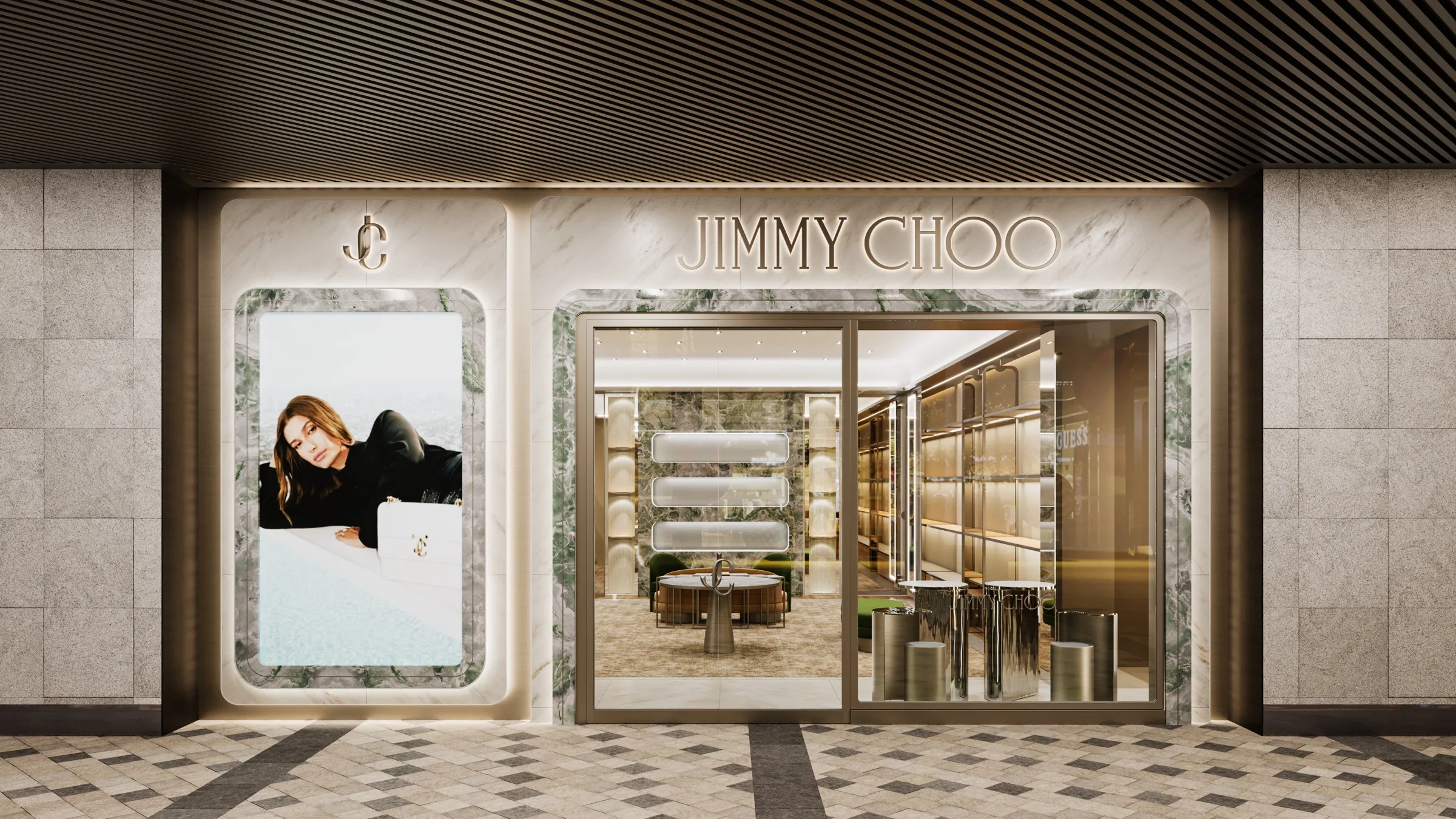
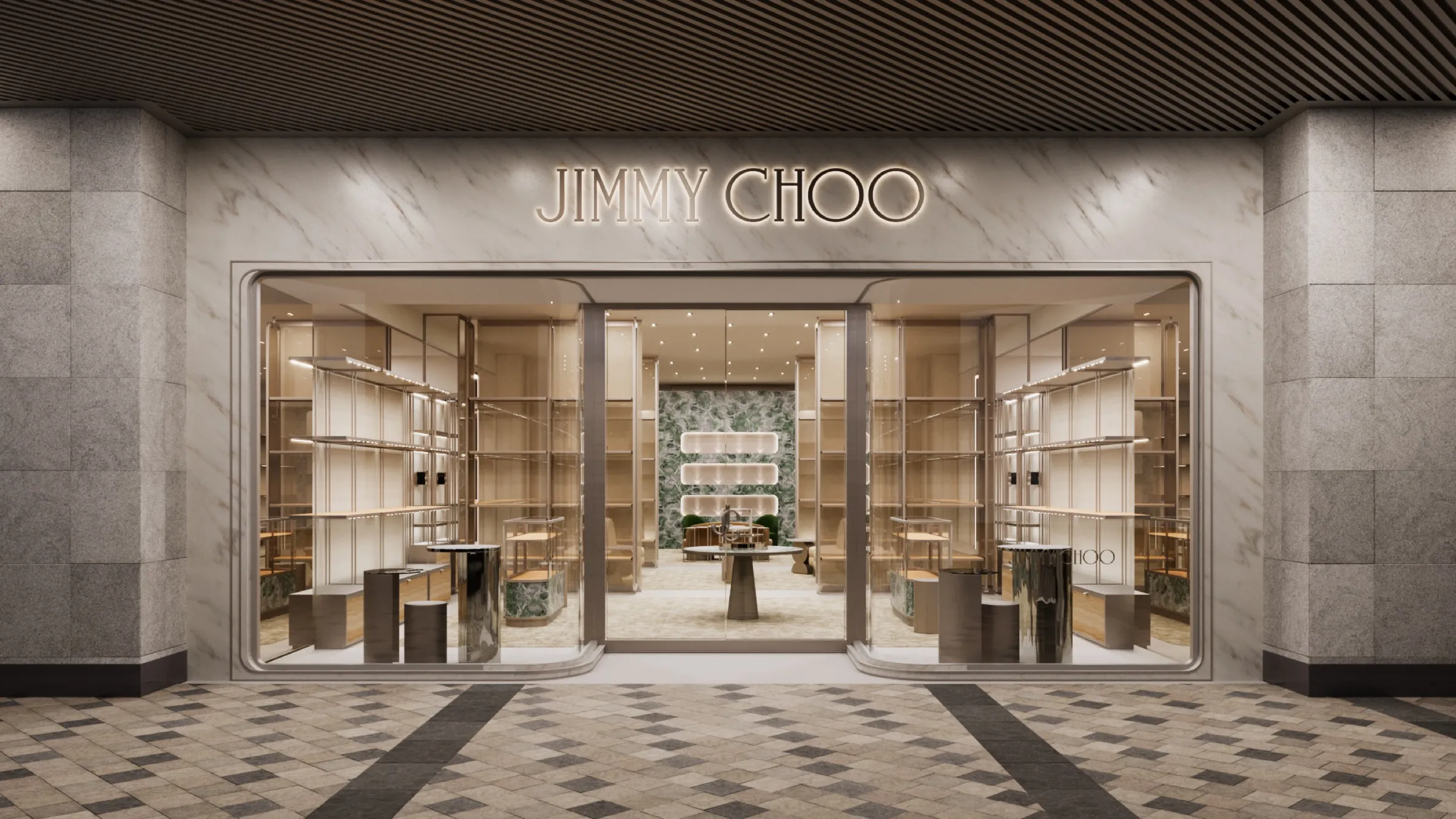
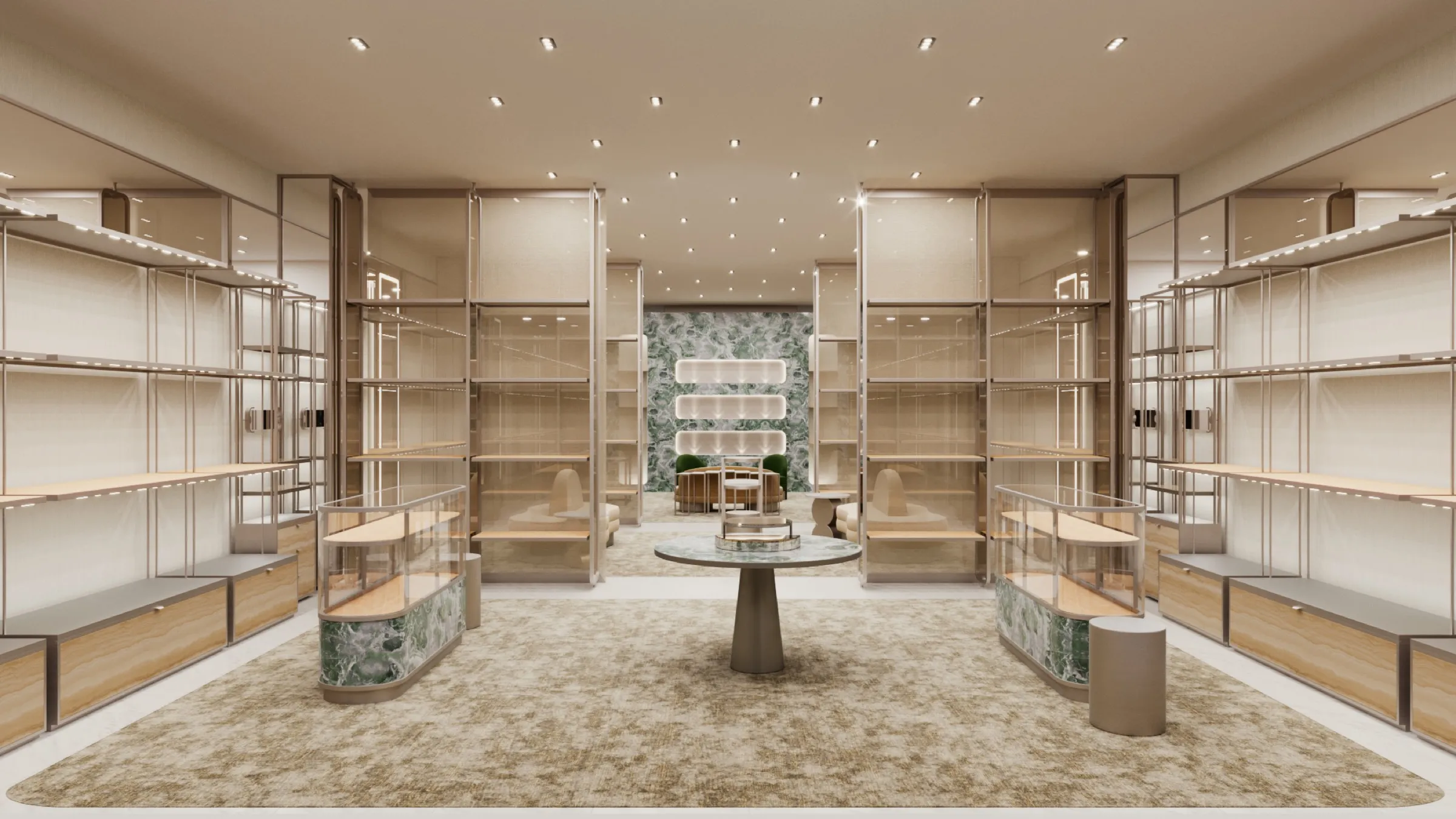
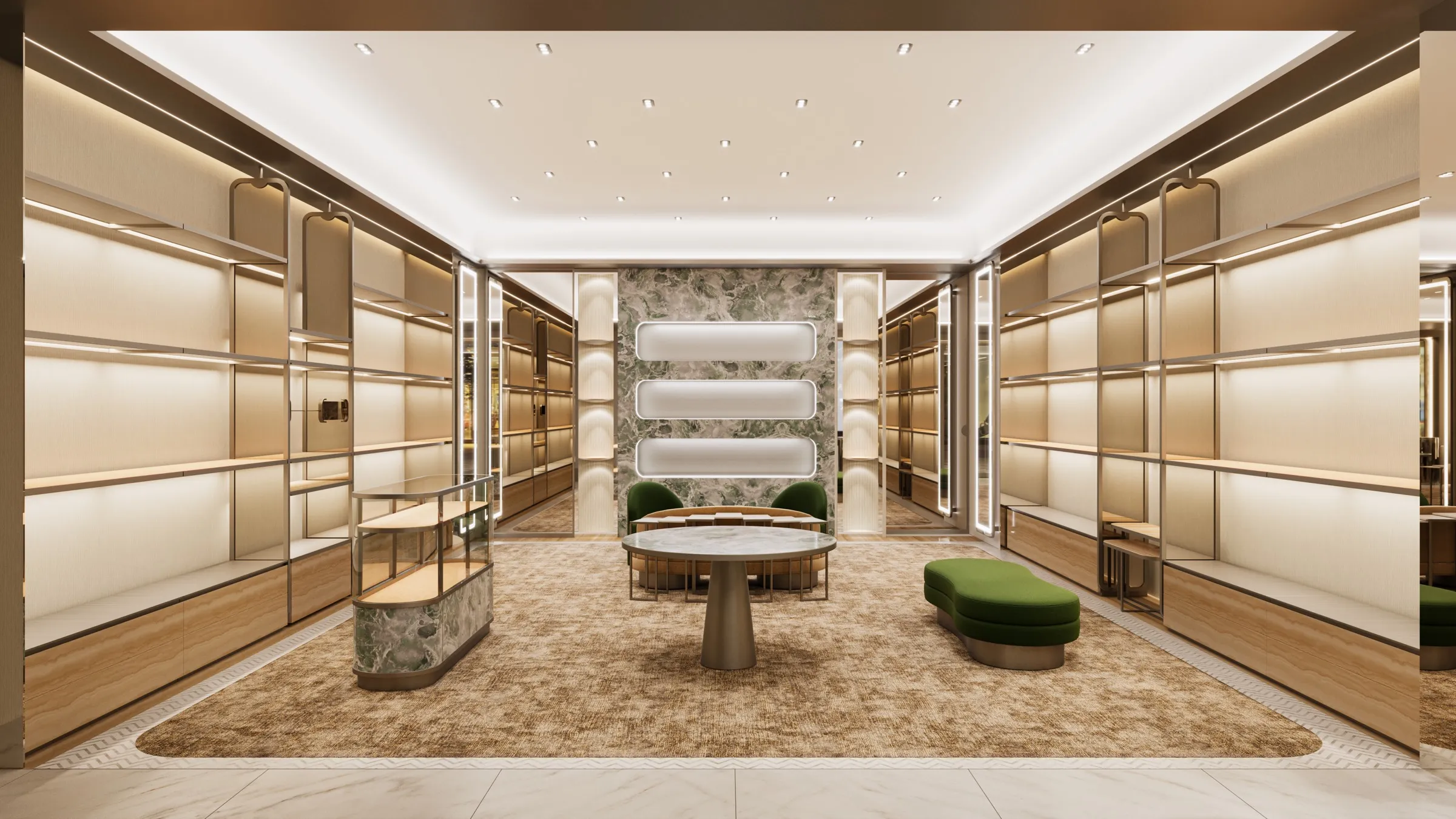
For Jimmy Choo, that signature is warm oak, cream display walls, and green marble, carried across two Shanghai boutiques. The renderings held the palette consistent from the storefront portal to the interior fixtures, so the brand read the same whether a shopper met it from the mall concourse or inside.
Michael Kors
One House, Two Cities.
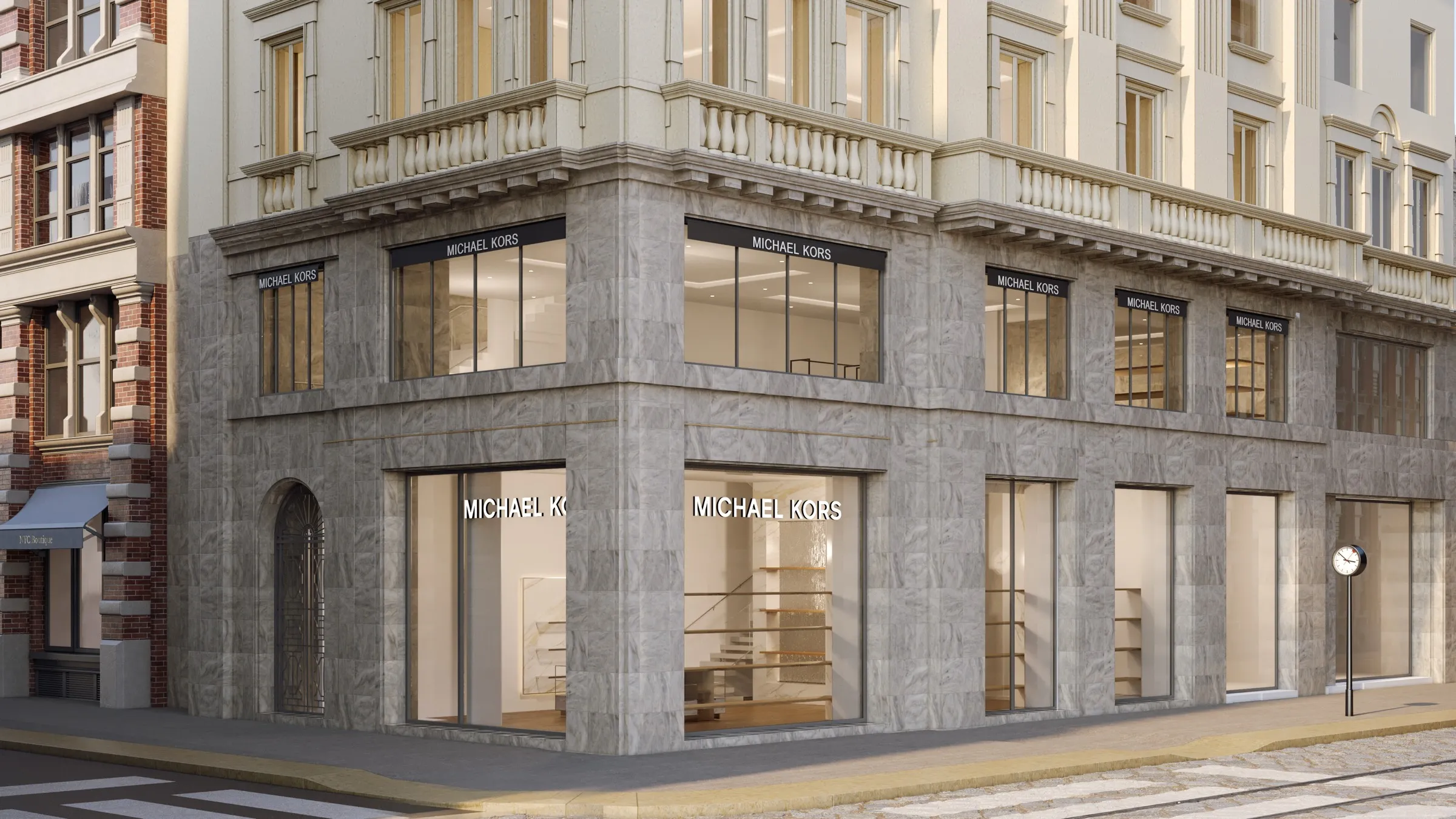
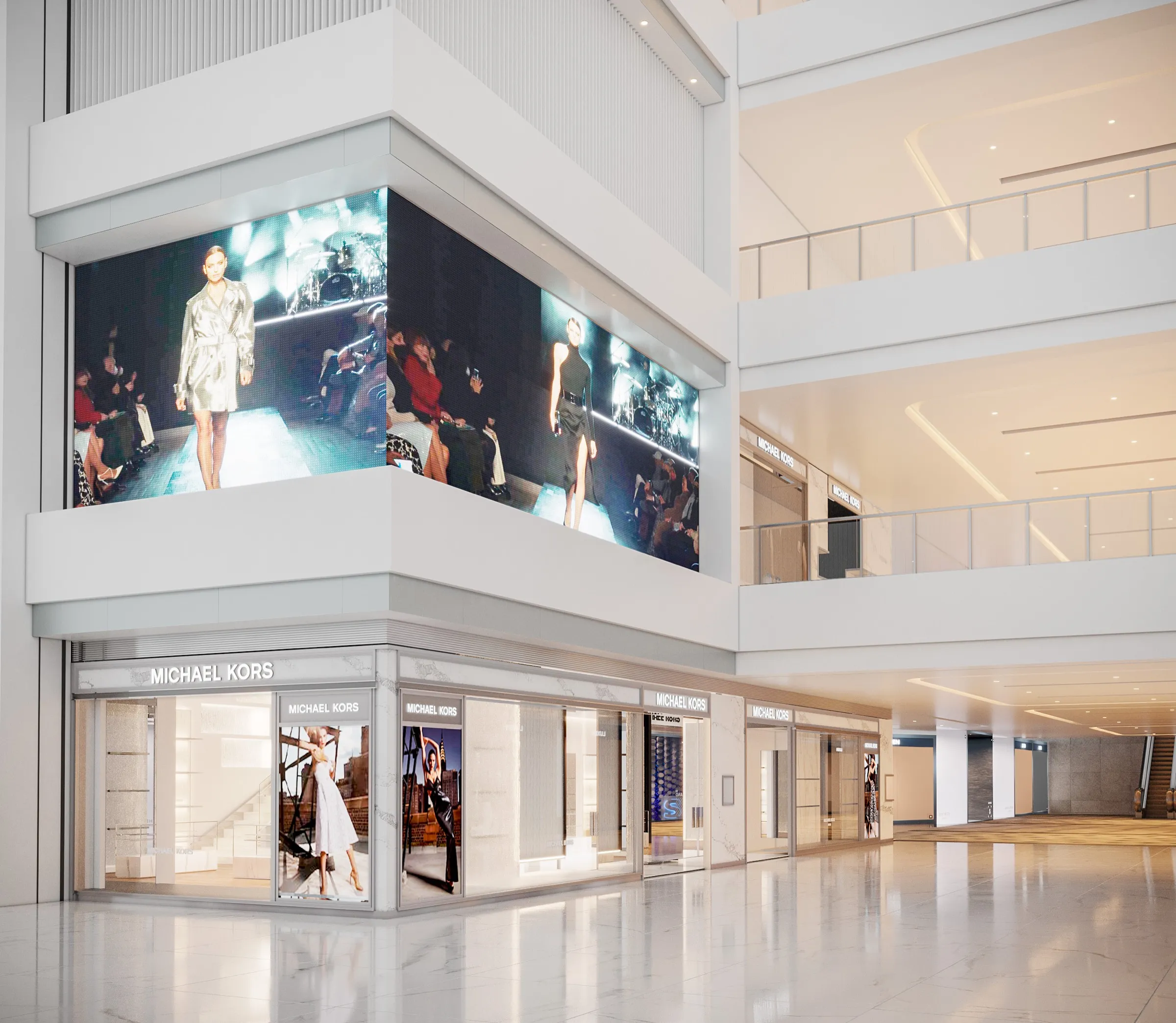
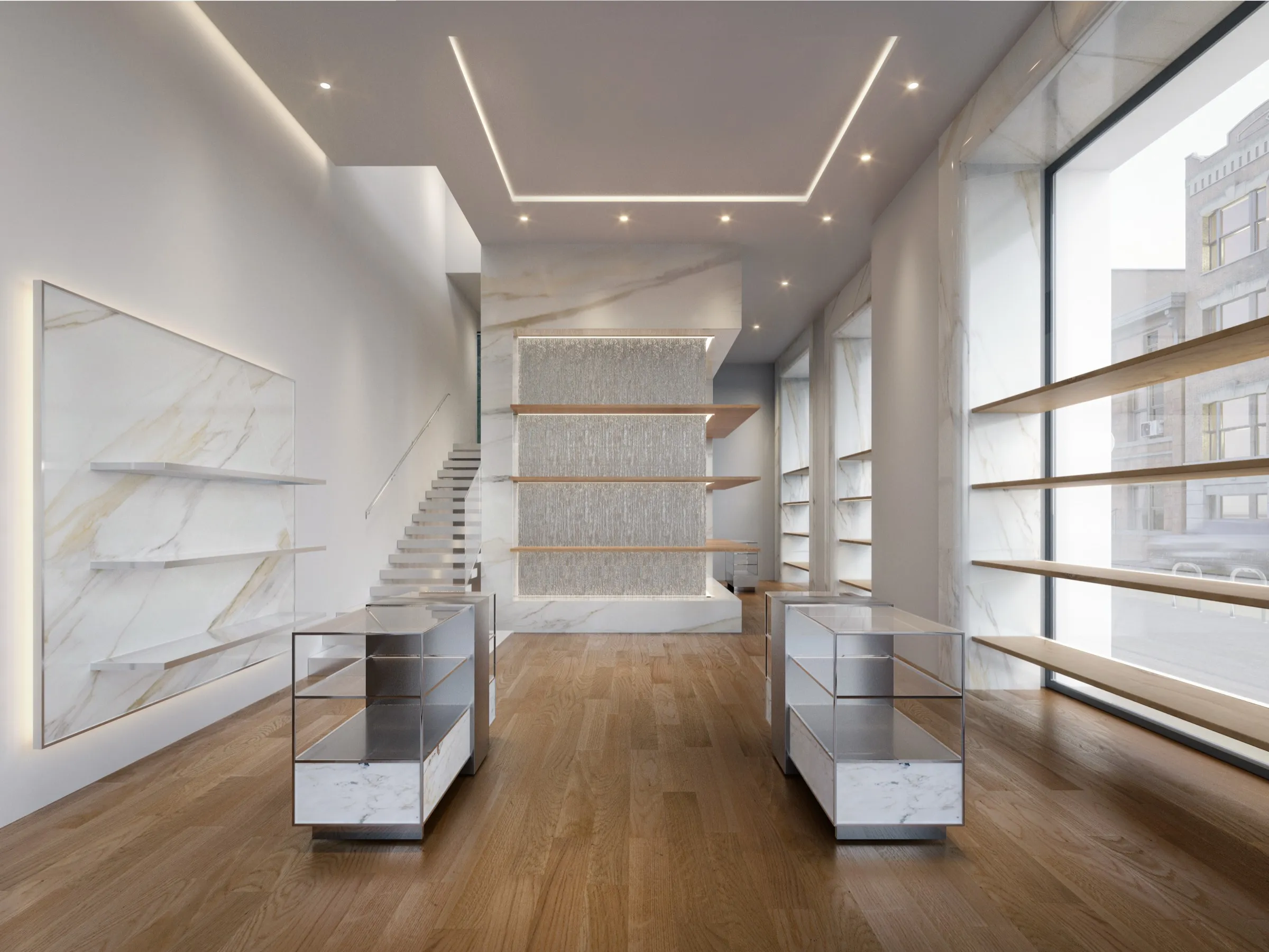
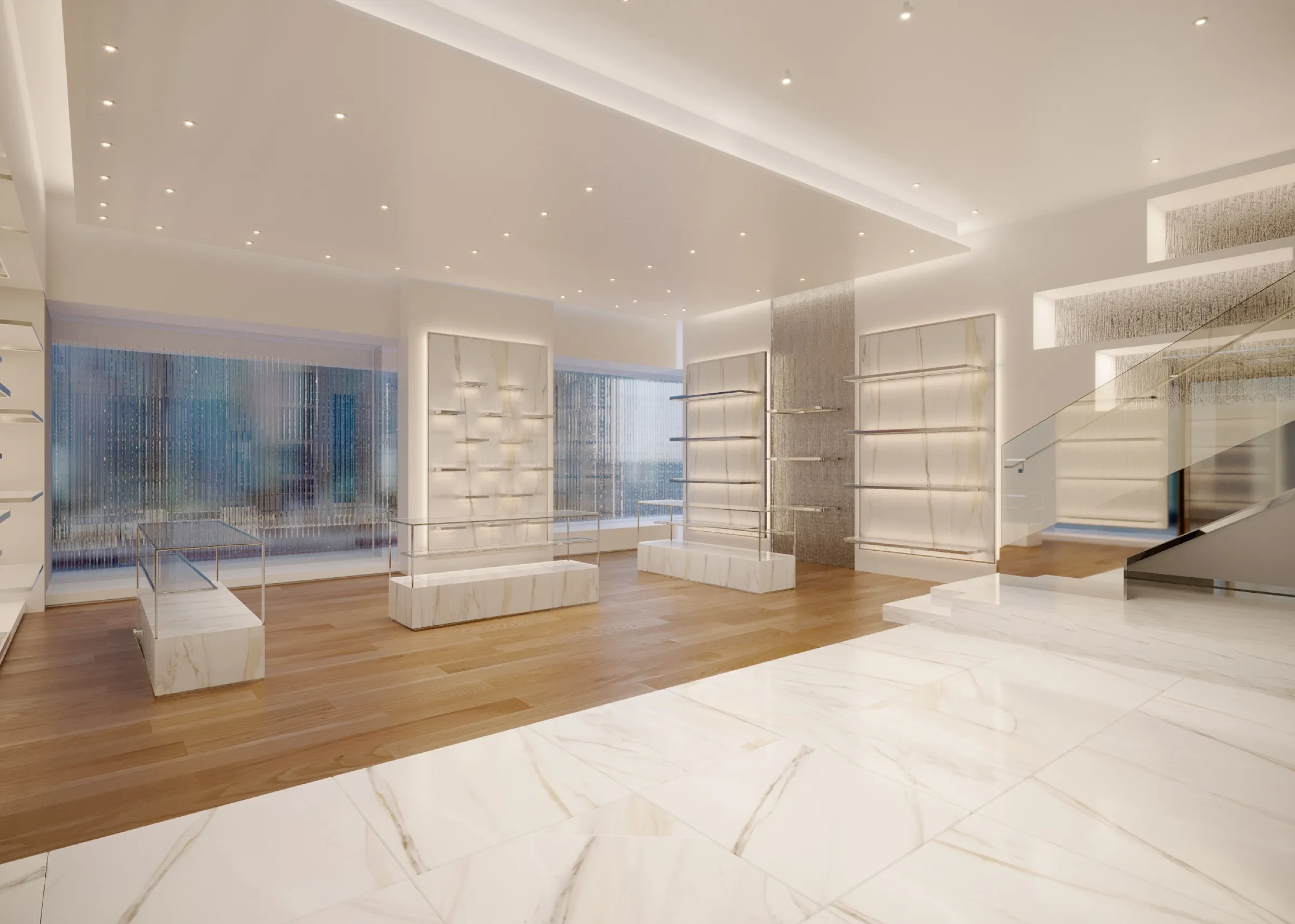
For Michael Kors, the material vocabulary is grey and white marble, warm oak, and light, adapted from a Milan corner to a Shanghai mall. The Via Montenapoleone store wraps a corner in grey veined marble beneath a classical facade, and the Jing'an Kerry Centre store in Shanghai meets the mall with double-height campaign screens and a white marble and onyx interior.
Each store was rendered inside and out, so the brand could approve the material, lighting, and fixtures as a whole before the space was built.
In Milan
One Identity, Every City.
The Via Montenapoleone store wraps a Milan corner in grey veined marble beneath a classical facade, the same house rendered for a very different street than a Shanghai mall. Across the flagship and boutique formats, one material vocabulary is adapted to each address rather than reinvented, so a shopper reads the brand the same in every city.
The outcome
One Reference, Every Store.
Across these Jimmy Choo and Michael Kors stores in Milan and Shanghai, the renderings gave Capri Holdings a single, photoreal reference for each design, the tool that lets a design team, a landlord, and a brand office all approve the same store. For a portfolio that rolls out and refreshes retail continuously, that shared preview is what keeps a global standard consistent from one fit-out to the next.
The work was a rolling program rather than a single delivery, each store rendered as its design firmed up, exterior and interior, so the brand could see the finished space before committing to it.
Questions
Visualizing a Retail Rollout
- How do renderings help roll out retail stores across different countries?
- They give every stakeholder one photoreal reference to approve. For Capri Holdings, we rendered Jimmy Choo and Michael Kors stores across Milan and Shanghai, so design teams, landlords, and brand offices in different cities could sign off on the exact materials, lighting, and fixtures of each store before any fit-out began. That keeps a single brand standard consistent from one location to the next.
- Can you keep a brand consistent across many store renderings?
- Yes, that is the point of the work. Each brand carries a fixed material vocabulary, warm oak and green marble for Jimmy Choo, grey and white marble for Michael Kors, and we hold that palette consistent across every storefront and interior we render, adapting it to each address rather than reinventing it. The result is a set of stores that read as one house across cities and formats.
- How do a fashion brand's standards reach the renderings?
- Through the brand's own design team. Capri's global store design group supplied the store concepts, materials, and fixtures as they developed, and reviews ran against named references, down to matching a marble in one store to the exact stone specified for the brand's flagship. The brief for each new location was to follow the established design language, so every rendering was checked against the standard, not just against good taste.
- Can several stores be rendered at once?
- Yes, that is how the Capri engagement ran. At one point four store projects were in production in parallel, with an agreed priority order and a weekly revision rhythm, while the brand's own designers worked in 3D alongside to feed the next round. Parallel production is how a global rollout keeps its calendar.
- Which Capri Holdings stores does this case study show?
- Four stores across two Capri Holdings brands: two Jimmy Choo boutiques in Shanghai, a Michael Kors store in Milan, and the Michael Kors store at Jing'an Kerry Centre in Shanghai. Each was rendered inside and out, so the brand's design team could approve materials, lighting, and fixtures before fit-out.
- Can renderings help a landlord approve a store fit-out?
- Yes. A landlord signs off on what the storefront will look like on its property, and a photoreal render answers that more clearly than drawings do. For the Capri Holdings stores the same exterior renders served the brand's design team and the landlord, so both approved one picture of the finished shopfront rather than two interpretations of a plan.
Services on this project
Related projects
Start with a discovery call
Every project starts with a conversation. The call is where we understand the project and whether we're the right studio to do the work.