
Can AI Do Architectural Renderings? An Honest Answer From a Studio That Uses It

Lukas Berezowiec · CEO of NoTriangle Studio
· 8 minutes
Key takeaways
AI is a great assistant in the rendering process, not a replacement for it. It handles part of the work, and people still do the part that has to be exactly right.
- Modeling
- AI does a first 20 to 30 percent of the model. People refine the rest.
- Concepts
- AI images are great for showing an idea, as long as the details do not matter.
- Accuracy
- When every detail has to match the design, it is still done in real 3D.
- Overall
- Depending on the scope, AI helps with roughly 30 to 50 percent of the job.
Almost every conversation we have with a client now includes the same question: can AI do renderings?
It is a fair question. The ads promise it, the tools get better every month, and the images on Instagram look stunning. So here is the honest answer from a studio that uses AI every day: yes, AI does part of the work, and it does it well. But the part our clients care about most, an image that shows exactly how the building will look, still needs real 3D and real people.
This is not a story of AI versus artists. The new AI tools are genuinely good, and we have already built many of them into our process. They let us deliver better work and better service. The question is not whether to use AI. It is knowing which parts of the job it can do and which parts it cannot.
3D Modeling: AI Gives Us a Head Start, People Finish It
Every accurate rendering starts with a 3D model of the real design. Today, AI tools can build a basic model for us, as long as we have full architectural drawings to work from.
That model is far from perfect. Proportions drift, details are missing, and things that are obvious to an architect are simply wrong. But it is a good start. In our experience, AI does roughly 20 to 30 percent of the initial modeling work. The rest, the refinement that makes the model match the drawings, is still done by hand by our 3D artists.
Custom furniture is a good example of how this has changed the work. A one-off sofa or a designer chair used to mean modeling it from scratch. Now we can generate a 3D model of a piece of furniture from a few photos of it. Again, the result is not perfect, but it is a good base that we refine and use.
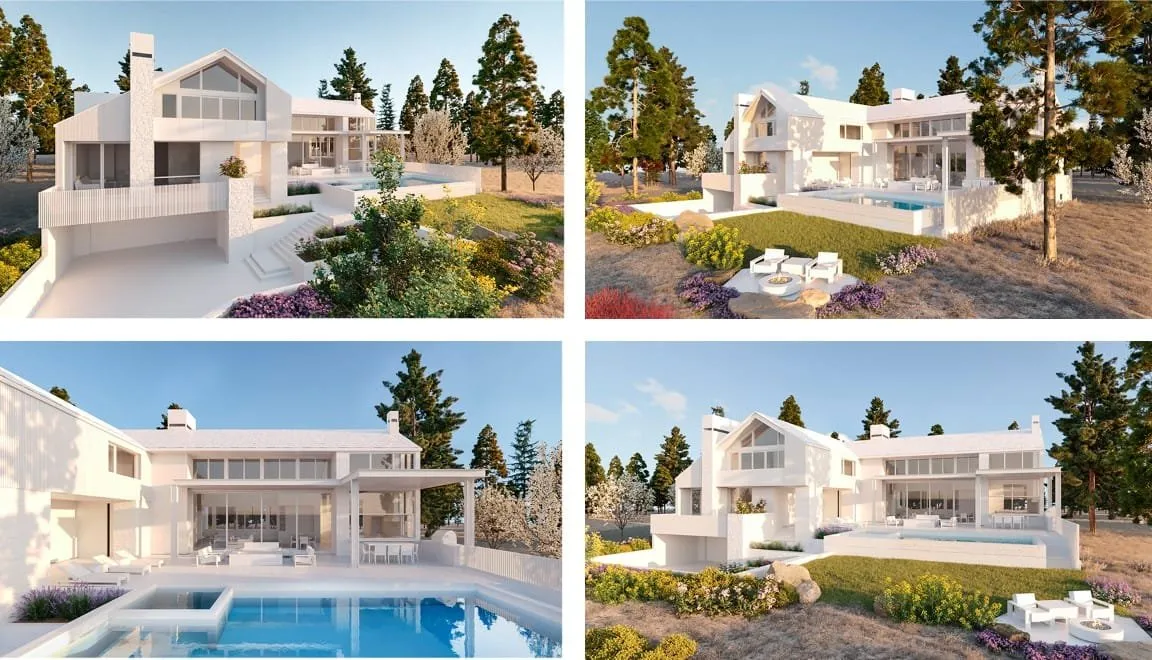
So modeling has become easier. But AI is helping with the work, not doing it. Most of the modeling is still manual, and it is the manual part that makes the model accurate. For more on why we check the model from every angle before anything else, see why we white-model every angle first.
Concept Images: Where AI Can Replace a Rendering
Once we have a model, we can use AI tools like Nano Banana to turn it into images. And they look beautiful.
For conceptual work, where the level of detail is not that important, these images can genuinely replace a traditional 3D rendering. In cases where, a few years ago, the only option was a full rendering, we can now produce a beautiful image that shows the idea.
Two situations where this works well:
- Spaces for tenants nobody knows yet. Sometimes a space has to be marketed to potential tenants before anyone knows who they are or what they will do there. The image only needs to show a possibility, how the space could look. AI concept images are a great fit.
- The early stage of a project. When someone wants to show a client an idea before committing to the proper work, a concept image says enough. Nobody is signing anything based on it.
There is one catch, and it is a big one: we cannot control the details.
Accurate Renderings: Where AI Falls Apart
Most of what we do is for architects and real estate developers who need renderings that show exactly how the building or the interior will look. The real window rhythm. The real stone. The real cabinet the client chose, in the right finish, at the right height.
This is where AI stops working. Ask it for a beautiful image and it delivers. Ask it to change one specific thing and keep everything else the same, and it starts redrawing the room. Ask for a second view of the same space and the details no longer match the first. When you try to control the details with AI, things fall apart.
So when a client needs to control every single detail, and to ask for any change and see exactly that change, the work is still done in real 3D, by hand. That may change in the future. We test new tools almost every day, and one of them may eventually do it. But it is not there yet.

This matters most when money or approvals depend on the image. A buyer reserving a unit off-plan, an investor committee, a planning board: all of them are trusting that the rendering is what will be built. An image that is beautiful but wrong is a risk to the project, not an asset. Our guide on what defines quality in 3D rendering goes deeper into why accuracy is the first test.
People and Surroundings: Where AI Shines
Then there is everything around the design: the people, the landscape, the setting. This is where AI has made the biggest difference to our daily work.
People. Most renderings need people in them, and placing convincing people used to be fiddly work. AI now does a great job of adding people, and this part of the job has become really easy.
Generic surroundings. If a house sits in a forest or on a beach, and the exact trees do not matter, AI can create that setting well. A house in the woods can get its woods from AI.
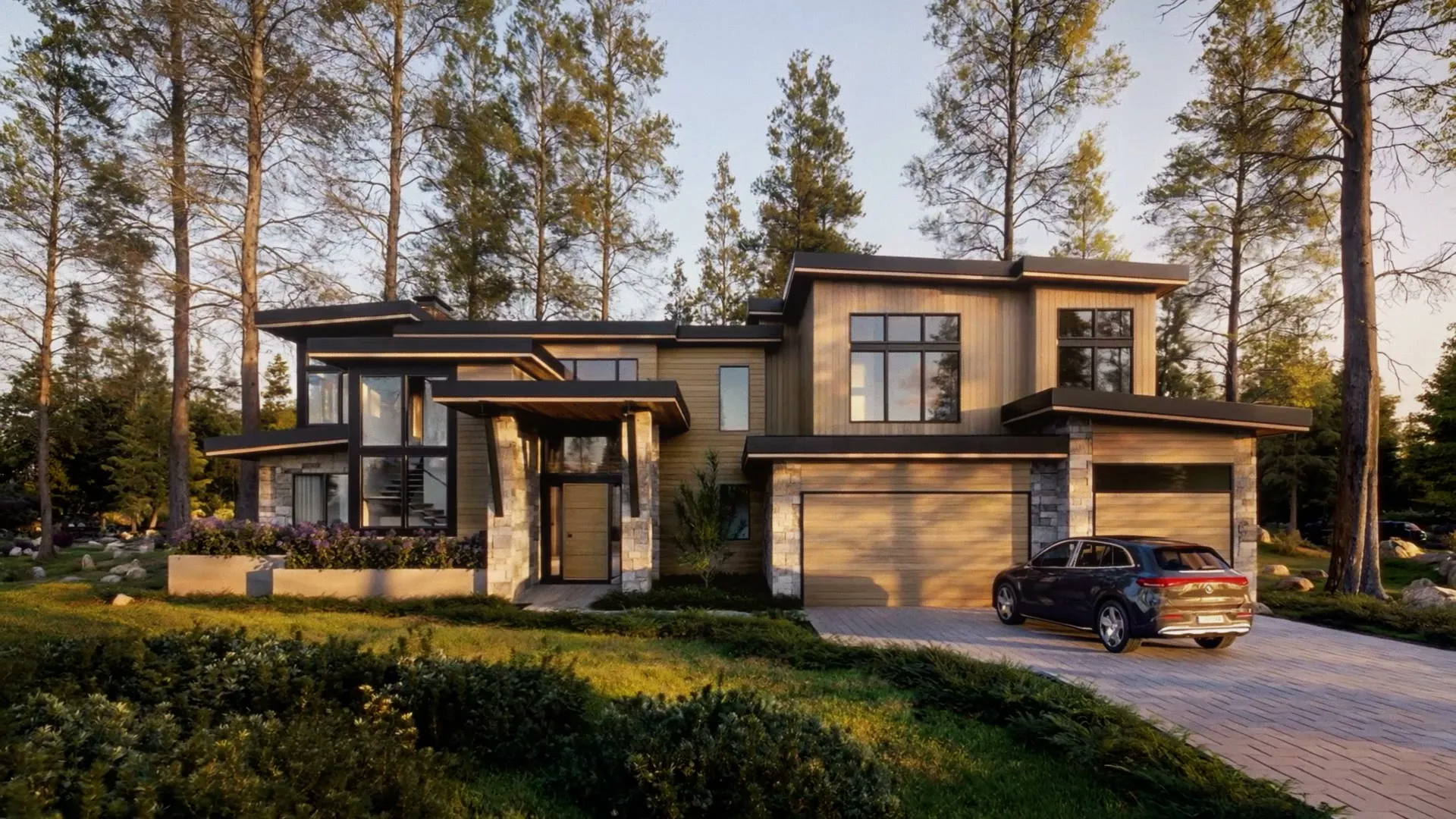
Specific surroundings. If the setting has to be accurate, it is a different job. A house surrounded by particular neighboring buildings, a real street, a real view: here we need drone footage, site photos, or a 3D model of the context. AI cannot invent the building next door correctly. We cover the options in exterior rendering without a drone.
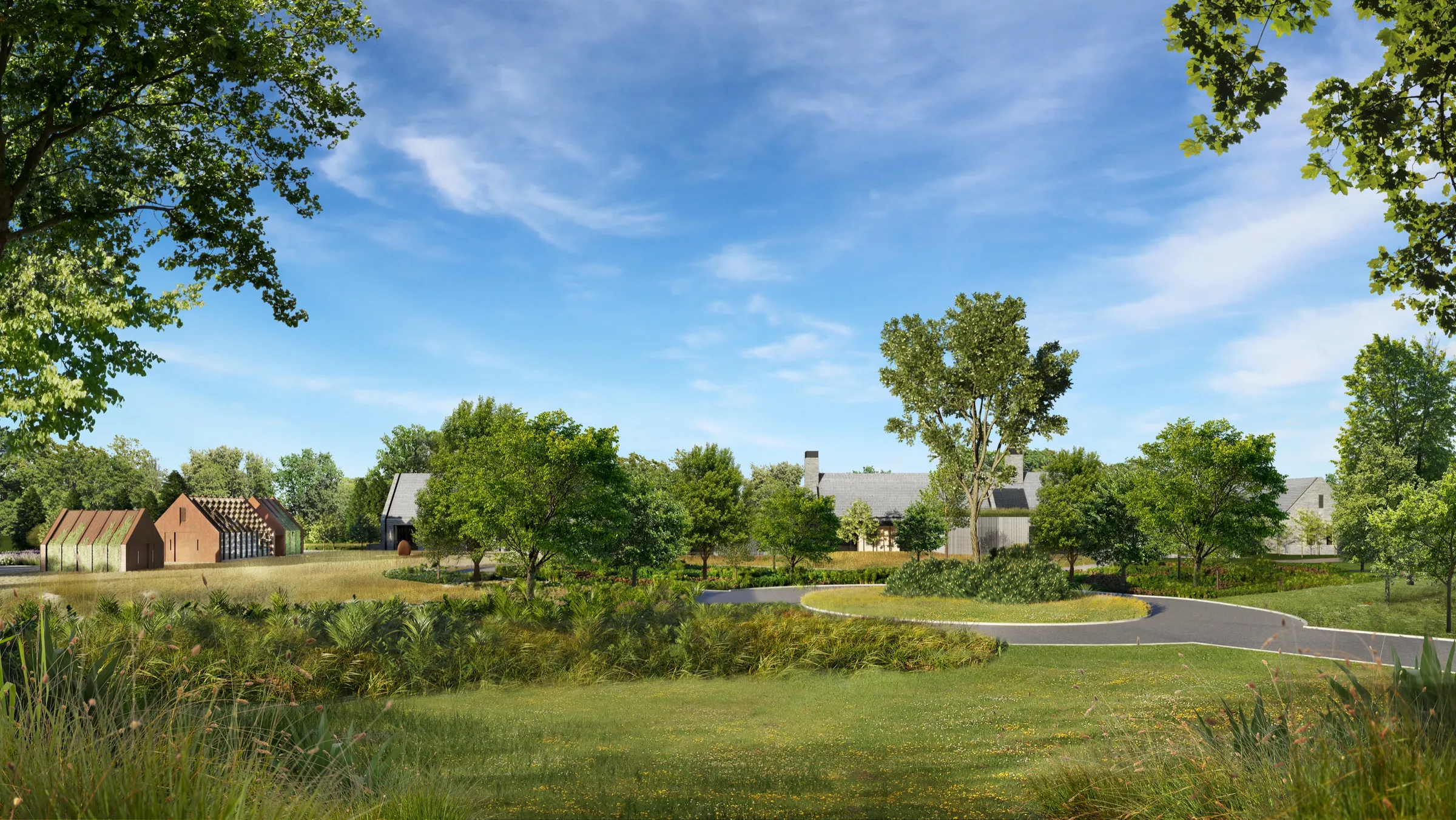
The landscape on Carrizo Lots in La Jolla is a good example of the two working together: we used light AI-assisted reference passes to agree on the look of the planting with the client first, then built it properly in 3D.
Animation: AI Handles About Half
Animation is the other big change. Tools like Kling AI can turn a still rendering into a short moving clip. As long as the camera move stays close to the original view, we can animate finished renderings with good results.
But this is only part of the work. When the camera has to travel a long way, move through the building, or show views that are not close to any rendering, AI cannot fill in what it has never seen. Those shots still need the real 3D model. In our experience, AI can help with about half of an animation, and the other half is still done in 3D. Our post on AI-assisted architectural animation shows where the line sits.
The Bottom Line: How Much of the Job Does AI Really Do?
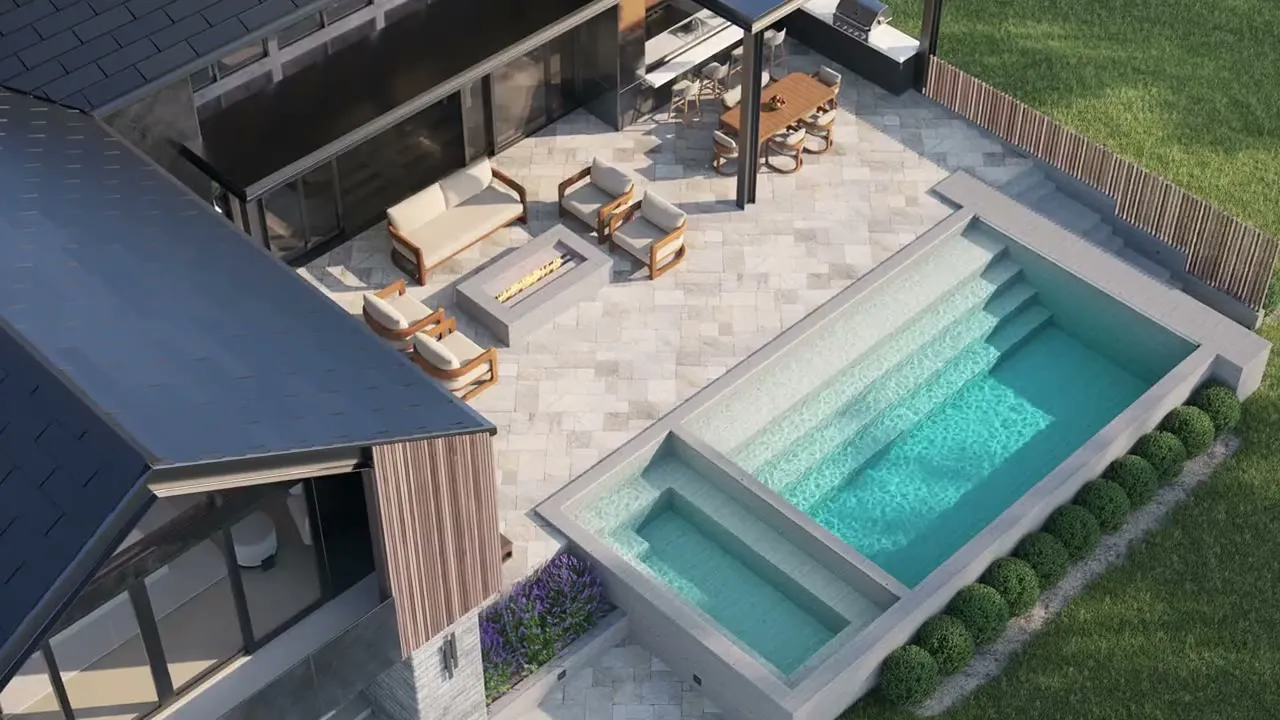
AI is genuinely helping in the process of creating renderings. Depending on the scope, we would say roughly 30 to 50 percent of the job can now be done with the help of AI: a first pass at the model, furniture from photos, people, generic surroundings, and parts of the animation.
The heavy lifting is still done in 3D, by people: the accurate model, the materials, the lighting, and every detail the client wants to control.
That combination, manual work supported by AI where it helps, is where the value is. It lets the team produce results that simply were not possible before.
So when a client asks us whether AI can do their renderings, our answer is a question: what does the image have to do? If it has to show an idea, AI may be all you need. If it has to show exactly what you are going to build, you still need 3D, and a team that knows where AI helps and where it does not. If you are not sure which one your project needs, that is a conversation we are happy to have.
FAQs
Can AI do architectural renderings?+
For concept images, yes. Tools like Nano Banana make beautiful images that are good enough to show an idea. For renderings that must show exactly how a design will look when it is built, no. Once you try to control the details, AI images fall apart, so accurate work is still built in real 3D.
How much of a rendering project can AI do today?+
In our experience, depending on the scope, AI helps with roughly 30 to 50 percent of the work: a first pass at the 3D model, furniture from photos, people, generic surroundings, and short animations from finished stills. The heavy lifting, the accurate model, materials, lighting and every detail the client asks for, is still done by hand.
Does a studio that uses AI still build a 3D model?+
Yes. AI can produce a rough first model from full architectural drawings, but it is far from perfect. We refine it by hand until it matches the design. That model is what makes every view consistent and every detail controllable.
When is an AI rendering good enough?+
When the image only has to show a possibility, not a promise. Early-stage concepts, or spaces shown to future tenants nobody knows yet, are good examples. When a buyer, investor or planning board will rely on the image, it has to be accurate, and that still needs real 3D.