Architectural Animation for Real Estate: What It Is for and How It Is Made

Lukas Berezowiec · CEO of NoTriangle Studio
Updated · 10 minutes
Key takeaways
Architectural animation is a short film of a building that does not exist yet, rendered from the same 3D model as the still renderings and used to launch, sell, fund, or win approval for a project before it is built.
- Marketing film
- The flagship format: the piece that runs on the project website, at the broker event, and in press coverage
- Walkthrough
- A first-person move through the interior, for sales offices, remote buyers, and listings
- Flythrough
- An exterior move that shows the building in context, for design review, investors, and launches
- Before production
- Scope the film with the rendering set rather than after it
Architectural animation is a short film of a building that does not exist yet, rendered from the same 3D model as the still renderings and used to launch, sell, fund, or win approval for a project before it is built. In real estate it comes in three main formats: a marketing film for the launch, a walkthrough that moves through the interiors for sales, and a flythrough that shows the building in its setting for investors, approvals, and press.
Every film this post points to is a real one from our case studies, each running roughly a minute to a minute and a half, and each made for a different job. We will cover what each format is for, how a film is actually built from the rendering model, and what a developer should have ready before it starts.
If you want to see the full range of films we produce, our architectural animation service page has them in one place. This post is the explanation behind them.
What Architectural Animation Is, and What It Is Not
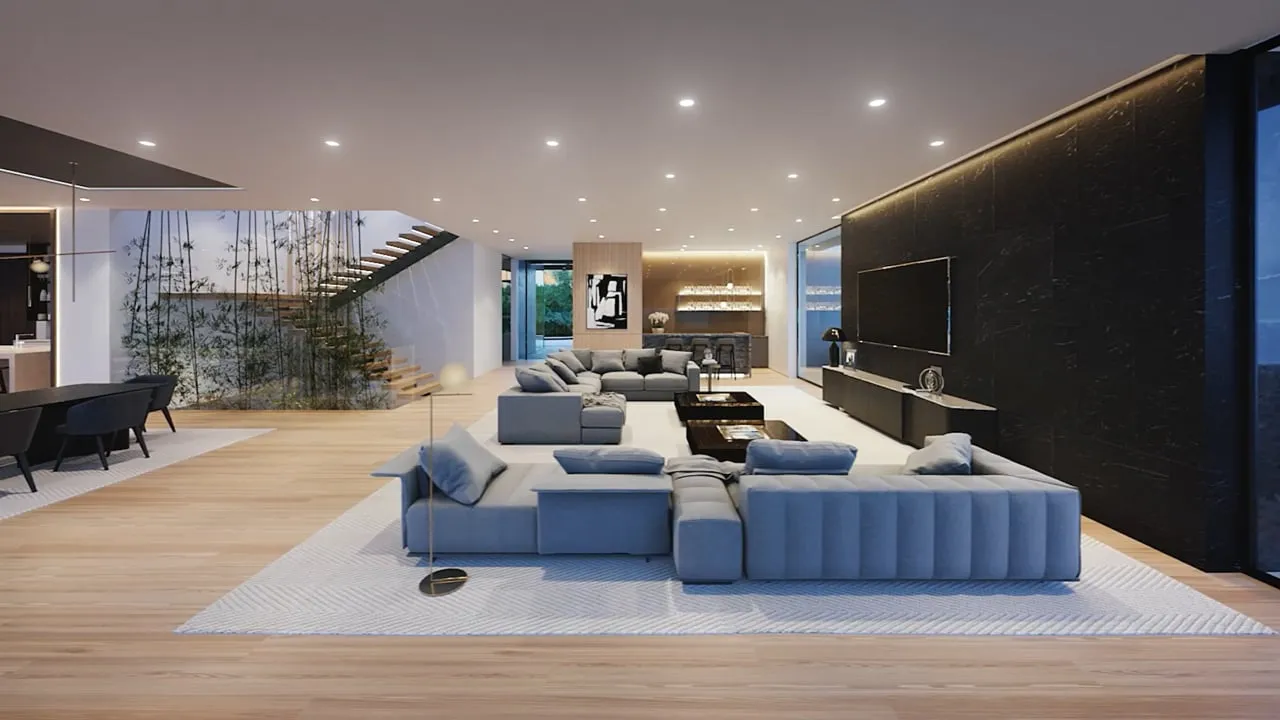
Animation is not a replacement for renderings. It comes after them. The modeling, the materials, the lighting, and the art direction are all established in the still set first, and the film draws on that foundation. What it adds is the one thing a still image cannot give a buyer: movement through space, in sequence, with pacing and sound.
That is why we treat a film as part of the rendering project rather than a separate production. Planned at the start, it uses the same model, the same approved angles, and the same look. Added as an afterthought, it often means rebuilding scenes that were only ever finished from one camera position.
The Three Formats
The Marketing Film
The flagship format. A produced film that combines the exterior approach, interior moments, lifestyle, and atmospheric detail, with a narrative arc, music, and deliberate pacing. It is the piece that runs on the project website, at the broker event, and in press coverage.
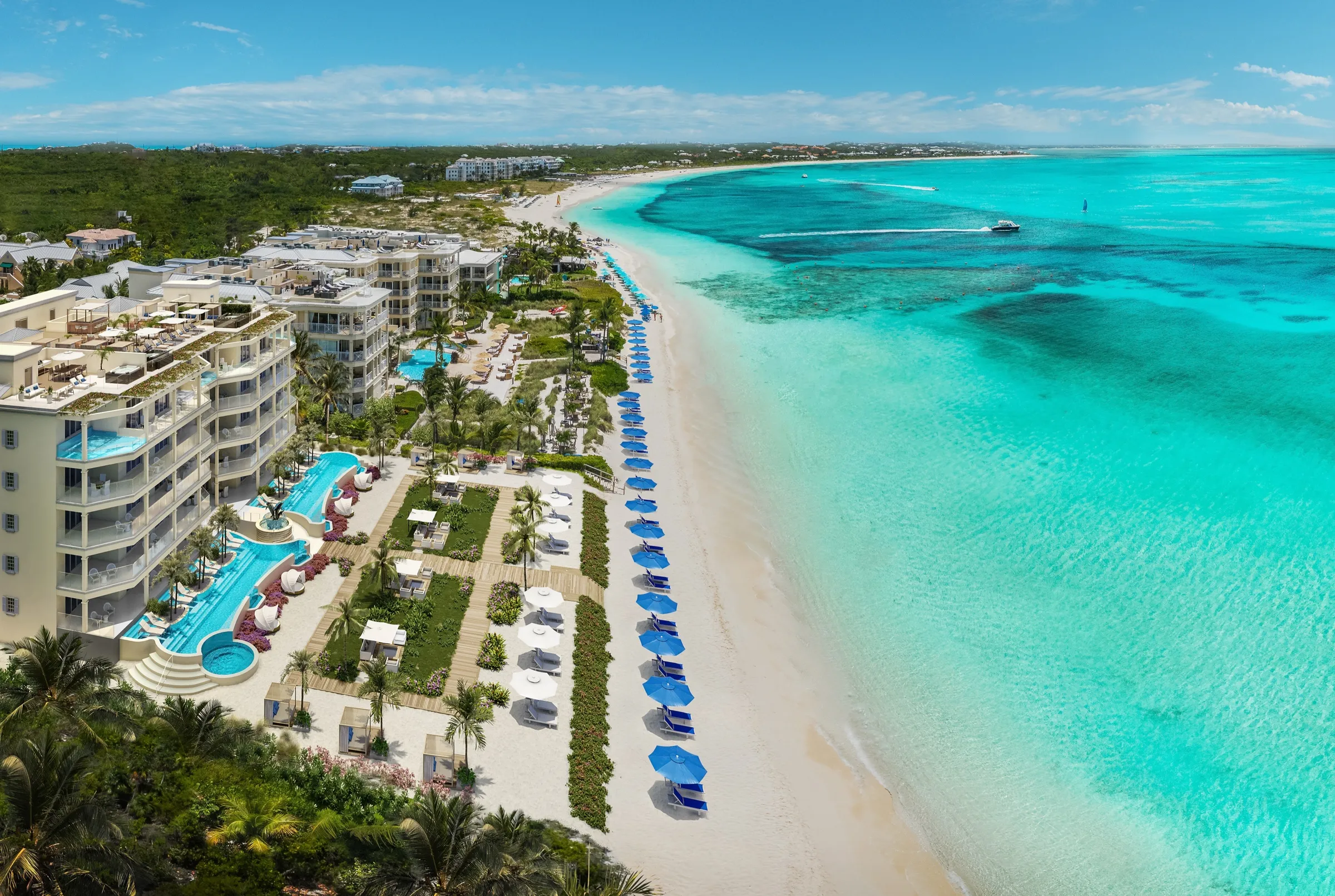
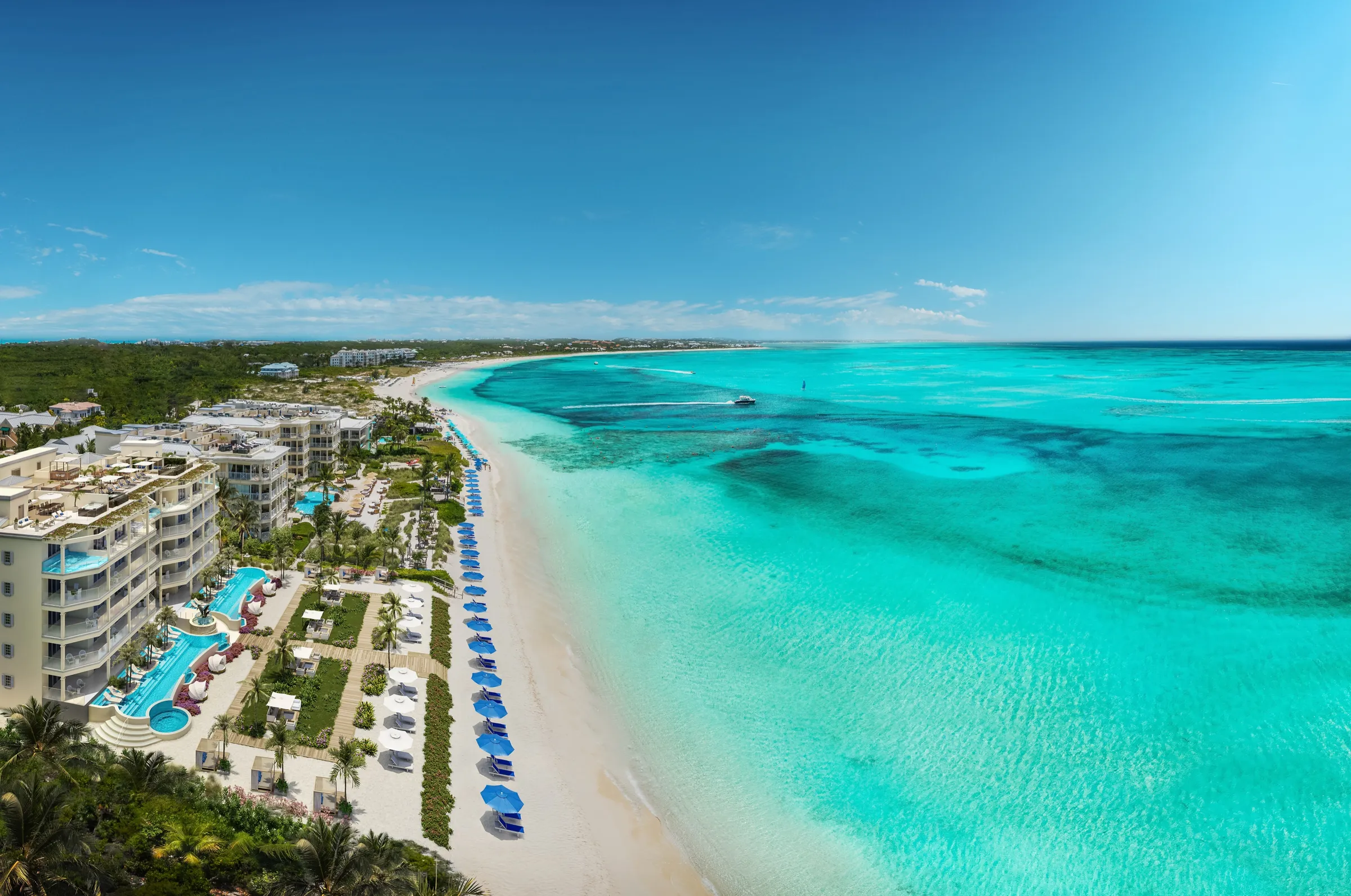
The pre-launch film for Sankari Place in Dubai, the world’s first standalone Regent Residences, with twin towers designed by Foster + Partners, is a good example of how far a marketing film can move away from explaining the building. The brief was to build anticipation, so the film was assembled from close-up architectural moments, partial views, atmospheric light, and material detail. Suggestion rather than explanation. It paired selected CGI shots with high-end lifestyle footage aimed at the buyers the project was written for.
The Walkthrough
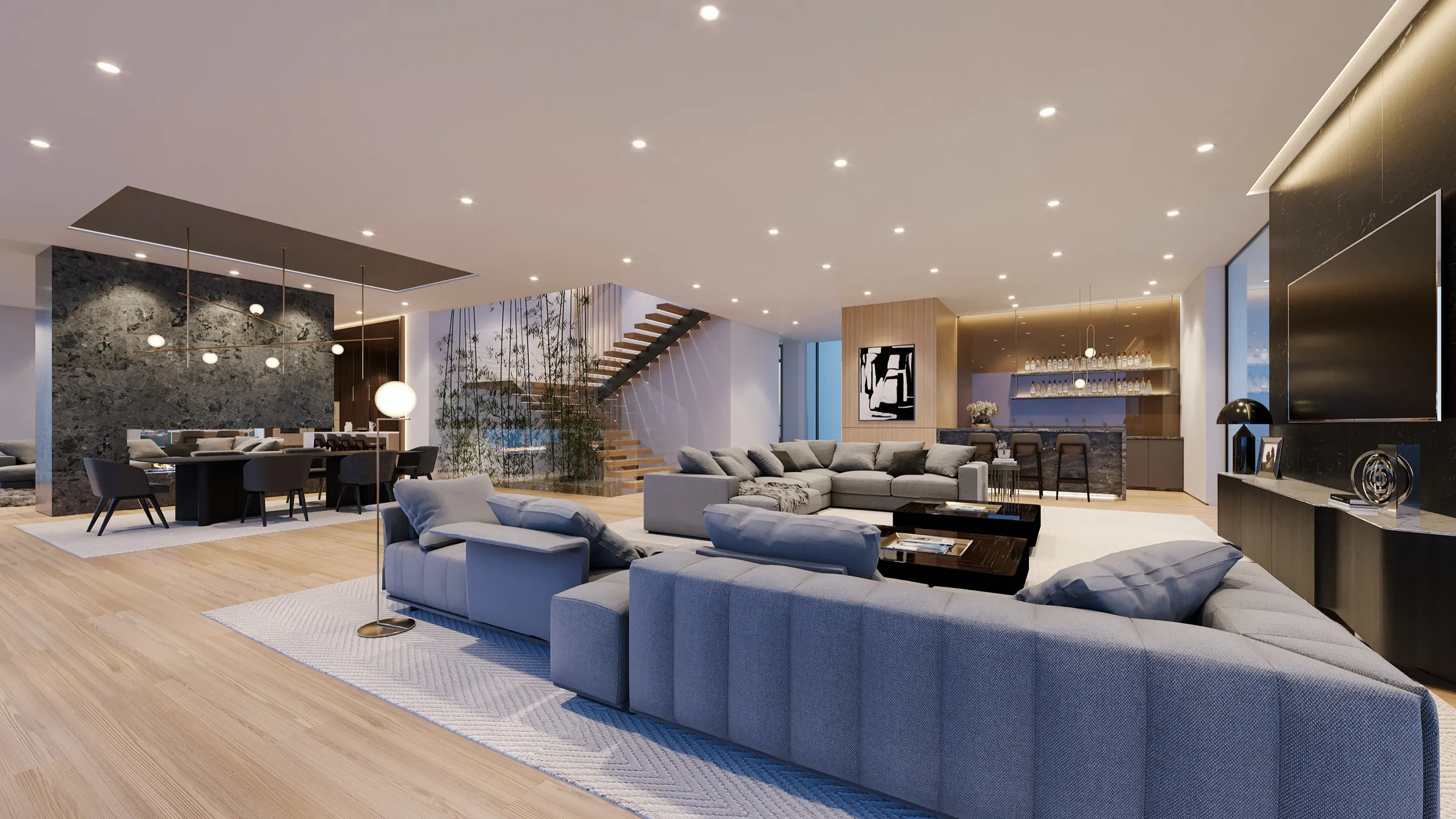
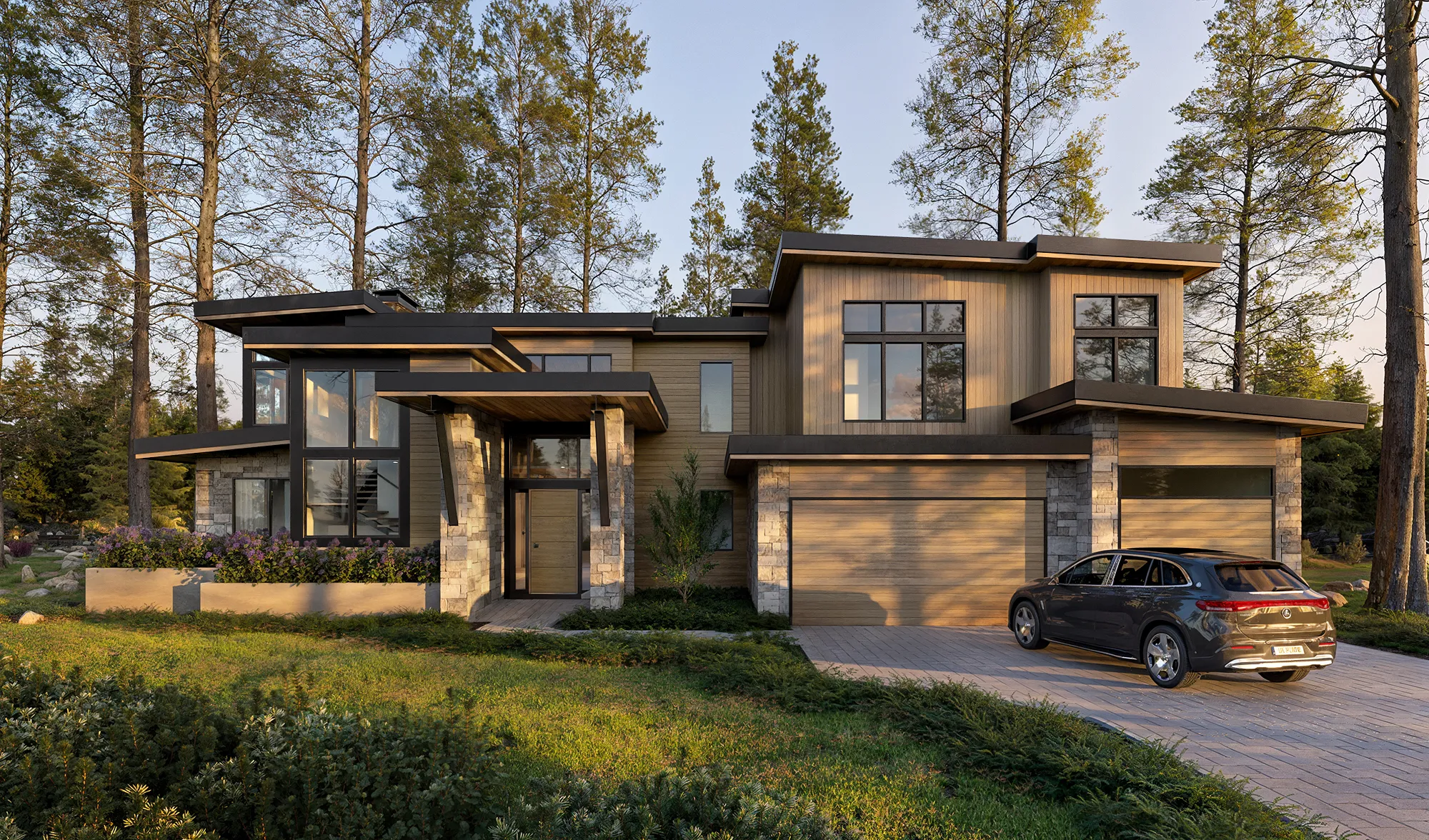
A first-person move through the interior: the entry sequence, the principal rooms, the key amenities. It shows spatial sequence and scale in a way floor plans and stills cannot, which makes it the format for sales offices, remote buyers, and listings where a buyer needs to understand the layout before visiting.
A walkthrough can also show something a still cannot explain at all. At 1660 Casale Road in Pacific Palisades, the estate’s two-story showcase garage has a hydraulic turntable car lift. In the film, the lift descends while spinning with a car on it, so a buyer sees the amenity work instead of looking at a static room.
The Flythrough
An exterior move around or through the development, often combining aerial and ground-level sequences. It shows the building in context: the approach, the massing, and the relationship to the landscape or city around it. That makes it the natural format for planning and design review, investor presentations, and launches where the setting matters as much as the interiors.
In practice, many films blend formats. The pre-sales film for The Addie at Westlake, a 46-home gated community in Austin, was structured in three movements: an aerial arrival that establishes the site and the surrounding Hill Country, a descent to street level, and a slow car-follow sequence through the gate and the internal streets. At the client’s request it then extended inward with a short interior walkthrough. For a fuller comparison of the two camera approaches, see 3D walkthrough vs flythrough animation.
What Each One Is Used For
The right format depends on the job the film has to do. These are the four jobs we see most.
Launch and PR
A short film is the most shareable piece of content a development produces, and at a launch it is often the first thing the market sees. On Sankari Place, the pre-launch imagery carried the Sankari and IHG partnership announcement in September 2024, and the full film was published that December, on the day Foster + Partners publicly revealed the design. Each asset was built for its moment. Our guide to branded residences visualization covers how that phasing works on a branded launch.
Sales
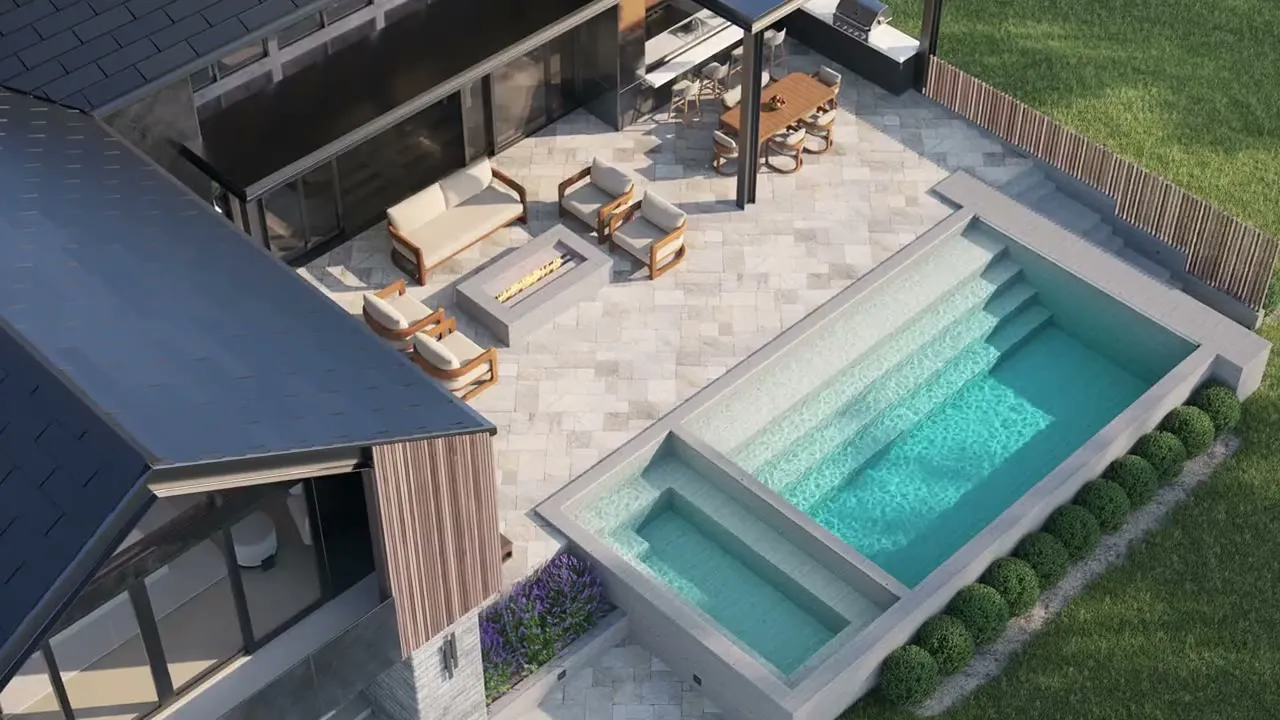
When there is nothing to walk yet, the film is the closest a buyer gets to being there. For the Clear Creek estate at Lake Tahoe, the 60-second animation sat alongside fifteen renderings, a VR tour, a property website, and floor plans, and the brokerage used it in private presentations to support pre-sale conversations. The home sold while it was still under construction, a record residential sale for Northern Nevada outside the Tahoe Basin.
“Their work is truly best-in-class, some of the highest quality, most realistic renderings we’ve seen in the industry. Beyond the visuals, what really sets NoTriangle apart is their responsiveness, professionalism, and ability to understand the emotional and architectural story behind a property. […]” Tyler St Pierre, Chase International
The Addie at Westlake is the multi-home version of the same story. The film and the still set anchored the MLS listings, sales presentations, website, and brochures, and every one of the 46 residences sold off-plan, largely before homes rose on the site. The client singled out the calm, gated car-entry sequence as especially effective in setting the tone of privacy and retreat.
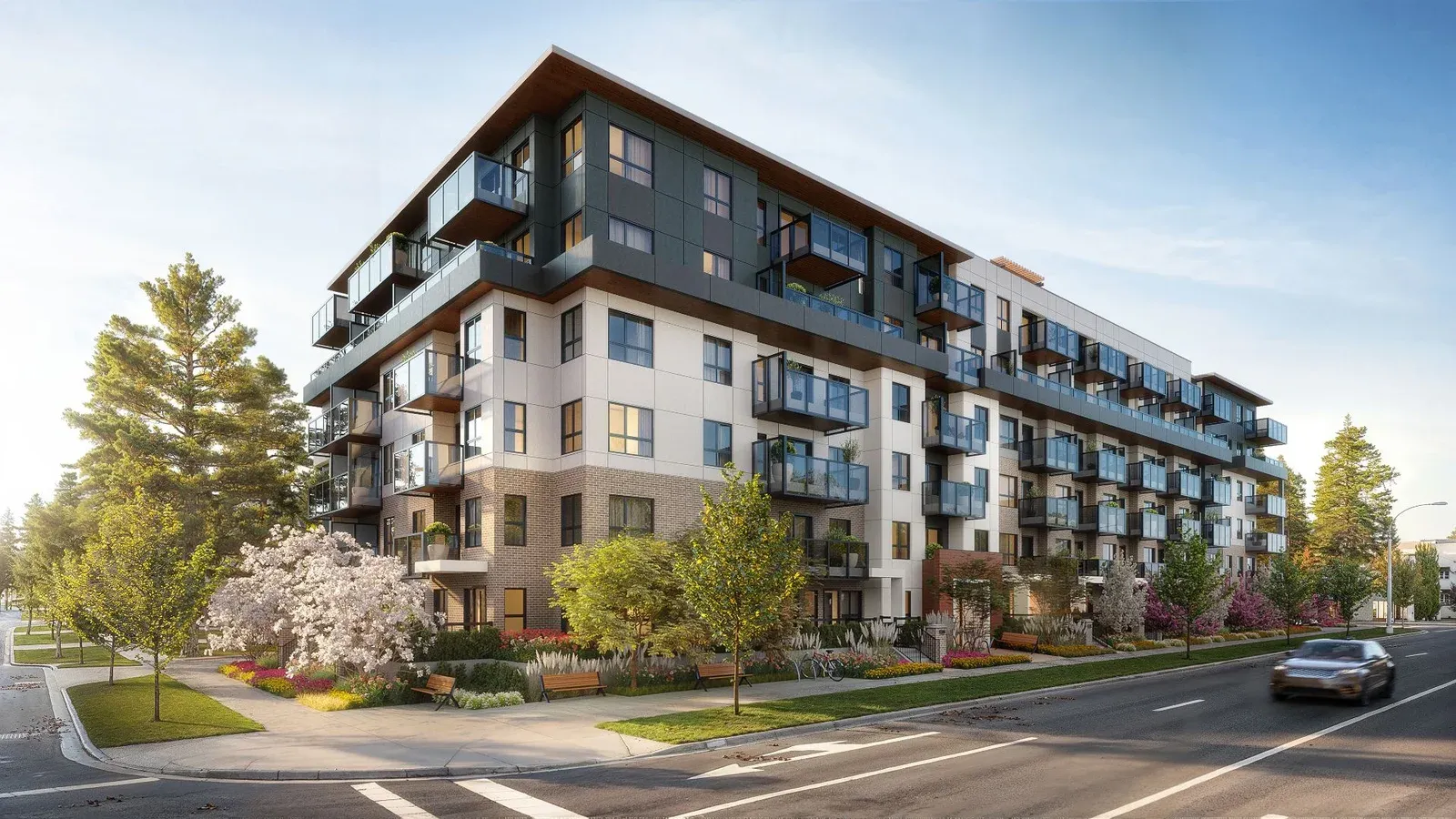
On Muse, a 108-home condominium launch in Metro Vancouver, one animated film and fourteen renderings carried the pre-sales rollout across the sales centre, brochures, the project website, digital advertising, MLS, and social. For the wider picture of selling before completion, see our guide to pre-selling real estate with 3D visualization.
Investors and Capital Partners
Capital partners and boards respond to film because it shows the ambition and scale of what they are funding without asking them to read drawings. A flythrough that establishes the site, the massing, and the setting is usually the right format here, and accuracy matters more than mood. We go deeper in 3D visualization for capital raises and investor decks.
Approvals
For planning boards, design review, and community meetings, a flythrough shows how a project sits in its surroundings: the approach, the height, the relationship to the street and the neighbors. An approval film should be clean and accurate, with fair light and full visibility. It is a different film from the launch piece, even when both come from the same model.
How a Film Is Built from the Rendering Model
The sequence below is how our films are made. Every step exists to make sure the moving camera does not reveal anything the stills were allowed to hide.
- Start from the architect’s files. The model is built from the project’s CAD and Revit files. At Casale Road we modeled the estate directly from the architect’s files, so the exteriors and interiors read as one property. At Sankari Place we remodeled the tower from the latest Foster + Partners Revit file before any imagery was made.
- Finish the model for motion. A still only needs to hold up from one angle. A film sees rooms from many angles and at different distances, so the scenes the camera passes through have to be complete, and anything that moves, like the car lift at Casale Road, has to be modeled as a working mechanism.
- Approve the camera path in greyscale. Before anything is rendered in color, camera moves are proposed as untextured views for sign-off. At Casale Road the client approved the greyscale angles for the garage sequence before the scene was built out.
- Ground it in the real site. A building floating in a digital void does not sell. For The Addie, the developer supplied drone footage and photography of the land, and we composited that real aerial backdrop behind the 3D models, matching grading, landscaping, and sightlines from the architect’s CAD.
- Carry the look over from the stills. Materials, lighting, and color come from the approved rendering set, so the film and the stills belong to the same project. On The Addie, stills and animation drew on one shared asset base for exactly this reason.
- Edit it like a film. Pacing, music, title cards, and the order of shots decide how the film feels. On Muse, the camera order was re-sequenced during review to improve the narrative flow, title cards were added, and the lifestyle pacing was adjusted.
- Deliver the versions you will actually use. Casale Road was delivered as a branded version for the brokerage and a clean, unbranded cut for the MLS and outside agents. Source files and individual clips can also be handed over when an agency needs to recut the work.
What to Prepare Before Production Starts
A film goes better when these are settled early. None of them need to be perfect, but each one you can answer saves a round of rework later.
- The job the film has to do. Launch, sales, investors, or approvals. Each one changes the format, the tone, and how much of the building the film shows.
- The one feature that sells the project. The view, the amenity, the arrival sequence. At The Addie it was privacy and retreat. At Casale Road it was the showcase garage. The film should be built around it.
- The design files. CAD or Revit models, elevations, floor plans, landscape plans, and material schedules. Our list of files needed for 3D rendering covers what helps most.
- Interior specifications. Finish schedules and FF&E, if the film goes inside.
- Brand guidelines. On a branded project the film has to sit beside the operator’s own material. For Sankari Place we worked from Regent’s photography guidelines.
- Site footage or photography. Drone footage of the actual site makes the aerial sequences read as the real place, as it did on The Addie.
- Where the film will run. Website, sales centre, MLS, social, investor deck. That decides the versions you need, branded or unbranded, and whether you will want the source clips.
- Who approves it. Name the reviewers early and gather their comments in one place, so the film is not pulled in several directions at the end.
If you are planning a launch, scope the film with the rendering set rather than after it. That is when the model, the angles, and the look are being decided, and the film can be designed into them from the start.
FAQs
What is architectural animation used for in real estate?+
It is used to launch, sell, fund, and win approval for projects that are not built yet. A marketing film carries the launch and press, a walkthrough helps buyers understand the interiors, and a flythrough shows the building in its setting for investors and planning boards.
What is the difference between a walkthrough and a flythrough?+
A walkthrough moves through the interior at eye level, room by room. A flythrough moves around the exterior, often from the air, to show the building in its context. Many real estate films combine the two, as The Addie at Westlake did, and our post on walkthrough vs flythrough compares them in detail.
Do I need renderings before an animation?+
Usually, yes. The film is built from the same model, materials, and lighting as the still set, so the stills are where the look is decided and approved. Planning both together keeps the film and the renderings consistent.
How long is a real estate animation?+
Most of the films in our case studies run between about one minute and a minute and a half. The Clear Creek animation is 60 seconds, and The Addie at Westlake runs roughly 90. Length follows the job: a launch teaser can be shorter, while a sales film that includes interiors needs more room.
Can an animation show a building that has not been built yet?+
Yes, that is its main purpose. For The Addie at Westlake, the 3D community was composited over real drone footage of the site, so the film read as the actual place, and all 46 residences sold off-plan.
Can I get an unbranded version for the MLS?+
Yes. For 1660 Casale Road we delivered a branded version for the brokerage and a clean, unbranded cut for the MLS and outside agents. It is worth deciding the versions you need at the start, so they are planned into the edit.