
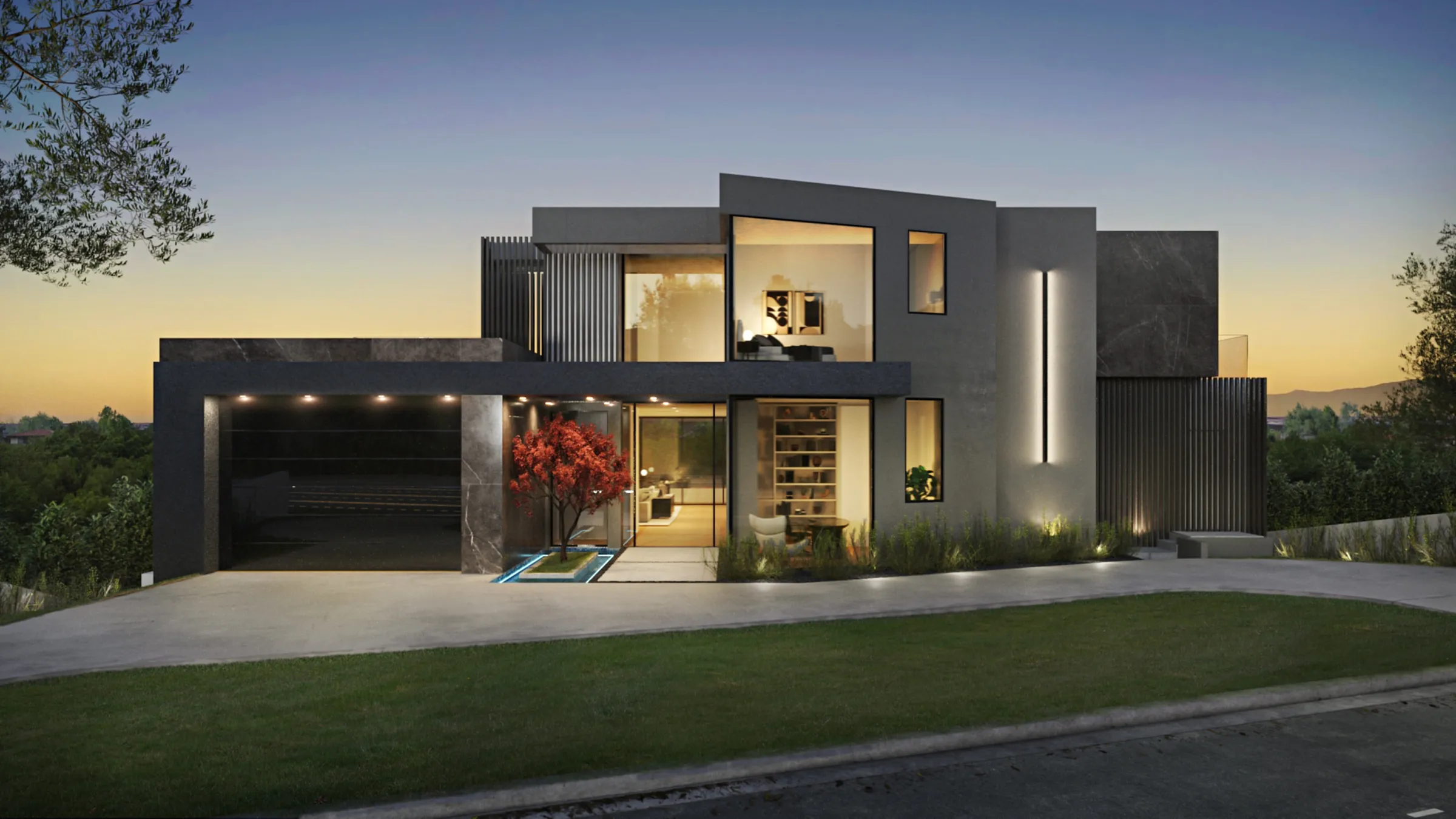
Choosing the Twilight Hero Exterior: Why Dusk Sells a Luxury Home

Rodolpho Reis·August 1, 2026 · 7 minutes
Look closely at the marketing for almost any luxury home and you will notice something: the headline exterior image is often the only one shot at dusk. The rest of the set is daytime, clean and bright, but the one image doing the selling is caught in that short window after sunset when the sky is deep and the house is lit from inside. That is not a coincidence, and it is not a default setting. It is a deliberate choice, and it is one of the most reliable ways to turn a competent exterior into a hero.
On our projects, the time of day for the hero exterior is a decision we make on purpose and lock early. Below is why dusk works, what the warm interior glow actually does for a buyer, and how we settle the lighting mood before rendering a single finished frame.
Why the hero gets its own time of day
Most views in a set share one time of day because consistency reads as calm and considered. The hero is the deliberate exception. On one luxury home in Los Angeles, the client set it out for us exactly that way: the rear-yard exterior should be twilight lighting only, and every other view could be the usual daytime. Before committing, he had even asked whether we produce night and late-twilight renderings at all, because he had seen twilight shots he liked and wanted to gauge whether the backyard view could be one. That is the pattern in a sentence. Daytime does the informing; one twilight view does the selling.
Different elevations can also carry different times of day for a reason. On a luxury cottage, the developer briefed the front and back separately: the front in a mid-morning summer light, around nine or a little earlier, and the back at sunset, golden hour, with minimal direct sun. The front is the arrival, crisp and legible. The back, where the living happens, gets the warmer, moodier treatment. Assigning the light view by view, rather than rendering everything at noon, is part of what separates a marketing set from a documentation set.
What dusk actually does: the interior glow
The real reason dusk works is almost mechanical. At noon, a house is lit from the outside and its windows read as dark glass. At dusk, with the sky dropped down, the interior lighting takes over and every window becomes a warm, inviting rectangle. The house stops looking like an object and starts looking occupied, alive, like somewhere you would want to be that evening. On one custom-home exterior, we suggested going dusk precisely so the lighting inside the building would show, and the client landed on the same reasoning in the same breath: go dusk, he said, so we can show off the lighting inside. That is the whole argument. Dusk is the only time of day that lets a rendering sell the interior from the outside.
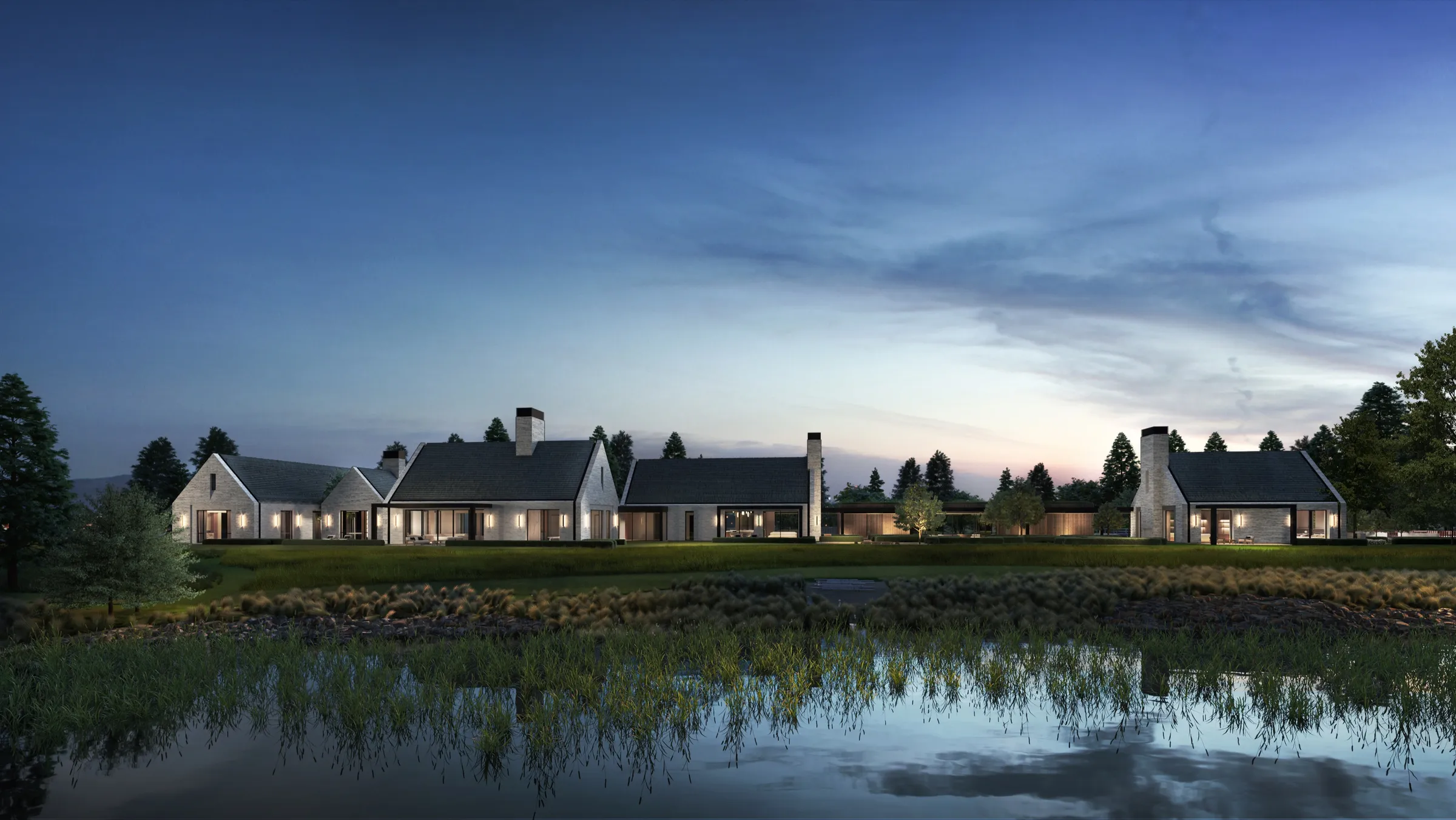
It is worth being honest about what this is. The warm glow is a technique, not an accident, and a good studio deploys it where it earns its place. The point is not to make every image dramatic. It is to give the one image that carries the home the conditions that make a buyer feel something, and then let the calmer daytime views fill in the facts.
Why dusk reads as premium
Dusk is not only warmer, it is coded. Taste-driven buyers consume this exact look every day, in shelter magazines and on the design accounts they follow, and it signals a certain tier before they have read a single detail. One developer building a series of luxury homes put it into the brief directly: he wanted carefully controlled lighting, sunset and dusk and dramatic glow, with proper art direction to give the images a magazine-level feel. On the call, he described wanting a night view alongside the daytime one specifically to get more of that drama. Dusk was his route to the editorial standard, not a garnish on top of it.
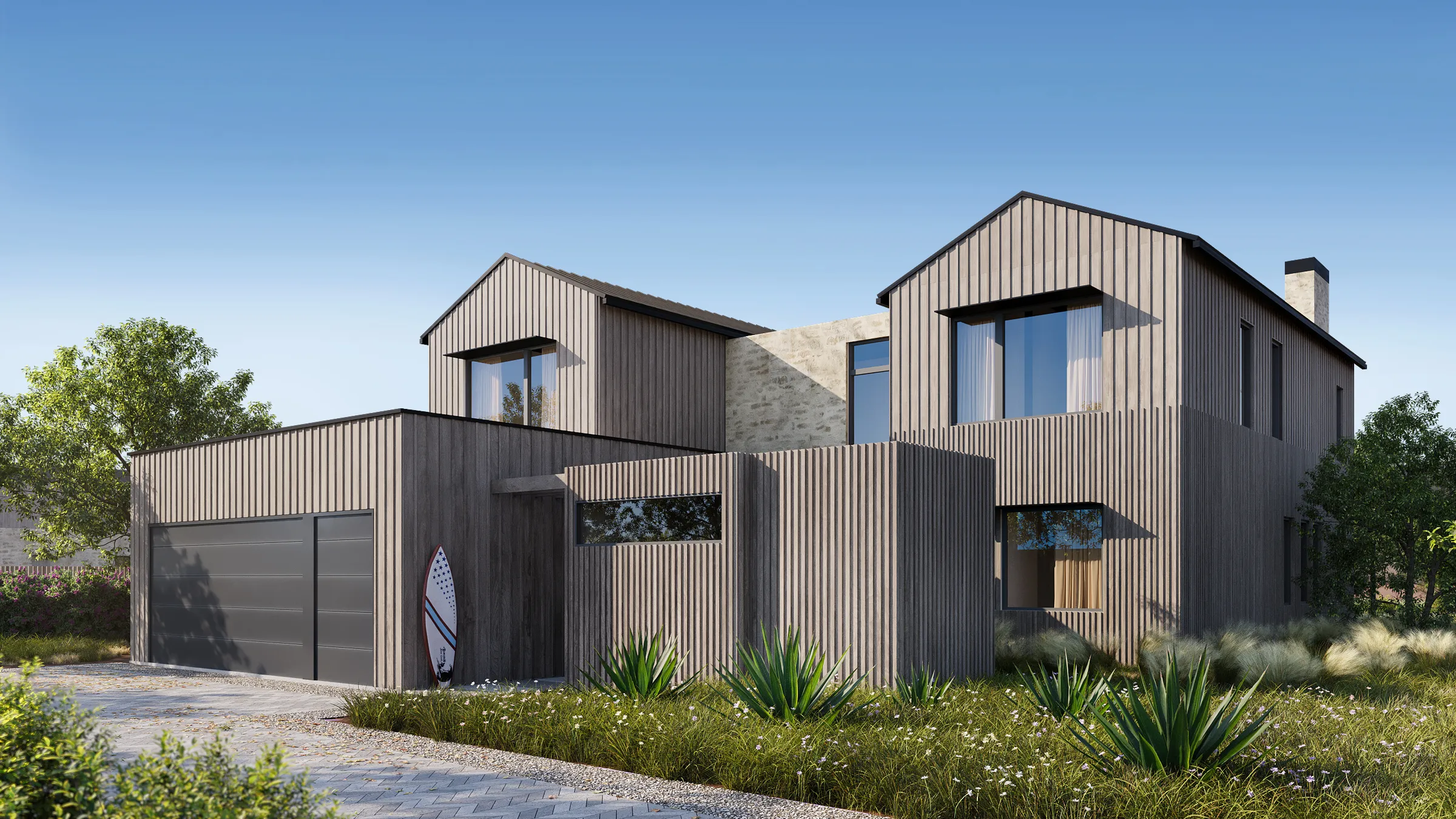
We hear the same instinct from clients across markets. On Austin Surf Club, the team wanted a run of views in a twilight, golden-hour treatment because the architecture asked for it, and reaching for that warmer light to lift a project to its next level is something we do often when a client wants it. The word clients reach for is almost always the same one: golden hour, magic hour, blue hour, the language of a photographer chasing the best light of the day rather than the most convenient.
Locking the lighting before we render
Because time of day changes everything downstream, we settle it up front rather than discovering it in a revision. Every project runs through a lighting moodboard, a short reference step where we propose the mood and the specific light for each view and agree it with you before any final frame is rendered. Clients engage with it at exactly that level of detail: on one high-end project, the senior designer answered view by view, blue hour here, daylight there, magic hour on the pool, treating the time of day as a real design choice rather than a slider we would nudge at the end.
Not every hero should be dusk, and the moodboard is where that gets decided honestly. On the luxury cottage, the client deliberated in the open, somewhere between daylight and golden hour, leaning toward daylight in the end, and that was the right call for that house. The discipline is not always choosing dusk. It is choosing the time of day on purpose, for reasons you can name, and locking it before the expensive work begins.
Bringing this to your project
When you brief the hero exterior on a luxury home, treat the time of day as a marketing decision on par with the camera angle. Ask what the one image needs to make a buyer feel, and more often than not the answer is a warm house against a fading sky. Then let the daytime views do the honest, informative work around it.
For how this fits the wider set, read why four great renderings beat fifteen average ones, see where the lighting moodboard sits in our visualization process, or look at how we work with luxury single-family developers.