
Case study
213 East 83rd Street
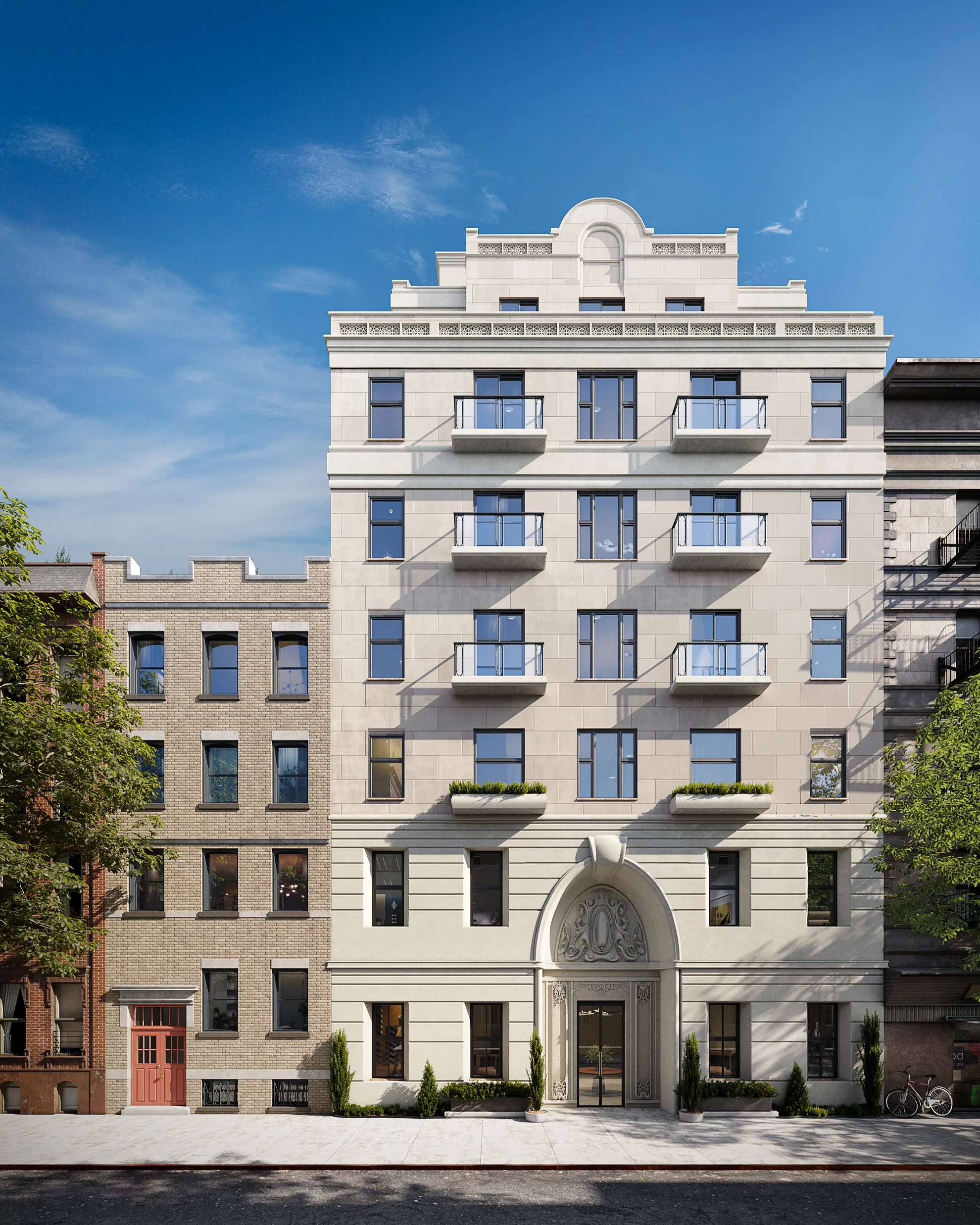
An investor-grade concept rendering that helped turn a Yorkville church site into a fundable condominium plan.
Project at a glance
An investor-grade exterior rendering created at concept stage to turn a church-conversion site into a fundable development vision. The project has since filed permits and moved into demolition under its full architectural team.
- Location
- Yorkville, Upper East Side, Manhattan
- Developer
- Saffayeh Development (AVENU)
- Site
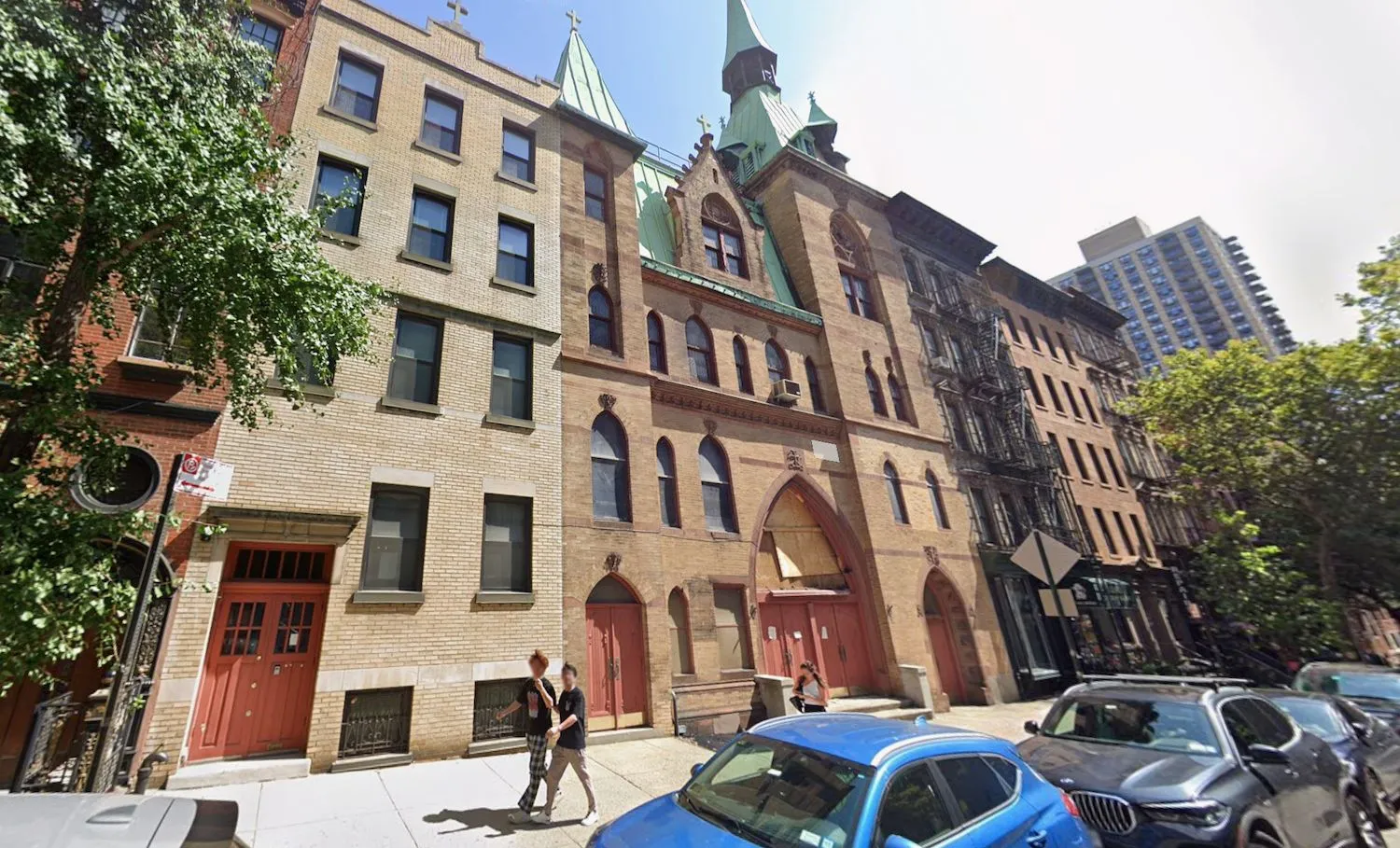
- Former Church of St. Elizabeth of Hungary
- Building type
- 7-story boutique condominium, eight residences
- Purpose
- De-risk an early-stage development for investors
- Scope
- Investor-grade exterior rendering and design direction
- Engagement
- Direct developer commission, under NDA
- Timeline
- Concept stage, 2024
- Current design team
- DOME Architecture, Paris Forino
- Status
- Permits filed 2024, demolition underway 2026
The brief
One Image to Make a Project Fundable.
A New York-based developer approached NoTriangle Studio with a high-stakes challenge: transforming an early architectural concept into a clear, credible investment vision for a boutique luxury redevelopment on the Upper East Side.
At this stage, the project was not ready for marketing, or even detailed design. But it did need one thing urgently:
Investor confidence.
The work became a clear example of how investor-focused townhouse visualization, used strategically, can validate feasibility, reduce perceived risk, and support early capital alignment, before construction begins.
The site
A Former Church, an Eight-Figure Plan.
Saffayeh Development secured a rare site in Yorkville: the former Church of St. Elizabeth of Hungary. The plan was to redevelop the lot into a 7-story luxury townhouse-style condominium, a boutique, high-end asset designed for discerning Manhattan buyers.
But before permits, construction, or even full architectural detailing, the developer needed a visual tool powerful enough to attract equity partners. Not just a rendering, but a Visualization for Guaranteed Investment, a photorealistic asset engineered to answer the investor's most important question: "If I commit millions, what exactly am I backing?"
Our role was to guide the visual and architectural direction of the project so the final image could work as a confidence-building tool for investors and lenders, a feasibility signal for zoning and neighborhood fit, and a north-star reference for the design development to come. In short: to transform uncertainty into visual clarity.
The challenge
Investors Do Not Buy Drawings. They Buy Certainty.
There was no finalized architectural design to work from. The team had only massing diagrams, conceptual facade studies, and early architectural sketches, and the townhouse concept needed refinement and polish before it could become investable.
The image also had to sit honestly in its neighborhood. It needed to respect Upper East Side architectural precedent, the aesthetic expectations of Yorkville buyers, and the scale and proportion constraints typical of Manhattan townhouse development. That required accuracy and restraint, not guesswork.
And the stakes were unusually high. The developer needed to secure support long before structural drawings, interior layouts, or material schedules were complete. The visualization had to feel premium, communicate feasibility, show sellability, demonstrate neighborhood fit, and project confidence. It needed to perform like a financial instrument, not artwork.
The approach
Massing First, Materials Second, Precision Throughout.
We gathered all the architectural studies, context photos, zoning parameters, and precedent materials, and built from them a clear, cohesive design direction for the facade, adapted for urban infill and townhouse precision.
Before applying any materials, the white-model stage refined the elements investors and the city judge first:
- 01Facade rhythm.
- 02Window proportions.
- 03Townhouse-style verticality.
- 04Balcony and limestone facade expression.
- 05Entrance symmetry.
- 06Overall scale in relation to the neighboring prewar buildings.
Once the direction was approved, we developed the final photorealistic rendering: limestone-like materiality, a premium townhouse facade composition with a symmetrical architectural presence, soft and believable Manhattan lighting, and contextual integration between the prewar neighbors. Each detail was calibrated to communicate luxury, viability, and market alignment to potential investors.
The image was created knowing it would be used in investor decks, pitch presentations, lender discussions, and zoning and permitting context packages. That demanded extreme precision, comparable to our highest level of exterior rendering work.
The outcome
From Concept to Permits and Demolition.
The visualization became the hero asset of the developer's investor pitch. It transformed a conceptual study into a fundable, believable development vision, de-risking an eight-figure project by visually proving feasibility at the earliest stage, alongside the refined massing direction and the context-integrated design documentation delivered with it.
The project has since moved. Permits were filed with the NYC Department of Buildings, and the development has advanced into demolition and pre-construction, with the built design carried forward by DOME Architecture and the studio Paris Forino on interiors. The early image did its job as the north-star reference the later team built from.
Projects like this are why developers choose NoTriangle in markets like Manhattan and Brooklyn: zoning-sensitive architecture, a neighborhood-fitting design language, an understanding of investor psychology, and early-stage feasibility visualization that turns concepts into capital.
Questions
Investor-Grade Rendering at Concept Stage
- Can a 3D rendering really help raise capital before a building is fully designed?
- Yes, and that was the entire point of the 213 East 83rd Street work. The developer had only massing diagrams and early facade studies when he needed to show equity partners what they would be backing. We organized the architectural studies, refined massing and proportions in a white-model stage, then produced one high-fidelity exterior image calibrated to read as premium, feasible, and contextually correct. At that stage the rendering works less like artwork and more like a financial instrument, answering the investor question of exactly what they are funding before construction money is committed.
- How do you keep an early concept rendering credible when there is no final design yet?
- By grounding it in the real site and its constraints rather than guessing. For this Upper East Side church-conversion site we worked from the zoning parameters, the neighboring prewar architecture, and Yorkville buyer expectations, refining facade rhythm, window proportions, and limestone-style materiality so the image respected its block. The result reads as a buildable, neighborhood-appropriate building, which is what gives investors and the city confidence in an early-stage proposal.
- What happens to an early-stage rendering once the project advances?
- It becomes the north-star reference the later team builds from. On 213 East 83rd Street the concept helped move the development from idea to fundable plan, and the project has since filed permits and entered demolition, with the built design carried forward by DOME Architecture and the interior design studio Paris Forino. The early visualization did its job: it de-risked an eight-figure project at the point when certainty was hardest to show.
Services on this project
Related projects
Start with a discovery call
Every project starts with a conversation. The call is where we understand the project and whether we're the right studio to do the work.