
Case study
University of Health and Performance
A veterans wellness and education campus for the nonprofit FitOps, rendered to convey the experience of the place, not only its architecture.
Project at a glance
NoTriangle produced eight renderings of two Workshop/APD-designed buildings, the mess hall and the classroom building, for the University of Health and Performance, a campus for the veterans nonprofit FitOps. The brief was not to picture the architecture, but to render the experience of the place: people gathering, learning, and moving through a quiet rural landscape.
- End client
- FitOps, a veterans wellness nonprofit
- Architect
- Workshop/APD
- Building type
- Veterans wellness and education campus (mess hall and classroom building)
- Location
- Gentry, Arkansas
- Purpose
- Convey the experience of the campus, not only its architecture
- Scope
- Eight renderings across two buildings, eye-level and aerial
- Engagement
- Part of an ongoing relationship with Workshop/APD
The brief
Render the Mission, Not Just the Buildings.
Workshop/APD designed the University of Health and Performance for FitOps, a nonprofit that trains military veterans to become certified fitness professionals, easing their return to civilian life and working to prevent veteran suicide. The campus sits on a rural site in the Ozarks of Northwest Arkansas, and the two buildings NoTriangle was asked to visualize, the mess hall and the classroom building, were the places the community would gather, eat, and learn.
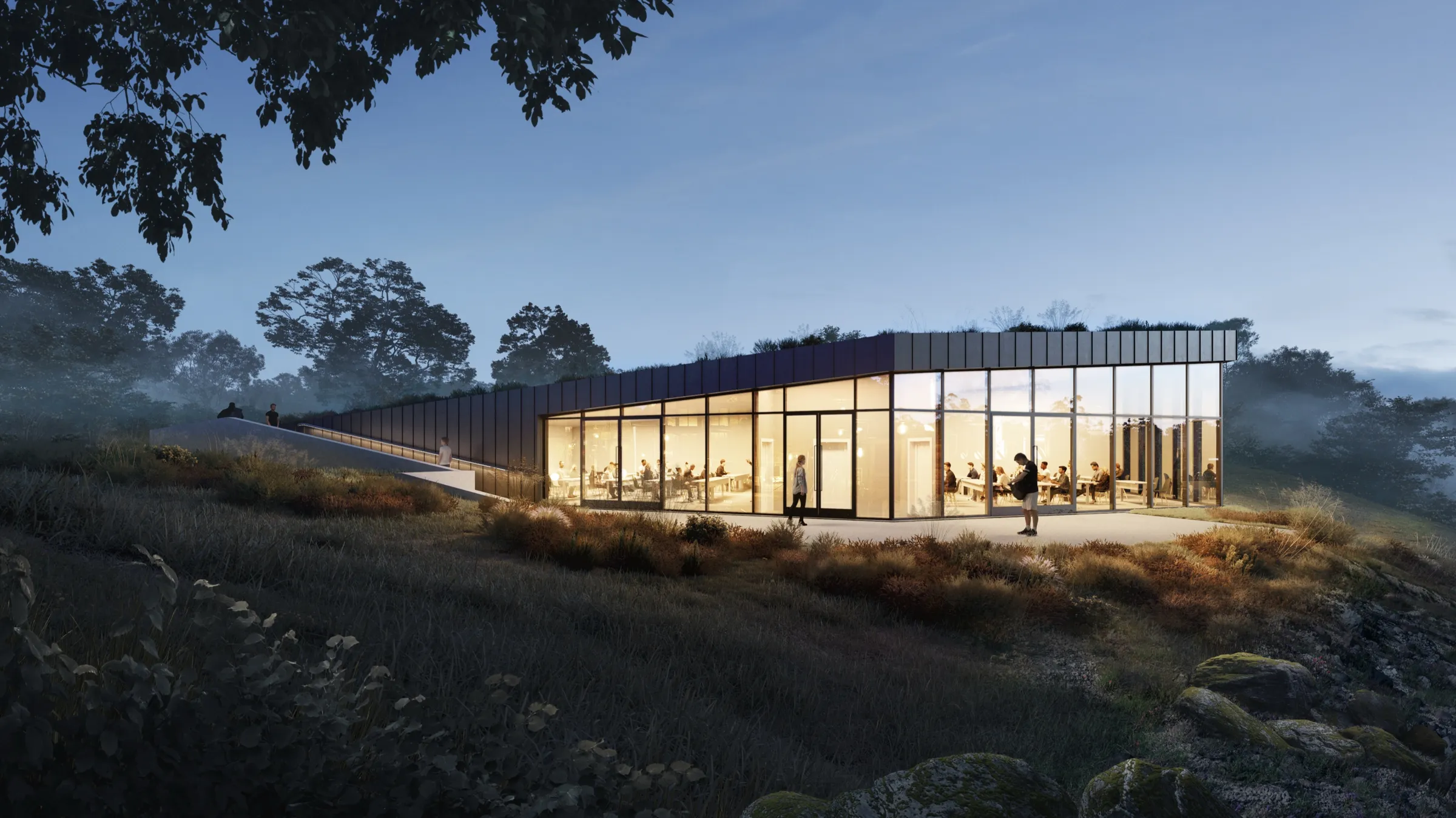
The request from the architect was specific. The renderings should tell a story and speak to the experience of the place more than to its architectural elements. The images had to feel the way the campus would feel once it was full of people, not present a building in isolation. That shifted the work from architecture to atmosphere: who is here, what are they doing, and what does it feel like to arrive.
The experience
A Place People Gather, Drawn Before It Existed.
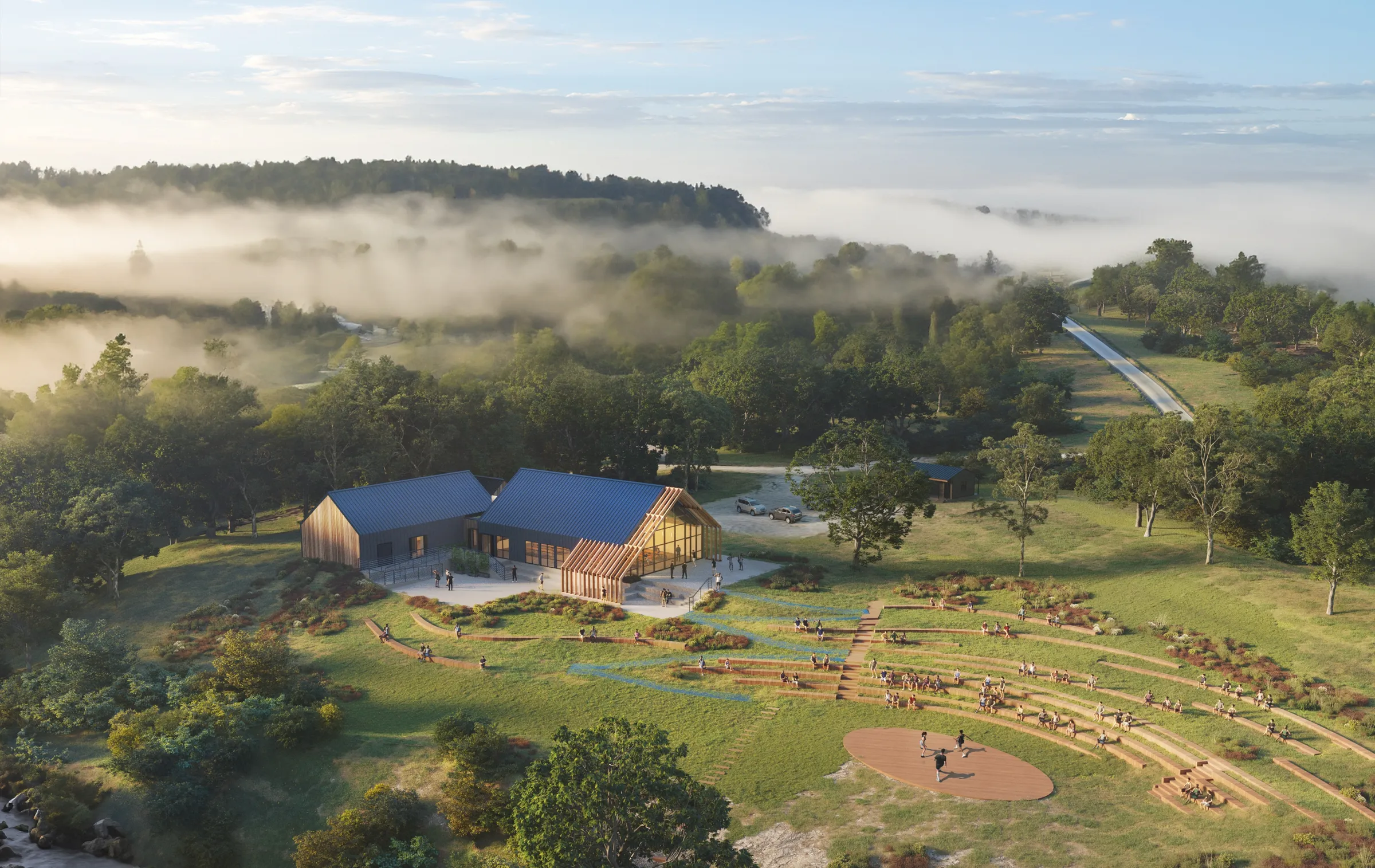
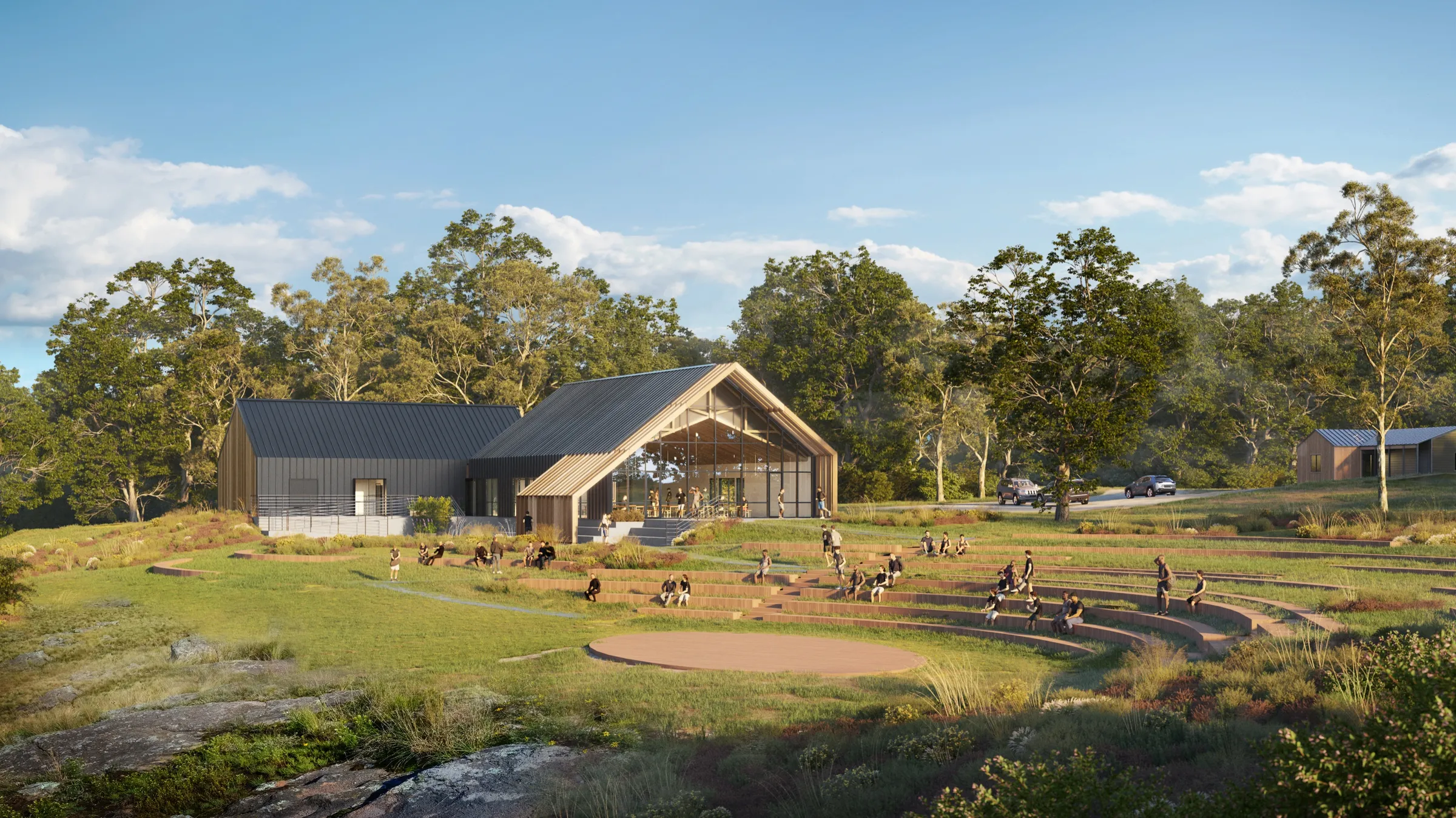
The strongest image of the campus is not a building, it is the amphitheater stepping down the meadow from the mess hall, filled with people. We staged the renderings around the way veterans would actually use the place, gathering outdoors, sharing meals, and moving through the landscape, so the work read as a community and not an empty set of structures.
The approach
Staged Around Real People.
Because the brief was about experience, the art direction started with the people. The studio built the scenes around how the campus would be used, and drew on the FitOps community itself for reference, the look and range of the people, their clothing, and the activity in each space, so the staging felt true to who the place is for rather than generic.
The buildings were modeled from Workshop/APD's design, and the cameras were locked in a white-model stage so composition could be approved before any surface was rendered. For the aerial views, virtual cameras were matched to the real Ozark landscape so each building sat honestly in its setting, at the height, angle, and light of an actual flyover. The result is a set of images that present the campus the way it would feel on a real morning, not as an architectural diagram.
Two buildings, one landscape
Built to Sit Lightly in the Land.
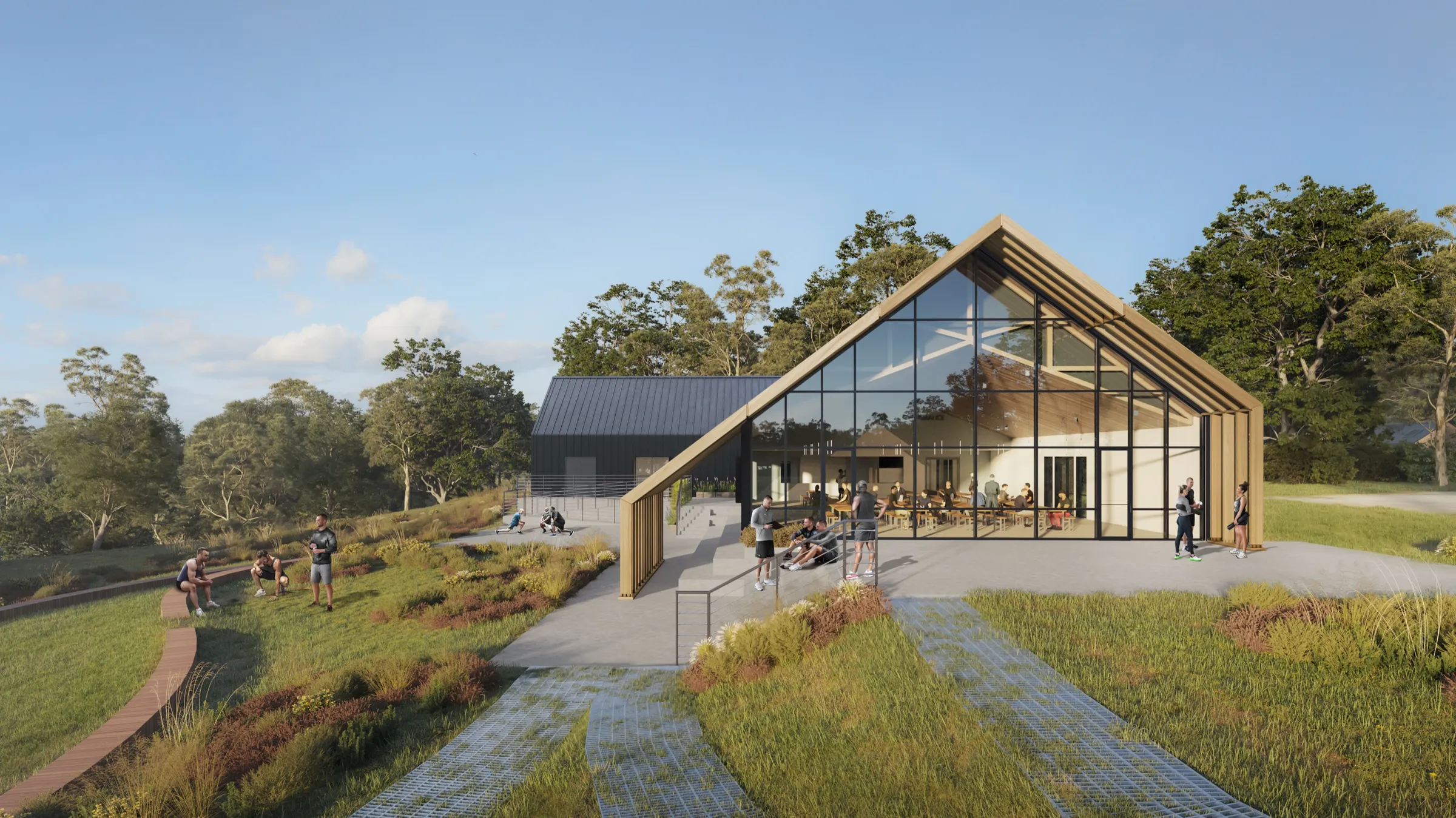
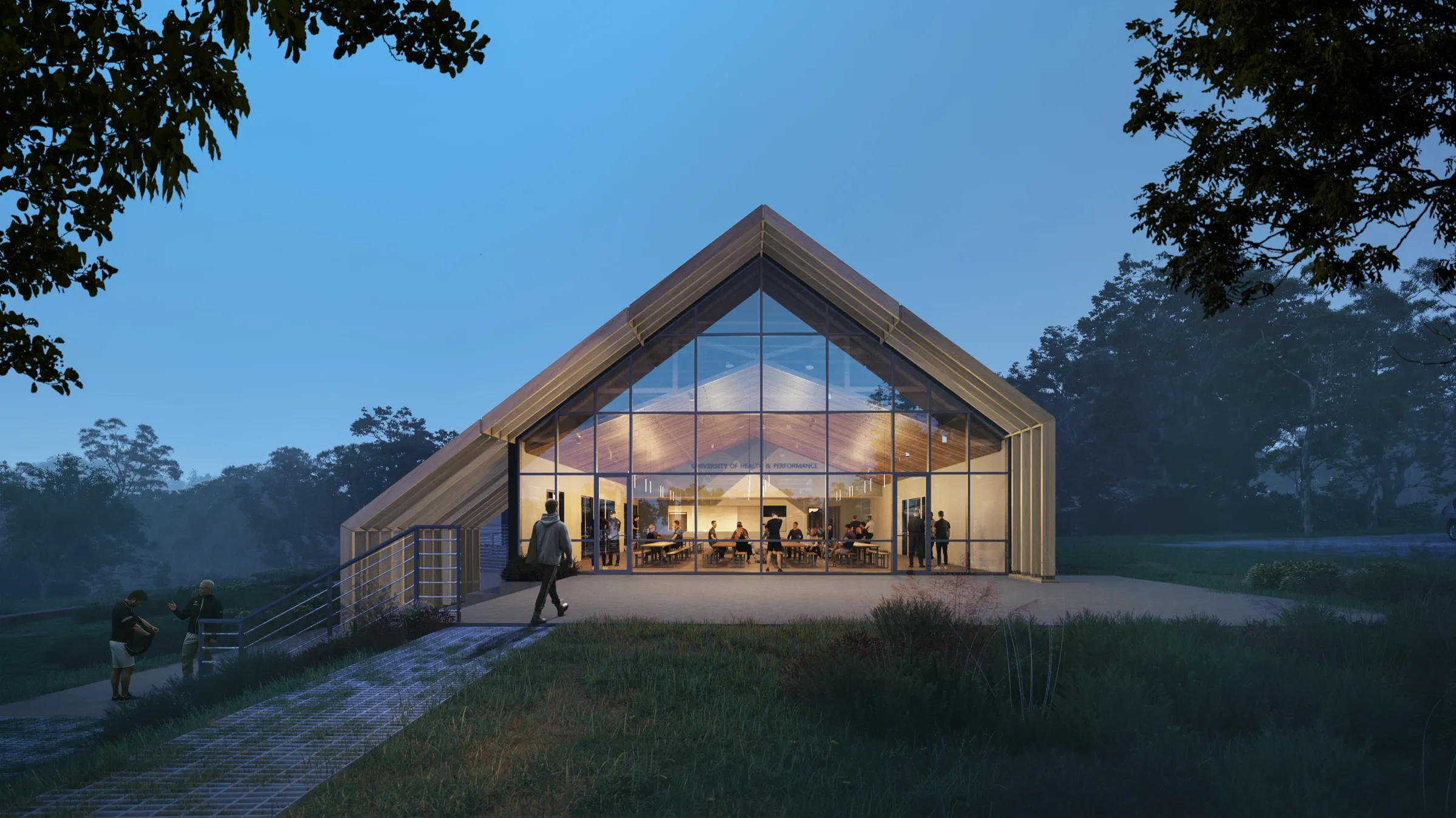
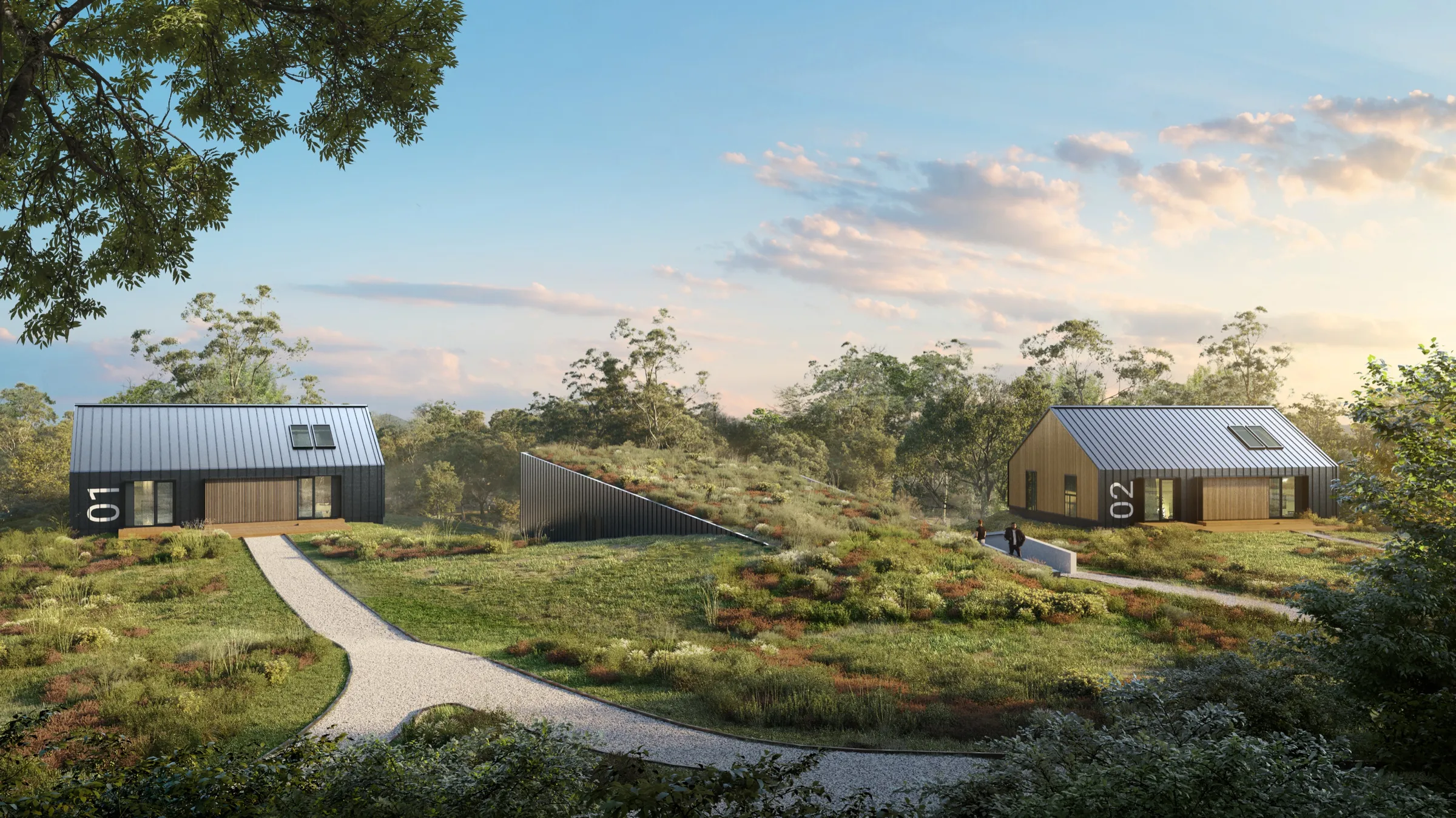
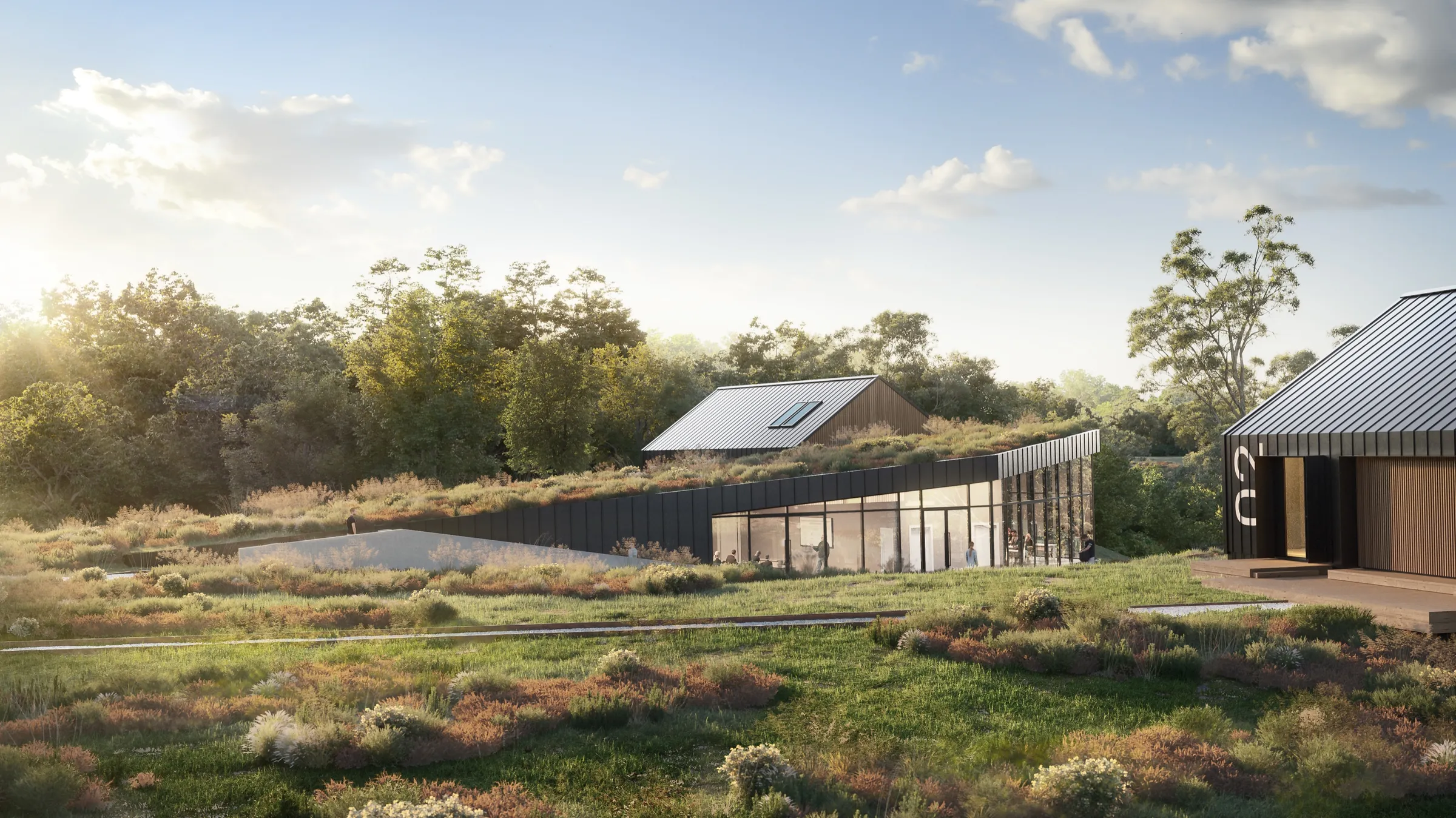
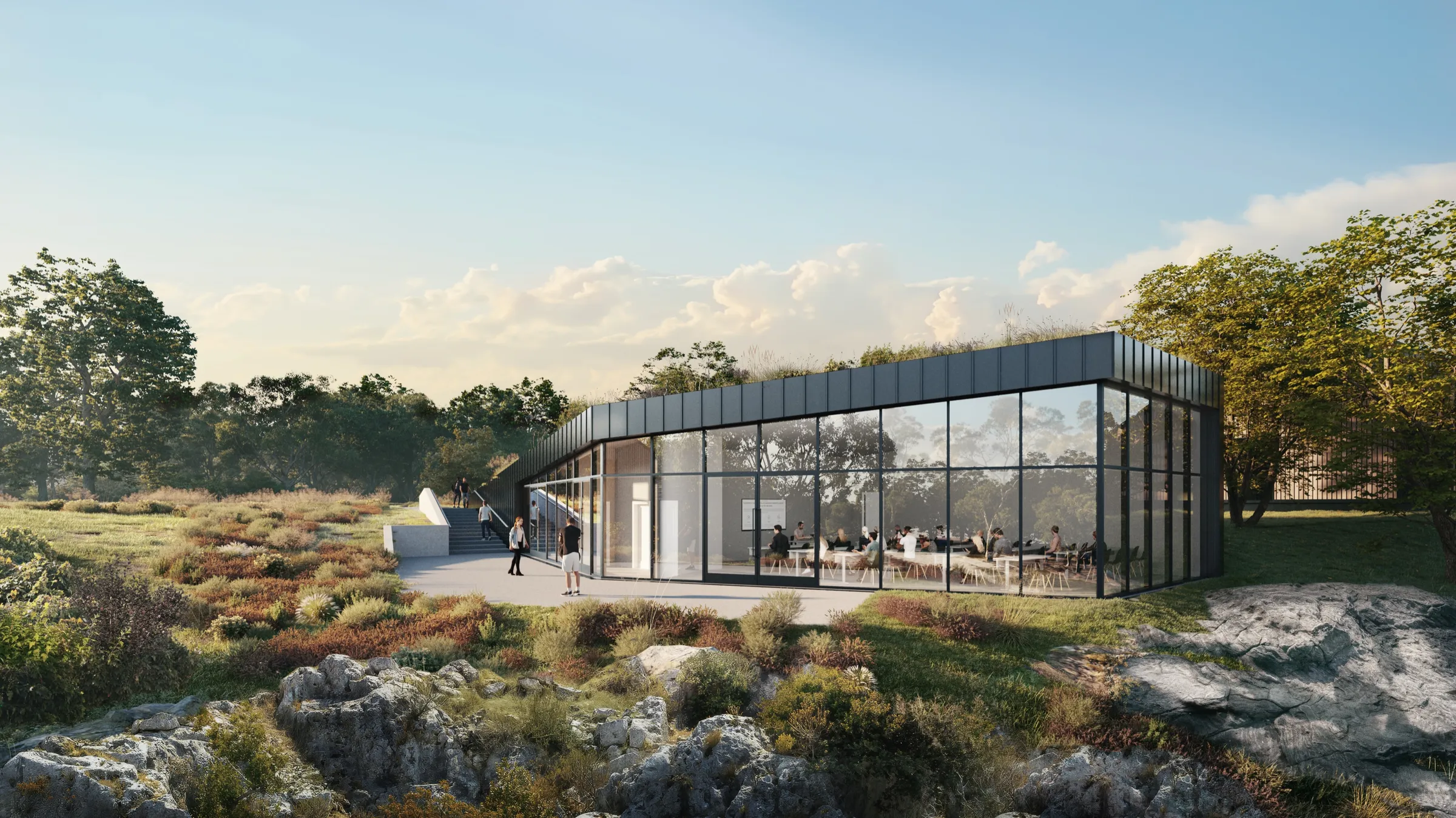
The mess hall is the social heart of the campus, a timber-framed hall with a glazed gable that opens to the amphitheater and the meadow. The classroom building is quieter and more grounded, a glass-walled pavilion set into the slope under a planted green roof, with a pair of standing-seam cabins stepping up the hill behind it. Both were designed to belong to the Ozark landscape rather than to stand apart from it.
The renderings carried that intent through, in daylight and at dusk, with the wild grasses, rock outcrops, and tree lines of the real site around each building. Showing the two buildings in the same material and landscape language let the campus read as one coherent place across every image.
The outcome
A Vision Made Tangible, Then Built.
The renderings gave FitOps and Workshop/APD a way to show what the University of Health and Performance would feel like before any of it stood, a campus defined less by its buildings than by the community gathering inside and around them. For a mission-driven project, that experiential picture is the point: it lets the people behind the campus, and the people it serves, see the place they are building.
The University of Health and Performance is built and operating today in Gentry, Arkansas, where FitOps runs veterans through its program. The visualization work was part of an ongoing relationship with Workshop/APD, one of the studio's longest-standing architecture partners, the kind of repeat collaboration that comes from getting the brief right, even when the brief is to render a feeling rather than a facade.
Questions
Rendering the Experience of a Place
- What does it mean to render the experience of a place, not just the building?
- It means staging each scene around how people will actually use the space, rather than presenting the architecture on its own. For the University of Health and Performance, Workshop/APD asked for images that spoke to the experience of the campus more than its architectural elements, so the renderings show people gathering, eating, learning, and moving through the buildings and the landscape, drawing on the FitOps community as reference so the scenes read as lived-in rather than staged.
- How do you render a campus before it is built so it feels real?
- The buildings are modeled from the architect's own design, the cameras are locked in a white-model stage before any surface is rendered, and the people and props are art-directed to match the real community that will use the place. For the aerial views, virtual cameras were matched to the real Ozark landscape so each building sat truthfully in its setting, at the height, angle, and light of an actual flyover.
- Can 3D rendering help a nonprofit or institution communicate its mission?
- Yes. Renderings let an organization show what a place will feel like before it exists, which is exactly what a mission-driven campus needs to convey to its community and stakeholders. Here the images carried the story of a campus built to help military veterans transition to civilian life, making the vision tangible long before the first building stood.
Services on this project
Related projects
Start with a discovery call
Every project starts with a conversation. The call is where we understand the project and whether we're the right studio to do the work.