
Case study
The Willow
Pre-leasing renderings for six full-floor rentals in an 1890s Greenwich Village landmark.
Project at a glance
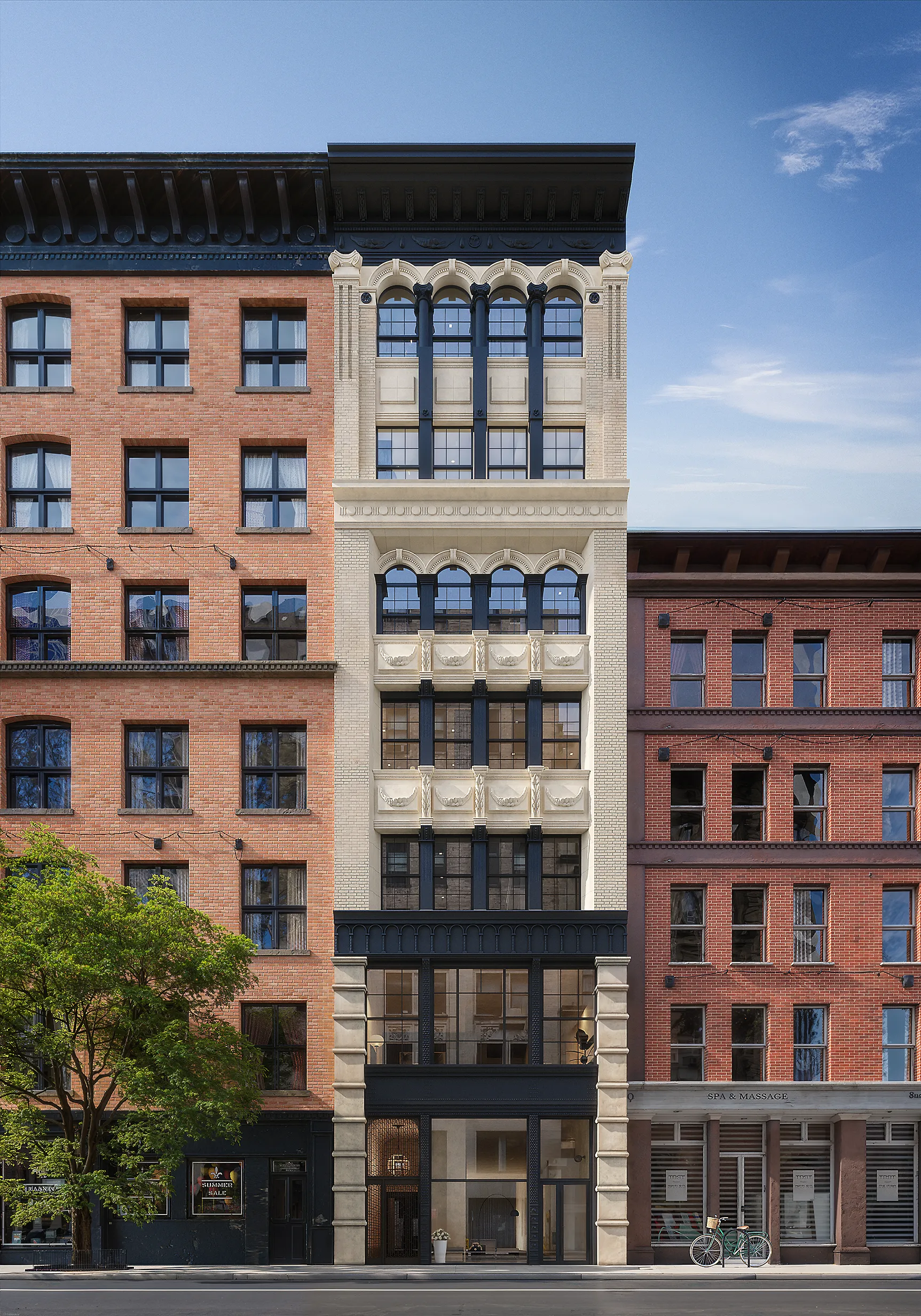
Repositioning an 1890s Greenwich Village landmark as a boutique rental of six full-floor residences, visualized so renters could understand the homes before leasing began.
- Developer
- GD Capital Group
- Building type
- Boutique rental, six full-floor residences
- Location
- 84 University Place, Greenwich Village, Manhattan
- Architecture
- 1890s Romanesque Revival loft by Louis Korn
- Interiors
- Alchemy Studios
- Marketing
- Douglas Elliman
- Acquired
- 2024
- Scope
- Ten residential interior and exterior views
- Purpose
- Pre-leasing and long-term marketing
The brief
An Elevated Story.
When GD Capital Group acquired 84 University Place, a seven-story Romanesque Revival loft built in the 1890s, the goal was more than a simple renovation. They wanted to reposition the property as a boutique rental of six full-floor residences that renters could clearly understand and feel confident about, well before the homes were finished.
GD Capital specializes in repositioning underutilized assets and bringing them to market at full value, and the vision here was a modern classic: historic character preserved, refined interiors and lifestyle-driven amenities introduced. In Manhattan, where buildings come with history and strong character, the challenge was to modernize the property without losing what made it feel authentic.
Architectural visualization became the tool that allowed this vision to be tested, refined, and communicated clearly to the leasing team and future residents.
The approach
Designed Around Daily Life, Not a Floor Plan.
From the outset, our role was both strategic and interpretive. Rather than producing technical views in isolation, we focused on how the spaces would be experienced, how light would move through rooms, how sequences would unfold, and where moments of pause and intimacy should exist.
Early white-model studies came first, used to:
- 01Understand how the spaces connect and flow.
- 02Identify the most effective viewpoints for telling the story of the home.
- 03See how natural light would move through the interiors throughout the day.
These studies allowed the team to discuss intent without distraction, focusing on proportion, openness, and flow before materials were introduced.
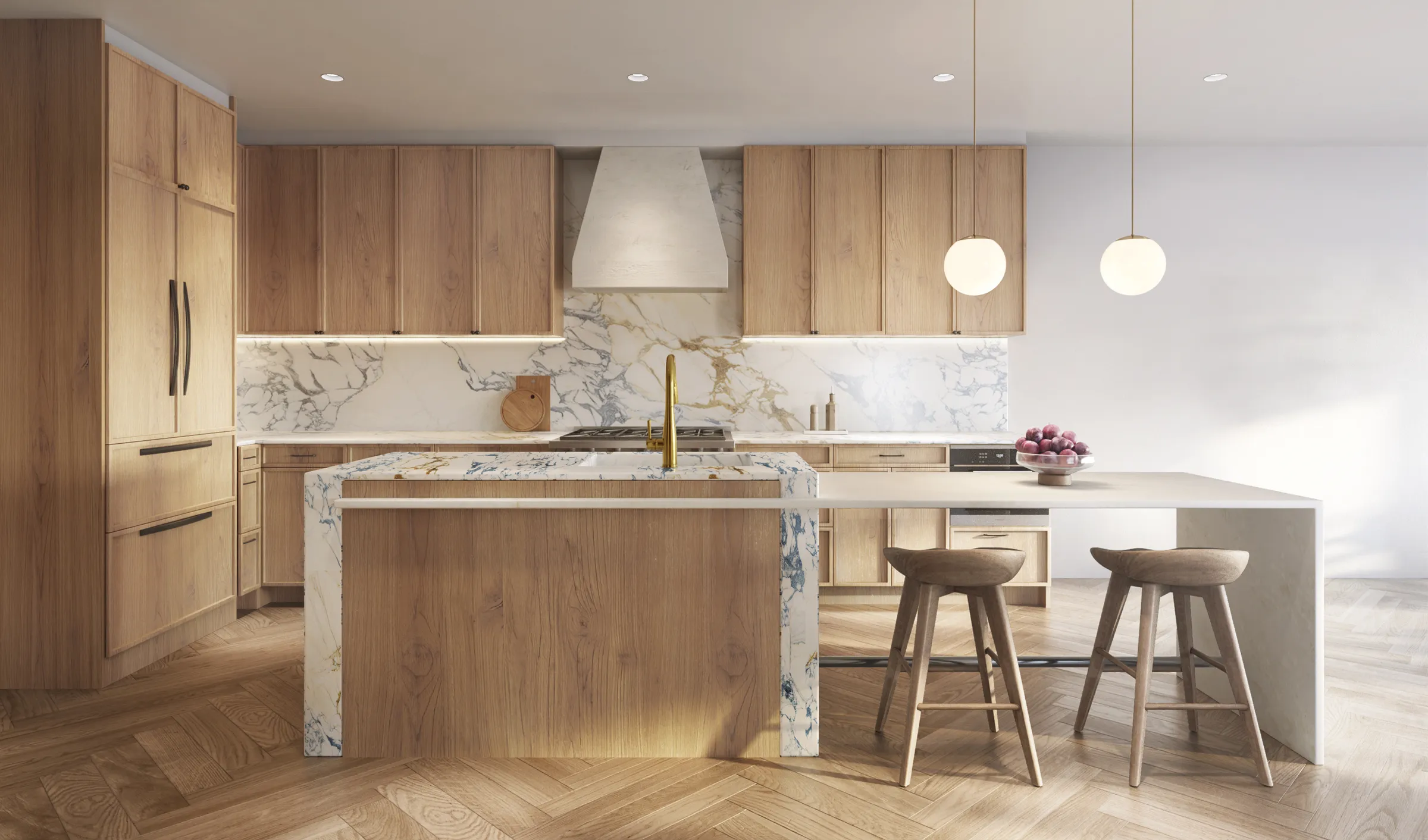
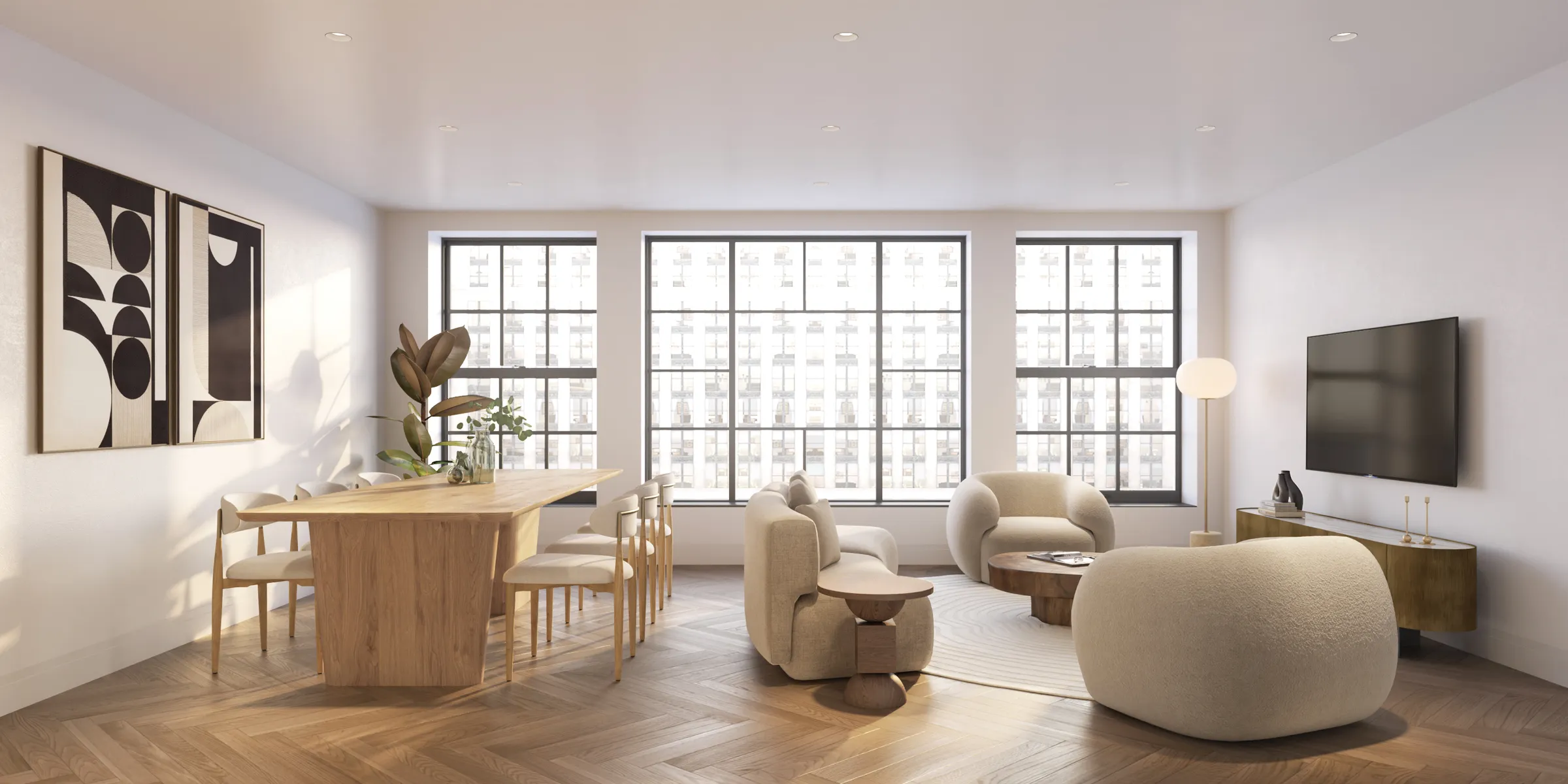
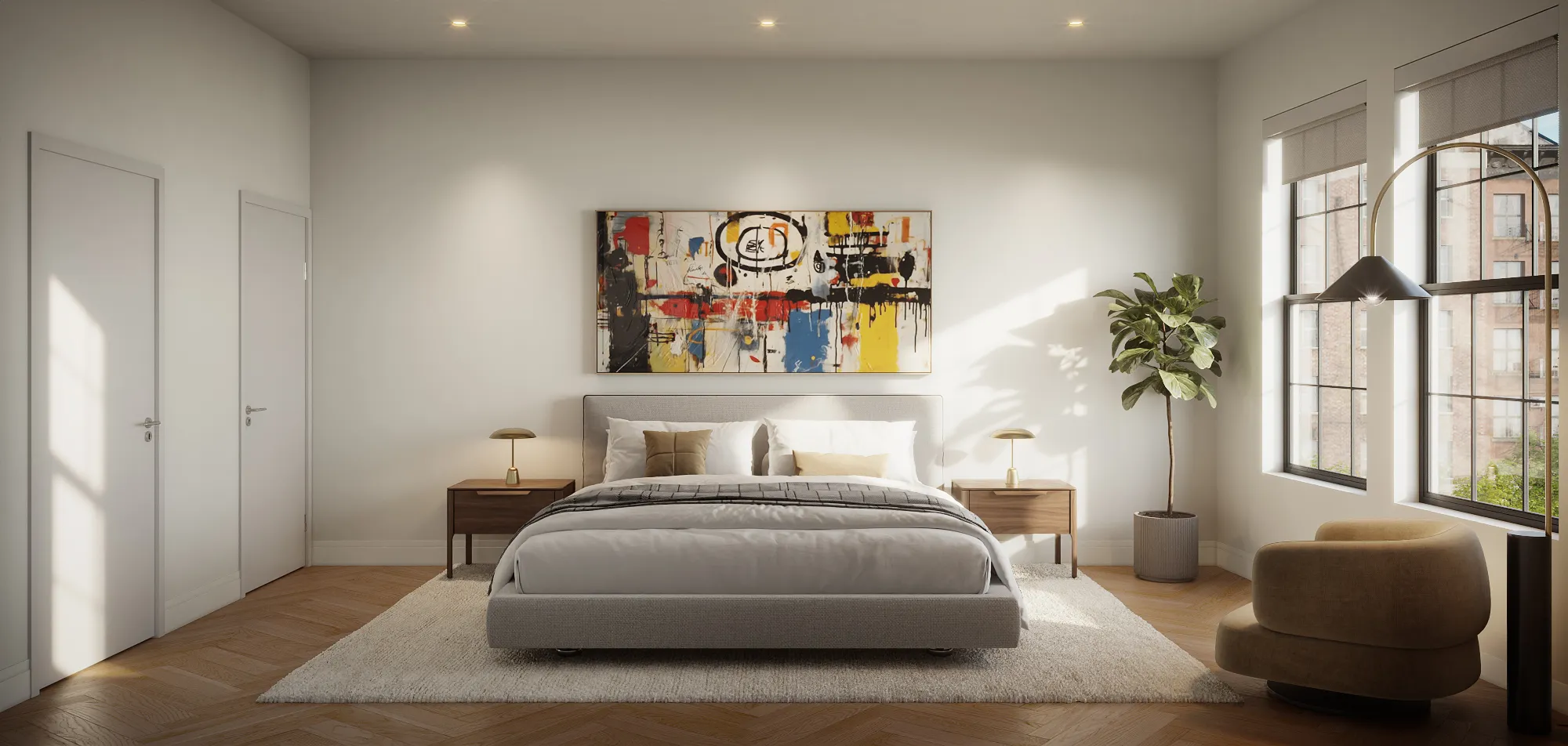
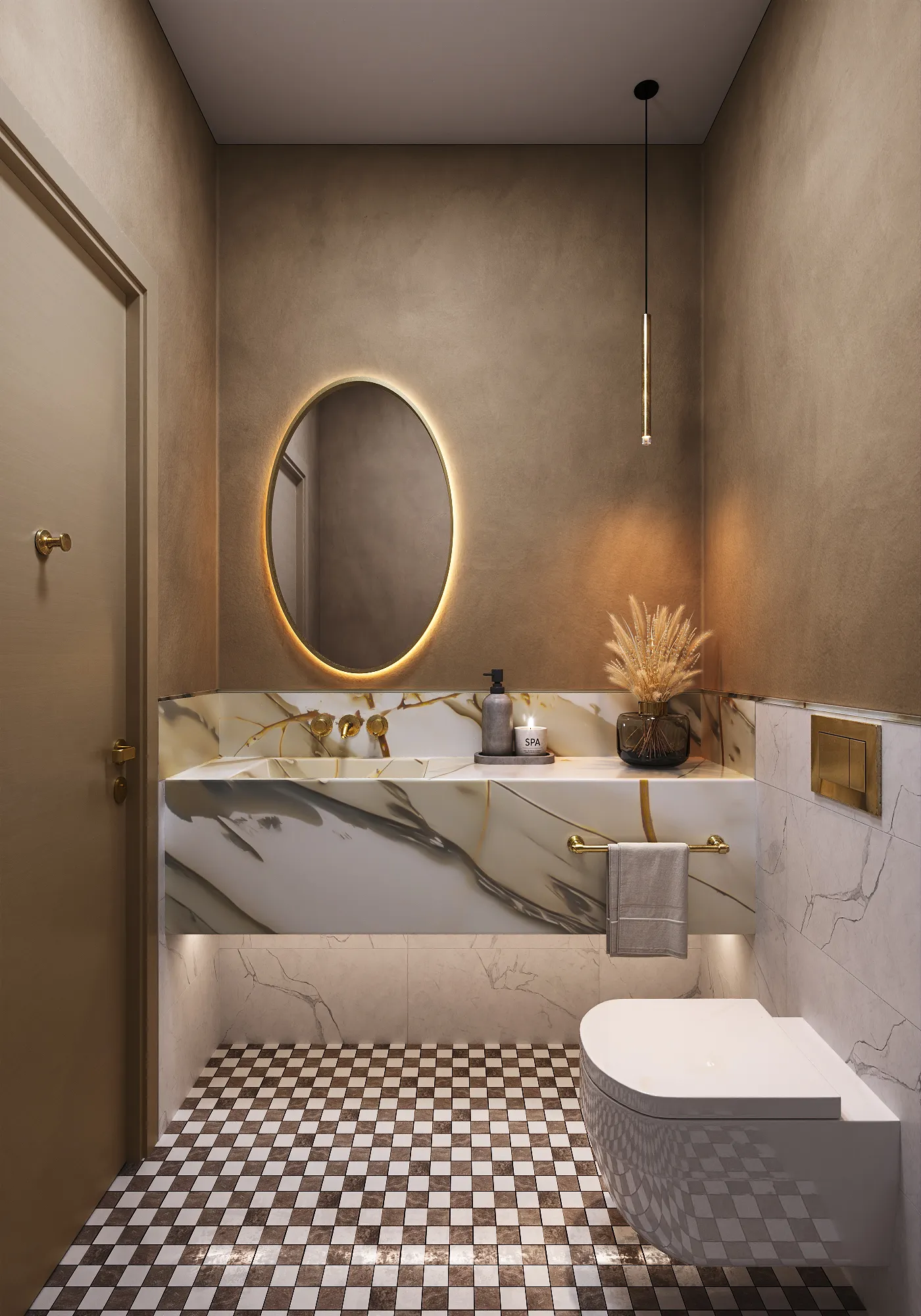
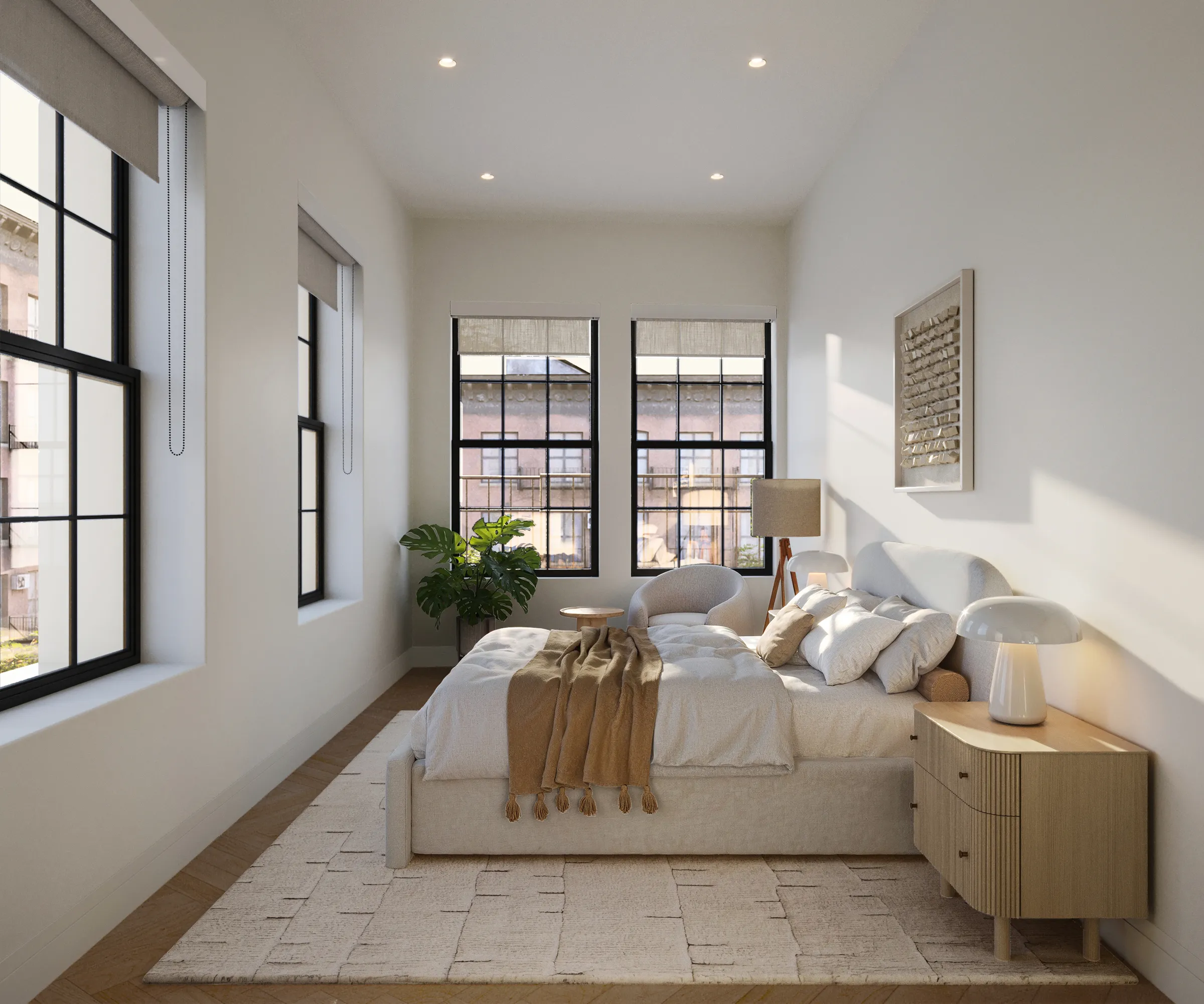
We approached the interiors with the understanding that renters are not just evaluating floor plans, they are imagining daily life in the space. The scenes were designed to feel warm, comfortable, and lived-in, without being overstyled.
Art direction
Believable, Not Brand-Driven.
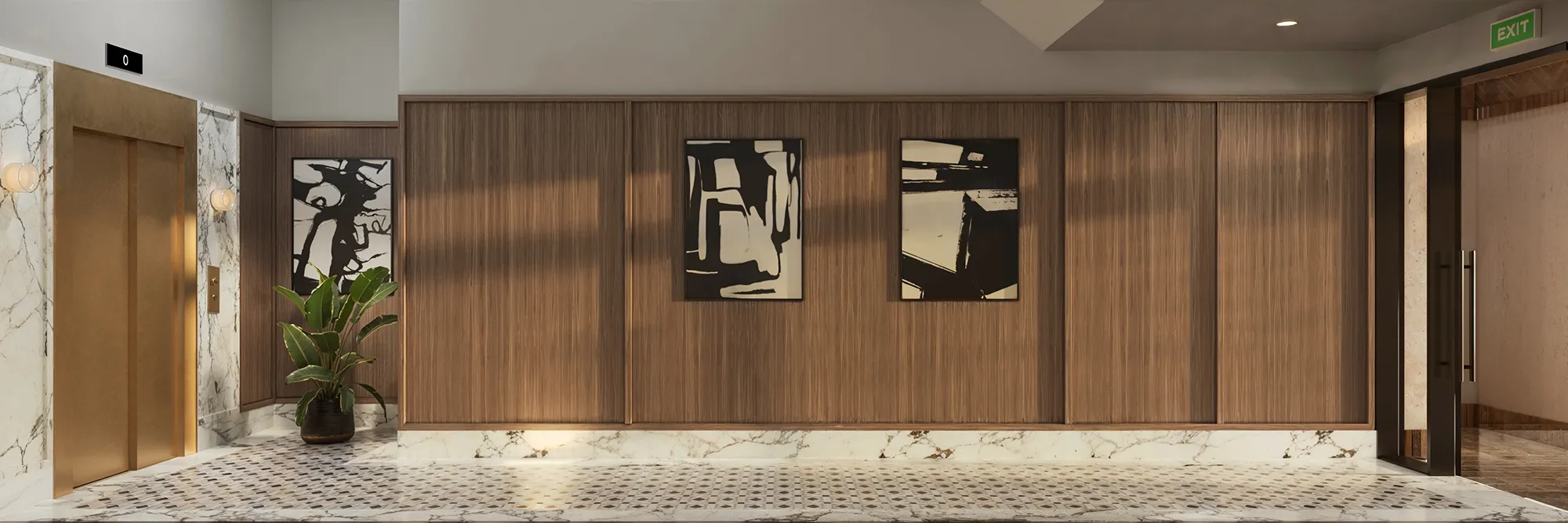
Furniture, artwork, and décor were chosen to feel natural and believable rather than brand-driven or overly designed. Material choices focused on finishes that would remain appealing over time, avoiding anything trendy or short-lived.
Lighting, color, and contrast were used to make the spaces feel natural and inviting rather than overly polished or artificial. Warm daylight showed how the interiors would feel at different times of day, while the rooftop scenes carried small details, soft lighting and a sense of movement, to make the spaces feel occupied and real.
Camera angles were selected to show the true size and proportions of the spaces, make layouts easy to understand at a glance, and include glimpses of the surrounding city without distracting from the interiors. Throughout the project, the goal was simple: the images needed to help people imagine living there, not just document the architecture.
The arrival
Making Manhattan Feel Intimate.
For the exterior visuals, the goal was to show how The Willow fits naturally into its Manhattan surroundings while still feeling welcoming and approachable. A custom black metal entry gate carries brass The Willow signage, soft landscape lighting creates a clear sense of arrival in the evening, and the street-level views were informed by real neighborhood photography so the setting reads as accurate and familiar.
These visuals were created to feel realistic and relatable, helping renters picture themselves at the address rather than viewing it as a stylized marketing image.
On the roof
An Evening, Not a Square Footage.
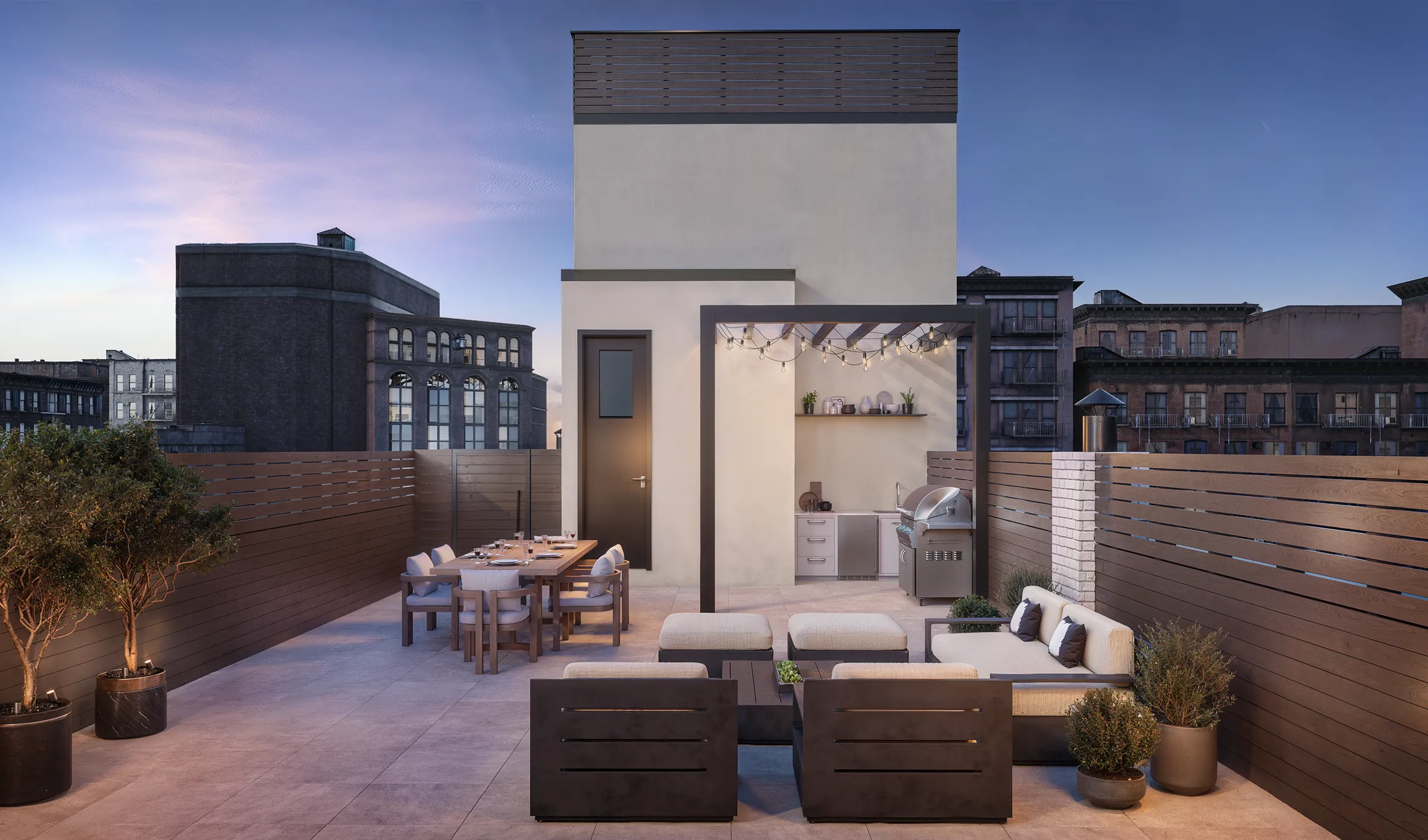
For the rooftop, the focus was on how the space would actually be used rather than how much of it there is. Communal dining and lounge areas, a grill under a pergola strung with lights, and subtle lighting suitable for evening use frame the surrounding rooftops in a natural, realistic way, so a renter pictures the dinner, not the dimensions.
The outcome
In Contract at the Top of the Building.
The final visuals were used as practical working tools, not just marketing images. GD Capital and its brokers relied on them to anchor the pre-leasing campaign run with Douglas Elliman, communicate the repositioning strategy clearly, and help prospective residents understand what living at The Willow would actually feel like.
The feedback confirmed that the renderings accurately reflected both the design intent and the overall character of the project, and conversations continued after delivery around adding short animations and VR to support future leasing. The same images were built to serve both the live pre-leasing push and long-term marketing, delivered for digital listings and large-format print.
The Willow shows how well-executed CGI can carry a pre-leasing campaign and build renter confidence. By combining accurate architectural representation with a clear, approachable visual style, the renderings helped reposition a historic Manhattan building as a modern residential offering, and the two top-floor residences have since gone into contract.
Questions
Repositioning a Historic Building
- Can 3D renderings market a rental before it is finished?
- Yes. The Willow, a six-residence rental conversion at 84 University Place in Greenwich Village, was marketed off the renderings while the homes were still being built. The visuals carried the pre-leasing campaign for Douglas Elliman, and the two top-floor residences went into contract.
- How do you reposition a historic building without losing its character?
- By modeling the existing 1890s Romanesque Revival shell honestly, then designing the interiors to sit inside it. For The Willow we kept the building’s authentic exterior and oversized original windows while visualizing refined modern interiors, oak millwork, herringbone floors, and a roof deck, so renters could picture a contemporary home without losing the loft’s history.
- How many renderings does a project like this need?
- The Willow used ten interior and exterior renderings, covering the building exterior and entry, the lobby, the kitchen and living spaces, the primary and secondary bedrooms, the bathrooms, and the roof deck. The count is chosen to show the rooms a renter actually decides on, not every corner of the building.
Services on this project
Related projects
Start with a discovery call
Every project starts with a conversation. The call is where we understand the project and whether we're the right studio to do the work.