
Case study
West Village Luxury Development
A Workshop/APD concept for a six-story brick residential building, its facade carved into terraced apartments, given visual form through rendering.
Project at a glance
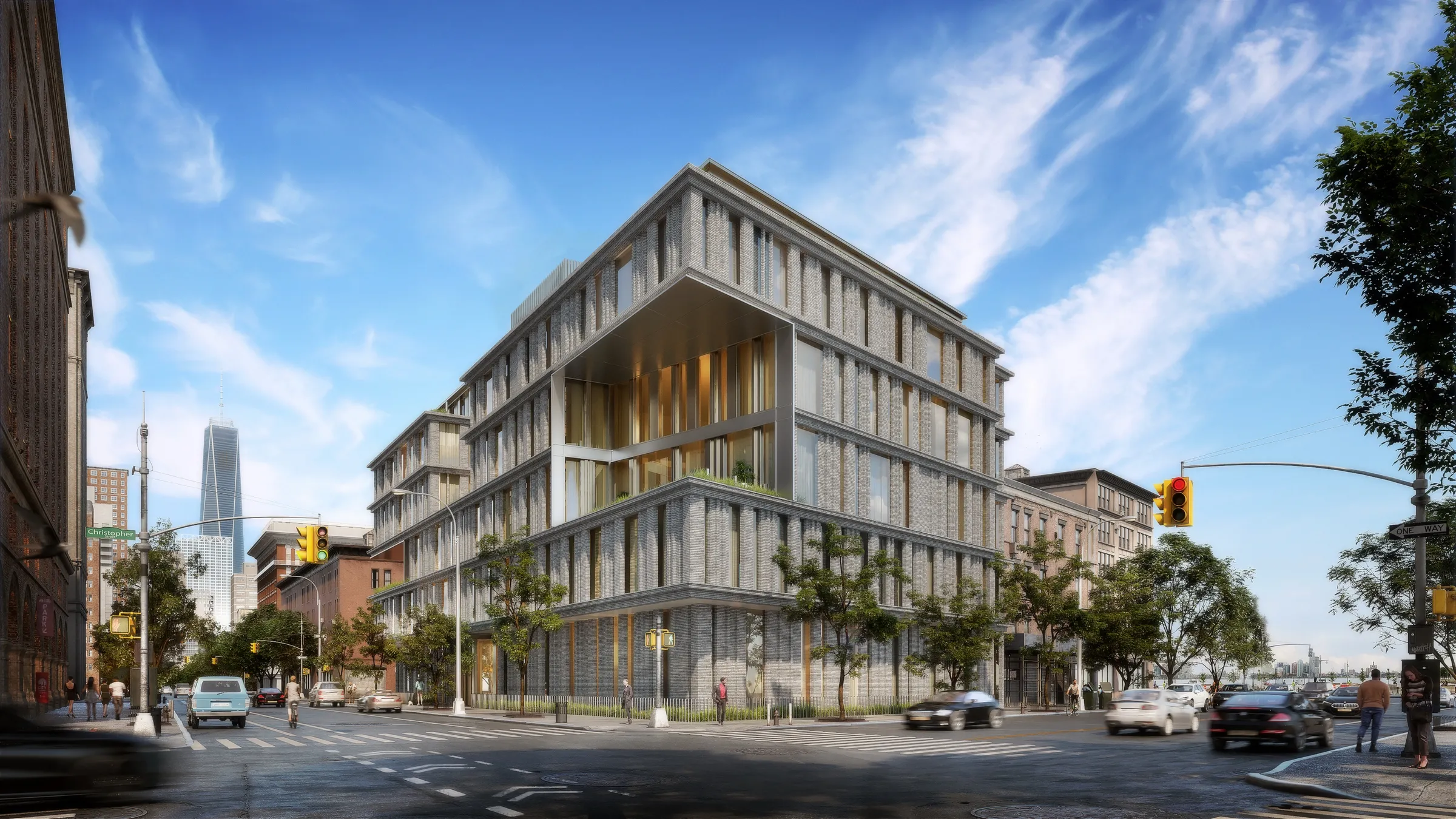
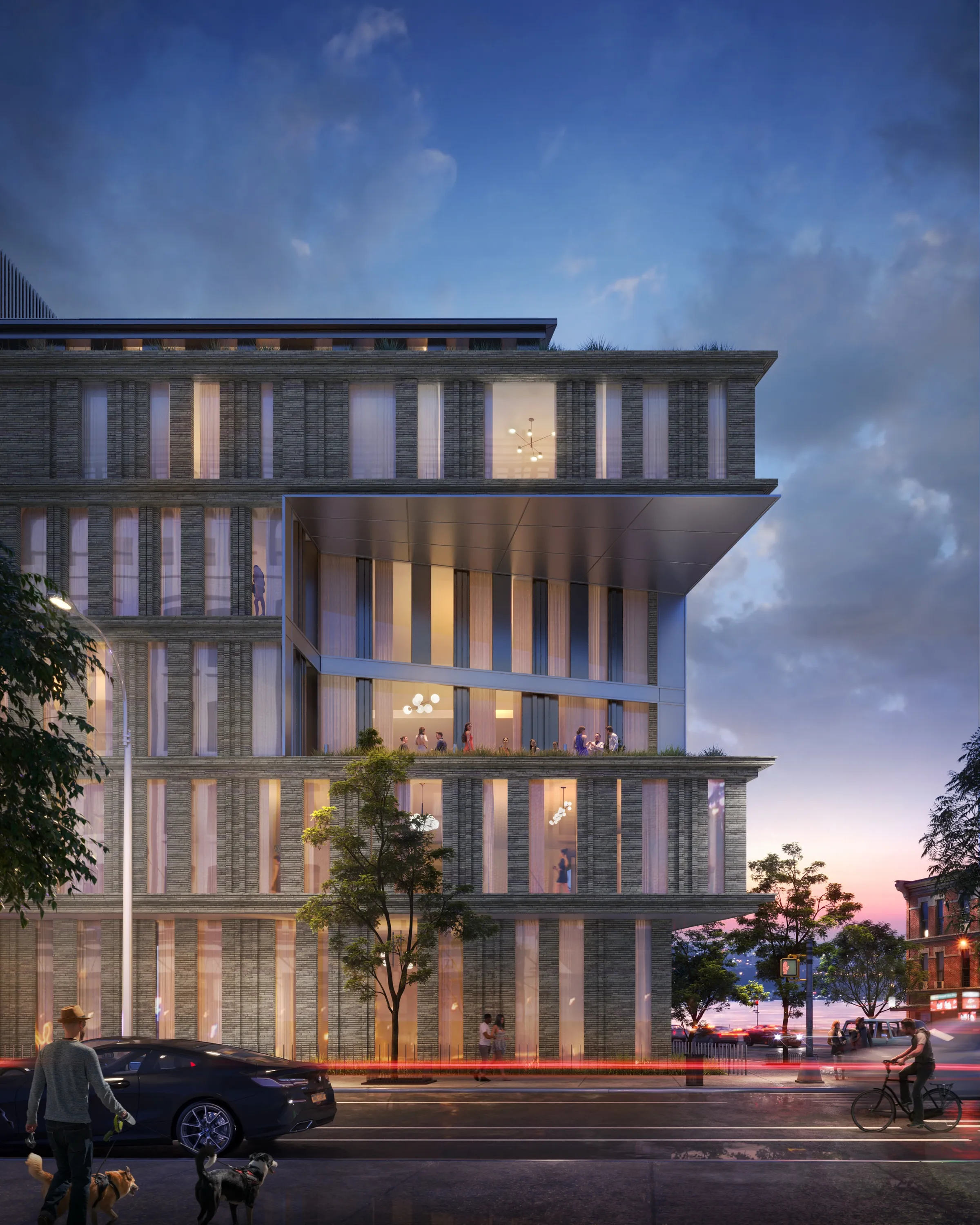
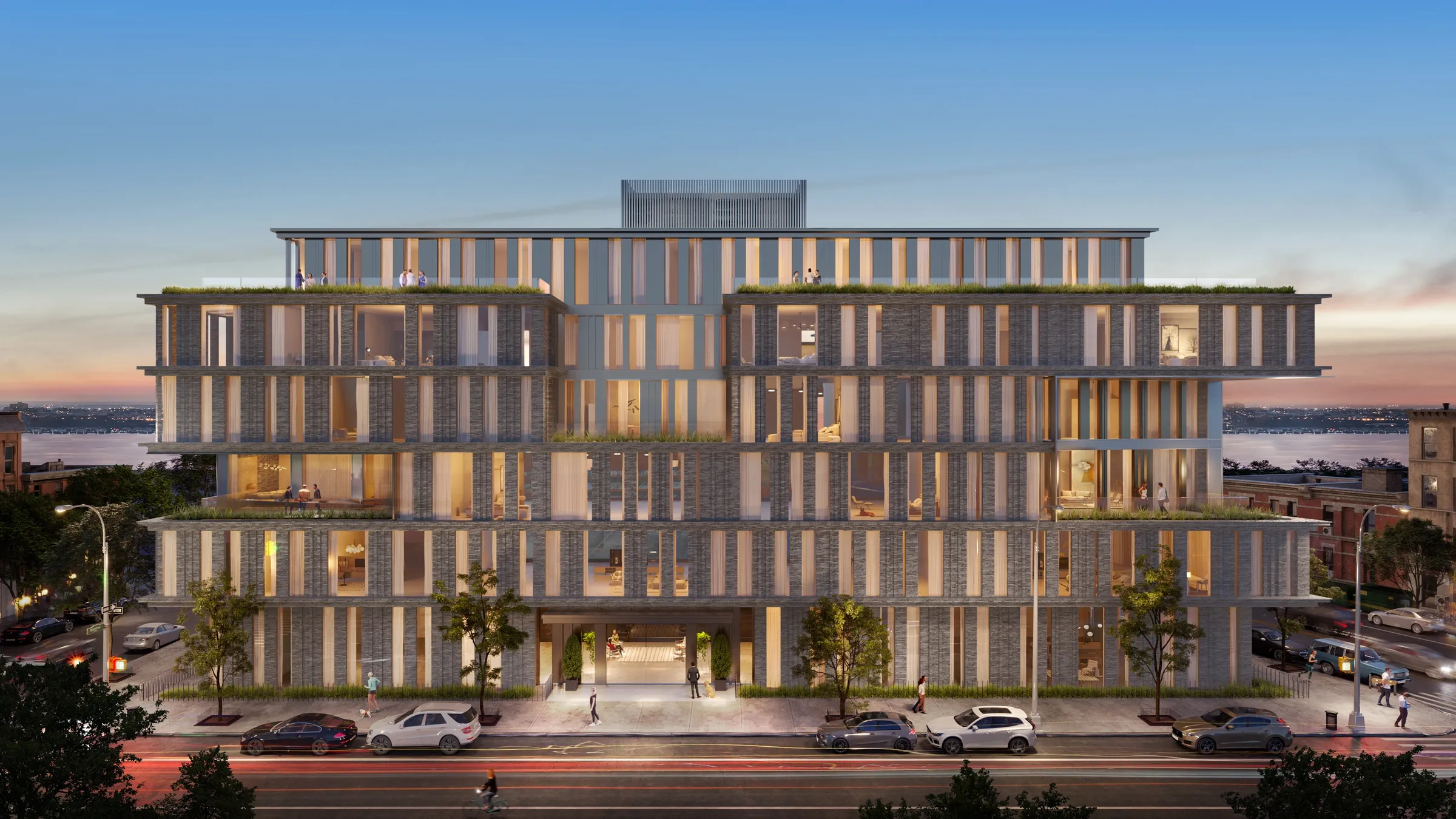
NoTriangle produced three renderings of Workshop/APD's concept for a six-story luxury residential building in the West Village, a contextual brick facade carved away into terraced apartments, crowned by natural metal panels meant to patina over time. The project is an unbuilt design concept, and the renderings are what give the idea visual form.
- Architect
- Workshop/APD
- Building type
- Six-story luxury residential development (concept)
- Location
- West Village, New York
- Purpose
- Give an architectural development concept visual form
- Scope
- Three renderings, daytime corner, sunset elevation, and blue hour
- Status
- Concept, unbuilt
- Engagement
- Part of an ongoing relationship with Workshop/APD
The concept
Brick, Carved Into Terraces.
In a historic neighborhood, materials matter. Workshop/APD's concept grows from a survey of the West Village's own building blocks, an amalgam of contextual brick for a modern residential development meant to feel at home on the block. Across its six stories, sections of the facade are carved away to create interconnected indoor and outdoor spaces and terraced apartments at multiple levels, so each residence gets the kind of private exterior access usually reserved for penthouses.
Above the brick, panels of natural, unlacquered metal are chosen to patina over time and meld with the masonry below. It is a design built to belong, and a set of ideas, the carved terraces, the contextual brick, the weathering crown, that only a rendering could make legible before anything was built.
Rendering a concept
Grounded in the Real Block.
A concept lives or dies on whether people can picture it in place. To make this one believable, the renderings set the building into the actual West Village streetscape, the existing brick rowhouses on the corner, the river at the end of the block, and One World Trade Center on the horizon, and lit the scenes across the day, from daylight to sunset to blue hour, so the brick, the terraces, and the patinated metal all read with real depth.
The work was a refinement process with the architect, with rounds of feedback on detail down to the roof bulkhead, and final views delivered at high resolution for presentation. Anchoring a contextual design in its true context, with honest light and real street life, is what lets an unbuilt scheme be shown as a place rather than a study.
The outcome
A Concept, Made Legible.
The West Village development remains a concept, an unbuilt vision for a contextual brick building that gives every residence a terrace. The renderings are the form the idea takes: the way it is seen, judged, and shared. For a project that exists only as a design, that is the whole job, and the studio treats it with the same rigor as any building headed for construction.
The work was part of an ongoing relationship with Workshop/APD, one of the studio's longest-standing architecture partners, a collaboration that has run across residential, hospitality, institutional, and conceptual work over many years.
Questions
Rendering an Unbuilt Concept
- What is the West Village development concept?
- It is a Workshop/APD concept for a six-story luxury residential building in the West Village, with a contextual brick facade carved away into terraced apartments, each with private outdoor space, and a crown of natural metal panels meant to patina over time. It is an unbuilt design concept, and NoTriangle produced the renderings that give the idea visual form.
- How do you render a new building so it belongs in a historic neighborhood?
- By grounding it in the real streetscape. The renderings set the building on its West Village corner among the existing brick rowhouses, with the Hudson River and the Lower Manhattan skyline beyond, in daylight, at sunset, and at blue hour. Showing a contextual brick design against the actual fabric of the block is how you test whether a modern building reads as at home rather than imposed.
- Why render a building that is only a concept?
- Because a concept has to be seen to be evaluated and discussed. Renderings turn a massing study and a material idea into a believable place, so the architect can present the design, test how the carved terraces and patinated metal read in context, and share the vision with stakeholders. For an unbuilt scheme, the rendering is how the idea exists.
- How does an architect review renderings of their own design?
- With markups, directly on the image. For the West Village set the architects marked their edits in a shared review tool, a lowered rooftop bulkhead, a terrace facade changed to metal panel, planting thinned on the lower terraces, and the studio worked through them to final. The architects' close of the project: "The renderings and the process has been fantastic."
Services on this project
Related projects
Start with a discovery call
Every project starts with a conversation. The call is where we understand the project and whether we're the right studio to do the work.