
Case study
Westin Vacation Club
3D hotel visualization for a ground-up Westin Vacation Club development in historic Charleston.
Project at a glance
3D hotel visualization supporting architectural design validation and serving as a tool to win formal approvals for a ground-up hospitality development.
- Client
- Vanrooy Design, hospitality interiors (Santa Ana, California)
- Architect
- Bello Garris
- Brand
- Westin Vacation Club, Marriott Vacation Clubs City Collection
- Location
- 235 East Bay Street, French Quarter, Charleston, South Carolina
- Building type
- Ground-up hospitality development, 60,696 sq ft
- Guest rooms
- 50 keys across 4 room types and 21 layouts
- Purpose
- Design validation and brand approvals
- Scope
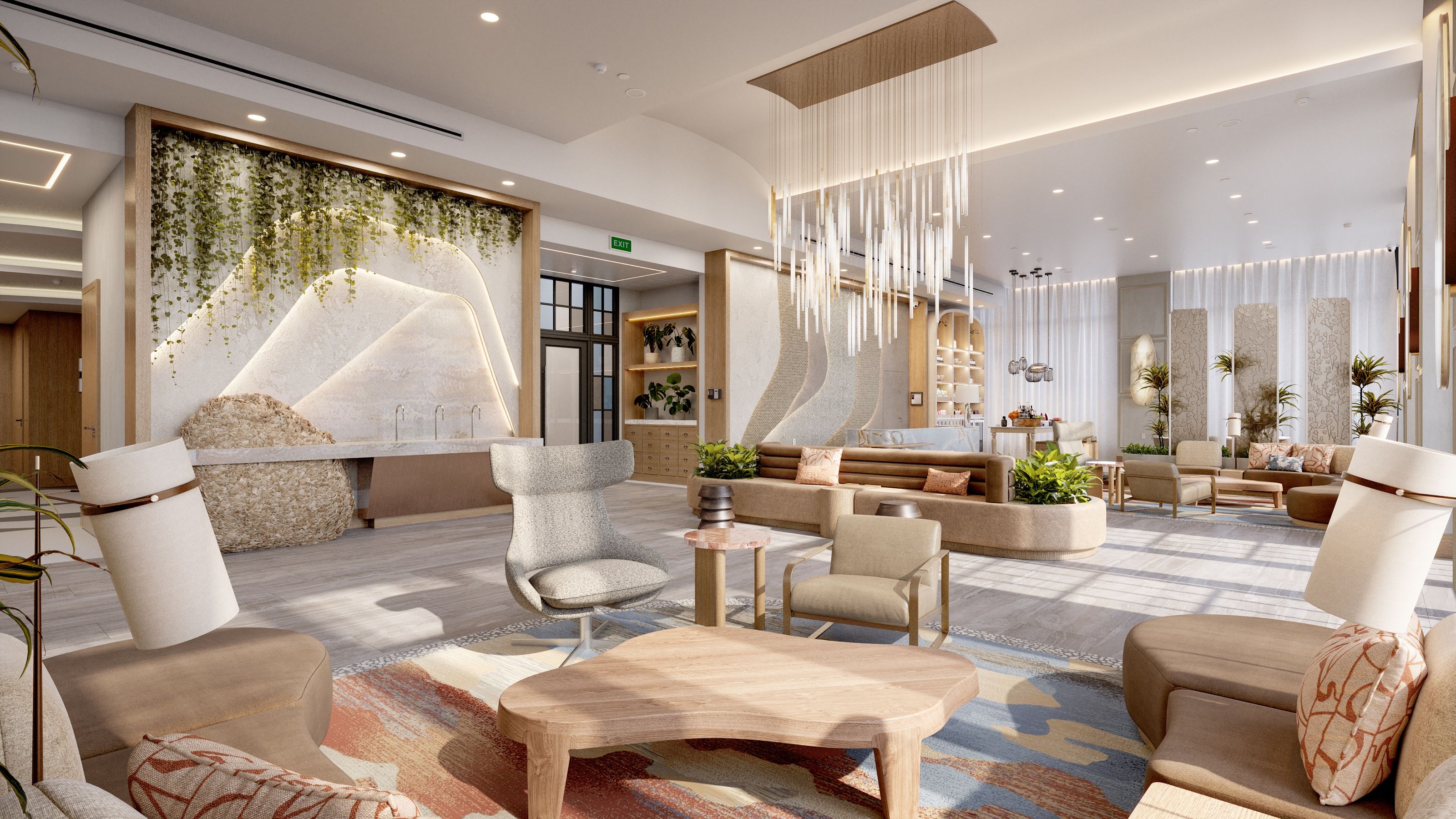
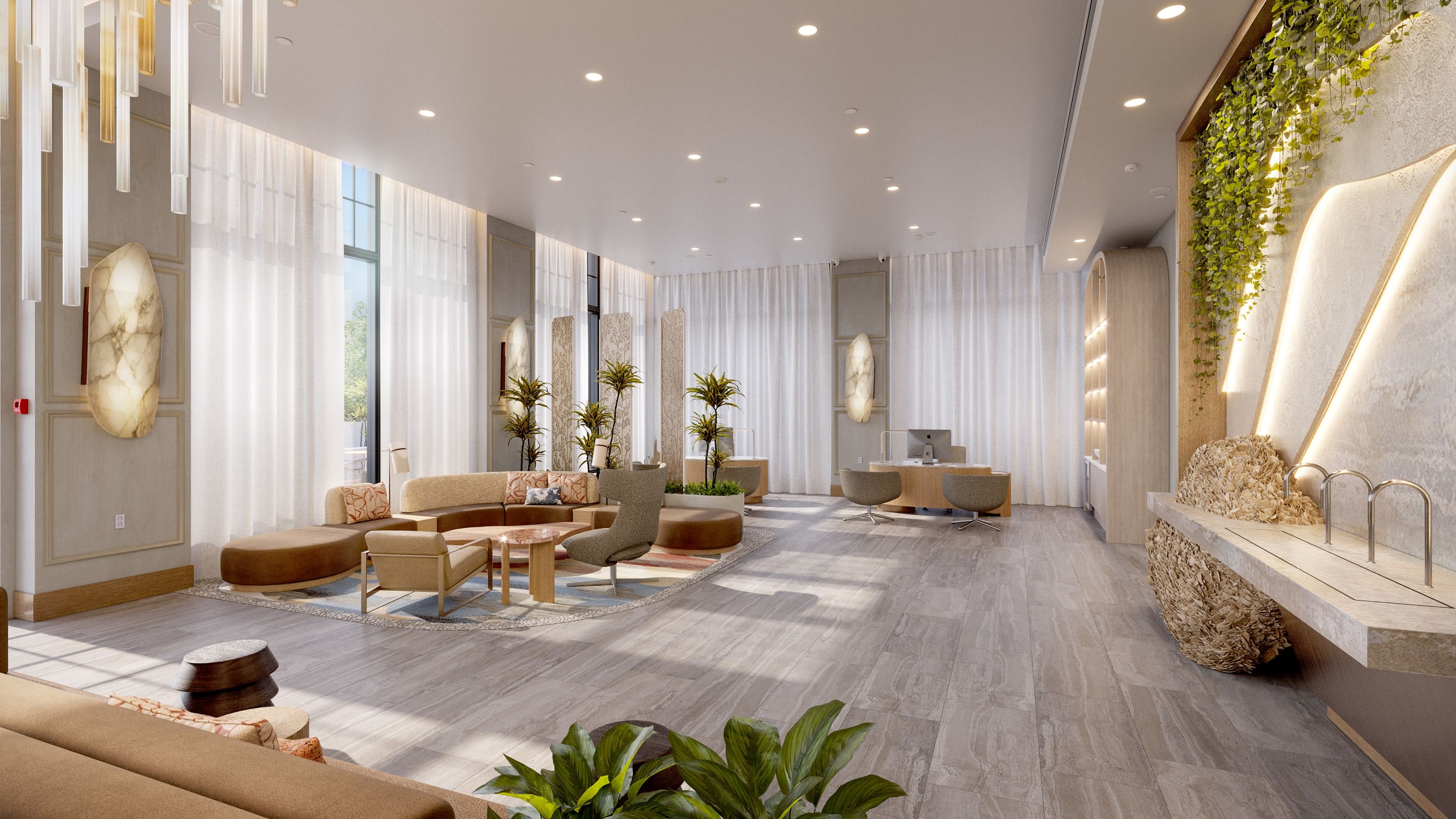
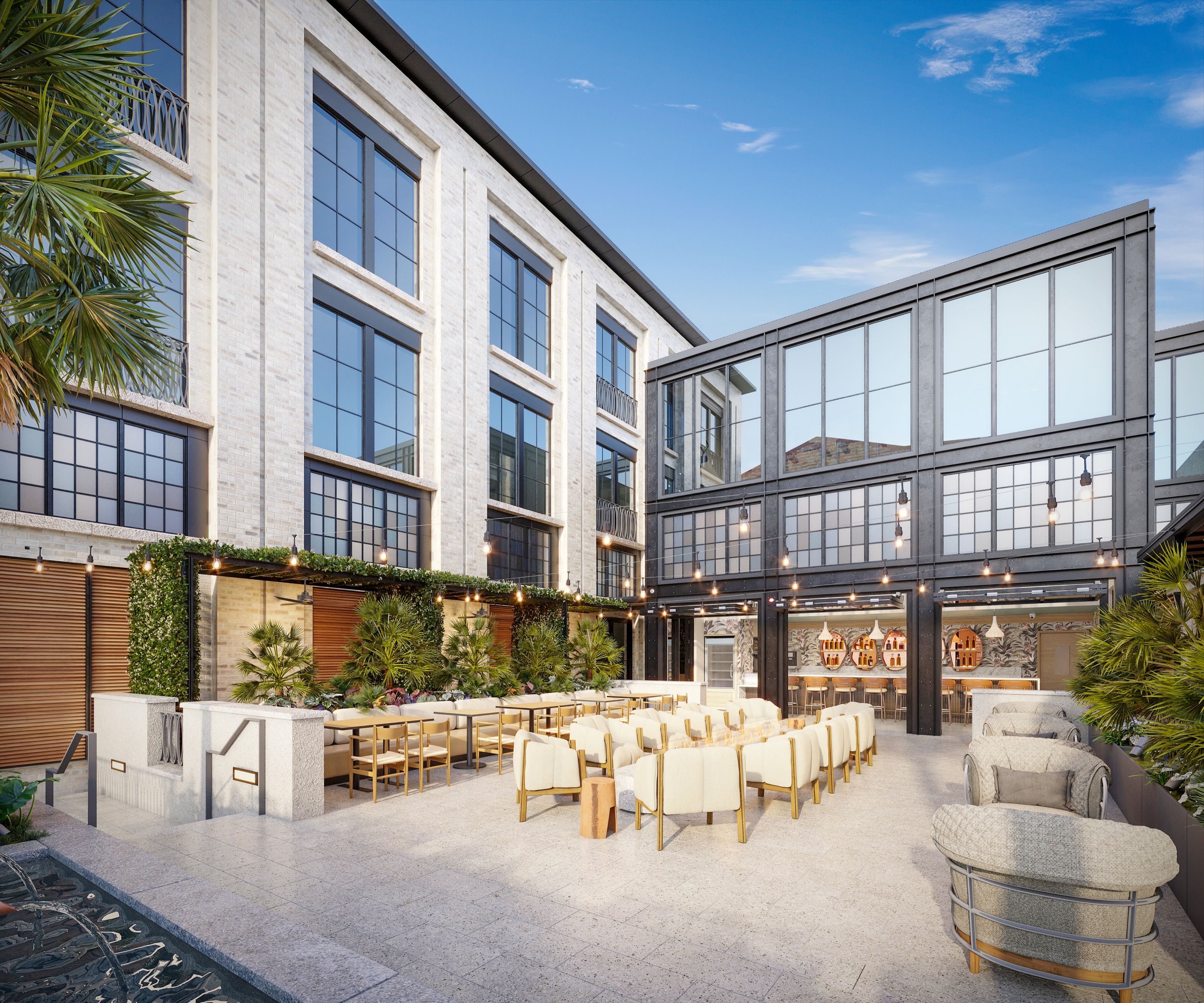
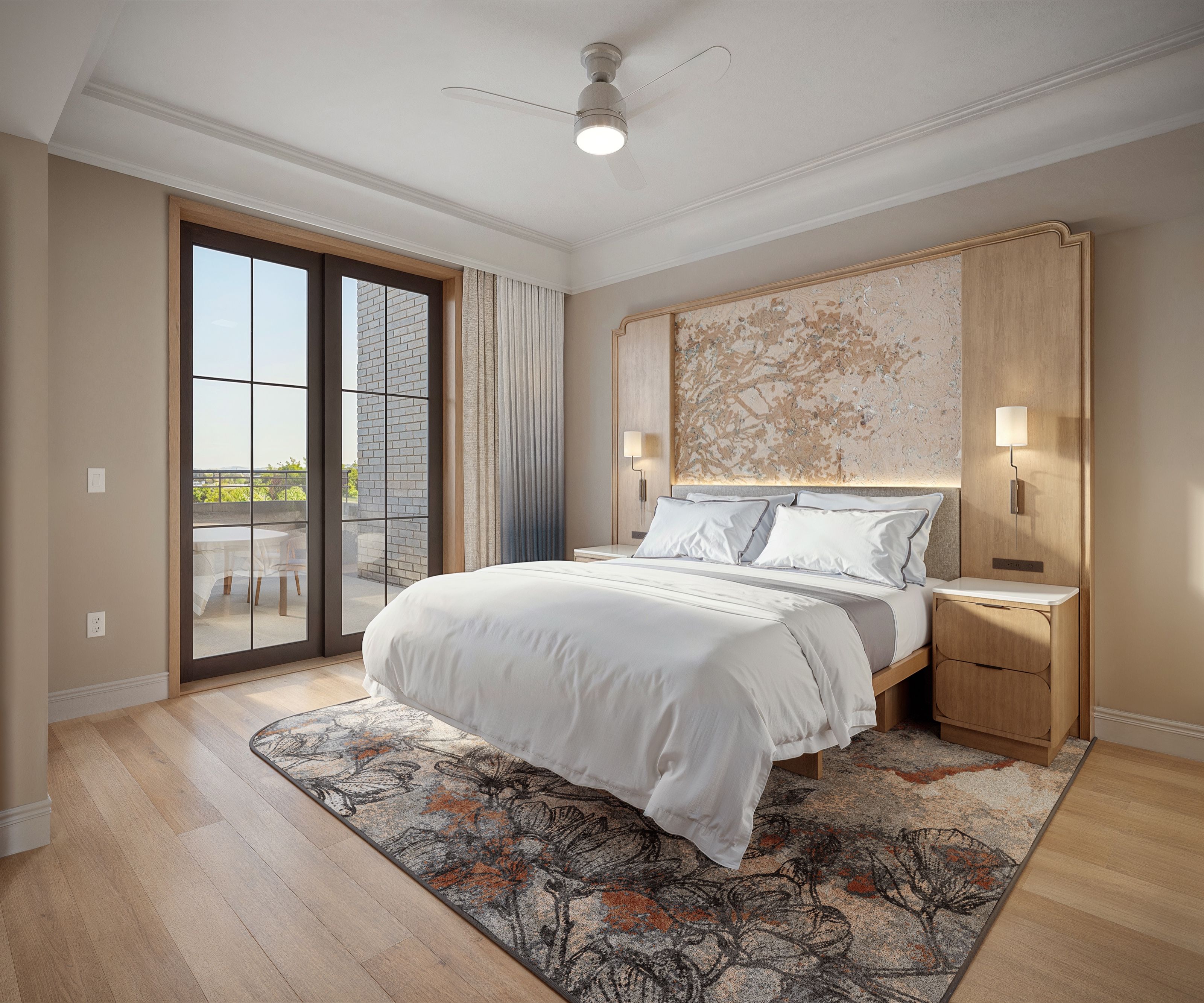
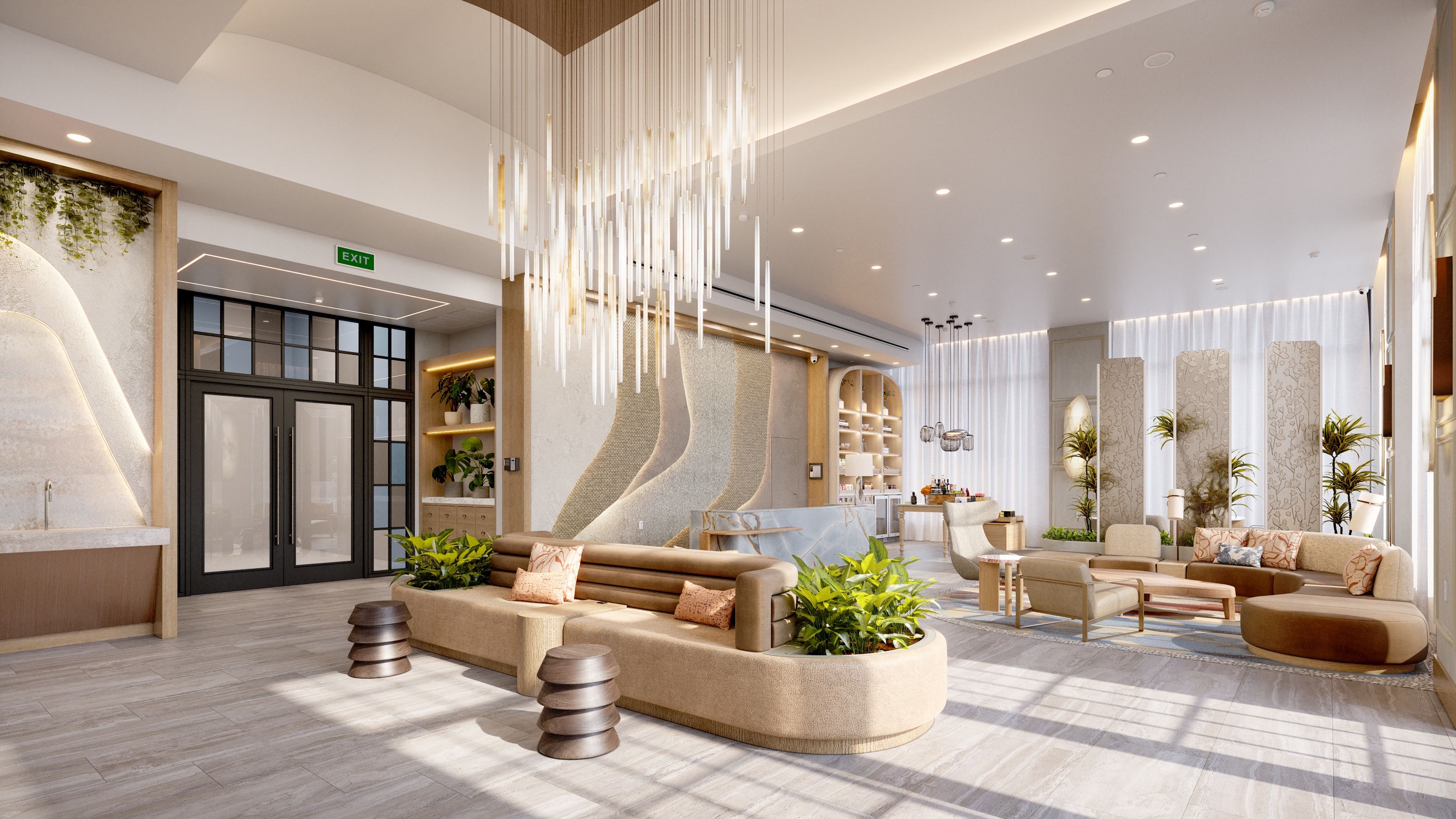
- Five hospitality interior views covering guest rooms, amenity spaces, and environmental graphics
- Package cost
- $5,000 to $8,000
- Workflow
- Revit, AutoCAD and SketchUp integration
- Engagement
- Repeat design-firm partner
The brief
A Hotel Reviewed on Screen Before It Was Built.
Vanrooy Design, a hospitality-specialized interior design studio based in Santa Ana, California, engaged NoTriangle Studio to produce a suite of technically precise 3D renderings for the Westin Vacation Club development on East Bay Street in historic Charleston, South Carolina, with Bello Garris as architect of record.
This was not a conventional hotel marketing assignment. The imagery had to integrate directly into an active architectural workflow, supporting design development, client reviews, and formal approvals. Rather than producing visual assets for presentation alone, the rendering process served as a working design-evaluation tool, a way for stakeholders to thoroughly review, question, and validate the design before construction.
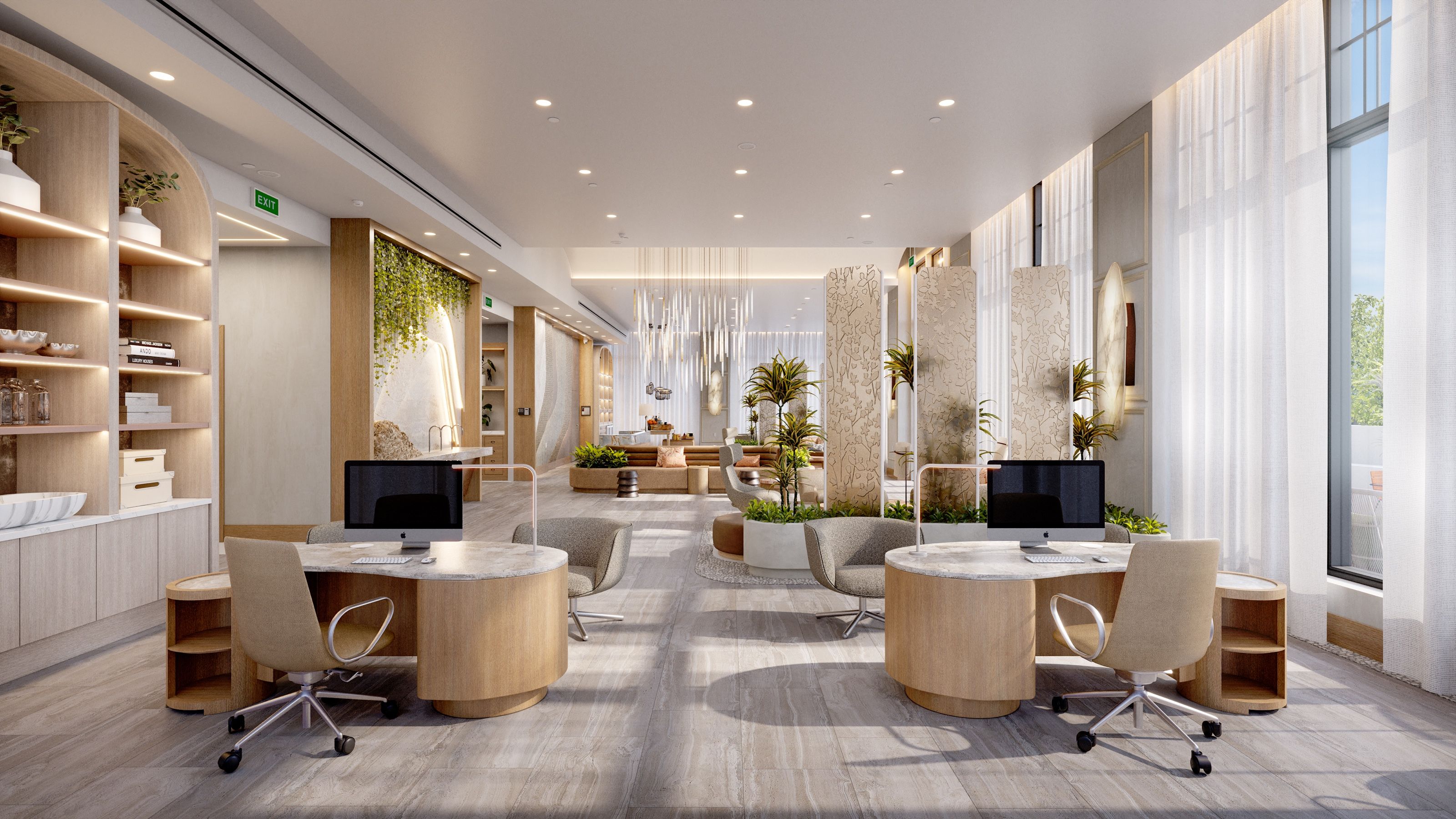
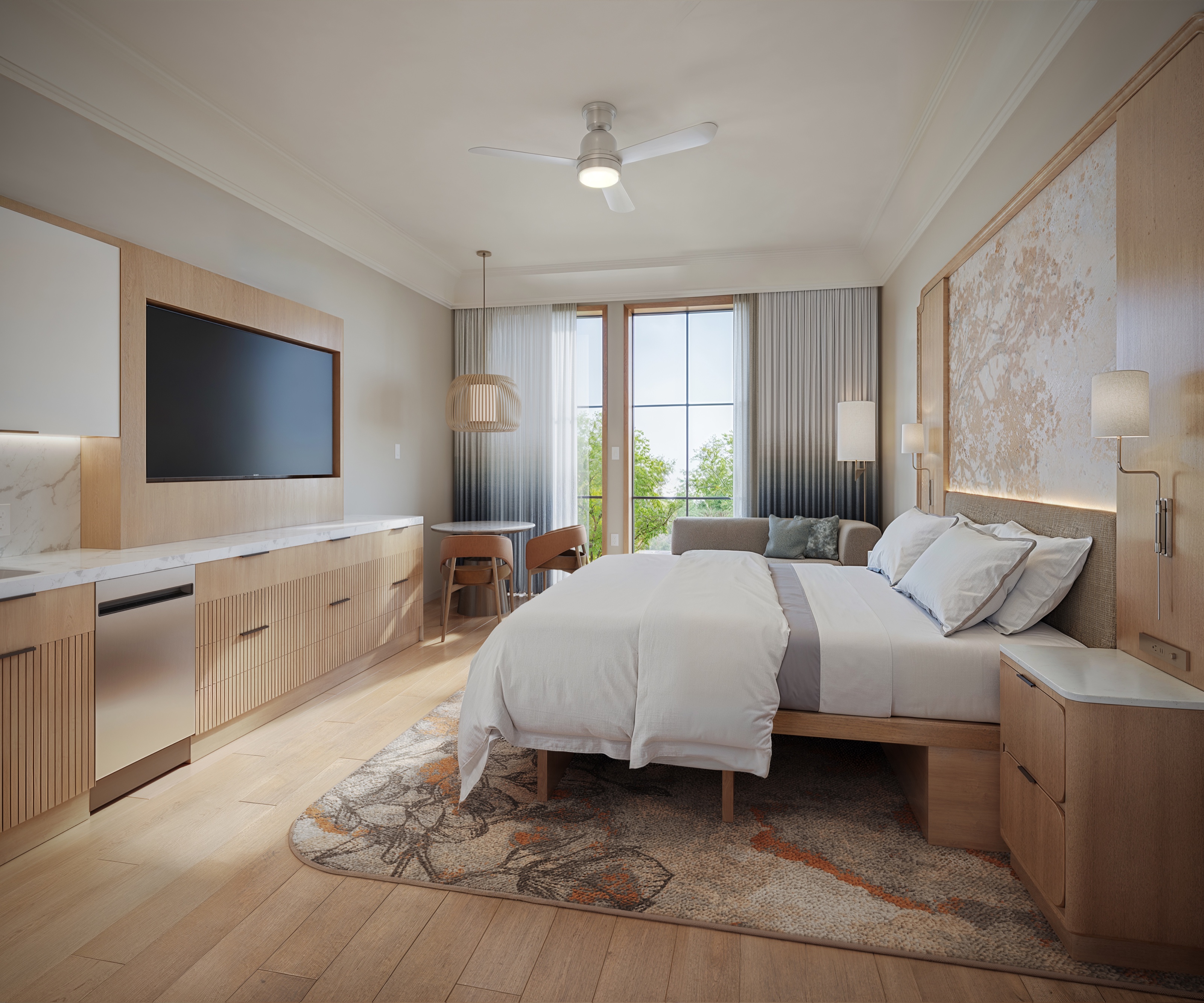
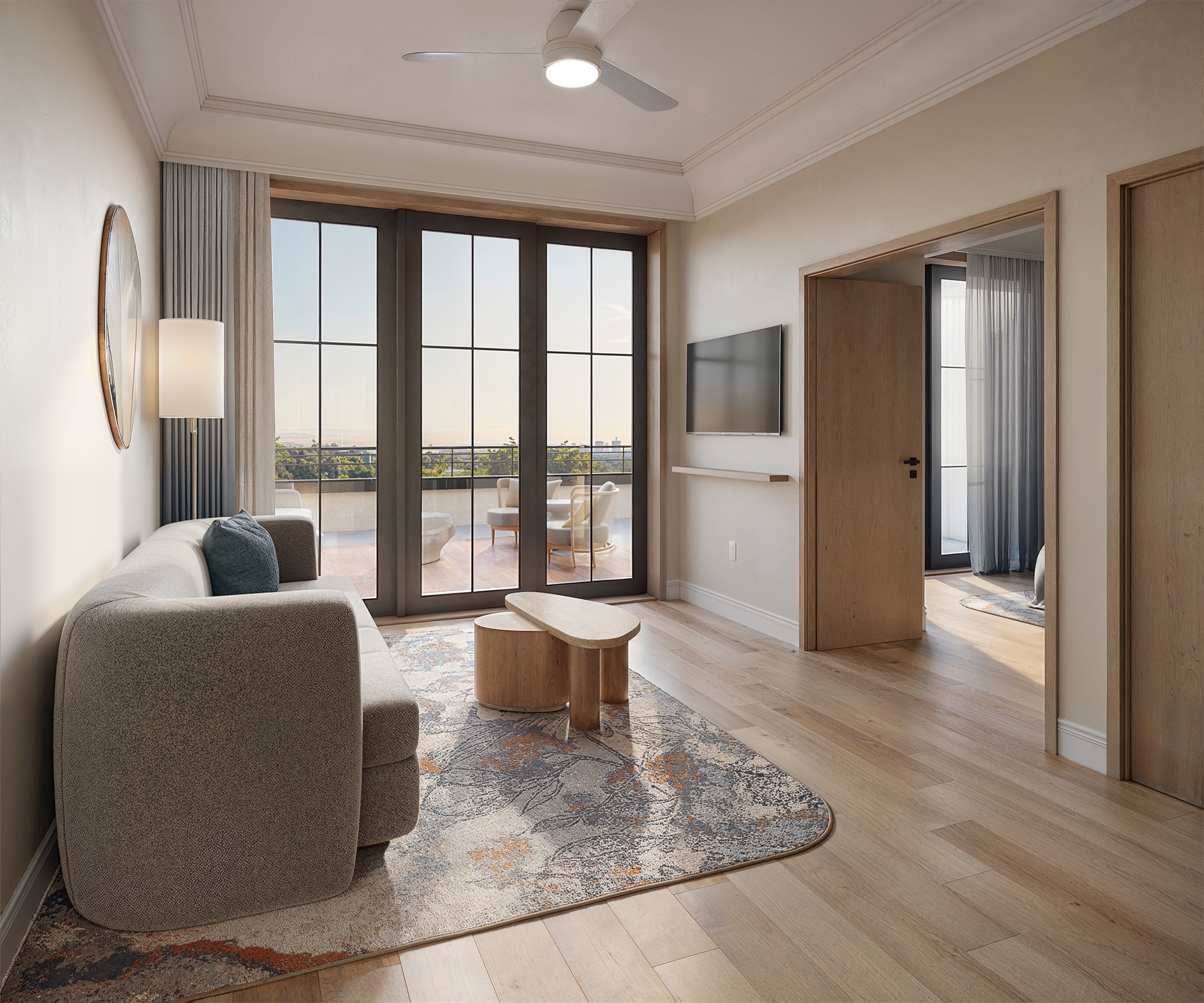
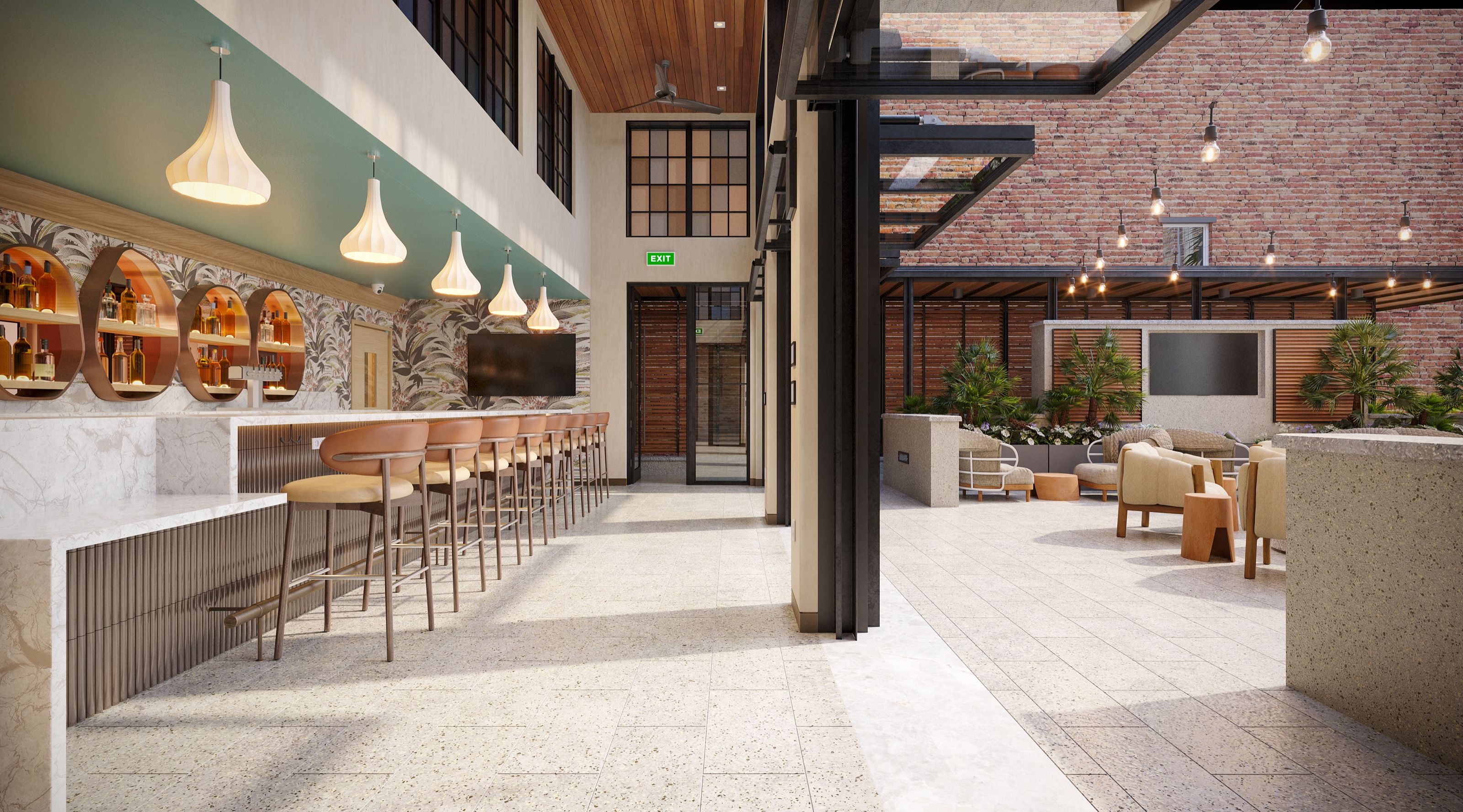
The scope covered the full 60,696-square-foot ground-up development: 50 guest rooms across 21 unique layouts, the public and shared amenity spaces, and custom environmental graphics, with interior concepts informed by Charleston's historic Southern character.
The setting
Greek Revival Charleston, Calibrated to a Wellness Brand.
Vanrooy Design specializes in highly crafted hospitality and residential environments, translating layered architectural concepts into refined, buildable spaces. Their client, Westin Vacation Club, part of Marriott Vacation Clubs, commissioned the ground-up development for the brand's new urban City Collection portfolio.
The resort rises at 235 East Bay Street, on the corner of North Market Street in the French Quarter, steps from the historic City Market, and folds an 1850s-era building on North Market Street into the finished property. Rooted in Greek Revival and Victorian influences, the design reflects Charleston's romantic historic character, thoughtfully calibrated to meet the operational demands of a contemporary hospitality development and Westin's wellness-oriented global brand standards.
The challenge
Twenty-One Room Types, One Standard of Accuracy.
Working directly with architects sets a different bar than hotel marketing visualization. The goal here was not storytelling for sales but precision, continuity, and support for active design decisions. With 21 unique room types, layered material palettes, and custom-designed public spaces, Vanrooy Design needed imagery that was both technically accurate and approval-ready, visuals that could function as design-validation tools rather than standalone marketing assets.
Five demands defined the work:
- 01 Integrating Revit, AutoCAD, and SketchUp without disrupting the design pipeline.
- 02 Managing multiple design revisions to refine materials and FF&E.
- 03 Maintaining technical accuracy across uniquely designed amenity areas and guest-room types.
- 04 Delivering consistent realism across bespoke joinery, lighting styles, and detailed finishes.
- 05 Aligning production timelines with formal client review and approval dates.
In this context, the hotel visualizations went beyond conventional marketing assets and became functional tools that directly influenced the final design and accelerated approvals.
The approach
An Architecture-First Pipeline.
Before modeling began, we worked through everything that defined the project: the design intent presentations, construction documentation, FF&E schedules, CAD drawings, the Revit and SketchUp models, and Westin's brand guidelines. The point was to understand not only how the spaces should look but how they were meant to function, supporting operational flow, brand standards, and approval requirements.
Design information arrived across Revit, SketchUp, and AutoCAD throughout the project, and our pipeline used each platform for its strength. SketchUp supported rapid iteration of interior layouts, FF&E placement, and design detail. Revit and AutoCAD verified spatial logic, dimensions, and architectural intent. All geometry was then consolidated and refined in our production environment, ready for final lighting and material application. Working in the client's native formats kept production moving quickly, held the visuals to the latest design decisions, and reduced approval risk.
Because the visuals were embedded in the approval process, the workflow was structured for refinement: multiple camera views to evaluate spatial hierarchy, progressive material and lighting passes, revision-ready models for efficient updates, scheduled progress reviews, and consolidated feedback cycles. Vanrooy's team could present current, accurate visuals at every client and brand meeting, and decisions kept pace with the design.
The production
Charleston Light, Westin Calm.
Once the design details were locked in and approved, full production added lighting accurate to the Charleston locale, refined high-fidelity materials in wood, textile, stone, and glass, and built an atmosphere aligned with Westin's wellness-focused brand, one consistent visual language carried across every space in the hotel.
The outcome
Approved Without Major Revisions, On Course for 2028.
The 3D interior renderings of all hotel spaces progressed through Westin's formal brand review without major revisions, reflecting strong alignment and disciplined execution from kickoff, and the visuals supported full client and brand approval. With the design approved, the development moved ahead toward a planned 2028 opening in downtown Charleston.
The integrated workflow minimized rework across a 60,000-plus-square-foot hospitality program, and Vanrooy Design cited responsiveness, clarity, and technical understanding as the reasons the visuals functioned as decision tools rather than presentation imagery.
That is the role this kind of work is meant to play. When visualization sits inside design development, stakeholder alignment, and approvals rather than after them, the studio is not a rendering vendor at the end of the process. It operates as a design-aligned partner, bringing clarity and confidence to the decisions that carry a project into construction.
Questions
Rendering for Hotel Design Approvals
- What does 3D rendering for a hotel design approval involve?
- For the Westin Vacation Club in Charleston, a 60,696-square-foot ground-up resort at 235 East Bay Street designed by Vanrooy Design with Bello Garris as architect of record, the renderings worked as a design-validation tool rather than marketing imagery. They let Vanrooy Design and the Westin brand team review materials, lighting, and FF&E across 50 keys and the public amenity spaces, then sign off on the design before construction. A design-validation package like this falls in the $5,000 to $8,000 range.
- Can a rendering studio work directly from Revit, AutoCAD and SketchUp?
- Yes. On the Westin Charleston project, design information arrived across Revit, AutoCAD and SketchUp, and the pipeline used each for its strength: SketchUp for rapid layout and FF&E iteration, Revit and AutoCAD to verify dimensions and architectural intent. Working in those native formats keeps the visuals aligned with the latest design decisions and reduces approval risk.
- How do renderings help win brand and stakeholder approvals?
- Decision-ready visuals let every stakeholder see the finished space before it is built, so material, lighting, and layout questions are resolved on screen instead of on site. For Westin Charleston the imagery carried the design through the formal Westin brand review without major revisions, and the project advanced toward a planned 2028 opening.
Services on this project
Related projects
Start with a discovery call
Eddie Kingsnorth runs the first conversation. The call is where we understand the project and whether we're the right studio to do the work.